
Waldemar Żurek
Waldemar Jan Żurek (born 6 January 1970 in Chrzanów) is a Polish lawyer and former judge who has served as Minister of Justice and Prosecutor General…
- Facts0
- Drivers0
- Indicators0
Waldemar Jan Żurek (born 6 January 1970 in Chrzanów) is a Polish lawyer and former judge who has served as Minister of Justice and Prosecutor General…
Waldemar Jan Żurek (born 6 January 1970 in Chrzanów) is a Polish lawyer and former judge who has served as Minister of Justice and Prosecutor General since 24 July 2025. On the motion of Prime Minister Donald Tusk, President Andrzej Duda appointed him to the Council of Ministers that day, and he succeeded Adam Bodnar, who had held both offices since December 2023. Before that appointment he was a civil-law judge of the Regional Court in Kraków.
He graduated from the Forestry Technical School in Brynek and from the Faculty of Law and Administration of the Jagiellonian University. He was the Kraków court's spokesperson for 14 years. From 2004 to 2008 he served on the management board of the Polish Judges Association Iustitia, and from 2018 he was a member of the general board and vice-president of the Association of Judges Themis. In June 2024 he became vice-director for organisational affairs at the National School of the Judiciary and Public Prosecution.
Judges elected him to the National Council of the Judiciary in 2010 and again in 2014, for a second four-year term, and in 2014 the council appointed him its spokesperson. The European Court of Human Rights later described him, in that office, as one of the main critics of judicial changes begun after Law and Justice formed a government in 2015. A 2017 amendment moved the election of the council's judicial members from judges to the Sejm and provided that the new members would replace those already sitting; when the Sejm chose 15 judges on 6 March 2018, Żurek's mandate ended without an official notification, and he ceased to be the council's spokesperson. On 16 June 2022 the Court held, by six votes to one, that the lack of a judicial remedy violated Article 6 § 1 of the European Convention on Human Rights, and held unanimously that removing him as spokesperson of the Kraków court, auditing his financial declarations and inspecting his judicial work violated Article 10. It described that combination of measures as aimed at intimidating him for views he had expressed on judicial independence.
Earlier in 2018 he had already been removed as the Kraków court's spokesperson. The justice ministry's later account states that Zbigniew Ziobro, then minister, moved him from the second civil appellate division to the first civil division, and that disciplinary files against him reached more than 20 proceedings and 68 charges before the cases were discontinued. Within days of taking office he dismissed 46 court presidents and vice-presidents and ended nine delegations to the ministry, presenting the decisions as a mandate from Tusk to speed changes after the Law and Justice period. Parliament passed a bill in January 2026 to let judges again elect most judicial members of the council; President Karol Nawrocki vetoed it on 19 February 2026, and his office said the text raised constitutional objections and would remove parliament from the choice. The government answered that it would ask the parliamentary majority to appoint candidates selected in votes organised among judges. On 30 October 2026, as prosecutor general, he submitted five motions totalling 224 pages asking the Constitutional Tribunal to lift the immunity of its acting president and vice-president, four of them concerning the acting president’s criminal liability.
Waldemar Żurek was born on 6 January 1970 in Chrzanów, in southern Poland. Notes from the Chancellery of the Prime Minister and the Ministry of Justice give that date and place but say nothing about his family.
His own later statements are the source for his upbringing. In a recollection dated 25 June 2018, recorded for a Bydgoszcz March memory project linked to Senator Jan Rulewski’s office, he said that he was eleven in 1981 and that the emergence of Solidarity set the tone at home. He described his father as a miner at the Siersza colliery in Trzebinia and a low-ranking Solidarity activist, and his mother as a teacher who also belonged to the union. He remembered his grandmother Józefa leading prayers for the beaten Rulewski, and said that an older brother, then at secondary school in Nowa Huta, joined the Federation of Fighting Youth after martial law was imposed.
He said that, while still under eighteen, he joined the Confederation of Independent Poland, which he called the most radical opposition organisation of the time. He recalled his first leaflets as stickers reading “nie idziesz, nie kłamiesz” (“if you do not go, you do not lie”), put up during what he remembered as a 1984 referendum, and said he was still posting election posters in 1989 and 1990. There was no referendum that year: on 17 June voters chose the national councils, and on 2 February the underground Temporary Coordinating Commission of Solidarity had urged a boycott, on the ground that entering a polling station would colour official claims of public support.
He linked that household to a plan to live in a forest lodge with a secret press for underground leaflets (bibuła). A profile by Małgorzata Kryszkiewicz in Dziennik Gazeta Prawna of 7 March 2014 reported the same wish to withdraw into the forest in a forester’s uniform, and said the fall of the communist system interrupted it.
The Ministry of Justice states that Żurek completed the Forestry Technical School (Technikum Leśne) in Brynek and then studied at the Faculty of Law and Administration of the Jagiellonian University in Kraków.
In an address on 3 December 2025 he said his first certified trade was not forestry technician but sawyer (pilarz): the course required a graded tree-felling examination, a tractor qualification, and driving licences for a motorcycle and a car. He presented the school as the practical side of the lodge-and-press plan, and said that after 1989 he chose law so as to help build the state rather than enter politics. Admission, he said, was difficult because he had not studied Russian: he sat a resit, was first taken onto the part-time (zaoczne) course, later moved to full-time studies, and finished, without stating the year, with what he called a decent average.
He then completed judicial training (aplikacja sędziowska). The European Court of Human Rights, in Żurek v. Poland, recorded that he passed the judicial examination in 1997 and was appointed a judge of the Kraków-Śródmieście District Court. He has said that he passed with the highest mark, and that a professor who had also supervised Andrzej Duda asked whether he would stay at the university; the president of the court, he said, offered him the First Civil Division of that district court instead, and he chose the bench.
In 1997 Waldemar Żurek passed the judicial examination and was afterwards appointed a judge of the Kraków-Śródmieście District Court (Sąd Rejonowy dla Krakowa-Śródmieścia). On 19 January 2005 he was appointed a judge of the Regional Court in Kraków (Sąd Okręgowy w Krakowie). The Ministry of Justice, in the notice of a later appointment, described that career as civil-law judging, first at district level and from 2005 at regional level.
Before a reassignment of duties in August 2018, he sat in the court's Second Civil Appellate Division (II Wydział Cywilny Odwoławczy), which hears civil appeals. That transfer, and the employment case he later brought over it, are part of the administrative measures treated elsewhere. The same notice named him as co-author of an outline of succession law, Prawo spadkowe w zarysie.
In 2002–2003 he was seconded to the Ministry of Justice, where he worked as a chief specialist in the Department of Common Courts and took part in the Civil Law Codification Commission. That account also says he performed duties at the Local Government Board of Appeal (Samorządowe Kolegium Odwoławcze) in Kraków, without stating the dates or the post.
Żurek was selected as press spokesperson of the Kraków Regional Court. The ministry's notice states that he held the post for more than 14 years. The European Court of Human Rights, in Żurek v. Poland, recorded the selection but not its starting date.
By a letter dated 15 January 2018 the president of the Regional Court told him that he was dismissed as spokesperson, after what she described as a favourable opinion of the court's board (kolegium). Żurek maintained that the board had not given that opinion; the dispute belongs with the later measures examined in his Strasbourg case and in domestic proceedings.
The National School of the Judiciary and Public Prosecution (Krajowa Szkoła Sądownictwa i Prokuratury), based in Kraków, conducts Poland's initial joint training for future judges and prosecutors, the general apprenticeship (aplikacja ogólna). Żurek was seconded to the school in 2009 and again in 2010. In 2009 he was secretary of the competition commission for admission to that apprenticeship. Before the first stage, a test sat in Warsaw on 8 August 2009, he told Rzeczpospolita that the examination arrangements were ready; more than 1,500 candidates were due to sit it, with a second, case-based stage in Kraków.
On 7 June 2024 the Minister of Justice, Adam Bodnar, appointed him deputy director of the school for organisational affairs while he remained a judge of the Kraków Regional Court. Judge Izabela Fountoukidis was appointed a deputy director at the same time, both of them under the school's director, Piotr Girdwoyń. Żurek's post charged him with heading the director's office, standing in for the director, and supervising organisational work that included the school's external contacts, recruitment to judicial and prosecutorial training, and the e-KSSiP training portal. He left the bench on taking office as Minister of Justice: the Law on the Organisation of Ordinary Courts requires a judge appointed to a state office to resign the judicial office promptly, unless the judge retires, and his resignation took effect at the end of 24 July 2025.
The National Council of the Judiciary (Krajowa Rada Sądownictwa) safeguards the independence of courts and judges in Poland. The Constitution of Poland lets it apply to the Constitutional Tribunal about normative acts affecting that independence, and the President of Poland appoints judges indefinitely on its motion. Its members are the First President of the Supreme Court of Poland, the Minister of Justice, the President of the Supreme Administrative Court and a presidential appointee, together with fifteen judges chosen from among judges of those courts and the military courts, four deputies chosen by the Sejm and two senators chosen by the Senate of Poland. Elected members serve four years; statute sets the manner of choice.
Until 2018 judges elected the fifteen judicial members. On 15 March 2010 representatives of the general assemblies of regional-court judges elected Waldemar Żurek, a judge of the Regional Court in Kraków, for four years from 21 March 2010. Re-elected on 2 March 2014, his second term ran from 21 March 2014 to 21 March 2018. Gazeta Prawna reported that at their assembly on 26 February 2014 he received 150 votes, which it called a record, among five sitting members given another term. Appointed the Council's spokesperson on 6 March 2014, he commented in the media, joined legislative work and attended the Sejm's Justice and Human Rights Committee. The Prime Minister's Chancellery records both terms, in 2010–2018, and that post. After Law and Justice won in 2015, he criticised proposals on the Tribunal, the Council, the Supreme Court and the ordinary courts.
In January 2017 Minister of Justice Zbigniew Ziobro, also Prosecutor General, presented reform as a way to make the courts more efficient and election to the Council more democratic. A bill of 14 March 2017 would have given the Sejm the election and ended the sitting members' terms. The Council, the Supreme Administrative Court, the National Bar Association, the Commissioner for Human Rights and the Organization for Security and Co-operation in Europe Office for Democratic Institutions and Human Rights said this would place the Council under the legislature, contrary to the separation of powers, and would cut short a constitutional four-year term. After protests, President Andrzej Duda vetoed the July 2017 acts on the Council and the Supreme Court.
In K 5/17 of 20 June 2017, on the Prosecutor General's application, the Tribunal held the election rules unequal among judges and individual terms contrary to the joint term in Article 187(3). Departing from its 2007 judgment K 25/07, it held that members must be chosen from among judges, not necessarily by them, and that the four-year term was not absolute. Two panel judges were among those the Strasbourg Court recorded as elected in December 2015 to seats already filled. Before the European Court of Human Rights, Żurek called K 5/17 a pretext; the government said the statute carried out the judgment and ended only his Council seat.
The Sejm and Senate passed Duda's bill of 26 September 2017 on 8 and 15 December; he signed it on 20 December, and it took effect on 17 January 2018. The explanatory report called citizen and judicial nominations, and a three-fifths vote, a "democratisation", and early termination proportionate to that aim and to a joint term. The act lets at least 2,000 citizens or 25 judges nominate a candidate. Clubs indicate names, a committee lists fifteen, and the Sejm votes on the list by a three-fifths majority or, failing that, by an absolute majority, in the presence of at least half the statutory number of deputies. The new term starts the day after the vote. Old mandates last until the day before, and at most 90 days after the act takes effect.
The Venice Commission, on 8–9 December 2017, accepted that statute may set the mode of election and regarded a three-fifths threshold as an improvement, but said peers should still elect the judicial members. Parliamentary election plus immediate replacement would, it found, politicise the Council, and K 5/17 did not require a joint term or early removal. The Supreme Court, the Council, the bar and the Commissioner also opposed the presidential bill.
On 6 March 2018 the Sejm chose fifteen new judicial members by a three-fifths majority in one vote. Żurek's mandate ended that day, about two weeks before 21 March 2018. He received no official notice and therefore also ceased to be spokesperson, while remaining a judge in Kraków. The European Court of Human Rights later examined the termination in Żurek v. Poland (see Litigation).
From 2015, as spokesperson of the National Council of the Judiciary, Waldemar Żurek, a judge of the Regional Court in Kraków, argued that laws prepared after Law and Justice took office threatened judicial independence. In an October 2016 interview he said the government was refusing to publish judgments of the Constitutional Tribunal; that the prosecution service now depended on Justice Minister Zbigniew Ziobro; and that a draft ending the council's judge-members' terms by ordinary statute would breach a term fixed in the constitution. He also objected to President Andrzej Duda's refusal, without reasons, to appoint some common-court judges and to take the oath of three Tribunal judges. Politicians of the new majority, he said, tried to dismiss such comments as "political", the easiest way in Poland to silence a judge.
In July 2017, with bills pending on the council, the Supreme Court of Poland and the ordinary courts, he told Deutsche Welle that the proposals were unconstitutional: parliament would choose the council's judicial members, and the minister could end judges' terms early. Set against what he called the previous year's disempowerment of the Tribunal, he described this as a search for judges of one political leaning. Because judges could not strike, he said, they could only appeal to citizens. The following month he called the changes "a war on the rule of law". Allies of the ruling party, he said, had cast him on state-run media as representing "the interests of a class of judges comprised of old communists", while the government presented judges as an elite tied to the old system and bent on blocking reform. He did not expect protest, or criticism from Brussels, to stop party leader Jarosław Kaczyński. In June 2018, after Żurek called publication of his asset declaration political harassment, Ziobro said the judge had "long ago crossed the boundary of compromising himself by his behaviour", to the harm of the judiciary's image.
On 11 January 2020 Żurek spoke during the March of a Thousand Robes (Marsz Tysiąca Tóg) in Warsaw, a largely silent procession from the Supreme Court to the Sejm. It opposed an amendment the Sejm had passed on 20 December 2019, then before the Senate, which critics called the "muzzle law" (ustawa kagańcowa). The text created disciplinary liability for acts that could prevent or seriously hinder the justice system, for challenging the effectiveness of a judge's appointment, and for "public activity incompatible with the principles of the independence of the courts and the independence of judges".
Waldemar Żurek in judicial robes among other robed participants and Polish flags during the March of a Thousand Robes in Warsaw on 11 January 2020.
Organisers included the Polish Judges Association Iustitia, the Association of Judges Themis, the prosecutors' association Lex Super Omnia, the advocates' association Defensor Iuris and Wolne Sądy. Those present included First President of the Supreme Court Małgorzata Gersdorf, Iustitia's president Krystian Markiewicz, Warsaw judge Igor Tuleya and Olsztyn judge Paweł Juszczyszyn, judges from abroad — 22 European countries, Iustitia said — and some opposition politicians. A figure given as the city hall's estimate was about 15,000. At the Presidential Palace, Żurek recited the judicial oath and Duda's oath of 6 August 2015, and urged the president to read opinions of the Venice Commission, the European Commission and lawyers' organisations. He said the bill would turn judges into officials and citizens into petitioners, and would punish judges for applying European Union law or for following judgments of the Court of Justice of the European Union. Judges were not opposed to reform, he added, but gagging them would not speed trials.
The march continued protests from 2017. On 14 July that year, still council spokesperson, he called for candles to form a "chain of light" around the Supreme Court and the ordinary courts, arguing that statutes on the council and the ordinary courts, and an overnight draft on the Supreme Court, would end the democratic state ruled by law and introduce "uniform and uncontrolled power". The same month he told a crowd outside parliament that the constitution was the highest law and that he would defend it to the end, as his oath required. He later said a disciplinary case had been opened over that appearance for alleged political activity.
His association ties were older than the dispute. He sat on Iustitia's national board from March 2004 to April 2007 and again from April 2007 to October 2008. A December 2019 copy of Themis's website listed him on the main board under president Beata Morawiec; the Ministry of Justice's 2025 biography said that from 2018 he had also been the association's vice-president. Markiewicz told the crowd at the Sejm that the march had ended but the effort to restore the rule of law had not.
From November 2016 the Central Anti-Corruption Bureau audited the asset declarations of Waldemar Żurek, a judge of the Regional Court in Kraków and spokesperson of the National Council of the Judiciary. The government told the European Court of Human Rights that a review of judges' declarations had flagged irregularities in a group that included him. Officers served an authorisation of 13 April 2017, covering 2012–2017, at the Council on 19 April. The Court described an audit of about seventeen months, to April 2018. It extended to his wife and, with leave of the Warsaw Regional Court, to nearly 300 financial institutions. A report went to the Kraków regional prosecutor. Żurek said he heard of no criminal investigation, and the Court noted no concrete result.
An anonymous letter received on 28 April 2017 backed the reforms and asked whether Żurek was judging or doing "politics" on television, and whether assistants wrote his reasons. The next day the Ministry of Justice asked the president of the Kraków Court of Appeal about his caseload, complaints and assistants. On 11 May that president reported no irregularities and no complaints of delay, and questioned using an anonymous letter. A court-of-appeal president may withhold a declaration if disclosure could endanger the judge or family; the minister may restore publicity. Żurek's was classified on 24 May 2018 after he reported threats, then released on 16 June without reasons or a right of appeal. In Żurek v. Poland (16 June 2022) the Court held that the audit, the inspection and his removal as spokesperson were not shown to rest on a substantiated irregularity and together amounted to a strategy to intimidate him for statements on judicial independence. The government called the measures routine and of general application.
On 9 January 2018 the minister appointed Dagmara Pawełczyk-Woicka president of the Kraków Regional Court under a six-month power to replace court presidents. On 15 January she dismissed Żurek as spokesperson, citing a favourable opinion of the court board. Six of eight members resigned on 29 January, saying there had been no vote and that the law required an opinion, not consent.
On 27 August 2018 she transferred him from the appellate second civil division to the first-instance first civil division. She told the Commissioner for Human Rights, Adam Bodnar, that the move was unrelated to his public activity, citing more than 3,000 pending cases for 15 first-instance judges against 1,235 for 21 appellate judges, his short list after a long leave, and the Constitution, which does not rank judges by instance. Żurek and the associations Themis and Iustitia called the transfer harassment. He appealed on 10 September 2018.
At least five disciplinary cases were pending by his August 2018 application in Strasbourg. He was charged with refusing to sit in the new division from 1 September to 15 October 2018 (2 March 2019); with tax on a tractor sale after the asset audit (22 November 2018); over a press interview on the Constitutional Court, the recomposed Council and a Supreme Court appointment (21 October 2019); and over a labour claim disputing a Supreme Court judge appointed with the new Council's participation (28 May 2020). Rzeczpospolita reported 23 proceedings opened by officers appointed under Justice Minister Zbigniew Ziobro.
In May 2022 disciplinary spokesperson Piotr Schab and deputy Michał Lasota said that in at least 64 cases from 2012–2018 Żurek had dated judgments for days when he was at Council meetings away from Kraków, so that he could not both draw a per diem and adjudicate there. The case, later reported as 68 charges, was discontinued on 3 December 2024 (SD 13/24) by ad hoc officer Grzegorz Kasicki of Szczecin, appointed after Bodnar became minister; the order was final on 20 December. The ministry told the Sejm that the file did not support a disciplinary indictment, that Bodnar had given no instructions, and that the officers are not his subordinates. Rzeczpospolita reported Kasicki's grounds: Żurek had worked before and after travel; judges on the same panels were not charged; and a closed-session decision takes effect when signed, which civil procedure allows away from the court. A prosecutor refused a criminal investigation on 12 March 2024 for lack of an offence. In February 2025 the ministry said a court had quashed that refusal and that the investigation continued.
Hermes was not the spyware Pegasus. The National Prosecutor's Office bought it in November 2020, for more than 15 million zlotys, to automate open-source intelligence. The Supreme Audit Office said the purchase lacked a needs analysis, wrongly avoided procurement although cheaper equivalents existed, and was used to search for politicians, local officials, prosecutors and businesspeople. It notified prosecutors of possible offences, including a large loss to the Treasury and concealment of an accounting document.
Onet, citing OKO.press, reported that in 2021, in a Świdnica investigation after Judge Jakub Iwaniec alleged harassment by critics of the reforms, prosecutors used Hermes and other public tools to collect social-media activity, telephone numbers and emails of judges, lawyers and journalists, including Żurek, up to mid-2021. In April 2025 Żurek and counsel Justyna Borucka notified prosecutors of a suspected abuse of powers. Their notice, as quoted by OKO.press, said Hermes was not spyware as such but allowed automated profiling, including of dark-web data, beyond what the Constitution permits even for public information. The Rzeszów regional prosecutor's office was already investigating the 2020–2023 purchase and use; in April 2025 National Prosecutor Dariusz Korneluk assigned a team to that case.
On 6 August 2018 Waldemar Żurek, born in 1970 and living in Rzeplin, lodged application no. 39650/18 with the European Court of Human Rights against Poland. A First Section Chamber decided it without a hearing. Interveners were the European Network of Councils for the Judiciary, the Polish Commissioner for Human Rights, Amnesty International with the International Commission of Jurists, Judges for Judges with Professor Laurent Pech, the Helsinki Foundation for Human Rights, and the associations Themis and Iustitia.
On 6 March 2018 his term as an elected judicial member of the National Council of the Judiciary, due to run until 21 March 2018, ended ex lege, and with it his post as the Council's spokesperson. A 2017 Act transferred election of the judicial members to the Sejm and ended the sitting terms when new members were chosen; no procedure existed in which to contest that. He also complained of steps he linked to criticism of judicial legislation after Law and Justice won in 2015: a Central Anti-Corruption Bureau audit of his declarations (November 2016–April 2018), a Ministry of Justice inspection of his work at the Kraków Regional Court (April 2017), removal as that court's spokesperson (January 2018), and an unexplained ministerial decision to publish his declaration (June 2018).
The judgment of 16 June 2022, final on 10 October 2022, applied the Grand Chamber judgment in Grzęda v. Poland (no. 43572/18, 15 March 2022). By six votes to one it found a violation of Article 6 § 1 of the European Convention on Human Rights: an arguable civil right to serve the full term could not be taken to a court, impairing the essence of access to a court. Article 13 was, unanimously, not examined separately; the complaint duplicated Article 6.
The violation of Article 10 was unanimous. The Court read the measures as one sequence by executive-linked authorities, following his statements and not shown to rest on a substantiated irregularity. It said that a judge's freedom to discuss the justice system "may be transformed into a corresponding duty to speak out in defence of the rule of law and judicial independence" when those values are threatened. Their accumulation "could be characterised as a strategy aimed at intimidating (or even silencing) the applicant" for views expressed in that defence, with a chilling effect on other judges, and was not "necessary in a democratic society." Ending all fifteen elected mandates was linked to his speech but was not the main Article 10 interference. Under Article 41 it awarded 15,000 euros for non-pecuniary damage, against a claim of 100,000 euros, and 10,000 euros for costs, dismissing the remainder.
Judge Krzysztof Wojtyczek dissented on Article 6, as in Grzęda, because he did not regard the claimed right as arguable. He agreed on Article 10, but objected to covering official Council speech, to counting removal from a spokesperson's post, to not deciding whether any legitimate aim existed, and to stronger protection for judges on councils than for other speakers.
The largest later disciplinary file, SD 13/24, was discontinued on 3 December 2024 by Grzegorz Kasicki, disciplinary spokesperson of the Minister of Justice, and the order became final on 20 December 2024: the inquiry gave no basis for a disciplinary hearing. The Ministry told the Sejm that Adam Bodnar, then minister, had not directed the decision. Officers appointed while Zbigniew Ziobro was minister had alleged untrue dates on rulings from 2012 to 2018; OKO.press reported 68 charges and said the decision treated a closed-session ruling as effective on signature. Rzeczpospolita quoted a May 2022 announcement by Piotr Schab referring to at least 64 cases. On 12 March 2024 prosecutors refused a criminal investigation for lack of an offence; a court quashed the refusal, and in February 2025 the Ministry said the investigation continued.
Before the presidential election of 1 June 2025, while still a judge, Żurek sued the State Treasury twice, after offering a settlement. A claim of 26 February 2025 for 150,000 złoty, over a media campaign he linked to the so-called "hate affair," was suspended in June 2025. A claim of 18 April 2025 for 1 million złoty, over measures he attributed to 2015–2023 and naming the Minister of Justice, the Prosecutor General, the First President of the Supreme Court and the head of the Central Anti-Corruption Bureau, had not been served. On 25 July 2025, after he became Minister of Justice, counsel Michał Romanowski withdrew both claims before the Warsaw Regional Court. He called the conflict awkward.
On 23 July 2025 Donald Tusk, prime minister of Poland, announced a reshuffle replacing Adam Bodnar, minister of justice since December 2023, with Waldemar Żurek, a judge of the Kraków Regional Court known for opposing changes made under Law and Justice (PiS), after the coalition lost the presidential election and judicial reform was said to have stalled. On 24 July President Andrzej Duda appointed the new ministers, and Żurek took the combined offices of minister of justice and prosecutor general. A judge who takes another state office must resign unless retiring; Bodnar told the National Council of the Judiciary (Krajowa Rada Sądownictwa, KRS) that Żurek's resignation took effect at the end of that day.
In November 2025 the ministry published a bill returning the KRS's 15 judicial members from parliamentary election, a 2017 PiS change, to direct, secret election by judges. Polish and European courts had treated the reformed council as lacking independence, which put later nominations in doubt. The draft did not end the sitting term, the ground on which Duda had referred a 2024 bill to the Constitutional Tribunal. Żurek called it a compromise for Duda's successor, Karol Nawrocki; PiS MP Sebastian Kaleta called judges electing judges a "judgeocracy".
Parliament passed the bill in January 2026. On 19 February Nawrocki vetoed it, citing constitutional concerns, the loss of parliament's role as "a representative of the sovereign", seniority rules he said excluded judges arbitrarily, and doubt over about 3,000 judges and their rulings. Government spokesman Adam Szłapka said signature would have ended that disorder; Żurek said the president had refused discussion. On 15 May 2026 the Sejm, still using that statute, elected 15 members despite a tribunal injunction the government does not treat as binding. PiS boycotted what MP Michał Wójcik called an illegal vote. Thirteen came from judges' assemblies; Łukasz Piebiak (PiS) and Łukasz Zawadzki (Confederation) filled seats left so each caucus can name a candidate. Żurek criticised Piebiak over allegations of an online campaign against judges and warned that the president, who appoints judges on the council's motion, might block the new body.
Sejm print no. 2107, outlined on 9 October 2025, addressed judges nominated through the post-2018 council—about 2,500 people, 28 percent of ordinary-court judges and 60 percent of the Supreme Court, on ministry figures. On 22 October 2026 the Sejm passed it by 231 votes to 200, with six abstentions, and sent it to the Senate. Rzeczpospolita reported that about 1,100 newer judges would be confirmed by a future council, promoted judges would return to earlier posts after two years on delegation, and entrants from other legal professions would lose office, while judgments would in principle stand and the extraordinary complaint would be abolished.
The Helsinki Foundation for Human Rights said in December 2025 that removing or transferring judges by statute breached Article 180 of the Constitution, which requires a court judgment, and the Venice Commission's view that a law cannot void every appointment from one period. Commissioner for Human Rights Marcin Wiącek wrote in October 2025 that the European Court of Human Rights, the Court of Justice of the European Union and Polish apex courts had found defects, not nullity, and that voiding about 2,700 nominations at once would not meet those standards. Kaleta called the adopted text unconstitutional, and presidential minister Zbigniew Bogucki said Nawrocki could not be forced to sign laws he considered bad for Poland. Nawrocki had refused to treat post-2018 appointees as inferior to judges named by the communist Council of State, and PiS leader Jarosław Kaczyński said that, in a restored "lawful state", Żurek would spend a long time in prison. A report of the vote, still in that form on 1 November 2026, treated the Senate stage and a likely veto as ahead.
Żurek said that among his first acts he was dismissing 46 court presidents and vice-presidents and nine officials delegated to the ministry, a "clean-up" he said Tusk had asked him to accelerate.
He also removed the last national disciplinary officer left from the tenure of Zbigniew Ziobro. Tribunal president Bogdan Święczkowski called the suspension of his wife, a court president, revenge. Like Bodnar, Żurek did not follow an unpublished 2024 tribunal ruling that had sought a KRS opinion before such dismissals. On 15 September 2025 he dismissed a further 25 presidents and vice-presidents despite negative opinions from court colleges, citing promotions before the post-2018 council or support for its candidates.
On 27 January 2026 the Supreme Court's professional-liability chamber held unlawful the removal of disciplinary officers Piotr Schab, Przemysław Radzik and Michał Lasota before terms due to end in June 2026. Bodnar had dismissed Schab and Radzik in April 2025, and Żurek removed Lasota, both arguing that silence in the statute left the appointing authority free to dismiss for compelling reasons. The chamber answered that "competence cannot be presumed" and that successors could not be named to occupied posts; its judges had been appointed before the post-2017 council. Żurek called the chamber improperly constituted and indicated he would not comply. The three kept their files until police and prosecutors forced the cabinets open, which Nawrocki called very concerning and Żurek called routine.
On 28 October 2025 Żurek asked Marshal of the Sejm Szymon Hołownia for consent to charge Ziobro with 26 alleged offences over the Justice Fund, meant for crime victims, and to detain him. Prosecutors said he had probably led a group that misappropriated 150 million zloty, including spending on Pegasus spyware, and could face up to 25 years. Ziobro, in Budapest from the day before, denied misuse and called the case a vendetta; Hungarian prime minister Viktor Orbán spoke of a "witch hunt". On 7 November the Sejm lifted immunity on each charge and approved pre-trial detention; the Civic Coalition and its partners voted in favour and PiS opposed. Ziobro stayed in Hungary, and Kaczyński called the proceedings characteristic of a totalitarian state.
In September 2025 Żurek asked the tribunal to lift Święczkowski's immunity over alleged abuse of power in 2020–2021, as national prosecutor, in the surveillance of lawyer Roman Giertych. An assembly chaired by deputy president Bartłomiej Sochański refused on 16 October; Święczkowski called the request a political stunt. On 30 October 2026, as prosecutor general, he submitted five further motions totalling 224 pages, four seeking consent to prosecute Święczkowski for criminal liability and one concerning Sochański’s immunity, and delivered them to judge Anna Korwin-Piotrowska, whom he described as the longest-serving judge and who said she had suspended Święczkowski. The leadership's account called that an unlawful takeover. Constitutional lawyer Marcin Matczak wrote that the minister had no such power over the tribunal, and Kaczyński said Poland had become a police state.
In January 2026 the ministry proposed ending imprisonment, but not fines or community service, for offending religious feelings under Article 196 of the Penal Code. Żurek linked the proposal to a 2022 judgment of the European Court of Human Rights in the case of the singer Dorota Rabczewska, who had been fined rather than jailed, and the same report noted likely resistance from conservative coalition partners and from Nawrocki.
Żurek was president of the Kraków branch of the Polish Judges’ Association Iustitia (Stowarzyszenie Sędziów Polskich „Iustitia”) from April 2001 to April 2004. He then sat on the association’s national board from March 2004 to April 2007 and from April 2007 to October 2008. On 1 October 2025 he resigned his membership because of his appointment as minister of justice, as Iustitia’s spokesperson, Katarzyna Wróbel-Zumbrzycka, stated in January 2026.
On 13–14 January 2018 a secret ballot at Themis’s general assembly in Spała elected him to the main board of the Association of Judges Themis (Stowarzyszenie Sędziów „Themis”). The board designated Beata Morawiec president. The Ministry of Justice biography states that from 2018 he was a board member and the association’s vice-president. He left the board after taking a post at the National School of the Judiciary and Public Prosecution. At its assembly of 22–24 November 2024, Themis appointed Judge Piotr Raczkowski in his place and recorded that the resignation was connected with that post. By October 2025, reporting described him as a former member.
With Liliana Kaltenbek-Skarbek he wrote the handbook Prawo spadkowe. The Sejm Library records a 2002 first edition from Kantor Wydawniczy Zakamycze in Kraków, then editions in 2007, 2011, 2012 and 2016. From 2007 the book was in Wolters Kluwer’s Biblioteka Sądowa series. The fifth edition (2016; 477 pages; law as of 1 June 2016) credits the co-author as Liliana Kaltenbek.
With Dariusz Mazur, also then a judge of the Regional Court in Kraków, he published “Wymiar sprawiedliwości w Polsce u progu 2017 r. – wyzwania i zagrożenia” in Ruch Prawniczy, Ekonomiczny i Socjologiczny 79, no. 1 (2017): 25–38, on changes to the Constitutional Tribunal, the prosecution service, the ordinary courts and the National Council of the Judiciary. He was on the editorial board of the Council’s quarterly Krajowa Rada Sądownictwa, published by Wolters Kluwer; the first issue of 2018 lists him with Łukasz Bojarski, Justyna Kossak, Jan Kremer and Gabriela Ott, under editor-in-chief Krzysztof Grajewski. With Bojarski, Grajewski, Kremer and Ott, he edited the 2019 Wolters Kluwer volume Konstytucja. Praworządność. Władza sądownicza. Aktualne problemy trzeciej władzy w Polsce (616 pages; law as of 15 April 2019), reviewed by Mirosław Wyrzykowski.
In 2016 Dziennik Gazeta Prawna gave him its Złoty Paragraf as “best judge” for 2015. Prawo.pl reported the 21 April 2016 gala at the University of Warsaw. On 27 November 2021, at a Warsaw convention marking six years of the Committee for the Defence of Democracy, he received its Przyjaciel Demokracji distinction in the lawyer category, presented by the advocate Kinga Dagmara Siadlak and Michał Szulc. The committee’s account gives the ground as persistence against breaches of the rule of law together with civic activity. The prize named after Professor Zbigniew Hołda has been given since 2012 by the association bearing his name for work on human rights, democracy and the rule of law. In 2022 the jury made two separate awards, one to Żurek and one to the Aborcyjny Dream Team.
Assessments of Żurek as a judge turned on whether his work as spokesperson of the National Council of the Judiciary, and of the Regional Court in Kraków, was compatible with judicial restraint. In October 2017, after the Council blocked trainee-judge appointments, deputy justice minister Patryk Jaki of Law and Justice said that Żurek "wanted to spite PiS" and had taken "young lawyers hostage," and that a judge was not permitted to take one side of the political scene. The Ordo Iuris Institute later wrote that the reasoning of an order he issued on 2 February 2022 was "in predominant part his own manifesto of a political character."
In Żurek v. Poland (16 June 2022) the European Court of Human Rights called him "one of the main critics" of the changes begun in 2015 and held that the measures against him "could be characterised as a strategy aimed at intimidating (or even silencing)" him for views expressed "in defence of the rule of law and judicial independence." It added that, as a judge and Council spokesperson, he "not only had the right but a duty to speak out," and that the measures had a "chilling effect" on other judges. The Article 6 finding was by six votes to one; Judge Krzysztof Wojtyczek appended a separate opinion. Interveners included the Helsinki Foundation for Human Rights, Iustitia, Themis, Amnesty International and the International Commission of Jurists. In August 2018 the board of Iustitia had already called an attempt to move him to another division "a form of repression" against a judge "consistently defending the independence of the courts."
After his appointment in July 2025, Żurek said Prime Minister Donald Tusk had given him a mandate to accelerate the "cleaning up" of the "mess" left by Law and Justice. Critics answered that he was using administrative power against judges and court leaders in ways he had previously condemned. In October 2025 the Council's presidium described his demand that judges of the Supreme Court of Poland and the Supreme Administrative Court appointed since 2018 stop adjudicating as "anti-state, anti-constitutional, anti-democratic and anti-citizen," and as an "unlawful assault" on constitutional bodies.
President Karol Nawrocki called a September 2025 regulation, which let court presidents appointed and dismissed by the minister depart from random case assignment, an "ostentatious act of lawlessness" enabling "manual selection of judges based on the political needs" of those in power; the head of his chancellery, Zbigniew Bogucki, asked prosecutors to investigate Żurek for abuse of power. In January 2026 the Supreme Court's professional liability chamber held that Żurek and his predecessor Adam Bodnar had removed disciplinary officers "without a proper legal basis." Żurek replied that the chamber was "improperly established"; Piotr Schab, one of the officers, said the executive was "destroying the independence of the judiciary."
On the 2025 bill concerning appointments made with the post-2017 Council, the Helsinki Foundation argued that parliament would decide by statute whom to remove or transfer, contrary to Article 180 of the Constitution of Poland and to the Venice Commission's view that a statute cannot declare all relevant appointments in a given period void. Maciej Nowicki, the Foundation's president, called the proposed court review a "semblance of judicial protection," and Marcin Szwed said international judgments had not justified "so deep an interference." In Gazeta Wyborcza, Wojciech Sadurski defended the bill, writing that "poor Minister Żurek" had to face both "PiS remnants" and the "laments of legalistic pięknoduchy," and calling that stance "formalist legalism." In April 2026 the board of Iustitia said, with "growing indignation," that the ministry's secondments of judges to higher courts remained "arbitrary" and "chaotic" and still missed the independence standards of the Court of Justice of the European Union.
Ranked by shared high-impact facts, then explicit ties, then shared drivers.
 Viktor OrbánViktor Orbán is a former Hungarian prime minister…Affiliated
 Zbigniew ZiobroZbigniew Tadeusz Ziobro is a Polish politician and lawyerAffiliated
 Andrzej DudaAndrzej Sebastian Duda (born 16 May 1972) is a Polish…Affiliated
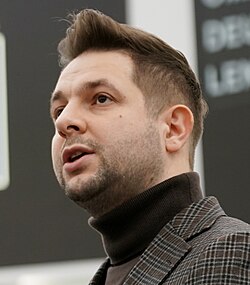 Patryk JakiPatryk Jaki (born 11 May 1985 in Opole) is a Polish…Affiliated
 Donald TuskDonald Tusk is the Prime Minister of PolandAffiliated
 Karol NawrockiKarol Nawrocki is a conservative Polish historian who has…Affiliated
How the record is sourced and how the score is derived.
The score is formula-derived (Factrail formula v1, version 1.0.0), not an editorial verdict. Read the methodology.
By the Factrail desk · Method: how we source and score · Last reviewed
Dispute a fact on this pageNamed here, or represent someone who is? Request a right of reply.
Linked because the text names them, not because anything was measured.
Built from the indicator links of the drivers this text names. A profile of coverage, not a score.