
Yannick Bury
Yannick Bury (born 11 March 1990 in Herbolzheim) is a German economist and a politician of the Christian Democratic Union (CDU).
- Facts0
- Drivers0
- Indicators0
Yannick Bury (born 11 March 1990 in Herbolzheim) is a German economist and a politician of the Christian Democratic Union (CDU).
Yannick Bury (born 11 March 1990 in Herbolzheim) is a German economist and a politician of the Christian Democratic Union (CDU). He has been a member of the Bundestag for the CDU/CSU since 26 October 2021, holding the direct mandate for constituency 283, Emmendingen–Lahr, in Baden-Württemberg. The Bundestag’s current biography, drawn from his own disclosure, describes him as Protestant, married and the father of two children.
Bury attended the Emil-Dörle-Realschule in Herbolzheim from 2000 to 2006 and passed the Abitur in 2009 at the Wirtschaftsgymnasium Emmendingen. He then did civilian service at the Caritas workshop St. Georg in Riegel am Kaiserstuhl. From 2010 to 2016 he studied economics at the University of Freiburg, including stays in Shanghai, Singapore and London, and graduated with a Master of Science.
From 2017 until his election he worked as an economist at the Walter Eucken Institute in Freiburg im Breisgau, with public finance and macroeconomics as his fields, and completed a doctorate in economics (Dr. rer. pol.) while in that post. In 2025 the Roman Herzog Institute awarded him second prize, and €10,000, in the Roman Herzog Forschungspreis Soziale Marktwirtschaft for the dissertation Essays on the Political Economy of Fiscal Federalism, which examines the incentives created by financial relations among the federation, the Länder and the municipalities.
He joined the Junge Union in 2006. He chaired its Emmendingen district association from 2009 to 2016, its South Baden regional association from 2016 to 2019, and the international commission of the Junge Union of Germany from 2019 to 2021, and he has chaired the CDU district association in Emmendingen since 2019. At the federal election of 2021 he took the constituency with 46,406 first votes (27.8 percent), 90 votes ahead of Johannes Fechner of the Social Democratic Party, who also received 27.8 percent; turnout was 76.8 percent. In 2025 the Federal Returning Officer recorded his re-election with 66,984 first votes (37.0 percent), ahead of Fechner on 40,204 (22.2 percent), at a turnout of 83.3 percent.
In the 21st Bundestag he is a full member of the Budget Committee, chair and parliamentary-group spokesperson of its subcommittee on European Union affairs, and a member of the Confidential Committee and the Federal Financing Body. He is also chair of the board of the Franco-German Parliamentary Assembly.
Yannick Bury was born on 11 March 1990 in Herbolzheim, in the Emmendingen district of Baden-Württemberg, and is Protestant. He grew up in Broggingen and in Malterdingen, both in that district. Broggingen is a village district of Herbolzheim in the loess hills at the edge of the Upper Rhine plain; during the state's municipal reform it was incorporated into the town, which from 1 January 1975 comprised Herbolzheim together with Broggingen, Bleichheim, Tutschfelden and Wagenstadt. The village has been Protestant since 1556. The Bundestag biography records his confession but does not name his parents.
From 1996 to 2000 Bury attended the primary school in Broggingen. From 2000 to 2006 he was a pupil at the Emil-Dörle-Realschule in Herbolzheim.
He has dated an interest in having a say in decisions to that school. A class teacher, he wrote, encouraged him to help shape things, and as class representative he tried, with little success at the time, to influence a renovation of the school building. He then attended the Wirtschaftsgymnasium in Emmendingen, where he passed the Abitur in 2009. In Baden-Württemberg the Wirtschaftsgymnasium teaches a broad general education together with business and economics and prepares pupils for university; in Emmendingen the three-year course is offered at the Carl-Helbing-Schule.
After the Abitur he performed Zivildienst, the civilian service required of recognized conscientious objectors in place of military conscription, from 2009 to 2010 at the Caritas workshop St. Georg in Riegel am Kaiserstuhl. The Kaiserstuhl branch of the Caritaswerkstätten St. Georg, run by the Caritasverband Freiburg-Stadt, provides work and training for people with intellectual or multiple disabilities, including horticulture and viticulture on the Kaiserstuhl. In a 2021 profile he said he was still glad of the experience. His service fell near the end of the compulsory system: conscription was suspended on 1 July 2011, and the Zivildienst Act required call-up notices for civilian service beginning after 30 June 2011 to be revoked, with the last Zivildienstleistende discharged by 31 December 2011.
From 2010 to 2016 Bury studied economics (Volkswirtschaftslehre) at the University of Freiburg in Freiburg im Breisgau and graduated as a Master of Science. He told the Badische Zeitung that he had settled on the subject early because, as he put it, it "simply explains how politics, the economy and society work together." The degree included periods in Shanghai, Singapore and London; his own chronology places internships as an economist in those cities in 2013–2014. The master's degree was the qualification with which he later worked as an economist at the Walter Eucken Institute in Freiburg.
The Walter Eucken Institut in Freiburg im Breisgau is an independent registered association for Ordnungspolitik and constitutional economics in the Freiburg school of ordoliberalism. Founded in 1954, after Walter Eucken died in March 1950, it was established by his collaborators and his widow, Edith Eucken-Erdsiek, to continue work on the institutional conditions of a competitive order associated with the social market economy. Friedrich Hayek was a board member from 1964 to 1970 and honorary president from 1978; James M. Buchanan later held that honorary office as well. Research is grouped into economic policy and public finance, behavioural economics, and the history of ideas.
Since 2010 the director has been Lars P. Feld, professor of economic policy and constitutional economics at the University of Freiburg. The institute's 2021 annual report records that he belonged to the German Council of Economic Experts from 2011 to 2021 and chaired it in the final year of that membership. Bury had been a student assistant there during his economics studies, became a doctoral candidate in January 2017 and a Forschungsreferent (research officer) that summer, and worked on public finance and the new political economy of fiscal federalism. His Bundestag biography dates the economist's post, concentrated on public finance and macroeconomics, from 2017 until his election. The report also lists him as a doctoral scholarship holder of the Konrad Adenauer Foundation and a member of its Promotionskolleg Soziale Marktwirtschaft, though it leaves the scholarship dates blank. It also lists commissioned studies with Feld, including one for the Swiss State Secretariat for Economic Affairs on public investment and fiscal rules.
The German National Library catalogues the dissertation as Essays on the political economy of fiscal federalism: an English typescript of ix + 217 leaves with diagrams, submitted in Freiburg in the winter semester 2023/2024 and recorded as a 2024 doctorate in economics. The authority file gives the degree as Dr. rer. pol. A Konrad Adenauer Foundation profile gives the working title Empirische Untersuchungen zum kooperativen Föderalismus and names Feld as Doktorvater. Bury had sat in the Bundestag since 26 October 2021, so the degree was completed while he was already an MP; the parliamentary biography describes the doctorate as taken alongside his work as an economist.
The deposited contents show an essay thesis rather than a single monograph. After an introduction on three patterns of German fiscal federalism, a chapter surveys powers, macroeconomic management, revenues and transfers in what it calls an executive and cooperative system. The same ground is covered in a 2023 handbook chapter with Feld on the post-2020 shift toward the federal level and toward executive branches. Three empirical chapters then measure equalisation incentives since 1970, ask whether party ties raise transfers under cooperative federalism, and use the 2009 stimulus package to ask whether local elections change how grants are spent. The last two chapters turn to the cantons of Switzerland: long-run fiscal sustainability, and whether direct democracy changes the fiscal reaction to higher debt.
In 2018 Bury, Heiko T. Burret and Feld published "Grenzabschöpfungsraten im deutschen Finanzausgleich" in List Forum für Wirtschafts- und Finanzpolitik, on marginal rates in German fiscal equalisation. A longer version, Freiburg Discussion Paper 21/04 (2021), appeared in 2024 in Economics of Governance. For every Land in each year from 1970, across five reforms, they report persistently high rates: until 2019 almost all extra tax revenue of recipient states was skimmed, and the 2020 reform produced what they call over-skimming.
"Do party ties increase transfer receipts in cooperative federalism? – Evidence from Germany", with Feld and Ekkehard A. Köhler, circulated in 2020 as CESifo Working Paper 8580 and was published in 2025 in the European Journal of Political Economy. On close races, a directly elected MP from the federal governing party is associated with higher federal infrastructure transfers to the municipality only if that party also leads the Land government; the authors treat local party competition as the motive. With Feld, the stimulus essay appeared in Public Choice in 2026. For the 2009 lump-sum investment grants to municipalities in Baden-Württemberg, it reports more long-run investment where no mayoral election was pending, extra short-run investment where the incumbent stood again, and grant money sticking except where the incumbent retired.
With Feld and Köhler, the cantonal essay was published as "On the Fiscal Sustainability of Swiss Cantons, 1905–2017" in Publius. With data from 1905 and panel methods that allow for heterogeneity, breaks and cross-sectional dependence, they report sustainable policies for the cantons as a group. The thesis chapter on referendums, initiatives and the reaction to debt had not, in the deposited text, appeared as a journal article.
In 2025 the dissertation took the second prize of the Roman Herzog Forschungspreis Soziale Marktwirtschaft. The Roman Herzog Institute, founded in 2002 at the initiative of former federal president Roman Herzog and Randolf Rodenstock, gives the prize annually for recent dissertations or Habilitation theses, from any discipline, on the economic and social order, by authors not older than 40. The twelfth award was presented on 27 May 2025 at the Literaturhaus in Munich. First prize, 20,000 euros, went to Franziska Poszler-Krauskopf for a dissertation on ethics in artificial-intelligence systems; Bury received 10,000 euros for Essays on the Political Economy of Fiscal Federalism; third prize, 5,000 euros, went to Fabian Eichberger for Self-Judgment in International Law. The institute's note describes the thesis as a study of financial relations among federation, Länder and municipalities, and of the incentives those relations create.
The Junge Union (JU) is the independent youth organization of the Christian Democratic Union (CDU) and the Christian Social Union in Bavaria. Membership runs from the age of 14 until a member’s 35th birthday and does not require membership of either party; it is held in a Kreisverband. The JU is organized in Landesverbände, Bezirksverbände and Kreisverbände, whose congresses adopt policy and elect boards, and it treats the Schüler Union as an internal working group for school pupils.
In September 2006 the Badische Zeitung reported that Yannick Bury and Sebastian Veith were leading a newly formed Kreisverband of the Schüler Union in Landkreis Emmendingen, a CDU-aligned group that aimed to act as a bridge for pupils’ interest in politics. In July 2007 the paper reported that, a year after the group’s founding, Bury remained its chairman. On his own website he dates his entry into the Junge Union to 2006 and into the CDU to 2008. The Bundestag biography, which the parliament states is based on members’ own information, records the 2006 JU entry but gives no year for joining the CDU.
That biography lists him as Kreisvorsitzender of the Junge Union Emmendingen from 2009 to 2016. The Badische Zeitung of 30 July 2010 reported a more specific election: members of the JU Kreisverband Emmendingen had chosen him the previous Sunday, and the headline presented him as the district JU chairman.
At the JU Südbaden Bezirkstag in Freiburg im Breisgau, reported on 8 March 2016, Bury succeeded Maria-Lena Weiss as Bezirksvorsitzender; she did not stand again. At a two-day Bezirkstag in the Paulinerheim in Bonndorf, published by the Südkurier on 1 March 2018, delegates of the ten Südbaden Kreisverbände—about 80 delegates and guests, under the motto “Im Herzen Europa(s)”—re-elected him with 100 percent of the votes. Deputies Carmen Jäger, Rolf-Peter Weber and Marvin Wolf were confirmed for two further years on the 21-member board. The Bundestag biography dates the Südbaden chairmanship to 2016–2019.
From 2019 to 2021 that biography describes him as chairman of the JU’s Internationale Kommission and a member of its Bundesvorstand. Under the statute published by the JU, the federal board appoints commission chairs, who sit on the Bundesvorstand with a consultative vote; the Internationale Kommission handles the organization’s foreign-policy program and contacts with sister bodies, including the Youth of the European People’s Party and the International Young Democratic Union. In August 2020, seeking the CDU Bundestag nomination, he told constituency members that he sat on the JU federal board and coordinated its European and international relations, a description SWR repeated in a July 2021 preview of the seat.
In May 2019 Bury became chairman of the CDU Kreisverband Emmendingen, succeeding Marcel Schwehr. A Badische Zeitung profile of 8 June 2019 placed the handover about three weeks earlier and called Schwehr the long-standing district chairman. SWR’s 2021 constituency preview also dated the chairmanship from May 2019, and the Bundestag biography lists him as Kreisvorsitzender of the Emmendingen CDU since 2019.
Peter Weiß, who had held the direct mandate for Emmendingen–Lahr in the Bundestag continuously since 1998, told CDU local chairmen at a meeting in Rust on 17 July 2020 that he would not stand in 2021. He told the Badische Zeitung that he had struggled with the decision until the end and that one should stop “when it is at its best”; the choice of a successor was planned for the autumn.
Bury, then 30, from Malterdingen, and an economist at the Walter Eucken Institute in Freiburg as well as CDU district chairman, informed CDU members in the constituency on the Friday covered by the Stadtanzeiger Ortenau of 7 August 2020 that he was seeking the nomination. He said he wanted to continue Weiß’s work on regional projects such as the Rhine Valley railway and the A5. The Badische Zeitung later noted that he had taken part in Weiß’s Bundestag campaigns for 15 years.
The nominating assembly met in the Ludwig-Jahn-Halle in Teningen and was reported by the Badische Zeitung on 25 October 2020 and by the Stadtanzeiger the following day. Andreas Schwab, CDU Bezirksvorsitzender in Südbaden and a member of the European Parliament, presided. Bury was the only candidate. Of the 90 eligible members present, 98.9 percent voted for him; Schwab, as returning officer, called the result “fulminant” in the Badische Zeitung’s account. The ballot made him the CDU candidate for constituency 283, Emmendingen–Lahr, at the 2021 federal election, while he remained chairman of the Emmendingen district CDU.
At the 2021 German federal election on 26 September 2021, Yannick Bury won constituency 283, Emmendingen – Lahr, for the Christian Democratic Union and entered the Bundestag by a margin of 90 votes. Of 218,872 people eligible to vote, 168,004 cast a ballot, a turnout of 76.8 percent and 0.4 percentage points below 2017. On 166,655 valid first votes, Bury received 46,406 (27.8 percent), 9.7 points less than the CDU share in 2017. Johannes Fechner of the Social Democratic Party, a lawyer who had sat in the Bundestag since 2013, received 46,316 votes, a share also rounded to 27.8 percent and 4.1 points above the SPD’s 2017 result. Bury replaced Peter Weiß, who had held the constituency since 1998 and did not stand.
The other principal first-vote results were Heike Dorow of Alliance 90/The Greens with 23,345 votes (14.0 percent, up 2.9 points), Tino Ritter of the Free Democratic Party with 16,620 (10.0 percent, up 1.4), Thomas Seitz of the Alternative for Germany with 14,396 (8.6 percent, down 2.2) and Imke Pirch of Die Linke with 4,921 (3.0 percent, down 2.3). The Free Voters received 3,963 votes (2.4 percent), the Tierschutzpartei 3,601 (2.2 percent) and dieBasis 3,325 (2.0 percent), with smaller candidacies below that. Seitz was already an AfD member of the Bundestag.
Second votes left the CDU ahead by a narrower distance than the candidate ballot: 41,323 (24.8 percent, down 11.1 points), then the SPD on 39,727 (23.8 percent, up 6.0), the Greens on 28,724 (17.2 percent, up 3.5), the FDP on 22,136 (13.3 percent, up 2.7), the AfD on 14,971 (9.0 percent, down 2.5) and Die Linke on 5,209 (3.1 percent, down 2.6). Bury took the constituency seat; Fechner entered on the SPD state list, and Seitz also sat in the Bundestag during the following legislative period.
Bury stood again at the federal election of 23 February 2025. Turnout rose to 83.3 percent, with 182,311 of 218,790 eligible voters participating, 6.6 points above 2021; 180,872 first votes were valid. Bury received 66,984 votes (37.0 percent, up 9.2 points). Fechner was again runner-up, with 40,204 votes (22.2 percent, down 5.6 points), so the margin widened from 90 votes to 26,780.
Michael Blos of the AfD placed third on 34,282 first votes (19.0 percent, up 10.3 points). Seitz did not stand; Susanne Floss ran for the Greens and Eileen Lerche for the FDP. Floss received 18,328 votes (10.1 percent, down 3.9 points), Die Linke 8,504 (4.7 percent, up 1.7), the Free Voters 6,875 (3.8 percent, up 1.4) and Lerche 5,695 (3.1 percent, down 6.8). On second votes the CDU led with 58,425 (32.2 percent, up 7.4), but the order behind it differed from the candidate vote: the AfD took 35,309 (19.5 percent, up 10.5), the SPD 28,150 (15.5 percent, down 8.3), the Greens 23,992 (13.2 percent, down 4.0), Die Linke 10,679 (5.9 percent, up 2.8) and the FDP 8,497 (4.7 percent, down 8.6). The Sahra Wagenknecht Alliance, with no constituency candidate, received 7,312 second votes (4.0 percent).
The electoral law used for the first time in 2025 gave a constituency winner a seat only when the party’s second-vote total covered it. The Federal Returning Officer recorded Bury as elected for constituency 283, Fechner on the SPD state list and Blos on the AfD state list. Bury’s Bundestag biography lists the same constituency mandate, and the Baden-Württemberg electoral committee included him among the members elected in the state’s constituencies.
Constituency 283 is in southwestern Baden-Württemberg. It comprises the whole district of Emmendingen and, from the Ortenau district, Ettenheim, Fischerbach, Friesenheim, Haslach im Kinzigtal, Hofstetten, Kappel-Grafenhausen, Kippenheim, Lahr/Schwarzwald, Mahlberg, Meißenheim, Mühlenbach, Ringsheim, Rust, Schuttertal, Schwanau, Seelbach and Steinach. The other Ortenau municipalities belong to constituencies 284 (Offenburg) and 286 (Schwarzwald-Baar). The 2021 boundary was the same. On 31 December 2023 the constituency had 41 municipalities, an area of 1,204.2 square kilometres and a population of 306,100, a density of 254.2 inhabitants per square kilometre; 14.5 percent of residents were foreign nationals.
The constituency seat in Emmendingen – Lahr has gone to the CDU at every Bundestag election since 1949. Weiß defended it from 1998 until he stood down for 2021. In 2013 the CDU took 52.3 percent of first votes in constituency 283; in 2017 it took 37.6 percent (62,476 votes), with turnout at 77.2 percent and the SPD second on 23.7 percent. Those shares frame the 2021 result, when the CDU plurality fell to 27.8 percent and 90 votes, and the 2025 result, when it rose to 37.0 percent.
Bury has been a full member of the Budget Committee (Haushaltsausschuss) of the Bundestag since he took his seat on 26 October 2021, in the 20th term and again in the 21st. In the 21st term the committee has 42 members, 14 of them from the CDU/CSU, Bury among them. The Bundestag states that the government receives nothing from the treasury without parliamentary consent. The committee advises on the level and purpose of spending and monitors execution, including euro-area stabilisation aid. It leads on the draft budget, checks whether other financial bills fit present and future budgets, and can impose qualified blocks so that money is released only with its later consent. For each departmental chapter (Einzelplan) every faction names a rapporteur. The group meets the minister and senior officials before the committee stage, and the committee then sends the plenary a separate recommendation on each plan. A lead rapporteur (Hauptberichterstatter), allocated by the whips according to faction strength, speaks for the group and arranges those talks; co-rapporteurs are to be briefed to the same standard.
In the 20th term Bury was one of the rapporteurs for the 2024 budget of the Federal Ministry of the Interior (Einzelplan 06). At the second reading on 30 January 2024 the chair named Jamila Schäfer, Martin Gerster, Bury, Thorsten Lieb, Marcus Bühl and Victor Perli. In the 21st term a CDU/CSU rapporteur list published by Table.Briefings assigns him Einzelplan 11, the Federal Ministry of Labour and Social Affairs, and the European Union budget within Einzelplan 60 (general financial administration). He is the first-named rapporteur on the committee's recommendation of 16 October 2025 for the 2026 labour and social plan.
It blocked €600,000 for the digital pension overview, and €5 million of the reimbursement to the artists' social-insurance fund, until concepts for further development and for IT modernisation were filed; lifting either block needs the committee's consent. At the cleanup sitting the committee set 2026 spending at €197.34 billion, €66.09 million below the draft and above 2025's €190.34 billion. The subsidy to the general pension insurance was €63.95 billion, €421.67 million under the draft, after the pension and tax estimates. The government draft for 2027 proposes about €201.46 billion, 36.27 per cent of federal expenditure, including €145.22 billion for pensions and old-age basic security and about €50.81 billion for basic security for jobseekers.
The Subcommittee on Questions concerning the European Union is a subcommittee of the Budget Committee. It prepares the European items referred from the Council, the European Parliament and the European Commission, and it meets members of the European Court of Auditors, MEPs and commissioners. In the 20th term Bury was a full member and the CDU/CSU Obmann, the group's spokesperson on the body. On 26 June 2025 the Budget Committee gave him the chair for the 21st term; the biography current as of 10 November 2026 also lists him as Obmann.
He sat on the Confidential Committee (Vertrauensgremium) in the 20th term and was re-elected on 26 June 2025 with 488 votes in favour, 55 against and 32 abstentions. Under section 10a(2) of the Federal Budget Code the Bundestag may leave secret expenditure to this Budget Committee body. It adopts the secret economic plans of the Federal Intelligence Service (BND), the Federal Office for the Protection of the Constitution (BfV) and the Military Counterintelligence Service (MAD) and checks their use; only the totals enter the public budget. That control is separate from the Parliamentary Control Panel. Election requires a majority of members, at least 316 votes. Three AfD nominees fell short, so 11 members were chosen rather than the larger slate proposed.
The same sitting elected him to the Federal Financing Body (Bundesfinanzierungsgremium), with 489 votes in favour. The Federal Ministry of Finance briefs it on federal debt management, and the government, under section 69a of the Budget Code, on holdings in private-law companies. Since 2018 the brief has included the Financial Market Stabilisation Fund, and since the Act of 27 March 2020 the Economic Stabilisation Fund. The 20th-term biography does not list this seat; the current one does.
The CDU/CSU group's own list places Bury in its budget working group (AG Haushalt), in the Junge Gruppe and in the Arbeitnehmergruppe. The Junge Gruppe takes in Union members under 35 on election day—18 of them in March 2025—and presents itself as a voice for younger generations in the faction. The Arbeitnehmergruppe, which the faction dates back about 70 years, follows social-insurance questions from the standpoint of employees and their families. Neither is an organ of the Bundestag.
His other committee seats changed between terms. In the 20th term he was a full member of the Petitions Committee and a substitute on the Finance Committee, the Committee on Internal Affairs and Community, and the Committee on European Union Affairs, which is distinct from the budget subcommittee. The Petitions Committee receives requests and complaints that fall within federal competence; its 26 members examine them, whether they concern an individual case or a matter of general interest. In the 21st term the biography lists him as a substitute on the Finance Committee and the Committee on Labour and Social Affairs. The Finance Committee's field matches the finance ministry except for budget policy: it leads, as a rule, on financial-market regulation, customs and tax bills. The labour and social committee covers pensions, labour-market policy, support for the unemployed and the inclusion of people with disabilities. The biography also records his membership of the Franco-German Parliamentary Assembly.
In the Bundestag, Bury has argued for a strict debt brake. On 21 March 2024, against a motion by Die Linke to loosen it for investment, he called the rule “kein Selbstzweck”: it should have “möglichst wenig Ausnahmen”, so that today’s policy is financed now rather than by later generations. Borrowing for a real shock, such as the COVID-19 pandemic, was not the same as having “einfach mehr versprochen, als am Ende finanzierbar ist”. With what he called record revenue, and a finance-ministry report that on his reading had the debt ratio more than doubling by 2070, further erosion was untimely. Using inherited reserves for coalition projects was the coalition’s failure, not the brake’s.
He used the same terms for the 2025 draft under Chancellor Olaf Scholz. In the closing round of the budget week, the Börsen-Zeitung reported on 13 September 2024, Bury said Finance Minister Christian Lindner’s draft followed “Nach mir die Sintflut” and would leave “ein haushaltspolitischer Scherbenhaufen”, with subsidy programmes at risk of running dry in early 2025. The agency noted a gap then still put at 12 billion euros.
After the 2025 election the CDU, the CSU and the SPD proposed Basic Law changes exempting much extra defence spending from the brake and creating an off-budget fund for infrastructure and climate neutrality. In the first reading on 13 March 2025 Bury said the money was overdue for defence, but that anyone who thought it eased structural reform “hat die Realität im Land offenbar noch immer nicht verstanden”. European rules would still bind, and there would be no “ungeahnte zusätzliche Spielräume”. He voted for the 2026 budget on 28 November 2025 with a written reservation: the plan secured the state’s capacity to act, but not the structural risks. He wanted administrative reform, a review of federal aid, and core tasks financed again from current revenue rather than credit. In August 2026 Handelsblatt reported that parts of the CDU/CSU group wanted that cabinet budget reopened over new borrowing. Bury said talks had to start on a finance structure for the 2030s, after the infrastructure fund and as an exit from the defence exemption.
On 22 April 2026 Bury and the CSU member Florian Dorn proposed an income-tax reform for 1 January 2027, the date the coalition had set. In a Handelsblatt guest commentary they wrote that Germany’s tax and contribution burden left too little net pay, and that relief for all incomes—relatively largest for low and middle ones—was possible if savings came before higher taxes on top earners and firms. Allowances would rise by at least 1,000 euros. The paper reported that the 42 per cent rate would begin only at a taxable income of 85,000 euros, that the solidarity surcharge would be abolished, and that the “Reichensteuer” rate would rise from 45 to 47.5 per cent. Relief for households and companies was put at 25 to 30 billion euros a year, financed by administrative cuts and by reducing federal financial aid of almost 60 billion euros by 15 per cent in each of three years, a “Rasenmäher” in the paper’s term. CDU general secretary Carsten Linnemann called it a “Durchbruch”; the SPD preferred to tax high earners more.
Wiebke Esdar, deputy chair of the SPD group, told Welt that a subsidy review was acceptable, but that “ein pauschaler Kahlschlag nach der Rasenmäher-Methode” would endanger investment and growth, and that ending the surcharge would leave “ausgerechnet die Spitzeneinkommen” with the largest gain. Finance minister and SPD co-leader Lars Klingbeil told Wirtschaftswoche that he meant people on 2,500 or 3,000 euros gross, and that very high incomes and wealth must contribute because “breitere Schultern auch mehr tragen können.” Doris Achelwilm of Die Linke called the draft unserious: a higher basic allowance met a coalition promise, but “mittlere Einkommen” ran up to 210,000 euros, cutting the surcharge was “das nächste Reichengeschenk”, and the public rather than the best-off would cover the loss. Monika Schnitzer of the German Council of Economic Experts told t-online, as Welt reported, that she lacked the “Phantasie” for financing the plan by cutting aid and subsidies. Bury told Welt TV that relief for everyone was possible if politicians dared to cut “an den öffentlichen Sektor”, and that ending the surcharge would more than offset any Reichensteuer change, leaving a tax cut rather than a rise. SPD chair Bärbel Bas said any compromise still had to relieve lower and middle incomes.
Bury is a rapporteur for the budget of the Federal Ministry of Labour and Social Affairs, the largest departmental plan. In the second reading for 2026, on 28 November 2025, he backed stronger job-centre budgets and active programmes, but with an efficiency review rather than automatic increases. Reform of the Bürgergeld was, he said, already visible in lower appropriations—“Wir kommen hier zu Einsparungen.” The federal pension subsidy would still rise from just under 127 billion euros to 150 billion by 2029. Unless that pattern changed, labour and social spending would “versteinern” the federal finances.
In May 2026 he widened the point to health care. Welt, citing Focus, reported that he wanted narrower cover discussed for Bürgergeld recipients who had not previously worked, on distinctions he said had existed under the old social assistance. That care, put at about 12 billion euros a year, is paid by the health funds and so by contributors. The CDU/CSU wanted it on the federal budget; Klingbeil saw no overall room, though 250 million euros was planned as a start. Bury said contributor financing was “falsch” and “kann auch nicht so bleiben”, and that the cost should be shifted and reduced.
In the 21st Bundestag, Yannick Bury chairs the Subcommittee on Questions concerning the European Union, a subcommittee of the Budget Committee, and is also the CDU/CSU group's lead member (Obmann) on it. The subcommittee prepares the European documents referred to the Budget Committee by the Council, the European Parliament and the European Commission, and meets the European Court of Auditors, members of the European Parliament and commissioners; its substitutes are the full members of the Budget Committee.
Its main business is the multiannual financial framework, the European Union's seven-year spending ceiling. In July 2025 the Commission proposed a framework for 2028–2034 of just under €2 trillion, or 1.26 per cent of EU gross national income a year. The Deutsche Bundesbank put Germany's 2025 net contribution at €26 billion, just under 0.6 per cent of German gross national income, the largest among seven net contributors, and noted that Germany and other net contributors were pressing for substantial cuts, especially in cohesion and agriculture.
Bury is the CDU/CSU rapporteur for the Commission's communication on that framework (COM(2025) 570) and for the draft Council regulation laying it down (COM(2025) 571), both on the subcommittee agenda of 6 March 2026 with a government briefing centred on heading 1. In the Bundestag on 6 November 2026, debating Alternative for Germany motions to reduce the EU budget, including "Verringerung des EU-Haushalts zur Entlastung der deutschen Steuerzahler" (Drucksache 21/8906), he argued that a Europe better able to act would follow from priorities rather than from a larger budget as such. He backed the federal government's emphasis on innovation and research and on the "Global Europe" chapter for foreign, security and defence policy, said that dropping those fields would worsen Germany's net-contributor position because they had the highest rates of return, and added that the Commission's administrative spending had to be part of the priorities.
The Franco-German Parliamentary Assembly was created by the Franco-German parliamentary agreement, adopted by the National Assembly on 11 March 2019 and by the Bundestag on 20 March 2019, after a joint resolution of 22 January 2018 marking the 55th anniversary of the Élysée Treaty. It has 50 members from each parliament and sits in public at least twice a year, normally alternating between Germany and France; the presidents of the two chambers preside. The constituent sitting was held in Paris on 25 March 2019 under Wolfgang Schäuble and Richard Ferrand.
The assembly watches the Élysée Treaty and the 2019 Aachen Treaty, follows the Franco-German ministerial councils and the Franco-German Defence and Security Council, and may adopt decisions and propose joint resolutions for the two parliaments to examine. It elects a board with equal numbers from each chamber, every group holding at least one seat and votes weighted to group strength. One Bundestag member and one member of the National Assembly, chosen from that board, chair it and may preside in place of their parliament's president.
At the 13th sitting in Paris on 22 June 2026, opened by Bundestag president Julia Klöckner and National Assembly president Yaël Braun-Pivet, the members elected Bury, the member for Emmendingen–Lahr, German co-chair of the board. He succeeded Andreas Jung (CDU/CSU), who had left the Bundestag in May 2026 to become minister for education, youth and sport in Baden-Württemberg; the French co-chair is Brigitte Klinkert (Ensemble pour la République), the deputy from Colmar. The sitting also heard the German and French ministers for education and youth. The Bundestag biography of 10 November 2026 lists Bury as chair of the board and as a member of both the board and the assembly.
In a statement from his office reported by the Schwarzwälder Bote, he called the assembly "no comfort body", where differences ran between the countries and, above all, across party lines, and said it should call governments to account where cooperation required it, including between southern Baden and Alsace.
The same disclosure lists him on the advisory board of the Jacques Delors Centre at the Hertie School in Berlin, which the centre's profile also records, and as a deputy member of the board of the Franco-German Youth Office, whose stated purpose is exchanges between young people in the two countries. The biography of 10 November 2026 still lists an honorary seat on the board of the Europäische Bewegung Deutschland, but the association's published board of 28 members, elected for two-year terms, does not name him and gives the CDU party section to Roland Theis. From 2019 to 2021 he chaired the international commission of the Junge Union.
Broggingen is a district of Herbolzheim, in the district of Emmendingen in Baden-Württemberg. Bury states that he grew up there and in nearby Malterdingen, and that he joined the Musikverein Malterdingen in 1999, in his ninth year, as a trumpeter who remains on the board although parliamentary work leaves little time to play. The Bundestag biography records the membership. The club itself has described him as a board member: its account of a trip to Berlin after the 2021 election says that, as a Vorstandsmitglied, he invited the ensemble to the capital and led it through the Reichstag and the Paul Löbe House.
The association was founded in Malterdingen in 1928 by local residents; its history gives an opening membership of 110, 22 of them active players. It describes a symphonic wind orchestra of about 48 musicians, aged 13 to 63, with trumpet and flugelhorn among the instruments, together with a youth orchestra and school wind classes. Michiel Oldenkamp conducted for 16 years until a farewell at the club’s Familienabend on 6 December 2025. In July 2026 the Badische Zeitung reported that Maximilian Weiß had been conducting the ensemble since the beginning of that year.
Away from the village band, the Bundestag’s register of members’ positions lists Bury as a member of the Universitätsbeirat of the University of Freiburg. The university describes the council as an advisory body of nearly 100 people, mostly from regional public life, business and culture, elected by the senate on the rector’s proposal, together with honorary senators, and charged with linking the university to the city, the region and wider society. The term lasting until 2028 opened on 5 May 2025; the disclosure does not date Bury’s appointment. The same entry states that from 26 January 2026 he has been a member of the Kuratorium of the Stiftung Bundespräsident-Theodor-Heuss-Haus in Stuttgart. A statute of 27 May 1994 established that public-law foundation in Stuttgart to preserve the memory of Theodor Heuss, the first president of Germany, through a memorial, an archive and work on contemporary history. Its five trustees, appointed by the federal president for five years, decide fundamental questions and supervise the board, and serve honorarily unless the post is a secondary official duty. The foundation lists Bury among them, with Sabine Leutheusser-Schnarrenberger as chair, Ludwig Theodor Heuss as deputy chair, Martin Gerster and Stuttgart’s lord mayor, Frank Nopper. The Wirtschaftsrat der CDU, a business association founded in 1963 and tied to the social market economy of Ludwig Erhard, lists him as chair of its federal working group on public finances, with Carsten Lehr as deputy. He describes the Malterdingen seat as that of an unpaid Beisitzer and states that he has taken no paid outside work or fee since entering the Bundestag.
The Bundestag biography, which is based on members’ own statements, describes Bury as Protestant, married and the father of two children. He writes that he lives with his family in Lahr, in the Ortenaukreis. The Bundestag lists two constituency offices, at Markgrafenstraße 16 in Emmendingen and Friedrichstraße 5 in Lahr, separate from the parliamentary office in Berlin.
Ranked by shared high-impact facts, then explicit ties, then shared drivers.
 Christian LindnerChristian Wolfgang Lindner is a German retired politician…Affiliated
 Bärbel BasBärbel Bas (born 3 May 1968) is a German politician of the…Affiliated
 Lars KlingbeilLars Klingbeil is a German politician who has been serving…Affiliated
 Roman HerzogRoman Herzog (5 April 1934Affiliated
 Doris AchelwilmDoris Achelwilm (born 30 November 1976 in ThuineAffiliated
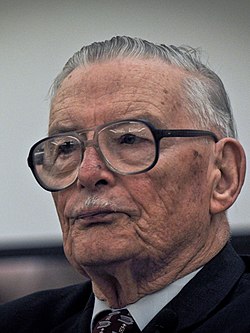 James M. BuchananJames McGill Buchanan JrAffiliated
How the record is sourced and how the score is derived.
The score is formula-derived (Factrail formula v1, version 1.0.0), not an editorial verdict. Read the methodology.
By the Factrail desk · Method: how we source and score · Last reviewed
Dispute a fact on this pageNamed here, or represent someone who is? Request a right of reply.
Linked because the text names them, not because anything was measured.
Built from the indicator links of the drivers this text names. A profile of coverage, not a score.