
Yvette Roudy
Yvette Roudy (née Saldou; 10 April 1929 – 18 August 2026) was a French journalist, translator and Socialist Party politician.
- Facts0
- Drivers0
- Indicators0
Yvette Roudy (née Saldou; 10 April 1929 – 18 August 2026) was a French journalist, translator and Socialist Party politician.
Yvette Roudy (née Saldou; 10 April 1929 – 18 August 2026) was a French journalist, translator and Socialist Party politician. She was minister delegate for women's rights from 22 May 1981 to 21 May 1985, then minister for women's rights from 21 May 1985 to 20 March 1986, in the governments of Pierre Mauroy and Laurent Fabius under President François Mitterrand. She sat in the European Parliament from 1979 to 1981, represented Calvados in the National Assembly from 1986 to 1993 and from 1997 to 2002, and was mayor of Lisieux from 1989 to 2001.
Born in Pessac, in the Gironde, to a metalworker and a household in which her mother died when she was twelve, she was sent to a technical college rather than a lycée, left to work at seventeen as a typist in a Bordeaux fish cannery, and prepared the baccalauréat by correspondence while living in Glasgow with her husband, Pierre Roudy. In Paris she translated Betty Friedan's The Feminine Mystique as La Femme mystifiée (1964), helped run the Mouvement démocratique féminin and its review, and in April 1971 signed the Manifesto of the 343, which called for the legalization of abortion. After the 1965 presidential campaign she joined Mitterrand's Convention des institutions républicaines and, with that current, the Socialist Party at the Épinay congress of June 1971. At the Suresnes congress of 1974 the party set a quota of 10 percent women in its governing bodies, a rule she had pressed for with Marie-Thérèse Eyquem and Colette Audry.
On appointment she said she wanted a ministry that would work toward its own disappearance. The government she served in had abortion reimbursed by social security, so that the procedure legalized in 1975 under Simone Veil would not depend on ability to pay, and adopted the professional-equality law of 13 July 1983. It also gave official status to 8 March as International Women's Rights Day and restarted public information on contraception. A bill to punish sexist injury and incitement, aimed in part at advertising, was abandoned after advertisers and some Socialists opposed it. In November 1982 the Constitutional Council struck down a statutory rule that municipal lists in towns of 3,500 inhabitants or more could include no more than 75 percent of candidates of one sex.
She left office when the 1986 cohabitation began, kept a parliamentary seat in Calvados except for the 1993–1997 legislature, and held the Lisieux mayoralty for twelve years. In June 1996 she was among the signatories of a cross-party appeal for parity in political office, and she later published Lutter toujours (2020). She died on the morning of 18 August 2026 in the medical residence at Cabestany where she had lived for three years; her nephew, Jean-Pierre Saldou, announced the death to Agence France-Presse.
Yvette Saldou, who made her public career under her married name, was born on 10 April 1929 in Pessac, in the Gironde, in a modest working-class family. Her father, Joseph Saldou, was a metalworker who returned from World War I with a disability pension, later became a municipal employee in Pessac, and belonged to the French Section of the Workers' International. Her mother, Jeanne Dicharry, died of cancer in 1941, when Yvette was twelve; she later spoke of “a grey period … black, sad.”
She had a brother and a sister, raised in the same household. The National Assembly’s biographical notice records her memory of her father as “very authoritarian and rather macho,” “patriarchal,” and “very domineering with his children,” and notes that she registered a difference of treatment between herself and her brother. On France Culture in October 2008 she said that inequalities of class, and between boys and girls, had struck her very early, and she described her parents as people who had not left their milieu and who “were among the dominated.” After the certificat d’études he refused to let her go on at school in the way she wanted. In her 1985 memoir À cause d’elles she quoted the family formula “That is not for us”; the 2008 interview gives the same refusal in almost the same words.
He sent her brother to the lycée. After primary school in Pessac he sent her instead to a girls’ technical college in Bordeaux, where she did not thrive; she remembered the shorthand-typing school as “a poorly lit tunnel.” Looking for independence, she dropped those studies. At seventeen she went to work as a shorthand-typist in a fish cannery in Bordeaux and signed up for evening classes. The Assembly notice presents that employment, together with her childhood, as the basis of her later fight for access to culture. She told Le Figaro that she had “perhaps because of him” committed herself to feminism and to socialism, and that the two struggles were for her “inseparable, complementary.”
In 1948 she met Pierre Roudy, then a lycée pupil, who drew her into reading; he later became an agrégé in English, a writer and a man of the theatre. They married in Pessac on 16 July 1951. He obtained a post as an assistant in Glasgow while preparing his licence, and the couple left the same year for Scotland. The Maitron dictionary, drawing on À cause d’elles and on an interview she gave on 17 May 2001, describes a stay of three years. Both that notice and the Assembly biography place the return in 1955, to Bordeaux.
She knew no English on arrival and worked to master the language, which the Assembly biography presents as her preparation for translation. In Glasgow she also followed courses from the Centre national d’enseignement par correspondance in order to prepare the baccalauréat. Back in France in 1955 she passed the examination, at twenty-six. Le Figaro reports that she also took an English diploma and then worked as a translator in Bordeaux and later in Paris. The Maitron adds that she first took a job with an American company in Bordeaux, which transferred to Paris in 1956, and that the couple moved with it.
In Paris, Roudy met Colette Audry, a socialist writer and feminist who directed the "Femme" collection and commissioned her first substantial translation, of Betty Friedan's 1963 book The Feminine Mystique.
Volume 2 of the 1964 Gonthier edition of La Femme mystifiée, Yvette Roudy's French translation of Betty Friedan's The Feminine Mystique.
Gonthier published it in 1964, in Geneva and Paris, as La Femme mystifiée, two volumes of 254 and 216 pages, numbers 8 and 9 of the collection. The title was not literal. A 1966 notice in the journal Population said the French wording gave the book a feminist cast the reviewer did not find in the English title. Roudy later wrote that Friedan's analysis lacked a political dimension, while still being struck by the educated woman who suffered from "living below her capacities." Audry helped with the translation; the two became friends, and the fees let Roudy leave her job for intellectual work.
She translated Eleanor Roosevelt's memoirs as Ma vie (Gonthier, legal deposit 1965) and, with Henriette Étienne, Friedan's Les femmes à la recherche d'une quatrième dimension (Denoël, legal deposit 1969). In 1972 Denoël published Elizabeth Janeway's La Place des femmes dans un monde d'hommes, translated from the American by Roudy and Rosette Coryell. A 1975 Denoël reissue kept Roudy's text of La Femme mystifiée and added a 1973 preface and epilogue translated by Audry and Frédérique Côme.
In 1964, at her own request, Roudy followed Audry into the Mouvement démocratique féminin and met Marie-Thérèse Eyquem, then its president. The finding aid to her papers at the Centre des archives du féminisme in Angers calls the MDF a political club founded by Eyquem and dates Roudy's entry to 1963, a year earlier than the Maitron. The club worked inside the non-communist left. In 1965 she founded its review La Femme du XXe siècle and directed it, with Audry and Eyquem on the editorial committee. Angers holds issues from no. 1 (July 1965) to no. 16 (March 1970); the Maitron carries the run to no. 17 in 1971 and links its end to the new Socialist Party. The paper argued for women's rights, including contraception, then still called "planning familial" and still forbidden. In no. 3 (October–November 1965), François Mitterrand, a presidential candidate, told the review he was a "partisan du planning familial."
That current sought change through parties and law. Beside it, and soon more visible, stood an autonomous women's movement. On 26 August 1970 nine women tried to lay flowers at the Arc de Triomphe for "the wife of the Unknown Soldier," in solidarity with the American women's liberation movement, and were arrested before the wreath could be placed. The Institut national de l'audiovisuel treats the action as the first media coup of the Mouvement de libération des femmes and as its symbolic birth, while noting that separate feminist groups had already been meeting in the late 1960s. Historian Sylvie Chaperon has argued against taking 1970 as a year zero, placing the MLF in a longer line of women's associations rather than a movement sprung from nothing.
On 5 April 1971 Le Nouvel Observateur printed the Manifesto of the 343. The cover listed 343 Frenchwomen who declared that they had had abortions, then illegal and punishable by prison; Roudy signed. She later said Audry, contacted by Simone de Beauvoir, had passed the appeal on by word of mouth, and that something "violent and provocative" was needed because abortion was treated as a "women's affair" and would not otherwise interest male politicians. In an interview for Marie Claire she said she had not herself had an abortion and had signed out of solidarity, as a political act. The next week Charlie Hebdo asked "Qui a engrossé les 343 salopes du manifeste sur l'avortement?", and the insult became a nickname. Roudy recalled that once well-known names were on the list, the authorities did not prosecute the signatories.
During the 1965 presidential campaign, François Mitterrand told La Femme du XXe siècle, the journal of the Mouvement démocratique féminin, that he would take up several of its demands, including legal contraception, greater wage equality and more women in politics. His forcing of Charles de Gaulle into a runoff on 5 December 1965 led Roudy to join his Convention des institutions républicaines.
Her first three candidacies failed. In March 1967, as a CIR candidate in the third constituency of Seine-et-Marne (Meaux), she finished third with 15.78 percent, behind the Gaullist Bertrand Flornoy and the Communist Raymonde Renard, and withdrew. In the June 1968 snap election, still for the CIR and backed by the Fédération de la gauche démocrate et socialiste, she took 6.22 percent in Paris's 31st constituency and was eliminated in the first round. She lost again in the Paris municipal elections of March 1971.
At the Épinay congress in June 1971 she entered the new Parti socialiste with the MDF. She later described the party as still marked by old "Proudhonian" reflexes and hostile to a separate feminist fight. After the 1973 legislative elections the enlarged Socialist group in the National Assembly included no women. La Femme en marge (Flammarion, 1975), with a preface by Mitterrand, argued that feminism and socialism were two struggles against inequality which the party would not join.
With Mitterrand, Marie-Thérèse Eyquem and Colette Audry, she won a minimum quota of 10 percent women in the party's leading bodies at the statutes congress at Suresnes in March 1974; the share was later raised to 15 percent. In 1977 a national secretariat for women's action was created, later retitled for the "luttes des femmes," and she took charge of it at once, organizing a convention on women's rights adopted in 1978.
In March 1978 she stood for the Socialists in the second constituency of the Rhône, in Lyon. She took 23.57 percent (10,823 votes), second to Roger Fenech of the Union pour la démocratie française, and lost the runoff, 47.09 percent (22,284 votes) to 52.91 percent.
For the first direct elections to the European Parliament, on 10 June 1979, she insisted, with Mitterrand and Pierre Mauroy, on a quota of 30 percent women. The Assembly biography records that a quarter of the 81 names on the Socialist list were reserved for women. Led by Mitterrand, the list won 23.53 percent (4,763,026 votes), and Roudy, at 50, gained her first elective mandate; six of the twenty Socialist and Left Radical members returned were women.
She sat from 17 July 1979 to 16 June 1981 in the Socialist Group for the Parti socialiste, on the Committee on the Environment, Public Health and Consumer Protection throughout, and, from 25 October 1979 to 13 April 1980, on the delegation to the EEC–Greece joint parliamentary committee.
Women were about 16 percent of members when the directly elected Parliament opened, under president Simone Veil. On 26 October 1979 a majority created an ad hoc Committee on Women's Rights, to prepare, with the European Commission, a debate on women's lives, especially at work, and on equality between women and men. Roudy was elected chair on 13 December 1979. Of its 35 members, 24 were women; the vice-chairs were Dame Shelagh Roberts (United Kingdom), Vera Squarcialupi (Italy) and Mechthild von Alemann (Federal Republic of Germany).
It sat through the 1980 recess, named Johanna Maij-Weggen rapporteur on women in the Community, joined a Commission survey on workplace discrimination, and held a hearing in Milan on women in medium-sized firms and on social security. In February 1981 a plenary debate, followed by nearly 500 women, adopted a resolution on education, health and maternity, legal status, migrant women and women in developing countries; abortion divided the chamber. A standing committee waited until 1984. Her mandate ended on 16 June 1981.
On 22 May 1981 François Mitterrand appointed Yvette Roudy, in the first government of Pierre Mauroy, ministre déléguée auprès du Premier ministre, chargée des Droits de la femme. The National Assembly's biographical notice keeps that delegated rank until 21 May 1985, then records her as ministre des Droits de la femme until 20 March 1986. She held the delegated post through Mauroy's later cabinets and into the government of Laurent Fabius; the reshuffle of 21 May 1985 dropped the "déléguée" formula. The ministry ended on 20 March 1986, with the opening of cohabitation.
The title broke with the offices "à la condition féminine" under Valéry Giscard d'Estaing. In 1974, with Jacques Chirac as prime minister, Giscard named the journalist Françoise Giroud secrétaire d'État auprès du Premier ministre, to improve women's condition, open responsibility to them and remove discrimination. A Senate note records slender means, twenty-two unpaid regional collaborators, and Giroud's later judgment that the secretariat could not finish a file once another ministry was involved. Near the end of that presidency the brief belonged to Monique Pelletier. Raymond Barre brought her in during 1978 as a junior justice minister; within months she was ministre déléguée auprès du Premier ministre, chargée de la Condition féminine, soon also responsible for the family, and she left after Mitterrand's election. Roudy told Le Monde that the handover with Pelletier lasted a minute and a half, by telephone, and that she found a few books and almost none of the files women had sent her predecessors.
The same interview quoted her decree: she was to promote measures "destinées à faire respecter les droits des femmes dans la société, à faire disparaître toute discrimination à leur égard et à accroître les garanties d'égalité" in political, economic, social and cultural life. She claimed the signature on any such text and the use of other ministries' services, and on 17 June 1981 told the Council of Ministers that the work would succeed only if each colleague treated it as his own; otherwise she would remain marginal, "and women with her." In the Senate that December she said the new name itself marked a break with the scattered measures taken under "condition féminine." Le Figaro later attributed to her, at the appointment, the wish to form "un ministère qui travaille à sa propre disparition," and a Le Monde headline of 27 January 1983 read "Je travaille à la disparition de mon ministère." It ended instead on 20 March 1986, and in April, as a deputy, she questioned the new government on a delegation for the condition féminine and on the institutions the ministry left behind.
The budget was the sharpest administrative change. On 3 December 1981, debating the 1982 finance bill, Roudy told the Senate that credits would rise about tenfold from the old line, from roughly 9 million francs to roughly 94 million. Des femmes en mouvement hebdo, on the Assembly sitting of 17–18 November 1981, reported the finance rapporteur's figures as 9.2 million francs in 1981, inside the prime minister's budget, and 94.8 million for the new year, still on the prime minister's lines. He described a ministry with no services of its own: 17 million francs for 73 posts and 22 regional delegates she had just replaced, and 77.7 million in intervention credits. For 1983 the special rapporteur, Emmanuel Hamel, put the total at 100.8 million francs, up 9.2 percent, of which 20.1 million were subsidies to associations inside a 75.4 million intervention chapter. Roudy said the constraint had cut her plans, that an extra 8 million francs would go mainly to the regions, and that associations would receive 60 million, not the 29 million a deputy had named.
The credits were meant to work through a thin network. By the 1983 debate each metropolitan region had a déléguée régionale aux droits des femmes — 22 in metropolitan France and four overseas, on Roudy's count — relayed by departmental chargées de mission who still had no operating credits of their own; prefectures paid for offices and secretaries. She called the regional delegates the "maîtres d'œuvre" and said she had wanted 74 posts, one for each departmental chargée. Only 22 assistant posts were created. In Paris she placed the services at 53, avenue d'Iéna: a small centre, money for outside actors, and a claim on other departments rather than a bureaucracy of her own.
The immediate circle came from associations, not the prefectoral corps. The Assembly biography names Dominique Jourdain; Jeannette Laot, from the French Democratic Confederation of Labour and a co-president of the Movement for the Freedom of Abortion and Contraception; and Simone Iff, president of the Mouvement français pour le planning familial, charged with the body and contraception. The choice fitted a feminism that entered the state through the Socialist Party. Roudy later said she had never felt close to "les féministes autonomes, celles qui rejetaient la politique et les partis." Subsidies were still a main use of the credits, so the ministry financed parts of the women's movement while staying apart from groups that refused parties. The office was a coordinating post beside the prime minister, raised to full rank only in May 1985 and abolished with the change of majority in March 1986.
On 1 December 1982 Yvette Roudy put before the Council of Ministers a bill for the sickness-insurance schemes to reimburse non-therapeutic voluntary interruption of pregnancy. The note said the law of 17 January 1975, which had authorized abortion on stated conditions, should not be defeated by lack of money. The state would pay by global transfers from the general budget, subject to the ordinary co-payment. That statute, law n° 75-17, associated with Simone Veil, had not brought non-therapeutic abortion into social security.
The bill was declared urgent. The National Assembly passed it at first reading on 10 December 1982. The Senate rejected it on 17 December by a motion refusing to debate the merits, and again on 18 December after a joint committee failed; the Assembly adopted it definitively on 20 December. Law n° 82-1172 of 31 December 1982, in the Journal officiel of 1 January 1983, set the coverage and its financing. Robert Schwint's social-affairs report discussed the co-payment, anonymity and the committee's positions in 1974 and 1979, but the Senate refused to debate the bill. A 2020 Assembly report described the 1982 scheme as reimbursement at 70 percent. Full cover of the abortion itself came later, by the social-security financing law n° 2012-1404 of 17 December 2012, applied by decree n° 2013-248 of 25 March 2013; associated examinations and consultations were fully covered from 1 April 2016.
Law n° 83-635 of 13 July 1983 amended the labour code and the penal code on equality between women and men at work. Article L. 123-1, as the Assembly restored it, forbade, unless sex was a determining condition of the job, any reference to sex or family situation in hiring advertisements and any decision on hiring, dismissal, pay, training, classification or promotion taken on those grounds. André Vallini's report of 1 March 2000, for the Assembly delegation for women's rights on Catherine Génisson's bill, described it as going beyond rules on health and family situation and as applying Convention No. 111 of the International Labour Organization (25 June 1958) and European Directive 76/207 of 1976.
Each year the employer had to give the works council, or the personnel delegates, a written comparison of women's and men's employment and training, and send it to the labour inspector. Firms of at least 300 employees were to do so in the first quarter of 1984, and firms of at least 50 during 1985. Catch-up measures could be negotiated as an equality plan; if there was no agreement, the employer could apply one after consulting representatives, unless the departmental labour director objected. Decree n° 84-69 of 30 January 1984 created state "contrats d'égalité professionnelle", which could also use European Social Fund money, for exemplary training and promotion.
On pay, article L. 140-8 required the employer to produce elements justifying an alleged inequality; the judge decided on both sides' evidence, and any remaining doubt benefited the employee. On 21 June 1983 the Senate deleted that last sentence. Roudy opposed the deletion and called the sentence the core of a shift in the burden of proof. It stayed in the promulgated text until 17 November 2001. The 2000 report still found the effects weak: a labour-ministry study for March 1998 put the average pay gap above 25 percent against women, and only thirty-four equality plans had been negotiated since 1983, twenty-two of them eligible for state aid. Law n° 2001-397 of 9 May 2001, from Génisson's bill, made annual negotiation on equality objectives compulsory in firms already bound to bargain each year, and branch negotiation at least every three years.
A municipal-election bill, referred to the Constitutional Council on 23 October 1982 by more than sixty deputies, would have forbidden closed lists in communes of 3,500 inhabitants or more to be more than 75 percent of one sex. Decision n° 82-146 DC of 18 November 1982, published the next day, held that article 3 of the Constitution and article 6 of the Declaration of the Rights of Man and of the Citizen open the vote and eligibility on the same terms, and forbid dividing candidates by category. The quota was unconstitutional; two-round lists and the majority premium were not. The statute was promulgated without the quota as law n° 82-974 of 19 November 1982.
On 9 March 1983 the cabinet adopted Roudy's bill against discrimination based on sex. Le Monde reported that, like the 1972 law against racism, it would have amended the penal code and the press law of 29 July 1881, punished provocation to discrimination, hatred or violence and sex-based insult or defamation, and let qualified associations sue, including over advertising. Advertisers and parts of the press called the draft censorship. At a meeting on 21 June 1983 Roudy said judges, not prior control, would apply it. It was never enacted. On 17 June 1981 the cabinet had already decided to legislate against sexism in culture, information and education and to let associations sue over discrimination and violence, and had called for a contraception campaign, hospital application of the contraception and abortion laws, more women's-rights information centres, and, by early 1982, trained police reception for women victims of violence. On 10 November 1981 she told the cabinet the campaign would use television, departmental relays and brochures. On 8 March 1982, recorded as International Women's Day, her article "L'enjeu du 8 mars" in Le Monde endorsed the day and denounced employment discrimination, physical violence and ignorance of rights.
Decree n° 84-153 of 29 February 1984 created, under the minister for women's rights, a terminology commission on the feminization of titles and functions and on the vocabulary of women's activities. Benoîte Groult chaired it. On 14 June 1984 the Académie française unanimously adopted a declaration drafted by Georges Dumézil and Claude Lévi-Strauss: grammatical gender was not sex, the unmarked masculine already covered both, and deliberate change risked disturbing usage. Prime Minister Laurent Fabius's circular of 11 March 1986 asked administrations to use the feminized names of occupations, functions, ranks and titles drawn up by the commission.
Yvette Roudy sat in the National Assembly for Calvados in the Socialist group in the Eighth legislature (2 April 1986–14 May 1988), the Ninth (13 June 1988–1 April 1993) and the Eleventh (1 June 1997–18 June 2002). On 16 March 1986, under departmental proportional representation, she was second on the Socialist list led by Louis Mexandeau. The list took 35.05 percent of the vote (105,488 ballots) and three of six seats, behind a joint list of the Rally for the Republic and the Union for French Democracy on 46.48 percent.
After François Mitterrand dissolved the Assembly, the June 1988 election was again fought in single-member constituencies. In the third, centred on Lisieux, Roudy polled 39.79 percent (17,430 votes), behind the outgoing RPR deputy André Fanton (42.13 percent), then defeated him on 12 June by 51.52 percent (25,171 votes) to 48.48 percent. She sat on the Cultural, Family and Social Affairs Committee in 1986–1988 and was its vice-president from 28 June 1988 to 1 April 1993.
In March 1993 Fanton led with 36.57 percent to her 23.10 percent (10,269 votes) and won the runoff, 57.21 percent to 42.79 percent (19,511 votes). She regained the seat in May–June 1997, first with 32.87 percent (14,857 votes) to his 28.12 percent, then with 55.26 percent (26,790) to 44.74 percent; the mandate ran from 1 June 1997 to 18 June 2002. In that term she sat on the Foreign Affairs Committee and, from 13 June 1997 to 18 June 2002, was a secretary of the Assembly, a Bureau office renewed each session.
In opposition under Jacques Chirac, Roudy argued that the Ministry of Women's Rights had been broken up. In April 1986 she questioned the government on a delegation for the status of women; in December 1987 she tabled a bill to repeal certain criminal provisions on abortion; and in May 1987 she spoke on the length and organization of working time. From 4 June 1986 to 14 May 1988 she chaired the Assembly study group on sexism.
In the Ninth legislature she tabled a bill in December 1990 to promote professional equality and, in October 1992, one to remove the criminal penalty for a self-induced abortion. An amendment she moved was adopted in May 1989 to strengthen professional equality in a bill on economic redundancy, and another in June 1989 required that aligning men's and women's conditions respect rights women already held. In November 1990 she was rapporteur for the government bill on employment, in-company training and the organization of working time, and in December 1992 she wrote the committee's information report on working-time arrangements.
On bioethics, she joined a joint information mission in October 1990 and, from 29 April 1992 to 1 April 1993, presided over the special committee on the three government bills, speaking in the November 1992 debates on the human body and on medically assisted procreation. She chaired the study group on women's rights from 11 October 1988 to 1 April 1993, and in December 1990 questioned the government on anti-abortion leagues.
Under Lionel Jospin she spoke in the 1998 budget on parity in the civil service and on professional equality, and in June 1998 two amendments she moved on parity of candidates were adopted in the bill on regional elections. She supported the constitutional bill on equality between women and men (December 1998–March 1999) and, in 2000, the examination of the bills on equal access to electoral office and on professional equality. In November 2000 and April 2001 she defended the government bill on abortion and contraception, and in March 1999 she spoke for the civil solidarity pact. From 9 November 1999 she was vice-president of the delegation for women's rights and equal opportunities. For the revision of the bioethics laws she sat on the preparatory mission from 29 March 2000 to 27 June 2001 and on the special committee from 28 June 2001, and in January 2002 she produced an information report on the bill.
In the municipal election of March 1989, Yvette Roudy won her first local mandate as mayor of Lisieux, in the department of Calvados, with 54.08 percent of the vote and 27 council seats. The National Assembly biography records that the result took the town hall from the right, in place there since 1945, and made her the city's first woman mayor.
She combined the mayoralty with the Calvados seat won in 1988, except between her 1993 legislative defeat and her return to the Assembly in 1997. After that defeat she said she would concentrate on her family, on Lisieux, on writing and on associative work, and she was re-elected mayor in June 1995. Le Monde's table for 1995 gives her united-left list 5,515 votes (52.79 percent) against 4,932 (47.21 percent) for Michel Triqueneaux's UDF-PR list; abstention was 28.43 percent among 15,188 registered voters.
The aquatic centre Le Nautile opened in 1992 with two large pools and a long slide. André Lucas, her deputy mayor for culture in the second term, called it the main project of the first mandate: some residents wanted an Olympic pool for competitions, while Roudy preferred a 25-metre leisure basin "for social reasons." He put annual entries at as many as 200,000.
From 1990 she pressed for a department of the Institut universitaire de technologie of the University of Caen. Renovation of the former Collège Michelet was dropped as dearer than new building, and the first 28 students in Techniques de commercialisation began on 20 September 1993 in makeshift rooms at the Tour verte, in Hauteville. They moved to Michelet on 5 October 1995, in a scheme Ouest-France costed at 12.5 million francs, of which Lisieux paid 1.38 million.
The council voted in June 1994 to pursue a médiathèque. A scheme to convert the deconsecrated church of Saint-Jacques, chosen in 1995, was abandoned: a report for the École nationale supérieure des sciences de l'information et des bibliothèques put the refit at 37 million francs and cited the constraints of a listed building. Pierre Dubesset and Dominique Lyon then designed a new building on the Place de la République, on the former square André-Malraux, to a programme of 22 million francs. A 2004 study from the same school found that the cost, estimated at 4.4 million euros, reached 5.7 million, including 2.2 million in subsidies, and that cost and site had both drawn local criticism. The library opened on 21 June 2002, more than a year after Roudy left office.
A bypass came into service at the end of 1999, taking lorries off the route nationale 13 through the centre; it later carried about 15,000 vehicles a day. In 1989 the town also gained a Centre d'information sur les droits des femmes et des familles, which Ouest-France attributes to Roudy.
She lost a third term in March 2001. At the first round her Socialist list took 35.68 percent (3,056 votes), behind Bernard Aubril, a school director heading a united right list, on 39.00 percent (3,341). Philippe Vacher, her former first deputy and parliamentary substitute, led a dissident left list on 17.99 percent (1,541), and a Green list took 7.33 percent. Vacher stayed in at the runoff. Aubril, classed by Le Monde as divers droite and described in the Assembly biography as the UDF candidate, won 49.99 percent (4,746 votes) and 27 seats, to 39.93 percent and seven seats for Roudy and 10.08 percent and one seat for Vacher. She told Le Monde she had dropped Vacher in 1998 because his methods of management were not hers; he had self-published Un homme de gauche face à la tsarine de Lisieux, and she blamed Louis Mexandeau and the split on the left for what she called a disaster. Aubril remained mayor until July 2020.
Roudy presided over the Assemblée des femmes, formed in 1992 to campaign for parity in political decision-making. In 1995 she founded the Institut politique européen de formation des femmes, to train French-speaking women in institutions and in party organization; it held conferences and colloquia.
In the autumn of 1993 the Cahiers du féminisme described a parity movement opened by elected women of the Socialist Party, among them Roudy, with support from the Greens, some feminists of the “difference” current, and figures of the right such as Michèle Barzach. The demand was a one-article organic law: elected assemblies should contain as many women as men. That formula appeared on 10 November 1993 in Le Monde as the Manifesto of the 577, at the initiative of a women’s network for parity. It noted that women, voters since 1945, were only about 5 percent of Parliament, and that the first signatories were 289 women and 288 men—577 being the number of deputies in the National Assembly.
Le Maitron states that Roudy initiated meetings of women who had held high office, producing the 6 June 1996 issue of L’Express and a manifesto signed by ten elected women, five from the left and five from the right. France 2’s evening news that day presented the text as a call for parity, with interviews of Simone Veil, Édith Cresson and Barzach. The Senate’s reprint names Barzach, Frédérique Bredin, Cresson, Hélène Gisserot, Catherine Lalumière, Véronique Neiertz, Monique Pelletier, Roudy, Catherine Tasca and Veil. They wrote that only 5 percent of senators or mayors, and 6 percent of deputies or general councillors, were women, and proposed Nordic-style quotas, parity in party funding and state appointments, an anti-sexism law, and, if needed, a constitutional amendment or a referendum.
Those texts were one strand of a wider campaign, not the later statutes alone. The Constitutional Council had held, on 18 November 1982 and 14 January 1999, that the Constitution did not allow a law to favour women’s eligibility. Constitutional law no. 99-569 of 8 July 1999, voted by Congress on 28 June, provided that the law favours equal access of women and men to electoral mandates and elective offices, and that parties contribute to that principle. Law no. 2000-493 of 6 June 2000 required near-equal numbers of each sex on list ballots—strict alternation in one round, parity by groups of six in two—and cut public funding where legislative slates were unequal by sex. On 30 May 2000 the Council upheld that scheme and struck some additions.
The Maitron lists À cause d’elles (Albin Michel, 1985) and Mais de quoi ont-ils peur? Un vent de misogynie souffle sur la politique (Albin Michel, 1995) among her principal books. In March 2020 Robert Laffont published Lutter toujours, a 126-page essay written at 90, in which she called it a duty to tell how a handful of feminists had “made the walls tremble,” and also how they had failed, “because nothing is ever won.”
A decree of 13 July 1993 named her a knight of the Legion of Honour for 45 years of social activity and elective office. Raised later to officer, she received the insignia on 26 November 2013 from President François Hollande at the Élysée Palace; he called her a “militante du féminisme” and linked her to “a generation of women” who had fought for their rights. The Maitron also records that, after the legislative defeat of June 1968, she entered Freemasonry in the Grande Loge féminine de France. In March 2018 she told Sud Ouest that the speech which followed the Harvey Weinstein case, the moment associated with #MeToo, was encouraging: “Women speak, but above all, now, they are heard.”
In 2001 she deposited personal papers at the Centre des archives du féminisme of the University of Angers (fonds 5 AF). The National Assembly describes them as 26 linear metres for 1965–2002; the centre measured about 18 linear metres on arrival in 2001, 8.50 of paper after weeding, plus a 9-linear-metre supplement in 2003. Papers from her office as deputy and mayor of Lisieux went in 2002 to the archives of Calvados, first as 2002 JP 529 (18.2 linear metres, 1988–2002) and later as fonds 154J, entry 2002-529 (16 linear metres, 1986–2002).
Yvette Roudy died on the morning of 18 August 2026, aged 97, in the medicalized residence at Cabestany, in the Pyrénées-Orientales, where she had lived for about three years. Her nephew, Jean-Pierre Saldou, gave the news to Agence France-Presse; the National Assembly biographical file records the same date and place. The Assemblée des femmes, which she had founded in 1992, also announced the death.
The funeral was held on the morning of Wednesday 26 August 2026 at Montparnasse Cemetery in Paris. At the same hour, about forty people gathered in the courtyard of Lisieux town hall, in Calvados, before a portrait of the former mayor. Deputy mayor Vincent Othon received them; mayor Sébastien Leclerc was absent.
Emmanuel Macron called her a “woman of conviction and of conquest” who had spent her life “making equality between women and men an effective right,” and said that her “untiring capacity for indignation” would continue to inspire those who refused to leave equality unfinished. The Socialist Party described the gains associated with her ministry as essential but insufficient, borrowing the title of her last book, Lutter toujours. Former president François Hollande saluted a “feminist, socialist, woman of convictions and of struggles.” The minister for equality, Aurore Bergé, said the legacy created an obligation; Martine Aubry recalled an “untiring militant.”
The measure most often attached to her name in the 2026 notices was the 1982 statute providing for reimbursement of abortion by social security. The Élysée presented it as a way of keeping the freedom established by the Simone Veil law from remaining available only to women who could pay.
The law of 13 July 1983 on professional equality, which bears her name, replaced a logic of special protection with a general ban on sex discrimination in hiring, pay, promotion and training, and added a comparative situation report, optional equality plans and state aid for exemplary plans. A Senate information report in 2000 called the practical record “mediocre”: only thirty-four company plans had been negotiated, twenty-two with public money, and barely half the firms concerned had produced the comparative report. In the high unemployment of the 1980s and 1990s, the social partners had rarely treated equality as a priority. The bill then before Parliament, associated with Catherine Génisson, was drawn to make negotiation on equality compulsory because those instruments had been little used.
An anti-sexism bill, approved by the Council of Ministers in March 1983 and aimed especially at images of women in advertising, did not become law. Advertisers argued that it would ask judges to enforce morality, and the text was contested inside the Socialist ranks. Roudy later wrote that “the sky of the machos fell on my head.”
On candidacies, the Constitutional Council, in decision 82-146 DC of 18 November 1982, struck down a rule that municipal lists in communes of 3,500 inhabitants or more could not be more than 75 percent of one sex. It held that article 3 of the Constitution and article 6 of the 1789 Declaration open the vote and eligibility on identical terms and bar any division of voters or candidates into categories, so a distinction by sex on lists was unconstitutional. That holding stood until the constitutional law of 8 July 1999 added to article 3 that “The law shall promote equal access of women and men to electoral mandates and elective offices,” and required parties, under article 4, to contribute to the principle on terms set by statute. The 1982 censure is the obstacle that revision removed: abortion reimbursement and the 1983 statute were enacted, while the anti-sexism bill and the municipal quota were not.
Ranked by shared high-impact facts, then explicit ties, then shared drivers.
 Jacques ChiracJacques Chirac was mayor of Paris and then president of…Affiliated
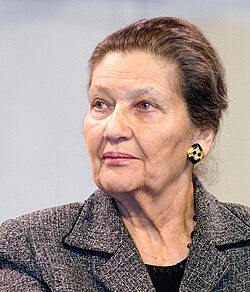 Simone VeilSimone Veil (née JacobAffiliated
 Aurore BergéAurore Bergé (born 13 November 1986) is a French…Affiliated
 François MitterrandFrançois Maurice Marie Mitterrand (26 October 1916Affiliated
 Raymond BarreRaymond Octave Joseph Barre (12 April 1924Affiliated
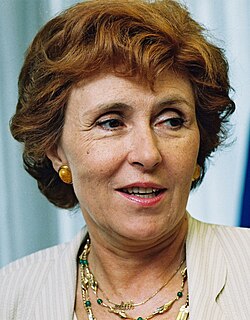 Édith CressonÉdith Cresson (born 27 January 1934) is a French…Affiliated
How the record is sourced and how the score is derived.
The score is formula-derived (Factrail formula v1, version 1.0.0), not an editorial verdict. Read the methodology.
By the Factrail desk · Method: how we source and score · Last reviewed
Dispute a fact on this pageNamed here, or represent someone who is? Request a right of reply.
People and organizations as listed in the Related section of this page; facts, drivers and the pages that name it as listed in the blocks here. Counts, not a rating.