Flávio Bolsonaro Put the Dynasty Back in Front — Brazil’s Runoff Is Now an Accountability Test
TL;DR
A first-round lead turns the Bolsonaro succession from campaign speculation into a concrete question: whether electoral power can become a route back around the legal reckoning that followed 8 January. With virtually all votes counted, Flávio Bolsonaro finished first on about 47.0%, while President Luiz Inácio Lula da Silva took about 45.2%.
By the Factrail desk · Method: how we source and score · Last reviewed
Article
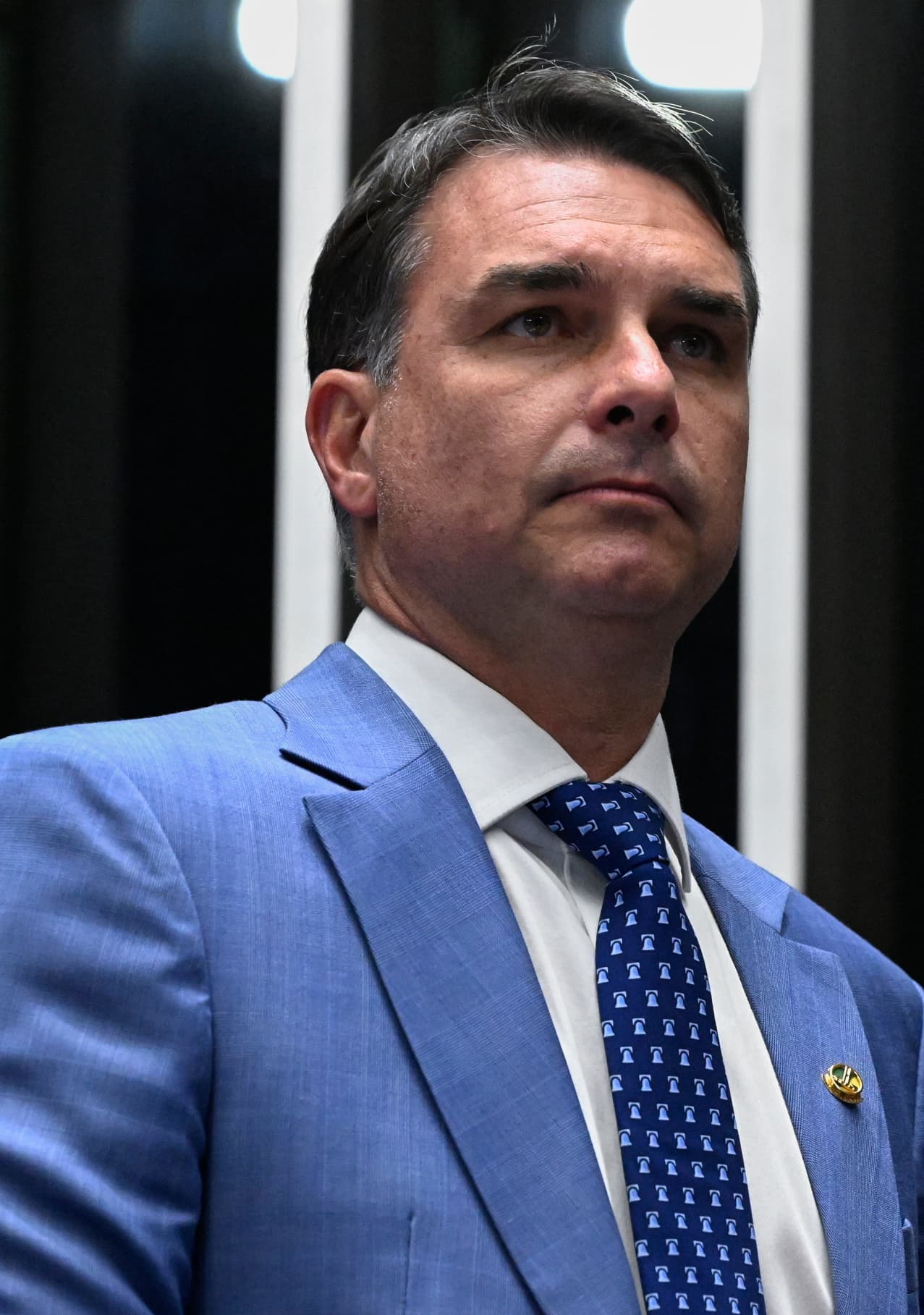
Brazil’s first round did something more consequential than produce a close election. It converted the Bolsonaro succession from a family strategy into a plausible route back to presidential power. With virtually all votes counted, Flávio Bolsonaro finished first on about 47.0%, while President Luiz Inácio Lula da Silva took about 45.2%. The two advance to a 25 October runoff. Official reporting put turnout at roughly 78.9%. TSE (opens in a new tab)
That result changes the accountability question. The relevant comparison is no longer simply Lula versus a conservative challenger. Flávio is the political heir of Jair Bolsonaro (opens in a new tab), whose own legal fate is inseparable from Brazil’s post-8 January struggle over whether an attempted reversal of an election can carry durable consequences. Bolsonaro is serving a prison sentence after his conviction over an attempted coup. His endorsement of his son therefore makes the runoff a test of whether a political dynasty can recover executive authority even while its patriarch remains under punishment for trying to subvert the constitutional order. Reuters (opens in a new tab)
That does not mean a Flávio presidency should be treated as legally identical to his father’s conduct. It means voters are choosing within an unusually direct chain of political succession. The son’s mandate would inevitably affect the political environment around his father, around 8 January and around future efforts to revisit penalties imposed on Bolsonaro-aligned defendants. Any promise of amnesty, institutional accommodation or pressure on prosecutors and courts therefore belongs in the accountability ledger, not in a separate box labelled “family politics.”
Lula’s own responsibility is different but real. Lula entered the count expecting to lead. Instead, the incumbent finished behind a candidate carrying the Bolsonaro name while Brazil continues to argue over corruption, public security, living costs and institutional trust. A narrow first-round deficit does not establish why individual voters moved, but it does demonstrate a political misread: incumbency and anti-Bolsonaro mobilisation were not enough to prevent the dynasty from taking first place. Agência Brasil (opens in a new tab)
The welfare stakes are broader than the fate of two political families. Executive control affects appointments, policing priorities, federal relations, fiscal policy and the institutional climate in which courts and investigators operate. Democracy is not protected merely because a vote takes place; it is protected when losing an election does not become grounds for overturning it and when winning a later election does not erase accountability for earlier conduct.
The runoff therefore deserves a stricter question than “who won the night?” Flávio Bolsonaro won the first-round plurality. What Brazil decides next is whether that result becomes a normal alternation of power inside constitutional rules, or a political bridge by which the unresolved battles of the Bolsonaro presidency return to the executive branch.
Evidence
The sources this article cites, claim-bearing material first.
- Presidency of Brazil · Planalto — Dirceu resignation and Mensalão-period government communications, June 2005
More analysis
Ranked by shared facts, drivers and people — never by publication date alone.
Articles10
- Brazil Votes on What Comes After a Coup AttemptAlso covers Luiz Inácio Lula da Silva · 4 October 2026
- Food Security in the Global South after the Pandemic and the War in UkraineAlso covers Luiz Inácio Lula da Silva · 3 August 2026
- How to Measure Human Rights: From Individual Cases to Comparable IndicatorsAlso covers Luiz Inácio Lula da Silva · 3 August 2026
- What Makes an Election Legitimate: Procedure, Trust, and Acceptance of the ResultAlso covers Luiz Inácio Lula da Silva · 3 August 2026