Brexit Back on the Ballot: Labour's Trade Test
By the Factrail desk · Method: how we source and score · Last reviewed
TL;DR
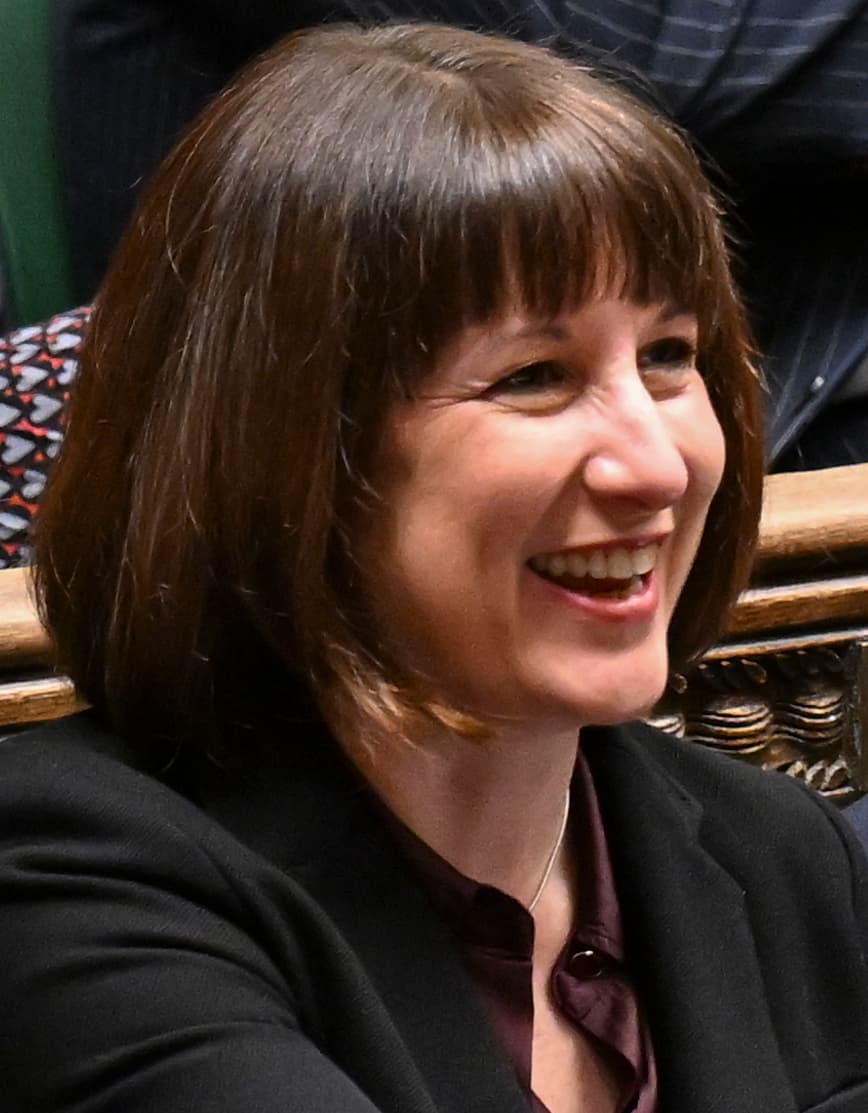
Rachel Reeves has made the economic cost of Brexit an explicit political challenge to Labour rather than a technical appendix to a trade negotiation. In her October 31 intervention, the former chancellor endorsed a long-term future for Britain inside the European Union and welcomed Prime Minister Andy Burnham's willingness to discuss the options.
Key graph impact
The article explains graph entities; the causal edges belong to the facts and drivers it links to.
- ArticleBrexit Back on the Ballot: Labour's Trade Test
- mentionsDriverCost-of-Living Pressure
- weakensIndicators (4)Unemployment, total (% of total labor force) (modeled ILO estimate)
- ArticleBrexit Back on the Ballot: Labour's Trade Test
- mentionsDriverFiscal-Policy Sustainability
- Better
Weakens · 38% impact strength
Observed
4.79% of total labor force · 1.3 above the normal line (2025)
Worse than normal8 readings, 2018–2025: fell from 5.76% of total labor force to 4.79% of total labor force.
Above normal = worse
- Better
Weakens · 31% impact strength
Observed
39.7% · 9.35 above the normal line (2024)
Worse than normal7 readings, 2018–2024: rose from 35.8% to 39.7%.
Above normal = worse
Strengthens · 30% impact strength
Observed
11% of primary-school-age children · 11 above the normal line (2023)
Worse than normalAbove normal = worse · Lag ~12 mo
Strengthens · 30% impact strength
Observed
37.4 deaths per 1,000 live births · 12.4 above the normal line (Dec 2024)
Worse than normal7 readings, 2018–2024: fell from 40 deaths per 1,000 live births to 37.4 deaths per 1,000 live births.
Above normal = worse · Lag ~12 mo
Article
The choice returns
Rachel Reeves has made the economic cost of Brexit an explicit political challenge to Labour rather than a technical appendix to a trade negotiation. In her October 31 intervention, the former chancellor endorsed a long-term future for Britain inside the European Union and welcomed Prime Minister Andy Burnham's willingness to discuss the options. That does not amount to an application for membership, a referendum date or a commitment from the government. The distinction is the heart of the story. A party can admit that trade barriers reduce national income without agreeing on how much sovereignty, migration flexibility and political capital it is willing to exchange to remove them. The immediate beneficiary of a serious debate is not Brussels but any British exporter whose business faces recurring paperwork, duplicated standards and slower access to its largest nearby market. The immediate political winner is less certain. Reform UK can turn talk of re-entry into a campaign about immigration and democratic consent, while Labour can present the same argument as a plan to restore growth and tax receipts. The people paying for political indecision are firms delaying investment and households relying on weak productivity to fund public services.
Three late-October events formed the opening
First, on October 26 Burnham told ITV he would not reverse Labour's manifesto limits within this Parliament, while saying the existing Brexit settlement was not adequate. Second, on October 30 Business Secretary Jonathan Reynolds warned that closer alignment required understanding the EU's future direction, introducing a cabinet-level counterweight to enthusiasm for rejoining. Third, Reeves intervened on October 31 and explicitly tied Britain's economic prospects to membership, while arguing that advocates had to demonstrate tangible benefits. These are distinct decisions and statements by separate political actors, not three reports of the same policy change. They expose the fault line between discussing a future destination and negotiating useful near-term agreements. The November 20 UK-EU meeting provides the first practical checkpoint: youth mobility, sanitary rules, energy cooperation and defence participation can move without an accession process. The political pressure increases precisely because voters can compare incremental changes with a fuller integration offer rather than being told that only two rigid choices exist.
The real economic baseline
The Office for Budget Responsibility (opens in a new tab) estimates that the post-Brexit trading relationship will leave long-run UK productivity around four per cent below a counterfactual in which Britain remained in the EU. Its established assumption is that imports and exports each end up around fifteen per cent below that counterfactual. These are modelling judgements, not observed measurements proving that today's GDP is exactly four per cent lower. They describe lost potential relative to an alternative path, not a prediction that British output will contract by four per cent next year. Lower trade intensity can mean less competition, weaker diffusion of technical methods, smaller markets for specialised producers and lower investment incentives. In a sluggish fiscal environment even a fraction of the assumed productivity gap matters: weaker earnings constrain income-tax receipts, less profitable investment restrains business taxes and slower growth raises the share of public spending required for debt service. Re-entry would not immediately reverse these costs. Businesses would need certainty about schedules, regulations, transition rules and customs procedures before committing capital.
Labour's split is about timing and mandates
Burnham's position contains a potentially powerful electoral compromise: no move inside the present Parliament, a public debate now, and a later mandate if voters choose deeper ties. That reduces the charge of a secret policy reversal but creates a new problem for his party. The government cannot indefinitely sell a technical reset while senior figures argue that membership is the economically rational end point. Reeves, whose prior involvement in the 2024 Labour manifesto gave weight to its limits, now highlights the difference between an electoral promise made in one cycle and the choices required by a later economic reality. Reynolds's caution is not necessarily anti-European; it asks whether a changed EU's regulatory, fiscal and industrial direction is compatible with Britain's objectives. Labour MPs in manufacturing areas may favour lower friction, while MPs in seats vulnerable to Reform may fear a new migration argument. That distribution of incentives makes a clean party line difficult. Politicians can support individual market improvements while rejecting membership, or support membership in principle while opposing a rushed vote.
Reform's opportunity and its limits
Nigel Farage and Reform UK have a straightforward campaign frame: renewed EU membership would overturn a major constitutional choice and restore obligations that voters once rejected. It is a simple message that does not require a detailed tariff schedule to resonate. Yet the economic counterargument also has political force in towns that lost export customers, skilled jobs or supply-chain investment. Reform gains if Labour talks about re-entry without defining border controls, fiscal contributions or who would decide. Labour gains if it can move the discussion from symbolic membership to verifiable changes in waiting times, export orders, investment and prices. Neither party can credibly guarantee that a referendum would reproduce the result it wants. Polling needs to separate support for closer trade relations, single-market participation and full membership; a yes to one cannot simply be counted as a yes to all. Any survey result also needs question wording, field dates and turnout assumptions before it can be interpreted as an electoral instruction.
Sterling is a growth story, not a referendum ticker
The first market channel is sterling. In principle, a credible path to lower trade barriers can improve expected long-run productivity and attract inward investment, favouring the pound. But there are offsetting forces. An intense constitutional argument can raise near-term uncertainty; a weaker government might find it harder to pass budgets; global dollar strength can overwhelm a UK-specific trade story. Therefore an isolated rise or fall in GBP/USD after a speech would not establish causation. Traders should watch sterling against the euro as well as the dollar, compare it with broader risk sentiment and look for changes in business investment plans. A membership application would require negotiations and political decisions outside British control. Firms should not price immediate tariff-free arrangements into contracts merely because a former minister gave a speech. The credible market question is whether policy reduces costs within the forecast horizon, not whether a headline contains the word Europe.
Gilts and the fiscal arithmetic
British government bond yields reflect many things: Bank of England (opens in a new tab) policy expectations, inflation, the supply of debt, international bond markets and confidence in fiscal governance. Stronger expected productivity may improve the debt-to-GDP path and reduce risk premia over time, but an expensive accession transition or politically unstable budget could have the opposite effect. The relevant indicator is not simply the yield on a ten-year gilt. Analysts should examine its movement relative to comparable German and US debt, inflation-linked yields, auction demand and the pound. A sustained fall in a UK-specific premium would be more meaningful than a one-day move. The fiscal sustainability driver (opens in a new tab) makes the link explicit: trade policy affects investment, investment affects the tax base, and the tax base shapes debt capacity. It is a chain of plausible economic mechanisms, not proof that a single politician can move bond yields through one remark.
Trade volumes are the decisive test
Trade data should be the centre of the rejoin argument. The UK's exports to the EU, imports from the bloc, business services flows and goods volumes each tell a different story. Nominal trade values fluctuate with inflation and exchange rates; a higher pound value for imports is not necessarily more real merchandise crossing the Channel. Services have performed differently from goods, and the growth of international financial and professional services complicates simplistic claims about the overall Brexit effect. Small manufacturers are especially sensitive to fixed compliance costs because a form or certification costs more per unit when shipments are small. A future deal on food inspections could offer concrete relief to agriculture and supermarkets even without single-market membership. An agreement on professional qualifications could matter greatly for particular firms while barely moving an aggregate monthly export series. The important question is which barriers are removed and whether affected industries subsequently show higher volumes, more new exporters and improved productivity.
The EU has its own bargaining position
Britain cannot unilaterally purchase the economic benefits of membership without assuming membership obligations. The EU's existing members must protect the integrity of their common market and will expect consistent commitments on rules, enforcement, contributions and movement of people. Defence cooperation, including possible participation in the SAFE programme, follows a different institutional route from accession and may advance faster. The forthcoming summit can generate useful commitments, but declarations about partnership do not equal completed implementation. A rational British strategy should distinguish the steps that need only reciprocal administrative changes from those requiring formal treaties or domestic electoral consent. This is where Ursula von der Leyen (opens in a new tab) and EU institutions matter: Brussels has leverage over the terms offered, but British politicians still have to decide which domestic costs they are willing to defend. Success cannot be defined solely by a warmer photograph at a summit.
Who benefits and who pays
Potential economic winners include exporters that handle frequent small consignments, manufacturers with integrated European supply chains, universities and research bodies, younger workers seeking reciprocal opportunities, and UK defence suppliers if joint procurement access expands. Some consumers could benefit from lower import frictions, although competition, distribution margins and exchange rates determine how much reaches retail prices. The costs are not imaginary. Firms that adapted to the current regime may have to alter processes again. Immigration arrangements raise questions of public services, housing and labour competition that deserve quantified answers rather than slogans. Taxpayers may face budget contributions or implementation expenses under deeper integration. Businesses supplying compliance services under the present system could lose demand. The democratic cost of a change made without a clear mandate could exceed any near-term economic gain by destroying public trust. These costs and benefits are distributed unevenly, which explains why aggregate GDP estimates alone will not settle the argument.
The strongest objection
The strongest case against rushing back toward the EU is not that Brexit has no costs; it is that economic forecasts do not automatically settle constitutional trade-offs. The OBR's four per cent comparison is a baseline modelling assumption assembled from research, not a universally accepted empirical measurement. Some economists contest how models estimate trade and productivity effects. British policy also has potential gains from regulatory freedom and bilateral deals, although such gains must be measured against actual implementation rather than campaign promises. EU conditions in 2026 differ from those in 2016, so a hypothetical future accession deal cannot be treated as a guaranteed restoration of the old arrangement. A responsible rejoin campaign must disclose realistic transition dates, fiscal contributions, mobility rights and the role of Parliament. A responsible anti-rejoin campaign must show the opportunity cost of remaining outside. Both sides should be made to use the same counterfactual when making numerical claims.
What it moves
UK GDP: the medium-term direction is potentially upward relative to the current-policy baseline only if a credible agreement lowers barriers; the OBR's long-run four per cent gap is not an instant recoverable prize. Trade volumes: stronger EU-facing goods movement and more regular small-business exports are the measurable upside; watch real volumes, not only nominal pounds. Gilt yields: a persistent UK-specific risk premium could move downward with stronger credible growth and fiscal planning, but political turmoil could drive it upward instead. Sterling: medium-term upside is conditional on improved investment prospects, while constitutional uncertainty may bring two-way volatility. Polling: support for membership, single-market access and youth mobility may diverge sharply; watch each as a separate series. Household prices: reduced trade friction may exert modest downward pressure in affected categories, but savings need verification at shop level. The cost-of-living driver (opens in a new tab) is therefore a test, not a slogan.
What happens next
The November 20 summit is a deadline for practical negotiation rather than a referendum launch. A useful outcome would name the commitments, implementation timetables and institutions responsible for them. Labour's next manifesto process is the more consequential arena for any proposal to rejoin or enter the single market. The public should watch whether ministers publish fiscal and trade impact assessments, whether exporters report reduced administrative burdens, and whether polling remains robust when respondents are asked about mobility and budget obligations. Markets should test for lasting shifts in relative gilt yields and euro-pound rates over weeks, not minutes. Reform should be pressed to say how it would compensate sectors losing trade, just as Labour should be pressed to say which EU rules it would accept. Britain's economic choices can be debated without pretending that its constitutional future has already been decided.
Sources
Sunday Times: Britain's Future Is in the EU, Says Rachel Reeves (opens in a new tab); Independent: Reeves Calls for UK to Rejoin (opens in a new tab); ITV: Burnham Rules Out Rejoining in This Parliament (opens in a new tab); Guardian: Business Secretary on EU Direction (opens in a new tab); OBR: Brexit Analysis (opens in a new tab); House of Commons Library: Brexit Referendum Impact (opens in a new tab); UK Parliament: Rejoin Petition Debate (opens in a new tab); Treasury Answer: Brexit Trade and GDP Assumptions (opens in a new tab); OBR: How Brexit Trade Assumptions Are Performing (opens in a new tab)
Evidence
The sources this article cites, claim-bearing material first.
More analysis
Ranked by shared facts, drivers and people — never by publication date alone.
Articles12
- Twenty French Banana Producers Received €43m in EU Aid. Brussels Proposes Rewriting the €653m Island Farm SchemeShares the driver: Fiscal-Policy Sustainability · 1 November 2026
- EU Allocated €1.4bn for Cybersecurity. An Airport Ransomware Attack Triggered No Cross-Border Alert.Shares the driver: Fiscal-Policy Sustainability · 1 November 2026
- Noem's DHS Canceled $887m in Migrant Shelter Grants. A Separate $608m Detention Award Went to Florida.Shares the driver: Fiscal-Policy Sustainability · 1 November 2026
- The West's New Price for Cheap ImportsShares the driver: Cost-of-Living Pressure · 1 November 2026