European Gas at €100: Why an LNG Shock Could Reach Household Bills
By the Factrail desk · Method: how we source and score · Last reviewed
TL;DR
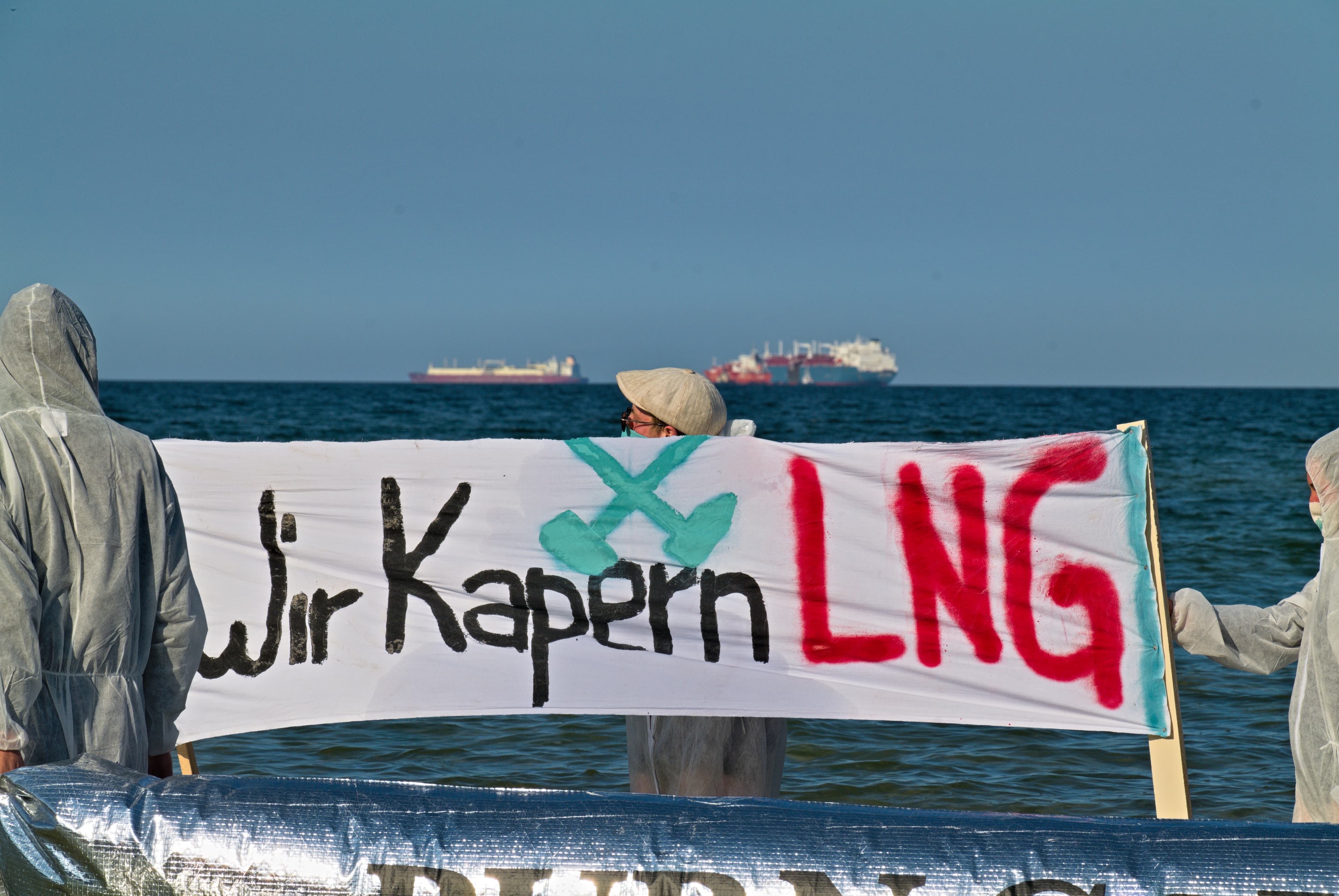
Euronews reported that the European gas benchmark crossed €100 per megawatt-hour on 28 October 2026, a level not seen since 2022. In Factrail’s graph, the linked fact “Germany enacts the LNG Acceleration Act” strengthens Energy Security, a driver that strengthens Poverty headcount ratio at $3.00 a day (2021 PPP) (% of population).
Key graph impact
The article explains graph entities; the causal edges belong to the facts and drivers it links to.
- ArticleEuropean Gas at €100: Why an LNG Shock Could Reach Household Bills
- mentionsDriverCost-of-Living Pressure
- weakensIndicators (4)Unemployment, total (% of total labor force) (modeled ILO estimate)
- ArticleEuropean Gas at €100: Why an LNG Shock Could Reach Household Bills
- mentionsFactGermany enacts the LNG Acceleration Act
- strengthensDriverEnergy Security
- strengthensIndicators (4)Poverty headcount ratio at $3.00 a day (2021 PPP) (% of population)
20 May 2022 · verified · impact weight 0.6
- ArticleEuropean Gas at €100: Why an LNG Shock Could Reach Household Bills
- mentionsFactCouncil agrees a market correction mechanism on gas
- weakensDriverEnergy-Price Volatility
- strengthensIndicators (2)Difficulty making ends meet
19 December 2022 · verified · impact weight 0.4
- Better
Weakens · 38% impact strength
Observed
4.79% of total labor force · 1.3 above the normal line (2025)
Worse than normal8 readings, 2018–2025: fell from 5.76% of total labor force to 4.79% of total labor force.
Above normal = worse
Strengthens · Relationship strength 0.37 (weight 0.6 × strength 0.62)
Observed
10.4% · 10.2 above the normal line (2024)
Worse than normal7 readings, 2018–2024: fell from 11.1% to 10.4%.
Above normal = worse
Weakens · Relationship strength 0.36 (weight 0.6 × strength 0.6)
Observed
7.97% of population aged 16 years or over · 5.2 above the normal line (2025)
Worse than normal8 readings, 2018–2025: rose from 7.77% of population aged 16 years or over to 7.97% of population aged 16 years or over.
Above normal = worse
- Better
Weakens · 31% impact strength
Observed
39.7% · 9.35 above the normal line (2024)
Worse than normal7 readings, 2018–2024: rose from 35.8% to 39.7%.
Above normal = worse
Article
00 Verdict
Euronews reported that the European gas benchmark crossed €100 per megawatt-hour on 28 October 2026, a level not seen since 2022. If confirmed against exchange settlement data, that would be a significant warning for European buyers, but it would not mean every household immediately pays the benchmark price. Gas enters household bills through wholesale purchasing, hedging, network charges, taxes and national tariff rules. The timing of contract renewal matters almost as much as the price on a single trading day. A sustained shock would be more consequential than a brief intraday spike.
The significant economic finding is that an internationally traded fuel can become expensive faster than a regulated retail bill changes. Reuters reported on 28 October that Dutch TTF briefly touched €100/MWh amid disruption to Middle Eastern shipping and tighter LNG availability. This independently supports the market threshold that had been treated as provisional in the earlier draft; it does not establish that €100 was the settlement price for every contract. The exact instrument, delivery month and closing price still matter. Reuters also described a market already facing lower storage and unusually vulnerable manufacturers. The decision confronting policymakers is consequently not simply whether to subsidise an unusually high bill. It is how to allocate scarce supplies, preserve incentives to conserve fuel, and prevent a temporary wholesale shock from becoming an industrial contraction.
For an ordinary consumer, a €100 wholesale quote is neither a retail tariff nor a universal multiplier. Retail electricity and gas bills include standing charges, network distribution, taxes and public-policy charges. Some tariffs are fixed; others are reset by a regulator or supplier on a schedule. The most honest initial conclusion is asymmetrical: households with contracts expiring soon and factories exposed to current market purchases face greater immediate risk, while hedged purchasers may experience the shock later. No national bill increase should be calculated by applying the wholesale percentage change to a household's entire invoice.
01 Hidden finding
The central analytical question is not the headline alone but the separation between the public claim and the mechanism that could move real outcomes.
The brief attributes the disruption partly to conflict affecting the Strait of Hormuz and competition with Asian LNG buyers. That is a plausible transmission mechanism: when shipping routes become riskier or more expensive, globally mobile LNG cargoes seek the strongest netback after freight and insurance. European import terminals then compete with buyers elsewhere. The actual share of the October price move attributable to Hormuz, weather, storage, or speculative positioning requires market evidence rather than a single-cause assertion.
A price surge is a market outcome, not itself an EU regulation. The market's Dutch TTF futures contracts are benchmarks around which physical gas purchases, hedging and financial positions can be organised. Buyers must distinguish an intraday trade from a daily settlement and a front-month contract from an annual or seasonal strip. A warehouse operator may be concerned about gas delivered next week, whereas a municipal utility may already have its winter requirements partly hedged. Quoting both positions as though they were paying the same instantaneous price hides the relevant economic protection.
The physical mechanism begins with liquefaction and shipping. LNG is cooled, transported in specialised tankers and regasified at import terminals. A disruption involving a critical strait can change sailing times, insurance rates, available shipping capacity and the relative attractiveness of European versus Asian destinations. Even cargoes that never normally traverse the disrupted route may reprice because buyers compete for the same marginal replacement cargo. The important qualification is that contracts, destination restrictions, terminal availability and pipeline substitutes constrain how freely a shipment can be redirected. Global cargo prices and European delivered prices need not move by identical percentages.
EU institutions can coordinate security-of-supply rules and common emergency measures, but they cannot command global vessel owners to accept a lower return. National authorities control many household relief and industrial support mechanisms; independent regulators determine specific network or tariff rules within domestic law. The policy instrument therefore differs by country and stage. A Commission announcement is not a funded national transfer; an emergency proposal is not enacted law; and a price ceiling does not constitute new gas production.
02 Who holds the levers
The consequential powers sit with the institutions and counterparties identified below; a public statement does not itself establish implementation.
The reported EU storage comparison—approximately 75% versus 83% a year earlier—also requires a dated Gas Infrastructure Europe series. A storage percentage is not the same as available daily withdrawal capacity, and a lower starting level does not independently predict shortages. Winter weather, industrial demand, pipeline flows, LNG arrivals and infrastructure constraints will determine the balance. The reported €18–33 billion additional bill attributed to ACER must be checked against the original agency methodology, period and scenario before being treated as an official forecast.
At the European level, the Commission can propose emergency legislation and monitor compliance, while the Council and Parliament hold legislative authority under the applicable legal basis. Member states control gas reserve arrangements, public procurement and the design of a large part of welfare support. National regulators supervise network pricing and supplier obligations. The companies supplying households, meanwhile, retain a commercially important lever: when to hedge purchases, how to manage credit exposure and which contractual terms to offer at renewal. A supplier cannot simply pass every shock through without regard to its contract, but a regulator cannot abolish the supplier's commodity acquisition cost either.
Storage operators influence deliverability and seasonal resilience rather than deciding the global commodity price. The reported Europe-wide inventory near 75%, compared with higher prior-year inventories, matters because stocks can meet demand when LNG arrivals temporarily fall. It does not mean that one quarter of European gas demand is unavailable. Storage capacity is a volume denominator, not a projection of total winter consumption. Its value also depends on withdrawal constraints, regional pipeline interconnections and the timing of the coldest weeks. Germany's reported storage near 60%, for example, should be read alongside local demand, import connections and industrial exposure instead of being substituted for the entire EU figure.
There is a second gatekeeper: market and fiscal credibility. A government can announce a household rebate, but parliament may have to fund it and regulators may need to administer it. Creditworthy utilities can survive a temporary spike using hedges and finance; suppliers with weaker balance sheets may need collateral precisely when futures rise. Recognising these institutional distinctions prevents a vague assertion that 'Brussels' or 'traders' single-handedly determined the final consumer outcome.
03 Document trail
The dated sequence and source trail distinguish a reported event from an operative decision or settled measurement.
Europe's policy response is constrained by the distinction between its earlier pipeline-gas emergency and a potential worldwide LNG supply shock. The 2022 gas-price-cap decision (opens in a new tab), emergency energy intervention (opens in a new tab), and German LNG acceleration (opens in a new tab) provide historical context, subject to live-link validation. Price interventions may redistribute costs or reduce exposure, but cannot create physical cargoes. National subsidies can shield some consumers while moving the burden to public budgets. Any EU-level response also runs through the European Commission (opens in a new tab), which proposes energy-market instruments and monitors member-state measures even when national ministries set household tariffs.
The causal sequence begins before the trading headline. Europe expanded LNG receiving capability after the 2022 supply emergency and maintained strategic gas-storage obligations to reduce vulnerability to disrupted pipeline imports. These investments improved options but also exposed more buyers to global LNG competition. The next phase is the October 2026 reported pressure on shipping, followed by the 28 October TTF price event. Neither stage establishes the eventual winter average.
The subsequent timeline must be reconstructed from observable releases: dated Gas Infrastructure Europe inventory readings; LNG arrival and regasification data; contract settlement records; national tariff announcements; and any enacted fiscal support. A planned ministerial discussion is an agenda item, not a policy outcome. A pledged subsidy becomes economically meaningful when eligibility, appropriations and disbursement are specified. Cold weather may deepen the strain, but future temperatures are scenarios rather than events to include as if already happened.
For a credible retrospective, separate the date each policy was announced, enacted, implemented and reflected on customer bills. This distinction is particularly important where annual price caps or fixed-price contracts postpone effects by a quarter or more. It is possible for a trading screen to show crisis prices while the household price index still reflects purchases made earlier. That lag is not an inconsistency; it is the central mechanism worth explaining.
04 How it was done
The transmission pathway matters because the same headline can affect groups differently depending on contracts, procedure and timing.
The immediate exposure is uneven. Industrial users purchasing at market-linked prices may feel higher costs before households with fixed contracts. Utilities with adequate hedges can delay the effect, but they do not eliminate the underlying cost when those positions expire. Countries with large gas-fired electricity generation may also experience higher power costs. A producer selling additional LNG at elevated spot prices may earn more, although the net gain depends on shipping, production costs and contractual pricing. A trader's gross sales value must not be mistaken for profit.
A severe energy-price event can aggravate energy poverty even when annual inflation appears contained. Low-income households spend a larger share of disposable income on heating and power, often lack funds for insulation and may have less ability to change a rental property's heating system. A rebate targeting the poorest customers can therefore achieve more welfare relief per euro than a universal subsidy of consumption, although narrow eligibility rules can exclude vulnerable households just above a threshold. Administrative speed matters: assistance delivered after an unaffordable winter bill may be less useful than support available before arrears accumulate.
For workers the relevant chain is indirect but serious. When a chemical works or glass factory loses margin because of fuel costs, management can reduce production, pause shifts or defer investments before layoffs occur. Such decisions can lower wages and local tax receipts even if wholesale prices subsequently retreat. Conversely, a protected contract may shield a factory for months, and some producers can pass costs to customers. Actual job-loss attribution requires firm records and broader demand data; higher energy prices alone do not prove a particular closure was caused by gas.
The welfare measurement should be explicit: household energy expenditure as a share of disposable income, arrears and disconnections, energy-intensive industrial output, household real income and consumer-price inflation. Factrail's global inflation series (opens in a new tab) supplies a background comparison, but a genuine EU impact assessment needs country-level price and expenditure data. A global index cannot reveal whether a protected Polish pensioner, a German renter or a British fixed-tariff household experienced this particular price shock.
05 Money, access and intermediaries
The distribution of control and financial exposure depends on who can transfer money, set terms or restrict access.
| Stakeholder | Potential effect | Evidence boundary |
|---|---|---|
| Households | Higher variable energy bills | Depends on tariffs and relief |
| Energy-intensive manufacturers | Higher input costs and weaker margins | Exposure varies by hedge and fuel mix |
| Flexible LNG sellers | Higher spot-market revenue | Revenue is not net profit |
| Governments | Pressure for subsidies and emergency intervention | Actual decisions must be verified |
| Gas traders and shipping firms | Possible spread and freight opportunities | Not evidence of a realized gain |
A disciplined cost calculation separates price, volume and time. Suppose, illustratively, that a buyer must purchase one million MWh of gas during an uncovered month. Every €10/MWh increase on that uncovered quantity raises the commodity acquisition bill by €10 million before credit, transmission and tax effects. The hypothetical arithmetic is not an estimate of the October shock: the real result requires the buyer's actual unhedged volume and purchase timing. An industrial firm's accounting expense may then be offset or amplified by product-price changes, exchange rates and demand reductions. An LNG seller's gross revenue uplift likewise cannot be equated with operating profit.
Government subsidies do not erase these real-resource costs. If a treasury pays part of a gas bill, the immediate payer changes from the consumer to the fiscal account. The eventual incidence may involve general taxation, debt servicing or reduced room for another public service. Governments can choose which households receive protection, whether to index assistance to income, and whether large industrial users face conditions such as investment or energy-efficiency commitments. These are political allocation choices with distributional effects distinct from physical supply.
Electricity adds a further transmission route. In systems where a gas-fired generator sets the marginal electricity price during expensive hours, higher gas prices can raise wholesale power prices beyond gas-heated homes. The actual increase depends on dispatch, renewable output, interconnectors and the design of the tariff or procurement contract. A manufacturer running a furnace continuously has different exposure from a household using a heat pump, and both differ from a data centre with a long-term electricity purchase agreement. Analysts should not treat all energy users as a single victim category.
Revenue effects also extend to cargo freight and financing. Disrupted sailing routes may improve the bargaining position of vessels available for particular journeys, but maintenance costs, charter agreements and time lost in transit can offset nominal rate gains. Insurers may collect higher premiums while also facing higher claims risk. That is why listing the beneficiaries of a price shock requires a contrast between realised payments, contractual options and merely possible future opportunities.
06 Narrative vs record
The public narrative needs to be compared with the narrower record and its unresolved evidentiary boundaries.
The welfare connection runs through energy security, cost-of-living pressure (opens in a new tab) and consumer-price inflation. The global indicator is context, not a direct measurement of EU household energy bills. The next evidence test is straightforward: dated TTF settlement prices, storage withdrawals, actual LNG deliveries and announced national tariff measures. The 29 October ministerial meeting's outcome should not be inferred from its scheduled agenda.
The reported €100/MWh threshold must be verified against a dated ICE Endex contract and settlement, not inferred from a news headline. The welfare channel is possible pressure on household energy expenditure and inflation; the linked consumer-price inflation indicator is global context rather than a measurement of this event.
The first unresolved issue is the precise benchmark: which expiry traded at €100, for how long, and at what settlement did it close? The second is causation: how much freight capacity was lost or delayed, which shipping costs rose, and how many cargoes actually diverted away from Europe? Third is exposure: what share of utilities' and industries' winter purchases remained unhedged when the price moved? Without these denominators, claims about windfall profits or a continent-wide consumer surcharge are premature.
The fourth issue is inventory comparability. A meaningful table must contain the same calendar date in the current and prior year, the geographic coverage and physical volume as well as storage percentage. A fifth issue is official budgetary burden: any purported ACER price-impact estimate must identify the published instrument, baseline and scenario rather than citing a free-floating range. Finally, real outcomes must be measured after tariff changes, industrial production statistics and household arrears data become available. Observing higher inflation over the same period would not by itself identify this particular gas event as the cause.
07 Who profits / who pays
The distinctions below separate potential gains from observed transfers, and documented roles from plausible exposure.
| Actor | Gains / loses | Evidence | Label |
|---|---|---|---|
| Flexible LNG suppliers and cargo holders | Potential higher sale prices if scarcity persists | Benchmark spike and LNG-shipping reporting; realised margins not established | inference |
| Households on variable or renewing tariffs | Higher bills conditional on tariff adjustment | Retail pricing mechanics and benchmark exposure | inference |
| Gas-intensive manufacturers | Potential higher input costs and production pressure | Wholesale gas exposure; factory-specific contracts unverified | inference |
| European buyers with existing hedges | Potential short-term protection against a spot spike | Futures market hedging mechanism; coverage varies | hypothesis |
The welfare consequences described in §04 depend on the legal and market mechanisms above; the table does not establish realised cash transfers or unlawful motives.
08 Strongest countercase
The strongest alternative reading deserves weight before a final attribution or causal claim is made.
The central account remains conditional on the original records, rather than on a headline or a forecast. The strongest alternative explanations and the status of disputed claims require independent documentary review.
The strongest counterargument to the crisis narrative is that Europe's energy system is more diversified and better prepared than in 2022. New import facilities, energy-saving measures, renewables, interconnectors and demand adjustment give importers more alternatives. Storage near three-quarters of rated capacity is not empty, and short-lived volatility may not survive into average winter invoices. This case should be taken seriously: a price touched briefly by a futures benchmark may overstate the duration of scarcity.
The counterargument does not remove the distributional risk. Diversification protects against dependence on a particular pipeline supplier but can expose buyers to global maritime disruption. Markets can be adequately supplied in aggregate yet experience expensive marginal cargoes and regional infrastructure bottlenecks. An industrial facility facing cash-flow stress cannot always wait for the annual average to recover. Policy must therefore be tested against the length of the price disturbance and the number of contracts repriced during that interval, rather than judged solely by a peak or by total European storage volumes.
A competing explanation assigns much of a price spike to financial positioning instead of physical shortage. Such an account is possible, but it requires futures position data, liquidity indicators and evidence about spot deliveries. Even financial volatility can damage firms through collateral requirements; nevertheless the appropriate remedy might differ markedly from a physical-supply emergency. The responsible editorial finding is that the price spike is documented by independent reporting, while the division between logistical disruption, demand, inventories and market positioning remains open to quantitative assessment.
09 What would change the verdict
The following documentary and implementation checkpoints would materially change this assessment.
The next checkpoint is the relevant official decision, final dataset or court record. No result is inferred before that record is available.
Monitor exchange settlement and month-ahead versus winter-strip prices, because those reveal whether the market expects a prolonged supply problem. Compare those signals with LNG arrivals, freight premiums, withdrawal rates and temperature-adjusted demand. Then examine regulatory and fiscal decisions in the countries with the greatest household or industrial exposure. A public announcement without eligibility rules or funding cannot be counted as delivered assistance.
The decisive welfare checkpoints will arrive later: retail tariff resets, measured domestic energy spending, company production and employment figures, and the price indexes that capture realised changes. If cargo delivery normalises while futures retreat, the high-price episode may be sharp but brief. If storage falls quickly while new contracts are signed at elevated rates, both the industrial and household consequences become more durable. Either outcome should be reported without retroactively treating a conditional October forecast as fact.
What is established? Only the documentary and numerical claims explicitly qualified above. What is still uncertain? The latest legal status, causal attribution and the size of any realized welfare impact.
Did European households immediately start paying €100/MWh? No. That was a wholesale benchmark level, not a universal domestic tariff. Contract design, taxes, network costs and renewal dates determine what households pay.
Does 75% storage mean Europe can cover three-quarters of winter demand? No. It means inventory relative to technical storage capacity. Deliverability, total demand and import flows determine resilience.
Who might benefit financially? Sellers with uncommitted gas at higher prices and some suppliers holding valuable flexible contracts may gain, but an increase in gross sales does not prove profit.
Can a price cap solve a cargo shortage? A cap can redistribute or constrain market payments, but cannot itself liquefy gas, supply ships or expand terminal capacity.
What would establish the impact? A linked record of market settlements, physical deliveries, purchasing contracts, tariffs and measured household or industrial outcomes.
10 Evidence file
SOURCE_QA_PENDING — external links are preserved as cited, but have not been independently HTTP-verified in this repair.
- ICE Endex — Dutch TTF Natural Gas Futures (opens in a new tab) — identifies the traded Dutch TTF futures instrument; exact daily settlement remains unverified. Label: record.
- RTÉ, 29 October 2026 (opens in a new tab) — reports the event or numerical claim discussed; underlying primary documentation remains subject to QA. Label: reported.
- CNBC, 28 October 2026 (opens in a new tab) — reports the event or numerical claim discussed; underlying primary documentation remains subject to QA. Label: reported.
- Reuters, European benchmark gas price touches €100, 28 October 2026 (opens in a new tab) — reports the event or numerical claim discussed; underlying primary documentation remains subject to QA. Label: reported.
- Gas Infrastructure Europe AGSI (opens in a new tab) — identifies the primary gas-storage statistics portal; the dated series has not been extracted. Label: record.
- EU gas market correction mechanism (opens in a new tab) — provides the institutional or policy record to check; the exact claim needs source-level verification. Label: record.
Accountability & contradictions
From the facts this article links to — each entry opens its record.
Who is accountable
- Charles MichelDirect contribution · Council agrees a market correction mechanism on gas
- Olaf ScholzDirect contribution · Germany enacts the LNG Acceleration Act
Evidence threshold
Evidence
The sources this article cites, claim-bearing material first.
More analysis
Ranked by shared facts, drivers and people — never by publication date alone.
Articles12
- Winter Energy Bills: Why Britain, Germany and America Pay DifferentlyShares the driver: Energy Security · 31 October 2026
- Italy's 5.4% Inflation Shock Turns Defence Into a Pay FightShares the driver: Energy Security · 31 October 2026
- Brent at $117: The Oil Shock That Could Keep Mortgages CostlyShares the driver: Energy Security · 31 October 2026
- The Boiler Upgrade Rule Opens a Door, Not a SubsidyShares the driver: Energy Security · 28 October 2026
Key facts
- 19 December 2022 — Council agrees a market correction mechanism on gas · Independent reporting
- 20 May 2022 — Germany enacts the LNG Acceleration Act · Gesetze im Internet