Fico’s majority is fraying at home while he lends political capital to Vučić abroad
TL;DR
Robert Fico is confronting two political stories at once. In Bratislava, the machinery required to keep his government functioning has become more fragile after parliament forced Tomáš Taraba from office.
By the Factrail desk · Method: how we source and score · Last reviewed
Article
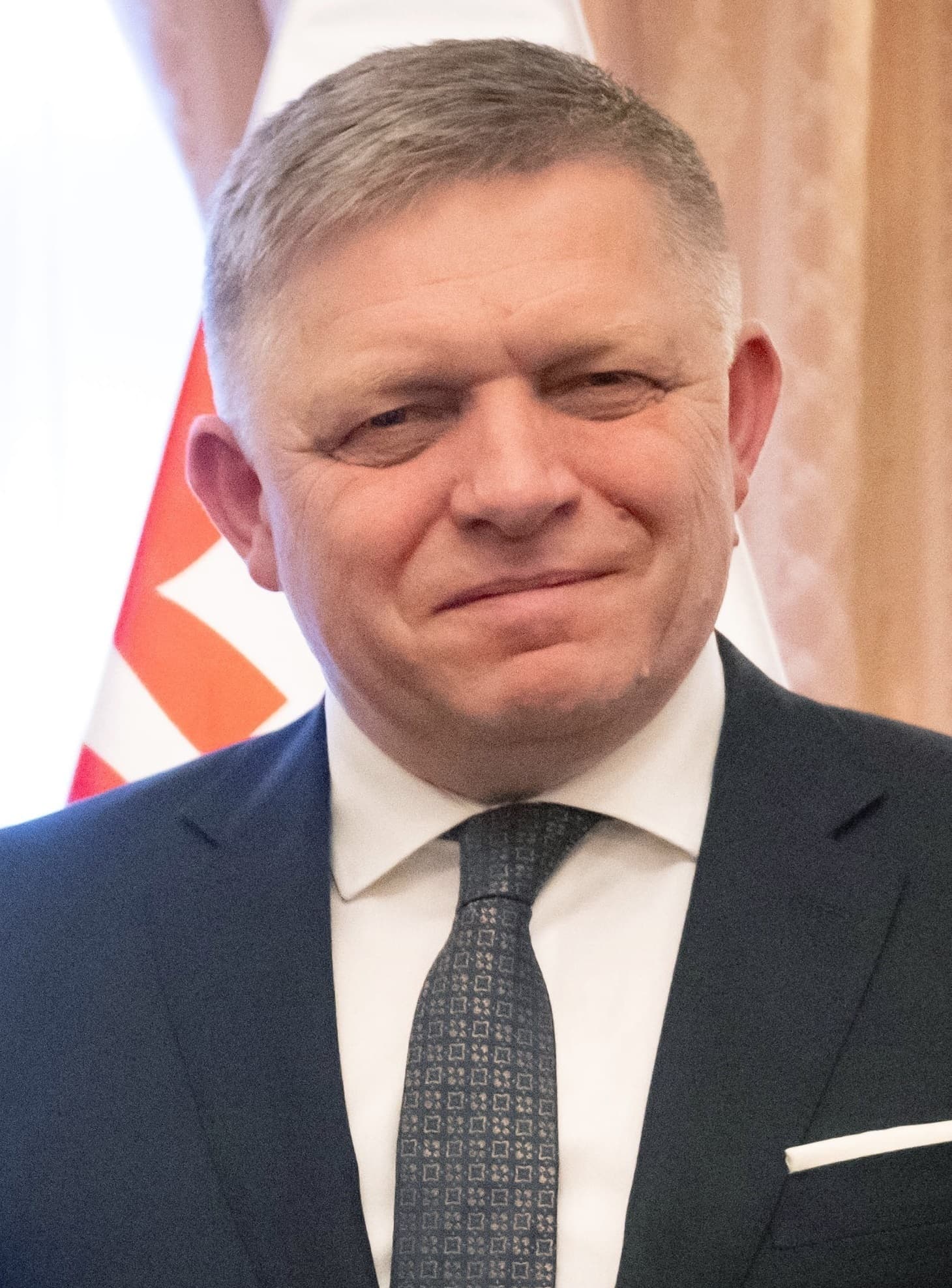
[Robert Fico (opens in a new tab)](/people/robert-fico) is confronting two political stories at once. In Bratislava, the machinery required to keep his government functioning has become more fragile after parliament forced Tomáš Taraba from office. In Serbia, meanwhile, Fico was prepared to lend the prestige of a sitting EU prime minister to Aleksandar Vučić’s election campaign before illness prevented him from appearing in person.
The two episodes are more revealing when read together. They show a prime minister whose most immediate democratic lever is a narrow parliamentary majority at home, but who is also willing to deploy the symbolic power of his office across a neighboring country’s electoral contest.
Taraba’s removal exposed the weakness directly.
Slovakia’s parliament withdrew confidence from the deputy prime minister and environment minister after members of the Slovak National Party, one of Fico’s governing partners, joined the opposition against him. President Peter Pellegrini subsequently dismissed Taraba, while Fico temporarily took control of the environment ministry himself.
The important accountability fact is not simply that one minister fell. It is who supplied the decisive leverage. A government partner was willing to cooperate with the opposition against a minister associated with its own side of the governing arrangement. That means Fico cannot treat every nominal coalition vote as automatically available.
The arithmetic matters because Slovakia’s government was already operating with little room for defections. Reporting around Taraba’s dismissal has put the coalition near the minimum majority required to control the 150-seat National Council. The coming 2027 budget therefore becomes more than an ordinary fiscal vote: it is an operational test of whether the coalition can still convert formal office into reliable legislative power.
That distinction matters for citizens. A fragile majority can increase bargaining among small groups of MPs, make budgets and reforms dependent on side agreements, and shift political attention away from policy performance toward coalition survival. It does not automatically mean government collapse, and opposition claims that Fico has "lost control" remain political claims rather than an established institutional fact. But the Taraba vote demonstrated that coalition discipline can fail on a consequential decision.
At almost the same moment, Fico was preparing a very different use of political influence.
He had been announced as a prominent guest at a Belgrade campaign rally supporting Aleksandar Vučić ahead of Serbia’s October 25 parliamentary election. Fico ultimately did not travel after his office said illness prevented the trip. His absence, however, did not erase the political endorsement: reporting from the event says his prepared message backed Vučić’s bid to become prime minister.
That is not equivalent to controlling the Serbian election. Serbian voters decide the outcome, and a foreign leader’s endorsement may have limited electoral effect. But it is still a transfer of political legitimacy. A serving EU head of government offers something a domestic candidate cannot manufacture alone: the visual and rhetorical claim that influential foreign leaders recognize him as a desirable governing partner.
The accountability question is therefore larger than whether Fico boarded a plane.
A prime minister possesses scarce political capital: official visibility, diplomatic standing, government communication machinery and the prestige attached to representing a sovereign state. When that capital is offered in support of a foreign election candidate, citizens are entitled to ask whose interest the intervention serves and where the boundary lies between interstate relations and partisan campaigning.
Fico’s government simultaneously faces a narrower margin for action at home. That creates an unusually clear causal contrast:
coalition fracture → weaker legislative certainty → greater dependence on individual MPs and coalition bargains
while, abroad:
prime-ministerial prestige → endorsement of a foreign candidate → additional legitimacy for that candidate’s campaign
Neither chain proves corruption, illegality or imminent government collapse. Those conclusions would go beyond the available evidence. But both chains concern the same resource: political power held in public trust.
The next measurable test is not Fico’s rhetoric about stability. It is whether his government can consistently assemble the votes required for major legislation, particularly the budget, without repeated crises or improvised concessions. The corresponding Serbia test is whether the Slovak government explains what public interest is advanced when its prime minister actively endorses a candidate in another state’s election.
Fico’s cancelled journey may make the Serbian episode look smaller. Institutionally, it is not. The intended appearance and endorsement remain evidence of how he chooses to spend political capital at a moment when his capacity to command it at home is becoming less certain.
Evidence
The sources this article cites, claim-bearing material first.
The one cited source is a general profile page; it identifies the subject but does not document the specific claims in this article.
- Government Office of the Slovak Republic · Government Office of Slovakia — 25 October 2023 appointment neighbourhood