Hibatullah Akhundzada ICC Warrant Explained
TL;DR
On 5 October 2026, the ICC unsealed four Taliban arrest warrants, including Hibatullah Akhundzada's, alleging gender persecution from 15 August 2021 to at least 20 January 2025. He remained in power and unarrested on 6 October. In Factrail’s graph, the linked fact “Taliban codifies extensive restrictions through vice and virtue law” strengthens State Repression, a driver that strengthens Number of victims of intentional homicide per 100,000 population, by sex (victims per 100,000 population).
By the Factrail desk · Method: how we source and score · Last reviewed
Key graph impact
The article explains graph entities; the causal edges belong to the facts and drivers it links to.
- ArticleHibatullah Akhundzada ICC Warrant Explained
- explainsFactTaliban codifies extensive restrictions through vice and virtue law
- strengthensDriverState Repression
- strengthensIndicators (5)Number of victims of intentional homicide per 100,000 population, by sex (victims per 100,000 population)
21 August 2024 · verified · impact weight 0.76
- ArticleHibatullah Akhundzada ICC Warrant Explained
- explainsFactICC issues arrest warrants for Taliban leaders over alleged gender persecution
- weakensDriverAfghanistan Taliban rule (2021+)
- strengthensIndicators (2)People Internally Displaced by Conflict and Violence (IDMC)
8 July 2025 · verified · provisional weight
- ArticleHibatullah Akhundzada ICC Warrant Explained
- explainsFactTaliban blocks girls from returning to secondary school
- weakensDriverAfghanistan Taliban rule (2021+)
- strengthensIndicators (2)People Internally Displaced by Conflict and Violence (IDMC)
23 March 2022 · verified · provisional weight
- Worse
Number of victims of intentional homicide per 100,000 population, by sex (victims per 100,000 population)
via State Repression
Strengthens · Relationship strength 0.64 (weight 0.76 × strength 0.84)
Observed
5.14 PER_100000_POP · 0.13 below the normal line (2024)
Better than normal7 readings, 2018–2024: fell from 5.65 PER_100000_POP to 5.14 PER_100000_POP.
Above normal = worse
- Worse
Number of cases of killings of human rights defenders, journalists and trade unionists
via State Repression
Strengthens · Relationship strength 0.63 (weight 0.76 × strength 0.83)
Observed
550 · 550 above the normal line (2025)
Worse than normal8 readings, 2018–2025: rose from 487 to 550.
Normal is zero · any amount = worse
- Better
Strengthens · 60% impact strength (driver → indicator)
Observed
69M people (stock, end-of-year) · 28M above the normal line (2025)
Worse than normal3 readings, 2023–2025: rose from 68M people (stock, end-of-year) to 69M people (stock, end-of-year).
Above normal = worse
- Worse
Number of cases of enforced disappearance of human rights defenders, journalists and trade unionists (Number)
via State Repression
Strengthens · Relationship strength 0.59 (weight 0.76 × strength 0.78)
Observed
123 · 123 above the normal line (2025)
Worse than normal8 readings, 2018–2025: rose from 32 to 123.
Normal is zero · any amount = worse
Article
Hibatullah Akhundzada ICC Warrant Explained: Gender Persecution Charges Unsealed
On 5 October 2026, the International Criminal Court unsealed four Taliban arrest warrants, including one for Hibatullah Akhundzada (opens in a new tab), over alleged gender persecution from 15 August 2021 to at least 20 January 2025. The court says the alleged persecution is a crime against humanity and reaches women, girls, gender-non-conforming people and people treated as allies of girls and women.
As of 6 October 2026, Akhundzada remained in power and had not been arrested. The disclosure sharpens the legal record around Taliban rule in Afghanistan (opens in a new tab), but the court has no police force and depends on states to execute its warrants.
Why does the ICC want to arrest Hibatullah Akhundzada?
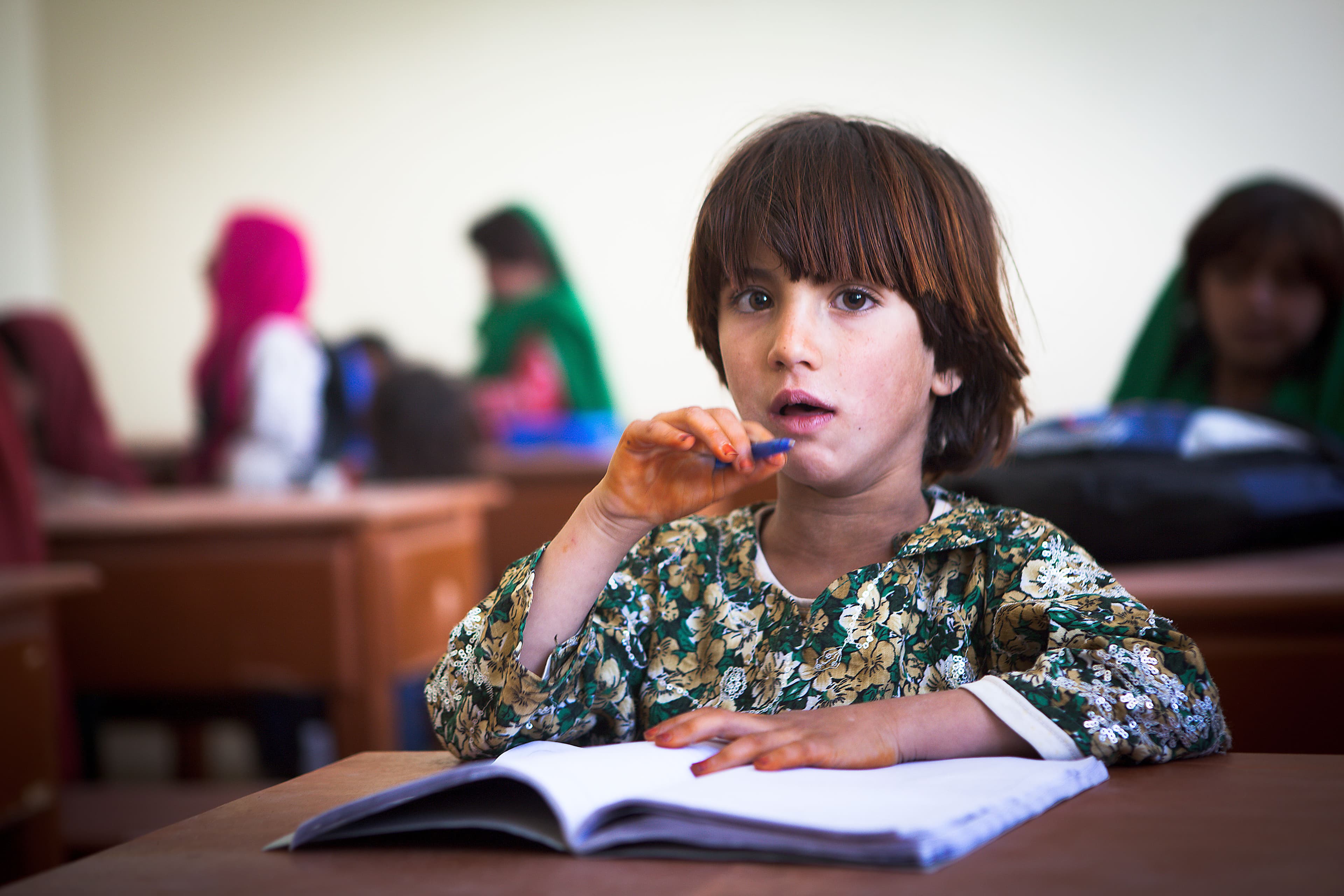
The chamber says Taliban decrees and edicts severely deprived women and girls of fundamental rights, including education, movement, privacy, family life, expression, thought, conscience and religion. The court's public explanation also refers to alleged murder, imprisonment, torture, rape and enforced disappearance in the wider policy of persecution. These are allegations supporting an arrest warrant, not findings after a trial.
The case is connected to a documented sequence of restrictions. Girls remained excluded from secondary education under the school-closure fact (opens in a new tab), women were suspended from university under the university ban fact (opens in a new tab), and the 2024 vice-and-virtue law (opens in a new tab) formalized additional controls.
The newly public record is captured in the 5 October unsealing fact (opens in a new tab), alongside the earlier 2025 ICC warrant fact (opens in a new tab).
What does the ICC mean by gender persecution?
The chamber said the Rome Statute's concept of gender cannot be reduced to a purely biological conception of sex. It described socially constructed roles, behaviors, expectations and hierarchies, and said people could also be targeted when their sexuality or gender identity was regarded as inconsistent with Taliban policy.
The court additionally identified people described as "allies of girls and women." In its account, people perceived as opposing the policy, even passively or by omission, could be treated as political opponents. That makes the allegation broader than a case about access to schools: the court is describing an institutional system of discrimination and coercion.
Can the ICC arrest the Taliban leader?
The ICC can issue a warrant but has no police force of its own. Enforcement therefore depends on cooperation by states. Akhundzada's control position inside Afghanistan makes immediate arrest difficult, while travel to cooperating states can create exposure.
Diplomacy does not erase the warrant. Russia's 2025 recognition of the Taliban government (opens in a new tab) is politically important, but recognition and criminal accountability are separate questions.
Who else is named in the ICC Taliban warrants?
The four people are Akhundzada, Abdul Hakim Haqqani, Habibullah Agha and Neda Mohammad Nadim. The first two warrants date to 8 July 2025; the latter two date to 9 September 2025.
Sirajuddin Haqqani (opens in a new tab), the Taliban interior minister, is not one of the four. Confusing him with Abdul Hakim Haqqani would misstate the court record.
Background: The Taliban return to Kabul and the failure of a twenty-year state-building model (opens in a new tab).
Questions people ask
Why does the ICC want to arrest Hibatullah Akhundzada?
The ICC alleges gender persecution as a crime against humanity under policies enforced by the Taliban leadership from 15 August 2021 to at least 20 January 2025.
Can the ICC arrest the Taliban leader?
The ICC has no police force. Arrest depends on state cooperation, making enforcement difficult while Akhundzada remains under Taliban protection.
Who else is named in the ICC Taliban warrants?
The four are Hibatullah Akhundzada, Abdul Hakim Haqqani, Habibullah Agha and Neda Mohammad Nadim; Sirajuddin Haqqani is not one of them.
Accountability & contradictions
From the facts this article links to — each entry opens its record.
Who is accountable
- Hibatullah AkhundzadaDirect contribution · Taliban blocks girls from returning to secondary school
Evidence threshold
Evidence
The sources this article cites, claim-bearing material first.
- International Criminal Court · ICC Pre-Trial Chamber II unseals four arrest warrants in Situation in Afghanistan · 5 Oct 2026
- UN News · UN News report on ICC Taliban warrants · 5 Oct 2026
- Reuters · ICC provides more details on arrest warrants for two Taliban leaders · 5 Oct 2026
- DW · DW report on unsealed Taliban warrants · 5 Oct 2026
More analysis
Ranked by shared facts, drivers and people — never by publication date alone.