Huckabee Denies U.S. Push for a Netanyahu–Eisenkot Unity Government
TL;DR
Israel Hayom reported on October 15 that the Trump administration wanted a broad Israeli government involving Likud and Gadi Eisenkot's Yashar. U.S. Ambassador Mike Huckabee denied the account and said Washington was not trying to interfere in Israel's election.
By the Factrail desk · Method: how we source and score · Last reviewed
Key graph impact
The article explains graph entities; the causal edges belong to the facts and drivers it links to.
- ArticleHuckabee Denies U.S. Push for a Netanyahu–Eisenkot Unity Government
- explainsDriverElectoral Integrity and Competitiveness
- strengthensIndicators (3)Having a say in government
- ArticleHuckabee Denies U.S. Push for a Netanyahu–Eisenkot Unity Government
- explainsDriverMilitary Escalation Risk
- strengthensIndicators (2)Global deaths from organized violence (UCDP)
Strengthens · 80% impact strength
Observed
29.8% of population aged 16-65 years · 8.13 below the normal line (2023)
Worse than normalTwo readings: 30.2% of population aged 16-65 years (2021) and 29.8% of population aged 16-65 years (2023).
20212023 Above normal = better
Strengthens · 70% impact strength
Observed
245k deaths per year · 195k above the normal line (2025)
Worse than normalAbove normal = worse
Strengthens · 68% impact strength
Observed
0.53 score from 0 to 1 · 0.34 below the normal line (2024)
Worse than normal125 readings, 1900–2024: rose from 0.17 score from 0 to 1 to 0.53 score from 0 to 1.
Above normal = better
Weakens · 51% impact strength
Observed
45 Score · 45 above the normal line (2024)
Worse than normal7 readings, 2018–2024: rose from 43.8 Score to 45 Score.
Normal is zero · any amount = worse
Article
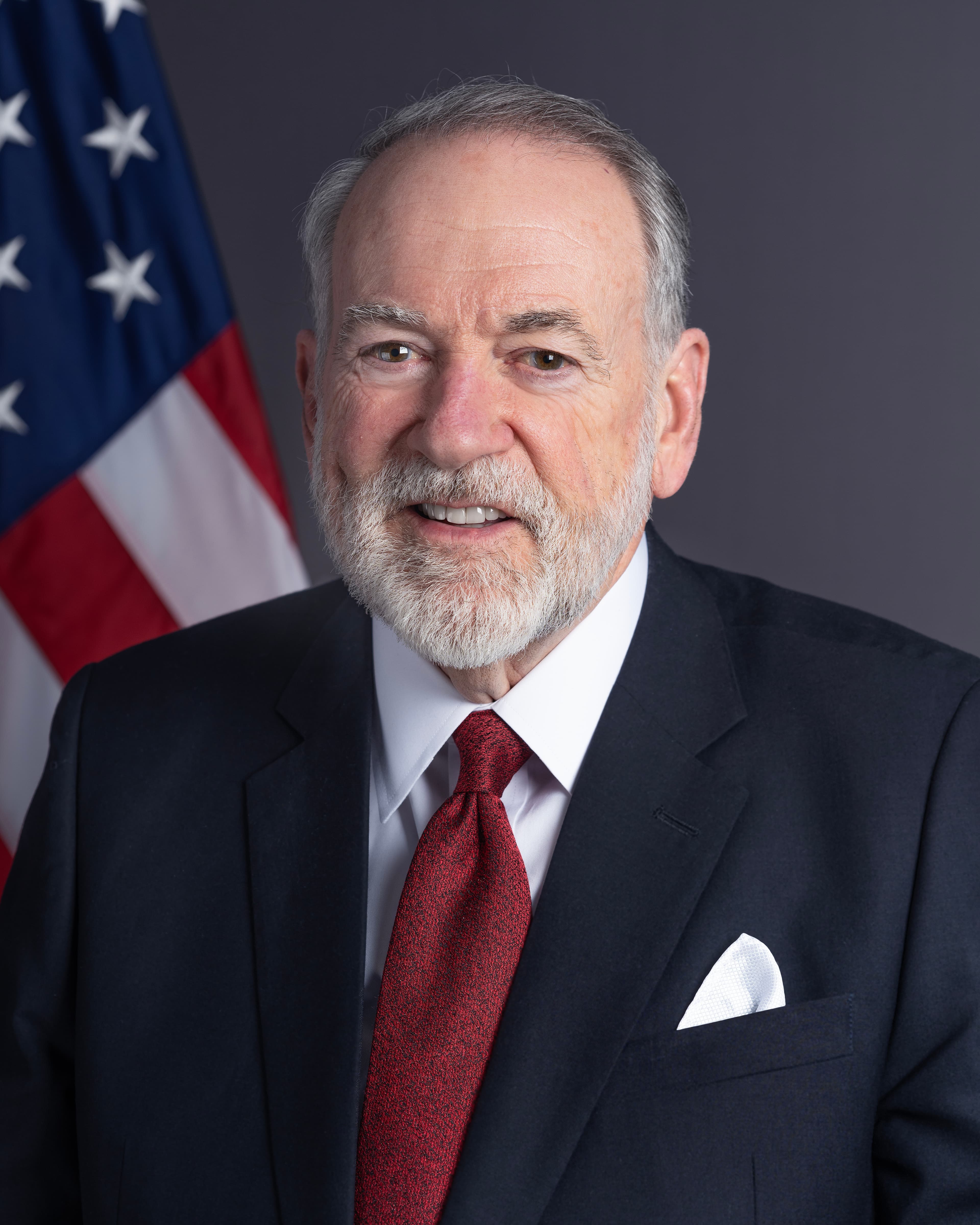
U.S. Ambassador to Israel Mike Huckabee (opens in a new tab) denied on October 15 that the Trump administration was trying to engineer a unity government between Prime Minister Benjamin Netanyahu (opens in a new tab) and opposition leader Gadi Eisenkot (opens in a new tab). His denial followed an Israel Hayom report, citing a senior American official, that Washington favored a broad post-election government involving Likud and Eisenkot's Yashar as part of a wider regional diplomatic strategy.
The key fact is conflict, not confirmation. Israel Hayom published a detailed account of an American preference. Huckabee said the story was untrue and that the administration was not trying to interfere in Israel's election or tell the Israeli prime minister what to do. There is no independently verified public document in the current sources proving that Washington issued a directive to form the reported coalition. Treating the report as settled fact would therefore overstate the evidence.
Huckabee's accountability comes from his office. As ambassador, he is the senior U.S. diplomatic representative in Israel and a natural channel for political contacts. The Israel Hayom report said he had met senior party leaders, including Eisenkot, in September. Diplomatic meetings with opposition politicians are normal and do not by themselves establish interference. The harder question is whether U.S. officials communicated a preferred governing arrangement before voters had cast their ballots.
Donald Trump is central because the report described a Trump-administration plan, not a freelance ambassadorial initiative. Trump has also been pressed on whether he will endorse Netanyahu and has not committed to doing so. On October 16, when asked whether he trusted Netanyahu, Trump said he did not trust anybody in politics while also praising their relationship. Those facts create political ambiguity but still do not prove the coalition report.
Eisenkot's position is equally important. The Israel Democracy Institute identifies him as the leader of Yashar, the party running in the election for the 26th Knesset. He is a former IDF chief of staff and has campaigned to replace Netanyahu. On October 15 he pledged to end Hamas rule in Gaza within 18 months of becoming prime minister. Previous public statements have also ruled out a power-sharing arrangement with Netanyahu. That record is difficult to reconcile with presenting a unity deal as already agreed.
Netanyahu has his own incentive to shape the story. A claim that Washington wants Likud in a broad coalition can be used to show international relevance, while a claim that foreign officials want to determine his retirement could be used to rally voters against outside pressure. Eisenkot can likewise use the dispute to emphasize independence from Netanyahu or to show that foreign capitals view him as a plausible governing figure. Because both camps have electoral incentives, unnamed-source reporting requires corroboration rather than partisan amplification.
The human effect may look remote from coalition arithmetic, but Israel's next government will make decisions about war, hostages, Gaza, Iran and regional normalization. A proposed government designed around major security bargains would affect millions of people. That puts the issue inside military escalation risk (opens in a new tab) even though the immediate controversy is electoral.
The democratic issue is electoral integrity and competitiveness (opens in a new tab). Foreign governments are allowed to have preferences, and diplomacy does not stop during election season. But covert pressure to pre-arrange a governing coalition would be different from ordinary diplomacy. The strongest defense of the U.S. side is Huckabee's categorical denial and the absence of publicly verified coercive evidence. The strongest reason for continued scrutiny is that the original report attributed the plan to a senior American official and described specific political outcomes rather than generic support for stability.
Polling adds caution. The Times of Israel reported on October 15 that neither the Netanyahu-led bloc nor the opposition had an easy route to a governing majority. A reported preference is not the same as a feasible coalition.
One secondary report used for the denial incorrectly described Eisenkot's party affiliation. That error is not repeated here; Yashar's identity is checked against the Israel Democracy Institute and current Israeli election coverage. This matters because a story about election interference loses credibility if basic party labels are copied without verification.
What comes next is evidence. If the White House, embassy, Netanyahu or Eisenkot releases records of contacts, those can be assessed directly. If no additional evidence emerges, the public record remains an Israel Hayom report and a categorical U.S. denial. The October 27 result will then determine which coalition scenarios are mathematically possible before any diplomatic preference can become politically relevant.
Questions people ask
Who is Mike Huckabee?
Mike Huckabee is a former Arkansas governor and the U.S. ambassador to Israel. He is the official who publicly denied the reported American push for a unity government.
Did the US push a Netanyahu–Eisenkot coalition?
Israel Hayom reported that the Trump administration favored such an arrangement, citing a senior American official. Huckabee denied that the administration was trying to interfere or dictate Israel's government. The current public evidence does not independently prove the reported push.
Who is Gadi Eisenkot?
Gadi Eisenkot is a former IDF chief of staff and the leader of Yashar, a major opposition party contesting Israel's October 27 election.
Evidence
The sources this article cites, claim-bearing material first.
More analysis
Ranked by shared facts, drivers and people — never by publication date alone.
Articles12
- Will Israel Strike Iran Before Its October Election?Shares the driver: Electoral Integrity and Competitiveness · 14 October 2026
- Does Trump Trust Netanyahu? What Trump's “Nobody” Answer Actually MeansShares the driver: Military Escalation Risk · 16 October 2026
- What Makes an Election Legitimate: Procedure, Trust, and Acceptance of the ResultShares the driver: Electoral Integrity and Competitiveness · 3 August 2026
- Lavrov Rejects a Ukraine Ceasefire as the Energy Truce UnravelsShares the driver: Military Escalation Risk · 16 October 2026