Lavrov Rejects a Ukraine Ceasefire as the Energy Truce Unravels
TL;DR
Russian Foreign Minister Sergey Lavrov said on October 15 that Moscow would not accept a ceasefire that could let Ukraine rearm. His statement came as Ukraine resumed strikes on Russian refineries after saying Russia had not honored the energy pause, leaving both the battlefield and security-guarantee talks unresolved.
By the Factrail desk · Method: how we source and score · Last reviewed
Key graph impact
The article explains graph entities; the causal edges belong to the facts and drivers it links to.
- ArticleLavrov Rejects a Ukraine Ceasefire as the Energy Truce Unravels
- explainsDriverUkraine war (Crimea–Donbas–2022+)
- strengthensIndicators (5)Global deaths from organized violence (UCDP)
- ArticleLavrov Rejects a Ukraine Ceasefire as the Energy Truce Unravels
- explainsDriverSanctions Pressure
- strengthensIndicators (4)Poverty headcount ratio at $3.00 a day (2021 PPP) (% of population)
- ArticleLavrov Rejects a Ukraine Ceasefire as the Energy Truce Unravels
- explainsDriverMilitary Escalation Risk
- strengthensIndicators (2)Global deaths from organized violence (UCDP)
Strengthens · 85% impact strength
Observed
245k deaths per year · 195k above the normal line (2025)
Worse than normalAbove normal = worse
- Worse
Strengthens · 80% impact strength
Observed
69M people (stock, end-of-year) · 28M above the normal line (2025)
Worse than normal3 readings, 2023–2025: rose from 68M people (stock, end-of-year) to 69M people (stock, end-of-year).
Above normal = worse · Lag ~30 d
Strengthens · 74% impact strength
Observed
10.4% · 10.2 above the normal line (2024)
Worse than normal7 readings, 2018–2024: fell from 11.1% to 10.4%.
Above normal = worse
Weakens · 53% impact strength
Observed
80 Years · 2.3 below the normal line (2023)
Worse than normal6 readings, 2018–2023: rose from 79.5 Years to 80 Years.
Above normal = better
Article
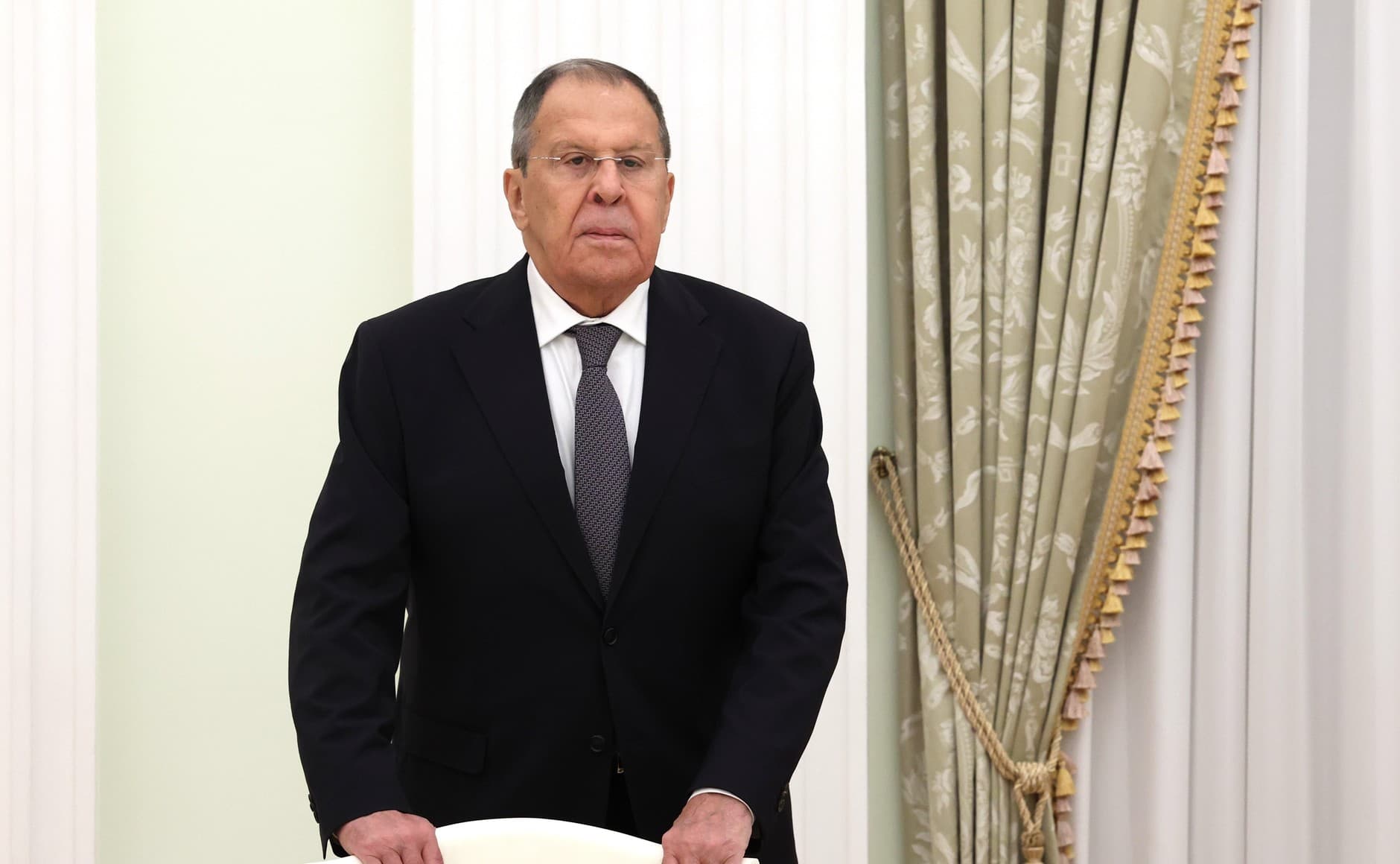
Russian Foreign Minister Sergey Lavrov (opens in a new tab) said on October 15 that Moscow would not accept a ceasefire that could allow Ukraine to replenish its military capabilities. That is the clearest current answer to the query "Lavrov rejects ceasefire": the Russian government is not offering an unconditional pause in the Ukraine war (opens in a new tab), and Lavrov said Russia's objectives remain unchanged.
The human cost sits behind the diplomatic language. Russian strikes on October 14 hit Ukrainian energy facilities and, according to Reuters, left hundreds of thousands of people without power while killing civilians. Ukraine then resumed attacks on Russian oil infrastructure. Volodymyr Zelenskyy (opens in a new tab) said Kyiv was finished with an energy truce because Russia had continued attacking Ukrainian power infrastructure. Ukraine struck the Ryazan refinery, linking the battlefield directly to fuel supply, sanctions and global energy prices.
Accountability is distributed but not symmetrical in origin. Vladimir Putin (opens in a new tab) remains responsible for Russia's full-scale invasion and the Russian state's war decisions. Zelenskyy is responsible for Ukraine's choice of targets and for explaining how strikes inside Russia serve Ukraine's defense. Donald Trump (opens in a new tab), whose administration has tried to mediate, is accountable for the terms and enforcement of any U.S.-brokered pause he presents as an agreement. A ceasefire that one side interprets differently from the other is not a stable settlement.
The central contradiction is visible in the energy fight. Trump described an energy truce as a step toward de-escalation. Russia continued major attacks on Ukrainian energy infrastructure, according to Kyiv and Reuters reporting, while Ukraine later restarted refinery strikes. Lavrov then argued against a broader ceasefire on the ground that Ukraine could use it to rearm. Moscow's strongest defense is that a military pause can create a tactical advantage for an opponent and that Russia wants a settlement addressing what it calls the root causes of the war. The evidence against treating that position as neutral is that Russia is simultaneously continuing offensive operations and maintaining war aims that Ukraine rejects as incompatible with sovereignty.
Ukraine's strongest defense is self-defense: Kyiv says Russian refineries support the economy and logistics sustaining the invasion and that it cannot be expected to honor a one-sided energy restraint. The criticism of Kyiv is that refinery attacks can affect civilian fuel markets and international energy prices, and Trump has publicly argued that they worsen diesel costs. That does not make Russian attacks on Ukrainian power infrastructure lawful or equivalent; it does mean both target selection and claimed military necessity deserve evidence-based scrutiny.
Security guarantees remain the obstacle behind the headline. The Council on Foreign Relations' conflict tracker, updated October 15, said negotiations had not produced a ceasefire and that the parties remained divided over territory and security guarantees. Those guarantees matter because Ukraine wants protection against another Russian attack after any settlement, while Moscow has resisted arrangements that would deepen Western military commitments to Ukraine. This is why the issue belongs not only to the war itself but also to military escalation risk (opens in a new tab) and sanctions pressure (opens in a new tab).
The older context should not be confused with the new lever. Ukraine's shortage of air-defense interceptors and the danger of ballistic attacks are covered in the Patriot interceptor background (opens in a new tab) and the Kyiv warning-time background (opens in a new tab). The October 15 development is narrower: Lavrov rejected a ceasefire that could enable rearmament just as the energy pause was visibly collapsing.
What comes next is a credibility test for every proposed pause. Any new ceasefire needs a defined scope, monitoring, consequences for violations and an agreed answer to what happens to arms deliveries and long-term guarantees. Without those mechanisms, each side has an incentive to describe the same pause differently and accuse the other of breaking it.
Questions people ask
Did Lavrov reject a Ukraine ceasefire?
Yes. On October 15, Lavrov said Russia would not accept a ceasefire that could allow Ukraine to replenish its military capabilities.
What security guarantees does Zelenskyy want?
Ukraine has sought durable guarantees that would deter or respond to another Russian attack after a settlement. The exact architecture remains disputed in negotiations.
Why does Russia reject a pause?
Moscow says a pause could let Ukraine rearm and that a settlement must address Russia's stated war objectives. Ukraine and its partners reject terms that would leave it exposed to renewed attack or require surrender of core sovereignty claims.
Evidence
The sources this article cites, claim-bearing material first.
More analysis
Ranked by shared facts, drivers and people — never by publication date alone.
Articles12
- Is Britain Escalating Ukraine Support as Trump Eases Russian Diesel?Shares the driver: Ukraine war (Crimea–Donbas–2022+) · 14 October 2026
- Ukraine Ran Out of Patriot Interceptors: What It Means for Air DefenseShares the driver: Ukraine war (Crimea–Donbas–2022+) · 15 October 2026
- Sanctions against Russia: What They Changed and Where Their Limits Became ClearShares the driver: Sanctions Pressure · 3 August 2026
- Who Controls Starshield? Musk Says U.S. Military and POTUS Set LimitsShares the driver: Ukraine war (Crimea–Donbas–2022+) · 16 October 2026