Why Is Delhi Limiting the Tiranga Protest at Connaught Place?
TL;DR
Abhijeet Dipke and the Cockroach Janta Party called a Tiranga protest at Connaught Place over India's Special Intensive Revision of electoral rolls. Delhi authorities closed Central Park and imposed restrictions, citing public order, while organisers said the controls were shrinking civic space.
By the Factrail desk · Method: how we source and score · Last reviewed
Key graph impact
The article explains graph entities; the causal edges belong to the facts and drivers it links to.
- ArticleWhy Is Delhi Limiting the Tiranga Protest at Connaught Place?
- explainsDriverState Repression
- strengthensIndicators (5)Number of victims of intentional homicide per 100,000 population, by sex (victims per 100,000 population)
- ArticleWhy Is Delhi Limiting the Tiranga Protest at Connaught Place?
- explainsDriverElectoral Integrity and Competitiveness
- strengthensIndicators (3)Having a say in government
- ArticleWhy Is Delhi Limiting the Tiranga Protest at Connaught Place?
- explainsDriverCivic Space
- strengthensIndicators (3)Having a say in government
- Worse
Number of victims of intentional homicide per 100,000 population, by sex (victims per 100,000 population)
via State Repression
Strengthens · 84% impact strength
Observed
5.14 PER_100000_POP · 0.13 below the normal line (2024)
Better than normal7 readings, 2018–2024: fell from 5.65 PER_100000_POP to 5.14 PER_100000_POP.
Above normal = worse
- Worse
Number of cases of killings of human rights defenders, journalists and trade unionists
via State Repression
Strengthens · 83% impact strength
Observed
550 · 550 above the normal line (2025)
Worse than normal8 readings, 2018–2025: rose from 487 to 550.
Normal is zero · any amount = worse
Strengthens · 80% impact strength
Observed
29.8% of population aged 16-65 years · 8.13 below the normal line (2023)
Worse than normalTwo readings: 30.2% of population aged 16-65 years (2021) and 29.8% of population aged 16-65 years (2023).
20212023 Above normal = better
- Worse
Number of cases of enforced disappearance of human rights defenders, journalists and trade unionists (Number)
via State Repression
Strengthens · 78% impact strength
Observed
123 · 123 above the normal line (2025)
Worse than normal8 readings, 2018–2025: rose from 32 to 123.
Normal is zero · any amount = worse
Article
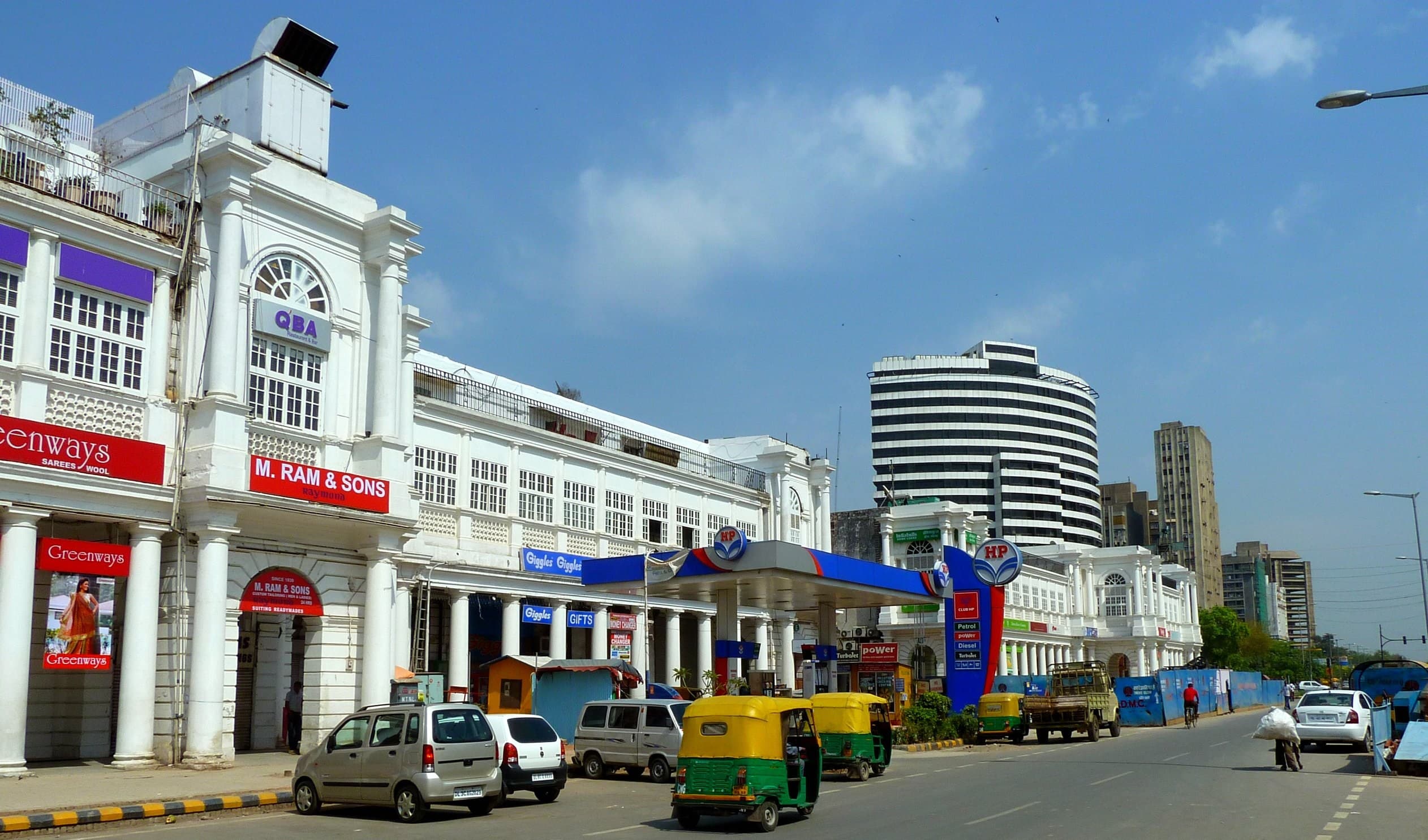
Delhi authorities closed Central Park for October 16–17 and imposed restrictions around Connaught Place as Abhijeet Dipke (opens in a new tab) and the Cockroach Janta Party called supporters to a "Lehra Do Tiranga" protest. The rally challenged India's Special Intensive Revision of electoral rolls and targeted Gyanesh Kumar (opens in a new tab), the chief election commissioner. Police and municipal authorities cited administration, safety and public order. Organisers said the restrictions were suppressing peaceful political expression.
The new issue is therefore not another general explainer on voter-roll revision. It is what happened when the dispute moved into Connaught Place, one of Delhi's most visible public spaces, with the national flag itself used as the protest symbol.
Dipke and allied organisers connected the march to earlier demonstrations and detentions around Jantar Mantar. Their message is that the revision process risks excluding legitimate voters and that restrictions on demonstrations are making it harder to challenge the Election Commission publicly. Dipke has claimed that about 13 crore — roughly 130 million — names were affected by the revision process. That number is an organiser's allegation and is not established here as a verified count. The Election Commission has rejected allegations of improper mass deletion.
That distinction matters because the underlying electoral-integrity (opens in a new tab) dispute is easy to inflate in both directions. Critics can turn a disputed estimate into a proven purge; officials can treat every protest claim as misinformation without answering specific cases of exclusion. A credible account has to separate the legal revision process, documented removals or corrections, organiser allegations and final voter eligibility.
The strongest defense of the Delhi restrictions is public order. Connaught Place is a dense commercial and transport hub. Authorities can regulate assembly locations, traffic, crowd size and access when they have a lawful safety basis. Section 163 powers are designed to permit preventive restrictions where officials anticipate danger or disruption. Closing Central Park for administrative reasons does not by itself prove political repression.
The criticism is proportionality. A government can have lawful public-order powers and still use them too broadly. When a peaceful opposition rally is pushed away from prominent public space, demonstrators are detained in related actions, and access is constrained at the same time as a major electoral controversy, the issue becomes civic space (opens in a new tab): can citizens visibly challenge an institution without being treated as a security problem?
Prime Minister Narendra Modi (opens in a new tab) and Home Minister Amit Shah (opens in a new tab) are central figures in the national political environment, but the cited October 16 reporting does not establish that either personally ordered the Connaught Place restrictions. They should be linked as political context, not falsely assigned a direct operational order. The same standard applies to opposition figures whose rhetoric may amplify the dispute without controlling the Election Commission.
The human effect of voter-roll disputes is basic democratic access. A wrongly excluded voter can lose the practical ability to participate in an election unless the error is corrected in time. At the same time, an inaccurate claim that millions have been unlawfully purged can undermine confidence in an election even when the evidence does not support that scale. Both institutional opacity and exaggerated allegations can damage trust.
The contradiction around the Tiranga protest is especially sharp. The national flag is normally presented as a shared symbol of citizenship. Organisers used it to argue that defending voter inclusion is patriotic. Authorities said they were regulating a potentially disruptive gathering, not banning the flag or the political view. The test is whether the restrictions were narrowly tailored to genuine safety needs or functioned in practice to make the protest less visible and less effective.
Two earlier background pieces cover the broader revision fight: the 17-state SIR protests (opens in a new tab) and the voter-list purge and Cockroach protest dispute (opens in a new tab). This article does not duplicate them. The October 16 lever is the Connaught Place rally, Central Park closure and Section 163 restrictions.
What comes next is measurable. Authorities can disclose the precise legal orders, duration and geographic scope of restrictions. The Election Commission can publish transparent revision data and correction procedures. Organisers can document individual cases instead of relying only on aggregate claims. Courts and election authorities can then test specific exclusions against evidence. That is the route from competing accusations to an auditable electoral record.
Questions people ask
What is the Tiranga Connaught Place protest?
It is an October 16 protest called by the Cockroach Janta Party and Abhijeet Dipke using the national flag as a symbol while challenging the Special Intensive Revision of voter rolls and restrictions on earlier demonstrations.
Who is Abhijeet Dipke?
Dipke is an Indian political activist and founder or leading organiser of the Cockroach Janta Party who helped organise the Connaught Place protest and has publicly challenged the voter-roll revision process.
How does SIR connect to the rally?
The organisers say the Special Intensive Revision risks excluding legitimate voters and demand accountability from the Election Commission. Their large numerical claims remain allegations unless independently verified.
Evidence
The sources this article cites, claim-bearing material first.
- thehindu.com · thehindu.com — www.thehindu.com
- thehindu.com · thehindu.com — www.thehindu.com
- indianexpress.com · indianexpress.com source
More analysis
Ranked by shared facts, drivers and people — never by publication date alone.
Articles12
- India Voter List 2026: Why 130M Names Were CutShares the driver: Electoral Integrity and Competitiveness · 15 October 2026
- India's Election Commission Starts a New Roll Revision in 17 States and TerritoriesShares the driver: Electoral Integrity and Competitiveness · 16 October 2026
- Why India's Supreme Court Put the Election Commission on NoticeShares the driver: Electoral Integrity and Competitiveness · 15 October 2026
- Neha Bora Released: Why India SIR Protests PersistShares the driver: Electoral Integrity and Competitiveness · 17 October 2026