Why Did Katie Zacharia Leave After 5 Days?
TL;DR
Katie Zacharia left the White House press secretary post on 16 October 2026 after just five days and one formal briefing. The White House characterized her departure as a transition, while questions about her credentials and the lack of routine briefings remained unresolved.
By the Factrail desk · Method: how we source and score · Last reviewed
Key graph impact
The article explains graph entities; the causal edges belong to the facts and drivers it links to.
- ArticleWhy Did Katie Zacharia Leave After 5 Days?
- explainsDriverMedia Freedom
- strengthensIndicators (2)Alternative sources of information index
- ArticleWhy Did Katie Zacharia Leave After 5 Days?
- explainsDriverExecutive-Power Concentration
- strengthensIndicators (4)Rule of Law Gap from the Highest Governance Score
- ArticleWhy Did Katie Zacharia Leave After 5 Days?
- explainsDriverGovernment Transparency
Strengthens · 66% impact strength
Observed
0.62 score from 0 to 1 · 0.23 below the normal line (2024)
Worse than normal125 readings, 1900–2024: rose from 0.35 score from 0 to 1 to 0.62 score from 0 to 1.
Above normal = better
Strengthens · 64% impact strength
Observed
43.9 Score · 43.9 above the normal line (2024)
Worse than normal26 readings, 1996–2024: rose from 43 Score to 43.9 Score.
Normal is zero · any amount = worse
- Better
Number of cases of killings of human rights defenders, journalists and trade unionists
via Media Freedom
Weakens · 58% impact strength
Observed
550 · 550 above the normal line (2025)
Worse than normal8 readings, 2018–2025: rose from 487 to 550.
Normal is zero · any amount = worse
- Worse
Weakens · 56% impact strength
Observed
0.57 index score (0-1) · 0.23 below the normal line (2024)
Worse than normal125 readings, 1900–2024: rose from 0.5 index score (0-1) to 0.57 index score (0-1).
Above normal = better
Article
Katie Zacharia Is Out After Five Days: What Went Wrong at the White House Podium
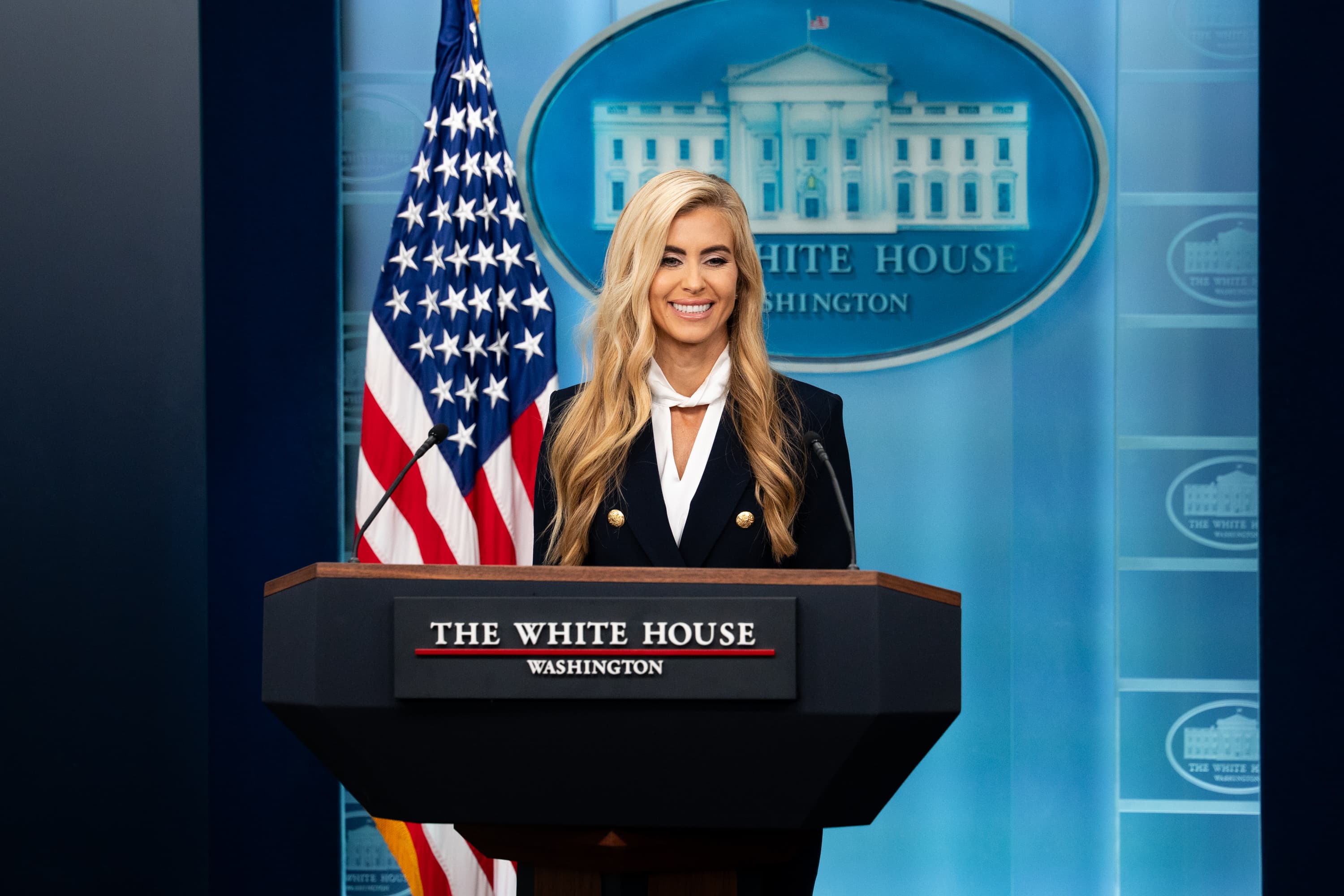
Katie Zacharia (opens in a new tab) left the White House press-secretary job on 16 October 2026 after only five days, according to administration officials cited by NPR (opens in a new tab) and NBC News (opens in a new tab). Officials described the move as “transitioning out” and suggested a different administration position might follow. She had delivered one formal briefing on Tuesday. Her departure raises questions not only about a new spokesperson's performance but about how the White House selects and supports people responsible for explaining government actions to the public.
One briefing, three reporters
Zacharia began the role on Monday and appeared at the podium the next day. The NPR account described a halting opening statement delivered from notes and questions taken from only three reporters. A short briefing alone cannot prove inability to perform a job. The issue is the combination of sparse public access, uncertainty about credentials and the extraordinary speed of the personnel reversal. It meant that the person who was supposed to answer questions for the administration became the story before establishing a routine of answers. The point matters for government transparency (opens in a new tab) as much as for palace intrigue.
The White House had already gone for weeks without its previous regular briefing pattern after Karoline Leavitt left. Zacharia was therefore being assessed against an unmet public need: a dependable way for reporters to seek explanations for policy decisions, obtain official records and challenge inaccurate assertions. The president can communicate directly with the public, but presidential appearances are not a substitute for a spokesperson who can systematically take questions and return to issues that remain unanswered. The availability of that channel is part of media freedom (opens in a new tab), not an entitlement to friendly questions.
Credentials: a real question, but not a criminal verdict
Zacharia is a Pepperdine law-school graduate who had described herself as an attorney. Reporters asked where she had passed a bar exam and whether she held a United States licence to practise law. NPR reported her answer referring to her time in China and a statement that she had practised international transactional law with appropriate credentials. NBC described the legal-credential issue as part of the controversy accompanying her exit. Graduation from law school and bar admission are different qualifications. A public official's professional background merits verification, but an unanswered or contested licensing question should not be inflated into a criminal finding.
The distinction is especially important because the credential question was already covered in the separate Zacharia bar-exam report (opens in a new tab). The new event is the 16 October departure. The earlier controversy may help explain why criticism intensified, but it should not be rewritten as a new disclosure or confused with the official reason for a personnel decision that the White House did not fully specify.
Trump defended her while signalling the end
Donald Trump (opens in a new tab) defended Zacharia against what he considered unfair press treatment and publicly suggested that, in her position, he would reconsider staying. That is the strongest charitable explanation: someone recruited into an unusually exposed role faced immediate criticism and might reasonably decide the personal cost was excessive. The competing accountability issue is why the administration had no durable answer to concerns before announcing her appointment, and why a chief government-communications job was apparently left unstable just ahead of a major election.
The president's personal defence does not resolve whether internal screening was adequate. Nor does Zacharia's departure by itself prove a named aide or previous official was responsible. Kimberly Guilfoyle (opens in a new tab) figures in other administration personnel reporting, but the cited sources do not establish her as Zacharia's replacement or as the decision-maker who caused this exit. Assigning that role would be unwarranted.
A record often compared incorrectly
Anthony Scaramucci served a famously brief period as White House communications director during Trump's first administration. That position is not identical to White House press secretary. Calling his roughly ten-day stint the previous press-secretary record would confuse two offices. Zacharia's five days can be described as an unusually short tenure in the specific post without relying on a faulty title comparison. The distinction is a small example of what a functioning press operation should itself be able to clarify promptly.
What follows at the podium?
A credible reset would identify a successor or clear temporary spokesperson, restore an accessible briefing schedule, clarify standards for describing credentials, and explain how a staff member could move so quickly from appointment to departure. None requires reporting private personnel details that lack a genuine public-interest basis. The deeper issue is the concentration of official messaging around executive power (opens in a new tab) and the difficulty of obtaining sustained answers when roles keep changing. No confirmed successor was identified in the cited 16 October reporting. The next verifiable evidence will be the White House's appointment announcement and actual briefing activity.
Questions people ask
Why is Katie Zacharia leaving the White House?
Officials said she was transitioning out after five days. Her first briefing and questions about professional credentials drew intense criticism, but no fully documented single reason was established.
Who was the shortest-serving White House press secretary?
Zacharia's five-day tenure is exceptionally short. Anthony Scaramucci's often-mentioned brief service was as communications director, a different office.
Who will replace Katie Zacharia?
The cited reporting had not established a confirmed replacement as of 17 October 2026.
<!-- PART 2 — four append-only person updates and articles M3–M5 --> <!-- PART 2 — append-only person updates and articles M3–M5 -->Evidence
The sources this article cites, claim-bearing material first.
- opb.org · opb.org — www.opb.org
- nbcnews.com · nbcnews.com — www.nbcnews.com
- kclu.org · kclu.org — www.kclu.org
More analysis
Ranked by shared facts, drivers and people — never by publication date alone.
Articles12
- Is the Presidential Records Act Unconstitutional?Shares the driver: Government Transparency · 17 October 2026
- Is Laura Loomer the Next White House Press Secretary?Shares the driver: Government Transparency · 17 October 2026
- Why Are Women Leaving Trump's Administration?Shares the driver: Government Transparency · 17 October 2026
- Why Trump Canceled the Nidal Hasan Execution LivestreamShares the driver: Media Freedom · 15 October 2026