Is the Presidential Records Act Unconstitutional?
TL;DR
At a US appeals hearing reported on 16 October 2026, the Justice Department argued that the Presidential Records Act unconstitutionally limits presidential control over official documents. Judges pressed lawyers on the consequences for record transfers and public accountability; no final appellate ruling was established by the hearing.
By the Factrail desk · Method: how we source and score · Last reviewed
Key graph impact
The article explains graph entities; the causal edges belong to the facts and drivers it links to.
- ArticleIs the Presidential Records Act Unconstitutional?
- explainsDriverJudicial independence erosion (court capture)
- strengthensIndicators (4)Rule of Law Gap from the Highest Governance Score
- ArticleIs the Presidential Records Act Unconstitutional?
- explainsDriverExecutive-Power Concentration
- strengthensIndicators (4)Rule of Law Gap from the Highest Governance Score
- ArticleIs the Presidential Records Act Unconstitutional?
- explainsDriverGovernment Transparency
- Worse
Strengthens · 72% impact strength
Observed
43.9 Score · 43.9 above the normal line (2024)
Worse than normal26 readings, 1996–2024: rose from 43 Score to 43.9 Score.
Normal is zero · any amount = worse
Weakens · 70% impact strength
Observed
0.55 index score (0-1) · 0.26 below the normal line (2024)
Worse than normalAbove normal = better · Lag ~12 mo
Weakens · 69% impact strength
Observed
0.62 score from 0 to 1 · 0.25 below the normal line (2024)
Worse than normal125 readings, 1900–2024: rose from 0.37 score from 0 to 1 to 0.62 score from 0 to 1.
Above normal = better
- Worse
Weakens · 56% impact strength
Observed
0.57 index score (0-1) · 0.23 below the normal line (2024)
Worse than normal125 readings, 1900–2024: rose from 0.5 index score (0-1) to 0.57 index score (0-1).
Above normal = better
Article
Trump's DOJ Calls the Presidential Records Act Invalid — Appeals Judges Push Back
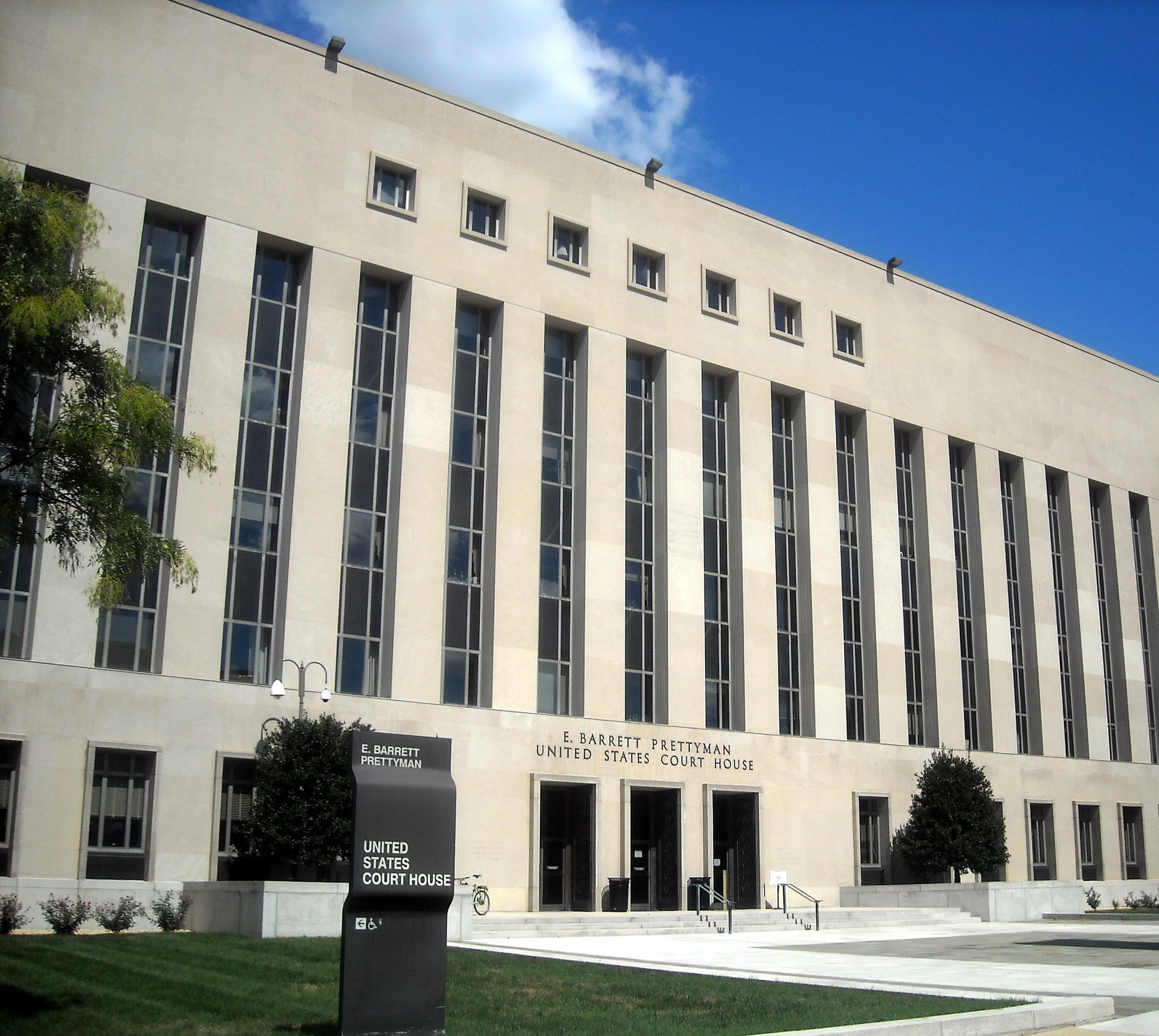
Lawyers for Donald Trump's (opens in a new tab) Justice Department urged a federal appeals court on 16 October 2026 to invalidate the Presidential Records Act as an unconstitutional intrusion into executive autonomy. A panel of the US Court of Appeals for the District of Columbia Circuit questioned what would protect presidential records if the law ceased to operate. The case concerns the public's ability to reconstruct government decisions; it is not merely a contest over who owns boxes of old documents.
The appeal and the law being challenged
The 1978 Presidential Records Act followed the Watergate period and established obligations for preserving official presidential records. As Bloomberg Law explains, later amendments addressed electronic records and government-account use. The law makes certain records part of a statutory preservation and public-access regime rather than purely private property of a president. That does not mean every presidential conversation becomes public immediately: disclosure is subject to rules, delays and privileges. Destroying the framework would change the starting principle for documenting the nation's executive branch.
In April 2026 the Justice Department's Office of Legal Counsel concluded that Congress exceeded its constitutional power when imposing this records scheme. Several watchdog and historical organisations challenged the administration's position. A federal trial judge issued a preliminary injunction in May directing compliance with the statute while litigation continued. That injunction was interim relief based on legal criteria, not an ultimate Supreme Court judgment on the statute's constitutionality. The October 16 appeals hearing concerned whether the lower-court protections would survive and how much control Congress could exercise.
What the judges asked
Justice Department lawyer John Bailey argued that the legislation impermissibly restrained the president and could discourage aides from speaking candidly. Judge Patricia Millett pressed the government on what would replace records preservation if the entire statute were removed. Her concern included practical handoffs between administrations: an incoming president might need national-security and policy records created by a predecessor. Judges also explored where a narrower constitutional legislative rule might lie. The attorney declined to draw a definitive line between permissible safeguards and interference.
The panel was not unanimous in emphasis. Judge Justin Walker questioned whether automatic future access by an adversarial successor could increase aides' reluctance to give frank advice. The plaintiffs' lawyer Daniel Jacobson answered that the Act already contains delayed disclosure mechanisms and opportunities to assert executive privilege. These competing arguments show why a fair account cannot simply describe judges as endorsing the watchdog groups: they asked difficult questions of both sides. The hearing took roughly two hours, according to Bloomberg's contemporaneous report.
The court's own October 2026 recording index (opens in a new tab) lists American Historical Association v. Donald Trump, No. 26-5185, argued on October 16 before Judges Millett, Pillard and Walker. That is the strongest documentary anchor for the hearing's existence, court and date. The index alone does not prove the content of any oral argument; contemporaneous legal reporting supplies the attributed descriptions above. Judicial questioning is not a final judgment, and the appeal remained unresolved at the editorial cutoff.
The opposing cases for autonomy and preservation
The government's strongest argument is constitutional separation of powers: an executive who expects every draft and frank adviser note to be preserved under rules written by Congress may receive less candid counsel. It says the president must retain control of internal decision-making. The challengers' strongest answer is that democratic government relies on institutional memory independent of whichever president happens to hold office. They point out that the Act's disclosure delays and privilege protections specifically address confidentiality concerns.
A practical example is an incoming national-security team seeking an accurate account of crisis decisions. If information lives only on personal devices and its preservation depends entirely on the departing incumbent, continuity may weaken. The opposite concern is a private adviser afraid of leaks or misuse of future records. Neither concern automatically settles the constitutional question. It is the courts' task to decide whether Congress's chosen framework is a permissible balance and, if not, what narrower requirements might survive.
The government-transparency driver (opens in a new tab) and executive-power concentration (opens in a new tab) explain the institutional stakes. Senior White House officials such as Susie Wiles (opens in a new tab) potentially have obligations under any applicable records regime, but the hearing report does not establish that Wiles personally destroyed a record. Similarly, the Supreme Court's 2024 presidential immunity ruling (opens in a new tab) is legal context, not a holding that this statute is unconstitutional.
What the public could lose
Preserved executive records can later show what warnings reached the White House, who advised decisions, whether agency objections were considered and how an administration represented those decisions to the public. They support historians and journalists, but also future officials trying to correct errors. The immediate litigation has not proved that all records have been destroyed. The actual dispute is whether an enforceable duty will continue to constrain preservation practices during the presidency.
Comparisons to other contemporary disputes over presidential secrecy may illuminate the political atmosphere, but they should not be substituted for the legal papers in this case. The judicial-independence driver (opens in a new tab) is relevant precisely because an independent court, not the litigating president, must decide the legal question. The outcome could have consequences for future Democratic and Republican administrations alike.
What happens next?
The D.C. Circuit must issue a ruling on the appeal or otherwise dispose of the matter; further litigation could follow. The immediate issues are compliance with the May order, the scope of any presidential privilege claim and the lawful baseline for electronic communications. A court may reject the Justice Department's broad theory, accept it or fashion narrower relief. Until that happens, claims that the law has already been definitively voided are inaccurate.
Questions people ask
Does the DOJ say the Presidential Records Act is unconstitutional?
Yes. The Justice Department advanced that argument in the appeal heard on October 16, 2026. The argument itself is not a court ruling.
Who owns presidential records?
The 1978 Act establishes a statutory public-records framework for official presidential material, subject to specified protections and disclosure rules. The administration is challenging that framework.
What did the DC Circuit judges say?
The judges questioned the implications for executive advice and future presidential transitions.
Evidence
The sources this article cites, claim-bearing material first.
More analysis
Ranked by shared facts, drivers and people — never by publication date alone.
Articles12
- Why Are Women Leaving Trump's Administration?Shares the driver: Government Transparency · 17 October 2026
- Why Did Katie Zacharia Leave After 5 Days?Shares the driver: Government Transparency · 17 October 2026
- What Did Democrats Find Inside Adelanto ICE?Shares the driver: Government Transparency · 17 October 2026
- Is Laura Loomer the Next White House Press Secretary?Shares the driver: Government Transparency · 17 October 2026