Myanmar's Military Lost Ground in Rakhine. Civilians in Kyauktaw Paid the Price.
TL;DR
An airstrike on a crowded market reportedly killed at least 50 civilians. The attack exposes the accountability gap behind Min Aung Hlaing's reliance on air power as the junta loses territorial control.
By the Factrail desk · Method: how we source and score · Last reviewed
Article
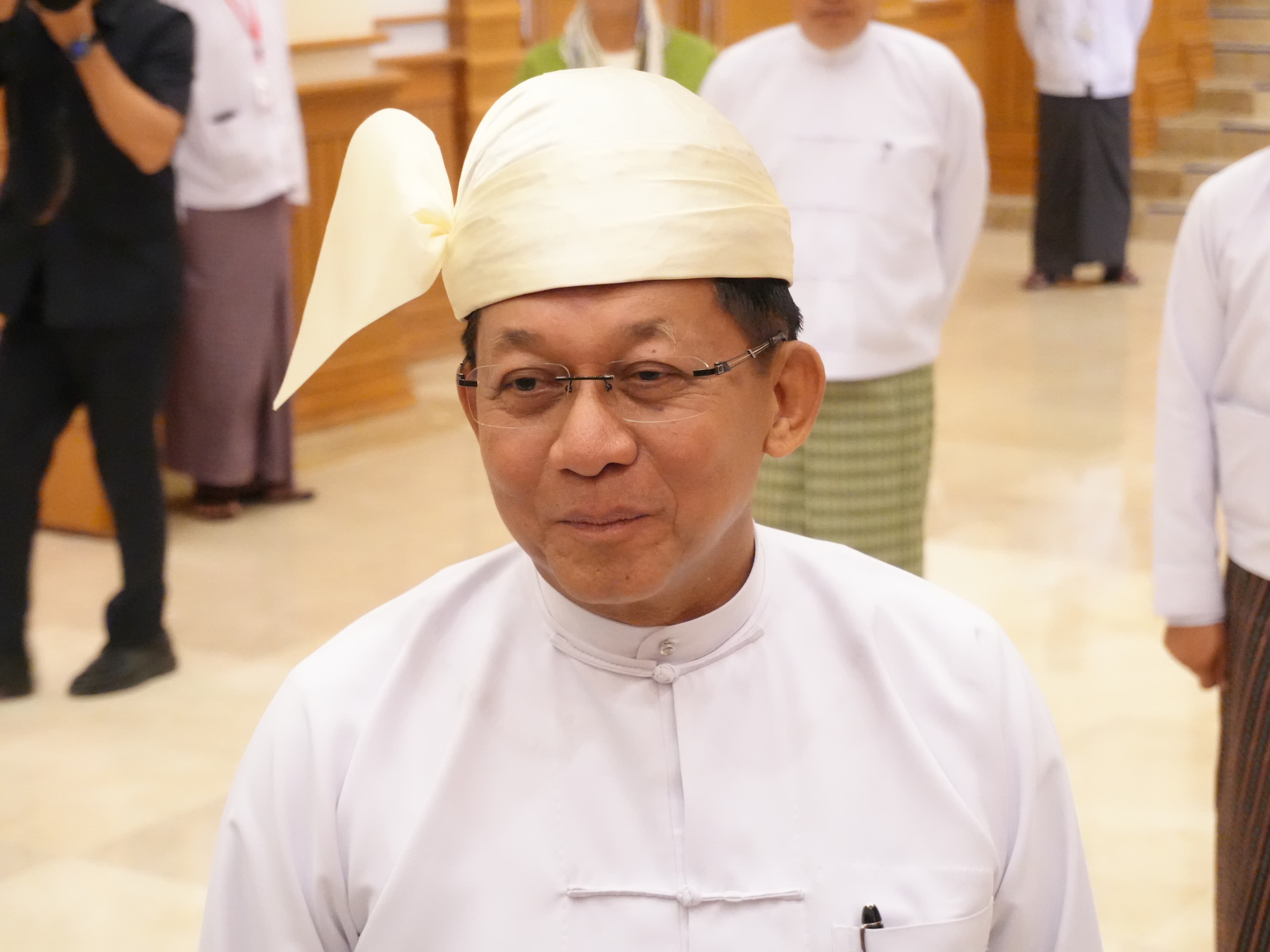
Min Aung Hlaing (opens in a new tab)'s military has lost most of Rakhine State to the Arakan Army. It still controls something the civilians living there cannot match: aircraft.
That imbalance was visible in Kyauktaw on September 28.
Myanmar's military carried out airstrikes on the town, including a crowded public market. Radio Free Asia reported that at least 50 people were killed, including children and pregnant women, according to the Arakan Army. The UN Human Rights Office described the bombing as one of the deadliest air attacks in Rakhine since the 2021 coup. (Radio Free Asia (opens in a new tab))
Fortify Rights independently documented the attack and said at least 50 civilians were reportedly killed and more than 50 wounded, including both ethnic Rakhine and Rohingya residents. It said the strikes hit the market and surrounding civilian areas during busy shopping hours and may constitute a war crime. (Fortify Rights (opens in a new tab))
The significance is not simply another civilian casualty count.
The military's territorial position in Rakhine has deteriorated sharply. Fortify Rights says the junta has lost control of 14 of the state's 17 townships to the Arakan Army. As control on the ground has contracted, air power has become an increasingly important lever.
That creates a brutal asymmetry. Losing territory does not automatically reduce a military's ability to punish the population living in that territory. Aircraft can reach towns that ground forces no longer govern.
The result is a form of coercion without administration. Civilians remain exposed to the state even where the state cannot provide security, services or meaningful political representation.
Radio Free Asia reported assessments from Rakhine politicians and analysts that attacks on civilians are being used to pressure the Arakan Army toward negotiations. That interpretation cannot by itself establish the intent behind every bomb. But the observable pattern is already serious enough: areas outside effective junta control continue to face military airstrikes, and civilian spaces are repeatedly among the locations hit.
Fortify Rights said available material showed two bomb craters, one in the market and another on a nearby bridge, and documented testimony from residents describing explosions, fire and mass casualties. The organization argued that states supplying weapons and aviation fuel should stop enabling attacks on civilians. (Fortify Rights (opens in a new tab))
That moves accountability beyond Min Aung Hlaing alone.
A military air campaign depends on aircraft, munitions, fuel, maintenance, finance and diplomatic protection. The chain is wider than the pilot who releases a bomb. Foreign suppliers and intermediaries can become part of the material infrastructure that allows a junta losing political and territorial control to retain coercive reach.
ASEAN governments face their own test. Statements of concern have become a recurring response to Myanmar's post-coup violence. The gap is between condemning civilian deaths and creating costs for the institutions that keep producing them.
Kyauktaw exposes that gap with unusual clarity.
If the junta can lose towns yet continue bombing the people inside them, then territorial retreat is not the same as civilian protection. And if regional governments continue treating every new strike as an isolated tragedy, Min Aung Hlaing keeps the most important advantage of all: the ability to impose consequences while facing few himself.
Evidence
The sources this article cites, claim-bearing material first.
- International Criminal Court · ICC Prosecutor — application for an arrest warrant, Bangladesh/Myanmar, 27 November 2024
More analysis
Ranked by shared facts, drivers and people — never by publication date alone.
Articles3
- Min Aung Hlaing's air force bombed a market. ASEAN answered with concern.Also covers Min Aung Hlaing · 5 October 2026
- Malaysia sends 1,476 people back to Myanmar while safety remains unprovenAlso covers Min Aung Hlaing · 4 October 2026
- Rakhine’s market deaths put the targeting question back at the centerAlso covers Min Aung Hlaing · 3 October 2026