Pyongyang sells uncertainty as a weapon: the new missile claim is designed to make interception less credible
TL;DR
North Korea says its latest intermediate-range missile can manoeuvre to defeat regional defences and incorporates unspecified AI capabilities. The technical claims remain partly unverified, but the political mechanism works before verification: increase uncertainty, force rivals to plan for the worst, and raise the cost of deterrence.
By the Factrail desk · Method: how we source and score · Last reviewed
Article
North Korea’s latest missile announcement is as much about uncertainty as hardware.
Pyongyang says it tested an intermediate-range ballistic missile capable of changing trajectory at low altitude to make interception more difficult. Kim Yo Jong also attributed unspecified artificial-intelligence capabilities to the weapon and described it as “strategic,” terminology associated with North Korea’s nuclear force. South Korean and Japanese authorities confirmed a launch but supplied somewhat different estimates of the distance travelled.
Those external observations establish that a missile was launched. They do not independently establish every performance claim North Korea attaches to it.
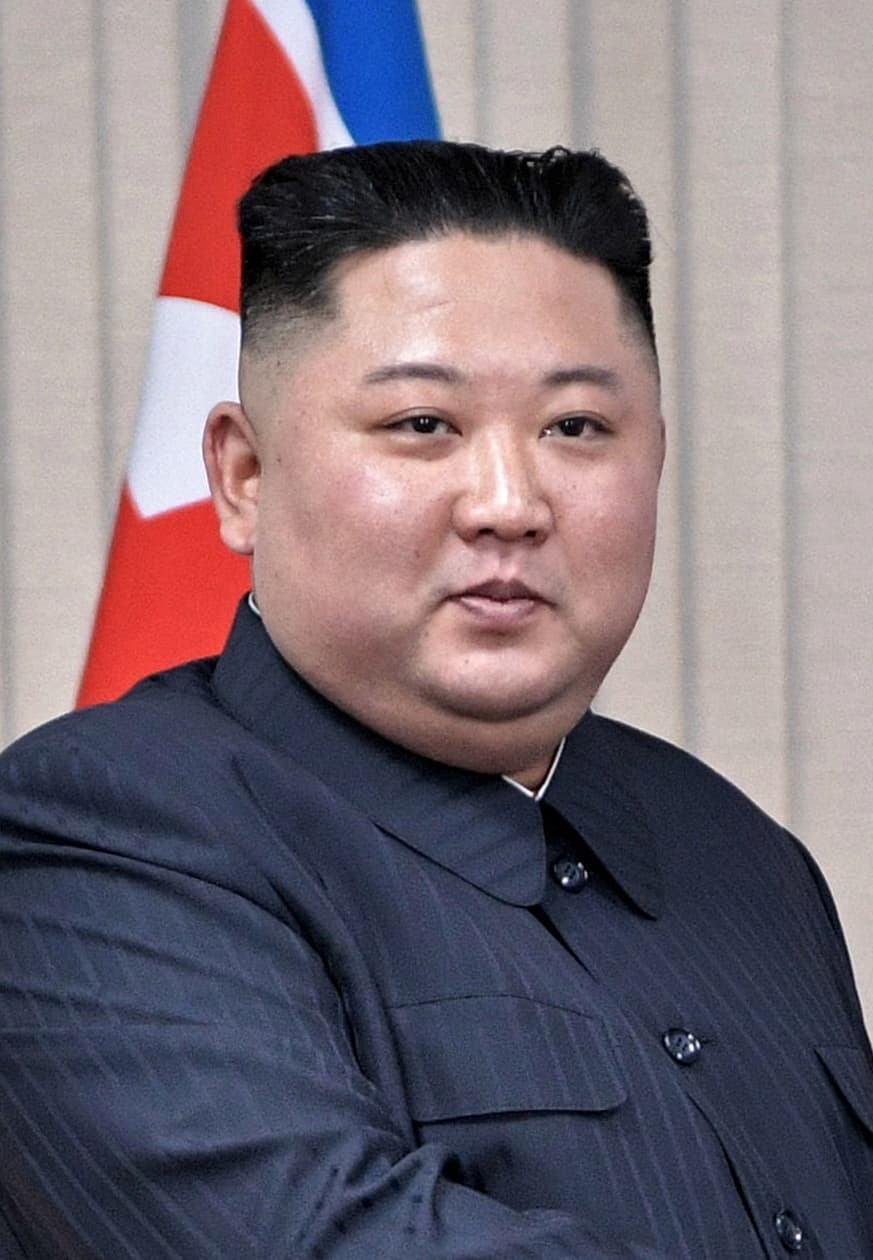
That distinction is central to the accountability story. Kim Jong-un (opens in a new tab) does not need foreign governments to accept every technical boast as proven for the launch to have strategic effects. He needs defence planners in Seoul, Tokyo and Washington to treat enough of the claims as plausible that they spend money, reposition assets and revise assumptions about interception.
Uncertainty itself becomes part of the weapon.
An evasive intermediate-range system potentially changes the burden on regional missile defence because defenders cannot safely plan only against demonstrated best-case performance. If Pyongyang claims manoeuvrability or automated guidance and the claim cannot quickly be disproved, adversaries have incentives to model the more dangerous scenario. That can produce additional sensors, interceptors, exercises and military integration among the United States, South Korea and Japan.
North Korea can then point to those responses as evidence of hostile encirclement and justify another round of military development. The result is a familiar security dilemma with unusually concentrated political ownership.
The latest launch also follows renewed tension around the inter-Korean border. A joint South Korean and US-led United Nations Command investigation attributed September landmine explosions that wounded South Korean soldiers to mines planted by North Korea and found an armistice violation. Pyongyang disputes the surrounding political accusations and has hardened its border infrastructure.
That context makes the missile test more than a technology demonstration. It communicates that local border incidents and strategic weapons belong to the same escalation environment.
The welfare cost is distributed much more widely than the command authority. Residents of the Korean Peninsula and Japan absorb the catastrophic tail risk. Governments absorb higher defence costs. Civil defence systems must prepare for shorter or less predictable warning. Diplomatic space contracts as each new capability becomes another reason for the other side not to reduce readiness.
The “AI” label deserves particular discipline. No independent evidence in the reporting establishes what the term means operationally. It could refer to guidance, target discrimination, trajectory optimisation or simply political branding. Treating the claim as proven would reproduce Pyongyang’s messaging. Ignoring it entirely would miss the deterrence mechanism.
The defensible conclusion is narrower: North Korea launched an intermediate-range missile and claims capabilities intended to complicate interception. The claim itself increases uncertainty even before those capabilities are independently demonstrated.
That is the lever Kim’s system controls — not only the missile, but the amount of risk everyone else must assume when deciding whether the missile can be stopped.
Evidence
The sources this article cites, claim-bearing material first.
- www.brookings.edu · Kim Jong-un's Education and Leadership Style
More analysis
Ranked by shared facts, drivers and people — never by publication date alone.