Kim Jong Un's Border Policy Left Three South Korean Soldiers in a Minefield
TL;DR
South Korea and the United Nations Command concluded that North Korean mines were deliberately placed south of the military demarcation line. Pyongyang calls the accusation a farce, while President Lee Jae-myung continues to pursue lower military tensions.
By the Factrail desk · Method: how we source and score · Last reviewed
Key graph impact
The article explains graph entities; the causal edges belong to the facts and drivers it links to.
- ArticleKim Jong Un's Border Policy Left Three South Korean Soldiers in a Minefield
- mentionsDriverMilitary Escalation Risk
- strengthensIndicators (2)Global deaths from organized violence (UCDP)
Strengthens · 70% impact strength
Observed
245k deaths per year · 195k above the normal line (2025)
Worse than normalAbove normal = worse
Strengthens · 45% impact strength
Observed
34.7 Score · 34.7 above the normal line (2024)
Worse than normal26 readings, 1996–2024: fell from 36.2 Score to 34.7 Score.
Normal is zero · any amount = worse
Article
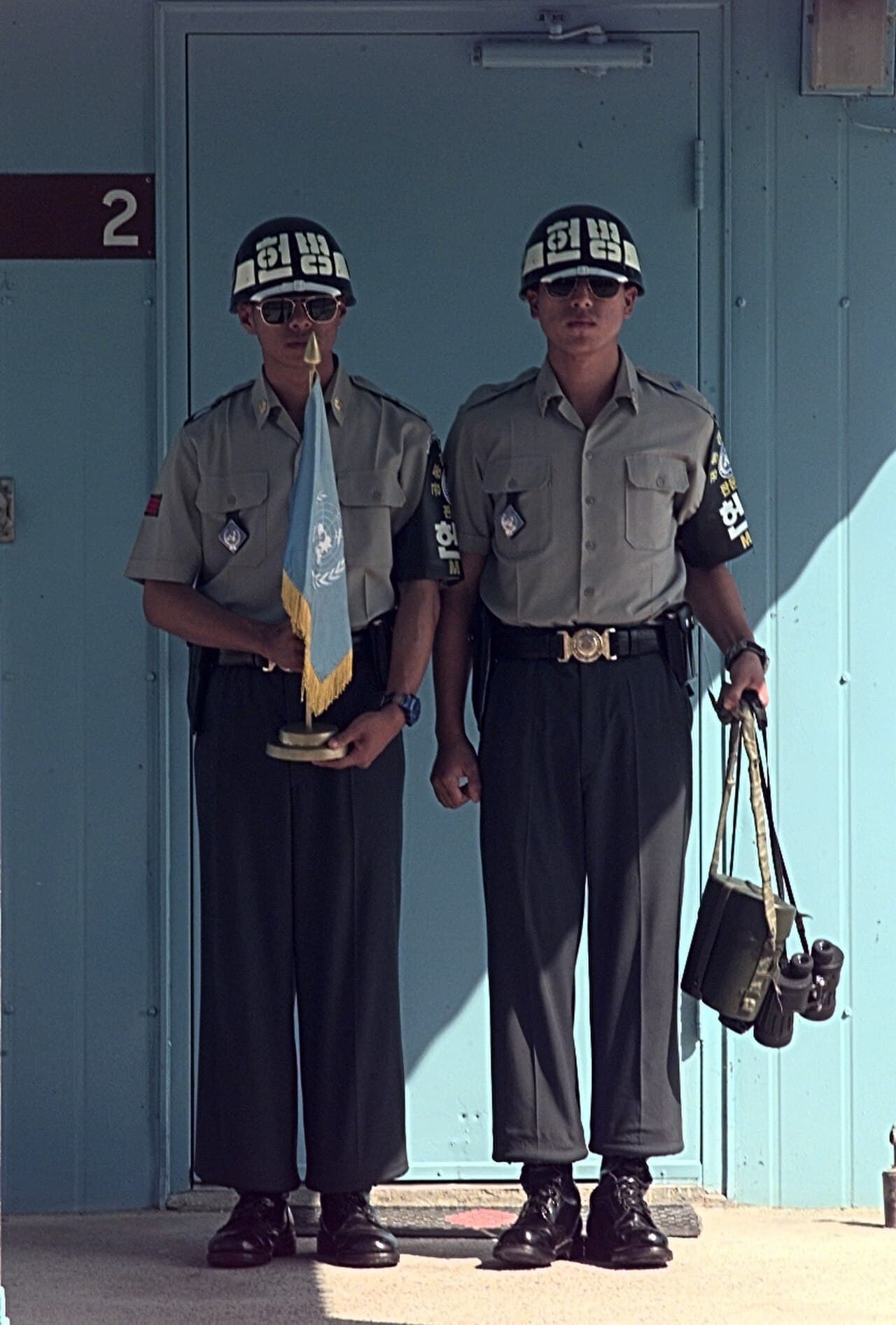
Three South Korean soldiers were injured in the Demilitarized Zone on September 21. Two suffered serious ankle injuries. The immediate question was whether the mines had drifted south through floods or had been deliberately placed across the military demarcation line.
On October 5, South Korea's military said its joint investigation with the United Nations Command had reached a conclusion: the mines were North Korean devices deliberately planted south of the line.
The investigators cited the construction of the mines, their placement and additional mines found in the area. South Korea described the incident as an armistice violation and demanded an apology and removal of the devices. The military then began clearing additional mines at the site.
North Korea rejects that account. Kim Yo-jong previously called Seoul's case a "farce" and warned against actions directed at North Korean personnel conducting border fortification work. That denial belongs in the record because the evidentiary contest has not disappeared simply because Seoul issued a final military finding.
But the responsibility question is wider than one blast.
Under Kim Jong Un (opens in a new tab), North Korea has hardened its physical and political separation from the South, building barriers, laying mines and increasingly defining inter-Korean relations through permanent hostility rather than unfinished reunification. South Korean reporting says thousands of North Korean personnel have been involved in border fortification work since 2024.
A deliberately placed antipersonnel mine south of the demarcation line would therefore not be an isolated tactical act. It would fit an expanding border policy in which the boundary itself becomes more dangerous.
That creates a direct military-escalation risk (opens in a new tab). Mines are especially destabilizing because they can create casualties without a live decision at the moment of contact. A soldier steps in the wrong place, an explosive detonates, and political leaders then have to decide whether an old emplacement is equivalent to a new attack.
The incident also tests Lee Jae-myung (opens in a new tab), whose government has continued to advocate practical tension reduction and renewed dialogue. Lee said days earlier that his administration would keep seeking measures to lower military tensions despite the mine dispute.
That is not necessarily weakness. De-escalation can be rational precisely when an adversary is dangerous. But engagement needs a credible answer to physical coercion. If Seoul calls for peaceful coexistence while North Korean fortifications create new casualties south of the line, the public needs to know what consequences follow and what safeguards change.
North Korea's nuclear-forces law (opens in a new tab) sits at the extreme end of the deterrence structure. The mine blast shows the opposite end: a small device in the ground can still test the entire relationship.
Peace on the Korean Peninsula is not only negotiated in summits. It is also measured by whether soldiers can walk inside the armistice zone without stepping on weapons allegedly planted across the line.
Evidence
The sources this article cites, claim-bearing material first.
- Office of the President, Republic of China (Taiwan) · Office of the President — Inaugural Address of ROC 16th-term President Lai Ching-te, 20 May 2024
More analysis
Ranked by shared facts, drivers and people — never by publication date alone.
Articles12
- Claudia Sheinbaum Asked Washington for Evidence Before a Border Shooting Claim Becomes a Military PretextShares the driver: Military Escalation Risk · 5 October 2026
- Benjamin Netanyahu Calls It an Opening for Peace While Israel Digs In Across South LebanonShares the driver: Military Escalation Risk · 5 October 2026
- Is Hegseth Being Impeached? The 8 Articles ExplainedShares the driver: Military Escalation Risk · 6 October 2026
- Israel Katz Orders Hunt for Remaining Oct. 7 AttackersShares the driver: Military Escalation Risk · 6 October 2026