Why Is Iran Attacking Ships in the Strait of Hormuz?
TL;DR
Iran has intensified pressure on commercial shipping around the Strait of Hormuz, with two senior Iranian officials telling Reuters that the new tactics are meant to sustain high oil prices and influence the November 3 US midterm elections. A cargo ship also sank after Iran said it struck a mine, while oil prices rose above $100 a barrel amid renewed fears over the world's most important energy chokepoint.
By the Factrail desk · Method: how we source and score · Last reviewed
Key graph impact
The article explains graph entities; the causal edges belong to the facts and drivers it links to.
- ArticleWhy Is Iran Attacking Ships in the Strait of Hormuz?
- explainsDriverEnergy-Price Volatility
- strengthensIndicators (2)Difficulty making ends meet
- ArticleWhy Is Iran Attacking Ships in the Strait of Hormuz?
- explainsDriverSecurity of Maritime Trade Routes
Strengthens · 77% impact strength
Observed
18.4% of population aged 16 years or over · 8.35 above the normal line (2025)
Worse than normal8 readings, 2018–2025: fell from 21.5% of population aged 16 years or over to 18.4% of population aged 16 years or over.
Above normal = worse
Strengthens · 52% impact strength
Observed
0.74 hours · 0.74 above the normal line (2025)
Worse than normal8 readings, 2018–2025: fell from 1.25 hours to 0.74 hours.
Above normal = worse
Article
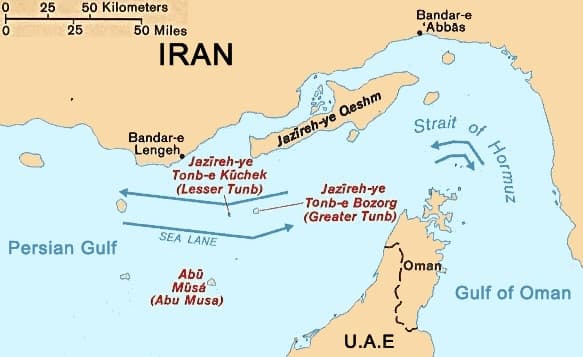
Iran is escalating pressure on commercial shipping around the Strait of Hormuz, and two senior Iranian officials gave Reuters an unusually explicit explanation on October 14: the new tactics are intended to keep oil prices high and influence the US midterm elections (opens in a new tab) on November 3. That makes the attacks more than battlefield spillover. They are also an attempt to use the world's most important oil chokepoint as political and economic leverage.
Reuters reported that Iranian operations have changed in both frequency and method. The campaign has expanded beyond the narrow strait into the Gulf of Oman and waters closer to Qatar and the United Arab Emirates. Iranian forces have used small unarmed boats as spotters after US strikes degraded parts of Iran's conventional capability. The officials said the strategy was coordinated at senior levels. Mojtaba Khamenei (opens in a new tab) is therefore part of the wider leadership context, but published reporting does not attribute individual ship attacks to a personal order from him.
The human and economic effects are immediate. AP and Iran International reported that Iran said a cargo ship carrying about 2,500 containers sank after striking a naval mine (opens in a new tab) in the Strait of Hormuz; the crew's fate was initially unclear, and the incident had not been independently verified by international maritime monitors. Every additional attack raises insurance costs, changes vessel behavior and threatens seafarers who are not decision-makers in the conflict. That is why the episode directly worsens security of maritime trade routes (opens in a new tab).
Energy markets are already pricing the risk. Reuters reported Brent crude at about $106.60 a barrel on October 14, with West Texas Intermediate near $95.79. Prices reflect several simultaneous shocks, including attacks connected to Iran and the Houthis, damage around Saudi infrastructure and uncertainty over Russian fuel flows. It would therefore be wrong to attribute every dollar of the move to Hormuz alone. The defensible conclusion is narrower: new Iranian threats to shipping added another risk premium to an already tight market, increasing energy-price volatility (opens in a new tab).
The contradiction for President Donald Trump (opens in a new tab) is that the US has repeatedly presented its naval posture as sufficient to keep the strait open while commercial incidents continue. That does not mean Iran has closed Hormuz; Reuters reported substantial shipping still moving. It means control is not the same as eliminating risk, especially when mines, small craft and dispersed attacks can impose costs without a conventional naval battle.
Iran's strongest defence is that it is responding to an ongoing war involving US and Israeli strikes and is targeting vessels it says violate Tehran's restrictions. That claim does not remove the legal and humanitarian consequences of endangering civilian shipping. Nor does it erase the extraordinary political admission reported by Reuters: officials linked the campaign to influencing a foreign election and sustaining commodity prices.
What comes next is a test of whether the tactic works. Washington can increase escorts and mine countermeasures, shipping companies can reroute or pause voyages, and oil markets can absorb or amplify each incident. The clearest warning sign would be a shift from intermittent attacks toward a sustained attempt to block transit. Until then, the danger is a costly grey zone: enough violence to move markets and elections, but below the threshold of a declared closure.
Questions people ask
Why is Iran attacking ships again?
Iranian officials told Reuters the campaign is meant to pressure adversaries, keep oil prices elevated and influence the US midterm political environment while the regional war continues.
How high are oil prices after the Hormuz attacks?
Reuters reported Brent crude at about $106.60 a barrel on October 14 and US WTI near $95.79. Multiple conflicts and supply risks are affecting those prices, not Hormuz alone.
Is Iran trying to influence the US midterms?
Two senior Iranian officials told Reuters that influencing the November 3 midterms was one purpose of the new shipping tactics. That is an attributed claim from officials involved in Iran's strategy, not an independent measure of whether the effort will succeed.
Evidence
The sources this article cites, claim-bearing material first.
- The Straits Times (Reuters) · Iran shifts Hormuz attacks ahead of US vote · 14 Oct 2026
- Global Banking & Finance Review (Reuters) · Oil prices rise as Iran deploys new tactics to target tankers · 14 Oct 2026
- Iran International · IRGC Navy says container ship carrying 2,500 containers sinks near Hormuz · 14 Oct 2026
More analysis
Ranked by shared facts, drivers and people — never by publication date alone.
Articles12
- Why Did Hormuz Ship Attacks Hit a New Daily High, and What Happened to GFS Pride?Shares the driver: Security of Maritime Trade Routes · 16 October 2026
- Hormuz Fertilizer Crisis: Why the UN Warns of Food ShortagesShares the driver: Security of Maritime Trade Routes · 15 October 2026
- Why Did US Inflation Rise to 3.7% Before the Midterms?Shares the driver: Energy-Price Volatility · 15 October 2026
- GFS Pride Sunk as Strait of Hormuz Attacks Hit Their Highest Daily LevelShares the driver: Security of Maritime Trade Routes · 16 October 2026