Why Did Hormuz Ship Attacks Hit a New Daily High, and What Happened to GFS Pride?
TL;DR
Maritime attacks around the Strait of Hormuz reached their highest daily level of the current U.S.-Iran war by October 15, with at least 10 vessels attacked since Sunday and two ships sinking in 24 hours. Singapore's maritime authority said GFS Pride was struck by an unknown projectile, while competing claims about mines and drones remain unresolved.
By the Factrail desk · Method: how we source and score · Last reviewed
Key graph impact
The article explains graph entities; the causal edges belong to the facts and drivers it links to.
- ArticleWhy Did Hormuz Ship Attacks Hit a New Daily High, and What Happened to GFS Pride?
- explainsDriverEnergy-Price Volatility
- strengthensIndicators (2)Difficulty making ends meet
- ArticleWhy Did Hormuz Ship Attacks Hit a New Daily High, and What Happened to GFS Pride?
- explainsDriverMilitary Escalation Risk
- strengthensIndicators (2)Global deaths from organized violence (UCDP)
- ArticleWhy Did Hormuz Ship Attacks Hit a New Daily High, and What Happened to GFS Pride?
- explainsDriverGlobal Oil-Market Balance
- strengthensIndicators (2)Inability to keep home adequately warm
Strengthens · 77% impact strength
Observed
18.4% of population aged 16 years or over · 8.35 above the normal line (2025)
Worse than normal8 readings, 2018–2025: fell from 21.5% of population aged 16 years or over to 18.4% of population aged 16 years or over.
Above normal = worse
Strengthens · 70% impact strength
Observed
245k deaths per year · 195k above the normal line (2025)
Worse than normalAbove normal = worse
Strengthens · 64% impact strength
Observed
7.97% of population aged 16 years or over · 5.2 above the normal line (2025)
Worse than normal8 readings, 2018–2025: rose from 7.77% of population aged 16 years or over to 7.97% of population aged 16 years or over.
Above normal = worse
- Worse
Strengthens · 58% impact strength
Observed
10.4% · 10.2 above the normal line (2024)
Worse than normal7 readings, 2018–2024: fell from 11.1% to 10.4%.
Above normal = worse
Article
Attacks around the Strait of Hormuz reached their highest daily level of the current U.S.-Iran war by October 15, according to ABC, with at least 10 vessels attacked since Sunday and two ships sinking within 24 hours. Singapore's Maritime and Port Authority said the Singapore-registered GFS Pride was struck by an unknown projectile, caught fire and later sank after its 21 crew members were evacuated without reported injury. The authority said a second Singapore-registered vessel, GFS Giselle, was also hit but reached safe anchorage.
Those are the strongest confirmed facts. Responsibility for individual strikes is less settled. CNN reported competing explanations, including Iranian state claims involving naval mines and outside analysis that a drone may have been more likely in at least one incident. The Singapore authority did not assign blame; it described unknown projectiles. That gap must remain visible rather than being replaced with a confident attribution.
The strategic accountability sits above any single ship. Donald Trump (opens in a new tab) leads the United States during the war with Iran, while Ali Khamenei (opens in a new tab) is Iran's supreme leader. Decisions by both governments shape the escalation environment in which commercial crews are now sailing through a corridor central to global energy and goods trade. That does not mean either leader personally ordered the specific projectile that hit GFS Pride; the cited evidence does not establish that.
For seafarers, the human cost is immediate. A commercial crew can be carrying ordinary cargo one moment and abandoning ship the next. GFS Pride's crew escaped, but the loss of the vessel shows how quickly a security incident becomes a rescue operation, an insurance loss and a disruption to schedules. Each new attack also changes the risk calculation for other captains, shipowners and insurers considering the same route.
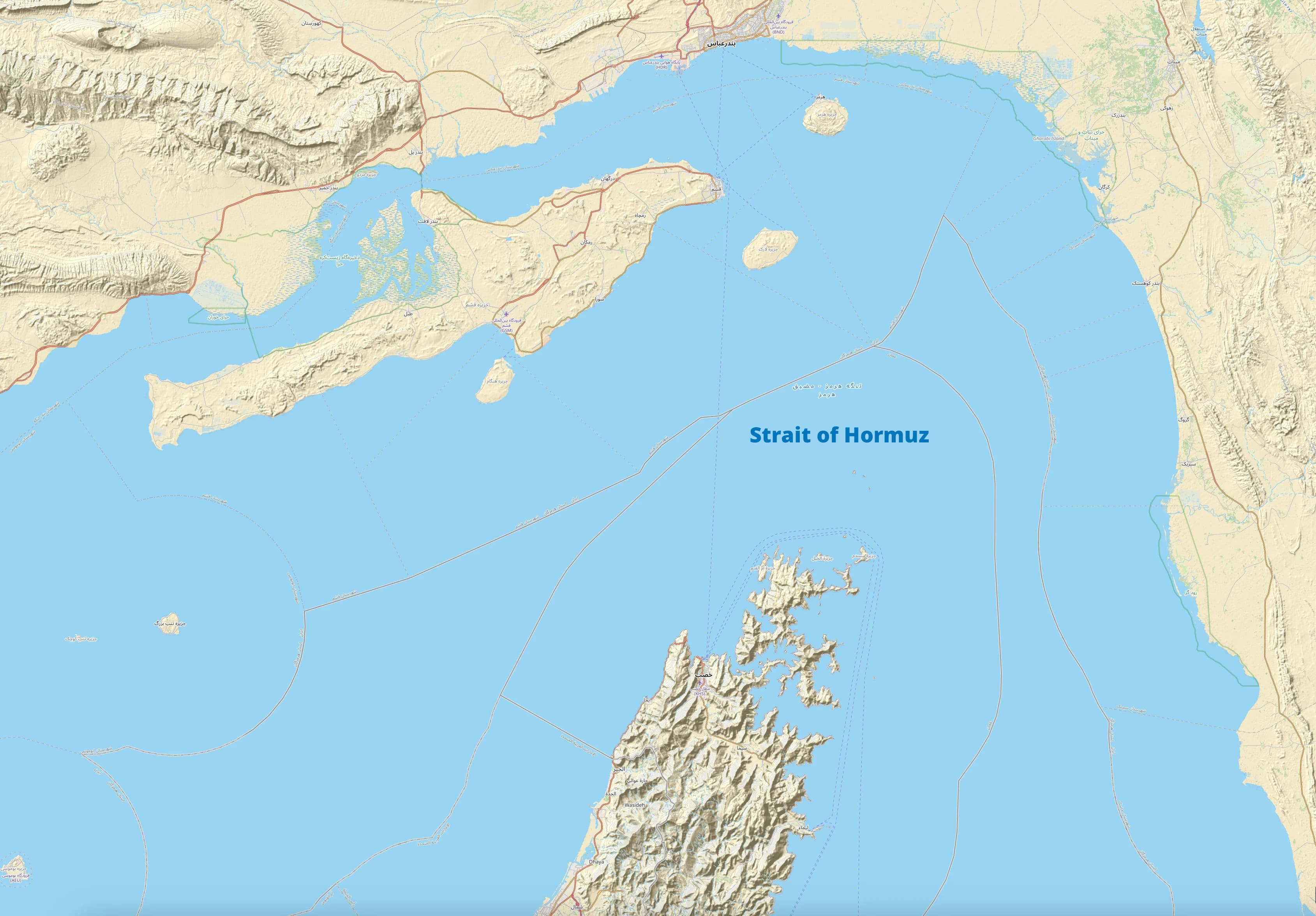
The economic driver is security of maritime trade routes (opens in a new tab). Hormuz is not just another shipping lane. It is a narrow gateway between the Persian Gulf and Gulf of Oman used by major oil and gas exporters. Even when the physical flow is not completely blocked, repeated attacks can raise insurance premiums, delay voyages, cause rerouting and make traders price in a higher probability of future disruption.
That is how the security story reaches global oil-market balance (opens in a new tab). Oil prices react not only to barrels already removed from the market but also to the risk that future supply will be delayed or cut. A ship attack can therefore move expectations before it materially changes aggregate supply. The effect is amplified when attacks become frequent enough to look like a pattern rather than an isolated incident.
The strongest Iranian defense is that Tehran has described some incidents as responses to wartime maritime activity and has offered specific explanations, including mine-related claims. Those claims cannot simply be discarded because they come from a belligerent government. They also cannot be treated as proven when the primary maritime authority uses the more cautious phrase "unknown projectile" and other reporting points to competing mechanisms.
The strongest criticism of U.S. policy is that a military campaign intended to deter Iranian action can increase the risk to shipping if escalation produces more attacks in the strait. The strongest criticism of Iran is that threatening or attacking commercial navigation shifts costs onto crews, consumers and countries far beyond the direct combatants. Both governments can claim deterrence while the actual observable result is more dangerous transit.
The contradiction extends to food security. A separate fertilizer crisis explainer (opens in a new tab) documented how disruption threatens fertilizer inputs and therefore food prices. Hormuz risk also connects to U.S. inflation and gas prices (opens in a new tab). The same shipping shock can raise energy costs, agricultural input costs and freight costs at once.
The October 15 spike does not prove that the strait will close. Nor does it prove a single actor was responsible for every vessel struck. What it proves is that attack frequency has risen to a level where commercial shipping is absorbing repeated physical losses. That is enough to increase military-escalation risk (opens in a new tab) even before governments announce a new phase of the war.
What comes next depends on whether attacks continue, whether navies provide safer transit, whether insurers keep covering voyages at tolerable rates and whether Washington and Tehran create any mechanism to reduce maritime escalation. Investigators also need to determine what actually struck the vessels. Until that evidence is public, the correct formulation is contested attribution with confirmed damage.
Questions people ask
What happened to the GFS Pride?
Singapore's Maritime and Port Authority said GFS Pride was hit by an unknown projectile, caught fire and later sank. Its 21 crew members were evacuated, and the authority reported no injuries among them.
How many ships were attacked in Hormuz?
ABC reported on October 15 that at least 10 vessels had been attacked since Sunday, with attacks reaching the highest daily level of the current U.S.-Iran war and two ships sinking within 24 hours.
How does Hormuz affect oil prices?
Repeated attacks increase the risk that oil and gas shipments will be delayed, rerouted or disrupted. Markets can price that risk before a full supply loss occurs, increasing energy-price volatility.
Evidence
The sources this article cites, claim-bearing material first.
- abc.net.au · Attacks in Strait of Hormuz reach highest daily level since US-Iran war began - ABC News
- CNN · cnn.com
- mpa.gov.sg · Two Singapore-Registered Vessels Struck in Strait of Hormuz | Maritime and Port Authority of Singapore
- Al Jazeera · UN official warns of looming food crisis as Hormuz fertiliser plan stalls | Agriculture News | Al Jazeera
More analysis
Ranked by shared facts, drivers and people — never by publication date alone.
Articles12
- GFS Pride Sunk as Strait of Hormuz Attacks Hit Their Highest Daily LevelShares the driver: Security of Maritime Trade Routes · 16 October 2026
- Will Trump Bomb Iran's Pickaxe Mountain?Shares the driver: Security of Maritime Trade Routes · 16 October 2026
- Hormuz Fertilizer Crisis: Why the UN Warns of Food ShortagesShares the driver: Security of Maritime Trade Routes · 15 October 2026
- Why Did US Inflation Rise to 3.7% Before the Midterms?Shares the driver: Global Oil-Market Balance · 15 October 2026