GFS Pride Sunk as Strait of Hormuz Attacks Hit Their Highest Daily Level
TL;DR
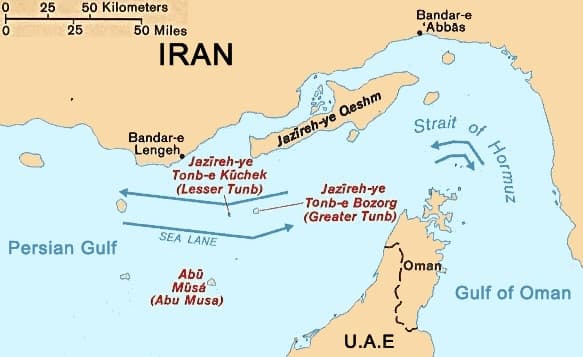
Attacks in and near the Strait of Hormuz reached their highest daily level of the U.S.-Iran war, with at least 10 vessels attacked since Sunday. Singapore-flagged GFS Pride sank after being hit, while Iran and Singapore gave conflicting accounts of whether a mine or projectile caused the loss.
By the Factrail desk · Method: how we source and score · Last reviewed
Key graph impact
The article explains graph entities; the causal edges belong to the facts and drivers it links to.
- ArticleGFS Pride Sunk as Strait of Hormuz Attacks Hit Their Highest Daily Level
- explainsDriverMilitary Escalation Risk
- strengthensIndicators (2)Global deaths from organized violence (UCDP)
- ArticleGFS Pride Sunk as Strait of Hormuz Attacks Hit Their Highest Daily Level
- explainsDriverGlobal Oil-Market Balance
- strengthensIndicators (2)Inability to keep home adequately warm
- ArticleGFS Pride Sunk as Strait of Hormuz Attacks Hit Their Highest Daily Level
- explainsDriverSecurity of Maritime Trade Routes
Strengthens · 70% impact strength
Observed
245k deaths per year · 195k above the normal line (2025)
Worse than normalAbove normal = worse
Strengthens · 64% impact strength
Observed
7.97% of population aged 16 years or over · 5.2 above the normal line (2025)
Worse than normal8 readings, 2018–2025: rose from 7.77% of population aged 16 years or over to 7.97% of population aged 16 years or over.
Above normal = worse
- Worse
Strengthens · 58% impact strength
Observed
10.4% · 10.2 above the normal line (2024)
Worse than normal7 readings, 2018–2024: fell from 11.1% to 10.4%.
Above normal = worse
Strengthens · 45% impact strength
Observed
34.7 Score · 34.7 above the normal line (2024)
Worse than normal26 readings, 1996–2024: fell from 36.2 Score to 34.7 Score.
Normal is zero · any amount = worse
Article
The latest Strait of Hormuz attacks have moved beyond threats to merchant shipping: a commercial container ship has sunk. Reporting on October 15 said attacks in and near the strait had reached their highest daily level since the U.S.-Iran war began, with at least 10 vessels attacked since Sunday. The Singapore-flagged GFS Pride was among the ships hit. Iran's Revolutionary Guard said a mine sank it; Singapore's maritime authorities said the vessel had been struck by an unknown projectile. All 21 crew members were evacuated, according to Singapore's account. The cause is disputed, but the result is not: another civilian vessel was lost on one of the world's most important energy routes.
Accountability. The operational claims point first to Iran's Islamic Revolutionary Guard Corps, which publicly claimed the mine explanation. The listed reporting does not establish that Ali Khamenei (opens in a new tab) personally ordered the attack on GFS Pride, so assigning him a direct operational command would go beyond the evidence. The wider Iranian state has, however, defended restrictions and attacks in the strait as part of its response to the U.S.-Israel war and what it describes as a blockade. On the other side, U.S. Central Command has publicly argued that American forces and regional partners control the strait. That claim now has to be measured against merchant casualties, sharply reduced traffic and the continued ability of attackers to hit ships.
Cost. Before the war, the Strait of Hormuz carried roughly a fifth of global crude-oil and liquefied-natural-gas supplies, according to the Al Jazeera report. Shipping data cited there showed crude flows falling from 20.8 million barrels on October 8 to 2.9 million barrels on October 11. Brent crude was quoted at $106.58 a barrel early on October 14. Those figures do not mean every price move is caused by one attack, but they show why the security of maritime trade routes (opens in a new tab) and the global oil market balance (opens in a new tab) are inseparable here. When tankers and container ships face mines, missiles or projectiles, insurers, crews, shipowners and commodity buyers all price the danger.
The knock-on effect is wider than fuel. Higher freight costs and disrupted Gulf exports can move through fertiliser supply and eventually food prices. The earlier warning about a Hormuz fertiliser shock (opens in a new tab) matters because fertiliser is an input into farming rather than a luxury purchase. Jorge Moreira da Silva's warnings about food-system exposure should be read as a second-order risk, not as proof that one sunk ship has already caused a specific food-price increase.
Contradiction. Iran says it is imposing costs in response to war and blockade pressure. CENTCOM says U.S. and partner forces control the strait. Both positions collide with the commercial record. If Iran fully controlled the passage, U.S.-protected traffic would not continue at all. If the United States fully controlled it in the ordinary meaning of safe navigation, repeated attacks on merchant ships would not be occurring at this rate. Military control of sea space and reliable commercial passage are not the same thing. The gap between those claims is where civilian crews and global trade absorb the risk.
President Donald Trump (opens in a new tab) therefore faces a practical test as well as a military one. The U.S. can destroy Iranian naval assets, escort shipping and insist that the strait remains open, but the policy is not succeeding commercially if shipowners still face a serious chance of being hit. The situation belongs as much to military escalation risk (opens in a new tab) as to oil markets because every new strike creates pressure for retaliation, while every retaliation can make neutral shipping less willing to transit.
Connections. The present attack sequence extends the earlier explanation of why Iran is attacking ships in Hormuz (opens in a new tab). It also feeds directly into the already documented U.S. inflation exposure from war-driven fuel prices (opens in a new tab). Those connections should not be collapsed into a single causal claim. A ship attack can raise perceived shipping risk; sustained disruption can tighten energy supply; energy and fertiliser costs can then contribute to consumer-price pressure. Each step has its own evidence threshold.
Receipts. ABC Australia reported on October 15 that two ships had been sunk within 24 hours and that at least 10 vessels had been attacked since Sunday, describing the daily pace as the highest since the war began. Al Jazeera reported on October 14 that attacks had intensified, cited UKMTO and shipping data showing a sharp fall in oil flows, and quoted Brent at $106.58. Gulf News reported the dispute over GFS Pride's cause: the IRGC said a mine was responsible, while Singapore said an unknown projectile struck the ship; it also reported that all 21 crew members were rescued. The strongest verified conclusion is therefore about the attack pattern and commercial danger, not the precise weapon that sank GFS Pride.
Fairness: Iran says its maritime campaign is a self-defence response to the U.S.-Israel war and blockade pressure, but that stated rationale does not change the documented danger to civilian merchant ships and crews using an international trade route.
What's next. Investigators still need to establish what struck GFS Pride. Shipping companies will decide whether naval protection, rerouting and insurance terms make Hormuz commercially tolerable. Iran and the United States will continue making control claims, but the harder metric is whether attacks fall and traffic recovers. Until then, the record is worsening: merchant vessels are being hit, a Singapore-flagged ship has sunk, oil flows have fallen sharply from pre-attack levels and the strait remains a live escalation channel.
Questions people ask
What sank the GFS Pride?
The cause remains disputed in the cited reporting. Iran's Revolutionary Guard said a mine sank the ship, while Singapore's Maritime and Port Authority said GFS Pride had been struck by an unknown projectile. The available evidence does not justify choosing one account as settled fact.
How many ships have been attacked in the Strait of Hormuz?
ABC Australia reported on October 15 that at least 10 vessels had been attacked in or near the strait since Sunday, with the daily pace reaching the highest level since the U.S.-Iran war began.
Why do Hormuz attacks affect oil and food prices?
Hormuz is a major route for crude oil and LNG, so attacks can reduce flows and raise shipping and insurance costs. Those energy disruptions can also affect fertiliser production and transport, creating a pathway to higher agricultural costs without implying that every food-price move comes from one incident.
Evidence
The sources this article cites, claim-bearing material first.
More analysis
Ranked by shared facts, drivers and people — never by publication date alone.
Articles12
- Hormuz Fertilizer Crisis: Why the UN Warns of Food ShortagesShares the driver: Security of Maritime Trade Routes · 15 October 2026
- Houthi Attack on Saudi Aramco HQ: What Happened in DhahranShares the driver: Global Oil-Market Balance · 15 October 2026
- Lavrov Rejects a Ukraine Ceasefire as the Energy Truce UnravelsShares the driver: Military Escalation Risk · 16 October 2026
- Huckabee Denies U.S. Push for a Netanyahu–Eisenkot Unity GovernmentShares the driver: Military Escalation Risk · 16 October 2026