Will Trump Bomb Iran's Pickaxe Mountain?
TL;DR
Trump said the US may need to strike Iran's Pickaxe Mountain site while ruling out nuclear weapons and ground troops. Public reporting describes contingency planning, not an approved strike order.
By the Factrail desk · Method: how we source and score · Last reviewed
Key graph impact
The article explains graph entities; the causal edges belong to the facts and drivers it links to.
- ArticleWill Trump Bomb Iran's Pickaxe Mountain?
- explainsDriverMilitary Escalation Risk
- strengthensIndicators (2)Global deaths from organized violence (UCDP)
- ArticleWill Trump Bomb Iran's Pickaxe Mountain?
- explainsDriverSecurity of Maritime Trade Routes
Strengthens · 70% impact strength
Observed
245k deaths per year · 195k above the normal line (2025)
Worse than normalAbove normal = worse
Strengthens · 45% impact strength
Observed
34.7 Score · 34.7 above the normal line (2024)
Worse than normal26 readings, 1996–2024: fell from 36.2 Score to 34.7 Score.
Normal is zero · any amount = worse
Article
Donald Trump (opens in a new tab) said on 16 October that the United States might need to strike Iran's Pickaxe Mountain complex, pushing a contingency that had been discussed inside the administration into public view. He also said nuclear weapons and US ground troops were off the table. The key precision point is that a publicly discussed option is not an order: Reuters reported Trump's remarks, while CBS said the White House would not confirm sensitive operational plans and described reports about such planning as plans that "may or may not exist."
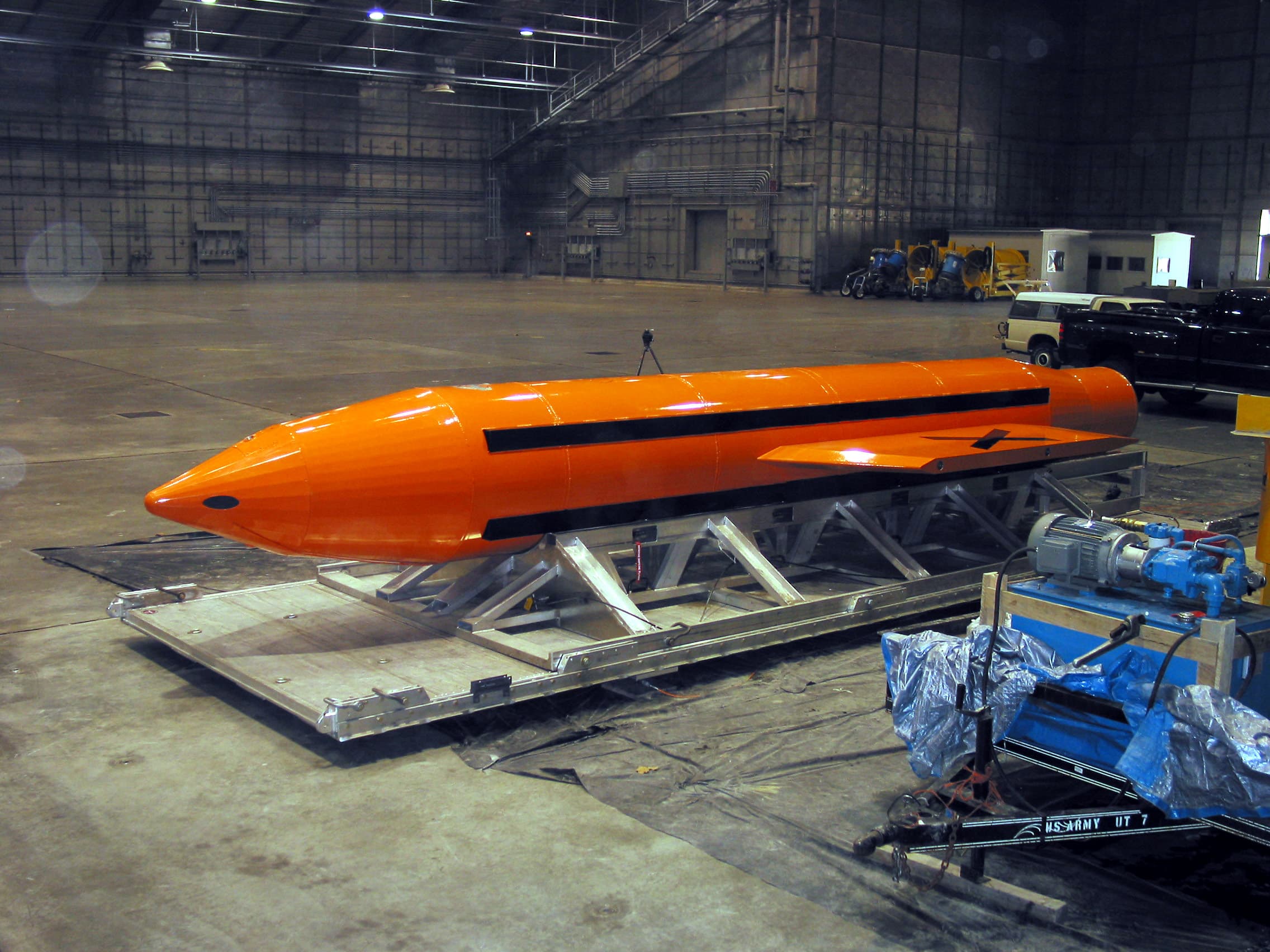
Pickaxe Mountain matters because it is associated with Iran's deeply buried nuclear infrastructure. The military problem is depth. The GBU-43/B Massive Ordnance Air Blast weapon, commonly called the MOAB or "Mother of All Bombs," is a very large conventional explosive, but public technical analysis cited by CNN and Al Jazeera questions whether it can destroy a deeply buried site. That uncertainty makes the political spectacle around the weapon different from evidence that it can accomplish the mission being discussed.
The option is real enough to raise risk, not real enough to call a decision
Reuters reported that Trump said the United States "may have to go there" when asked about Pickaxe Mountain. CBS, citing officials, reported that the administration had reviewed options involving the MOAB. A Pentagon spokesperson gave the standard position that the military routinely prepares contingency plans. None of those facts establishes that Pete Hegseth ordered a strike, that a target package has been approved, or that a weapon has been selected.
That distinction is crucial under the military escalation risk (opens in a new tab) surrounding Iran. Publicly naming a target can itself affect deterrence, force protection and Iranian calculations. It can also create pressure to act if Tehran interprets the statement as a deadline rather than bargaining leverage. The strongest defence of Trump's approach is that publicly displaying a credible conventional option may deter Iran while his explicit rejection of nuclear weapons and ground troops places limits around escalation.
The evidence for restraint is mixed. Trump did rule out those two categories, which is meaningful. But threatening a deeply buried nuclear-related site while regional attacks and shipping risks are already high can still widen the conflict without nuclear use or an invasion. Ali Khamenei (opens in a new tab) and Iran's security establishment have incentives to portray US planning as proof of aggression, just as Washington has incentives to portray military preparation as deterrence.
The weapon question may be the wrong question
The MOAB's notoriety can obscure the engineering issue. CNN reported doubts that the weapon is designed to penetrate the kind of hardened underground structure associated with Pickaxe Mountain. Al Jazeera's explainer likewise noted that MOAB is not a purpose-built deep-penetration munition. A large blast above or near a mountain is not equivalent to destroying deeply buried tunnels or centrifuge halls. Without classified geological and weapons-effect data, claims that one conventional bomb can "take out" the site should be treated as unproven.
That uncertainty has a human consequence. If a first strike fails to achieve its objective, leaders can face pressure for follow-on attacks. Additional sorties increase risk to aircrews, nearby civilians, regional bases and commercial traffic. The security of maritime trade routes (opens in a new tab) is especially exposed because escalation with Iran can affect the Strait of Hormuz and energy markets even when the target is inland.
Background on that regional exposure is already available in Hormuz highest daily attacks GFS Pride (opens in a new tab) and US inflation 3.7 percent gas prices Iran war (opens in a new tab). The new development here is narrower: Trump publicly linked the United States to a possible Pickaxe Mountain strike while drawing two explicit red lines around nuclear weapons and ground troops.
What would count as evidence of a decision?
A real decision would normally leave clearer indicators than a television comment: formal authorization, force movements consistent with a specific mission, allied notifications, congressional consultation where applicable, or an official statement after action. None of the cited public reporting establishes that full chain as of the 16 October desk.
The administration's strongest case is that presidents need military options before they need to use them, and contingency planning is not aggression by itself. The criticism is that public target talk can narrow diplomatic space and generate escalation pressure before the government has shown that the proposed conventional weapon can reliably reach the objective.
The next question is therefore not simply whether a MOAB exists. It is whether Washington can define a military objective, demonstrate that the proposed means can achieve it, explain the legal basis for force, and show how it would prevent a strike from becoming a longer regional war.
Questions people ask
What is Pickaxe Mountain?
It is the name used in current reporting for a deeply buried Iranian nuclear-related site that US officials have discussed as a potential target.
Is the US planning to use the MOAB on Iran?
Officials have discussed military options that may include the MOAB, but the White House has not confirmed an approved strike plan or a final weapon choice.
Did Trump rule out nuclear weapons?
Yes. Trump said nuclear weapons and US ground troops were not options for the scenario he was discussing.
Evidence
The sources this article cites, claim-bearing material first.
- CBS News · CBS News — www.cbsnews.com
- Al Jazeera · What is the ‘Mother of All Bombs’ US could use in Iran?
More analysis
Ranked by shared facts, drivers and people — never by publication date alone.
Articles12
- Why Did Hormuz Ship Attacks Hit a New Daily High, and What Happened to GFS Pride?Shares the driver: Military Escalation Risk · 16 October 2026
- GFS Pride Sunk as Strait of Hormuz Attacks Hit Their Highest Daily LevelShares the driver: Military Escalation Risk · 16 October 2026
- Hormuz Fertilizer Crisis: Why the UN Warns of Food ShortagesShares the driver: Security of Maritime Trade Routes · 15 October 2026
- How Many Houthi Attacks Hit Riyadh Airport?Shares the driver: Military Escalation Risk · 16 October 2026