Michigan's 2.3 Million Early Votes Face a Trust Test
Published Factrail
Summary
Michigan's 2.3 million early ballots put voting access, Senate control and ballot certification under scrutiny. Here's what the November 3 count can prove.
Report
A statewide head start
Michigan entered the November 3 midterm election with 2,313,165 ballots already cast, equal to 31.2% of its roughly 7.42 million active registered voters, according to figures published by the state and reported by local outlets on Monday. Early participation includes 743,450 in-person votes and 1,569,715 returned absentee ballots. These ballots are not a forecast of which candidate will win. They are evidence of voter engagement in a state choosing a governor, a US senator and legislators. Residents benefit from multiple ways to vote, while local clerks must demonstrate that each ballot is secured, counted and reconciled. Confidence in the process is itself a public good, and unfounded allegations can damage it.
What changed since earlier midterms
Michigan's first midterm with statewide early in-person voting follows the voting-rights changes approved in 2022. A new voting method can shift when people cast ballots without proving that the electorate is larger than before. The state announced more than 780,000 votes two weeks before Election Day and more than 1.39 million one week before, before the Monday count passed 2.3 million. The underlying progression matters: citizens used both absentee and in-person systems over several weeks. It also complicates simple comparisons with 2022, when the current statewide early in-person process did not operate in the same way. The best final test compares total eligible participation, not merely early-vote records.
The ballot deadline
The Michigan Secretary of State's election guidance says ordinary absentee ballots must reach a clerk or an authorized drop box by 8 p.m. local time on Election Day to be counted, with special provisions for military and overseas voters. Near the deadline, the department urged residents not to rely on the postal service and to deliver ballots directly. Polling stations generally run from 7 a.m. until 8 p.m. local time, but some Upper Peninsula counties follow Central Time. Eligible voters can still register in person with proof of residency at their local clerk's office on Election Day. Each detail has consequences for whether a lawful ballot arrives in time. A delayed mail delivery is a practical access problem, not proof of intentional fraud.
A contested Senate race
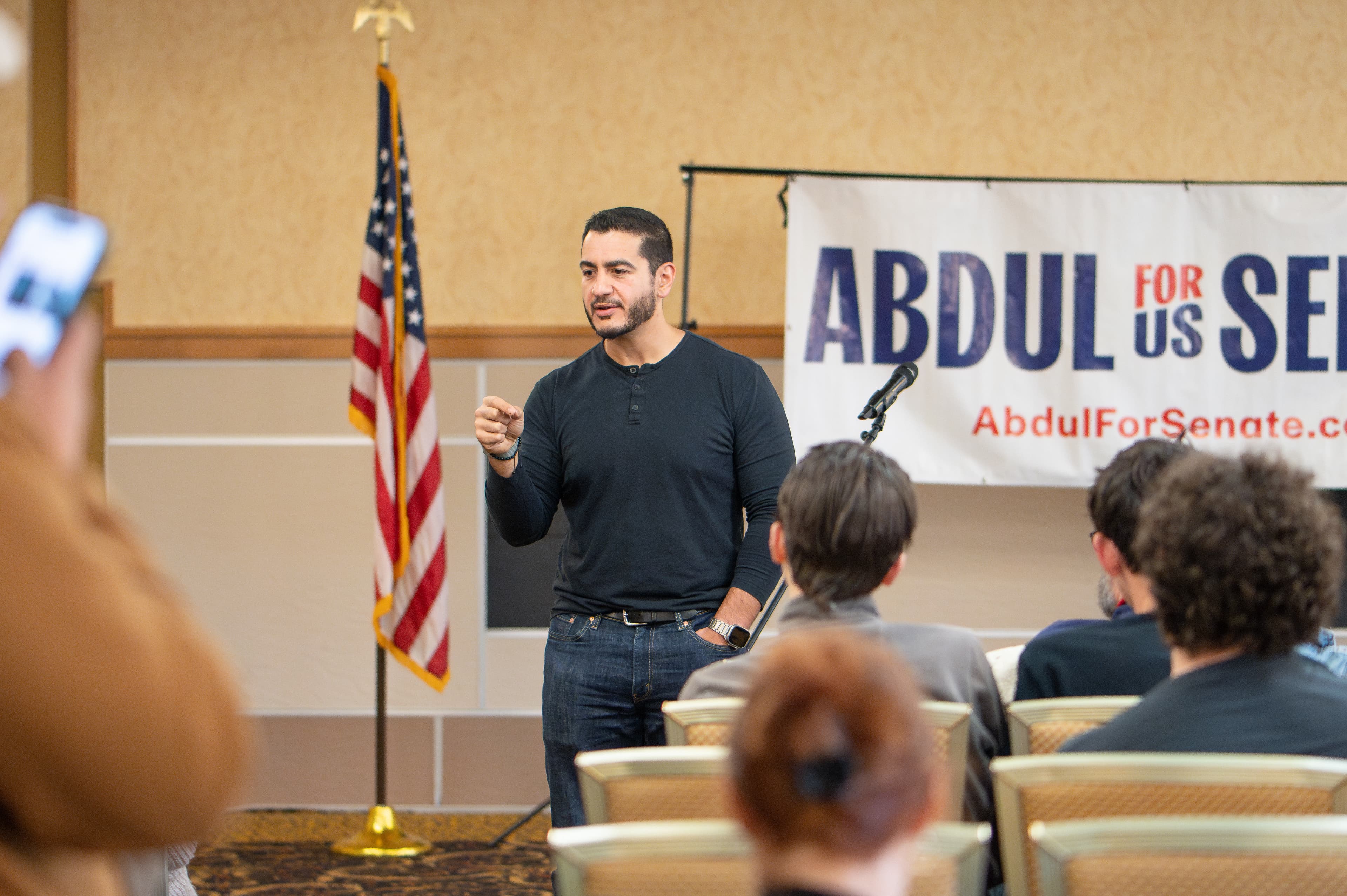
The Michigan Senate campaign between Democrat Abdul El-Sayed and Republican Mike Rogers has become especially contentious. CBS News reported a public split after Democratic primary rival Haley Stevens endorsed Rogers and sharply criticised El-Sayed. That political development may influence turnout among party supporters, but the size and direction of any effect cannot be derived from a headline. The national stakes are high because the US Senate votes on judges, senior executive nominees and legislation. The Democratic National Committee (opens in a new tab) and Republican National Committee (opens in a new tab) have incentives to mobilise Michigan voters. They do not administer Michigan precincts or independently decide the lawful outcome.
Federal monitoring and public concerns
Michigan Advance reported that Department of Justice monitors were expected at several Michigan communities, including Detroit, Flint, Grand Rapids and Lansing. Monitoring by itself is not evidence of misconduct, and federal civil-rights observation has a history in American elections. Election advocates also warned about the possibility that armed federal agents near polling locations could intimidate voters. Those concerns must be distinguished from verified incidents. An isolated report, a formal complaint, a court filing and a judicial finding carry very different evidentiary weight. The task for authorities is to protect lawful participation, respond to specific allegations and publish the results of investigations without converting political rumours into official conclusions.
Counting is not certification
The first posted vote totals on Election Night will not be final. Counties reconcile ballots and report results before legally designated canvassing boards certify them. Michigan Advance noted that statewide canvassers have a prescribed certification timetable and that close contests can trigger recount procedures under specific thresholds. These steps are not optional political negotiations. A provisional leader can remain the winner, but a careful news report should identify whether numbers are unofficial, canvassed or certified. Campaign challenges can be legitimate if supported by evidence, yet an unsupported demand to discard votes is not equivalent to finding an error. Transparency means publishing both the arithmetic and the rules used to validate it.
Who benefits and who pays
Voters benefit from easier access if expanded voting methods work as intended and ballots are counted lawfully. Campaign organisations gain from strong participation when their supporters turn out. Election offices incur staffing, equipment, training and security costs; taxpayers ultimately finance these functions. The human cost of administrative failure falls disproportionately on the person whose ballot is late, rejected without a cure opportunity or improperly handled. A functioning democracy should count voter intent within the law while giving clear remedies for correctable errors. Political actors may gain short-term attention from attacking election administration, but public confidence can erode when disputes are detached from documented evidence.
What it moves
The measurable indicator is registered-voter participation: 31.2% of active registered voters had cast a ballot by the Monday snapshot. Final turnout, successful absentee-ballot acceptance and the number of ballots cured or rejected will show whether access translated into counted votes. The seat-level outcome affects Senate control and the capacity for peaceful transfer of power (opens in a new tab), but the early-vote count does not prove either a party win or a change in economic growth. The public should watch the final official totals, certification records and any substantiated voting-access problems before drawing broader conclusions.
What still needs proof
The available data do not establish that early voting changed the ultimate political preference of Michigan's electorate. They do not establish that federal monitors interfered with voters, nor that any specific candidate has already won. County-by-county counts, demographic participation, ballot acceptance rates and official audits remain necessary. The strongest defence of Michigan's system is that it offers multiple lawful voting channels and established certification processes. The strongest test is whether those channels function equally well when a major race is close and partisan pressure is intense. The contest should be judged by documented votes and prescribed legal review, not by speculation about which political campaign appears stronger on a particular afternoon.
Sources
- Michigan Secretary of State: election guidance and deadlines (opens in a new tab)
- Michigan Secretary of State: October 20 participation release (opens in a new tab)
- Michigan Secretary of State: October 27 participation release (opens in a new tab)
- Michigan Advance: Election Day rules, monitoring and certification (opens in a new tab)
- CBS Detroit: more than 2.3 million early ballots (opens in a new tab)
- MLive: November 2 Michigan early-vote figures (opens in a new tab)
- Spectrum News Michigan: 31% of voters already participated (opens in a new tab)
- CBS News: national Election Day and Michigan Senate developments (opens in a new tab)