Poland Prices a Permanent US Army Base at PLN 3bn
Published Factrail
Summary
A Polish defence official has attached a concrete opening price to a possible permanent American Army base: about PLN 3 billion for the base itself, with substantially more needed for housing and public services. The October 30 disclosure turns a strategic aspiration into a fiscal question.
Report
A Polish defence official has attached a concrete opening price to a possible permanent American Army base: about PLN 3 billion for the base itself, with substantially more needed for housing and public services. The October 30 disclosure turns a strategic aspiration into a fiscal question. No final location, force composition or American presidential decision had been announced. The public should therefore treat the figures as planning estimates, not as money already contracted or a base already approved.
What the official said
General Dariusz Łukowski told Rzeczpospolita, as reported by PAP and Polish Radio, that creating a permanent base would require roughly PLN 3 billion, approximately US$764 million at the rate used in the report. Housing, schools, nurseries and a hospital for personnel and their families could require another dozen billion zlotys. He envisaged at least three years of construction. His remarks are not a final appropriation, a signed host-nation agreement, or a completed cost-benefit assessment. Those legal and fiscal stages remain separate.
Why permanent matters
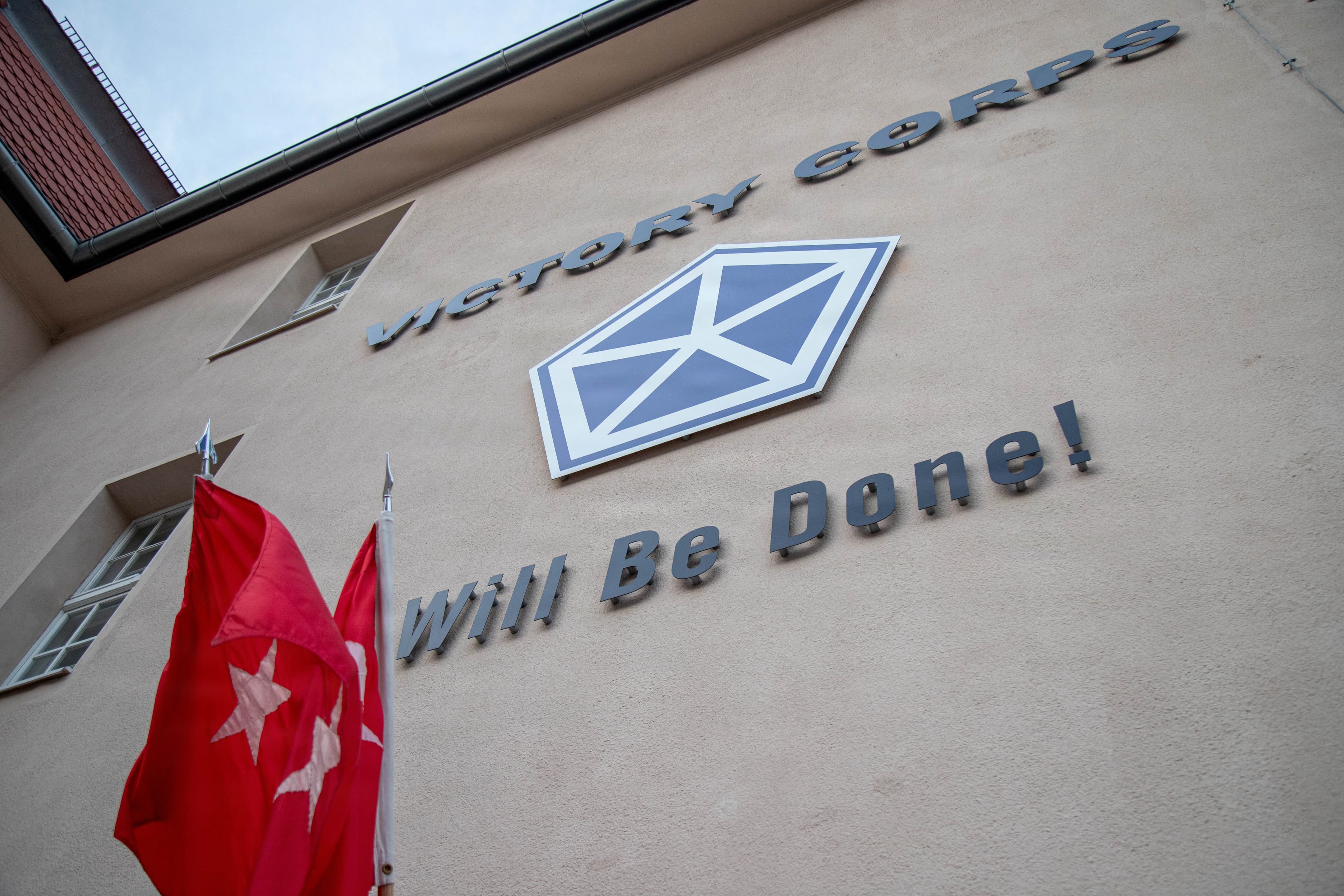
Poland already hosts American and allied military facilities, including a forward US V Corps command presence in Poznań. Permanent basing would represent a different level of commitment, potentially adding families and an enduring demand for civic infrastructure. Military planners want capabilities that can respond quickly to threats on NATO's eastern flank. Łukowski specifically mentioned long-range precision strike as a possible way to fill gaps in Polish capability. That is a strategic argument, not proof that a particular unit or weapon system has been assigned.
Locations are political choices
Wrocław, Poznań, Bydgoszcz and Szczecin were identified as candidates, with no site selected. An armoured unit would have different transport requirements from a long-range strike formation. Szczecin's port infrastructure could help logistics; Bydgoszcz already hosts NATO command functions; Poznań has an American command footprint. Local governments may compete for construction, jobs and federal investment, but site selection changes land use, traffic, schools and healthcare needs. A national security choice also becomes a municipal budget choice.
The population multiplier
The general described a scenario of 5,000 soldiers accompanied by families, creating a possible total population of at least 15,000 people. Such a footprint needs far more than secure compounds. Housing supply and school capacity could be strained before new buildings are completed. Contractors, property owners and service businesses may benefit, while existing residents may experience more competition for rental homes or new traffic. Those outcomes depend on location and sequencing. Authorities should publish costed plans rather than assuming military employment automatically generates net gains for every household.
Who can actually approve it
The Polish government can offer land, infrastructure and funding, but Washington must decide whether and how to station American formations. Łukowski explicitly identified Donald Trump (opens in a new tab) as the final American decision maker in the scenario discussed. Congressional appropriations, US military planning and Polish budget procedures could also matter. The crucial distinction is that a Polish estimate does not bind the United States. Nor is Polish willingness to pay sufficient evidence of a binding agreement. The next authoritative document would be a formal bilateral decision with specified responsibilities.
A wider defence funding squeeze
Poland is arguing for larger European defence outlays while balancing domestic commitments. Its defence minister said in October that Europe needs stronger industrial capacity and secure supply chains. Construction of a permanent installation might improve readiness but tie up capital that could otherwise buy ammunition, air defence, drones or maintenance capacity. Public finance analysis should separate one-time building costs, recurrent operating costs and costs borne by each country. The value of deterrence is real but difficult to quantify; it cannot justify skipping scrutiny of individual contracts.
Who benefits and who pays
Allied forces and nearby populations could benefit from faster reinforcement and a stronger deterrent signal. Building firms, property developers and local suppliers would have commercial opportunities, subject to actual awards. Polish taxpayers would bear the host-nation share of construction and public infrastructure, while American taxpayers would finance any US contributions. Families may receive better services if the infrastructure is integrated locally; other residents could lose out if facilities are reserved or priced for military personnel. Transparent procurement is essential to judge the distribution of gains.
What it moves
A permanent base could improve NATO deterrence capacity (opens in a new tab), but the practical indicators are deployment response time, logistics capacity, available long-range fires and sustainable support facilities. Fiscal indicators include actual appropriations, contract values, annual maintenance commitments and the share of costs borne by the host state. Higher spending is not itself proof of stronger readiness. The fiscal policy sustainability (opens in a new tab) impact depends on financing and what other projects are displaced.
The best countercase
One view is that a permanent US presence raises the cost to a potential aggressor and therefore reduces the probability of conflict. The countercase is that a costly fixed installation can attract threats and divert funds from flexible military capabilities. Both arguments deserve assessment with force design and local vulnerability information, rather than symbolic appeals to an alliance. A genuine business case would specify what capability a permanent base provides that rotational deployments cannot, the full life-cycle cost and how quickly it would be usable. The proposal should stand or fall on those comparisons.
What to watch
Look for a formal American basing decision, a named location, a defined unit and a bilateral cost-sharing agreement. Polish ministries should explain what portion of the proposed PLN 3 billion is a preliminary building estimate and how the additional civilian infrastructure will be funded. Municipal councils should assess land, housing and school capacity before contracts begin. The wider Ukraine war (opens in a new tab) supplies the security context but does not make every spending proposal cost-effective. October 30 was an estimate and a strategic pitch, not the start of construction.
Evidence standard
A source count is not a substitute for source independence: where an article is a government release or a report of one interview, it is labeled as such. An estimate is not a payment, a pledge is not a delivery, and a modeled projection is not an official count. This distinction protects readers from an appealing but misleading interpretation of events.
Sources
- Polish Radio: PLN 3bn US base proposal (opens in a new tab)
- Polish Radio: defence investment push (opens in a new tab)
- Polish Radio: October 30 national news (opens in a new tab)
- Polish Radio: October 30 foreign and defence reporting (opens in a new tab)
- Council of EU: fiscal flexibility for defence (opens in a new tab)
- Polish Radio: regional and budget reports (opens in a new tab)