Skip to content
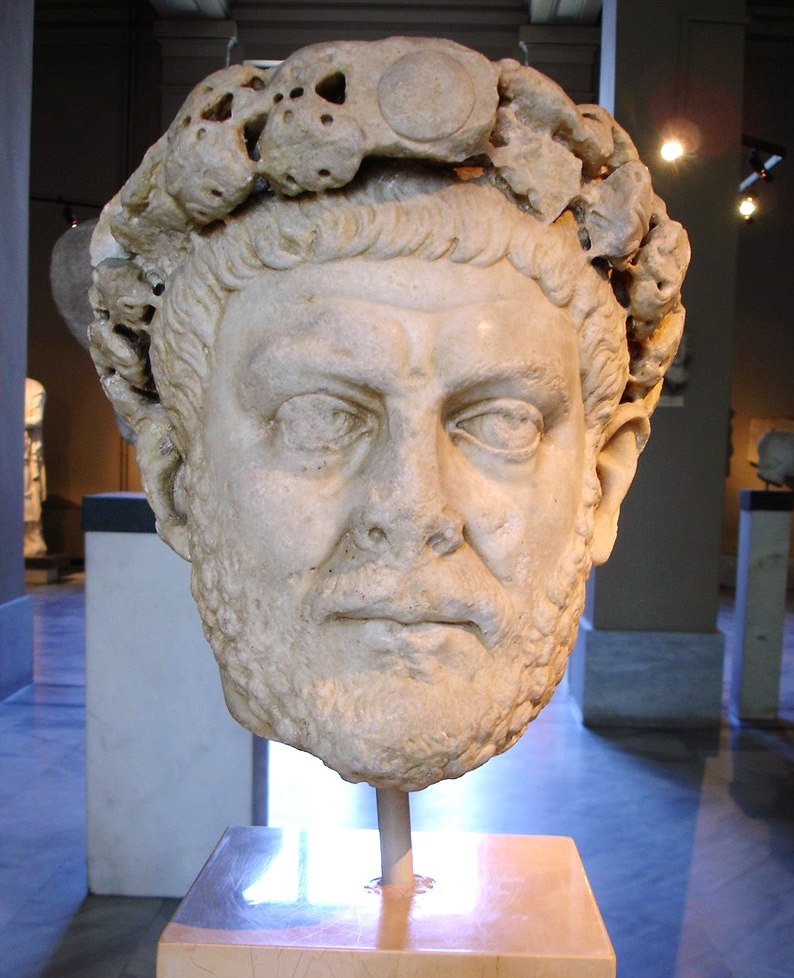
Diocletian

Diocletian

0

Near balanceFormula-derived score

Roman emperor (284–305) who built the Tetrarchy, a census-tax, coin reform, and the Price Edict, then abdicated to Split. Documented harms: 303–304 Great Persecution edicts (implementation differed by tetrarch), Manichaean burning, price police with death threats, extractive census. Offsets: relative stabilization after the mid-century crisis, dioceses, frontiers, rare abdication, UNESCO Split.

Tetrarchic colleague-rule and dominate ceremonialextractive census-tax statecoercive religious edicts including the Great Persecution

Impact

Not rated yet: the verified records linked to this person, without a numeric impact.

Editorial assessment (context, not the score)

The page is not a restorer statue and not a martyr pamphlet only. The heaviest documented costs are the 303–304 edicts (with real tetrarch variation), Manichaean burning, Price Edict coercion, and a tighter census-tax. The offsets are a holding tetrarchy while it lasted, dioceses, frontiers, a rare abdication, and a palace that became a city. He did not file UNESCO. Confidence is high on edict and abdication dates, medium on fiscal-welfare sign.

Indicators affected

Indicators this person’s verified facts reach. No score contribution is assigned; the observed state is the indicator’s own reading.

Accountability & contradictions

Claims against the record, the type of responsibility, and what is disputed.

What could change this assessment

  • 9 linked facts have no assessed welfare direction yet.
  • Lifetime coverage has not been assessed: the record reflects stored facts only (0284–0308).

Causal path

Person → Fact → Driver → Indicator. Select a path to inspect its factors; the full network opens on demand.

Timeline

The most relevant dated facts, newest first.

Evidence & methodology

How the record is sourced and how the score is derived.

30 of 30 linked facts verified, drawing on 10 distinct sources (0284–0308).

Sources include Livius.org, UNESCO World Heritage Centre, New Advent / Catholic Encyclopedia fathers, New Advent, Université Grenoble Alpes / Droit romain, Encyclopaedia Britannica, Cambridge University Press, British Museum.

The score is formula-derived (Factrail formula v1, version 1.0.0), not an editorial verdict. Read the methodology.

By the Factrail desk · Method: how we source and score · Last reviewed · Sources: 10

Expert analysis

An excerpt; the full analysis opens on request.

The first fact about Diocletian is that administrative stabilization and religious-rights destruction are both dated, and neither cancels the other. Start with 24 February 303. Britannica’s Great Persecution (https://www.britannica.com/topic/Great-Persecution (opens in a new tab)), Lactantius (https://www.newadvent.org/fathers/0705.htm (opens in a new tab)), and Eusebius (https://www.newadvent.org/fathers/2501.htm (opens in a new tab)) independently date the first edict: churches down, scriptures burned, honestiores stripped. Later edicts demanded sacrifice. Implementation differed: Constantius in the West was lighter; Galerius and Maximinus in the East ran the killing-machine. Cambridge Ancient History (https://www.cambridge.org/core/books/cambridge-ancient-history/ (opens in a new tab)) treats that variation as real. Variation is not a finding that the senior Augustus did not sign. Write burning and torture. The Price Edict of 301 (fragments via https://droitromain.univ-grenoble-alpes.fr/ (opens in a new tab)) is a tariff with death threats. It is also, later, an economic-history file. Split those rows. The census-tax (iugatio/capitatio) is a machine Lactantius hates and moderns reconstruct; extraction and state capacity share a spine — split them. 302’s Manichaean edict rhymes with 303 in method. Offsets that survive the martyr file: 293 tetrarchy as a frontier college (https://www.britannica.com/topic/tetrarch-Roman-official (opens in a new tab); Livius https://www.livius.org/articles/person/diocletian/ (opens in a new tab)); smaller provinces and dioceses; rebuilt frontiers versus the 260s; 1 May 305 abdication, rare among Augusti; the retirement palace now a living city listed by UNESCO (https://whc.unesco.org/en/list/97/ (opens in a new tab); https://www.split.hr/en (opens in a new tab); https://www.diocletianspalace.org/ (opens in a new tab)). Coin reform as attempt and as shock, split. Gregorian/Hermogenian collections as copyable law, not as an independent bench. What the score must not say: that 303 was mild because Gaul was lighter; that UNESCO Split rebates scripture-burning; that the Price Edict lowered a CPI; that abdication undid the edicts; that Lactantius is a tape of inner pride; that he is Constantine (who halted persecution in his zone from 306). Confidence is high on 284, 293, 301, 303, 305 as received chronology and on UNESCO, medium on tax-welfare sign and on martyr totals, low on anecdotal Alexandrian massacre numbers. Related people: Maximian; Galerius as persecution driver in Lactantius; Constantius Chlorus as lighter western implementer; Constantine as successor who reversed the edicts in his lands; Lactantius and Eusebius as narrators; Carinus as civil-war rival; later Charlemagne as a western imperial reader of Roman office; Marcus Aurelius as an earlier philosophical princeps in school contrast. Keep 284, 293, 301, 303, and 305 on separate dates. Later Loeb, UNESCO, and encyclopedia pages are evidence, not additional acts.

Dispute a fact on this pageNamed here, or represent someone who is? Request a right of reply.