Skip to content
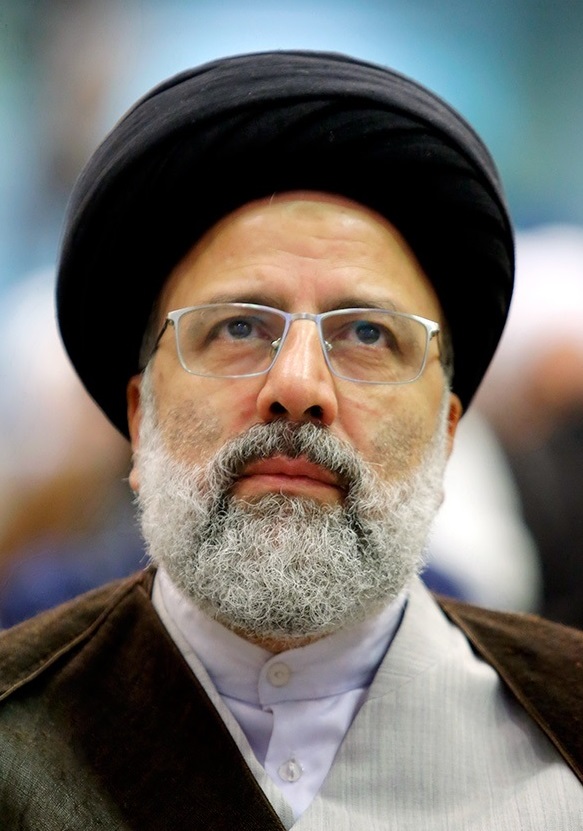
Ebrahim Raisi

Ebrahim Raisi

Not rated

Iranian cleric, former judiciary chief and president from 2021 until his death in 2024, whose presidency encompassed the Woman, Life, Freedom uprising and a state crackdown documented by UN investigators and human-rights organizations. The most recent verified record is “Security forces violently suppressed Woman, Life, Freedom protests during Raisi's presidency” (19 September 2022), linked to the driver Woman Life Freedom protests in Iran.

Sources: [1][2]

Iranian clerical and revolutionary conservatism aligned with the supreme leaderstrict social regulationresistance economics

Impact

Not rated yet: the verified records linked to this person, without a numeric impact.

Editorial assessment (context, not the score)

Raisi was an important executor of conservative policy and bore governmental responsibility during severe repression, while Iran's divided power structure limits automatic attribution for every security act. Diplomatic rapprochement and continued nuclear impasse coexist. The crash definitively ended his term and should not become a vehicle for unsupported conspiracy. Prose does not manufacture calculation inputs. Scores and comparative ranks remain unavailable until the supported graph produces them. Institutional authority raises an attribution question but does not answer it; the record still needs a dated decision, order, vote, negotiation, or supported chain.

Accountability & contradictions

Claims against the record, the type of responsibility, and what is disputed.

What could change this assessment

  • 2 linked facts have no assessed welfare direction yet.
  • Lifetime coverage has not been assessed: the record reflects stored facts only (2022).

Causal path

Person → Fact → Driver → Indicator. Select a path to inspect its factors; the full network opens on demand.

Timeline

The most relevant dated facts, newest first.

Evidence & methodology

How the record is sourced and how the score is derived.

2 of 2 linked facts verified, drawing on 2 distinct sources (2022).

Sources include Human Rights Watch, Amnesty International.

The score is formula-derived (Factrail formula v1, version 1.0.0), not an editorial verdict. Read the methodology.

By the Factrail desk · Method: how we source and score · Last reviewed · Sources: 2

Expert analysis

An excerpt; the full analysis opens on request.

Raisi's relevance to the Woman, Life, Freedom movement is best understood through institutional responsibility rather than a claim that the presidency directly executed every coercive act. The protests followed Mahsa Amini's death after morality-police detention and rapidly became a nationwide challenge to compulsory veiling and broader state repression. During the response, security forces used excessive and lethal force, authorities carried out mass arrests, communications were restricted, and Revolutionary Courts pursued protest-related capital cases. UN investigators later found that serious violations in the protest context included acts amounting to crimes against humanity.

Raisi was president throughout the uprising and chaired the Supreme Council of National Security. Amnesty International states that he praised and oversaw the crackdown and also links his administration to intensified compulsory-veiling enforcement. Those facts place his office inside the accountability chain without erasing the distinct powers of Ali Khamenei, the judiciary, the IRGC, Basij, police and other state bodies. The strongest Factrail framing is therefore causal and bounded: policy enforcement helped create the conditions for the uprising; Amini's death became the trigger; state institutions responded with documented repression; and Raisi exercised senior executive and national-security authority during that response.

Dispute a fact on this pageNamed here, or represent someone who is? Request a right of reply.