
Hans-Jürgen Papier
Hans-Jürgen Papier (born 6 July 1943 in Berlin) is a German jurist and scholar of constitutional and administrative law.
- Facts0
- Drivers0
- Indicators0
Hans-Jürgen Papier (born 6 July 1943 in Berlin) is a German jurist and scholar of constitutional and administrative law.
Hans-Jürgen Papier (born 6 July 1943 in Berlin) is a German jurist and scholar of constitutional and administrative law. He was vice-president of the Federal Constitutional Court and chair of its First Senate from 27 February 1998, and president of the court from 10 April 2002 until 16 March 2010. He is an emeritus professor at the Ludwig Maximilian University of Munich. A member of the Christian Social Union in Bavaria since his move to Munich in 1992, he had earlier joined the Christian Democratic Union while teaching in Bielefeld in the 1970s.
Papier studied law in Berlin, was awarded a doctorate there for a thesis on the breach of obligations in public law, passed the second state examination in Berlin in 1971, and completed his habilitation on statutory reservations in financial law and the democracy principle of the Basic Law. In 1974 he became a full professor of public law at Bielefeld University, holding the chair until 1991. From 1977 to 1987 he was a part-time judge of the Higher Administrative Court for North Rhine-Westphalia in Münster. From 1991 to 1998 he chaired, without pay, the independent commission that reviewed the assets of the parties and mass organisations of the former German Democratic Republic. In 1992 he accepted the Munich chair of German and Bavarian constitutional and administrative law and of public social law.
The Bundesrat elected him president of the Constitutional Court unanimously on 1 March 2002, to succeed Jutta Limbach. On 10 April 2002 the federal president gave Limbach her certificate of discharge and handed Papier his certificate of appointment as president. In a profile published the day after the Bundesrat vote, he described himself as "more of a liberal, with a certain conservative orientation," and the taz reported that he had not been active in party politics. The First Senate, which he chaired, gave a long series of judgments on the protection of fundamental rights. On 15 February 2006 it held that a statute allowing the armed forces to shoot down a hijacked passenger aircraft used as a weapon was incompatible with human dignity and the right to life. On 9 February 2010 it held that the method used to set standard benefits under the Hartz IV unemployment scheme did not satisfy the constitutional guarantee of a subsistence minimum consistent with human dignity, and required Parliament to enact a new calculation by the end of that year. On 2 March 2010, in one of the last major judgments of his tenure, the same senate held the concrete statutory design of telecommunications data retention unconstitutional.
On 16 March 2010 Federal President Horst Köhler gave Papier his certificate of discharge after the twelve-year term; Andreas Voßkuhle succeeded him as president. Papier returned to teaching at Munich and took the honorary chair of the Chamber for Public Responsibility of the Evangelical Church in Germany. He is married and has two children. In January 2016 the Frankfurter Allgemeine Zeitung reported his statement, as a member of the CSU, that the refugee crisis had opened a gap between law and reality deeper than at any earlier point in the legal order of the Federal Republic, and that Chancellor Angela Merkel had to secure the country's external borders.
Hans-Jürgen Papier was born on 6 July 1943 in the Mariendorf district of Berlin. Biographical notices record him as Protestant; the family is of Huguenot origin and pronounces the surname in German, with the stress on the first syllable. His father and grandfather were master bakers in Berlin.
In a 2005 interview he recalled a postwar childhood he regarded as happy: when life in Berlin was hard, a baker's children were not short of food, and because his father started in the bakery very early and his mother served in the shop, the children grew used to some independence. He later called himself a "Protestant Prussian," born in Berlin, where he lived for more than thirty years and took his academic training, and said he had tried to live by thrift and duty. In the spring of 1962 he passed the Abitur at the Eckener-Gymnasium in Berlin-Mariendorf.
In the summer semester of 1962 he began to study law in the faculty of law of the Free University of Berlin, in West Berlin. Public law engaged him at once, and he became a pupil of Karl August Bettermann. He passed the First Juristic State Examination in Berlin in February 1967. From the second half of the course his concentration was constitutional law, which he later described as nearer to politics than criminal or private law. As a student he heard John F. Kennedy address the university outside the Henry Ford Building in 1963, and he later saw classes disrupted and deans' offices occupied. Living in West Berlin, he said, gave him a closer view of the German Democratic Republic than most people in West Germany had, and left him without sympathy for the SED regime.
After the first examination he spent a year as acting holder of a research assistant's post on Bettermann's chair, then a three-year legal traineeship, completed in 1971 with the Great Juristic State Examination, the second state examination, again in Berlin. In 1970 the faculty awarded the doctorate summa cum laude for Die Forderungsverletzung im öffentlichen Recht, supervised by Bettermann, with the civil lawyer Arwed Blomeyer as second examiner. Accepted in the spring of 1970 and published that year as volume 136 of Duncker & Humblot's Schriften zum Öffentlichen Recht, the book examines state liability for breach of public-law obligations and how far private-law rules apply beside or instead of official liability.
After the second examination he was assistant professor of public law at the Free University for three years. In 1973, eighteen months after that appointment, he completed the habilitation in constitutional and administrative law and in finance and tax law. The thesis, Die finanzrechtlichen Gesetzesvorbehalte und das grundgesetzliche Demokratieprinzip—a contribution to the doctrine of the legal forms of interferences with fundamental rights—treats the statutory reservation in tax and public finance in light of the democracy principle of the Basic Law. The habilitation lecture, "Der verfahrensfehlerhafte Staatsakt," and the thesis were both published as books in 1973.
After his habilitation Papier was a substitute professor (Vertretungsprofessor) in the law faculty of the University of Hamburg. In August 1974, aged 31, he was appointed Wissenschaftlicher Rat und Professor, a tenured post, in the law faculty of Bielefeld University; about a year later he received his first full professorship (Ordinariat) there. Biographical notes of the Federal Constitutional Court describe that appointment as a chair of public law held from 1974 until 1991. He was dean for one year and prodean (Prodekan) in the years immediately before and after, sat on the study-reform committee of the Deutscher Fakultätentag, and declined calls to the University of Trier and the Free University of Berlin.
The university's Institute for Environmental Law has existed since 1988, and Papier was its managing director (Geschäftsführender Leiter). In March 1989 the newspaper taz identified him as head of the institute, which still lists him as a former member. Its stated work covers the "ecological constitutional state", regulation of environmental and technological risk, water law and immission control, and international and European constraints on national environmental rules. A 2013 Festschrift preface also records that he directed Bielefeld's Zentrum für Wissenschaft und Praxis, and it counts environmental law, including the rules on contaminated sites, among the main strands of his writing.
With effect from 1 January 1992 he moved to the law faculty of Ludwig Maximilian University of Munich. Later court biographies name the chair as public law, in particular German and Bavarian state and administrative law and public social law (Öffentliches Recht, insbesondere deutsches und bayerisches Staats- und Verwaltungsrecht sowie Öffentliches Sozialrecht).
He held the chair until emeritus status in the autumn of 2011. From 1994 to 1996 he was a member of the university senate and prodean of the law faculty. The Festschrift preface, written for his seventieth birthday, describes seminars he had been holding at the Akademie für Politische Bildung in Tutzing as especially popular with students. Day-to-day teaching stopped during full-time service in Karlsruhe: he became vice-president of the Federal Constitutional Court on 27 February 1998 and president on 10 April 2002, and left on 16 March 2010 at the end of the twelve-year term. The court said then that he would teach again as a professor in Munich, and later wrote that he had returned to the university and resumed that work.
From 1977 to 1987, while the Bielefeld chair was his main office, Papier was a part-time judge (Richter im Nebenamt) of the Higher Administrative Court of North Rhine-Westphalia (Oberverwaltungsgericht) in Münster. The Festschrift preface calls the judgeship his first office outside the university and a ten-year appointment. Section 16 of the Code of Administrative Court Procedure allows an ordinary professor of law to be named a judge in a secondary office at an administrative court or a higher administrative court for at least two years, and for no longer than the main office lasts, so the Münster seat ran alongside the professorship.
The university emerited him on 30 September 2011. The faculty still lists him as an entpflichteter Professor in the Institute for Politics and Public Law. He continued to offer classes after that date. The winter 2022/23 catalogue named him for a blocked foundational seminar, "Rechtsstaat und Internet", on 16 and 17 December 2022, and the summer 2023 catalogue listed his seminar "Staatsaufgabe Sicherheit", with written work expected into May 2023. The winter 2023/24 catalogue of the faculty no longer included him.
From 1991 to 1998 Hans-Jürgen Papier was honorary chair of the Independent Commission for the Review of the Assets of the Parties and Mass Organisations of the GDR (Unabhängige Kommission zur Überprüfung des Vermögens der Parteien und Massenorganisationen der DDR). The Volkskammer created it on 31 May 1990 under the Party Law of the German Democratic Republic, and Prime Minister Lothar de Maizière made the first appointments. The Unification Treaty continued the commission after German reunification. With the Treuhandanstalt, and from 1995 its successor, it assigned trust assets to earlier owners, back to the organisations only if acquisition satisfied the Basic Law, or to charitable purposes in the accession territory, later including the new Länder's debts and a foundation studying the Socialist Unity Party of Germany dictatorship. At most 16 part-time members served, under legal but not substantive supervision by the Federal Ministry of the Interior.
On 19 March 1991 the federal government, after consulting the President of the Bundestag, appointed Papier chair in place of Georg Reinicke, who became deputy. Papier left on 27 February 1998 to become vice-president of the Federal Constitutional Court; Christian von Hammerstein, head of the Berlin secretariat, succeeded him on 8 July 1998. The commission ended its work at the close of 2006.
It covered the SED, its successor the Party of Democratic Socialism, the other pre-1989 GDR parties, and bodies such as the Free German Trade Union Federation. On 18 July 1995 the commission and the trusteeship agency settled with the PDS before the Higher Administrative Court of Berlin in the dispute over the Karl-Liebknecht-Haus. The party renounced nearly all known and undiscovered old assets, keeping four properties. In February 1998 he told Die Welt that about 3.6 billion marks had been identified, 1.8 billion of them SED assets. The 2006 report put assets taken into trust at about 1.6 billion euro, nearly three quarters of them from the SED or the PDS, and mostly not returned because the acquisition was unlawful.
From 1994 to 1998 Papier was a member of the commission under the Versorgungsruhensgesetz of 25 July 1991, a procedure also used by the Entschädigungsrentengesetz of 22 April 1992. Three members, at least one qualified for judicial office, were appointed for four years by the federal government—two on a proposal of the eastern Länder and one of several ministries—and were not bound by instructions. They proposed suspension of GDR special and supplementary pensions where a beneficiary, prosecuted for a grave offence against life, bodily integrity or personal liberty committed in a state, political or social office, had fled abroad. Compensation pensions for people recognised as persecuted under Nazism could likewise be refused or reduced for breaches of humanity or the rule of law, or for serious abuse of a position. The federal social-security office decided on the commission's reasoned proposals and could depart from them only for special cause. The commission was abolished on 1 January 2023.
From 1996 to 1998 he was deputy chair of the ethics commission of the Bavarian State Medical Association in Munich. Founded in 1988, this Land-wide body reviews medical research on human participants.
From 1981 to 1993, while professor at Bielefeld University, he directed studies at the Verwaltungsakademie Ostwestfalen-Lippe, which trained public servants.
The sixteen justices of the Federal Constitutional Court sit in two senates of eight. Each senate is filled half by the Bundestag and half by the Bundesrat. The Bundestag's justices were then chosen by a twelve-member committee, the Bundesrat voting in plenary; both required a two-thirds majority. Candidates were therefore agreed between the large parties before the vote. Papier was put forward by the CDU/CSU. He belonged to the Christian Social Union in Bavaria: he had joined the Christian Democratic Union in the 1970s, while a professor in Bielefeld, and was a CSU member after moving to Munich in 1992. He held no party office, and he called himself a liberal with a conservative leaning.
On 4 February 1998 the Bundestag elected him a justice. On 6 February the Bundesrat elected him vice-president in succession to the non-party justice Otto Seidl. He received his certificate of appointment on 27 February 1998 and took the chair of the First Senate. Outside the courtroom the vice-president's work was chiefly representative. In the senate he cast one vote among eight: the president and the vice-president chair their own senates, but a tie cannot establish a breach of the Basic Law.
The First Senate is the main forum for constitutional complaints and for review of statutes challenged under fundamental rights. The Second Senate hears disputes between constitutional organs, conflicts between the federation and the Länder, electoral cases and party-ban proceedings. The plenum may move fields when one senate is lastingly overloaded. Papier's reporting areas included inheritance law and intellectual property. The senate's decisions covered surveillance and criminal procedure, personality and press rights, family and inheritance law, tax and subsistence benefits, and rules on health insurance and shop-opening hours.
The Bundestag and the Bundesrat elect the president and the vice-president by turns; the vice-president is taken from the senate to which the president does not belong. On 1 March 2002, its turn, the Bundesrat unanimously elected the sitting vice-president to succeed Jutta Limbach, a member of the Social Democratic Party, on the proposal of a preparatory commission. The statute required 46 votes, two thirds of the Bundesrat. Johannes Rau delivered the certificate on 10 April 2002. Papier remained chair of the First Senate throughout the presidency. An alternation of that office between Union and SPD nominees was by then the expected pattern.
As president he spoke on the social state, the federal order and parliamentarism. At the court's press reception in February 2010, after calls for it to stand back from political questions, he said that in Germany political measures were not exempt from constitutional review, and that a demand for arbitrary limits struck "the nerve of the constitutional state." He pointed to 619 statutes or individual norms quashed or corrected since 1951—beyond, he said, the per-mille share of German lawmaking—as "wise restraint."
The court kept up contacts with foreign constitutional courts and supreme courts. Regular meetings that Papier helped to initiate included the European Court of Human Rights and the Court of Justice of the European Union. A building extension, finished in March 2007, was marked on 10 May at a ceremony he hosted: a three-storey block of forty offices by the Berlin architect Michael Schrölkamp, bridged to Paul Baumgarten's building of 1969 and placed on the edge of the botanical garden so as to respect both protected sites. The same presidency set the course for the renovation of the whole complex from 2011.
A justice serves twelve years, may not be re-elected, and leaves at the latest at the end of the month in which they turn 68, continuing in office until a successor is appointed. Papier's twelve years ran out at the end of February 2010, and he stayed on until the appointments. On 5 March 2010 the electoral committee chose Andreas Voßkuhle, vice-president and chair of the Second Senate, as president; Ferdinand Kirchhof, already a justice and the Union's nominee, as vice-president and chair of the First Senate; and Andreas Paulus, a Göttingen professor of public and international law, for Papier's seat. Voßkuhle, at 46 the youngest president to that point, belonged to no party. He had joined the court in 2008 on an SPD nomination and described himself as close to social democracy. Paulus, 41 and just over the minimum age of 40, was the nominee of the Free Democratic Party, to which the Union had left the choice. The ballots were not published. Brigitte Zypries of the SPD objected that again no woman had been proposed, and the committee's chair, Wolfgang Neskovic, said the choice should not be treated as a "geheime Kommandosache," a secret operation.
On 16 March 2010 Federal President Horst Köhler gave Papier his discharge and delivered the three certificates of appointment. The change of office showed the court's place in the political system: party groups negotiate the proposals, and the two-thirds rule forces agreement across government and opposition, while a senate, once constituted, reviews the statutes of the organs that elected its members, the presiding justice holding no casting vote.
From his appointment as vice-president and chairman of the First Senate on 27 February 1998 until he left office on 16 March 2010, Hans-Jürgen Papier presided over that senate of the Federal Constitutional Court in Karlsruhe. The court later listed the decisions below among the fundamental-rights cases of his chairmanship.
On 3 March 2004 the senate decided the Großer Lauschangriff complaints against acoustic surveillance of homes (1 BvR 2378/98 and 1 BvR 1084/99; BVerfGE 109, 279), aimed at the 1998 amendment of Article 13 of the Basic Law and at the Code of Criminal Procedure rules allowing homes to be bugged. The amendment stood, but much of the statute did not. Human dignity protects a core of private life that may not be entered even to prosecute crime: a person has a right to be left alone at home, and talks with the closest confidants are closed to investigators unless concrete indications point to criminal content, though talk of offences already committed is outside that core. Orders were limited to offences with a maximum above five years, and judges had to fix their type, duration and extent. Der Spiegel reported a 16-month deadline for a new statute.
On 15 February 2006 the senate voided § 14(3) of the Aviation Security Act (1 BvR 357/05; BVerfGE 115, 118), which would have let the armed forces shoot down an aircraft meant to be used as a weapon against human life. Article 35 allows the Bundeswehr to help in disasters and especially grave accidents, but not with specifically military weapons, and an interregional order belongs to the federal government, not the defence minister with the interior minister. Killing people on board who were not part of the crime also violated the right to life in Article 2(2) with human dignity in Article 1(1), because the state would use their deaths to save others. Dignity did not bar force against an unmanned aircraft or one carrying only the attackers, but lack of competence voided the rule there as well. Complainants included Burkhard Hirsch and Gerhart Baum. The CDU/CSU then sought a constitutional amendment for domestic military deployments, while SPD leader Peter Struck said the court had limited the wider interior role urged by Interior Minister Wolfgang Schäuble.
On 27 February 2008 the senate voided covert online-search powers in the Constitution Protection Act of North Rhine-Westphalia (1 BvR 370/07 and 1 BvR 595/07; BVerfGE 120, 274). Section 5(2) no. 11, on covert internet monitoring and covert access to information-technology systems, was incompatible with the Basic Law. The personality right in Article 2(1) with Article 1(1) was held to guarantee the confidentiality and integrity of such systems, beyond telecommunications secrecy, the home and informational self-determination. Infiltration to watch use and read stored data requires factual indications of a specific danger to life, limb or liberty, or to public interests whose threat would affect the foundations or existence of the state or of human existence, and generally a judicial order and protection of the core of private life. Reading publicly accessible internet content was generally not an interference.
On 2 March 2010 the data-retention rules were held unconstitutional (1 BvR 256/08, 1 BvR 263/08 and 1 BvR 586/08; BVerfGE 125, 260). Sections 113a and 113b of the Telecommunications Act, and § 100g of the Code of Criminal Procedure so far as it allowed access to those data, breached Article 10(1). Added on 21 December 2007 to transpose the Data Retention Directive, they made providers keep for six months, without a specific occasion, traffic data on who communicated with whom, for how long and from where, but not contents. Storage of that breadth was not forbidden in principle, but this design lacked sufficient security, limits on use, transparency and legal protection, and was void. Der Spiegel reported an order to delete stored data at once, and quoted President Papier that the statute had exceeded the European aim and could produce a diffuse sense of being watched.
On 9 February 2010, on references from the Hessian Land Social Court and the Federal Social Court (1 BvL 1/09, 1 BvL 3/09 and 1 BvL 4/09; BVerfGE 125, 175), standard benefits under Book II of the Social Code—the Hartz IV scheme—were held not to meet the right to a subsistence minimum consistent with human dignity. The right, from Article 1(1) with the social-state principle in Article 20(1), requires a transparent calculation of what physical existence and a minimum of social, cultural and political participation cost. From 1 January 2005 the adult rate in the old Länder was 345 euro, partners about 90 per cent and children under 14 60 per cent (207 euro); the statistical model had been changed without an adequate inquiry, and children’s needs had not been measured on their own. The rules remained applicable until a new statute by 31 December 2010, which also had to cover an unavoidable, continuing special need, claimable directly against the Federation in the meantime. Der Spiegel reported that more than 6.5 million people received the benefit and that the court left open whether rates had to rise.
Photographs of Princess Caroline of Monaco produced two decisions. On 15 December 1999 (1 BvR 653/96; BVerfGE 101, 361) the private sphere was held not to stop at the home, and Article 6 strengthened protection against certain pictures with her children, while freedom of the press covered entertainment reporting, so other images of ordinary public activity remained lawful. In von Hannover v. Germany (24 June 2004) the European Court of Human Rights found a breach of Article 8 where publication of purely private everyday scenes did not serve a debate of general interest. On 26 February 2008 (1 BvR 1602/07, 1 BvR 1606/07 and 1 BvR 1626/07; BVerfGE 120, 180) press freedom was held in principle to protect reports and photographs of celebrities’ private lives, including ordinary routine, if they inform opinion on a matter of general interest. Caroline and Frau im Spiegel lost; 7 Tage won because a ban on a holiday photograph illustrating an article about letting a villa in Kenya infringed press freedom, and that dispute was remitted.
An order of 13 June 2007 on Maxim Biller’s novel Esra (1 BvR 1783/05; BVerfGE 119, 1), published on 12 October 2007, upheld a ban so far as the former partner was identifiable and intimate details were described. The publisher succeeded only against the injunction for her mother, and Helge Malchow of Kiepenheuer & Witsch called it a dark hour for artistic freedom.
Other decisions the court listed were more confined. On 27 October 1998 (BVerfGE 98, 265) much of Bavaria’s supplementary law on help in pregnancy was unconstitutional for limiting physicians’ freedom of occupation under Article 12, though a permission requirement could stand. On 22 November 2000 (BVerfGE 102, 254) compensation for expropriations in the German Democratic Republic and under occupation law from 1945 to 1949 survived review, Article 14 not requiring restitution for another state’s wrongs. On 30 January 2002 (BVerfGE 104, 373) barring a double surname as a child’s birth name, where the parents had no common married name, was compatible with parental rights. On 9 April 2003 (BVerfGE 108, 82) excluding a biological but not legal father from challenging another man’s acknowledgement of paternity, and from contact despite a social tie to the child, violated Article 6; the Civil Code had to be changed by 30 April 2004. On 7 November 2006 (BVerfGE 117, 1) inheritance-tax rates breached equality in Article 3(1) because major assets were not valued to a common market standard. On 10 June 2009 (BVerfGE 123, 186) the 2007 health reform’s basic tariff, partial portability of ageing reserves and three-year earnings test for leaving statutory cover were upheld as justified limits on occupational freedom, subject to legislative monitoring. On 1 December 2009 (BVerfGE 125, 39) Berlin’s opening of shops on all four Advent Sundays breached the protection of Sundays as days of rest; commercial interest was not enough, though the clause could apply until the end of 2009.
Papier's article-by-article writing on the Basic Law sits in the loose-leaf commentary long cited as Maunz/Dürig. A judgment of the Federal Constitutional Court of 5 February 2002 refers to his property commentary as "Papier, in: Maunz/Dürig/Herzog, GG, Art. 14". The law-faculty bibliography at Ludwig Maximilian University of Munich dates a first version of Article 14 to 1983, with deliveries in May 1994, June 2002 and July 2010; it dates Article 34, on state liability for breach of official duty, from 1987, with deliveries in June 1998 and January 2009, and Article 13, on the inviolability of the home, to October 1999. C.H. Beck now issues the commentary as the loose-leaf Grundgesetz under the names Dürig, Roman Herzog and Scholz.
With Foroud Shirvani he annotated § 839 of the Bürgerliches Gesetzbuch. The faculty list places that text in volume 6 of the Münchener Kommentar, 7th edition (2017), pages 2286–2417; a 2022 Bundestag research paper cites the same co-authors on § 839 in the 8th edition of 2020.
With Detlef Merten he co-edited the Handbuch der Grundrechte in Deutschland und Europa (C.F. Müller). The German National Library catalogues a collected edition in twelve part-volumes under their names; the faculty list speaks of volumes I–X. His own chapters there, as listed by the faculty and for several titles confirmed in the publisher's contents, cover fundamental rights and the social order and their horizontal effect (volume II, 2006); rights guaranteed without an express statutory reservation, protection in the ordinary courts, and the Federal Constitutional Court as guardian of fundamental rights (volume III, 2009); protection of the home (volume IV, 2011); and judicial independence (volume V, 2013).
Die Forderungsverletzung im öffentlichen Recht, accepted in spring 1970 as a dissertation at the Free University of Berlin under Karl August Bettermann and graded summa cum laude, appeared that year from Duncker & Humblot as volume 136 of Schriften zum Öffentlichen Recht (174 pages). It treats breach of a public-law obligation, sets it against the judge-made enteignungsgleicher Eingriff, and takes Article 34 of the Basic Law read with § 839 BGB as the central liability rule. In 1973 he habilitated there in constitutional and administrative law and in financial and tax law with Die finanzrechtlichen Gesetzesvorbehalte und das grundgesetzliche Demokratieprinzip (Duncker & Humblot, 243 pages), subtitled a study of the legal forms of interferences with fundamental rights; the lecture Der verfahrensfehlerhafte Staatsakt was published the same year at Tübingen. The thesis works through the parliamentary reservation for taxes and other charges, the limits of delegation, and the statutory binding of tax administration.
Recht der öffentlichen Sachen, a short textbook on public things, was issued by de Gruyter in 1977, 1984 and, revised, in 1998. With Christoph Krönke he wrote the two-volume Grundkurs Öffentliches Recht at C.F. Müller, volume 1 on foundations, structural principles and state organs, volume 2 on fundamental rights. Booksellers list a fifth edition of volume 2 in 2024 and of volume 1 in 2025.
The Festschrift Freiheit und Sicherheit in Deutschland und Europa (Duncker & Humblot, 2013; Schriften zum Öffentlichen Recht, vol. 1238), edited by Wolfgang Durner, Franz-Joseph Peine and Foroud Shirvani, marked his seventieth birthday. Its preface names three centres of the work then in print—state liability, fundamental-rights doctrine, and environmental law, including contaminated sites—and counts 29 monographs or extended commentaries and more than 400 essays. The faculty list, which continues into the 2020s, adds the right to property and taxation, public finance and the democracy principle, social law (including pensions and a chapter in the Handbuch des Sozialrechts), and planning topics from building plans to the 1994 Umweltgesetzbuch – Besonderer Teil with Jarass, Kloepfer, Kunig, Peine, Rehbinder, Salzwedel and Schmidt-Aßmann.
After leaving the Federal Constitutional Court in March 2010, Papier took several part-time public roles. In the spring of 2010 the Evangelical Church in Germany reconstituted its Chamber for Public Responsibility and made him chair, succeeding the theologian Wilfried Härle, with Susanne Breit-Keßler as deputy. Under Papier the chamber prepared EKD-Text 120, Wenn die alte Welt verlernt wird, on dementia, issued with Diakonie Deutschland. The Constitutional Court later recorded the chairmanship as 2010 to 2015.
On 1 September 2014 he became the independent ombudsman of SCHUFA Holding AG, the Wiesbaden credit-reporting company, succeeding Winfried Hassemer, who had died earlier that year. A consumer may apply only after first trying to settle the dispute with SCHUFA. The procedure is free, limited to the documents filed, and ends in a conciliation decision. The ombudsman acts independently and can require deletions or corrections in SCHUFA's files. SCHUFA stated that almost 10,000 consumer matters reached him in nearly ten years and that in about 300 he ordered a change because of a processing error by SCHUFA or a contractual partner. He left on 31 August 2023. The former federal justice minister Brigitte Zypries became ombudswoman on 1 September 2023.
In February 2014 the ADAC, reorganising after manipulated voting for its Gelber Engel award, named Papier the second member of a new advisory board, after Jürgen Heraeus. It had no supervisory powers. With Edda Müller, Heraeus and Rupert Graf Strachwitz, Papier sat until a closing meeting in Munich on 13 January 2016.
In 2016 Papier joined the Advisory Commission on the return of cultural property seized as a result of Nazi persecution, especially Jewish property, widely called the Limbach Commission. On 20 November 2017 it announced in Magdeburg that he would chair it, with the art historian Wolf Tegethoff as deputy, succeeding Jutta Limbach, an earlier president of the Federal Constitutional Court, who had led it from its foundation in 2003 until her death in 2016.
The Federation, the Länder and the national associations of local authorities had created the commission as the alternative mechanism for disputed ownership foreseen in principle 11 of the 1998 Washington Principles on Nazi-Confiscated Art. A case opened only if both the claimants and the holding institution agreed, and a recommendation was neither binding nor enforceable. Its archive records 26 recommendations, mostly in complex disputes over looted art, and states that holders carried them out in every case. Papier said in November 2025 that only 26 cases had been finished in more than twenty years, with five still open, including the Guelph Treasure, which the Prussian Cultural Heritage Foundation had referred only shortly beforehand.
He treated that consent rule as a design flaw. In 2023 he called it, in a Spiegel interview reported by the Jüdische Allgemeine, "one of the most serious design flaws in the system", and said a statute was indispensable. He told the Protestant Press Service that, twenty-five years after the Washington Principles, Germany still lacked a binding regime, and that a restitution law should reach private holders and let heirs bring a public institution before the commission without its consent. The commission's 2023 memorandum made the same demand for legislation.
The commission stopped on 30 November 2025. On 1 December 2025 the Court of Arbitration for Nazi-Looted Cultural Property began, established by the Federation, the Länder and the municipal associations with the Central Council of Jews in Germany and the Claims Conference. A tribunal issues an award that is binding and has the effect of a state-court judgment. A claimant may open a case only if the holding institution has made a standing offer or consents in that case. Elisabeth Steiner and Peter Müller, a former minister-president of the Saarland and Constitutional Court judge, share the presidency; 36 arbitrators are listed. Open cases could transfer only by agreement, and then as new proceedings. Papier said the dissolution surprised him, because the 2021 coalition agreement had promised to strengthen the commission rather than replace it.
Papier has argued that asylum practice since 2015 departed from the Basic Law. In January 2016 he called the gap between law and reality new in scale for the Federal Republic and the European Union, judged a simple “return to the law” too crude, and pointed to Article 16a, as amended in 1993, and section 18 of the Asylum Act—refusal of entry from a safe third country—which the Federal Constitutional Court had upheld in 1996.
A June 2018 opinion for the Free Democratic Party Bundestag group, reported by Rheinische Post as support for returns then threatened by Interior Minister Horst Seehofer, said turning back people already registered in another EU state was not merely lawful but “imperatively required,” or the Dublin Regulation—responsibility with the first country of entry, never Germany by land—would be emptied. Reviewing Die Warnung, Christian Rath set against this Daniel Thym’s view that Dublin III overrides section 18, called Papier’s reading, following Alexander Peukert and others, a minority position inflated into a danger to the Rechtsstaat, and noted that Papier rejected as overstated the slogan “Herrschaft des Unrechts,” used by the Alternative for Germany and at times by Seehofer.
In September 2024 he told the Neue Zürcher Zeitung that refusals were “not only possible, but even required,” and that the claim EU law forbade them was ideological. Germany, he said, could not be forced to admit anyone who asked for asylum; citing Article 72 of the Treaty on the Functioning of the European Union, he called refusal the only real alternative until the law was reformed.
On the COVID-19 pandemic in Germany he separated the first weeks from what followed. In October 2020 he told the NZZ that March action under the Infection Protection Act was understandable, no other instrument existing, but that the Act was not written for a general lockdown, and that limits on fundamental rights belonged to parliament rather than to the chancellor’s conferences with the minister-presidents, from which most members had “taken themselves out of the game.” A strict curfew, he said, was “utterly disproportionate.” In December 2021 he told t-online that the crisis justified appropriate limits, but that parliaments had been spectators in the first year; the April 2021 “federal emergency brake” restored a parliamentary basis, yet he found the First Senate’s wide margin questionable and wanted review of the early executive measures.
A party ban, in his view, is a last resort. In January 2024 he told Der Tagesspiegel, as reported by Der Spiegel, that an AfD ban “would only play into the AfD’s hands”: Article 21 requires an aggressive assault and the weight to carry it through—weight he granted the AfD, unlike the National Democratic Party—and should be tried only with a high chance of success, which he did not then see; the centre parties had to win voters back. An SPD working group on migration answered that German history required anti-fascism and that the constitution provides for bans. He later called a ban “the most extreme and a very double-edged means” and “in itself undemocratic and authoritarian” (Berliner Morgenpost, August 2024), and in October 2026 told the NZZ he saw no provable legal grounds, that an intelligence label would not bind the court, and that a ban is an “authoritarian, if you like democracy-alien means,” only an ultima ratio.
On 8 July 2012 Der Spiegel reported that since leaving office in spring 2010 Papier had written paid opinions, including for private clients. The latest, it said, was for E.ON; earlier he had given ARD what Spiegel called a blank cheque for its online expansion, and had told bwin and Tipico that planned limits by the Länder on gambling concessions were unconstitutional. He said the five public opinions were “not all,” that he refused about half the requests and was resuming pre-court work, and he declined to name fees that insiders put at a middle five-figure euro sum. Spiegel contrasted predecessors limited to academic or representative roles with his 2005 remark on Gerhard Schröder’s move to Gazprom: holders of the highest offices carry a moral obligation into retirement, court presidents included.
Die Warnung (Heyne, 2019), his first popular book, warns that politicians govern past the constitution and trade freedom for security while the social state expands. Rath, in Legal Tribune Online on 2 December 2019, found it not populist but overstated—the anti-IS deployment, “marriage for all” and the solidarity surcharge were ordinary disputes—while welcoming pages on surveillance and on diversity as a “guiding culture,” and objecting to unnamed deregulation and to a pairing of Duisburg clans with Greta Thunberg.
Freiheit in Gefahr (Heyne, 2021) treats the pandemic as the high point of spending liberty on health, security, climate policy or “more Europe.” Gudula Geuther wrote that the title misled: Papier accepted the early phase, blamed parliament’s delay, and warned that prolonged restrictions would suspend “the whole system of liberty,” without saying clearly how freedom was to be protected. René Schlott, on 19 October 2021, found the book and Udo Di Fabio’s Coronabilanz alike diffuse, with Papier seeing disproportion where Di Fabio gave an all-clear.
Unantastbar (Heyne, August 2026), with the journalist Doris Mendlewitsch, defends an independent court at its 75th anniversary. Wolfgang Janisch, on 17 August 2026, saw a conservative who also argued as a liberal—fewer pandemic limits, speech unendangered, an AfD ban opposed for now—while wanting more law on whether a ban could succeed. The conservative lines, in his reading, were asylum applications from abroad, against the court and the European Court of Human Rights, and discretion over the 2010 subsistence minimum; the mix still worked, he judged, even as Papier supplied keywords for conservatives.
On 16 March 2010 in Berlin, as the presidency of the Federal Constitutional Court changed, Federal President Horst Köhler conferred the Grand Cross of the Order of Merit of the Federal Republic of Germany. In the bulletin text of his address he told Papier, “Sie haben sich um unser Vaterland verdient gemacht,” and awarded the Grand Cross.
Foreign decorations came while he was still president. On 3 September 2003 the court reported that Rolandas Paksas, president of Lithuania, had awarded him the Commander’s Cross of the Lithuanian Order of Merit, citing the German court’s help in building constitutional jurisdiction there. He was in Vilnius on 3 and 4 September for the Lithuanian Constitutional Court’s tenth-anniversary conference, and lectured on enforcing its decisions. By a resolution of 28 February 2006 the Austrian federal president conferred the Grand Decoration of Honour in Gold with Sash for services to the Republic of Austria; Karl Korinek, president of the Austrian Constitutional Court, presented it on 11 May 2006 in Vienna.
After he left the court, Bavaria added a state honour. The Bavarian State Chancellery lists him, then of Tutzing, among those given the Bavarian Order of Merit on 20 July 2011. Horst Seehofer, then minister-president, presented the order that day in the Antiquarium of the Munich Residenz. The court’s notice for his seventieth birthday named the Bavarian order with the federal Grand Cross and the Austrian decoration.
Later court notices use the style “Dres. h. c.” for two honorary doctorates. On 18 February 2003 the court announced that the law faculty of the Aristotle University of Thessaloniki was conferring that day a doctorate of laws honoris causa for his work in public law, with the laudation by Vassilios Skouris, then a judge of the Court of Justice of the European Communities. On 11 July 2006 the Deutsche Hochschule für Verwaltungswissenschaften Speyer, later the German University of Administrative Sciences Speyer, awarded a doctorate of administrative sciences honoris causa (Dr. rer. publ. h.c.) for his work in constitutional and administrative law, including in European integration.
The court’s release of 16 March 2010 stated that Papier was married and had two children. It repeated that on his seventieth birthday, and added that after he became emeritus at the Ludwig Maximilian University of Munich on 30 September 2011 he continued to live in Munich. In a Bayerischer Rundfunk interview of 23 May 2005 he called the family a support: a daughter lived nearby in Upper Bavaria, a son farther away, and weekends were spent at the home on Lake Starnberg. The 2011 state list gave Tutzing as his residence, and the court’s notice for his seventy-fifth birthday in 2018 again placed him in Tutzing, near Munich. Reference biographies record him as Protestant, of a family of Huguenot origin.
Ranked by shared high-impact facts, then explicit ties, then shared drivers.
 Horst SeehoferHorst Lorenz Seehofer is a German politician who served as…Affiliated
 Roman HerzogRoman Herzog (5 April 1934Affiliated
 Gerhard SchröderGerhard Schröder (born 7 April 1944) is a German…Affiliated
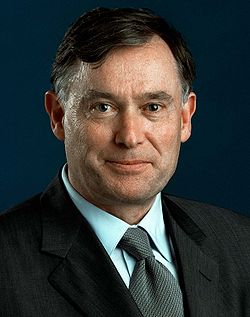 Horst KöhlerHorst Köhler (22 February 1943Affiliated
 Angela MerkelAngela Merkel is a German physicist and CDU politician who…Affiliated
How the record is sourced and how the score is derived.
The score is formula-derived (Factrail formula v1, version 1.0.0), not an editorial verdict. Read the methodology.
By the Factrail desk · Method: how we source and score · Last reviewed
Dispute a fact on this pageNamed here, or represent someone who is? Request a right of reply.
Linked because the text names them, not because anything was measured.
Built from the indicator links of the drivers this text names. A profile of coverage, not a score.