
Hermann Otto Solms
Hermann Otto Solms (born Hermann Otto Prinz zu Solms-Hohensolms-Lich on 24 November 1940 in Lich, Hesse) is a German politician…
- Facts0
- Drivers0
- Indicators0
Hermann Otto Solms (born Hermann Otto Prinz zu Solms-Hohensolms-Lich on 24 November 1940 in Lich, Hesse) is a German politician…
Hermann Otto Solms (born Hermann Otto Prinz zu Solms-Hohensolms-Lich on 24 November 1940 in Lich, Hesse) is a German politician of the Free Democratic Party, a trained bank clerk and a graduate economist. He was a member of the Bundestag from 1980 to 2013 and again from 2017 until the end of the 19th electoral term, having chosen not to stand in the September 2021 federal election. In parliament he was deputy chairman of the FDP group from 1985 to 1991, its chairman from 1991 to 1998, and a vice president of the Bundestag from 26 October 1998 until October 2013. After three periods as the party's federal treasurer—1987 to 1999, 2004 to 2011 and 2013 to 2020—he became honorary chairman of the FDP on 19 September 2020.
The archived Bundestag biography, drawn from his own disclosures, records an Abitur in 1960, military service, a bank apprenticeship finished with the commercial assistant's examination in 1964, and studies in economics and agriculture at Goethe University Frankfurt, the University of Giessen and Kansas State University. He took a Diplom-Ökonom degree in 1969 and a doctorate in agricultural science (Dr. agr.) in 1975, then worked as an independent entrepreneur from 1976 to 1984 and later sat on company advisory and supervisory boards. He joined the FDP in 1971 and chaired its district association in Giessen from 1976 to 1989, while also serving on the party's federal executive and presidium.
He took over the FDP parliamentary group in 1991 and held the chair until 1998, the end of the black-yellow coalition of the Christian Democratic Union, the Christian Social Union and the Free Democrats under Chancellor Helmut Kohl. As vice president he closed the last regular sitting in the plenary hall of the Bundeshaus in Bonn on 1 July 1999. His treasurership was marked by a dispute over 12.4 million Deutsche Marks in state funding for 1996: the South Schleswig Voters' Association, the Republicans and the Grey Panthers argued that he had registered the claim too late, and the Cologne administrative court ordered the sum repaid, but on 17 May 2000 the Federal Administrative Court held that the application for instalments had been filed correctly and on time.
In October 2017, at 76, he returned with the FDP after the party's four years outside the Bundestag and opened the constitutive sitting of the 19th Bundestag on 24 October as Alterspräsident, the member who presides until a president is elected. He was the first to do so under a revised rule that gives the task to the longest-serving member willing to take it, rather than to the oldest; Wolfgang Schäuble, whose service was longer, had declined because his group had nominated him for President of the Bundestag. Addressing a House of 709 members—the largest to that date, and the first in sixty years to seat seven parties, including the Alternative for Germany—he called a mandate a great honour and a still greater obligation, and he warned against special rules that would exclude or stigmatize any group. The office of the federal president listed him in November 2019 among recipients of the Grand Cross with Star and Sash of the Order of Merit of the Federal Republic of Germany. On 20 March 2022 the Hessian minister-president, Volker Bouffier, presented him with the state's Wilhelm Leuschner Medal for his political life's work.
Hermann Otto Solms was born on 24 November 1940 in Lich, in the district of Giessen in Hesse. The archived biography of the Bundestag, drawn from the member's own disclosures, records that date and place and lists him as Protestant. A Hessian government notice of 2022 styles him Hermann Otto Prinz zu Solms-Hohensolms-Lich of Lich; he has not used the princely title in public life, writing that it did not fit a democratic social order.
The name belongs to a branch of the counts and princes of Solms, a free noble family first attested in 1129 with Marquardus de Sulmese and divided in the early fifteenth century into the main lines of Braunfels and Lich. In 1792 the Hohensolms-Lich line was raised to imperial princely rank in the person of Count Carl Christian, vice-director of the college of counts in the Wetterau. The Act of the Confederation of the Rhine of 12 July 1806 then assigned sovereignty over the Wetterau possessions of the princes and counts of Solms—except the districts of Hohensolms, Braunfels and Greifenstein—to the Grand Duchy of Hesse. The house lost imperial immediacy and continued among the mediatized German nobility; the Neue Deutsche Biographie describes a later head of the line, Prince Ludwig (1805–1880), as a Standesherr. The private seat remained Schloss Lich, built as a rectangular water castle in the thirteenth century beside the crossing of the Wetter, remodelled in Renaissance and then Baroque forms, and still occupied by the family. The castle is not open to visitors, although much of the adjoining park is.
Solms was the youngest son of the hereditary prince Hermann Otto zu Solms-Hohensolms-Lich (1902–1940), a doctor of philosophy who worked in agriculture and forestry. A genealogical account of the line places the father's death on 3 July 1940 at Neuruppin, before the son's birth, and names the mother as Gertrud, Freiin von Werthern (1913–1987), whom the hereditary prince had married on 29 December 1933 at Großneuhausen. An older brother, Philipp Reinhard (27 November 1934 – 28 July 2015), later headed the house as eighth prince and took responsibility for the castle and estates. Another brother, Wilhelm, born in Lich in 1937 as Wilhelm Prinz Solms-Hohensolms-Lich, became a literary scholar. Solms's memoirs, as described by their publisher, treat that aristocratic background and a fatherless childhood as the setting of his early years.
In 1950, at the age of nine, he entered Schule Schloss Stein at Stein an der Traun, a private boarding gymnasium in Bavaria, and he later spoke at the school's seventy-fifth anniversary as a former pupil. Ilse Wiskott had founded the Landschulheim there in 1948, after the castle returned from use by American forces, and ran it in the manner of the Landerziehungsheime, with a gymnasium course alongside a brewery and a farm. For a long time the school was not allowed to conduct the Abitur itself, and in the early years pupils had to sit the examination in Munich. Solms's Bundestag biography records his own Abitur in 1960, without naming the examining school. The publisher's summary of his memoirs presents those boarding-school years, with the fatherless childhood, as the personal background he later set out under the name Solms rather than the princely style.
Biographies published by the Bundestag, which the parliament states rest on members' own disclosures, record that Hermann Otto Solms took the Abitur in 1960, completed compulsory military service, and then served a bank apprenticeship, passing the Kaufmannsgehilfenprüfung in 1964. He afterwards studied economics (Wirtschaftswissenschaften) and agriculture at Goethe University Frankfurt, the University of Giessen, and Kansas State University. In 1969 he qualified as a Diplomökonom. Those biographies do not call it a Diplom-Volkswirt or a Dr. rer. pol., and they do not record a separate American degree.
From 1970 to 1973 Solms was a research associate (wissenschaftlicher Mitarbeiter) at Giessen's Institute of Agricultural Business Management (Institut für landwirtschaftliche Betriebslehre). In 1975 the university awarded him a doctorate in agricultural science (Dr. agr.). The German National Library catalogues the dissertation, under the author name Solms-Lich, as Das Unternehmungsspiel als Ausbildungsmethode in der Landwirtschaft ("The business game as a training method in agriculture"), a 1975 thesis in Faculty 20, food economics and household sciences, of seven preliminary pages and 305 pages. The table of contents develops a computer-based farm business game, ULB-1, for crop and livestock decisions and farm accounts, and assesses it as a training method.
The doctorate overlapped with staff work for the Free Democratic Party. From 1973 to 1976 Solms was personal assistant (persönlicher Referent) to Liselotte Funcke, then a vice president of the Bundestag, and in 1977 and 1978 he was the FDP parliamentary group's specialist on tax and finance (Steuer- und Finanzreferent). Bundestag biographies based on his disclosures also describe entrepreneurial activity beginning in 1976, together with membership of advisory and supervisory boards. The biography for the 19th legislative term dates that activity to 1976–1984; the biography current during the 17th term dated it to 1976–1987.
Der Spiegel reported in 1990 that Solms and a partner from the electronics industry founded Datagraph GmbH in Lich, near Giessen, in 1976 to import American video games and place the machines in German pubs. The magazine wrote that the founders later built the machines themselves and, after that market weakened in the early 1980s, moved into graphics computers and related software, with peak annual turnover of up to 20 million marks and about 80 employees. On 6 April 1984 Computerwoche reported that Solms had left the managing directorship while remaining a shareholder, and that he was expected to join a supervisory board if the firm were converted into a stock corporation. Walter Sprenger was named commercial managing director alongside technical managing director Reinhard Stompe.
Writing while Solms was FDP federal treasurer, Spiegel described a later collapse of Datagraph and an investigation by the Giessen prosecutor's office into suspected fraudulent bankruptcy. It reported that he still held a stake of 1.05 million marks, which he said he had believed sold, and that in 1986 shares with a nominal value of four million marks were sold for ten million to Ican Data, part of the American firm Clark Copy, after the Frankfurt operation of Citibank had taken a minority holding. Buyers alleged that inventories had been overvalued. Solms called that charge incomprehensible and said he had been careless not to leave the firm entirely and in time.
For the 19th Bundestag (2017–2021), disclosed paid posts were the managing directorships of Dr. Solms Consulting GmbH in Berlin and of LIBERAL Vermögensverwaltungsgesellschaft mbH in Bonn, with shareholdings in the consulting company and in Polpinha Naturprodukte GmbH in Lich. Other declared company roles were membership of the advisory board of Deutsche Vermögensberatung AG in Frankfurt, published as annual income in bracket 4 (Stufe 4); the advisory board of Eschweiler & Partner GmbH in Bonn; the chair of the supervisory board of Piper Deutschland AG in Calden until August 2021; and a seat on the supervisory board of Universum Kommunikation und Medien AG in Berlin. It also listed the chair of the Deutsche Stiftung Eigentum, a trusteeship of the Friedrich Naumann Foundation for Freedom, the parliamentary advisory board of the Bundesverband Deutscher Vermögensberater, the Giessen district council, and honorary jury service for the International Prize of the Peace of Westphalia. The filing publishes declarations under the members' rules of conduct.
Hermann Otto Solms joined the Free Democratic Party (FDP) in 1971, while he was still based in Hesse. At the fiftieth anniversary of the FDP branch in Lich, reported by the Gießener Anzeiger, Solms said that eight members founded the Ortsverband on 28 July 1972 in the Schlosscafé. He tied the meeting to the failed constructive vote of no confidence against Chancellor Willy Brandt on 27 April 1972, which he called a chance for the FDP to steady itself. Walter Paul Berger was elected chair and Solms, then named Hermann Otto zu Solms-Lich, deputy chair. The branch set out to run a list in the October 1972 municipal election and entered the Lich council with two members.
From 1973 to 1976 he worked as personal assistant to Liselotte Funcke, an FDP finance politician and vice-president of the Bundestag. The Bundestag biography, which rests on his own disclosures, states that he was district chair of the FDP in Giessen from 1976 to 1989. The same text lists membership of the FDP presidium and federal executive board; the only federal party office it dates is that of federal treasurer, beginning in 1987, after he was already a member of parliament.
A first candidacy for the Bundestag failed in the election of 3 October 1976; a 2025 appreciation by Christian Lindner for the Friedrich Naumann Foundation describes the list place as one without a realistic chance of election. In Hesse the FDP took 8.5 percent of the vote, against 7.9 percent nationally, and four list seats, filled by Wolfgang Mischnick (first), Richard Wurbs (second), Andreas von Schoeler (third) and Klaus-Jürgen Hoffie (fourth). Solms was not among those elected. The Bundestag biography places entrepreneurial activity in 1976–1984, alongside the start of the district chairmanship.
The mandate came at the federal election of 5 October 1980. In Hesse the FDP received 10.6 percent of valid second votes, level with its national share: 377,448 votes out of 3,565,162 valid second votes, with turnout at 89.9 percent. Of 22 Hessian constituencies, the Social Democrats won 19 direct seats and the Christian Democrats three; the five FDP members all entered on the state list. The Hessian historical record places Solms, entered as Dr. Hermann-Otto Prinz zu Solms-Hohensolms-Lich of Lich, fifth on that list, after Mischnick, von Schoeler, Hoffie and Wurbs. He took the seat through the Hesse state list; the Bundestag biography records the membership, from 1980, as the Giessen constituency reached by that list.
Hermann Otto Solms entered the Bundestag in 1980 and sat continuously until 2013. The chamber's biography records that membership for the Giessen constituency on the state list of Hesse. Before the election he had been, from 1973 to 1976, personal assistant to Bundestag vice-president Liselotte Funcke of the Free Democratic Party, and in 1977 and 1978 the FDP group's adviser on tax and finance. A biography carried for the 13th electoral term states that he was returned on the Hessian state list and had been a member of the Finance Committee since 1980.
The uninterrupted spell ended at the 2013 federal election. At the Hessian FDP congress in Bad Homburg on 8 December 2012, Solms lost the ballot for first place on the state list to Heinrich Kolb by 124 votes to 154. He had urged delegates to keep a known face while the party was weak in the polls, and he accused the federal leadership of having squandered trust after the 2009 result; reports the same weekend said he would not stand for further places and treated the vote as the end of his Bundestag career. The list admitted by the Hessian state returning officer on 26 July 2013 nevertheless placed him last, at number 39. Nationally the FDP received 4.8 percent of second votes, against 14.6 percent in 2009, and took no seats. In Hesse its second-vote share was 5.6 percent, which did not meet the federal electoral threshold. A later account by the Hessian government summarised the record as membership of the Bundestag from 1980 to 2013.
Five years after entering parliament Solms became a deputy chairman of the FDP group, an office the Bundestag dates from 1985 to 1991. On 15 January 1991, in the first Bundestag elected after German reunification, the group made him chairman. The appointment was part of the post-election distribution of offices. Party chairman Otto Graf Lambsdorff had preferred Jürgen Möllemann for the group and Solms for the economics ministry, while Irmgard Schwaetzer wanted the chair. After the FDP leadership agreed with Chancellor Helmut Kohl that the party would receive a fifth department, the building ministry, Schwaetzer withdrew, Möllemann moved to economics, and a contest for the chair did not take place. Der Spiegel reported that Möllemann defeated the nominal opponent Günter Rexrodt by 49 votes to 34, with seven abstentions, and quoted Lambsdorff as saying that Solms made his life easier. The Bundestag data handbook lists Solms as group chairman throughout the 12th electoral term (1990–1994) and the 13th (1994–1998), with Wolfgang Mischnick as honorary chairman in the 12th, and names Wolfgang Gerhardt as chairman from the 14th term. Solms held the post until 1998, when the CDU/CSU–FDP coalition left office.
In that role he was the group's main parliamentary speaker on tax and the federal budget in the later Kohl cabinets. In a June 1997 Spiegel interview he said the necessary reforms had been begun "too late, too hesitantly," that the coalition had been slow to agree at the start of the term even though the FDP had pressed for tax and pension changes, and that the Social Democratic Party was then blocking bills in the Bundesrat. He said a reform would be credible only once it was in the statute book and felt "in the wallet," and he described a lower rate for all taxpayers, not only those on lower incomes, as the point that was not negotiable.
The same 13th-term biography, while recording membership of the Finance Committee since 1980, listed him for that term as a deputy member of the committee and as a full member of the Joint Committee under Article 53a of the Basic Law.
On 21 February 1991 the Bundestag elected him to the Parliamentary Control Commission, which oversees the federal intelligence services, alongside Burkhard Hirsch and six members of the other groups. The commission met for the first time on 20 March 1991. Its report for 20 December 1990 to 30 June 1993 said the largest part of the work concerned the intelligence consequences of the changed East–West relationship, above all the legacy of the Stasi and the structures left by the dissolution of the Soviet Union and the Warsaw Pact. Other recurrent subjects were arms exports and defence-industrial cooperation, political extremism, and international drug crime. In November 1991 the tageszeitung reported that Solms and Hirsch had threatened to resign from the commission unless its powers were substantially extended, citing what they regarded as insufficient information from the government, including a weapons transaction involving the Federal Intelligence Service and Mossad that ministers had not known about. The control statute was amended on 27 May 1992. A later report, for 1 July 1993 to 20 June 1994, still named Solms among the eight members; the biography for the following electoral term does not list the commission.
Solms had chaired the parliamentary group of the Free Democratic Party since 1991. The chairmanship ended in 1998 with the black–yellow coalition. At the constitutive sitting of the 14th Bundestag on 26 October 1998—the last such sitting in Bonn—members elected him a vice president, an office he held until he left parliament in October 2013. The sitting first elected Wolfgang Thierse of the Social Democratic Party as President of the Bundestag. Each group was entitled to at least one vice president. A CDU/CSU motion to keep the Party of Democratic Socialism, newly of group strength, out of the Präsidium failed. Elected with Solms were Anke Fuchs (SPD), Rudolf Seiters (CDU/CSU), Antje Vollmer (Alliance 90/The Greens) and Petra Bläss (PDS), who beat the CSU’s Michaela Geiger.
Nominated by the FDP, Solms was chosen by secret ballot, which required the votes of a majority of members. Of 664 votes cast, 423 were in favour, 150 against and 91 abstentions; he accepted. He was re-elected on 17 October 2002 (490 in favour out of 581, after the house had fixed four vice presidents), on 18 October 2005 (486 out of 602) and on 27 October 2009 (487 in favour). The four terms ran under Thierse and then Norbert Lammert.
With the president, the vice presidents form the Präsidium for the electoral period. In confidential meetings during sitting weeks it advises on the running of the house, including senior administrative posts, major contracts and public relations; the president may assign tasks to the vice presidents. The rules require proceedings to be conducted fairly and impartially and order to be kept. In plenary the president and vice presidents normally rotate about every two hours. Whoever is in the chair may issue a call to order, withdraw the floor or, in a serious case, exclude a member for up to 30 sitting days, and with two secretaries forms the Sitzungsvorstand.
On 1 July 1999 Solms closed the last regular sitting in the plenary hall of the Bonn Bundeshaus, the 50th sitting of the 14th electoral period. Vice president Anke Fuchs had opened it at 9:00 as the last sitting of the German Bundestag in Bonn.
The plenary hall of the Bundestag in the Bonn Bundeshaus, inaugurated in 1992 and used until the last regular sitting there on 1 July 1999.
After routine business came the agreed debate “50 Jahre Demokratie – Dank an Bonn”. Thierse spoke, then former chancellor Helmut Kohl in his last Bundestag speech; among later speakers were Antje Vollmer, Wolfgang Gerhardt and North Rhine-Westphalia’s minister-president Wolfgang Clement. Guests included Richard von Weizsäcker, former presidents Annemarie Renger and Richard Stücklen, and Bonn’s lord mayor Bärbel Dieckmann.
Taking the chair for the close, Solms recorded the house’s agreement that, following a decision of 25 November 1997, completion of the Reichstag building and office space from July 1999 comparable with Bonn’s, the Bundestag could work in Berlin, at Platz der Republik, from 1 September 1999. He called the next sitting for 8 September 1999 at 10:45 in the Reichstag and closed the Bonn sitting at 12:37. That afternoon the Bundestag and the Bundesrat met jointly under Article 56 of the Basic Law for the oath and installation of federal president Johannes Rau.
As a member of the Präsidium, Solms sat on the Council of Elders (Ältestenrat) throughout. Despite the name, it is not made up of the oldest members: the president, the vice presidents and 23 further members named by the groups in proportion to strength, with a representative of the federal government attending. It supports the president and, without deciding, seeks agreement on committee chairs and on the work programme. It does decide internal matters left to it, allocates the Bundestag’s reserved rooms, drafts the Bundestag’s budget chapter—from which the Budget Committee may depart only in consultation with it (im Benehmen)—and sets the sitting weeks and, at shorter notice, each plenary agenda and the length of debate.
Hermann Otto Solms was federal treasurer of the Free Democratic Party (FDP) in three periods: 1987 to 1999, 2004 to 2011 and 2013 to 2020. At the federal congress in Bremen in May 1999 he did not stand again after twelve years. He told delegates that net assets were 1.5 million marks, about 1.35 million of them claims on the Land associations, so that 150,000 marks were available, and that a fifth of roughly 67,000 members paid nothing and another fifth less than the ten-mark minimum. Der Spiegel reported that Paul Friedhoff, economic-policy spokesman of the Bundestag group, was expected to succeed him, and that Solms apologised for a formal error in the 1996 funding application, then still before the courts.
He returned after Günter Rexrodt, treasurer since May 2001, died on 19 August 2004 aged 62. On 6 September 2004 the federal executive unanimously elected Solms, then a vice-president of the Bundestag. He left at the May 2011 Rostock congress, where the Rheinische Post reported that Patrick Döring was elected with 91.5 percent. After the 2013 loss of all Bundestag seats, a special congress in Berlin — dpa reported the results on 8 December — elected him again, with 88.64 percent; Christian Lindner became chairman. He served until the congress of 19 September 2020. From that day the government of Hesse lists him as honorary chairman of the party.
In 1996 the FDP applied for instalments of state funding but, as the lower courts later held, filed no separate application for a final assessment. Bundestag president Rita Süssmuth paid about 12.4 million marks anyway. The South Schleswig Voters' Association, The Republicans and the Grey Panthers, who said the same omission had left them unpaid, sued. They argued that Solms had registered the 1996 claim too late and that their own share had been reduced because the FDP was paid.
The administrative court in Cologne ordered repayment of the whole 12.4 million marks. The tageszeitung called the missing application a formal error and reported appeals by the FDP and the Bundestag administration. The higher administrative court in Münster also found a deadline error. Der Spiegel said in 1999 that it had reduced repayment to 300,000 marks; the Associated Press report of the final appeal said Münster awarded the plaintiffs 300,000 marks and left the other 12.1 million to the administration’s discretion. The tageszeitung later estimated the three parties’ gain under that ruling at about 385,000 marks.
On 17 May 2000 the Federal Administrative Court let the FDP keep the 12.4 million marks. It held the instalment application correct and timely, and treated it as the request for final assessment as well. Presiding judge Werner Meyer called a contrary reading “lebensfremd”. The tageszeitung, citing file 1 C 3.00, noted that the Political Parties Act appeared to require two applications and that Münster had found no sign one letter was meant to be both. The plaintiffs’ lawyers said they would consider the Federal Constitutional Court. The FDP said defeat would not have ended its financial existence, citing new dues and the letting of its Bonn headquarters. In May 1999 Solms had said that, despite cuts, only 150,000 marks were on hand and the federal party was practically without cash.
Bundestag Drucksache 18/4301, the 2013 accountability report, shows federal net assets of −8,651,940.46 euros at 31 December 2013, bank debt of 8,012,504.60 euros and 12,730,250.02 euros owed to other lenders. Federal, Land and local levels together still had net assets of 6,271,535.03 euros. Der Spiegel, quoting the report Solms signed, wrote that a positive going-concern forecast meant the party did not treat the negative equity as insolvency-law over-indebtedness. At the May 2015 congress he blamed spending that outran income and said the banks required a surplus large enough to repay at least one million euros a year. Lindner asked district associations to send the federal party 75 euros per member over three years. By autumn 2017, Der Spiegel reported, the federal association was in surplus but still owed 6.7 million euros, with the deficits shifted onto the Land associations.
On 13 August 2020 Solms told the federal executive he would resign at the 19 September congress. He wrote that ten legislative periods in the Bundestag were enough, that he would not stand again, and that he and Lindner had agreed the date so the leadership could face forward. He wrote that by mid-2020 the federal party had, as he put it, ended an over-indebtedness running since 1990, that the books were in order and income matched spending, though donations still lagged in the pandemic year, and that a basis for further development was in place. Der Spiegel reported that Lindner intended to nominate Harald Christ, an entrepreneur and former Social Democrat who had joined the FDP that March. This was Solms’s third tenure, the latest having begun in December 2013.
Solms repeatedly drafted Free Democratic Party schemes to replace Germany's linear-progressive income tax with a few brackets; the party adopted versions, and none passed in that form. In August 1996, as group leader, he called for 15, 25 and 35 percent and sharp cuts in allowances, and said a reform before 1998 needed the Social Democratic Party. In December 1999 he extended the three rates to all income, proposed abolishing the trade tax and cutting the solidarity surcharge by one point a year, and put the gross loss at 120 billion Deutsche Marks. The Schröder–Eichel plans, he said, would leave companies above 40 percent and the law "finally in chaos".
An October 2003 bill he introduced set income to 7,500 euros tax-free, then 15 percent to 15,000, 25 percent to 40,000 and 35 percent above. Drucksache 16/679 (February 2006), which he introduced, kept those bands and taxed business income and corporations at 15 and 25 percent. On 1 June 2008 a Munich congress adopted a motion he had largely written: 10 percent to 20,000 euros, 25 percent to 50,000 and 35 percent above, and an end to the surcharge by 2019. He had begun with steps at 15,000 and 40,000 euros and called Andreas Pinkwart's rates of 10, 20 and 30 percent unaffordable.
In the 2009 coalition talks, speaking for the FDP on finance, he called the books "appalling" on 8 October: 264 billion euros of new debt were projected, and the debt brake—a federal structural deficit of at most 0.35 percent of GDP from 2015—required 29 billion euros of savings over four years. Two days later he said exceptional rules to finance tax cuts with debt were out of the question, rejecting a course Der Spiegel attributed to Chancellor Angela Merkel. Klaus Zimmermann of the DIW called the cuts an illusion. On 24 October Solms said the talks were over: 24 billion euros of relief from 2011, between an FDP bid of 35 billion and a CDU/CSU offer of 20, plus an unspecified step tariff. In April 2010 he and Pinkwart proposed five steps—14 percent kept, then 25 percent above 12,500 euros, 35 from 35,000, 42 above 53,000 and 45 above 250,730—with 16 billion euros still open. He denied a flip-flop; Der Spiegel called the change a retreat, and Union deputy Michael Meister would not underwrite the 16 billion.
A May 2009 motion he introduced already demanded the debt brake in the Basic Law and a repayment plan. In 2012 he argued in the Frankfurter Allgemeine Zeitung for a second constitutional guardrail, a "tax brake". In 2020 he told Handelsblatt he saw no early chance of radical simplification. In February 2026 the paper reported a four-step text he had drafted for the party programme, at 15, 25, 35 and 42 percent.
In January 1997 he urged a sharply higher value-added tax on fuels, heating oil, gas, coal and possibly electricity. Der Spiegel answered that firms reclaim input tax, so industrial prices would hardly change. In April 1998 he asked for a third rate across the European Union rather than higher charges on labour; the 1999 sketch also used it to replace trade-tax revenue.
In September 2015 he wrote that rules on looted antiquities should pass at once and export controls wait—the line of a letter to culture minister Monika Grütters from owner groups, including the Deutsche Stiftung Eigentum, which he chaired. An undefined "nationally valuable" category would widen the state's claim and lower prices; he preferred a public right of pre-emption at the market price, as in England. On 23 June 2016, the day the Bundestag passed the law, he and Karl-Heinz Paqué called limits on works more than 75 years old and worth over 300,000 euros a "cold expropriation" and a "provincial relapse into nationalism".
On 24 October 2017, as president by seniority, he told the Bundestag that 709 members left it "bloated", weakening its work and its public standing. Following Norbert Lammert, he urged a prompt electoral-law reform without tactical games and, failing agreement, a return to the previous law, if need be by constitutional majority.
Until 2017, § 1(2) of the rules of procedure of the Bundestag gave the chair at the first sitting to the oldest member by age, or the next oldest if that member declined, until a president or vice-president took office. On 23 March 2017 Norbert Lammert, then president of the Bundestag, asked the Council of Elders to give the role instead to the longest-serving member willing to preside, with age used only if length of service was equal. His stated reason was that a newly elected member, lacking any experience of chairing, might otherwise be the oldest and have to open the house. On 27 April 2017 the committee on electoral scrutiny, immunity and the rules of procedure recommended that text with the votes of the CDU/CSU and the SPD, against Alliance 90/The Greens and with Die Linke abstaining, and the Bundestag adopted it on 1 June 2017, the Greens against, Die Linke abstaining and the non-attached member Erika Steinbach also against. The new § 1(2) names as Alterspräsident the willing member with the longest membership.
Die Linke warned the committee that the Bundestag had to be able to bear a controversial Alterspräsident and that newer parliamentary groups would be disadvantaged; the Greens said changing the rule before the election inflated the office and should wait. The proposal came months before the election of 24 September 2017, when the Alternative for Germany was expected to enter the Bundestag, and the Frankfurter Allgemeine Zeitung described it as an attempt to stop an AfD politician taking the chair. Deutsche Welle reported that Wilhelm von Gottberg, then 77, was the prospective oldest member the change would keep from the opening speech, and that Lammert had told Die Zeit the occasion was a possible Alterspräsident “regarded as a right-wing radical,” referring to statements by von Gottberg on the Nazi past that critics called Holocaust denial. Alexander Gauland called the move tricks.
Wolfgang Schäuble of the CDU/CSU, with nearly 45 years of membership, was the longest-serving member, but he declined because his group had nominated him for president. Solms, of the Free Democratic Party, was next. He had sat from 1980 to 2013, 33 years, and at 76 was neither the oldest nor the longest-serving member. On 24 October 2017 in Berlin he opened the constitutive sitting of the 19th Bundestag under the revised rule, stated those 33 years, and asked whether anyone had served longer; the minutes record that no one had.
The AfD, on printed paper 19/2, objected and moved that the house elect a chair to open the sitting. Solms put the motion straight to a vote; every other group opposed it and only the AfD supported it. The Süddeutsche Zeitung reported that the group wanted the oldest member by age, one of its own, and its parliamentary manager Bernd Baumann later called the June change a ruse.
Solms welcomed the Free Democrats’ return after four years outside parliament, called a mandate an honour and a greater obligation, and described the Bundestag as the only state organ directly legitimated by the people. The house, he said, elects its government rather than the reverse, the chancellor’s power to set guidelines binding the government and not parliamentary decisions. The result of 24 September had to be accepted, and parliament should mirror the diversity of opinion. In words Der Spiegel read as aimed at the AfD’s arrival, he warned against special rules, exclusion or stigmatisation: “We all have the same mandate, the same rights, but also the same duties.” He invoked Article 38 of the Basic Law: members represent the whole people, are free of orders and answer only to their conscience.
He asked that public controversy be brought back into the chamber, moderate in tone and firm in substance, and quoted Frank-Walter Steinmeier that disagreement must not become irreconcilability. The Bundestag’s account records 709 members, the largest house in the history of the Federal Republic, and for the first time in sixty years seven parties in six groups: the CDU and the CSU, the SPD, Die Linke and the Greens, the FDP back after 2013, and the AfD for the first time. Solms called that size, which he termed bloated, harmful to the house’s capacity and standing, and urged a rapid reform of the electoral law, restoring the previous law by a constitutional majority if no agreement came. He stayed in the chair until Schäuble was elected president.
For the 19th electoral period, 2017–2021, Solms returned on the Free Democrats’ state list in Hesse, for constituency 173, Giessen. He was a deputy member of the finance committee and of the committee for economic affairs and energy. From 24 February to 3 March 2019 he travelled to Taiwan in a delegation of the Parliamentary Friendship Group Berlin–Taipei, led by Klaus-Peter Willsch, for talks with the Legislative Yuan and the Taiwanese government. He did not stand in the federal election of September 2021 and left the Bundestag at the end of that legislative period.
For the 19th Bundestag, Solms’s disclosure of outside interests listed him as managing director of Dr. Solms Consulting GmbH in Berlin and of LIBERAL Vermögensverwaltungsgesellschaft mbH in Bonn, with holdings in the consulting firm and in Polpinha Naturprodukte GmbH in Lich. It also recorded an annual advisory-board seat at Deutsche Vermögensberatung in Frankfurt, in income bracket 4; the advisory board of Eschweiler & Partner GmbH in Bonn; the chair of the supervisory board of Piper Deutschland AG in Calden until August 2021; and the supervisory board of Universum Kommunikation und Medien AG in Berlin. Among foundations he was chairman of the board of trustees of the Deutsche Stiftung Eigentum and a member of the board of trustees of the Friedrich Naumann Foundation for Freedom. In November 2019 the Deutsche Presse-Agentur reported that former federal minister Christian Schmidt had succeeded him as chair of the property foundation’s board.
In November 2021 the Munich association Republik21 (Denkfabrik R21) described itself as a non-party voice for a renewed “bourgeois” politics. Publishing remarks by the ethnologist Susanne Schröter, it named among those involved the historian Andreas Rödder, former CDU family minister Kristina Schröder, psychologist Ahmad Mansour, former Kiel mayor Susanne Gaschke, Neue Zürcher Zeitung editor-in-chief Eric Gujer, and Solms, honorary chairman of the Free Democratic Party. In November 2025 Der Spiegel reported that the budget committee, on a CDU/CSU–SPD proposal, raised the association’s support from €250,000 to €500,000 a year from 2026, as four-year project funding rather than open-ended institutional aid, and that critics located its views on the right of the CDU. Rödder, it noted, had as chair of the CDU basic-values commission favoured CDU minority governments sometimes backed by the Alternative for Germany and rejected the “firewall” against that party. The taz called Republik21 a right-wing association now receiving state money after the Union had opposed public financing of NGOs.
In 2021 Langen-Müller in Munich published Solms’s memoir Frei heraus: Mein selbstbestimmtes Leben (LMV imprint; hardcover ISBN 978-3-7844-3609-8, 461 pages). Earlier, as editor, he issued Die neue Einkommenssteuer: niedrig, einfach und gerecht. Berliner Entwurf der FDP (Liberal-Verlag, Berlin, 2003, 76 pages), the Free Democrats’ draft for a simplified income tax.
The Office of the Federal President announced on 1 November 2019 that Solms, of Lich, had received the Grand Cross with Star and Sash of the Order of Merit of the Federal Republic of Germany. The office states that names are generally published four months after an award. The Gießener Allgemeine reported on 24 September 2019 that Bundestag President Wolfgang Schäuble had conferred the decoration in Berlin the previous Monday on behalf of President Frank-Walter Steinmeier, and had also cited Solms’s work as a founding member of the support association of the Hohenschönhausen memorial and as chairman of the Deutsche Stiftung Eigentum.
On 20 March 2022 Minister President Volker Bouffier presented the Wilhelm Leuschner Medal, Hesse’s highest distinction, at Biebrich Palace in Wiesbaden; the 2021 awards had been postponed from Constitution Day, 1 December, because of the pandemic. The state chancellery cited Solms’s political life’s work: FDP member from 1971, federal treasurer in 1987–1999, 2004–2011 and 2013–2020, honorary chairman from 19 September 2020, Bundestag member in 1980–2013 and from 2017 (he did not stand in 2021), FDP group deputy then chair from 1985 to 1998, and Bundestag vice-president from 26 October 1998 to October 2013. Honoured the same day were former Federal Constitutional Court judge Herbert Landau, former Rüsselsheim mayor and state secretary Ottilia Geschka and nurse Zeynep Kallmayer. The medal was endowed in 1964 by Minister President Georg-August Zinn for the Hessian trade unionist and resistance fighter Wilhelm Leuschner, executed at Berlin-Plötzensee on 29 September 1944.
Volker Bouffier presents the 2021 Wilhelm Leuschner Medals at Biebrich Palace on 20 March 2022; Hermann Otto Solms was one of the four recipients.
The Bundestag biography for the 19th electoral term, drawn from Solms's own disclosures, lists him as Protestant, married, and the father of three children. A December 1997 profile in Die Welt called Christiane his second wife and named their daughters Sophie-Charlotte, Christine and Lilly-Constanze, without identifying an earlier spouse. Local reporting identifies her as Dr. Christiane Prinzessin zu Solms, born Christiane Meyer zu Eissen in Bielefeld, who met Hermann Otto Prinz zu Solms-Hohensolms-Lich while working for the Bundestag and settled in Lich in 1989. In a Gießener Allgemeine interview given when he was 73, about half a year after leaving the Bundestag in October 2013, he said they had just marked their silver wedding, consistent with a marriage in 1989. In 2018 the Frankfurter Neue Presse reported that a daughter, Marie Christine, had entered the Lich city council for the Free Democratic Party and founded a start-up.
Solms was born in Lich, in Hesse, and has remained based there. When the state government awarded him the Wilhelm Leuschner Medal in March 2022, it described him both as Dr. Hermann Otto Solms of Lich and as Hermann Otto Prinz zu Solms-Hohensolms-Lich. The Frankfurter Neue Presse wrote in 2018 that he and his wife lived in an old-town house within sight of Schloss Lich, the former family property.
At the municipal election of 6 March 2016 he stood 79th on the FDP list for the Kreistag of Landkreis Gießen; preferential votes lifted him to fourth place, and he accepted the seat. As the oldest member he was Altersvorsitzender and conducted the election of the council chair on 2 May 2016. A district list gives his membership as 2016–2018. He later said he resigned after about two years because meeting dates clashed with duties in Berlin. The 19th-term Bundestag biography, again from his own information, still called him a Kreistag member since May 2016 and its Alterspräsident.
The online catalogue of the Archiv des Liberalismus, maintained by the Friedrich Naumann Foundation for Freedom, lists a fonds under the name Solms, Hermann Otto. It holds political and private correspondence from his time as a Bundestag member and chairman of the FDP parliamentary group, with subject files on pensions, tax reform and the 1998 federal election, covering 1991–1998, plus a web archive of 28 captures of his sites for 2005–2015 and 2017–2020.
Ranked by shared high-impact facts, then explicit ties, then shared drivers.
 Christian LindnerChristian Wolfgang Lindner is a German retired politician…Affiliated
 Monika GrüttersMonika Grütters (born 9 January 1962 in Münster) is a…Affiliated
 Norbert LammertNorbert Lammert (born 16 November 1948 in Bochum) is a…Affiliated
 Alexander GaulandDrAffiliated
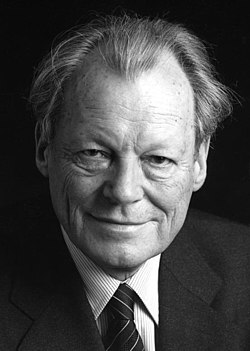 Willy BrandtWilly Brandt (born Herbert Ernst Karl FrahmAffiliated
 Angela MerkelAngela Merkel is a German physicist and CDU politician who…Affiliated
How the record is sourced and how the score is derived.
The score is formula-derived (Factrail formula v1, version 1.0.0), not an editorial verdict. Read the methodology.
By the Factrail desk · Method: how we source and score · Last reviewed
Dispute a fact on this pageNamed here, or represent someone who is? Request a right of reply.
Linked because the text names them, not because anything was measured.
People and organizations as listed in the Related section of this page; facts, drivers and the pages that name it as listed in the blocks here. Counts, not a rating.