
Norbert Lammert
Norbert Lammert (born 16 November 1948 in Bochum) is a German politician of the Christian Democratic Union (CDU).
- Facts0
- Drivers0
- Indicators0
Norbert Lammert (born 16 November 1948 in Bochum) is a German politician of the Christian Democratic Union (CDU).
Norbert Lammert (born 16 November 1948 in Bochum) is a German politician of the Christian Democratic Union (CDU). He sat in the Bundestag from 1980 until he left parliament in 2017, and he was its president from 2005 to 2017, the twelfth person to hold the office since 1949.
He was the eldest of seven children of the master baker Ferdinand Lammert and his wife Hildegard. After a Catholic primary school and a classical grammar school in Bochum, he passed the Abitur in 1967 and served until 1969 with the artillery of the Bundeswehr in Ahlen and Dülmen. He then studied political science, sociology, modern history and social economics at Ruhr University Bochum, including a term in 1971 at the University of Oxford, took his diploma in 1972, and in 1975 received a doctorate in social science for a dissertation on local party organisation. The university later appointed him an honorary professor, in 2008.
Lammert joined the Young Union in 1964 and the CDU in 1966, sat on Bochum city council from 1975 to 1980, and in 1980 entered the Bundestag on the CDU list in North Rhine-Westphalia. From 1989 to 1998 he was a parliamentary state secretary in the federal governments led by Helmut Kohl, first at the Ministry of Education and Science, then at Economics, and from 1997 at Transport, while from 1995 he was also the government's coordinator for aerospace. After the change of government in 1998 he became the CDU/CSU group's spokesman on culture and the media, and in 2002 the Bundestag elected him a vice-president.
On 18 October 2005 the newly elected Bundestag chose him as president, the second-ranking office of state in protocol, with 564 of 607 votes cast, 25 against and 17 abstentions. The Bundestag records that share of the valid votes as 93.1 per cent. Members confirmed him in 2009 and, on 22 October 2013, again, when he received 591 of 625 votes. He treated the chamber's independence from the government as part of the office, including when that stance irritated his own parliamentary camp. He did not stand for the Bundestag in 2017. In October of that year Wolfgang Schäuble was elected his successor and, in his inaugural address, credited Lammert with twelve years in the chair.
On 1 December 2017 the members of the Konrad Adenauer Foundation, the political foundation affiliated with the CDU, elected him chairman unanimously, in succession to Hans-Gert Pöttering, whose deputy he had been. In September 2025, after what he described as twenty-four years as deputy chairman and then chairman, he said the moment had come to pass the office on. On 19 December 2025 the members' assembly elected Annegret Kramp-Karrenbauer to succeed him, by 28 votes to 21 for Günter Krings, with one abstention, in the first contested vote for the chair in the foundation's seventy-year history.
Norbert Lammert was born on 16 November 1948 in Bochum, the eldest of seven children of the master baker Ferdinand Lammert and his wife Hildegard. His father, trained as a baker and confectioner, had taken over a grocery founded by Lammert’s paternal grandfather, a merchant; his maternal grandfather had been a miner, then a common occupation in the Ruhr. Lammert has described a childhood formed by a large family and a craft household in a city still marked by wartime destruction, with his mother drawn into the bakery without a formal contract of employment. He has said that his father never expected him to inherit the business, and that none of the siblings did; he was the first in the family to pass the Abitur and to attend university.
The household was recognizably Catholic. Lammert has connected his father’s early activity in the Christian Democratic Union (CDU), including membership of the Bochum council, with politics becoming a regular subject at the family table. In a 2013 interview he called the family the strongest influence on his upbringing and recalled that his parents bought a piano early so that he could learn an instrument for which they themselves had no particular training. He has dated his own interest in politics to his school years and to a history and politics teacher who was an enthusiastic floating voter, then still an unusual position.
In Bochum he attended a Catholic elementary school (Volksschule) from 1955 to 1959 and then, from 1959 to 1967, the city’s classical humanist state Gymnasium, which he has said he attended for eight years. He left with the Abitur in 1967. He has presented that path as typical of his generation: he was the first in the family to enter a Gymnasium, and a classical one, rather than someone raised inside a Bildungsbürgertum. Music ran alongside school. He learned piano, organ and harpsichord; Robert Schumann mattered especially in his youth, and Johann Sebastian Bach remained a lasting reference. Around the Abitur he briefly considered studying conducting, then concluded that he would not pass the entrance examination of a German music college. The Bundestag’s biographical account records the same judgment in his own later words: enthusiasm for music would not have been enough for a profession.
From 1967 to 1969 he did his military service in the Bundeswehr, with the artillery at Ahlen and Dülmen.
In 1969 he began a degree in political science, sociology, modern history and social economics at Ruhr University Bochum. One semester, in 1971, was spent at the University of Oxford. He was a scholarship holder of the Cusanuswerk, the Catholic Church’s organization for gifted students. He later described the social-science faculty of the late 1960s as sharply polarized and himself, already a CDU member, as a minority among students who identified with the protest movement; he stayed out of university politics so that he could sit his examinations quickly. He received the Diplom as a social scientist in 1972.
A doctoral grant then allowed him to turn to a dissertation. He has said the subject was suggested by a professor, later his supervisor, who worked on political parties and argued that there were still few systematic findings on how parties formed their will internally. That supervisor was the political scientist Erwin Faul, a former professor at Bochum, of whom Lammert was a doctoral student. Lammert submitted the thesis in 1974 under the title Die Bedeutung regionaler und nichtregionaler Organisationsstrukturen im Willensbildungsprozeß politischer Parteien auf unterer Organisationsebene – dargestellt am Beispiel eines CDU-Kreisverbandes im Ruhrgebiet, and was awarded the degree of Dr. rer. soc. in 1975. In 1976 the Konrad Adenauer Foundation published the 224-page text under the shorter title Lokale Organisationsstrukturen innerparteilicher Willensbildung – Fallstudie am Beispiel eines CDU-Kreisverbandes im Ruhrgebiet. Lammert has summarized its main finding as the mismatch between party organization, still built around where members lived, and political interest in the Ruhr, already spread across towns by work, school and leisure, with parties losing engaged citizens to issue-based citizens’ initiatives.
While already a member of the Bundestag, Lammert taught outside a regular university chair. From 1983 to 1989 he held a lectureship in political science at the Fachhochschulen in Bochum and Hagen, and from 1984 to 1991 he worked freelance as a lecturer in adult and continuing education.
In the winter semester 2005/06 he took up a teaching assignment at the Faculty of Social Science of Ruhr University Bochum. On 8 February 2008 the faculty conferred an honorary professorship (Honorarprofessor), citing his writing on politics and the economy, education, cultural policy, Europe and the Ruhr. Dean Ludger Pries described the courses as a bridge between theory and practice. At the ceremony he gave an inaugural lecture, “Weder machtlos noch allmächtig: Der deutsche Parlamentarismus zwischen normativen Erwartungen und politischen Realitäten”.
The doctorate, a Dr. rer. soc. awarded in 1975, rested on a dissertation submitted at Bochum in 1974. The faculty later described it as one of the first empirically grounded studies of democracy inside parties. It appeared in 1976 with the Eichholz-Verlag in Bonn as Lokale Organisationsstrukturen innerparteilicher Willensbildung: Fallstudie am Beispiel eines CDU-Kreisverbandes im Ruhrgebiet (xii + 224 pages); the submitted title had been Die Bedeutung regionaler und nichtregionaler Organisationsstrukturen im Willensbildungsprozeß politischer Parteien auf unterer Organisationsebene. Taking one district association of the Christian Democratic Union in the Ruhr, the study compared local branches with non-territorial bodies such as associations and working groups, and concluded that parties at municipal level were at best poorly able to articulate citizens’ concrete interests.
Later books were mainly edited collections and volumes of speeches. In 2004 he edited Alles nur Theater? Beiträge zur Debatte über Kulturstaat und Bürgergesellschaft (DuMont, Cologne), with 31 contributions. Verfassung, Patriotismus, Leitkultur: Was unsere Gesellschaft zusammenhält (Hoffmann und Campe, Hamburg, 2006) gathered about forty short texts he had invited on constitutional patriotism and the disputed notion of a Leitkultur. Zwischenrufe: Politische Reden über Geschichte und Kultur, Demokratie und Religion (Berlin University Press, 2008), with a foreword by Jutta Limbach, collected speeches from 2005 to 2008. Einigkeit. Und Recht. Und Freiheit: 20 Blicke auf unser Land (Herder, Freiburg, 2010) and Wer vertritt das Volk? Reden über unser Land (Suhrkamp, Berlin, 2017) brought together further essays and addresses on the Federal Republic and on parliamentary representation.
In late July 2013 an anonymous writer using the pseudonym Robert Schmidt, the same name used in allegations against Annette Schavan, published claims about the dissertation. As reported by Der Spiegel, the posting described irregularities on 42 pages involving 21 sources, including errors carried over from secondary literature, and asserted that a substantial share of the works cited had apparently not been read; the writer said the check had stopped after about a third of the main text.
Lammert said he had written the thesis “nach bestem Wissen und Gewissen” and put the full text on his website. On 29 July 2013 he asked the rector for an independent examination. The supervisor, the political scientist Erwin Faul, told Der Spiegel that he would not discuss the details until he had reread the dissertation and his original report, while recalling Lammert as “eine erstaunliche Figur von Integrität und Selbständigkeit”. The university followed its rules on good scientific practice and the corresponding rules of the German Research Foundation. Ombudsman Ulf Eysel analysed the individual claims, a legal assessment was added, and an external opinion was commissioned from the social historian Jürgen Kocka, a long-serving president of the WZB Berlin Social Science Center.
On 6 November 2013 the rectorate decided not to open proceedings to withdraw the doctorate. It stated that avoidable weaknesses of citation “den Verdacht des Plagiats oder der Täuschung keineswegs rechtfertigen”. Eysel and Kocka treated the demonstrable errors as “handwerkliche Schwächen”; Kocka stressed the limited weight of the contested passages for the dissertation’s overall achievement. The university found no sufficient suspicion of scientific misconduct and closed the matter.
Norbert Lammert joined the Junge Union, the youth organisation of the Christian Democratic Union (CDU) and the Christian Social Union, in 1964, while still a pupil in Bochum, and the CDU itself in 1966. His father, the master baker Ferdinand Lammert, was already a CDU municipal politician in the city. When Norbert Lammert was elected to the Bochum council in 1975, the two sat together until the son left the council in 1980.
From 1977 to 1985 he was deputy district chairman of the CDU in Bochum. From 1978 to 1984 he was also deputy state chairman of the Junge Union of Westphalia-Lippe. A biography published by the Haus der Geschichte dates that youth-wing office a year longer, through 1985; Lammert’s own résumé, the Bundestag member biography and the Konrad Adenauer Foundation all give 1978–1984. The Adenauer Foundation’s biographical sketch places him, in his early years in the Bundestag, with what it calls the party’s left-Catholic reform wing.
On 8 March 1986 the CDU state associations of the Rhineland and of Westphalia-Lippe held a merger congress, adopted statutes for a single CDU of North Rhine-Westphalia and elected a joint executive; the two predecessor associations continued until a federal party congress amended the federal statutes and gave the new state party legal effect. In that reorganisation a district association for the Ruhr was formed from 14 local associations on both the Rhenish and the Westphalian side of the region. Lammert, elected chairman at the founding congress in Essen, led the CDU-Bezirksverband Ruhr from 1986 until 2008. At the congress where he stood down he recalled four aims he had set in 1986: a party organisation recognisable across the Ruhr and effective for it; direct election of mayors and Landräte, ending the dual headship of an honorary mayor and a professional Stadtdirektor; a regional body that would concentrate planning powers for the whole area; and proof that the CDU could win majorities in the Ruhr.
The district chairmanship also put him on the state executive. The Bundestag’s later profile says that leading the Ruhr association made him a member of the North Rhine-Westphalia Landesvorstand; his own curriculum vitae lists that membership as continuous from 1986 to 2017, and the office of deputy state chairman from 1991 to 1997. In 1994 he sought the CDU’s lead candidacy for the 1995 Landtag election. On Sunday 15 May 1994 the state party held a membership ballot, which the Rheinische Post later described as the first of its kind in a state association of either Union party; members voted at district offices or by post. Helmut Linssen, chairman of the CDU group in the Landtag and the candidate backed by state chairman Norbert Blüm, received 59.6 percent. Lammert took 34,725 of 88,177 votes, about 39.4 percent, on a turnout of 44.6 percent of roughly 210,000 members, and won a majority only in the Ruhr district.
From 1996 he chaired the CDU Landesgruppe of North Rhine-Westphalia in the CDU/CSU Bundestag group, the largest regional caucus in the parliamentary party. Published end-dates differ by a year. His later résumé and the Adenauer Foundation’s tabular biography close the office in 2005; the Bundestag member biography current in 2012 gives 1996–2006. Contemporary reporting matches the later date. On 7 December 2005, in his Bochum constituency, he said he would give up the Landesgruppe, which he regarded as incompatible with the presidency of the Bundestag, while keeping the Ruhr chairmanship, and that a successor should be chosen in January. On the evening of 23 January 2006 the group, then 46 members strong, elected Peter Hintze with 35 of 37 votes; Norbert Königshofen of Essen became deputy.
Lammert stayed Ruhr chairman until the 38th district congress in Gelsenkirchen on 29 November 2008, where he gave the office up after more than twenty years. Die Welt reported that Oliver Wittke stood that day for the succession. The CDU Ruhr lists Wittke, its deputy chairman from 1992 to 2008 and at the time the state’s minister for building and transport, as chairman from 2008, and Lammert as honorary chairman from the same year, a title its board page still carries.
At the 1980 Bundestag election Norbert Lammert entered the Bundestag on the state list of the Christian Democratic Union (CDU) in North Rhine-Westphalia, not by winning a constituency. Bochum, his home city, remained a stronghold of the Social Democratic Party of Germany. In 1998 he was the CDU candidate in Bochum II and received 41,325 first votes, 27.5 percent, against 59.9 percent for the SPD’s Christel Humme, who took the seat. At the election of 22 September 2002 in Bochum I the SPD won 57.0 percent of valid first votes and the CDU 28.4 percent. The Bundestag biography current at the end of 2009 still recorded his own mandate as a North Rhine-Westphalia list seat and named constituency 141, Bochum I, as the district attached to it.
From 1983 to 1989 the same biography lists him as deputy chairman of the Committee on the Scrutiny of Elections, Immunity and the Rules of Procedure and as chairman of the German–Brazilian Parliamentary Group. His own curriculum vitae dates the group chairmanship from 1984 to 1991.
On 21 April 1989 Federal President Richard von Weizsäcker, on the proposal of Chancellor Helmut Kohl, appointed Lammert Parliamentary State Secretary at the Federal Ministry of Education and Science. The minister was Jürgen W. Möllemann of the Free Democratic Party, who had held the portfolio since 12 March 1987. Lammert stayed until 10 November 1994. In the 12th electoral term the ministers at the department were Rainer Ortleb (FDP) until 4 February 1994 and, from that day, Karl-Hans Laermann (FDP).
In office he pressed for tighter university admissions. In January 1992 Der Spiegel reported that he considered many of those enrolled unsuited to academic study and wanted aptitude tests. The article put the student population at about 1.72 million, roughly 75 percent higher than in 1977, with staffing almost unchanged, and noted that Hans-Uwe Erichsen, president of the Hochschulrektorenkonferenz, also favoured starting selection procedures.
On 17 November 1994 he moved to the Federal Ministry of Economics as parliamentary state secretary under Günter Rexrodt (FDP), and remained there until 15 May 1997. From 1995 to 1998 he was also the federal government’s coordinator for aerospace. The report he signed in Bonn on 20 February 1996, forwarded by the economics ministry on 20 March, described a sharp fall in demand at the start of the 1990s after the end of the East–West conflict, and summarised policy as national consolidation, European integration and global cooperation. A section on small and medium-sized suppliers recorded that, on 1993 figures, a prime contractor in the space sector had passed about 55 percent of order volume to subcontractors. Among the 1995 measures it listed were commitments under a new integrated aeronautical research and technology programme for 1995–1998 and, at a ministerial meeting of the European Space Agency in Toulouse that October, the European contribution to the International Space Station and the further development of Ariane 5.
On 15 May 1997 Lammert transferred to the Federal Ministry of Transport under Matthias Wissmann (CDU); the appointment lasted until 26 October 1998, when the Kohl government left office. Kohl wanted the aerospace coordination to follow him to transport. Rexrodt refused to surrender it and, Der Spiegel reported that June, denied Lammert further access to the files while the chancellor put off a cabinet decision.
Out of government, Lammert was the CDU/CSU group’s spokesman on cultural and media policy from 1998 to 2002. On 12 April 2000 the group tabled a motion, with him as first signatory, on federal support for culture in the capital. It asked the Bundestag to recognise a particular federal responsibility for cultural life in Berlin, to keep the Länder’s own responsibility and the country’s cultural variety intact, to continue in a lasting way the support previously given to Bonn, and not to treat federal money as a substitute for repairing Berlin’s structural problems or as general relief for the city budget. The motion sought a government report on future funding in Berlin and Bonn, on the German Historical Museum and the Museumsinsel, and on talks with the Länder, whom it invited to take part. In Die Welt in January 2001 he wrote that a federal state bound to cultural federalism must not reduce its cultural policy to funding the capital. He described the debate as skewed by the federation’s interest in representation, Berlin’s interest in money, and the Länder’s lack of interest, and he criticised the centralising and representational tendency he saw in the policy of the federal minister of state for culture, Michael Naumann.
At the constitutive sitting of the 15th Bundestag on 17 October 2002 the CDU/CSU nominated him as a vice-president. Of 591 votes cast, all valid, 498 were in favour, 66 against and 27 abstentions; President Wolfgang Thierse declared the required majority reached, and Lammert accepted. He held the office until 18 October 2005, the day the next Bundestag was constituted and elected him its president.
The President of the Bundestag is chosen by secret ballot for one legislative term. Under Article 40 of the Basic Law the office represents the directly elected chamber and, in protocol, ranks immediately after the federal president, ahead of the chancellor, the Bundesrat president and the president of the Federal Constitutional Court. The holder chairs the Council of Elders, directs the plenary, exercises domestic authority and police power in the parliamentary buildings, and heads the Bundestag administration.
On 18 October 2005, at the constitutive sitting of the 16th Bundestag, the presiding senior member, Otto Schily, announced that Norbert Lammert of the Christian Democratic Union had been elected. Of 607 votes cast, 606 were valid: 564 in favour, 25 against and 17 abstentions, with one invalid ballot. He was the only candidate, nominated by the CDU/CSU, and he succeeded Wolfgang Thierse. The 17th Bundestag re-elected him on 27 October 2009, with 522 yes votes, 66 no and 29 abstentions among 617 valid ballots. On 22 October 2013 the 18th Bundestag returned him again: 591 yes, 26 no and eight abstentions, all 625 ballots valid, and again with no opposing candidate. He held the chair from that first sitting until a successor was elected on 24 October 2017.
In the 2005 acceptance speech Lammert said that in the chamber "the heart of democracy beats — or it does not", and that the Bundestag commissioned the government rather than serving as its implementing agency. A large coalition majority, he argued, made parliamentary self-confidence more necessary, not less, and sittings need not be humourless so long as respect for other members remained visible. The president and vice-presidents ordinarily rotate in the chair about every two hours; whoever is presiding may call members to order, withdraw the floor or exclude them for up to 30 sitting days.
On 22 November 2005, announcing Angela Merkel's election as chancellor, he read the full tally — 202 votes against, among 612 cast — "not only out of consideration for many generations of historians", and wished her "occasionally also pleasure" in the office. A 2011 Spiegel account, counting the stenographic mark "Heiterkeit" for 2005–2009, described him as the member whose interventions most often drew recorded laughter.
He also used the chair to complain of thin coverage. After his 2009 re-election he said he had no understanding for a fee-financed broadcaster that, "with a sovereign stubbornness", preferred entertainment to information on the day a new Bundestag met: ARD was showing the comedy Schaumküsse and ZDF the serials Alisa and Bianca, while Phoenix carried the sitting. He had earlier sought a parliamentary channel and in 2008 had dropped it after the public broadcasters promised more main-programme coverage; they answered that Phoenix had met the reporting duty.
Opening the 18th Bundestag, he said his insistence on the chamber's independence had not always brought "stormy enthusiasm" on his own side. With another grand coalition, he argued, it had to be settled whether the rules protecting minority rights needed change; Spiegel noted that The Left and the Greens together held only about a fifth of the seats, short of the share required for a committee of inquiry. Clear results and large majorities, he added, were not therefore unconstitutional.
During the euro-area rescue programmes he argued that the Bundestag could not give a standing authorisation over guarantees on the scale of the annual federal budget. In a Deutschlandfunk interview on 26 August 2011 he rejected both a single "general mandate", after which aid would become ordinary executive business, and participation in every operational step of the European Financial Stability Facility. Each new country commitment, he said, needed a parliamentary decision before it bound the state; the plenum should settle questions of principle and the budget committee routine matters. Answering a report that a draft linked to Finance Minister Wolfgang Schäuble would leave pricing and conditions to the EFSF board, he told Welt that "there will certainly be no general mandate".
On 7 September 2011 the Second Senate dismissed constitutional complaints against the Greek-loan and EFSF statutes, holding that they did not violate the Bundestag's budgetary autonomy. It also held that a clause requiring only an effort to agree with the budget committee was compatible with the Basic Law solely if read as obliging the government to obtain that committee's prior consent before guarantees were assumed.
After the accident at the Fukushima Daiichi Nuclear Power Plant, the government ordered a three-month moratorium on extended reactor lives and a temporary shutdown of the oldest plants without a new Bundestag statute. Lammert doubted that the Federation and the Länder could do so and said the legal basis was being examined. On 17 March, participants in the Council of Elders reported him accusing the government of a "certain slapdash attitude" (Wurstigkeit) in applying statutes — the moratorium, rules on online child pornography, and the suspension of conscription — and saying that legal bases were required even in emergencies and were "not a dispensable side agreement".
As president he convened and chaired the Federal Convention, which under Article 54 elects the President of Germany. He presided over four assemblies in the Reichstag building. On 23 May 2009 Horst Köhler was re-elected on the first ballot with 613 votes, the exact majority required, from 1,223 cast. On 30 June 2010, after Köhler's resignation, Christian Wulff was elected only on the third ballot, with 625 votes. On 18 March 2012, after Wulff's resignation, Joachim Gauck received 991 of 1,232 votes cast. On 12 February 2017 Frank-Walter Steinmeier received 931 of 1,253 votes cast. Opening that Convention, Lammert again urged a change in the electoral law so that growth in the Bundestag, and therefore in the Convention, would not push the assembly out of the Reichstag chamber.
On 17 October 2016 the Bundestag spokesman said Lammert had written to the CDU in Bochum and to Armin Laschet, then its North Rhine-Westphalian chairman, that he would not stand in 2017. After 37 years in the House, the letter said, a change was due, "especially as I, too, am not getting any younger". He was also discussed as Gauck's successor. Spiegel reported on 4 November, citing Union sources, that Merkel had that week asked him to stand for the Union and that he had refused. On 23 November he told the Rheinische Post that he "simply did not want" the office and called Steinmeier's nomination shrewd, while still chairing the Convention that elected him.
His last sitting as member and president was on 5 September 2017. He told the 18th Bundestag that a living democracy showed itself less in the final majority than in minorities being able to use their rights beforehand — in his view the president's foremost task — and thanked the House for three elections over twelve years. On 24 October 2017 the 19th Bundestag elected Wolfgang Schäuble with 501 of 704 valid votes; 173 were against and 30 abstained.
In August 2011, as ministers prepared to widen the rescue fund used for Greece and other euro-area states, Lammert told Deutschlandfunk that one consent by the Bundestag must not become a “general authorisation” for liabilities on the scale of an annual federal budget, nor should parliament manage every operational step. Each new aid commitment, he said, required the Bundestag before legally binding obligations were entered; he also wanted to await the Federal Constitutional Court, then about to rule on earlier Greek aid and the fund.
In June 2012 he advised a two-thirds majority, in the Bundestag and the Bundesrat, for the permanent European Stability Mechanism as well as the fiscal compact. Karlsruhe had found parliament informed too late about ESM talks; a supermajority, he told Tagesspiegel am Sonntag, would add constitutional security even though the ESM did not legally require one. The government disagreed, while tying the votes together before the summer break; SPD chairman Sigmar Gabriel said ever larger umbrellas changed nothing structural, and Green co-chair Cem Özdemir called the coupling an embarrassment born inside the coalition.
On German Unity Day, 3 October 2012, in Munich, with Angela Merkel present, he warned that if integration “fell under the wheels” of the euro crisis, national rivalries would return. “Europe is more than an administration, more than the much-criticised bureaucracy, more than directives and more than treaties. And it is also more than the euro,” he said: the currency was a means toward political and economic union, not a substitute for shared values, and developing the European Union further was in Germany’s interest.
In September 2010, when the CDU/CSU–FDP coalition planned longer reactor lives without the Bundesrat, he said doing so was not “a stroke of genius”: it carried a “considerable constitutional risk” and dropped the broad base a concept running to 2050 needed. After the Fukushima nuclear accident he called a pause and a reassessment “right and appropriate”, and shutting the oldest plants closer to public expectation than leaving them on, but he denied that the cabinet could set the statute aside by administrative act. It had to apply the law or bring a bill; “in no case” could it suspend the law even temporarily. In the Council of Elders he was reported to speak of a “certain casualness” toward statutes: legal bases, he said, were required even in emergencies and were “not an optional side agreement”. Scepticism of nuclear power in Germany, he added, long predated Japan.
He separated criticism of asylum policy from Pegida. After a Dresden march in October 2015 showed a gallows labelled for Merkel and Vice-Chancellor Sigmar Gabriel — prosecutors investigated a threatened crime — he said liberalism included concerns, doubts and criticism, but that, faced with that “tastelessness”, citizens should ask whether they were being used for an “irresponsible stirring-up of sentiment”. At the 2016 Unity Day ceremony in Dresden, with protesters outside, he said opposition was allowed, yet the loudest had the shortest memory of the country before unity, and that anyone claiming to defend the West had to meet its minimum of respect, tolerance, free opinion and the rule of law.
In the debate then called Leitkultur, he urged writing into the Basic Law that German is the national language, an idea he had raised around the 2006 federalism reform. He told Der Spiegel it was “not off the table”, because the country’s identity “was, long before the founding of the nation-state, grounded in its language”; the sentence was not added.
On 2 June 2016 the Bundestag adopted, with one vote against and one abstention — a “remarkable majority”, Lammert said — a CDU/CSU, SPD and Green motion to commemorate the genocide of the Armenians and other Christian minorities in 1915 and 1916. With envoys of Armenia and Turkey present, he said a parliament was “not a historians’ commission and certainly not a court”, but would not dodge questions where the German Empire shared the guilt, and that today’s Turkish government was “not responsible for what happened 100 years ago, but it shares responsibility for what becomes of it”. Death threats against members of Turkish family background, meant to sway the vote, were unacceptable; criticism, even aggressive criticism, was not. Turkey withdrew its ambassador and later barred members from German troops at Incirlik. On 9 June, for all groups, he answered President Recep Tayyip Erdoğan, who had questioned those members’ origin and, in Lammert’s words, called their blood tainted: he would not have thought that possible of a democratically elected head of state in the twenty-first century, and threats against individual members attacked the whole parliament.
On 30 June 2017 the Bundestag voted on a Bundesrat bill opening marriage to same-sex couples. That morning the SPD, the Left and the Greens carried a motion to take the bill at once, against the CDU/CSU group’s wish to leave it to the next term. Lammert, presiding, said there were considerable reasons for and against the existing law, and hoped the debate would show “the mutual respect which both positions undoubtedly deserve”. It passed by 393 votes to 226, with four abstentions, on 623 cast; Lammert voted no. Of the CDU/CSU group, 75 voted yes and 225 no; SPD, Left and Greens cast no votes against. Merkel, who also voted no, said the Basic Law reserved marriage to a man and a woman, though she favoured easier adoption. When Green members fired confetti cannons, he called the gesture inadmissible under the chamber’s rules.
The Konrad Adenauer Foundation (Konrad-Adenauer-Stiftung) is the political foundation affiliated with the Christian Democratic Union, organized as a registered association with seats in Berlin and Sankt Augustin. It describes its work as political education, documentation of the Christian-democratic movement, support for European unification and international understanding, policy analysis, and help for gifted young people, carried out through offices in Germany and abroad.
Lammert had been a deputy chairman since 2001. On 1 December 2017 the members' assembly elected him unanimously to succeed Hans-Gert Pöttering, who had proposed him for the unpaid chair. The succession had been contested. Angela Merkel, then CDU leader, had preferred Annette Schavan, a former education minister who had resigned over a plagiarism finding and was ambassador to the Holy See. Board members urged Lammert to stand; Schavan withdrew, and Merkel told Pöttering she would support Lammert. Board member Andreas Rödder said the foundation should contribute to debate and not become an arm of the party leadership.
Coverage of the chairmanship turned on foreign partnerships and on the party's right flank. In 2018, visiting Namibia, Lammert told President Hage Geingob that the Chinese community there was about four times the German one. Geingob rejected the remark as a lecture and raised Germany's colonial record and the treatment of Namibians entering Germany; a recording of the exchange circulated later. In 2023 taz reported that the foundation's Hungary office still treated the Mathias Corvinus Collegium, close to Prime Minister Viktor Orbán, as a regular partner after Fidesz left the European People's Party. A spokeswoman said the foundation was reviewing that closeness, would keep a critical dialogue with governing-party figures, and was seeking more pro-European partners in Hungary.
In September 2025 a foundation study, as reported by the Süddeutsche Zeitung and the Tagesspiegel, classed the Alternative for Germany among "authoritarian right-populist and right-extremist" parties that rejected liberal-democratic principles and the European Union and often took pro-Russian positions. Lammert said that attitudes to the EU, Ukraine and the rule of law were a practical test, that the AfD failed it and could not partner with EPP parties, and that centre-party cooperation had tended to legitimize such groups rather than consolidate the centre. The same month he said he would not stand again after 24 years on the board, as deputy and then chairman.
On 19 December 2025 the assembly held the first contested chair election in the foundation's 70 years. Annegret Kramp-Karrenbauer, a former CDU leader, Saarland minister-president and defence minister, defeated Günter Krings, deputy chair of the CDU/CSU Bundestag group and chair of its North Rhine-Westphalia Landesgruppe, by 28 votes to 21, with one abstention. Chancellor Friedrich Merz had written to Lammert in mid-November backing Krings. Kramp-Karrenbauer took office on 1 January 2026. Lammert, chairman since 1 January 2018, was elected honorary chairman.
On 18 November 2002 Lammert founded the Norbert-Lammert-Stiftung, a dependent charitable trust administered by the Konrad Adenauer Foundation and financed from endowment income and donations. Its statutes set the purpose as promoting education, art and culture, international understanding and tolerance, and development aid, including humanitarian measures. A four-member board of trustees, which he chairs, decides spending; Gertrud Lammert is deputy chair, with two Adenauer Foundation officers also seated.
From about 2004 he was the neutral member of the supervisory board of RAG AG, formerly Ruhrkohle, a co-determination seat he took at the request of chief executive Werner Müller and of both the employer and employee sides, succeeding former Bundestag vice-president Anke Fuchs, and which he kept as Bundestag president. The fee was €25,000 a year. He said the company had discouraged him from waiving it and that he passed it to his foundation, and he denied a conflict of interest over RAG's planned flotation and the hard-coal law. In November 2017 Armin Laschet, then minister-president of North Rhine-Westphalia, appointed him to the 13-member board of trustees of the RAG-Stiftung, which holds assets for the perpetual costs of hard-coal mining after 2018. Appointed trustees were paid €30,000 a year plus €500 a meeting. He left that board during 2022.
As Bundestag president he chaired, ex officio, the trustees of the foundation for the Memorial to the Murdered Jews of Europe. The statute assigns that chair to the Bundestag president or a deputy; the trustees decide fundamental matters and appoint the director. In March 2007 he gave up an acting chair of the foundation's executive board, held since the previous summer, arguing that the two offices should not be combined. Bernd Neumann, minister of state for culture, became executive chair; the trustees' chair remained attached to the Bundestag presidency.
In early March 2022, under Chancellor Olaf Scholz, Federal President Frank-Walter Steinmeier appointed Lammert and Andreas Voßkuhle, former president of the Federal Constitutional Court, to the three-member advisory panel on post-office employment, and reappointed Krista Sager, replacing Theo Waigel and Michael Gerhardt. The Federal Ministers Act lets the government, on the panel's recommendation, bar former ministers—and, under parallel rules, parliamentary state secretaries—from outside work for up to 18 months, ordinarily no more than a year, where public interests or confidence in the government might suffer. The president appoints the members on a government proposal at the start of a Bundestag term; the cabinet decides, and the recommendation is published with that decision. LobbyControl noted that the previous panel had never recommended the full 18 months.
The Bundestag biography records Lammert as Catholic, married, and the father of four children. He states that he has been married since 1971 to Gertrud, née Wilmes; that Felicitas (born 1975) and Nils (born 1977) were born in Bochum, Jonas (born 1981) in Rio de Janeiro and Teresa (born 1985) in New Delhi; and that, having married and started a family in Bochum, he also came to feel at home in Berlin.
In a Deutschlandfunk interview he confirmed that the parental household had been recognizably Catholic, and the conversation treated piano-playing, wide reading and writing about books as interests that continued beside politics. He has said that as a child he played the organ and the harpsichord, later learned the piano, and wanted his four children to have a musical education, though he now plays only rarely. A laudation for the North Rhine-Westphalia state chancellery quoted his remark that enthusiasm for music and football had not been enough for a profession, so that both stayed private interests.
On 26 October 2007 Federal President Horst Köhler conferred the Grand Cross of the Order of Merit of the Federal Republic of Germany in Berlin, as an Associated Press caption of the ceremony records. On 18 February 2008 Minister-President Jürgen Rüttgers awarded the Order of Merit of North Rhine-Westphalia at Jagdschloss Herdringen in Arnsberg, naming Lammert among ten recipients; the conferral was also published in the state's ministerial gazette. On 1 February 2011 Bernard Accoyer, president of the French National Assembly, invested him, in the name of President Nicolas Sarkozy, as a Commander of the Legion of Honour, for cooperation between the Bundestag and the Assemblée nationale.
On 1 February 2018 the Central Council of Jews in Germany presented the Leo Baeck Prize, its highest distinction and endowed with 10,000 euros, at a ceremony in Berlin. Council president Josef Schuster praised Lammert's Holocaust-remembrance addresses and his support for relations with Israel; Navid Kermani gave the laudation at Lammert's request. The council's notice cited those Bundestag speeches on International Holocaust Remembrance Day, his opposition to antisemitism, and closer parliamentary contact with the Knesset around fifty years of German-Israeli diplomatic relations.
On 11 November 2017 in Kassel he received the Jacob Grimm Prize for the German Language, worth 30,000 euros, from the Eberhard Schöck Foundation and the Verein Deutsche Sprache; the jury cited his political argument and his work for German in politics and scholarship. That autumn the Verlag für die Deutsche Wirtschaft gave him the Ecumenical Preaching Prize for his life's work at a service in Bonn, pointing to addresses for the Auschwitz commemoration and German Unity Day as political speech joined to Christian preaching. Earlier awards of the same kind were the Dolf Sternberger Prize for public speech, received in Heidelberg on 4 December 2010, and the Börsenverein des Deutschen Buchhandels plaque "Dem Förderer des Buches", announced in May 2011 with reference to his part in the 2002 fixed book-price law. On 1 November 2010 the German Music Council elected him an honorary member for his commitment to musical education.
The law faculty of the University of Pécs made him an honorary doctor on 11 March 2010. At the end of October 2007 the German embassy in Romania announced that the University of Bucharest would confer a doctorate honoris causa during his visit, a degree his biographical note lists. In July 2021 the Cusanuswerk, the Catholic scholarship foundation of which he had been a holder, awarded its Cusanus Prize for his life's work at a ceremony in Essen. In 2021 Bochum conferred its Ehrenring; the city's roll of recipients lists him for that year.
Ranked by shared high-impact facts, then explicit ties, then shared drivers.
 Joachim GauckJoachim Gauck (born 24 January 1940) is a German civil…Affiliated
 Viktor OrbánFormer Hungarian prime minister (1998–2002Affiliated
 Friedrich MerzGerman chancellor since May 2025 and CDU leader from 2022Affiliated
 Recep Tayyip ErdoğanPresident of Turkey since 2014 after a premiership from 2003Affiliated
 Nicolas SarkozyNicolas Sarkozy was president of France from 2007 to 2012…Affiliated
 Olaf ScholzGerman chancellor from December 2021 to May 2025Affiliated
 Christian WulffChristian Wilhelm Wulff (born 19 June 1959) is a German…Affiliated
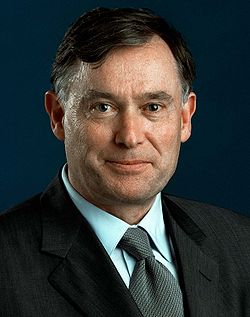 Horst KöhlerHorst Köhler (22 February 1943Affiliated
How the record is sourced and how the score is derived.
The score is formula-derived (Factrail formula v1, version 1.0.0), not an editorial verdict. Read the methodology.
By the Factrail desk · Method: how we source and score · Last reviewed
Dispute a fact on this pageNamed here, or represent someone who is? Request a right of reply.