
Ilse Aigner
Ilse Aigner (born 7 December 1964 in Feldkirchen-Westerham) is a German politician of the Christian Social Union in Bavaria.
- Facts0
- Drivers0
- Indicators0
Ilse Aigner (born 7 December 1964 in Feldkirchen-Westerham) is a German politician of the Christian Social Union in Bavaria.
Ilse Aigner (born 7 December 1964 in Feldkirchen-Westerham) is a German politician of the Christian Social Union in Bavaria. Since 5 November 2018 she has been President of the Landtag of Bavaria. The Landtag re-elected her on 30 October 2023, with 164 of 200 votes.
She completed an apprenticeship as a radio and television technician, qualified as a state-certified electrical technician, worked in her parents' electrical firm, and from 1990 to 1994 developed helicopter electrical systems at Eurocopter. She was a member of the Feldkirchen-Westerham municipal council from 1990 to 1998 and of the Rosenheim district council from 1990 to 1999, sat in the Landtag from 1994 to 1998, and returned in 2013 for the Miesbach constituency. From 1998 until 2013 she was a member of the Bundestag.
In 2008 the CSU leadership designated her to succeed Horst Seehofer as federal minister of food, agriculture and consumer protection after he became minister-president of Bavaria. She held that portfolio, in the cabinets of Chancellor Angela Merkel, until 2013. She was then deputy minister-president of Bavaria from October 2013 to November 2018, state minister for economic affairs, media, energy and technology until March 2018, and state minister for housing, construction and transport from March until she took the Landtag presidency.
As consumer-protection minister she called Google Street View's photography of streets and houses a "million-fold violation of the private sphere," and said that no intelligence service would collect such images so freely. In January 2011, after dioxin-laced industrial fat entered animal feed, she said the case showed "criminal energy coupled with alarming unscrupulousness"; investigators had found excessive dioxin in eggs and some chicken, and authorities had halted sales of poultry, pork and eggs from more than 4,000 farms. In October 2026, at a Landtag event on modern antisemitism attended by Charlotte Knobloch, she said that "'Never again!' is dead" and that Jewish people in Germany again had to fear living their identity openly. On 8 November 2026 Chancellor Friedrich Merz announced that he would propose her the following Monday to the CDU leadership as candidate for President of Germany, to succeed Frank-Walter Steinmeier at the Federal Convention on 30 January 2027.
Ilse Aigner was born in Feldkirchen-Westerham, in the district of Rosenheim in Upper Bavaria. The curriculum vitae issued by the Bavarian Landtag, the Bundesrat, the Haus der Bayerischen Geschichte and the short biography of the Christian Social Union in Bavaria (CSU) all give 7 December 1964; the Landtag text and the Bundesrat also describe her as Roman Catholic. Reporting of her 60th birthday in the Oberbayerisches Volksblatt likewise treats 7 December as the day. The CSU history portal instead lists 6 December 1964 and shortens the birthplace to Feldkirchen.
She was the youngest of four sisters, born within about four years of one another, and grew up in Feldkirchen-Westerham among cousins and neighbouring children. Her parents ran a medium-sized electrical craft business in the town — she has put the workforce at about 20 — and her father was a CSU member. She attended the local kindergarten and primary school.
In 1974 she was among the first fifth-grade pupils at the Gymnasium Bad Aibling, which opened that year as the only Gymnasium in the old district of Bad Aibling. She travelled by bus from Feldkirchen with an older sister already at the school, and the 1975/76 yearbook lists “Aigner Ilse, Feldkirchen” in class 6a. She later said she transferred because the Gymnasium seemed too theoretical, a choice her parents left to her and one that also fitted a possible succession in the family firm. In 1981 she gained the Mittlere Reife, the intermediate school-leaving certificate, at the Wilhelm-Leibl-Realschule in Bad Aibling, where she had taken the economics stream before deciding that mathematics and physics interested her more.
After the Realschule she began an apprenticeship as a radio and television technician at Elektrohaus Stern in the city of Rosenheim, a trade she has said she chose in order to take over her parents’ business. She was the only woman among the men there. Customers treated a female apprentice as a novelty: she recalled a householder who, seeing her on a roof with a journeyman, asked since when craftsmen brought their girlfriends to work, and a building site where someone assumed she was stealing while she fitted sockets.
The apprenticeship overlapped with an illness that changed her plans. Severe back pain began while she was still at school; she gave up competitive cycle racing with RSV Götting and, unable to lie down, slept sitting at the kitchen table on piled cushions. She has described about two years of pain around the age of 17 before doctors found a benign tumour in the spinal canal. During a diagnostic examination paralysis set in, her parents were telephoned for consent to an emergency operation, and she later said the surgery could have left her paraplegic. The pain stopped afterwards. She did not finish the Rosenheim apprenticeship and completed the training in the family firm.
Official biographies record one sequence: training as a radio and television technician, with the journeyman’s examination in the electrical trade, from 1981 to 1985, then work as a journeyman in the parents’ business until 1988. She has said she would have liked to stay, but after the operation was no longer sure she could spend a working life on roofs.
From 1988 to 1990 she attended a technical college and qualified as a state-certified electrical technician (staatlich geprüfte Elektrotechnikerin). The CSU history portal gives the title as state-certified technician, specialism electrical engineering, from a Fachschule für Technik; the published curricula vitae do not name the school. She has said she was the only woman among about 100 men there, that instructors tested whether she was merely trying the course, and that she finished with the best result.
From 1990 to 1994 she developed system electrics for helicopters. The Landtag CV, the CSU and the Bundesrat name the employer Eurocopter; the CSU history portal says Eurocopter Deutschland. A 2025 caption in the Augsburger Allgemeine, on a company photograph from those years, identifies the workplace as Messerschmitt-Bölkow-Blohm (MBB), where she was one of few women in a technical role. Airbus records that the helicopter divisions of Aérospatiale and of DASA, which had absorbed MBB, merged in 1992 to form Eurocopter, renamed Airbus Helicopters in 2014. The works associated with her job were in Ottobrunn: visiting a helicopter operator on the former Eurocopter site there in 2013, she was described by the Münchner Merkur as being on home ground because she had worked in Eurocopter development in the early 1990s. The Süddeutsche Zeitung later called the post development of helicopter electrics, held until the mid-1990s. She has called the four years very good ones, in a workplace that was again mostly male, and recalled a flight in which colleagues put the helicopter into an autorotation to see how much she would stand.
Aigner entered party politics through the Christian Social Union in Bavaria and its auxiliary organizations. She joined the Young Union (Junge Union) in 1983, the CSU in 1985 and the Frauen-Union in 1987, and from 1993 to 1999 she was deputy state chair of the Junge Union in Bavaria.
In 1990 she took local office while still employed as an electrical technician at Eurocopter, a job she held until 1994. From 1990 to 1998 she sat on the municipal council of Feldkirchen-Westerham, in the district of Rosenheim, where the CSU lists her as chair of its council group and as the council's youth officer (Jugendreferentin). In the same years she was a member of the district committee of Landkreis Rosenheim, and she remained on the district council until 1999. She later said that at 27 she had narrowly failed to win the CSU nomination for mayor of Feldkirchen-Westerham, which she described as her first encounter with male networks in the local party.
The election to the 13th Landtag of Bavaria was held on 25 September 1994, with a turnout of 67.8 percent among 8,743,532 eligible voters. The CSU won 52.8 percent of the combined first and second votes and 120 of 204 seats, 99 of them direct mandates, keeping an absolute majority but falling short of the 127 seats it had taken in 1990. The Social Democratic Party of Germany received 30.0 percent and 70 seats, Alliance 90/The Greens 6.1 percent and 14, and the Free Democratic Party, with 2.8 percent, none. In Upper Bavaria the CSU won 39 of 65 seats, nine of them from the regional list.
Aigner did not contest a constituency (Stimmkreis). She entered on the CSU list for Upper Bavaria and was a member from the opening sitting on 20 October 1994 until 28 September 1998. That sitting, in the Maximilianeum in Munich, elected Johann Böhm (CSU) president by secret ballot. On 21 October the Landtag elected Edmund Stoiber minister-president, and on 27 October it approved the Stoiber II cabinet. She later said the list place had been offered when, during the Amigo affair around Max Streibl, the CSU looked far from an absolute majority and established candidates were reluctant to run, and that Stoiber's result then carried her in; Markus Söder entered the Landtag in the same election.
From 10 November 1994 she sat on the Committee for Education, Youth and Sport and the Committee for Petitions and Complaints, and from 24 November 1994 on the state sports advisory council (Landessportbeirat), all until the end of the mandate. Her plenary speeches, as indexed by the Landtag, clustered on training and schools. On 15 May 1997, debating a shortage of apprenticeships, she opposed a training levy as a further burden on firms and argued that small businesses often could not take motivated Hauptschule graduates because training rules set by employers and unions demanded theory those pupils could not meet. She called instead for shorter courses, or courses that spread the theory over longer, and for appeals to employers rather than municipal contracts tied to the number of trainees. The index also records her in debates on apprenticeship places (4 July 1995), the vocational preparation year (10 October 1995) and women's education and employment (19 March 1996), on the second reading of the Bavarian Pregnancy Counseling Act (31 July 1996), and as rapporteur on pre-apprenticeship placements (24 March 1998). The Landtag closed the term on 9 July 1998; her membership is recorded through 28 September 1998, after the election of 13 September.
Aigner sat in the Bundestag from 1998 to 2013 as the directly elected member for the Starnberg constituency in Upper Bavaria. The seat covered municipalities in the districts of Starnberg, Bad Tölz-Wolfratshausen and Miesbach, including the towns of Bad Tölz and Wolfratshausen. Redistricting changed its official number from 210 in 1998 to 225 in 2002 and 2005, and to 224 in 2009.
At the 1998 federal election she won constituency 210 for the Christian Social Union (CSU) with 57.0 percent of the first votes, on a turnout of 81.3 percent. The Social Democratic Party (SPD) took 26.2 percent of the constituency first vote. Klaus Barthel (SPD) and Sabine Leutheusser-Schnarrenberger of the Free Democratic Party (FDP) entered the Bundestag from the same constituency on the Bavarian state list.
On 22 September 2002 the CSU received 63.3 percent of the valid first votes in constituency 225 (132,307 of 208,941), with turnout at 85.3 percent and the SPD on 22.0 percent. Aigner held the direct mandate. In 2005 she was again directly elected, with 59.7 percent of the first votes against 22.0 percent for the SPD and turnout of 81.5 percent. Recalculated onto the 2005 constituency boundaries, the CSU first-vote share for 2002 was 63.5 percent. Barthel and Leutheusser-Schnarrenberger were again returned on the state list.
At the 2009 federal election the Federal Returning Officer recorded her re-election in constituency 224 with 54.0 percent of the first votes (101,261). The SPD followed on 15.8 percent and the FDP on 14.6 percent; turnout was 75.7 percent.
In the 14th Bundestag (1998–2002) Aigner was a full member of the Committee on Education, Research and Technology Assessment. For the CDU/CSU group she reported on space research and on the content of vocational training. She was a Schriftführerin of the Bundestag and a deputy member of the Petitions Committee and the Committee on Tourism.
She was the CDU/CSU Obfrau on the study commission “Future of Civic Engagement” (Zukunft des Bürgerschaftlichen Engagements), which the Bundestag set up on 15 December 1999 and which constituted itself on 14 February 2000. Chaired by Michael Bürsch (SPD), the commission published its report, Bürgerschaftliches Engagement: auf dem Weg in eine zukunftsfähige Bürgergesellschaft, as printed paper 14/8900 on 3 June 2002. The report was adopted on 22 April 2002 by 15 votes to none, with four abstentions. A footnote entered in Aigner’s name recorded that the CDU/CSU members, with the expert members André Habisch and Peter Maser, abstained. With other CDU/CSU members and those two experts she signed a minority opinion calling for the state to concentrate on core tasks, to cut bureaucracy, and to apply subsidiarity so that citizens, associations and smaller units kept scope to act. She also sat on the commission’s rapporteur group on civic engagement and the welfare state.
In the 15th Bundestag (2002–2005) she was deputy chairwoman of the CSU Landesgruppe in the Bundestag and a full member of the Budget Committee. For the CDU/CSU she reported on chapter 10, the budget of the Federal Ministry of Consumer Protection, Food and Agriculture, and on the spaceflight section of chapter 30, the education and research budget. She was a deputy member of the Defence Committee.
From 2005 she was an assessor (Beisitzerin) on the executive of the CDU/CSU parliamentary group. Until 2008 she chaired the group’s working group on education and research and was its spokesperson on the Committee on Education, Research and Technology Assessment.
On 31 October 2008 Federal President Horst Köhler, on the proposal of Chancellor Angela Merkel, appointed her Federal Minister of Food, Agriculture and Consumer Protection in succession to Horst Seehofer. Bundestag President Norbert Lammert administered the oath required by Articles 56 and 64 of the Basic Law on 4 November 2008. Immediately before the appointment she had led the Union group’s education and research working group; earlier, as a member of the Budget Committee, she had reported on the agriculture budget.
Ilse Aigner, of the Christian Social Union in Bavaria, became federal minister of food, agriculture and consumer protection on 31 October 2008, succeeding Horst Seehofer after he became Bavarian minister-president. Seehofer had nominated her on 30 October; she was the second woman to hold the post. She left Chancellor Angela Merkel's cabinet on 30 September 2013 to return to Bavarian politics; Federal President Joachim Gauck was to hand her the dismissal certificate that day.
Her first Brussels test was the November 2008 "Health Check" of the Common Agricultural Policy. Ministers agreed to cut direct payments by 10 percent from 2013, less than the European Commission had sought, at a cost negotiators put at about €240 million a year for German farmers, who were then receiving a good €5.4 billion across nearly 380,000 farms. Germany secured a €300 million milk fund for producers in hard-to-farm regions, which diplomats and Der Spiegel's English edition tied largely to Aigner's lobbying, though part of it was to come from the direct-aid cuts she and the government had opposed. Milk quotas were still to rise 1 percent a year and end in 2015, and premiums for the largest farms, concentrated in the east, were cut by less than the Commission wanted. Aigner called the result a success "even if not all wishes were fulfilled"; Green politician Friedrich-Wilhelm Graefe zu Baringdorf called it a victory for the agro-industry lobby.
In March 2013 ministers outlined the policy to 2020, which Aigner called a "Herculean task." Thirty percent of direct payments were tied to environmental conditions, with a further 7.5 percent at risk for breaches; Commissioner Dacian Cioloș had wanted the entire payment conditional on environmental performance. Five percent of farmland was to be left more to nature, though Aigner said they could still be farmed sustainably.
In January 2011 investigators found excessive levels of cancer-causing dioxin in eggs and some chicken meat after contaminated fat entered feed. Sales of poultry, pork and eggs from more than 4,000 farms were halted, and several countries banned German farm products. Aigner said "criminal energy coupled with alarming unscrupulousness" required a severe response.
Additives from the Harles und Jentzsch plant in Schleswig-Holstein tested at 77 times the permitted dioxin level. On 14 January her action plan separated industrial-fat and feed-fat plants, required licences, insurance and full reporting of tests, and proposed an EU list of permitted ingredients, tougher penalties and an early-warning databank. She said she would examine the industry "from raw materials to the stall" even if the mixing was criminal, and that dioxin found in food had not endangered health; South Korea and China banned German pork. Renate Künast of the Greens, a former agriculture minister, called for her to be dismissed.
That spring, warnings during an outbreak of enterohaemorrhagic Escherichia coli first focused on raw cucumbers, tomatoes and lettuce. Aigner said most patients had eaten those vegetables, mainly in northern Germany. Officials later admitted the outbreak strain had not come from Spain, but said the warning was justified because a different strain had been found on Spanish cucumbers. By 10 June the Robert Koch Institute blamed bean sprouts: 29 people had died and about 3,000 had fallen ill, and warnings on cucumbers, tomatoes and lettuce were lifted while the sprout warning stayed. Aigner told the Hamburger Abendblatt she had "nothing to reproach" herself for, while promising a review of who should speak in such crises.
On 14 April 2009 Aigner banned cultivation of Monsanto's MON 810 maize, then the only genetically modified crop widely grown in Europe. "I have come to the conclusion that genetically-modified corn from the MON 810 strain constitutes a danger to the environment," she said. Approved in the European Union in 1998 and permitted in Germany since 2005, it had been judged safe by the European Food Safety Authority, and the Commission had backed lifting similar bans in France, Austria, Hungary, Greece and Luxembourg. German biotechnology lobbyists called it a setback for science and the economy.
Less than two weeks later the ministry allowed field trials, not commercial growing, of BASF's starch potato Amflora. A spokeswoman said reviewers expected "no negative effects on human health and the environment," with any market approval left to the Commission. Seehofer had demanded a ban and then said there had been "no pressure or instruction"; Aigner had described the maize ban as a single case, and CSU parliamentary leader Peter Ramsauer backed research "under the strictest conditions."
A voluntary "Ohne Gentechnik" seal introduced by the ministry in autumn 2009 let firms label food made entirely without genetic engineering, beyond EU rules that required a label only when an ingredient itself was modified. By January 2010 Der Spiegel reported that the seal had barely caught on.
In February 2010 Aigner called Google Street View's photography of streets and houses "nothing less than a million-fold violation of the private sphere," and said no intelligence service would "collect photos so unabashedly." She wanted prior consent before a private home was published, rather than an opt-out, and the ministry posted a form letter for people who wanted their houses left out.
In April she wrote to Facebook chief Mark Zuckerberg against plans to pass "general data"—name, sex, profile pictures or location—automatically to other sites, with only an opt-out. "Private matters must stay private," she wrote, threatening to close her own account. On 4 June, after meeting a company representative, she said she would delete the profile, because she would not accept a leading firm breaking data-protection law and ignoring members' privacy.
At the January 2012 Green Week she presented a charter drawn up with farmers, consumers, churches and environmental and animal-welfare groups, and said causing animals to suffer was not allowed. She sought an EU ban from 2017 on castrating piglets without anaesthesia and an EU label for higher-welfare meat, and noted that battery cages for hens had been illegal in Germany since 2010, ahead of the EU-wide ban. In February 2013 she claimed the Christian-liberal coalition had "done more for animal welfare than any other federal government." Spiegel noted that the cabinet approved her animal-welfare bill in May 2012, but coalition partners delayed the piglet rule to 2019 and dropped a ban on hot-iron branding of horses before the Bundestag passed it, and that animal experiments rose from about 2.6 million in 2007 to 2.9 million despite her pledge to try to reduce them.
In Rostock in August 2010 she called the western Baltic herring stock the lowest ever recorded and said Germany would work with the Commission, coastal states and fishermen through the next two years, while urging an EU legal framework for a fisheries eco-label and more careful consumer choice.
On 27 December 2012 the Naturschutzbund Deutschland named her "Dinosaur of the Year," a negative prize given since 1993 as a 2.6-kilogram tin lizard. President Olaf Tschimpke cited "backward-looking clientele politics": environmentally harmful agricultural policy, disappointing work on animal-welfare law, blocking a greener hunting law, and too little effort on sustainable fisheries. A ministry spokesman called that "cheap PR gags," answered with a mocking "blind nut of the year," and said uniform regional per-hectare premiums now paid for sustainable land management rather than production, while the ministry worked to keep fish stocks as food for later generations.
At the state election in Bavaria on 15 September 2013, Ilse Aigner of the Christian Social Union returned to the Landtag of Bavaria by winning the Miesbach constituency, Stimmkreis 120. The state returning officer's final count gave her 33,428 first votes, 56.8 percent; 59,652 of 85,725 eligible voters took part, a turnout of 69.6 percent. On 10 October 2013 she was the first member of Horst Seehofer's new cabinet to take the oath, as Deputy Minister-President and State Minister of Economic Affairs, Media, Energy and Technology. She kept that portfolio until Markus Söder's cabinet was sworn in on 21 March 2018. The Bundesrat's register of former members records the same offices for 2013–2018 and lists plenary contributions on 13 June 2014, 18 December 2015, 8 July 2016 and 10 February 2017.
Energy policy in the ministry was set by the Energiewende after Germany's nuclear phase-out. Aigner closed a three-month Energiedialog with a final sitting of the Plattform Energie Bayern; the state government's account, linked to a paper dated 2 February 2015, described a consultation of business, unions, churches, citizens' initiatives, investors, authorities and researchers. She said the dialogue had put the gap after Bavaria's last nuclear plants closed at 5 gigawatts of firm capacity and 40 terawatt-hours of generation. She argued that the planned Südlink and Südostpassage lines were not required for Bavaria's own supply if federal rules made gas-fired plants and combined heat and power economic in the state, and that lines should not be built merely to export surplus power. She announced €90 million, at first for combined electricity and heat in one- and two-family houses, and said renewable growth should shift from quantity to quality because uncontrolled wind-power additions would raise costs and the need for further lines.
A statute of 17 November 2014 used a federal opening clause so that a wind turbine kept its privileged status outside built-up areas only if it stood at least ten times its total height—hub height plus rotor radius—from protected housing. Municipalities could still allow a shorter distance in their own land-use plans; complete applications filed before 4 February 2014 were exempt, and existing plan designations were tied to 21 November 2014. On 9 May 2016 the Bavarian Constitutional Court held the so-called 10H rule largely compatible with the state constitution, in proceedings brought by opposition groups in the Landtag and by a popular complaint. Ten times the height, it found, narrowed the privilege but did not remove it: for turbines about 200 metres tall, 1.7 percent of the state's area remained, against the applicants' estimate of about 0.05 percent, or about 0.01 percent once wind yield and other public interests were counted. Only Article 82(5), which told municipalities seeking a shorter distance to work toward agreement with their neighbours, was struck down as a breach of the rule of law.
Aigner and Interior and Construction Minister Joachim Herrmann called the judgment legal certainty and a balance between energy targets and local opinion, and said turbines could still stand closer where there was local consensus. The government put the fleet then at 937 turbines and 1.9 gigawatts. Herrmann had described the 2014 law as citizen participation rather than a ban on wind power. The Bavarian branch of the German Wind Energy Association reported additions falling from 410 megawatts in 2014 to 372 in 2015 and 340 in 2016, mostly from permits issued before 10H, and at the end of 2016 counted 362 megawatts permitted but unbuilt in Bavaria against 1,638 megawatts in Lower Saxony. Figures from the Fachagentur Windenergie an Land, set out later by Bayerischer Rundfunk, put applications at 22.1 turbines a month from January 2010 to February 2014 and 2.6 a month from March 2014 to March 2021, a span that continues past Aigner's tenure. In 2016, when applications rose 69 percent in Germany ahead of auctions, they fell 39 percent in Bavaria. The broadcaster recorded the wind industry, the Social Democratic Party and Alliance 90/The Greens as blaming 10H, and the CSU as rejecting that account.
Seehofer resigned with effect from the end of 13 March 2018 in order to enter the federal cabinet, and he declined to remain in office until a successor was sworn in. Under the Bavarian constitution the state government falls with the minister-president: external representation passed to Landtag President Barbara Stamm, while the law on members of the government left ordinary business with the deputy. Aigner therefore conducted that business from 14 March until the morning of 16 March. In a special sitting that day the Landtag elected Söder on the first ballot, with 99 of 169 votes cast, 64 against, four abstentions and two invalid papers, and Stamm swore him in at 11:38.
On 21 March 2018 Aigner entered Söder's cabinet as State Minister of Housing, Construction and Transport, a new department that took construction and transport from the interior ministry, and she remained Deputy Minister-President. The Bundesrat dates the housing portfolio, together with the deputy minister-presidency, to 12 November 2018.
On 18 July 2018 she and Söder presented BayernHeim GmbH, a state company meant to assemble a stock of 10,000 lower-cost rental homes by 2025, especially for lower-paid workers such as nurses and educators. The state assigned it €500 million from its capital reserve, of which €50 million was available at once as share capital, with the rest to follow in cash and land. First sites were the former McGraw barracks in Munich-Obergiesing, projected at up to 1,000 homes and hostel places, land near the Großhadern hospital for clinic staff, and plots in Fürth and Bayreuth, including flats over a partly used car park. The ministry said it was already in contact with 22 other municipalities about 32 possible sites. Peter Baumeister was named managing director. On 5 November 2018 the newly constituted Landtag elected Aigner its president with 198 of 205 votes; the successor cabinet was confirmed on 12 November.
At the constitutive sitting of the 18th Landtag of Bavaria on 5 November 2018, Ilse Aigner of the Christian Social Union in Bavaria (CSU) was elected president by secret ballot with 198 of 205 votes; five members voted against her and two abstained. She succeeded Barbara Stamm, who had presided for ten years and, after 42 years in the Landtag, had not been returned in 2018. The senior member, Helmut Markwort of the Free Democratic Party, conducted the election. Aigner said she would hold the office impartially, "not enthroned above the factions, but turned toward every member and very close to the citizens," and stated "a clear no to extremism of every kind, to antisemitism, racism and intolerance toward minorities."
Under the constitution of Bavaria, the Landtag elects a presidium from its members, and the president holds house authority and police powers in the parliament building, runs its administration and represents the state in that administration's legal business. The Landtag adds that she chairs plenary sittings, supervises the administration and the state data-protection commissioner, and represents the parliament in legal matters. She chairs the commission that prepares the election, without debate, of the Constitutional Court's president, its professional judges and their deputies, and, by virtue of office, the administrative board of Bayerischer Rundfunk, which oversees the broadcaster's management and the director-general's contract.
The 19th Landtag re-elected her on 30 October 2023 with 164 of 200 votes; eight members voted no, 27 abstained and one ballot was invalid. She said she would be "a president for all factions" and "party-politically neutral," while adding that she was "not without a position" and would, in conflict, do "what is good for democracy in Bavaria."
In the same address she said the previous term's debate had been deliberately coarsened, and that reprimands had been "carried about like trophies," which she called a degradation of a constitutional organ. She asked members to "disarm verbally" and proposed fines for misconduct, on the model of the Bundestag; a voluntary "democracy codex" against disinformation and online hate; and an annual "Demokratiespiegel Bayern" survey of attitudes to democracy.
The CSU, the Free Voters, Alliance 90/The Greens and the Social Democratic Party passed an amendment to the Members Act on 25 April 2024, against the Alternative for Germany (AfD); it took effect on 1 June 2024. Reprimands gave way to a call to order, a fine of up to 2,000 euros (4,000 for a repeat in the same sitting) and, as a last resort, exclusion from the sitting. The presidium sets fines case by case; the president may also fine a more than minor breach of house rules. Sponsors said it was not a law aimed only at the AfD, while arguing that standards had suffered since that party entered; AfD speakers Markus Walbrunn and Christoph Maier called it an "authoritarian muzzle law" and arbitrary, and said the faction might go to court. The report said 26 members had been reprimanded in the previous term. Aigner said parliamentary democracy was "capable of defending itself."
On 11 March 2025 she announced the first such fine: 1,000 euros against AfD member Oskar Lipp for using the Nazi term Endsieg in a Ukraine debate, telling other factions they wanted to continue toward it. She called it an unacceptable lapse and a reversal of perpetrator and victim; Lipp objected.
Each faction is to supply one vice-president, but election requires more than half the valid votes in a secret ballot; abstentions do not count toward the majority. AfD nominees repeatedly fell short. On 5 November 2018 Raimund Swoboda, put up after Uli Henkel withdrew, received 27 of 204 votes, below the 103 required; Der Spiegel wrote that Henkel was under observation by the domestic intelligence service. On 30 October 2023 Matthias Vogler received 29 of 200 votes, short of 101. On 9 April 2024 Ramona Storm received 27 yes votes, 145 no and four abstentions among 176 members. Die Zeit, carrying a dpa dispatch, called that ballot the faction's 19th unsuccessful attempt.
On 21 October 2026 the series "Der Landtag im Gespräch" filled the Senate Hall of the Maximilianeum with about 320 guests for a discussion titled "Der neue alte Wahn – der moderne Judenhass" ("The new old madness – modern Jew-hatred"). Holocaust survivor Charlotte Knobloch, president of the Jewish community of Munich and Upper Bavaria, gave the opening address; antisemitism commissioner Ludwig Spaenle, sociologist Armin Nassehi of Ludwig Maximilian University of Munich and producer Alice Brauner-Zechbauer also took part.
The Landtag reported that she condemned antisemitism from the right, the left and religious fanaticism, criticised celebrations of the Hamas attack of 7 October 2023 as "resistance," and said criticism of Israel's government was allowed but that suffering in Gaza was caused "first and foremost by the terrorists of Hamas." The next day dpa, quoting a published text, reported her line that "'Never again!' is dead" and that Jewish people must again fear living their identity openly. She called antisemitism a stain grown "even darker," said she had been wrong to think that, "apart from a few incorrigible misfits," people in the country where Auschwitz was invented were united against it, and urged that the "gravediggers of 'Never again!'" not have the last word.
On 23 January 2025, after a wreath-laying at the Dachau memorial, she spoke at a Landtag ceremony in Dachau Castle, with the Bavarian Memorials Foundation, for the 80th anniversary of the liberation of the concentration camps; Knobloch and other survivors were present. She called a claim she attributed to AfD co-leader Alice Weidel—that Hitler had been a communist—a "perfidious mockery of the victims," noting that many of the first Dachau prisoners were Social Democrats and Communists. "Let us be honest: we have broken the promise of 'Never again!'" she said, and called for resistance to an "again and again."
Aigner joined the Junge Union in 1983 and the Christian Social Union in Bavaria (CSU) in 1985. From 1989 to 1999 she sat on the state executive of the Junge Union in Bavaria, and from 1993 to 1999 she was its deputy state chair. Since 1995 she has been a member of the CSU party executive (Parteivorstand) and of the executive of the Upper Bavaria district association.
The party statute assigns urgent decisions and day-to-day business to a presidium composed of the chair, the deputy chairs, two treasurers, two secretaries (Schriftführer), the general secretary, the chief executive, the chair of the finance commission and seven further members of the executive. The CSU board biography dates Aigner's appointment as Schriftführerin of the executive and the presidium to September 2007, and a curriculum vitae from her website, archived in January 2013, still described her as secretary and presidium member from 2007. Later party profiles continue to date the presidium membership from 2007. On the presidium roster published by the CSU, the secretary posts are held by Astrid Freudenstein and Markus Pannermayr, while Aigner is listed among the further members.
The CSU is divided into local, county and district associations. A district association (Bezirksverband) generally covers a Regierungsbezirk, but the statute names ten rather than the seven administrative districts: Upper Bavaria, Lower Franconia, Lower Bavaria, the Upper Palatinate, Swabia, Munich, Upper Franconia, Nuremberg–Fürth–Schwabach, Middle Franconia and Augsburg. Changes to that division are made by the party executive after those affected have been heard. The organs of a district association are the district party congress (Bezirksparteitag) and the district executive. The congress elects the chair, up to five deputies, two treasurers, two secretaries and further members whose number depends on the association's size, and it chooses delegates to the state party congress and the party committee.
Upper Bavaria is the largest of the ten. In 2011 it was reported to have about 44,000 members, and later accounts of its congresses have continued to call it the biggest district association.
Siegfried Schneider gave up the chair on moving to the Bavarian Landeszentrale für neue Medien. At an extraordinary meeting of the district executive on 5 March 2011 the board chose Aigner, then federal minister of food, agriculture and consumer protection, unanimously; she took over the duties provisionally on 16 March, with the delegate election set for 23 July. Contemporary reports described her as the second woman to head a CSU district association, alongside Emilia Müller in the Upper Palatinate. Finance Minister Georg Fahrenschon, identified in reporting as a potential opposing candidate, did not stand.
On 23 July 2011 the congress in Traunreut elected her with 98.2 percent of the vote; seven of 393 delegates voted against her, and she became the first woman to lead the Upper Bavaria association. The congress in Rosenheim on 22 July 2023 re-elected her with 96.9 percent, before more than 300 participants. On 5 July 2025 the congress in Altötting gave the president of the Landtag of Bavaria 278 of 283 votes, or 98.6 percent, and confirmed five deputy chairs. Markus Söder, Federal Interior Minister Alexander Dobrindt and CSU general secretary Martin Huber addressed the delegates. The district executive elected for 2025–2027 lists her as chair.
Beyond her offices in the Landtag of Bavaria, Aigner has held unpaid board and honorary posts listed in the parliament's register of interests, which is based on members' own disclosures.
Donum Vitae is a lay association of the Catholic Church formed after Pope John Paul II in 1999 ordered the German bishops to stop issuing the counseling certificate required before an abortion is not punished. The association continued church-profiled pregnancy counseling inside the state system and still issues that certificate. Donum Vitae in Bayern elected Aigner chair unanimously on 25 September 2021 at St. Bonifaz abbey in Munich. She left on 25 October 2024, when Katrin Staffler succeeded her. From 18 November 2024 the register lists her as unpaid chair of its support circle and deputy chair of the Donum Vitae Stiftung Bayern.
She chairs, unpaid, the support association of the Caritas Kinderdorf Irschenberg, having succeeded Alois Glück at his request. In July 2009 she left the Wasserwacht of the Bavarian Red Cross, a state association of the German Red Cross, after eight years; Ulrike Scharf-Gerlspeck was elected to follow her. A Landtag statement of 14 August 2021 called Aigner, a rescue swimmer, an ambassador of the Bavarian Red Cross and a former Wasserwacht chair, and the register still lists the ambassadorship as unpaid.
The same disclosures, matched by the organizations' lists, place her on the board of the Hanns Seidel Foundation (among its further board members as of 29 July 2026), on the Kuratorium of the Deutsches Museum, and as an external member of the university council of the Technical University of Munich. She sits on the board of the Stiftung Bayerischer Gedenkstätten by virtue of the Landtag presidency.
On 9 July 2009, while federal minister, Aigner received the Bavarian Order of Merit. In November 2012 the Münchner Merkur reported that she and Irschenberg mayor Hans Schönauer were to receive the Bavarian Constitutional Medal in Silver. Her Landtag biography also names her as a holder of the Bavarian Constitutional Order; since 1 November 2021 the Landtag president receives that order on taking office.
On 28 January 2024, at Feldkirchen-Westerham's New Year reception, mayor Johannes Zistl made her an honorary citizen, only the third person so honored, after the priest Hubert Huber and former mayor Georg Röhrmoser. On 8 May 2026 Tyrol's governor Anton Mattle conferred the Grand Tyrolean Eagle Order in Innsbruck, with Tyrolean Landtag president Sonja Ledl-Rossmann. The award, one of three classes created by the Tyrolean Landtag in 1970, recognized her work for cooperation between Bavaria and Tyrol, including mediation on Alpine transit at the 2018 Brenner summit. She was one of 14 people from outside Tyrol honored that day.
A biography published by the Christian Social Union in Bavaria describes Aigner as Roman Catholic and unmarried. Born in Feldkirchen-Westerham, she told the Münchner Merkur in October 2026 that she still lives there, with relatives nearby, and that she "goes through life as a single person" in a multi-generation household rather than alone.
She also described two illnesses. At 17, while finishing Realschule, a spinal-canal tumor went unidentified through about two years of severe pain; during an examination paralysis set in, her parents were asked by telephone to consent to emergency surgery, and she said the operation could have left her paraplegic. As federal agriculture minister under Angela Merkel she was treated for thyroid cancer, which she linked to a family pattern affecting her sisters less severely. Radioiodine therapy required isolation; she said the illness was not then public and that the cancer had not spread.
As of 23 October 2026, when the Christian Social Union in Bavaria (CSU) opened its congress in Munich, no party had formally nominated a successor to Frank-Walter Steinmeier as Federal President. He has held the office since 19 March 2017; the Basic Law allows only one re-election, and this term ends at the close of 18 March 2027. Bundestag President Julia Klöckner had called the 18th Federal Convention—all 630 Bundestag members plus an equal number from the state parliaments—for Saturday, 30 January 2027. Ilse Aigner, president of the Landtag of Bavaria, was one possible nominee of the Union, the Christian Democratic Union (CDU) and the CSU, not a decided choice. Reports noted that neither a woman nor a CSU politician had held the office.
On 8 November 2026 Chancellor Friedrich Merz announced to Christian Democrat party heads that he would propose Aigner the following Monday to the CDU leadership as candidate. According to dpa, Merz's party and its coalition partner, the Social Democratic Party, held a majority of about 50 votes in the Federal Convention, and her election was considered highly likely. The report said she would be the first woman and the first CSU politician to serve as federal president, and that if elected on 30 January her term would begin on 19 March 2027, with Steinmeier remaining in office until 18 March.
The same dispatch said the Alternative for Germany intended to field its own candidate, regarded as having no chance given the majority, and that The Left had not yet decided whether to do so. Merz and Aigner have known each other since 1998 and, according to sources close to the chancellor, have been close friends in private life for 25 years; Merz has a holiday home in her constituency on Lake Tegernsee.
CSU chairman and minister-president of Bavaria Markus Söder said on ARD that he wanted Aigner to become federal president "if it is at all possible." He told the Augsburger Allgemeine that only the coalition party leaders could make a joint proposal, that the CDU still needed "a little time," and that he would call her "a convincing solution" at the congress. The question was not on the agenda, and Der Tagesspiegel reported that CSU circles expected no formal nomination there.
Chancellor Friedrich Merz said on 27 July 2026 that Aigner would be a "respectable, conceivable federal president," but that the Union had chosen no one and would talk with Söder after the September state elections, once the Convention's makeup was known. Bild reported that he meant to speak at the CDU presidium in early November and could imagine other names. Manfred Weber, president of the European People's Party and a CSU politician, said the CSU stood "united behind her." On 11 October former CSU chairman Horst Seehofer again proposed her on Bayerischer Rundfunk's Sonntags-Stammtisch, citing the "unifying" quality as her strongest argument.
Saarland minister-president Anke Rehlinger of the Social Democratic Party told Der Spiegel it was "time for a woman in Bellevue" and that Aigner had the seriousness, closeness to citizens and experience the office required. Party leader Lars Klingbeil had called her a bridge-builder. SPD sources, as reported by Bild, expected a quick yes if the Union proposed Aigner and a quick no to Udo Di Fabio, after talks with the presidium, SPD minister-presidents and the Bundestag group; the party was described as attaching particular weight to a woman. Aigner had said in July that the question of her own candidacy "does not arise now."
INSA, for Bild on 15–16 October among 1,001 people, found 27 percent rating her suitable, 30 percent unsuitable and 43 percent undecided (47 and 22 percent among Union voters). Twenty-eight percent wanted a woman as head of state, 10 percent did not, and for 55 percent gender did not matter. Infratest dimap's BR24 BayernTrend of 12–17 October, among 1,207 eligible voters in Bavaria, found 59 percent calling her a good successor and 22 percent disagreeing, with majorities among CSU, Free Voters, Green and SPD supporters and a minority among supporters of the Alternative for Germany. Cem Özdemir, Green minister-president of Baden-Württemberg, urged a joint CDU–CSU–SPD–Green candidate and, after twelve presidents, a woman, without naming anyone; in August he had called Aigner "a very interesting proposal."
Also mentioned were Hesse's minister-president Boris Rhein, former CDU chair Annegret Kramp-Karrenbauer, Di Fabio and Klöckner. In late September Rhein told Bild am Sonntag that a candidacy "does not arise" and that he wanted to remain minister-president, though October reports still described his ambitions, in government circles, as noteworthy. No candidacy had been declared. Söder looked to a joint decision by the coalition chairs in November; Bild reported a CDU position for the early-November presidium. On 8 November 2026 Merz told Christian Democrat party heads that he would propose Aigner to the CDU leadership bodies the next day.
Ranked by shared high-impact facts, then explicit ties, then shared drivers.
 Joachim GauckJoachim Gauck (born 24 January 1940) is a German civil…Affiliated
 Horst SeehoferHorst Lorenz Seehofer is a German politician who served as…Affiliated
 Markus SöderMarkus Thomas Theodor Söder is a German politician from…Affiliated
 Norbert LammertNorbert Lammert (born 16 November 1948 in Bochum) is a…Affiliated
 Alice WeidelCo-leader of Germany's far-right AfDAffiliated
 Alexander DobrindtAlexander Dobrindt is a German politician of the Christian…Affiliated
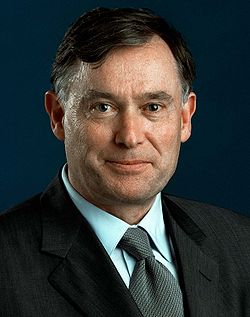 Horst KöhlerHorst Köhler (22 February 1943Affiliated
 Angela MerkelGerman chancellor from 2005 to 2021Affiliated
How the record is sourced and how the score is derived.
The score is formula-derived (Factrail formula v1, version 1.0.0), not an editorial verdict. Read the methodology.
By the Factrail desk · Method: how we source and score · Last reviewed
Dispute a fact on this pageNamed here, or represent someone who is? Request a right of reply.