
Kanye West
Ye (born Kanye Omari West; June 8, 1977) is an American rapper, singer, songwriter, record producer, fashion designer, and entrepreneur.
- Facts0
- Drivers0
- Indicators0
Ye (born Kanye Omari West; June 8, 1977) is an American rapper, singer, songwriter, record producer, fashion designer, and entrepreneur.
Ye (born Kanye Omari West; June 8, 1977) is an American rapper, singer, songwriter, record producer, fashion designer, and entrepreneur. He legally changed his name from Kanye Omari West to Ye in October 2021. Rising to prominence as a producer for Roc-A-Fella Records in the early 2000s, West debuted as a lead artist with the album The College Dropout in 2004, establishing him as a major figure in hip-hop. He has won 24 Grammy Awards.
West's music innovations blend hip-hop with soul, rock, and electronic elements, influencing production techniques and subsequent artists. He founded the record label GOOD Music (2004–2022) and developed the Yeezy fashion line, partnering with Adidas from 2013 to 2022 to build a brand that achieved significant commercial success. His career includes high-profile controversies, such as public outbursts and remarks that led to the termination of major business partnerships.
Kanye Omari West was born on June 8, 1977, in Atlanta, Georgia. His parents, Ray West and Donda West, divorced when he was three years old in 1980, prompting him to relocate with his mother to Chicago, Illinois, where she had secured a position as an English professor at Chicago State University.
Donda West raised Kanye primarily in a middle-class household on Chicago's South Shore, instilling values of academic discipline and broad cultural engagement through her scholarly background and emphasis on education. Ray West, Kanye's father, remained involved during summers spent in Atlanta, where he worked as a photojournalist for the Atlanta Journal-Constitution and had earlier affiliations with the Black Panther Party, exposing his son to journalistic pursuits and civil rights activism. This bifurcated upbringing between Chicago's urban environment and Atlanta's Southern influences cultivated early adaptability amid family separation.
The post-divorce dynamic, with Donda as the primary caregiver fostering intellectual curiosity and Ray providing periodic paternal guidance, shaped West's formative worldview, marked by resilience in navigating dual geographic and familial spheres without evident long-term estrangement from either parent. Family travels and Chicago's diverse cultural milieu further broadened his early experiences, laying empirical foundations for later ambitions though independent of formal musical training at this stage.
West briefly enrolled at the American Academy of Art in Chicago to study visual arts, reflecting his early interest in drawing and design. He later transferred to Chicago State University, where he pursued English for approximately one to two semesters beginning around 1997, overlapping with his mother's tenure as a professor there.
Facing parental reservations from his mother, who emphasized education, West dropped out to focus on music aspirations, a decision he later framed as prioritizing opportunity over formal credentials. This choice occurred amid initial rejections in the industry, fostering persistence through self-directed efforts in rapping and creative expression. His mother's skepticism stemmed from her academic background and concerns over forgoing structured learning for uncertain pursuits.
West's initial interests extended to poetry, which he began writing at age five, and rapping, starting in the third grade alongside his drawing passion. These pursuits, combined with visual art training, informed his multidisciplinary approach, though music gradually dominated. He engaged in early rap battles within Chicago's local scene, building skills independently before formal production involvement.
At age 10 in 1987, West spent a year in Nanjing, China, attending local elementary school while his mother taught English at Nanjing University as a Fulbright scholar. This experience exposed him to being a racial minority and cultural novelty, which he later described as acclimating him to public attention akin to future fame.
West's initial foray into professional music production occurred in Chicago, where, at age 19, he produced eight tracks for local rapper Grav's debut album Down to Earth, released on October 29, 1996, by Correct Records; these included beats characterized by slap basslines and booming drums, marking his first paid credits. Around this time, West co-formed the Go-Getters crew in 1996 with local rappers, recording early tracks and handling beats via MPC sampler. The group nearly signed with Elektra Records in 1999 but the deal collapsed, after which West shifted focus to New York, producing for broader acts while the group faded.
By early 2000, West had secured production placements with Roc-A-Fella Records artists, including tracks on Beanie Sigel's The Truth and Cam'ron's work, establishing his reputation through soul and funk sampling techniques that pitched-up vocal samples into high-energy hooks—later termed "chipmunk soul."
His breakthrough came with Jay-Z's sixth album The Blueprint, released September 11, 2001, where he produced five tracks, notably the lead single "Izzo (H.O.V.A.)," sampling the Jackson 5's "I Want You Back" for its triumphant, sped-up chorus, alongside "Takeover" and "Heart of the City (Ain't No Love)," contributing to the album's diamond certification. West also provided key beats for Talib Kweli's debut solo album Quality in 2002, including "Get By," which peaked at number 77 on the Billboard Hot 100, showcasing his ability to blend conscious rap with accessible, sample-driven production.
Despite production success, West faced repeated rejections for a solo artist deal; after pitching himself to Roc-A-Fella executives including Jay-Z and Damon Dash around 2002, they balked at his middle-class suburban background, preppy style, and lack of "street" credentials, viewing him solely as a behind-the-scenes producer. Other labels similarly passed, prompting West to persist by ghost-producing and refining demos while continuing Roc-A-Fella work. Ultimately, this persistence led Roc-A-Fella to grant him an artist contract on August 3, 2002.
On October 23, 2002, West suffered a near-fatal car crash in Los Angeles after falling asleep at the wheel, resulting in a head-on collision that fractured his jaw in three places and required it to be wired shut for recovery. Within weeks, with his jaw still wired, he recorded the demo "Through the Wire", rapping through clenched teeth over a pitched-up Chaka Khan sample from "Through the Fire", which showcased his resilience and sampling prowess, solidifying his artist push.
Kanye West released his debut album, The College Dropout, on February 10, 2004, through Roc-A-Fella Records and Def Jam Recordings. The album debuted at number two on the US Billboard 200 chart, selling 441,000 copies in its first week. It featured themes centered on personal choice, critiquing higher education while emphasizing faith, family, and alternatives to street life over dominant gangsta rap narratives. Critically acclaimed for its soul-sampled production and introspective lyricism, the album earned West 10 Grammy nominations in 2005, including Album of the Year, and won Best Rap Album. By 2020, it achieved quadruple platinum certification from the RIAA, reflecting over 4 million units sold in the US.
West followed with Late Registration on August 30, 2005, incorporating orchestral arrangements through collaboration with film composer Jon Brion, who lacked prior hip-hop experience but contributed string and woodwind elements to tracks like Touch the Sky. The album debuted at number one on the Billboard 200, moving 860,000 copies in its first week. Singles such as "Gold Digger," featuring Jamie Foxx, topped the Billboard Hot 100 for 10 weeks, while "Heard 'Em Say" and Touch the Sky also charted highly, blending conscious themes with pop accessibility.
Both albums marked West's commercial breakthrough, with The College Dropout and Late Registration achieving multi-platinum status and shifting hip-hop toward "backpack" styles emphasizing intellect and samples over gangsta authenticity. This innovation drew acclaim for broadening the genre but faced pushback from purists who viewed West's middle-class perspective and rejection of thug personas as inauthentic amid gangsta rap's mid-2000s dominance.
Kanye West released his third studio album, Graduation, on September 11, 2007, through Def Jam Recordings and Roc-A-Fella Records. The album debuted at number one on the Billboard 200, selling 957,000 copies in its first week, outperforming 50 Cent's Curtis, which sold 691,000 units in the same period. This sales rivalry, which West initiated by advancing Graduation's release date by a week to coincide with Curtis, marked a pivotal commercial showdown in hip-hop, with 50 Cent wagering his retirement on the outcome, a bet he ultimately lost. Tracks like "Stronger," featuring Auto-Tune effects and a Daft Punk sample, introduced electronic and stadium-ready production elements that foreshadowed West's evolving sound.
To promote Graduation, West embarked on the Glow in the Dark Tour starting in April 2008, featuring elaborate arena spectacles with theatrical staging, including a spaceship set piece and synchronized visuals designed for large venues. The tour, supporting artists like Rihanna and N.E.R.D., emphasized West's ambition for hip-hop's expansion into rock-inspired arena formats, drawing from influences like U2 and The Rolling Stones.
West's fourth album, 808s & Heartbreak, arrived on November 24, 2008, heavily shaped by the death of his mother, Donda West, on November 10, 2007, from complications of plastic surgery, for which West felt responsible, alongside a personal breakup. The project pioneered heavy use of Auto-Tune for melodic, emotionally raw vocals over sparse, synthesizer-driven beats emulating the Roland TR-808 drum machine, diverging from traditional rap structures and emphasizing vulnerability in hip-hop production. This minimalist, emotive approach influenced subsequent genres, including trap and mumble rap, by normalizing sung, introspective delivery, as adopted by artists like Drake in Take Care, Travis Scott, and Future. Initial critical reception was mixed due to its unconventional style, but retrospective analyses credit it with reshaping rap's emotional and production landscape.
Early public controversies in 2009 generated backlash and intensified scrutiny of West's public image and career trajectory.
Following the public backlash from his interruption of Taylor Swift at the 2009 MTV Video Music Awards, Kanye West traveled to Japan and then to Italy (Rome) before relocating recording sessions for his fifth studio album to a rented mansion in Hawaii in late 2009, inviting a diverse array of collaborators including producers and artists to create what became My Beautiful Dark Twisted Fantasy. The album was released on November 22, 2010, debuting at number one on the Billboard 200 with 496,000 copies sold in its first week. It drew on contributions from artists such as Nicki Minaj, Rihanna, Elton John, Jay-Z, Pusha T, Rick Ross, Kid Cudi, Bon Iver, and Raekwon to showcase West's expansive approach to hip-hop production, incorporating orchestral elements, layered samples, and genre-blending maximalism.
Critics lauded the album for its thematic exploration of fame, excess, self-aggrandizement, and vulnerability, with Pitchfork awarding it a perfect 10/10 score and describing it as an "instant greatest hits" that realized West's talents amid his divisive persona. Retrospectively, in November 2025, Complex ranked My Beautiful Dark Twisted Fantasy as the best album of the 21st century. The short film Runaway, premiered in London in October 2010 as part of the album's rollout, extended these themes visually; West drew inspiration from short films accompanying albums by influential 20th-century artists, including Purple Rain, The Wall, and Thriller, aiming for a modern equivalent. The film received critical praise for its bold visuals and directorial ambition. The record's artistic risks, including introspective tracks like "Runaway" addressing personal flaws, contributed to its critical zenith, influencing subsequent maximalist hip-hop productions through its dense, cinematic soundscapes.
In 2011, West collaborated with Jay-Z on the joint album Watch the Throne, released on August 8, which debuted at number one on the Billboard 200, selling 436,000 copies in its first week. Recorded across multiple locations, the project emphasized opulent production and themes of success and defiance, featuring guests like Frank Ocean and Beyoncé, and received strong reviews for its cohesive energy, earning an 84/100 on Metacritic based on aggregated critic scores. This partnership underscored West's commercial peak, blending his innovative beats with Jay-Z's established lyricism to produce hits like "N****s in Paris."
West extended his collaborative momentum in 2012 with Kanye West Presents GOOD Music: Cruel Summer, a compilation album featuring his label's roster including Big Sean, Pusha T, and 2 Chainz, released on September 14. It debuted at number two on the Billboard 200 with 216,000 first-week units, certified gold by the RIAA. Tracks like "Mercy" highlighted West's role in elevating emerging talents through trap-influenced beats and star-powered features, solidifying GOOD Music's roster while maintaining West's influence on hip-hop's evolving sound during this commercially triumphant period.
Kanye West released his sixth studio album, Yeezus, on June 18, 2013, marking a stark departure from the lush, orchestral production of his prior work toward a raw, industrial sound influenced by noise music and electronic genres. The album featured co-production from Daft Punk on tracks like "On Sight" and "Black Skinhead", incorporating abrasive synthesizers, minimalistic beats, and distorted samples to evoke a sense of urgency and confrontation. Lyrically, West critiqued consumerism and racial dynamics in songs such as "New Slaves", which condemned corporate exploitation of black communities through luxury branding and mass incarceration parallels, though some lines drew accusations of misogyny and narcissism from detractors.
Despite its polarizing elements, Yeezus achieved commercial success, debuting at number one on the Billboard 200 with 327,000 copies sold in its first week, West's fifth consecutive chart-topping album. Critical reception highlighted the album's innovation in stripping hip-hop to its aggressive essentials, with praise for its boldness against mainstream polish—as Pitchfork noted it "trades smooth soul and anthemic choruses for jarring electro, acid house, and industrial grind"—though some reviewers labeled its abrasiveness as self-indulgent or uneven, with Rolling Stone describing it as an "extravagantly abrasive" record, reflecting an overreaction to West's refusal to conform to radio-friendly norms. This tension underscored Yeezus as a deliberate creative risk, prioritizing sonic experimentation over accessibility, which ultimately reinforced West's influence on hip-hop's boundaries.
The subsequent Yeezus Tour, spanning November 2013 to December 2014 across North America and Europe, amplified the album's themes through elaborate staging designed by Es Devlin, featuring towering mountain sets, LED screens, and ballet-inspired choreography to create an immersive, theatrical experience. Performances often faced disruptions, including mid-show rants, abrupt stops for emphasis, and technical glitches with complex equipment like hydraulic lifts and pyrotechnics, which tested the production's limits but highlighted West's commitment to pushing live spectacle beyond conventional concerts.
Fashion played a central role in the tour, with West donning custom pieces from Maison Martin Margiela, including embroidered jackets, masks, and avant-garde layers that blurred performer and artwork, foreshadowing his later independent Yeezy brand by integrating high fashion with streetwear in a rejection of traditional rap aesthetics. These elements embodied the period's creative risks, where West's non-conformist vision—merging music, visuals, and attire—provoked both acclaim for boundary-pushing artistry and backlash for perceived excess, yet sustained audience engagement through its uncompromised intensity.
Kanye West released his seventh studio album, The Life of Pablo, on February 14, 2016, initially as an exclusive stream on Tidal with a purchase option via his website. The album underwent multiple post-release revisions, including tracklist adjustments and the addition of the song "Saint Pablo" on June 15, 2016, reflecting West's iterative creative process rather than a fixed product. Tracks such as "Wolves" incorporated personal reflections on family life and the influence of his late mother, Donda West, amid concerns over his children's future. Family members, including Kim Kardashian West and their children North and Saint, shaped thematic elements, with West drawing from domestic experiences in lyrics addressing vulnerability and legacy.
The supporting Saint Pablo Tour commenced in August 2016, featuring innovative staging with a retractable platform, but faced disruptions culminating in turmoil. On November 19, 2016, during a performance at the Golden 1 Center in Sacramento, California, West delivered a 15- to 17-minute onstage rant criticizing Jay-Z's parenting, Beyoncé's alleged politicking at the MTV Video Music Awards, and industry dynamics, before performing only three songs and abruptly leaving the stage. The following day, November 20, he canceled a scheduled show in Foxborough, Massachusetts, and on November 21, 2016, the entire remaining tour—approximately 21 dates—was canceled due to what his representatives described as unforeseen circumstances.
West was hospitalized on November 21, 2016, immediately following the tour cancellation announcement for exhaustion and dehydration amid erratic behavior; West later stated that he had been addicted to opioids in the days leading up to the hospitalization, following pain medication prescribed after liposuction, which delayed subsequent projects including collaborative work and new releases until 2018. Yet empirical metrics showed sustained fan engagement, with The Life of Pablo exceeding 250 million streams in its first 10 days on Tidal and maintaining commercial viability despite the interruptions.
In early 2018, Kanye West convened a series of secluded recording sessions at a ranch in Jackson Hole, Wyoming, dubbed the Wyoming Sessions, where he executive produced five albums in rapid succession, prioritizing his direct control over production amid strained relationships with prior collaborators like Jay-Z and his label. These sessions, described by participants as therapeutic yet volatile, involved a small camp of artists including Pusha T and Kid Cudi, yielding output that highlighted West's shift toward greater autonomy in beat-making and album assembly.
A key product was Pusha T's Daytona, released May 25, 2018, which West produced entirely across its seven tracks, serving as a mentorship exercise that distilled raw verses into concise, hard-hitting compositions without co-producers. West's hands-on role extended to sequencing and refining Pusha T's content, fostering a focused creative environment that contrasted with the interpersonal frictions West had publicly aired earlier that year on platforms like X. This project underscored his production philosophy of minimalism and executive oversight, reducing dependencies on external input.
West's own Ye, released June 1, 2018, embodied this self-reliant ethos as a seven-track, 23-minute album he primarily produced solo, featuring fragmented structures with abrupt transitions and sparse instrumentation that mirrored its introspective disarray. The record delved into bipolar disorder themes, with West confirming his diagnosis in tracks like "Yikes," where he raps lines attributing erratic behavior to the condition, and "Ghost Town," which grapples with self-destructive impulses and medication struggles. These disclosures, drawn from West's unfiltered Wyoming reflections, prioritized raw causality over polished narrative.
Despite the album's polarizing personal revelations, Ye debuted at number one on the Billboard 200 with 208,000 album-equivalent units in its first week, including 85,000 in traditional sales, marking West's eighth consecutive chart-topping release. The Wyoming output also included the collaborative Kids See Ghosts with Kid Cudi on June 8, 2018, another seven-track effort West co-produced, reinforcing his emphasis on streamlined, self-directed engineering to bypass traditional studio hierarchies and accelerate releases. This period solidified West's pivot to in-house production dominance, minimizing reliance on long-time engineers like Mike Dean for core mixing tasks through self-taught proficiency in Pro Tools and analog tweaks.
In October 2019, Kanye West released Jesus Is King, his ninth studio album, following the shelving of the secular-leaning Yandhi project anticipated since 2018. Tracks from Yandhi sessions were reworked, such as "Chakras" as "Selah," "The Storm" as "Everything We Need," and "Law of Attraction" as "Use This Gospel". The album featured the Sunday Service Choir from West's pop-up church performances that began earlier that year and debuted at number one on the Billboard 200 chart with 264,000 album-equivalent units in its first week. Lyrics in tracks like "Selah" and "God Is" addressed salvation, repentance, and divine intervention, with production noted for its minimalism and runtime under 30 minutes.
Complementing the album, West premiered the opera Nebuchadnezzar on November 24, 2019, at the Hollywood Bowl, a 35-minute production on the biblical king's encounter with faith, performed by the Sunday Service Choir. The choir released Jesus Is Born on December 25, 2019, which topped gospel charts.
By 2021, West released Donda, his tenth studio album named after his late mother Donda West, on August 29 after delays from an initial July target. The album featured appearances including simulated vocals from his mother via archival audio and AI, alongside artists like Jay-Z and Travis Scott. It was previewed through stadium listening events, including three in Atlanta's Mercedes-Benz Stadium and one in Chicago, where live alterations occurred. Donda blended gospel influences with hip-hop, as in Come to Life addressing maternal loss and redemption, and debuted at number one on the Billboard 200 with 309,000 units.
In January 2022, Kanye West announced Donda 2 as a sequel to his previous album, with rapper Future serving as executive producer. The project was positioned as an extension of West's ongoing musical explorations, but its distribution marked a deliberate departure from conventional streaming models. On February 17, 2022, West declared that Donda 2 would be available exclusively on his Stem Player device—a $200 hardware tool allowing users to remix and isolate audio stems—eschewing platforms such as Apple Music, Amazon Music, Spotify, and YouTube. This strategy aimed to grant artists greater control and revenue retention, as West argued that streaming services underpay creators, though it required fans to purchase the device for access.
The album launched on February 23, 2022, via the Stem Player, featuring unmastered drafts and a raw, unfinished aesthetic that some observers described as a "guest-reliant mess" reliant on contributions from Future and others, with West's production showing sporadic flashes of innovation amid structural disarray. Lyrically, it maintained thematic continuity with Donda, delving into grief over personal losses including West's divorce from Kim Kardashian, strained family ties, and the death of designer Virgil Abloh, framed through expressions of anger and emotional turmoil. However, the exclusivity fueled widespread leaks and bootleg distributions shortly after release, as unauthorized early versions circulated online, exacerbating accessibility barriers for non-device owners and prompting fan frustration over the paywall.
Commercially, the experiment yielded limited reach: the Stem Player announcement spurred approximately $2 million in device sales, equating to around 10,000 units in days, a fraction of Donda's 309,000 equivalent album units in its debut week driven by 357 million streams. This underperformance highlighted the trade-offs of independence, rendering Donda 2 ineligible for Billboard charts—a outcome West celebrated as a "big win" against industry metrics—yet alienating broader audiences in favor of superfans willing to invest in proprietary hardware. Critics noted the approach as an innovative push for artist autonomy and direct monetization, akin to hardware-driven superfan targeting, but one that risked diminishing cultural impact by prioritizing exclusivity over widespread dissemination.
Kanye West (left) and Ty Dolla $ign, collaborators on the Vultures trilogy
In 2023, Ye pursued independent distribution through his YZY label for the collaborative Vultures trilogy with Ty Dolla $ign, amid platform hesitations following public controversies. Vultures 1, released on February 10, 2024, debuted at number one on the Billboard 200 with 148,000 album-equivalent units in its first week, marking Ye's eleventh chart-topping album. The project encountered delays from initial December 2023 targets and legal hurdles, including sampling disputes, yet achieved streaming dominance independently.
Vultures 2 followed on August 3, 2024, after multiple postponed dates, debuting at number two on the Billboard 200 with 130,000 units. Ye's DIY approach persisted, with Vultures 3 teased for potential 2025 release alongside Bully, emphasizing self-production to circumvent traditional gatekeepers.
In April 2025, Ye re-released Donda 2 to streaming platforms for the first time via YZY, featuring an updated 18-track list distinct from its 2022 Stem Player-exclusive version.
Bully, announced as Ye's twelfth studio album, saw partial song drops teased in March and June 2025 featuring AI-generated elements, but Kanye explicitly stated a day before the 2026 release that the album has "NO AI" in an X post; with plans for ten tracks shared that summer; Ye signed a distribution deal with Gamma to facilitate its release, and it was released on March 28, 2026, across major streaming platforms including Spotify, Apple Music, and YouTube Music. Ye promoted the release by tweeting a link to the album on Apple Music. Bully debuted at No. 2 on the Billboard 200 with 152,000 equivalent album units in the tracking week ending April 2, 2026 (96,000 from streaming, equal to 98.43 million on-demand streams, and 56,000 from album sales), behind BTS's Arirang. It also debuted at No. 1 on Billboard's Top R&B/Hip-Hop Albums chart, Ye's 13th chart-topper there. Gamma, the album's distributor, claimed a higher first-week total of over 200,000 units than the figure Billboard reported. A deluxe edition was released on June 19, 2026.
The release came after several teasers and was preceded by significant production challenges, most notably a public request from producer James Blake to remove his credits from the track "This One Here" (previously known to fans as "Showtime"). The track was originally intended for a scrapped collaborative album between Ye and Blake titled "WAR", a project that has been highly regarded within the Kanye West fan community but received little mainstream attention. Blake stated: "It’s not personal! I just hit a point where don’t want to be credited on music where I can’t affect the end result." Fans have highlighted major differences between earlier versions of the track and its final form on Bully. Bully received critical attention from outlets like Pitchfork, Rolling Stone, Billboard, The New Yorker, and Complex, with coverage focusing on its experimental nature, track highlights, and Ye's artistic persistence amid adversity.
In November 2025, Ye made a surprise appearance at Travis Scott's Circus Maximus Tour concert at the Belluna Dome in Tokyo, Japan, on November 8, performing songs including "Runaway." Later that month, Ye announced concerts in Mexico City for January 2026 dates at the Plaza de Toros, with the first show selling out in under 24 hours and prompting an additional performance. The Ye Live Concert Tour in support of Bully began with two shows at SoFi Stadium in Inglewood, California, on April 1 and 3, 2026, his first major US concerts in nearly five years; the two nights sold 149,000 tickets and grossed $32.6 million. Each show featured a large spherical stage projecting images of the Earth and Moon. On May 30, 2026, he drew a reported 118,000 people to Atatürk Olympic Stadium in Istanbul, which he claimed as a record for the largest stadium performance; he also performed in Arnhem (June 6 and 8) and Tbilisi (June 12). On October 31, 2026, he played Reliant Stadium in Houston, which was announced as the highest-attended hip-hop concert in US history, though reported attendance figures varied between roughly 74,000 and 80,000. Numerous planned dates were cancelled or blocked amid backlash over his past antisemitic statements, including the Reggio Emilia concert planned for July 18, 2026 (see Controversies). Despite persistent challenges, Ye's releases demonstrated commercial viability through direct fan engagement and alternative distribution, sustaining chart presence absent major label support.
Kanye West's production relies heavily on sampling, employing hardware such as the Ensoniq ASR-10 for chopping and manipulating audio samples and the Akai MPC series for sequencing and drum programming. His workflow evolved from dense integrations of soul samples in early albums like The College Dropout to sparser, experimental approaches in later works such as Yeezus, incorporating industrial and electronic elements. West manipulates samples through chopping into segments, pitching to alter timbre and tempo, looping for rhythmic foundations, and rearranging elements to create novel compositions, primarily sourcing from 1970s–1980s soul, funk, and R&B genres. These techniques, refined through collaborations with producers like No I.D. and Jon Brion, have influenced hip-hop production by popularizing pitched vintage samples and genre-blending methods.
West developed the "chipmunk soul" technique, which involves accelerating the playback speed of soul and R&B vocal samples from the 1970s and 1980s to create a high-pitched, squeaky timbre while preserving rhythmic elements. This method allows for creative sample manipulation that alters the original pitch. West systematized pitch-shifting by layering sped-up hooks over drum patterns to blend vintage soul warmth with hip-hop beats.
West integrates orchestration by combining manipulated samples with acoustic instruments, such as live string ensembles, to add organic depth and contrast digital alterations. This hybrid approach fuses hip-hop's loop-based structure with classical and rock timbres for expanded sonic landscapes.
West employs Auto-Tune as a deliberate production device, applying heavy pitch correction to vocals for a robotic, emotive distortion that transforms sung melodies into synthetic textures. In later work, he incorporates industrial synth integrations, using aggressive, distorted synthesizers and minimal drum programming to evoke raw electronics drawn from acid house and noise genres. Examples include sampling Daft Punk's "Harder, Better, Faster, Stronger" (2001) in "Stronger" from Graduation (2007), featuring French house with robotic vocoder vocals and heavy beats; and in "Fade" from The Life of Pablo (2016), incorporating Hardrive's "Deep Inside" (1993), a 90s New York house track with looping vocal hooks and driving rhythm, alongside Mr. Fingers' "Mystery of Love" (1985), deep Chicago house with moody synths. These techniques emphasize stark contrasts and essential layers, blending hip-hop with industrial and electronic influences.
Kanye West's early lyrics, particularly in The College Dropout (2004), Late Registration (2005), and Graduation (2007), emphasized aspiration rooted in middle-class values, exploring tensions between educational goals and urban materialism. Tracks like "All Falls Down" critiqued consumerism's impact on self-worth, while "Jesus Walks" incorporated religious introspection to challenge hip-hop's embrace of vice, portraying personal triumph amid societal pressures.
A shift toward grief and vulnerability emerged in 808s & Heartbreak (2008), following personal losses including his mother's death, with themes of fame's isolation and emotional exposure supplanting earlier bravado, as seen in "Coldest Winter" and "Flashing Lights." This introspective approach continued in My Beautiful Dark Twisted Fantasy (2010) and Yeezus (2013), blending ego-driven celebrity critique with deconstructions of power dynamics and consumerism, exemplified by self-acknowledged flaws in "Runaway" and racial-economic entrapment in "New Slaves."
Later works intensified explorations of mental health and spirituality. Ye (2018) addressed bipolar disorder as both challenge and creative force, while Jesus Is King (2019) and Donda (2021) focused on faith-driven redemption and unresolved familial grief, countering prior turmoil with divine seeking.
West's lyrics consistently feature unfiltered self-examination, linking personal agency to societal influences and disrupting genre norms, though recurring motifs of ego have drawn criticism for veering into solipsism. Sustained fan engagement, such as ye's strong streaming performance, underscores resonance despite polarization.
Kanye West initiated his fashion pursuits through collaborations, beginning with Nike on the Air Yeezy 1 sneakers released in 2009, which featured high-top silhouettes with glow-in-the-dark soles and became collector's items due to limited production. By 2013, West shifted to developing an independent line.
West presented early collections, including his 2011 women's line at Paris Fashion Week.
The Yeezy Season 1 collection debuted at New York Fashion Week on February 12, 2015, showcasing minimalist sneakers like the Yeezy Boost 750 in neutral tones alongside apparel featuring oversized sweatshirts, distressed military-inspired sweaters, and shearling bombers, with limited color palettes and basic silhouettes.
In 2013, Kanye West entered a long-term partnership with Adidas to produce and distribute Yeezy-branded footwear and apparel. Yeezy sales reached $1.3 billion in 2019, $1.7 billion in 2020, $1.7 billion in 2021, and $1.3 billion in 2022, contributing nearly 7% of Adidas's total annual revenue by 2021. West's stake was valued at approximately $1.5 billion by Forbes, with Yeezy-related earnings estimated at $100–200 million annually, contributing to a net worth peak of around $1.8 billion in 2021.
West broadened Yeezy through a June 2020 agreement with Gap for a 10-year collaboration on co-branded clothing lines, projected to yield $1 billion in annual sales. The deal valued Yeezy at $2.9 billion and included provisions for West to acquire up to 8.5 million Gap shares based on performance milestones, plus royalties. In 2009, West collaborated with Louis Vuitton on limited-edition sneakers, including the "Louis Vuitton Don" and "Jasper Patchwork" models.
West also expanded Yeezy into architecture with the May 2018 announcement of "Yeezy Home" for affordable housing prototypes, supported by Yeezy Studio in Calabasas for prototyping. In 2021, West founded Donda Academy, an unaccredited private Christian school in Simi Valley, California, associated with the Yeezy brand as an educational initiative. Lawsuits from former teachers alleged operational dysfunction, including a policy of serving only sushi for lunch, absence of windows due to West's dislike of glass, restrictions on stair usage owing to his fear of stairs, and safety violations such as exposed wires and locked doors without proper egress. The academy closed in 2024 amid controversies, and in March 2025, West reached conditional settlements in wrongful termination suits filed by former teachers, requiring fulfillment of terms within 45 days before case dismissal.
Following the termination of his partnership with Adidas in October 2022, triggered by West's public antisemitic statements, West faced significant financial fallout as major apparel deals evaporated, with Forbes removing him from its billionaires list. Similar severances from Gap and other collaborators reduced his liquid assets, prompting reliance on asset liquidation. Despite these setbacks, West has sustained operations through independent revenue streams, including music catalog royalties and direct Yeezy sales, with Forbes estimating his net worth at $400 million as of October 2025; West claimed $2.77 billion in January 2025 based on an unverified assessment from Eton Venture Services.
West's property holdings in Wyoming and California underwent sales amid cash constraints, reflecting a shift to self-managed operations post-corporate fallout.
West's initial political commentary included interrupting an NBC telethon following Hurricane Katrina in 2005 to declare, "George Bush doesn't care about black people," citing inadequate federal response to the disaster's impact on African American communities. He supported Democratic candidates, performing at the 2008 Democratic National Convention and voting for Barack Obama in both 2008 and 2012 elections.
In a May 2018 TMZ Live interview, West contended that "400 years of slavery [sounded like] a choice," positing that emphasizing historical trauma perpetuated a mindset hindering personal accountability and progress. During an October 2018 White House meeting, he elaborated that he had been "programmed to think from a victimized mentality, a welfare mentality," attributing Democratic Party loyalty among black voters to welfare policies that incentivize reliance on government aid over self-sufficiency. This critique extended to rejecting identity-based grievances as barriers to individual achievement, favoring merit and entrepreneurial drive as antidotes to cycles of poverty.
West publicly endorsed Donald Trump in 2018, appearing in the Oval Office on October 11 while wearing a Make America Great Again (MAGA) hat, which he described as making him feel like "Superman" and symbolizing unity and empowerment. During the meeting with Trump and former NFL player Jim Brown, West aligned on prison reform efforts, citing influences like the First Step Act and expressing concerns over urban violence in Chicago, advocating for job creation over reliance on government aid.
In 2020, West voiced criticisms of Joe Biden's presidential campaign, acknowledging that his independent run could siphon Black voters from Biden and thereby influence the election outcome against Democratic policies on race and economic opportunity. He highlighted perceived failures in addressing systemic issues for Black Americans, contrasting them with Trump's reforms, though West later distanced himself from full Trump alignment during his own bid.
West reaffirmed support for Trump in the 2024 election, listing himself among celebrities backing the former president amid debates over policy and cultural issues. By March 2025, he praised Trump explicitly while decrying "wokeness" during commentary on a congressional address.
Kanye West announced his candidacy for President of the United States on July 4, 2020, via a tweet stating "We must now realize the promise of America by trusting God, unifying our vision and building our future," positioning his run as independent under the "Birthday Party" banner. He filed a statement of candidacy with the Federal Election Commission (FEC) on July 16, 2020, establishing his campaign committee "Kanye 2020," which reported raising over $13 million primarily from West himself. The late announcement, just four months before the November 3 election, resulted in missing filing deadlines in numerous states, limiting ballot access to only 12 states including Arkansas, Colorado, Iowa, Idaho, Kentucky, Louisiana, Minnesota, Mississippi, Oklahoma, Tennessee, Utah, and Vermont through paid petition efforts costing millions. Independent candidates face stringent state-specific requirements for signatures and fees, often exceeding 1% of registered voters in some jurisdictions, which structurally disadvantages non-major party entrants by design to maintain two-party dominance.
West's 2020 campaign involved minimal organized efforts, including a single public rally on July 18 in North Charleston, South Carolina, where he discussed policy ideas on education and criminal justice reform, though the event drew small crowds and faced logistical issues. No formal platform document was released, and advertising was sporadic, with West appearing on ballots as a write-in in other states. In the general election, he received 60,946 popular votes nationwide, representing 0.04% of the total, with no electoral votes; the highest tallies came from Tennessee (10,198 votes, 0.45%) and Arkansas (5,001 votes, 0.45%), indicating modestly stronger resonance in Republican-leaning states where conservative voters may have viewed his independent bid as aligned with cultural critiques of establishment politics. These outcomes underscore empirical barriers like compressed timelines and petition thresholds, which FEC data shows filter out most independents before votes are cast, rather than voter rejection alone. In October 2020, during his independent presidential campaign, West appeared on episode #1554 of The Joe Rogan Experience podcast hosted by Joe Rogan. The nearly three-hour episode featured extended discussions on his presidential bid, divine calling to lead, opposition to certain medications (which he claimed blocked his ideas), the music and fashion industries, hype culture versus minimalism, and personal experiences with media portrayal. The episode garnered significant viewership, with millions of views across platforms including over 20 million for related clips on YouTube, and received substantial media attention. Reception was mixed: some praised it as insightful for revealing West's unfiltered mindset and humanizing him, while others criticized it as meandering with stream-of-consciousness tangents and limited dialogue. Rogan later defended West against perceptions of instability, highlighting his bold and innovative ideas.
For 2024, West reiterated presidential ambitions on November 20, 2022, during an interview on Drink Champs, claiming a run under the Birthday Party with a focus on family-centric policies and opposition to progressive cultural mandates, though he cited asking Donald Trump as a potential running mate without confirmation. Unlike 2020, no FEC committee was formed, and no petitions were gathered for ballot access in any state, as verified by absence of filings in FEC records; the effort fizzled amid personal and legal distractions, yielding negligible write-in votes estimated under 1,000 nationwide per scattered state reports. This non-starter campaign highlighted persistent structural hurdles for independents, including early party affiliation deadlines and resource demands unmet without major party infrastructure, resulting in zero measurable electoral impact.
Kanye West's earliest known romantic relationship was with high school classmate Sumeke Rainey in the late 1990s, which he referenced in his 2004 song "Never Let Me Down" from The College Dropout.
In 2002, West began an on-and-off relationship with fashion designer Alexis Phifer, which lasted until 2008; the pair became engaged in August 2006 following a diamond-and-sapphire ring proposal but called off the engagement in April 2008. During this period, he also dated designer Brooke Crittendon from 2004 to 2006. From 2008 to 2010, West was in a high-profile relationship with model Amber Rose.
West began dating television personality and model Kim Kardashian in 2012, although the two had known each other for several years before beginning their relationship; they married on May 24, 2014, in a ceremony at Forte di Belvedere in Florence, Italy, attended by approximately 600 guests. The marriage lasted nearly seven years. The couple collaborated on fashion projects, with Kardashian often modeling West's designs. In 2018, West purchased a luxury condo in Miami Beach's Faena House for approximately $14 million as a Christmas gift for Kardashian, but they backed out of the deal in early 2019 due to privacy concerns after paparazzi photos of them touring the property surfaced. Kardashian filed for divorce on February 19, 2021, citing irreconcilable differences, with the date of separation listed as December 26, 2020. Although a judge declared Kardashian legally single in March 2022, final resolution of custody and property issues required additional months of negotiations before the settlement was filed on November 29, 2022, with a settlement including joint legal and physical custody of their four children. Under the settlement, West agreed to pay $200,000 per month in child support and both parties equally shared the children's educational and security expenses. The couple’s extensive real estate holdings — including multiple properties in California, Wyoming, Idaho, and elsewhere — were divided according to the prenuptial agreement. Kardashian retained several homes in Hidden Hills and other locations, while West kept properties including ranches in Wyoming and his childhood home in Chicago. Both parties retained their respective business interests and intellectual property under the terms of the prenuptial agreement, with neither required to pay the other spousal support.
Following the separation from Kardashian, West briefly dated Russian model Irina Shayk in the summer of 2021, with the pair spotted together in France and the United States before parting ways by late 2021. In early 2022, he was linked to actress Julia Fox for about a month, during which she wore custom outfits from his Yeezy line. West married Australian architect Bianca Censori, a Yeezy employee, in a private ceremony on December 20, 2022, in Utah; the union was legally formalized without a marriage license initially but confirmed through public appearances. Censori has frequently appeared alongside West in outfits featuring sheer fabrics and minimal coverage, often attributed to his design influence, including a February 2023 Paris Fashion Week ensemble consisting of a corset top and micro-shorts. As of mid-2026, West and Censori remain married. In March 2026, Censori made her directorial debut with the music video for "Father" (featuring Travis Scott) from Bully, and later directed further Ye videos, including "Gemini Season" (June 2026) and "OK" featuring Don Toliver (August 2026).
Kanye West shares four children with his former wife, Kim Kardashian. Their first child, daughter North West, was born on June 15, 2013. Later that year, West proposed to Kardashian at AT&T Park in San Francisco. The couple also has son Saint West, born on December 5, 2015; daughter Chicago West, born via gestational surrogate on January 15, 2018; and son Psalm West, born via gestational surrogate on May 9, 2019. West and Kardashian welcomed North and Saint through natural births, but turned to surrogacy for the younger two due to Kardashian's health complications from prior pregnancies.
Following their divorce finalized in November 2022, the settlement provided for joint legal and physical custody with “equal access.” Both parents must consult on major decisions regarding the children’s health, education, and welfare, with mediation required in case of disputes. Co-parenting has presented challenges. The divorce attracted significant public attention due to ongoing disputes over parenting time and public statements made during the proceedings. Under the settlement, West is responsible for 50 percent of the children’s educational expenses, including tuition, and security costs. The children may not be relocated more than 60 miles from Kardashian’s Hidden Hills residence without the other parent’s consent or a court order until they finish high school or turn 19, whichever comes first. West's current wife, Bianca Censori, whom he married in December 2022, has assumed a stepmother role, accompanying the children on outings.
West has incorporated his children into his creative life, notably collaborating musically with North, who rapped on tracks like "Lonely Roads" (featuring King Combs) released in 2025 and received studio guidance from her father. He has credited North, now 13, with restoring his enthusiasm for music production, including work on her debut album alongside his own projects. In 2026, North signed with Gamma ahead of her debut album, Elementary School Dropout, and joined her father on stage during his SoFi Stadium and Houston concerts.
Kanye West's mother, Donda West, a professor and former chair of the English department at Chicago State University, instilled early Christian values in him, drawing from her own devout faith and his father's role as a Christian marriage counselor.
By the Yeezus era in 2013, West's public expressions leaned toward self-deification. This contrasted with his earlier nods to Christianity, reflecting a period of questioning orthodoxy.
In early 2019, West underwent a public shift toward born-again Christianity, launching Sunday Service on January 6 as weekly gospel choir performances in Calabasas, California, which evolved from private gatherings to larger events. He formalized this conversion in October 2019, describing his work as "an expression of the gospel."
West has integrated Christian elements into subsequent personal reflections and critiqued associations with prosperity gospel, rejecting the label in interviews by emphasizing spiritual accountability over material success. Sunday Service events have persisted, including a return on March 16, 2025.
In May 2025, West posted pleas for God's forgiveness tied to past statements.
In October 2010, at a screening of his short film Runaway, West disclosed that he had contemplated suicide in the years following his mother's death in November 2007, stating he had thought about "not being here" but chose instead to remain as a "soldier for culture."
On November 21, 2016, West was hospitalized at Ronald Reagan UCLA Medical Center after canceling the remaining dates of his Saint Pablo Tour amid erratic behavior; his physician said he was suffering from temporary psychosis due to sleep deprivation and dehydration. He was discharged on November 30 after nine days of treatment, and initial reports attributed the episode to exhaustion rather than a formal diagnosis.
West publicly disclosed his bipolar disorder diagnosis in 2018, framing it on the cover of his album ye with the phrase "I hate being Bi-Polar it's awesome" and describing the condition in interviews as a "superpower" that enhanced his creativity rather than a mere disability. He revealed having been off psychiatric medications for six months prior, stating it allowed him to "feel me again" and improved his artistic output, despite warnings from medical sources about the risks of discontinuation in bipolar management.
In July 2020, amid his presidential campaign, West experienced another episode involving public rants, leading to a voluntary hospital visit in Wyoming for anxiety treatment, with his then-wife Kim Kardashian publicly expressing concern over his medication adherence and describing family efforts to encourage professional help. Kardashian later detailed interventions, including pleas for him to resume medications, noting the challenges of his resistance tied to fears of dampening his genius-level productivity.
By February 2025, West claimed his bipolar diagnosis was a misdiagnosis, asserting instead an autism diagnosis that better explained his lifelong traits, as shared in a podcast interview where he reflected on past episodes as misunderstood neurodivergence rather than instability requiring constant medical intervention.
West began treatment with Beverly Hills cosmetic dentist Dr. Thomas P. Connelly in early 2024 for cosmetic dental procedures, including the placement of specialized prosthodontic work and a custom titanium crown. On April 30, 2025, a formal notice of intent to sue was sent to Connelly by the law firm Golden Law, signed by Andrew Cherkasky, on behalf of West (Ye) and his wife Bianca Censori. The letter accused Connelly of medical malpractice by repeatedly administering or supplying nitrous oxide ("laughing gas") and other sedative substances (including propofol in some reports) in quantities and frequencies lacking legitimate dental or medical justification. It specifically alleged that Connelly provided large "surgical-size" nitrous oxide tanks, masks, and related equipment delivered to West's personal residence (including the one shared with Censori), along with instructions for self-administration without supervision, while ignoring evident adverse neurological and behavioral effects. The notice further claimed Connelly encouraged unsupervised use, fostered addiction, and engaged in fraudulent billing practices, with costs reportedly ranging from $50,000 per month to hundreds of thousands overall. West alleged these actions left him to manage a serious induced addiction independently and contributed to worsened mental health symptoms. These remain allegations, and no lawsuit outcome is specified as of available reports. Earlier public claims about Connelly's role in supplying nitrous oxide originated in August 2024 from West's former chief of staff Milo Yiannopoulos. In early 2025, West experienced a four-month manic episode characterized by psychotic, paranoid, and impulsive behavior, which he later described as having "destroyed my life." In a January 2026 public apology published as a full-page advertisement in The Wall Street Journal and elaborated in a Vanity Fair interview, he attributed this episode to his bipolar disorder (with some references to possible brain trauma), linking it to his controversial statements and expressing deep remorse. West credited his wife Bianca Censori for providing crucial support during and after the episode, reaffirming his bipolar diagnosis in contrast to his earlier February 2025 claim of autism. These disclosures highlighted ongoing challenges in managing his condition without consistent medication.
Ye has publicly shared his tastes in film on multiple occasions. In 2015, he stated that Akira (1988) and There Will Be Blood (2007) are equally his two favorite movies of all time. He has claimed to have watched There Will Be Blood over 30–40 times. West is also a noted fan of the Star Wars prequel trilogy directed by George Lucas, defending them as superior to the Disney sequel trilogy during a 2020 appearance on the Joe Rogan Experience podcast, where he praised Lucas's vision and criticized corporate influences on the later films. These preferences align with his interests in visually ambitious and emotionally resonant storytelling, which have influenced aspects of his creative work.
In October 2021, a Los Angeles Superior Court judge approved Kanye West's petition to legally change his name from Kanye Omari West to Ye, dropping his birth name entirely without adopting a middle or last name, as he cited personal reasons for the simplification. Business documents filed in California in June 2025 indicated an update to "Ye Ye" for certain professional purposes, though this did not constitute a full court-approved legal alteration at that time.
West's divorce from Kim Kardashian, finalized in November 2022, resulted in a settlement granting joint legal and physical custody of their four children—North, Saint, Chicago, and Psalm—with West ordered to pay $200,000 monthly in child support and the parties sharing additional child-related expenses such as private school and security costs. Ongoing custody disputes emerged in 2025, including allegations that Kardashian violated access terms by restricting West's time with North West, prompting West to claim denial of "meaningful access" under their agreement, and reports of Kardashian considering court action to modify custody due to West's behavior. West reportedly issued a cease-and-desist notice amid claims of neglect toward North, though no formal custody revocation occurred by late 2025.
In 2023, Malibu contractor Tony Saxon sued Ye in Los Angeles Superior Court for over $1 million in unpaid wages, unsafe working conditions, wrongful termination, and related claims arising from his 2021 renovation work on Ye's $57 million Malibu mansion. The civil trial concluded in March 2026 with a mixed verdict: the jury found Ye liable for Saxon's workplace injuries (determining Saxon was an employee entitled to protections) and awarded $140,000 in damages—far less than the $1.7 million sought—with no punitive damages. Ye's legal team has filed motions to overturn aspects of the verdict.
West has not faced formal charges related to scrutiny over his associations with Sean Combs (Diddy), despite public support for Combs during his 2025 sex-trafficking trial, where West briefly attended court proceedings but was later barred from further entry amid concerns over witness intimidation. No lawsuits directly implicated West in Combs' legal proceedings as of October 2025.
On September 2, 2005, during the live telethon "A Concert for Hurricane Relief" broadcast on NBC to aid Hurricane Katrina victims, Kanye West stated, "George Bush doesn't care about black people," criticizing the federal government's response to the disaster. The remark prompted immediate backlash from some media outlets.
At the 2009 MTV Video Music Awards on September 13, Kanye West interrupted Taylor Swift's acceptance speech for Best Female Video, stating, "Yo, Taylor, I'm really happy for you, I'mma let you finish, but Beyoncé had one of the best videos of all time." The incident drew widespread condemnation, including from President Barack Obama, who called West a "jackass." Beyoncé later invited Swift back onstage during her own acceptance speech.
In November 2013, during an interview on Sway in the Morning, West delivered a heated rant comparing himself to Andy Warhol, declaring "I am Warhol. I am the number one most impactful artist of our generation, in the flesh," and likening his influence to that of Shakespeare, Walt Disney, Nike, and Google, while voicing frustrations with the fashion industry and calling for investment in his DONDA creative agency.
During a May 1, 2018, appearance on TMZ Live, Kanye West remarked that "slavery sounds like a choice" in reference to American slavery. The statement received intense media backlash, with TMZ producer Van Lathan confronting West on air about slavery's coercive nature.
In October 2022, Ye posted on X (formerly Twitter): "I'm a bit sleepy tonight but when I wake up I'm going death con 3 On JEWISH PEOPLE," referencing the U.S. military's DEFCON alert system. The post, made on October 8, prompted immediate restrictions on his X and Instagram accounts for violating policies against violent speech.
The statements triggered swift industry severances. On October 25, 2022, Adidas terminated its Yeezy partnership with Ye, citing his offensive comments. Gap followed by removing Yeezy products and ending collaboration, along with other brands like Balenciaga distancing themselves, resulting in Ye's estimated $1.5–2 billion net worth loss.
On December 1, 2022, Ye appeared on Alex Jones's Infowars, declaring "I love Jewish people, but I also love Nazis" and stating "I see good things about Hitler."
Escalations continued in 2025 with the May 8 release of Ye's "Heil Hitler" music video, featuring lyrics like "all my n****s Nazis," a Hitler speech sample, and imagery of men chanting "Ni**a heil Hitler." Platforms including Spotify and YouTube banned the content for glorification of Nazism.
On May 22, Ye posted an apology on X, stating he was "done with antisemitism" and expressing regret. In November 2025, Ye met privately with Rabbi Yoshiyahu Yosef Pinto in New York City, apologizing for his past antisemitic remarks.
In January 2026, Ye published a full-page letter as an advertisement in The Wall Street Journal, detailing his mental health struggles and attributing his antisemitic comments to them. He expressed regret for the hateful statements. Ye also gave an interview to Vanity Fair, where he elaborated on how his condition influenced his behavior.
In February 2025, Ye posted statements on X expressing support for Sean "Diddy" Combs amid federal charges of sex trafficking, racketeering, and related offenses.
Ye attended Combs' sex trafficking trial in New York on June 13, 2025, entering the courtroom briefly and nodding in support before leaving without comment.
At the 67th Grammy Awards on February 2, 2025, Ye appeared on the red carpet with Bianca Censori but was denied seating inside the venue, after which he posted rants on X reaffirming prior statements, including on slavery and defenses of Combs.
A planned concert in Seoul, South Korea, on May 31, 2025, was canceled on May 19 due to recent controversies, including a song referencing Adolf Hitler, and was later rescheduled for July.
A proposed concert in São Paulo, Brazil, on November 29, 2025, at Interlagos Racetrack was canceled after city officials refused a permit, citing Ye's pro-Nazi remarks.
In July 2025, Australia's Home Affairs Minister Tony Burke revoked Ye's visa, stating it was due to the release of a song in early May 2025 that glorified Adolf Hitler and Ye's antisemitic remarks, to avoid importing hatred into the country.
Ye's performance in Shanghai, China, on July 12, 2025, was affected by heavy rainfall, technical difficulties, a delay of over 40 minutes, an early stage exit, and audience chants for refunds, resulting in demands for reimbursements. In April 2026, the United Kingdom government denied Ye entry to the country, citing his history of antisemitic remarks. This resulted in the cancellation of the Wireless Festival in London, where Ye was scheduled to headline. The decision followed significant pressure from Jewish advocacy groups and demands from Members of Parliament to block his visa.
Despite the festival promoter defending the decision to book Ye, the government proceeded with the entry ban.
A legal expert outlined that UK immigration rules permit the exclusion of individuals whose presence is deemed not conducive to the public good, especially in cases involving a risk of hate speech or public disorder.
In a related development, plans for Ye to headline a festival in Reggio Emilia, Italy, in July 2026 sparked considerable controversy and public debate regarding his suitability to perform given his past statements. Italian authorities subsequently cancelled the concerts by Ye and Travis Scott scheduled for 17 and 18 July at the RCF Arena, citing public-order and security concerns including the risk of counter-protests, following requests from the local Jewish community and consumer group Codacons. \n In mid-April 2026, Ye indefinitely postponed his scheduled June 11 concert at the Orange Vélodrome in Marseille, France, following pressure from French authorities who sought to block the event over his history of antisemitic remarks and recent controversial statements, including the "Heil Hitler" video. France's Interior Minister Laurent Nuñez stated he was "very determined" to prevent the performance. Marseille Mayor Benoît Payan opposed the gig, declaring Ye promoted "unabashed Nazism" and was "not welcome" in the city. This came shortly after the UK's denial of entry and further highlighted the international repercussions of Ye's public controversies.
In April 2026, FC Basel declined a request for Ye to perform a concert at St. Jakob-Park in Basel, Switzerland, planned for June 26. The club explained that after careful review, they chose not to pursue the project, as they could not offer a platform to the artist in line with their values.
A planned concert by Ye at the Silesian Stadium in Chorzów, Poland, scheduled for 19 June 2026, was cancelled by the venue on 17 April citing formal and legal reasons. The decision followed opposition from Polish Culture Minister Marta Cienkowska, who called the booking unacceptable due to Ye's antisemitic statements, relativization of crimes, and sale of swastika T-shirts, particularly in a country marked by the history of the Holocaust; she had indicated the government would seek to block his entry if the event proceeded.
Czechia’s Federation of Jewish Communities opposed a planned concert by Ye at the horse track in Prague’s Cuchle district on July 25, 2026, stating it was unacceptable for somebody who has publicly expressed sympathy for Nazism to perform in a country that experienced the Holocaust.
In August 2026, two planned concerts by Ye at Gazprom Arena in St. Petersburg, Russia, scheduled for October 10 and 11, were thrown into uncertainty after the venue stated that no rental agreement had been signed and that the concerts therefore could not take place on its premises. The Moscow-based organizer Say-Agency stated that the concerts had not been cancelled and that a deadline to sign a deal remained. On September 30, 2026, SAY Agency announced that the concerts could not take place on the planned dates, with ticket refunds to begin from October 12; a report indicated authorities had launched an investigation into the organizers on suspicion of possible fraud.
In late May 2026, Arnhem Mayor Ahmed Marcouch issued event permits for two concerts by Ye at GelreDome stadium on 6 and 8 June, despite a parliamentary majority calling for him to be barred and the mayor describing Ye's past statements as "reprehensible." Marcouch stated that a mayor cannot refuse a permit on moral grounds alone and that, after consultation with police, fire and medical services, there was no legal basis related to public order or safety. Dutch Asylum and Migration Minister Bart van den Brink likewise found no legal grounds under European agreements to deny Ye entry to the Netherlands.
Kanye West's debut album The College Dropout, released on February 10, 2004, introduced "chipmunk soul" production, characterized by pitching up soul and R&B samples from the 1970s and 1980s to create high-pitched, energetic loops, which contrasted dominant gangsta rap beats and influenced subsequent hip-hop producers seeking melodic introspection. This technique, evident in tracks like "Through the Wire," drew from earlier influences like Wu-Tang Clan's RZA but mainstreamed it, inspiring artists to blend vintage soul with modern rap for emotional depth.
West's 2008 album 808s & Heartbreak shifted hip-hop toward emotional vulnerability, using Auto-Tune not for pitch correction but as an emotive tool to convey heartbreak following his mother's death, influencing a generation of rappers to prioritize melodic introspection over braggadocio. Artists like Drake have explicitly credited this approach, noting West's role in enabling introspective, sing-rap hybrids on projects like Drake's 2009 mixtape So Far Gone, which echoed 808s' minimalism and synthesized vulnerability. Kid Cudi, who contributed vocals and writing to 808s, extended this influence into his own work, such as Man on the Moon: The End of Day (2009), where themes of isolation and mental strife mirrored West's raw lyricism, fostering a subgenre of hip-hop centered on psychological exposure.
The 2013 album Yeezus marked a pivot to abrasive, industrial sounds incorporating acid house, noise rock, and sparse trap elements, with producers like Mike Dean layering distorted synths and heavy percussion, which presaged harsher aesthetics in trap and experimental rap. This raw minimalism, heard in "Black Skinhead," impacted the SoundCloud rap era's aggressive, metal-infused drums and genre-defying production, as seen in artists adopting similar sonic aggression for underground appeal. West's later incorporation of gospel choirs and samples, culminating in Jesus Is King on October 25, 2019, hybridized rap with traditional gospel structures, inspiring fusions like Chance the Rapper's faith-infused tracks and broadening hip-hop's spiritual expressions beyond secular norms.
Critics have argued West's pervasive stylistic shifts contributed to imitation saturation in hip-hop, where protégés and emulators overly replicated his Auto-Tune melancholy or sample flips, diluting originality and leading to homogenized "emo rap" waves dominated by derivative vulnerability without substantive innovation. Despite this, metrics like streaming surges in post-808s melodic rap—evident in Billboard chart dominations by influenced acts—underscore quantifiable genre expansions, with West's methods cited in over 20% of sampled soul integrations in mid-2000s hip-hop tracks per production analyses.
West has a notable history of spotting and elevating underground or experimental rappers, integrating their distinctive styles into his projects through innovative production. Early examples include signing Kid Cudi after hearing "Day 'n' Nite" and featuring him on 808s & Heartbreak, boosting his career. He incorporated Chief Keef and King L on Yeezus for drill credibility, Desiigner on The Life of Pablo, and Playboi Carti on later works. This pattern continued with Nine Vicious on Bully (2026), featuring on tracks like "Mama's Favorite" and "This A Must". West's think-tank production process and fearless experimentation often polish raw, "weird" elements into impactful contributions, bridging niche sounds to wider audiences and maintaining his role as a tastemaker in hip-hop.
Kanye West's controversies have prompted public debates on the limits of free speech for public figures, including the role of corporate and platform moderation in response to provocative statements. Institutions such as social media companies and advertisers have implemented restrictions, including account suspensions and partnership terminations, citing violations of content policies on hate speech and discrimination. These actions have fueled discussions on celebrity accountability, with some observers arguing that deplatforming hinders engagement with critiques of race, power structures, and cultural norms, while others emphasize the need to curb harmful rhetoric.
Analyses of media coverage note that reporting on West's statements often highlights attributions of mental health issues alongside his substantive points on industry practices and societal biases. West's persistence amid backlash has contributed to ongoing discourse on norms of expression, ideological conformity, and the treatment of controversial artists in media and culture.
West has won 24 Grammy Awards, the second-most of any hip-hop artist. His first three Grammys came in 2005 for The College Dropout, including Best Rap Album, Best Rap Song for "Jesus Walks," and Best R&B Song for his production on Alicia Keys' "You Don't Know My Name." He secured additional wins for Best Rap Album with Late Registration (2006), Graduation (2008), and My Beautiful Dark Twisted Fantasy (2012), along with Best Melodic Rap Performance for "Hurricane" from Donda in 2022.
West received four Billboard Music Awards in 2020, including Top Christian Album for Jesus Is King, and won Top Gospel Albums Artist in 2023, marking his 22nd Billboard award overall. In 2004, West earned Best New Male Artist honors at the Billboard Music Awards and World Music Awards.
From Late Registration (2005) through Ye (2018), West scored eight consecutive No. 1 debuts on the Billboard 200 (counting the collaborative Watch the Throne), tying the record held by Eminem and the Beatles; his debut album The College Dropout had peaked at No. 2.
All of West's studio albums except Vultures 1 have achieved platinum certification from the RIAA, denoting at least one million units shipped in the United States; Vultures 1 is certified gold.
Ranked by shared high-impact facts, then explicit ties, then shared drivers.
 Kylie JennerKylie Kristen Jenner (born August 10Affiliated
 Lil WayneDwayne Michael Carter JrAffiliated
 2 ChainzTauheed Epps (born September 12Affiliated
 Andrew TateEmory Andrew Tate III (born December 1Affiliated
 Pharrell WilliamsPharrell Lanscilo Williams (born April 5Affiliated
 Jay-ZShawn Corey Carter (born December 4Affiliated
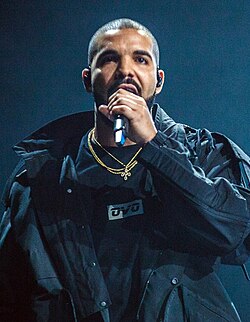 DrakeAubrey Drake Graham (born October 24Affiliated
How the record is sourced and how the score is derived.
The score is formula-derived (Factrail formula v1, version 1.0.0), not an editorial verdict. Read the methodology.
By the Factrail desk · Method: how we source and score · Last reviewed
Dispute a fact on this pageNamed here, or represent someone who is? Request a right of reply.