
Metin Hakverdi
Metin Hakverdi (born 25 June 1969 in Hamburg) is a lawyer and politician in Germany of the Social Democratic Party of Germany (SPD).
- Facts0
- Drivers0
- Indicators0
Metin Hakverdi (born 25 June 1969 in Hamburg) is a lawyer and politician in Germany of the Social Democratic Party of Germany (SPD).
Metin Hakverdi (born 25 June 1969 in Hamburg) is a lawyer and politician in Germany of the Social Democratic Party of Germany (SPD). He has sat in the Bundestag since 2013, holding the direct mandate for constituency 23, Hamburg-Bergedorf – Harburg, and the parliament lists his profession as a fully qualified lawyer (Volljurist). In the federal election of 2025 he was returned with 32.2 percent of the first votes (53,073), ahead of Clara-Sophie Groß of the Christian Democratic Union of Germany on 21.4 percent. Since 28 May 2025 he has been the federal government's Coordinator for Transatlantic Cooperation at the Federal Foreign Office.
Hakverdi grew up in Hamburg-Wilhelmsburg, where he still lives. Die Welt has described his father as a taxi driver who came from Turkey and his mother as a secretary from Mecklenburg-Vorpommern. He is married. In 1986 he earned a high-school diploma at Simi Valley High School in California, and in 1988 he passed the Abitur at the Gymnasium Kirchdorf/Wilhelmsburg. He completed the first state examination in law at the Christian-Albrechts-Universität zu Kiel in 1994, studied at the Indiana University School of Law from 1995 to 1996, and, after a traineeship at the Higher Regional Court in Oldenburg, passed the second state examination in 1999.
He joined the SPD in 2002 and, before his move to the Bundestag, worked as a lawyer in Hamburg. From 2008 to 2013 he was a member of the Hamburg Parliament and of its presidium, sat on the budget committee and the committee for public enterprises and assets, and was the SPD group's spokesman on the parliamentary inquiry into the Elbphilharmonie. Die Welt has named Hans-Ulrich Klose, Helmut Schmidt and Herbert Wehner among earlier representatives of his Bundestag constituency.
The coordinator's official title is Coordinator for Transatlantic Intersocietal, Cultural and Information-Policy Cooperation. The Foreign Office assigns the post the promotion of ties with the United States and Canada, including scientific cooperation, social questions and contacts with Jewish organizations, and records that the office was created in 1981 and later extended to Canada. Previous holders named by the ministry include Hildegard Hamm-Brücher, Werner Weidenfeld, Peter Beyer and Michael Link. Hakverdi has described the appointment as continuing transatlantic work associated with Klose, his predecessor in the constituency, and has said that security cooperation across the Atlantic needs a new basis built on greater European sovereignty.
Metin Hakverdi was born on 25 June 1969 in Hamburg. He grew up in Wilhelmsburg, the quarter that covers most of the Elbe island of the same name, and in 2013 he still called it home.
The City of Hamburg’s account of the district says that unemployment spread there in the 1970s, after the North Sea flood of 1962 destroyed streets and industrial sites and container handling reduced the need for dock labor. Hakverdi later described that setting as his own. At a campaign stop reported by the taz in September 2013, he introduced himself as the son of an immigrant: his father had come from Anatolia, his mother from Mecklenburg-Vorpommern, and he had grown up in socially disadvantaged Wilhelmsburg in the 1970s as a boy with a foreign surname, for whom education had been the only chance.
He told Die Welt that his father, by then dead, had arrived from Turkey in 1955, and that his mother was from Demmin. Reports of what the parents did for a living do not match. The Hamburger Morgenpost wrote that the father drove a taxi and the mother worked as a secretary, and quoted Hakverdi as saying that neither parent had been able to finish school and that they had taught him education was the most important thing. The Hamburger Abendblatt, in a profile published the next day, called him the son of an Anatolian tailor who died unable to read or write and of a secretary from Mecklenburg-Vorpommern. A 2025 Welt article again described the father as a taxi driver and the mother as a secretary. During the 2013 campaign he showed an Abendblatt reporter the flat on Georg-Wilhelm-Straße where he had grown up: 88 square meters, four rooms and a balcony.
His parents sent him to a Gymnasium even though he lacked the usual recommendation from primary school. The Abendblatt later wrote that he made the change at his mother’s urging.
The Bundestag biography, which the parliament notes is based on members’ own statements, records a high-school diploma in 1986 from Simi Valley High School in Simi Valley, California, and the Abitur in 1988 at the Gymnasium Kirchdorf/Wilhelmsburg. The Morgenpost also placed the Abitur in 1988 at the Gymnasium Kirchdorf. In August 2013 he told Die Welt that he had gone to school in Wilhelmsburg and was living there again after a two-year stay in the United States.
On 5 November 2012 the school, known as “KiWi,” was renamed the Helmut-Schmidt-Gymnasium at a ceremony on Krieterstraße attended by former chancellor Helmut Schmidt. The name marked his conduct as Hamburg’s interior senator during the 1962 flood, which hit Wilhelmsburg particularly hard; about 700 pupils from 40 countries were enrolled at the time.
Hakverdi studied law at the Christian-Albrechts-Universität zu Kiel and passed the first state examination in law in 1994. As the Kiel law faculty describes the German path to judicial qualification, university study ends with that first examination and is followed by a practical preparatory service, the Referendariat, which ends with the second state examination.
The Abendblatt wrote that, after the Abitur and the law course in Kiel, a scholarship paid for a year in the United States. The Bundestag biography places study in 1995–1996 at the Indiana University School of Law. A résumé he published in 2016 uses the same name and does not name a campus or a degree. The university’s law school in Bloomington, then called the Indiana University School of Law, was renamed the Maurer School of Law in December 2008.
He then did the Referendariat at the Oberlandesgericht in Oldenburg and passed the second state examination in 1999. The Abendblatt reported that he repaid his BAföG student-aid debt in a single payment after his first major case as a lawyer.
The Bundestag biography for the 18th electoral term records that Metin Hakverdi passed the second state examination in law in 1999, after a legal traineeship at the Oberlandesgericht in Oldenburg, and was admitted as a Rechtsanwalt in 2000. The current biography, which the Bundestag says rests on members’ own information, lists him as a Volljurist and gives his occupation before membership as “Rechtsanwalt, Hamburg.”
He practiced in a small Hamburg partnership with Cem Sengül, a lawyer specializing in business law (Wirtschaftsrecht). A September 2013 Hamburger Abendblatt profile reported that Sengül had left a large firm about two years earlier for the partnership, and that the two shared about 60 square metres on the fourth floor of an office building near Hamburg-Altona station. It also said that on 1 March 2013 Hakverdi cleared his office to concentrate on that year’s Bundestag campaign. A JuraForum directory entry, which the site says it compiled itself rather than receiving from the lawyer, names the practice Hakverdi & Sengül at Bugdahnstraße 5 in Altona-Altstadt and gives 2000 as the year of admission.
For the 18th Bundestag he reported paid legal work in Hamburg alongside the mandate until 31 December 2016. The Hanseatische Rechtsanwaltskammer Hamburg then listed him among departed members in its Kammerreport of 2 February 2017. Later biographies record only the pre-mandate occupation, not a continuing practice.
The summer-semester 2024 handbook for non-technical master’s electives at the Hamburg University of Technology (Technische Universität Hamburg), in Harburg, names Hakverdi as Dozent for the German seminar “Analyse internationaler Quellen – Was, wenn Trump gewinnt?” (L3256). Dated 19 March 2024, it sets the course at two hours a week and two credit points, with students using public sources to examine how a possible victory by Donald Trump might affect selected regions, institutions and topics; it does not record a permanent faculty post.
In spring 2023 the Minda de Gunzburg Center for European Studies at Harvard University listed him as a John F. Kennedy Memorial Policy Fellow, a short-term visit for German policymakers, journalists and academics rather than one of the center’s longer academic fellowships. On 6 April 2023, in the Hoffmann Room of Adolphus Busch Hall in Cambridge, Massachusetts, he joined “Germany: One Year After the Zeitenwende,” a discussion chaired by the center’s director, Daniel Ziblatt, on Germany’s place in Europe and the transatlantic relationship after the start of the war in Ukraine.
In the summer of 2019 he was a Distinguished Visitor at the American Institute for Contemporary German Studies at Johns Hopkins University. The institute said the project concerned structural economic change and an “equitable transition,” and their effect on voting and democratic institutions, with a focus on the U.S. energy, steel and automobile industries. It described planned interviews between Detroit and Pittsburgh and between Atlanta and Charlotte.
Metin Hakverdi, of the Social Democratic Party of Germany (SPD), sat in the Hamburg Parliament (Hamburgische Bürgerschaft) from March 2008 until 21 October 2013. Both times he was elected from constituency 2, Billstedt–Wilhelmsburg–Finkenwerder, in Hamburg. Personal votes could reorder the candidates and decide who took a party’s seats.
On 24 February 2008 the constituency had 83,215 eligible voters and turnout of 50.8 percent. The SPD took 77,815 of 197,273 valid party votes (39.4 percent) and two of five seats. Hakverdi, third on the SPD list, received 20,721 personal votes, more than any other SPD candidate, and was given the SPD seat awarded on personal votes. Philipp-Sebastian Kühn took the seat awarded on list votes.
At the election of 20 February 2011 each voter could cast up to five constituency votes, counting both for a party’s seats and for candidate order. Turnout was 44.8 percent of 83,863 eligible voters, the lowest of Hamburg’s 17 constituencies. The SPD received 91,811 of 175,519 valid constituency votes (52.3 percent) and three of the five seats. Hakverdi, again listed third, received 25,984 votes and placed second on the SPD list, behind Philipp Kühn (37,690) and ahead of Jan-Hinrich Fock (12,552); all three were elected. In May 2010 his mandate was resting while the Hamburg public prosecutor’s office investigated him; the Hamburger Abendblatt reported on 7 May that he intended to resume it after the SPD group met on 31 May.
He resigned by letter of 21 October 2013. President Carola Veit said he was leaving for work in Berlin, and Susanne Kilgast succeeded him on the SPD list for constituency 2.
From April 2008 Hakverdi was a secretary (Schriftführer) of the Bürgerschaft’s presiding board (Vorstand). His Bundestag biography, from his own information, lists the Präsidium, the Budget Committee, the Committee for Public Enterprises and Assets, and the post of SPD spokesman (Obmann) on the Elbphilharmonie inquiry.
On 27 August 2010 he was a member, and acting secretary, of the subcommittee on assets and public enterprises, at a sitting on the 2008 holdings report for the Hamburg Port Authority and Hamburger Hafen und Logistik AG. On 11 August 2011 the Budget Committee listed him as a full member; on 10 May 2011 the Committee on Public Enterprises listed him as a standing substitute, not an ordinary member. In October 2013 Veit said he had worked in particular on the Budget Committee, the Committee on Legal Affairs and Equality, and the Committee on Public Enterprises.
The SPD group, Hakverdi among the signatories, moved on 27 May 2009 for an inquiry into HSH Nordbank. The Bürgerschaft set it up on 11 June 2009 to examine failures at the bank and the Senate’s protection of the city’s assets. Its report describes a rescue, shared with Schleswig-Holstein, of a further 3 billion euro capital increase and a 10 billion euro guarantee, half for each state. The Bürgerschaft approved the treaty legislation on 1 April 2009. Hakverdi was a deputy member. Thomas Völsch was the SPD’s Obmann, and Harald Krüger of the Christian Democratic Union chaired the committee. Hakverdi signed the SPD minority report of 27 January 2011. In January 2010 he accused the Senate of having misled the public before the 2008 election about the bank, saying the city had soon afterward had to put in 300 million euros.
On 5 May 2010 the Bürgerschaft unanimously opened an Elbphilharmonie inquiry, on an SPD motion Hakverdi signed, into costs, responsibility and whether parliament had been accurately informed. The motion cited a 2005 figure of a municipal contribution of up to 77 million euros. The dissolution voted on 15 December 2010 ended that committee early; its interim report said the time had been too short. The new parliament re-established the inquiry on 14 April 2011, with the SPD, the Green Alternative List (Alliance 90/The Greens), the Free Democratic Party and Die Linke in favour and the CDU against. Hakverdi was a full member and the SPD’s Obmann until October 2013, when Frank Schmitt replaced him; Ole Thorben Buschhüter (SPD) chaired. It held 45 sittings to 28 March 2013 and heard 37 witnesses orally. Drucksache 20/11500, dated 3 April 2014, appeared after his resignation and records that Kilgast succeeded him.
In December 2012 the Social Democratic Party of Germany (SPD) nominated Metin Hakverdi as its direct candidate for Bundestag constituency 23, Hamburg-Bergedorf – Harburg, to succeed Hans-Ulrich Klose, who did not stand again after three decades in parliament. Hakverdi, then a 43-year-old member of the Hamburg Parliament from Wilhelmsburg, won a second ballot against Frank Richter, the Harburg district chair and deputy SPD state chair, by 73 votes to 70. Ingo Egloff, a sitting member and former state party chair, had been eliminated in the first round with 22 votes. The tageszeitung reported that party chair Olaf Scholz had pressed Egloff to seek the nomination so that Aydan Özoğuz could stand in Hamburg-Wandsbek, and described the result as a defeat for candidates preferred by the party leadership.
For the 2025 election the Federal Returning Officer defined the constituency as the boroughs of Bergedorf and Harburg in full and, from the borough of Hamburg-Mitte, the quarter of Wilhelmsburg; the rest of Hamburg-Mitte forms constituency 18. On 31 December 2023 it covered 315.2 square kilometres and had 345,400 inhabitants. The Statistical Office for Hamburg and Schleswig-Holstein reported in August 2009 that the Harburg area—its own constituency and, from 2002, part of Bergedorf–Harburg—had been represented by only two directly elected members: Herbert Wehner (SPD), nine times from 1949 to 1980, and Klose from 1983, in seven elections up to that date. The office described that area as the only part of Hamburg then continuously represented by SPD members. Helmut Schmidt (SPD) held the separate Bergedorf constituency from 1969 to 1983, after direct mandates in Hamburg VIII in 1957 and 1961. In February 2013 the Frankfurter Allgemeine Zeitung named Herlind Gundelach, a former Hamburg science senator, as the Christian Democratic Union (CDU) direct candidate for the southern seat.
Hakverdi won the direct mandate in 2013 and took his seat at the constituent meeting of the 18th Bundestag on 22 October 2013. Of 140,615 valid first votes he received 56,867 (40.4 percent); turnout was 64.3 percent among 221,887 eligible voters. The CDU, whose candidate was Gundelach, placed second with 50,044 votes (35.6 percent).
He held the seat in 2017 with 53,446 first votes (34.8 percent), against Dr. Herlind Gundelach of the CDU on 43,274 (28.1 percent). Peter-Paul Lorkowski of the Alternative for Germany (AfD) received 16,688 votes (10.9 percent) and David Stoop of Die Linke 16,382 (10.7 percent); turnout was 70.2 percent. On second votes the CDU led the SPD in the constituency, 27.4 percent to 26.2 percent.
In 2021 his first-vote share rose to 39.3 percent (61,590 votes). Uwe Schneider (CDU) was second with 26,483 votes (16.9 percent), ahead of Manuel Sarrazin of Alliance 90/The Greens on 24,231 (15.5 percent). Sonja Julia Jacobsen of the Free Democratic Party received 13,301 votes (8.5 percent) and Olga Petersen of the AfD 12,774 (8.2 percent). Turnout was 71.3 percent of 221,794 eligible voters.
The election for the 21st Bundestag was held on 23 February 2025 after the early dissolution of the 20th Bundestag. Hakverdi again won constituency 23, with 53,073 first votes, 32.2 percent of 164,866 valid ballots and 7.1 percentage points below his 2021 share. Clara-Sophie Groß (CDU) was runner-up with 35,208 votes (21.4 percent), and Reinhard Krohn (AfD) was third with 28,983 (17.6 percent). Lenka Brodbeck (Greens) received 19,139 votes (11.6 percent) and Mark Roach (Die Linke) 19,075 (11.6 percent). Turnout was 76.1 percent of 218,950 eligible voters. On second votes the SPD led the constituency with 23.7 percent, followed by the CDU on 20.4 percent and the AfD on 17.3 percent.
Metin Hakverdi has been a member of the Bundestag since 2013, through the 18th, 19th, 20th and 21st electoral terms, for the Social Democratic Party of Germany, holding the direct mandate for Hamburg-Bergedorf – Harburg in Hamburg. Archived biographies show the seats moving from legal and financial business toward European Union affairs and, in the 20th term, the federal budget.
In the 18th term he was a full member of the Committee on Legal Affairs and Consumer Protection, the Finance Committee and the Parliamentary Financial Market Panel, and a deputy member of the Committee on European Union Affairs, the Budget Committee and the 4th Committee of Inquiry. The Bundestag established that inquiry on 19 February 2016 to examine Cum-Ex trades, in which short sales around the dividend date produced multiple credits for tax paid only once. Its report of 20 June 2017 lists Hakverdi and Sarah Ryglewski as the SPD’s deputy members, under chair Hans-Ulrich Krüger.
In the 19th term he was a full member of the Committee on European Union Affairs and of the subcommittee on questions of the European Union, and a deputy member of the Finance Committee, the Budget Committee and the Committee on the Environment, Nature Conservation and Nuclear Safety. In the 20th term he was a full member of the Budget Committee and of that European Union subcommittee, for which the archived biography names him as the SPD group’s coordinator (Obmann). He was a deputy member of the Committee on European Union Affairs, the Committee for Digital Affairs and the Transport Committee, and a deputy member of the Franco-German Parliamentary Assembly.
On the biography dated 29 October 2026, his seats in the 21st term are a full membership of the Committee on European Union Affairs and deputy memberships of the Foreign Affairs Committee, the Finance Committee and the Budget Committee, with the deputy seat in the Franco-German Parliamentary Assembly continued. The SPD parliamentary group’s own list records the matching working-group places—member on European Union affairs and deputy on foreign affairs, finance and the budget—from 21 May 2025.
The inquiry was to establish why that tax treatment ended only in 2012, what revenue may have been lost from 1999 to 2011, and which federal bodies were responsible. The report names Hakverdi only as a deputy member, not as a rapporteur.
From the 19th term the emphasis was Europe. A Politico profile from his second term said that since 2018 he had been deputy chair of the SPD group’s working group on European Union affairs and its rapporteur for China, the United States, Russia and Brexit.
In the 20th term the Budget Committee’s recommendations name him as one of the rapporteurs for Einzelplan 12, the estimate of the then Federal Ministry for Digital and Transport, with one rapporteur from each of the other groups. The designation is on the recommendation for the 2023 budget, printed on 24 October 2022, and on the recommendation for the 2025 budget, printed on 22 October 2024. The deputy seats on the digital-affairs and transport committees ran alongside that reporting task, as did the Obmann role on the budget subcommittee dealing with European Union questions.
In the 21st term the balance moved back toward a full seat on European Union affairs, with deputy seats on finance and the budget and a new deputy seat on foreign affairs. Separately from those parliamentary seats, he took office on 28 May 2025 as the Federal Foreign Office’s coordinator for transatlantic cooperation, a government appointment treated in the following section.
The Bundestag’s bilateral parliamentary groups sit across party lines. In the 20th term the parliament’s list of group officers names Hakverdi as a deputy chair of the parliamentary group for the United States, under Sebastian Schäfer of the Greens as chair. In September 2022, when Jürgen Trittin still led the group, a Bundestag press notice on a delegation to Pennsylvania and Washington, D.C., listed Hakverdi among the deputy chairs, with Kai Whittaker, Andrew Ullmann, Harald Weyel and Sevim Dagdelen.
Members of the Bundestag’s USA parliamentary group with U.S. Representative Ted Deutch in Washington in September 2022, including Metin Hakverdi.
The Bundestag’s account of the 11–15 September 2022 trip said the group had more than 100 members and kept contact with the United States Congress through the Congressional Study Group on Germany. Trittin summed up talks on aid for Ukraine, energy and climate policy ahead of the U.S. midterm elections; delegations of this kind are a chair plus five deputies, one from each Bundestag group.
The names shown for the group in the 21st term do not include Hakverdi. The Bundestag’s page lists Kai Whittaker, Beatrix von Storch, Philipp Rottwilm, Sebastian Schäfer and Caren Lay. Inside the SPD group the circle on the United States and North America is separate. Politico recorded Hakverdi as its chair from 2018, and the group’s page for the 21st term lists him as chair of the Gesprächskreis USA/Nordamerika from 25 June 2025. On his website, as archived in June 2020, he wrote that he also belonged to the parliamentary groups for Israel and for Southeast Europe (Albania, Kosovo, Serbia, Montenegro and Macedonia). Later Bundestag biographies do not record those memberships.
On 28 May 2025 Metin Hakverdi, a member of the Bundestag for the Social Democratic Party of Germany, took office at the Federal Foreign Office as Coordinator for Transatlantic Cooperation. The formal title is Coordinator of Transatlantic Cooperation in the Field of Intersocietal Relations, Cultural and Information Policy (Koordinator für die transatlantische zwischengesellschaftliche, kultur- und informationspolitische Zusammenarbeit). The post was created in 1981 as coordinator for German-American cooperation and was later renamed and extended to Canada. The Foreign Office names among earlier holders former minister of state Hildegard Hamm-Brücher, the political scientist Werner Weidenfeld, Bundestag member Peter Beyer and, most recently before Hakverdi, Bundestag member Michael Link.
Welt reported that day that Hakverdi had said the federal government appointed him. He entered the CDU/CSU–SPD government led by Chancellor Friedrich Merz, in which the chancellery, the Foreign Office under Johann Wadephul and the chair of the Foreign Affairs Committee were in CDU hands. In the previous coalition Link, of the Free Democratic Party, had held the post, and Tobias Lindner carried it on an acting basis after that coalition collapsed. Hakverdi called the appointment an honour, said he had worked for years in and on the United States, and pointed to Hans-Ulrich Klose, an earlier coordinator and his predecessor in the Hamburg constituency. He said he would work from his own office in the Foreign Office and looked forward to cooperating with Wadephul.
In May 2026 the government told the Bundestag, answering a written question from Alternative for Germany, that combining the office with a Bundestag mandate was established practice, and it declined to comment on statements Hakverdi had made as a parliamentarian before taking the post. A later answer, to a question on his first year, said staffing for the office had been cut sharply at the start of the legislative period.
The Foreign Office calls the United States and Canada Germany’s closest allies outside Europe and gives the coordinator the long-term promotion of societal and cultural ties. It lists science and research, social questions such as demographic change and new media, contacts with Jewish organisations, and personal networks between Germany and North America, and says the coordinator seeks to build bridges between the partners. The title and that task list keep the job to intersocietal, cultural, scientific and informational cooperation, rather than summit dealings between the Chancellery and the White House.
On taking office he said security cooperation needed a new basis, above all more European sovereignty, and an honest understanding on tariffs and economic policy. At the Munich Security Conference in February 2026 he told phoenix, “We have to talk to all Americans here,” naming Republicans, supporters of President Donald Trump and Democrats. Europe, he said, still depended on the United States for its security architecture, especially Ukraine and intelligence, and should keep Washington engaged while building the capacity to act independently; some Republicans, he added, already differed from the president on NATO, Ukraine and tariffs.
On 14 and 15 July 2025 he accompanied Defence Minister Boris Pistorius to the United States, including talks with Secretary of Defence Pete Hegseth. On 21 July he began the first trip he led as coordinator, to Missouri and Washington, D.C., saying he was starting away from the coasts in order to keep contacts in both political camps and at state level. The Foreign Office said the Missouri stops, in St. Louis, Jefferson City and Kansas City, would cover state politics, business, German cultural heritage and civil society, and that Washington would focus on the administration, Congress, think tanks, geopolitics and trade, including an event with the American-German Institute. He said he would also set out Germany’s larger share of responsibility for its own security, and that of neighbours and NATO allies, since Russia’s attack on Ukraine, and look for economic openings despite tariffs.
On 5 December 2025 he told the Deutsche Presse-Agentur that Europe did have to become economically and militarily stronger and more sovereign. “We will shape this path ourselves. Gladly together with the United States. We will not, however, accept interference in our domestic politics, no matter from whom,” he said, adding that under Trump “paper is patient, and reality is often faster,” and that Berlin would watch how far the new U.S. National Security Strategy actually steered policy.
On 24 February 2026 he told Der Tagesspiegel that a trade agreement should be signed only if it shielded Europe from fresh tariff demands and further moves by the president, which the paper linked to the dispute over Greenland. After a Supreme Court ruling against most of the tariffs, he said talks should wait for clarity on new duties, noting that the president could impose them for only 150 days, and that many Republicans he met wanted more reliability because they worried about German and European investment.
In a Welt interview of 19 May 2026, after another week in Washington, he said friction between Merz and Trump was being treated there as the president’s personal disappointment, while Germany was still seen as meeting or exceeding U.S. security expectations. If buying Tomahawks were only a matter of price, he said, Trump would agree at once; he reported conflicting explanations for a decision not to station them, and said German firms, investors and steps such as shifting mine-clearance capacity toward the Mediterranean remained part of his Washington conversations.
Hakverdi, of the Social Democratic Party of Germany, has argued that the United States should stay inside European security while Germany builds forces of its own. In May 2023 he told the Friedrich-Ebert-Stiftung that cooperation with Joe Biden was working, that Russia must not succeed against Ukraine, and that major escalation had to be avoided. In the sense of the Zeitenwende speech of Olaf Scholz, he pointed to arms deliveries, the NATO eastern flank and support for people from Ukraine. A returning populist, he warned, might leave the European Union alone with Russia; nothing, he said, would then be worse than a Republican president.
After Donald Trump’s return he told the Hamburger Morgenpost that Washington had noticed the Zeitenwende, while ties with Congress, states, business and the military remained strong. He doubted that “emancipation” was the right word for the United States and, if at all, applied it to China; American security, cheap Russian gas and car exports to China no longer added up. He said he told American interlocutors that Germany no longer expected Washington to carry European security alone. In February 2026 he told phoenix that Europe still needed the United States for Ukraine aid and intelligence and should keep it engaged “as long as possible and as intensively as possible,” while investing in its own capacity and talking to the administration, Republicans including MAGA supporters, and Democrats. In January 2026 he lectured at Carleton University on Germany, Canada and Trump.
On 26 November 2025 he told the Bundestag that Europe’s security order had gone up in smoke in February 2022 and would not return. He defended a “coalition of the willing” and sums he stated as 118 billion euros for infrastructure and 108 billion for the Bundeswehr.
As the SPD group’s deputy European-policy spokesperson and Brexit rapporteur, Hakverdi told Die Welt in January 2019 that the EU had shown it could hold together and that Brexit was “not an accident, but a warning signal.” Voters, he said, wanted a security community and social standards—a European minimum wage, unemployment reinsurance and a banking union sharing risk—not only a single market, and the Union had “lately simply delivered too little.” Governments should not treat Brexit as only a British problem; if the United Kingdom sought another referendum, the EU should compromise to avoid an exit without a deal.
On 9 May 2019, against an Alternative for Germany motion on the Western Balkans, he said accession still rested on the Copenhagen criteria, with “no discount.” Excluding regions at the outset would, he argued, have shrunk the Union’s power to make Europe more peaceful—a German interest—but talks were not automatic membership, and EU decision-making had to be repaired first. In 2023 he told the FES the Union was strongest under outside pressure. He would have preferred a carbon price to the Inflation Reduction Act, but called that law one of the most important climate decisions so long as it did not start a subsidy race.
As rapporteur for the digital and transport budget, Hakverdi told the Bundestag on 30 January 2024 that the chapter was an investment plan: more than 5 billion euros for broadband, about 6.5 billion for school digitalization, 1.4 billion for waterways, 8.5 billion for roads, mainly motorway bridges, and 18 billion for the railways. Deutsche Bahn, he said, had been left unreliable—he cited the S3 in southern Hamburg—and the rail money was also a climate measure; nothing, including the debt brake, should stop holding that level through the decade. The investment need ran to several hundred billion euros, which he said the fiscal constitution could not finance over ten to fifteen years. In the 2025 coalition talks the SPD listed him on its delegation to working group 3, “Digitales,” chaired by Armand Zorn.
On migration he has treated integration as a social question. In 2008, as a Hamburg state deputy, he wrote that coexistence needed fair chances and an end to Kita and tuition fees, and that politics alone could not produce it. In May 2016 he backed early courses for people still in the asylum procedure, with benefit cuts under the Asylum Seekers’ Benefits Act if they refused without good cause. In February 2021 he said he voted against opposition motions on Moria because the coalition had agreed not to defeat one another; agreeing, he argued, would have helped nobody there. His alternative was EU-wide intake: Germany, he wrote, had pledged nearly 1,000 places for unaccompanied minors, children needing treatment and their families, and was still pressing other states to join.
Metin Hakverdi joined the Social Democratic Party of Germany (SPD) in 2002. The biography issued for the 18th Bundestag listed him, together with his seat in the Hamburg parliament, as deputy federal chair of the Arbeitsgemeinschaft der Selbständigen in der SPD (AGS), the party’s organization for the self-employed. The current Bundestag biography records the 2002 entry and no longer lists the AGS post.
In the Hamburg party he was a Beisitzer on the Landesvorstand as of 1 November 2023. The state organization’s report for 2023–2025 again names him among the Beisitzer of the board that followed the Landesparteitag of 10–11 November 2023 in Wilhelmsburg. He is not among the members of the Landesvorstand elected on 11 October 2025 for a two-year term. For the Kreisverband’s 2025–2027 term he is one of three deputy chairs of the SPD Hamburg-Mitte, with Falko Droßmann and Carola Veit; Annkathrin Behr and Hansjörg Schmidt share the Kreisvorsitz. In the local branch SPD Wilhelmsburg-West he is deputy Distrikt chair. With the Bürgerschaft member Irene Appiah he coordinates the SPD Hamburg’s Forum Internationale Politik. The 2023–2025 party report describes that forum as a body, more than forty years old, concerned with international and European politics from a Hamburg perspective, including city partnerships, relations with the United States and European integration.
Hakverdi sits for Bundestag constituency 23, Hamburg-Bergedorf – Harburg. For the 2025 election the Federal Returning Officer assigns that constituency the whole borough of Bergedorf, the whole borough of Harburg, and, from Hamburg-Mitte, the quarter of Wilhelmsburg. A 2013 taz profile said he grew up in Wilhelmsburg, which it called a socially disadvantaged quarter, and Die Welt reported in 2025 that he still lives there. The SPD Bundestag group lists a constituency office at Veringstraße 61, 21107 Hamburg, in Wilhelmsburg, and a Berlin office at Platz der Republik 1. The same profile lists Hamburg-Eimsbüttel (constituency 20) as a constituency he supervises in addition to his own seat.
Rail links across the Elbe have been a documented local theme. In April 2020 the Hamburger Abendblatt reported his demand that any Hamburg S-Bahn ring include the south of the city. Replying on 13 September 2021 on Abgeordnetenwatch to a question about posters promising U-Bahn and S-Bahn expansion for the Süderelbe, he described a proposed S33 ring from the main station via Veddel, Wilhelmsburg, Harburg and the Süderelbe, through a tunnel under the Elbe to Altona. He wrote that the line should cut a journey from Neugraben to Altona from about 90 minutes to at most 30 and relieve the main station, and that on his initiative the Bundestag was providing three million euros for a feasibility study of a rail crossing west of the existing Elbe bridges. He also argued that the U4, then running to the Elbbrücken and planned toward Wilhelmsburg, should continue to Harburg. A study commissioned by the Federal Ministry for Digital and Transport, and carried out from November 2021 to December 2024, later found a recognizable benefit for local rail, including new S-Bahn services, but benefit-cost ratios of 0.3 and 0.4 for the two variants it examined. It did not recommend a western Elbe rail crossing under the planning assumptions then in force.
The Technisches Hilfswerk (THW) is a federal agency in the remit of the Federal Ministry of the Interior. It states that about 98 percent of its members are volunteers—some 88,000 people in 669 local units—who give technical help after disasters in Germany and emergency aid abroad. Hakverdi’s Bundestag biography, which the parliament says rests on members’ own statements, lists him as an active helper of the local unit in Hamburg-Harburg who finished basic training in 2016. On 10 November 2016 the Hamburger Abendblatt reported that he was among about 100 active members of that southern unit.
The same biography calls him state chair (Landesvorsitzender) of the THW-Helfervereinigung Hamburg. The mandatory disclosure lists him as chair of the state board of the THW-Landeshelfervereinigung Hamburg e.V. Founded in 1983 by local helpers’ associations, it says it supports those groups and THW youth work in Hamburg and speaks for them toward politics. The association is a private registered body, not the federal agency.
Posts that the Bundestag rules of conduct require to be published appear on the biography page. The page, dated 29 October 2026, lists Hakverdi from 15 September 2025 as an advisory-board member of 1014 Inc. in New York City, under functions in companies. 1014 Inc. describes itself as an independent U.S. nonprofit founded in 2017 at the initiative of the Federal Foreign Office and the Goethe-Institut for transatlantic programs.
The disclosure also records an honorary board seat at Atlantik-Brücke e.V. in Berlin; from 1 July 2025, an honorary trusteeship of the Helmut Schmidt and Loki Schmidt Foundation in Hamburg; and, from 25 September 2026, honorary membership of the assembly of curators of the Institut für Europäische Politik. Founded in 1952, Atlantik-Brücke is a nonprofit that says it promotes cooperation between Germany, Europe and North America across party lines. On 8 July 2025 it reported that its members’ assembly had confirmed Hakverdi on the extended board and elected Sigmar Gabriel chair for a third time. Those association and foundation posts are marked unpaid. The 1014 entry is not, and the page does not list a remunerated secondary occupation.
A separate self-reported line names the services union ver.di, the Sozialverband Deutschland and the Arbeiterwohlfahrt in Hamburg. On 10 August 2020 the Hamburg Sozialverband reported that he signed a membership form at its Harburg office. It also lists the friends’ circle of the Neuengamme concentration camp memorial, the German Council on Foreign Relations (DGAP), Global Bridges, D64, the American Club of Hamburg, the parliamentary group of the Europa-Union Deutschland and the Deutsche Parlamentarische Gesellschaft, plus sports clubs and civic associations in Wilhelmsburg and Harburg, among them FC Süderelbe, SV Wilhelmsburg, neighborhood societies, a marksmen’s guild and a hospice society.
In spring 2010 Hamburg prosecutors examined Metin Hakverdi, a lawyer and member of the Social Democratic Party of Germany in the Hamburg Parliament, over a sham-marriage case against fellow deputy Bülent Ciftlik, his former partner Nicole D. and the Turkish national Kenan T. Der Spiegel reported that on 11 February 2008 Nicole D. emailed Ciftlik asking him to have Hakverdi explain the legal consequences of a marriage of convenience, and that Ciftlik forwarded the questions the same morning. She later said Hakverdi had been present when office partner Hartmut Müller, a family lawyer, discussed a marriage contract; Müller’s invoice referred to advice given in Hakverdi’s presence. Prosecutors suspected that he had advised the couple on securing the suspected sham marriage.
Hakverdi denied advising on any sham marriage. He said that in early February 2008 Ciftlik brought a former Turkish client and a young German woman to his office, that no consultation took place, and that he referred them to a family-law specialist and gave no immigration-law advice. On 2 May 2010 the Hamburg SPD announced that he would let his mandate rest. State chair Olaf Scholz and group chair Michael Neumann wrote that his denial had to prove true if he was to remain a deputy.
On 5 May 2010 Die Welt reported that the prosecution would discontinue the investigation under section 153a of the Code of Criminal Procedure once Hakverdi paid 750 euros to the German Red Cross. The step described was a conditional discontinuance, not a conviction, although the paper’s headline called the payment a fine. His lawyer, Gerhard Strate, said the presumption of innocence still applied and that Hakverdi’s account held. The mandate had rested since the previous Sunday, and he intended to attend the Bürgerschaft sitting that Wednesday.
Ciftlik’s own case, separate from the inquiry into Hakverdi, ended in conviction. On 28 June 2010 an Amtsgericht fined him 12,000 euros for arranging the sham marriage, and Scholz demanded that he leave the party and its parliamentary group. In June 2017 the Landgericht Hamburg sentenced him to two years and six months, including for arranging the marriage; in December 2018 the Federal Court of Justice largely confirmed that sentence.
After Hakverdi became coordinator for transatlantic cooperation on 28 May 2025, the Alternative for Germany group in the Bundestag questioned posts on X. The government’s answer of 27 April 2026, printed paper 21/5658, quotes a post of 3 November 2024 in which he forecast that Kamala Harris would win the presidential election: “Our weekly forecast: @KamalaHarris gewinnt Präsidentschaftswahlen, Ampel-Koalition bleibt bestehen. Fertig.” The questioners also cited posts from November 2024 and January 2025 criticizing Friedrich Merz. The Federal Foreign Office replied that holding the office alongside a Bundestag seat was established practice, that those statements predated the appointment and had been made as a member of parliament, and that the government would not comment.
A further question concerned a post of 10 October 2025, after the appointment. Hakverdi congratulated María Corina Machado on the Nobel Peace Prize and wrote that he would “even be fine” if Donald Trump received it the next year “if the U.S. also stands firmly and effectively with Ukraine,” adding that “Peace prizes are nice. Stopping aggression is better.” The question treated that condition as support for continuing the war in Ukraine rather than diplomacy. The government said it did not adopt that assessment and would not comment on a statement made as a member of the Bundestag.
Ranked by shared high-impact facts, then explicit ties, then shared drivers.
 Friedrich MerzFriedrich Merz has been Chancellor of Germany since May…Affiliated
 Olaf ScholzOlaf Scholz was Chancellor of Germany from December 2021…Affiliated
 Sigmar GabrielSigmar Hartmut Gabriel is a German politician who was the…Affiliated
 Boris PistoriusBoris Ludwig Pistorius is a German lawyer and politician…Affiliated
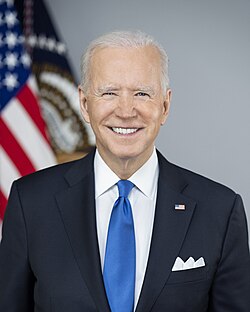 Joe BidenJoe Biden was the 46th President of the United States from…Affiliated
How the record is sourced and how the score is derived.
The score is formula-derived (Factrail formula v1, version 1.0.0), not an editorial verdict. Read the methodology.
By the Factrail desk · Method: how we source and score · Last reviewed
Dispute a fact on this pageNamed here, or represent someone who is? Request a right of reply.
People and organizations as listed in the Related section of this page; facts, drivers and the pages that name it as listed in the blocks here. Counts, not a rating.