
Nicole Shanahan
Nicole Ann Shanahan (born September 26, 1985) is an American attorney, legal-technology entrepreneur…
- Facts0
- Drivers0
- Indicators0
Nicole Ann Shanahan (born September 26, 1985) is an American attorney, legal-technology entrepreneur…
Nicole Ann Shanahan (born September 26, 1985) is an American attorney, legal-technology entrepreneur, and philanthropist who was the vice-presidential running mate of independent candidate Robert F. Kennedy Jr. in the 2024 United States presidential election. Kennedy announced the choice on 26 March 2024 at a campaign event in Oakland, California, the city where she grew up. She was 38, had never held elected office, and was little known nationally.
She has said that her family in Oakland relied on food stamps, that her father was diagnosed with bipolar disorder and schizophrenia when she was nine, and that her mother had immigrated from China. She graduated from the University of Puget Sound and received a J.D. from Santa Clara University School of Law. She founded ClearAccessIP, a company that used software to help patent holders manage intellectual property; IPwe acquired it in 2020. As a fellow at Stanford Law School’s CodeX center, she worked with the San Francisco district attorney’s office on turning police-misconduct records into data that could be analyzed. In 2018 she married Google co-founder Sergey Brin. The marriage later ended in divorce; NBC News dated the divorce to 2022, while ABC News, writing in March 2024, said the couple had divorced the previous summer. In 2022 The Wall Street Journal reported that she had an affair with Elon Musk; she and Musk denied it, and she later rejected the account in an essay for People. She and Brin have a daughter, Echo, who was diagnosed with autism.
NBC News reported that in 2019 she announced a $100 million commitment to work on later-life pregnancy, criminal justice, and climate, pursued in part through the Bia-Echo Foundation, of which she is president. She has argued that in vitro fertilization is marketed as a commercial service and that more funding should go to research on reproductive aging. She told The New York Times, as quoted by The Guardian, “I do wonder about vaccine injuries,” and she told Newsweek that calling Kennedy an “anti-vaxxer” was unfair. She had mostly supported Democratic candidates and described herself to ABC News as a “lifelong Democrat.”
Before she joined the ticket, she gave $4 million to a super PAC supporting Kennedy, covering more than half of a roughly $7 million Super Bowl advertisement that restaged a 1960 commercial for John F. Kennedy. Members of the Kennedy family condemned the spot. On the Impact Theory podcast in the week Kennedy left the race, she said the campaign was choosing between staying in, which she said could help Kamala Harris because the ticket drew votes from Donald Trump, and “join[ing] forces with Donald Trump.” On 23 August 2024 Kennedy suspended his campaign and endorsed Trump. Shanahan did not attend the announcement in Phoenix; she wrote that the race had been “one of my greatest honors” and urged Kennedy to “save our children.”
Nicole Ann Shanahan was born on September 26, 1985, in Placer County, California. The California Birth Index lists her mother's maiden name as Wong. She grew up in Oakland.
She has described a low-income childhood in a single-parent household. In remarks compiled by Politico, she said her mother, a Chinese immigrant from Guangzhou who arrived in the 1980s during China's Open Door Policy, raised her and a brother, and that the family was on welfare. She has said her mother was ashamed to use food stamps and asked the children to leave the store so they would not watch her use them, and that her mother later worked as an accountant in the Bay Area. In a 2024 Newsweek interview she said her mother had first worked as a caretaker for an elderly woman, then put herself through college and became an accountant, and that the household was "one misfortune away" from losing a car or a home.
Her father, Shawn Shanahan, could not hold a job and died in 2014, she has said. She has said he was diagnosed, when she was nine, with what she called bipolar schizophrenia, and that the family relied on food stamps and other government assistance. Politico, drawing on her public comments, reported that he struggled to find work and had bipolar disorder and schizophrenia. The New York Times, in a later profile, wrote that on the campaign trail she had omitted or embellished parts of her history.
She has also said that school was one of the few steady parts of her childhood, that she at one point owned only two T-shirts that fit, and that she bused tables at a burger restaurant at 12 and worked as a hostess at 15. She attended Saint Mary's College High School, a private Catholic school in Berkeley. The website of Robert F. Kennedy Jr.'s 2024 campaign said she had received an athletic scholarship. The school confirmed to the Times that she had been a student but said it had never offered scholarships; annual tuition was about $24,000, and the school said she had received some tuition assistance while declining to disclose the amount.
Shanahan attended the University of Puget Sound in Tacoma, Washington, from 2003 to 2007. The university's media-relations office told the campus newspaper The Trail that she graduated with a bachelor's degree in Asian studies and minors in economics and Chinese language and culture, joined the Pacific Rim study-abroad program in the 2005–06 school year, and briefly ran cross-country as a freshman. The office also said she received several aid awards: the E. Nelson James Junior Memorial Scholarship, the Charles Garnet Trimble Endowed Fund in Chinese Studies, the Pac-Rim Alumni Scholarship, and the Albertson-Johnson Scholarship.
Returning to campus in October 2021 for an "Empowering Asian-Americans: Women in Leadership" symposium, her first visit since graduation, she called that support an "enormous merit scholarship" and said, "We were very low income. We were on welfare." She also said that when she was choosing colleges she "barely had access to dial-up internet." Lotus Perry, a professor of Chinese language and culture, later described her as a hardworking student who had made clear that she wanted to become an attorney. A 2015 profile by Stanford Law School's CodeX center listed the same major and minors and said she spoke English, Mandarin, and Cantonese.
That Stanford profile recorded a 2007 World Trade Organization certificate from the Graduate Institute of International Studies in Geneva, the name then used for the Geneva institution Politico later called the Geneva Graduate Institute. While she was still an undergraduate, Adam Philipp, founder of the Seattle firm Aeon Law, said she applied in 2006 for a paralegal job and impressed him with "a willingness to learn and an abundance of common sense."
Shanahan earned a J.D. from Santa Clara University School of Law in 2014. The Trail reported that she attended the school from 2011 to 2014. The Stanford profile said she was an editor of the High Technology Law Journal. The law school later noted that, while a student, she created ClearAccessIP, a company that used artificial intelligence to manage patents.
Politico, compiling her public remarks, reported that during law school she studied intellectual property and Chinese law at the National University of Singapore. In a 2021 statement quoted by The Business Times of Singapore, she described herself as having been "a study-abroad student at NUS Law School."
Shanahan’s early patent work came before she was licensed to practice. Adam Philipp, founder of the Seattle firm Aeon Law, told The New York Times that she applied there as a paralegal in 2006. Legal Dive, drawing on her public career history, reported later patent-support roles at Longan Law Firm, Townsend and Townsend and Crew, and Rutan & Tucker, then a 2010 move to RPX Corporation, a defensive aggregator that buys patents to keep them from firms that assert them against operating companies. At RPX she helped build a licensing matrix tracking transactions between portfolios and licensees, and she worked with a team bidding on a large telecommunications portfolio. A 2020 account of her LinkedIn profile described the job as about ten months as a patent specialist.
In a 2021 San Francisco Magazine profile, as recounted by the Times, Shanahan said an unnamed male coworker sexually assaulted her at RPX, and that the episode caused severe depression and led her to give up law. Daniel McCurdy, RPX’s chief executive, told the Times that the company learned of the claim only from the article, then hired a law firm whose investigation was inconclusive. The report did not name the coworker or describe any criminal charge or lawsuit.
She received a J.D. from Santa Clara University School of Law in 2014, where she edited the High Technology Law Journal, and IP CloseUp reported that she had been a research assistant there to patent scholar Colleen Chien. The State Bar of California admitted her on October 13, 2015; its public record lists the license as active.
Shanahan founded ClearAccessIP in 2013, while still a Santa Clara student. The Palo Alto company sold cloud software for patent docketing, portfolio analysis, and licensing. In a 2015 Stanford Law interview she said a beta “zero-touch” docketing service, launched in April 2014, automated calendaring and file management from United States Patent and Trademark Office records for prosecution lawyers and in-house groups. She cast the company as transaction-cost theory applied to patents, which she treated as both rights and assets, and connected that idea to automation and artificial intelligence. Legal Dive described the platform as analytics on aggregated patent data—ownership, existing coverage, and gaps practitioners call white space—and as a marketplace for licensing rights.
ClearAccessIP raised $3.7 million in September 2019. IP CloseUp named backers including Alpana Ventures, Plug and Play Ventures, Founder's X, and Bill Tai, and said Erich Spangenberg, then head of IPwe, had been an early investor. His previous firm, Dallas-based IPNav, filed and settled scores of patent suits from about 2000 to 2014, the sort of assertion often labeled patent-troll litigation. In a 2018 CNBC interview quoted by Legal Dive, he said he had “played in … the troll business,” where inefficiency let him make a fortune, and he described IPwe as a market for patent rights rather than an aggregator on the IPNav model. IPwe acquired ClearAccessIP in April 2020 without announcing terms. The Times, citing two people familiar with the deal, reported that Shanahan received IPwe stock valued at more than $10 million.
On April 7, 2017, she filed U.S. application 15/482,517, published as US20180293678A1, “Method and apparatus for the semi-autonomous management, analysis and distribution of intellectual property assets between various entities.” Assigned to ClearAccessIP, it described machine-learning tools for managing, analyzing, and transacting intellectual-property assets, including automated docketing; the record reproduced by Google Patents lists the application as abandoned.
IPwe filed a voluntary Chapter 11 petition, electing Subchapter V, on January 24, 2024, in the U.S. Bankruptcy Court for the District of Delaware (case 24-10078). Its schedules listed $156,169.86 in property and $7,292,376.58 in liabilities, including a disputed unsecured claim of $1,382,499 for IBM, and a board consent authorized an affiliate of Spangenberg as a debtor-in-possession lender. On March 5 the company moved to convert the case to Chapter 7; the court granted the motion on March 13, and the U.S. Trustee appointed George L. Miller as trustee.
From 2014 to 2016 Shanahan was a residential fellow at CodeX, Stanford Law School’s center for legal informatics, run jointly with computer science. A 2015 Stanford profile said she worked on projects including the Stanford OpenData Initiative and helped arrange a partnership with the San Francisco District Attorney’s Office so a blue-ribbon task force on police misconduct could analyze data. She said that work had “huge potential” for addressing racial profiling nationwide.
In a February 2016 CodeX post listing her as project leader, Shanahan described the Smart Prosecution Project as the use of data mining and analytics in policing, prosecution, and criminal justice, with a structured look at the ethical and social effects of those tools. She tied it to United States Department of Justice programs, including the Bureau of Justice Assistance “smart suite,” which began with Smart Policing and supported evidence-based strategies. Stanford Lawyer reported that law and computer-science students were cleaning data for analysis and assisting the district attorney’s Blue Ribbon Panel, convened to investigate several officers for misconduct, before a meeting where findings were to be presented. Shanahan told the magazine that criminal-justice data systems were “incredibly antiquated” and “probably 30 years behind” finance, and that the project’s main aim was to help prosecutors’ offices adopt more usable data standards so policy questions could be asked across cases rather than one file at a time.
In 2011 Shanahan began dating Jeremy Kranz, a technology investor in San Francisco. She told people she had converted to Judaism for the relationship. About a month before their August 2014 wedding, Kranz bought a $2.7 million San Francisco penthouse, according to property records cited by The New York Times. That July, the Times reported, she met Sergey Brin, a co-founder of Google, at a yoga festival at Lake Tahoe; he had recently separated from Anne Wojcicki. Four people with knowledge of the events said Shanahan and Brin began an affair weeks before the wedding, and that Kranz found their text messages several days after the ceremony. Court records show he filed to annul the marriage 27 days later. The Times reported that he planned to allege fraud, that Shanahan feared a fraud finding could affect her law license, and that three people said she threatened to harm herself during negotiations. Kranz agreed to a divorce without a fraud claim. The settlement required her to remove traces of him from social media and to pay $20,000 toward wedding costs and fees. He did not comment to the Times.
Shanahan has dated the relationship later. In a July 2023 People interview she said she met Brin in 2014 at Lake Tahoe's Wanderlust festival and that they began dating in 2015, walking the Stanford University campus and discussing quantum physics and the creation of Google with Larry Page. She said they married in 2018 and that their daughter, Echo, was born that year after Shanahan struggled with infertility. Court documents reviewed by Business Insider put the wedding on November 11, 2018, and the birth about two weeks later. The Times reported that the couple traveled on Brin's yachts and attended Burning Man, and owned homes at Lake Tahoe, in Los Altos, California, in Montana, and in Malibu. Around 2020 they learned that Echo had autism. Shanahan has said her daughter was diagnosed on the spectrum.
People close to the couple told the Times that lockdowns and Echo's diagnosis strained the marriage. In December 2021 Shanahan and Elon Musk were at a private Miami party that his brother, Kimbal Musk, hosted around Art Basel. Four people briefed on the event, and related documents, told the Times that the two took ketamine and were gone for several hours. Three of those people said Shanahan later told Brin she had had sex with Musk; the Times also reported that she described the encounter to friends, family, and advisers. The couple separated about two weeks later, the Times reported.
On July 24, 2022, The Wall Street Journal reported, citing people familiar with the matter, that Musk had "engaged in a brief affair last fall with the wife of Sergey Brin," prompting Brin to file for divorce and ending the men's friendship. The Journal's account, as relayed by The Verge, placed the encounter at Art Basel while the couple were separated but still sharing a household. Musk wrote on Twitter that the report was "total bs," that he and Brin remained friends and had been together at a party the night before, and that he had seen Shanahan only twice in three years, both times among other people, with "nothing romantic." Shanahan told People, "Did Elon and I have sex, like it was a moment of passion, and then it was over? No. Did we have a romantic relationship? No. We didn't have an affair." She said they had discussed her daughter's autism and Musk's work at Neuralink, and called the publicity humiliating. The Journal told People it stood by its sourcing. Reporting the encounter account in 2024, the Times noted that both had denied an affair.
Brin filed in January 2022, citing "irreconcilable differences," Business Insider reported from the court file. He listed a separation date of December 15, 2021; Shanahan's papers marked it "TBD." She did not contest the case but sought spousal support. They had a prenuptial agreement. The Journal reported that she asked for more than $1 billion. Forbes, citing the Journal, reported that she said she had signed the prenup under duress while pregnant. Support, fees, and property division were sent to confidential arbitration under that agreement, and the non-guideline child-support amount was not disclosed. A judge signed the divorce on May 26, 2023. The parents received joint legal and physical custody. The Times reported that settlement took nearly 18 months and that two people briefed on the matter said Shanahan threatened to harm herself during it. The filings did not state what property changed hands.
Shanahan told People she met Jacob Strumwasser, a Lightning Labs vice president, at Burning Man in 2022 and began a relationship with him. The Times still described him as her partner in 2024.
In September 2019 Nicole Shanahan said the Bia-Echo Foundation, a private foundation she had just launched and of which she is president, would give $100 million over five years for research meant to help women become pregnant later in life, for changes to the criminal-justice system, and for work on climate change. She and Sergey Brin, the Google co-founder she married in 2018, put in about $20 million to start. The New York Times later described the foundation as named for their daughter, Echo. A funder directory quotes a founder's gloss in which "Bia" is the Greek personification of force and "echo" means a multiplying effect.
Form 990-PF filings show that the money arrived mostly as stock from Brin. In 2019 he contributed $23,148,744, including 9,600 Class A and 9,600 Class C shares of publicly traded stock valued at $20,085,744. In 2020 he gave 8,400 Alphabet Class A shares and 8,400 Class C shares, worth $11,942,868 and $11,914,728. In 2021 he gave 37,250 Tesla shares valued at $25,393,325. The 2023 return adds $90,308,036: $70 million from SMB Pacific Trust, Sergey Brin trustee, and $20,308,036 in noncash property from Planeta Capital LLC, listed at the foundation's Reno address, chiefly Alphabet shares worth about $9.95 million in each class.
The foundation (EIN 83-3983572) was ruled tax-exempt in November 2019 and files from Reno, Nevada. Net assets rose from about $6.8 million at the end of 2019 to $25.9 million at the end of 2021, then $25.2 million in 2022, when there were no contributions or grants, $118.8 million after the 2023 gifts, and $124.4 million at the end of 2024. That year brought about $6.1 million in dividends and no grants. Charitable disbursements were about $8.0 million, $15.5 million, and $22.9 million in 2019–2021, then about $132,000, $124,000, and $272,000 in 2022–2024. The 2023 return says the foundation gives only to preselected organizations. Shanahan drew no salary. The 2020 return paid chief executive Christine Gulbranson $348,764 and chief operating officer Wendy Lim $187,479; treasurer Daniel Hall was paid about $10,000 on later returns.
The Chronicle of Philanthropy reported that the gift passed through the Sergey Brin Family Foundation; a 2019 Buck release credited Shanahan and that foundation. The institute said the center would seek ways to delay ovarian aging, which Eric Verdin, the institute's president, called understudied and tied to wider effects once fertility ends.
Bia-Echo and the Buck then said a Global Consortium for Reproductive Longevity and Equality, based at the center, would award $7.4 million over two years to postdoctoral researchers and to junior and senior faculty. On August 10, 2020, the Buck named 22 inaugural scholars, chosen by a scientific advisory council, with that sum to be paid over two years. Jennifer Garrison, the consortium's faculty director, said the aim was to join reproductive science and geroscience. The foundation's returns show $5 million to the Buck in 2020 for "reproductive longevity and equality" and $5 million in 2021 under the label "healthy and livable planet." The Buck's Center for Healthy Aging in Women page says the consortium was later renamed the Productive Health Consortium and that, from 2020 through 2025, $14.5 million administered there supported 57 grants on four continents.
The same returns record $2 million in 2020 and $2 million in 2021 to NUS America Foundation Inc., in New York, for reproductive longevity. In February 2021 the National University of Singapore Yong Loo Lin School of Medicine announced a Bia-Echo Asia Centre for Reproductive Longevity and Equality, describing an $8 million foundation gift, so the cash on the returns through 2021 is only part of the figure the university announced. In 2021 Bia-Echo also paid the National Academy of Sciences $150,000 for the same purpose.
Shanahan told the Chronicle she wanted fewer people in prison and an end to bail in nonviolent cases, and that criminal-justice applicants should go through the Stanford University Computational Policy Lab. She told Inside Philanthropy that she seeded the lab in 2016 out of work on a San Francisco review of bias in policing. Stanford describes the lab as founded by Sharad Goel to turn research on policing and courts into tools, and a Bia-Echo release called the lab its partner for that work.
Criminal-justice grants on the 2019 return were $5 million to the Silicon Valley Community Foundation, $500,000 to the Edward Charles Foundation, and $500,000 to Good Films Impact, plus $1 million in general support to the Full Circle Fund in Oakland. Another $400,000 went to the satellite company Planet Labs for data tied to the United Nations' Sustainable Development Goals, an expenditure-responsibility grant to a for-profit that a later return said had been spent for that purpose. In 2020 the community foundation received another $5 million for criminal justice, and Impact Justice in Oakland received $625,000.
Payments labeled "healthy and livable planet" included $1.5 million to the Redford Center in 2020 and, to the Iowa State University Foundation, $317,560 in 2020 and $380,551 in 2021. The Iowa State Daily reported a $1,104,788, three-year grant for STRIPS, which plants prairie in corn and soybean fields; Lisa Schulte Moore, a professor of natural resource ecology and management, described the strips as a way to regenerate soil. The two installments on the returns total $698,111. In 2021 the largest payment was $14 million, unrestricted, to Vanguard Charitable, a donor-advised fund sponsor, so later uses are not on Bia-Echo's return, plus $1 million unrestricted to Congregation Emanu-El in San Francisco. Shanahan is also credited as an executive producer of Kiss the Ground (2020), a documentary on soil and regenerative agriculture; the grant schedule does not tie that credit to a named payment.
On March 26, 2024, Robert F. Kennedy Jr. introduced Nicole Shanahan as his vice-presidential running mate at a rally in Oakland, California, her hometown, as part of his independent bid in the 2024 United States presidential election. Kennedy, who had left the Democratic Party primary the previous October, called her a fellow lawyer, “a brilliant scientist, technologist, a fierce warrior mom.” Shanahan, then 38 and without prior elected office, spoke about an Oakland childhood marked by poverty and her father’s mental illness, and about chronic disease and her daughter’s autism diagnosis. Tickets sold for $2, $24, or $500.
The selection followed months in which Shanahan moved from Democratic donor to Kennedy financier. Federal Election Commission records show that on May 17, 2023, while he was still seeking the Democratic nomination, she gave his campaign committee, Team Kennedy, $6,600, then the maximum an individual could contribute for the primary and general elections combined. The New York Times reported that she had given to Democrats before, including Joe Biden’s 2020 campaign, and that in February 2024 she described herself as a “progressive through and through.” When Kennedy announced in October 2023 that he would run as an independent, she told the Times she was “incredibly disappointed” and decided not to support him, then reconsidered after meeting people who backed the campaign.
Names floated earlier included NFL quarterback Aaron Rodgers, Tony Robbins, Senator Rand Paul, and former Representative Tulsi Gabbard. Putting a running mate on the ticket also let the campaign begin signature gathering in about 20 more states. As a candidate she could give the committee unlimited sums, but she could no longer donate to or communicate with the allied super PAC American Values 2024.
Before she was a candidate, Shanahan paid for the advertisement that tied her publicly to the Robert F. Kennedy Jr. 2024 presidential campaign. FEC filings record a $4 million contribution on January 31, 2024, from Planeta Management LLC to American Values 2024, attributed to Shanahan. She told the Times the gift, made about a week before Super Bowl LVIII, was meant to help buy a national spot, and that she helped coordinate production with the broadcasters. The same LLC had given $500,000 on July 20, 2023, to Common Sense, another pro-Kennedy committee; Politico later put the two LLC gifts at $4.5 million.
The 30-second commercial, which an American Values official said cost $7 million, reused the template of a 1960 advertisement for Kennedy’s uncle, John F. Kennedy, and aired nationally on February 11, 2024. Kennedy distanced himself in a social-media post, writing that the super PAC had created and aired the spot “without any involvement or approval” from his campaign and that he was sorry if it caused his family pain. His cousin Bobby Shriver wrote that the ad used images of their uncle and of Shriver’s mother, Eunice Kennedy Shriver, who he said “would be appalled by his deadly health care views.” Shanahan told the Times that part of her motive was concern about the environment, vaccines, and children’s health; she said she wondered about vaccine injuries, while describing herself as “not an anti-vaxxer,” and that there needed to be space for the discussion. Tony Lyons, a co-chairman of American Values 2024, confirmed her funding and her role in production.
After Oakland, her personal contributions became the campaign’s principal source of cash. FEC itemizations to Team Kennedy include $2 million on March 27, 2024; $8 million on April 1; about $2.84 million in June, including $2.5 million on June 24; about $2.77 million in July, including $2.5 million on July 12; about $742,000 in August, including $726,000 on August 23; and about $463,000 in September. With the May 2023 maximum gift, those receipts total about $16.9 million, separate from the super PAC contributions. She announced the $8 million gift on May 15 at a fundraiser in Nashville and said in a campaign statement, “We want to liberate presidential elections from the grip of the existing two-party duopoly.” At the fundraiser Shanahan addressed criticism that she had been chosen for her fortune: “they’re going to say Bobby only picked me for my money.”
In mid-May the ticket was officially on the ballot in four states, with signatures submitted elsewhere still under review, while CNN’s June debate required ballot access worth a majority of electoral votes by June 20 plus 15 percent in selected polls. By August 20 Politico reported certification in about 20 states, short of a 50-state slate. Shanahan appeared at a May 13 Austin stop and the Nashville fundraiser and gave podcast interviews, but by August she had seldom been on the trail, and Kennedy had not held a public campaign event since July.
On a podcast with Tom Bilyeu published on August 20, 2024, Shanahan said the ticket was unlikely to win the White House and laid out two choices: remain in the race and try to form a new party, which she said risked a presidency of Kamala Harris and Tim Walz because the ticket drew more votes from Donald Trump, or “walk away right now and join forces with Donald Trump” and explain the decision to supporters. She said Trump had taken the campaign’s chronic-disease proposals seriously, speculated that Kennedy could lead the Department of Health and Human Services, and said she might run for office again. Blaming the Democratic National Committee, she said it had “turned us into a spoiler” and made a fair shot “impossible.” DNC adviser Lis Smith called that an admission that Kennedy was “nothing more than a spoiler for Donald Trump.” The campaign pointed to a Kennedy post saying he would talk with leaders of any party.
On August 23, Kennedy suspended the campaign at an appearance in Phoenix, Arizona, endorsed Trump, and said he would take his name off ballots in competitive states where he believed he would change the outcome. Shanahan did not attend. Politico reported that she had said she was not part of the meetings with Trump, and that before the announcement she wrote on X, “I’m not a Kamala Democrat. I’m not a Trump Republican. I’m an INDEPENDENT American …” In another post she praised Kennedy without issuing her own endorsement of Trump: “You sparked a movement that millions of Americans had been longing for. It has been one of my greatest honors to run this race with you,” ending with “Save our children, Bobby.” After the suspension Kennedy’s name stayed on some state ballots, including in the swing states of North Carolina and Michigan, where the Natural Law Party said it would continue to list him.
In a February 2024 interview with The New York Times, Nicole Shanahan said concern about the environment, vaccines, and children's health had drawn her to Robert F. Kennedy Jr., whom she described as willing to challenge the scientific establishment. "I do wonder about vaccine injuries," she said, while stating that she was "not an anti-vaxxer," that she wanted more screening of risks, and that "there needs to be a space to have these conversations." The Times reported that Kennedy and Children's Health Defense had promoted debunked claims about vaccines against measles, polio, tetanus, meningitis, COVID-19, and other diseases.
Introduced as his running mate in Oakland on March 26, 2024, she named three "main causes" of an "epidemic of chronic disease": "toxic substances in our environment," "electromagnetic pollution," and "pharmaceutical medicine." She said "no single safety study can assess the cumulative impact of one prescription on top of another prescription and one shot on top of another shot" through childhood, then said autism had gone from 1 in 10,000 to 1 in 22 children in California. FactCheck.org said the figures were largely right, including a Centers for Disease Control and Prevention 1-in-22 rate at a California site, but that the remarks misleadingly implied childhood vaccines caused the increase. It cited National Academies findings that expanded diagnosis, screening, and services explain most of the recorded rise, and quoted epidemiologist David Mandell that rigorous studies show no vaccination-autism association. The World Health Organization has said current evidence does not confirm health consequences from the low-level electromagnetic fields Shanahan called pollution, while noting that some biological questions remain open.
She has tied the subject to her daughter, Echo, with Sergey Brin. NBC News reported that Shanahan described Echo as born "healthy" and then beginning to "slow fade," with an autism diagnosis by video in 2020. WIRED reported that she told producer Rick Rubin medications affect cellular biology, "and in that category are vaccines." NBC reported that in 2022 Jack Kruse, a neurosurgeon whose theories it placed far outside mainstream medicine, told her Echo's vaccines, artificial light, and household electromagnetic radiation were responsible, and that she then funded work he suggested, including a University of Texas at Austin trial of infrared-light headbands. WIRED reported a $3.7 million grant for that trial, announced in May 2024, with participants ages 4 to 60; Autism Science Foundation chief science officer Alycia Halladay called the design "doomed to fail," which investigator Francisco Gonzalez-Lima disputed. WIRED also reported that Shanahan called the Moderna mRNA COVID-19 vaccine unsafe and urged its recall. Immunologist Azza Gadir told the magazine such claims could lower vaccination rates.
Her criticism of in vitro fertilization follows care she has described publicly. NBC News reported that polycystic ovary syndrome ended early embryo-freezing plans, and that she later described three failed attempts and "three dozen" Bay Area clinic visits before a pregnancy she credited partly to acupuncture, more sleep, and "letting go." In a People essay she wrote that IVF is "sold irresponsibly" and that the fertility industry is "deeply flawed." She told the Australian Financial Review in February 2024, Politico reported, that there was not "enough science for the things that we are telling and selling women," and called IVF "one of the biggest lies that's being told about women's health today." She has called it a "commercial endeavor," not a scientific one. Politico quoted Mini Timmaraju of Reproductive Freedom for All calling the criticisms "junk science" from a non-expert about a long-established technology. Shanahan told Rolling Stone she wanted informed consent, not a ban, and objected to private-equity ownership of clinics.
She funded ovarian-aging research instead. At a 2023 National Academy of Medicine panel, Politico reported, she said she would like to study whether two hours of morning sunlight affects reproductive health, and she described a $100 million academies gift that the academies said had been $150,000 from her Bia-Echo Foundation.
In the March speech she said women's fertility was "in precipitous decline around the world" and that a reproductive-health crisis was "embedded in the larger epidemic of chronic disease." She blamed endocrine-disrupting chemicals, including pesticides, microplastics, per- and polyfluoroalkyl substances, and food additives, and said they had "contaminated nearly every human cell." FactCheck.org called that misleading. Births per woman fell from about 5 to 2.3 globally, and from 2.9 to 1.7 in the United States, between 1965 and 2021, for reasons researchers tie to education, work, contraception, child survival, and cost, not to an inability to conceive, and a 2022 Fertility and Sterility study found U.S. infertility roughly stable from 1995 to 2019. Northwestern's Eve C. Feinberg told FactCheck there was "no data" that women's fertility was "precipitately declining." Emory's Jennifer Kawwass called the causal wording "presumptions that have not been proven," and Feinberg named obesity a larger documented risk.
She has put soil in the same frame. NBC News reported that her first stump speech, in Austin in May 2024, opened with "I want to talk about soil" and treated chronic illness, not guns or inflation, as the central problem. Credit listings name her an executive producer of Kiss the Ground (2020), a Woody Harrelson-narrated film promoting regenerative agriculture as a way to rebuild soil and store carbon.
After Robert F. Kennedy Jr. left the 2024 race, Shanahan kept advocating the Make America Healthy Again agenda associated with his focus on chronic disease. On January 28, 2025, as the United States Senate considered his nomination to lead the United States Department of Health and Human Services, she posted a video on X warning senators of both parties. "While Bobby may be willing to play nice, I won't," she said. "If you vote against him, I will personally fund challengers to primary you in your next election. And I will enlist hundreds of thousands to join me."
She named Republicans Mitch McConnell and Lisa Murkowski, who had opposed Pete Hegseth for defense secretary, along with Lindsey Graham, Susan Collins, Bill Cassidy, Thom Tillis, and James Lankford, and Democrats Raphael Warnock, Jon Ossoff, Cory Booker, John Fetterman, and Catherine Cortez Masto, plus independent Bernie Sanders. Recalling that in 2020 she had "cut large checks to Chuck Schumer to help Democrats flip two Senate seats in Georgia," she told Warnock and Ossoff she would make it her "personal mission" that they lose their seats if they voted "against the future health of America's children."
The Senate confirmed Kennedy on February 13, 2025, 52–48. McConnell, a childhood polio survivor, cast the only Republican no vote, saying he would not "condone the re-litigation of proven cures." The same day President Donald Trump created a Make America Healthy Again Commission by executive order. On February 20 McConnell said he would not seek another term, so there was no incumbent primary against him. Later reporting still treated the January message as a threat and followed her political spending to a Los Angeles recall, not to primary campaigns against those senators.
In May 2025, after Trump dropped Janette Nesheiwat and nominated wellness author Casey Means for surgeon general, Shanahan wrote that she had been "promised that if I supported RFK Jr. in his Senate confirmation that neither of these siblings would be working under HHS or in an appointment." She said she did not know whether Kennedy had "very clearly lied" to her or was "reporting to someone regularly who is controlling his decisions (and it isn't President Trump)," and she described Means and her brother Calley as "almost like they were bred and raised Manchurian assets."
Shanahan started the interview podcast Back to the People in 2024. In April 2025 Blaze Media, the conservative company built around Glenn Beck, agreed to license the show, sell its ads, and promote it on the company's network, including BlazeTV+. She told Semafor the show was meant to broadcast talks once "limited to a very elite and small circle," and that they led to "activism and policy" within "this greater-sovereignty, MAHA movement."
In early March 2025 she funded a drive to recall Los Angeles Mayor Karen Bass after criticism of the mayor's response to the January wildfires, including Bass's absence in Ghana when they began. A disclosure listed Shanahan as a major funder. Consultant Gerald Sirotnak said she made "a generous contribution to help launch" the effort and would not run it day to day. On X she called the city "overrun with crime, chaos, and suffering" and said recalling Bass was the "first step." About 330,000 signatures, 15 percent of registered voters, were required within about four months. Bass's campaign called the drive an "extreme right wing political stunt."
Proponents never finished the paperwork to circulate petitions. In June 2025 the group said a recall would "no longer be our vehicle for change" and turned to the 2026 elections; Shanahan declined to comment. The threat let Bass open an anti-recall committee outside the $1,800-per-donor cap on her reelection account. Through June that committee had raised nearly $750,000, against about $179,589 for the reelection campaign.
No court record states what Nicole Shanahan received in her 2023 divorce from Google co-founder Sergey Brin. The New York Times reported on May 22, 2024, that three people with knowledge of her finances said she had more than $1 billion, largely from that settlement, and in June described her as “said to have access to over $1 billion.” Those are unnamed-source estimates, not a disclosed sum.
Forbes, on March 27, 2024, worked from Brin’s Alphabet filings. Kyle Khan-Mullins and Phoebe Liu reported a drop of about 2.6 million Class B shares between May and December 2023, with no disclosed sales or gifts, and wrote that specialists said a divorce transfer need not be reported at once. Forbes valued that block at about $390 million. If Brin also transferred a similar number of Class C shares, 5.2 million shares would have been worth just under $800 million, and other assets could have neared the $1 billion she had reportedly sought. The article said her side challenged a prenuptial agreement as signed under duress while pregnant. His Schedule 13G/A for December 31, 2023, a filing that does not mention Shanahan, reported 363,474,028 Class B shares.
A later Forbes profile attributed an estimated 5.3 million Google shares to her and, on August 7, 2026, listed a real-time net worth of $1.6 billion. The Times reported a smaller, earlier source: IPwe stock from the 2020 sale of ClearAccessIP, which two people familiar with the deal valued at more than $10 million; IPwe filed for bankruptcy in 2024.
Federal Election Commission reports described by the Times showed $2 million from her in March 2024 and $8 million in April. Politico totaled the gifts at $10 million to Robert F. Kennedy Jr.’s campaign, plus about $4.5 million to two super PACs, including $4 million for a $7 million Super Bowl ad. Forbes noted that a candidate disclosure lists assets over $50 million only as “over $50 million.”
The Times said she described an Oakland childhood on food stamps as the making of “a success story,” and found that she embellished parts of it. The campaign claimed an athletic scholarship, but Saint Mary’s College High School told the paper it had never offered scholarships, only some tuition aid.
The same account said Kennedy selected her because the campaign needed her money, and quoted her anticipating that people would say “Bobby only picked me for my money.” The Super Bowl spot remade a 1960 ad for John F. Kennedy. Cousin Bobby Shriver wrote that his mother “would be appalled by his deadly health care views” and that respect for science and vaccines was “in her DNA.” Raymond Buckley, the New Hampshire Democratic Party chairman, said the tarnish was the campaign’s, not the family’s, and Kennedy said an outside committee had made the ad.
FactCheck.org said her March 2024 speech misleadingly tied childhood vaccines to autism. She called “pharmaceutical medicine,” including “one shot on top of another shot,” a cause of chronic disease, then cited California autism rates of 1 in 22 against an older 1 in 10,000. The site said there is no evidence of a link, and quoted University of Pennsylvania epidemiologist David Mandell that every rigorous study finds none. The Times noted that the Centers for Disease Control and Prevention calls childhood vaccines safe.
In July 2022 The Wall Street Journal, citing people familiar with the matter, reported that a brief affair with Elon Musk led Brin to file for divorce. Shanahan and Musk denied an affair; the Times later reported she told Brin of a sexual encounter with Musk.
Ranked by shared high-impact facts, then explicit ties, then shared drivers.
 Anne WojcickiAnne Wojcicki (born 1973) is an American entrepreneur best…Affiliated
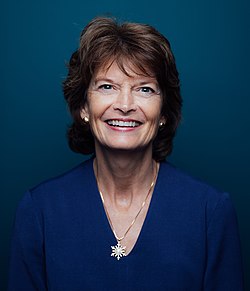 Lisa MurkowskiLisa Ann Murkowski (born May 22Affiliated
 Sergey BrinSergey Mikhailovich Brin is an American computer scientist…Affiliated
 Mitch McConnellAddison Mitchell McConnell III (born February 20Affiliated
 Elon MuskElon Musk is a technology executive whose influence…Affiliated
How the record is sourced and how the score is derived.
The score is formula-derived (Factrail formula v1, version 1.0.0), not an editorial verdict. Read the methodology.
By the Factrail desk · Method: how we source and score · Last reviewed
Dispute a fact on this pageNamed here, or represent someone who is? Request a right of reply.
People and organizations as listed in the Related section of this page; facts, drivers and the pages that name it as listed in the blocks here. Counts, not a rating.