Australia's Rent Trap: Tax Reform Meets Scarce New Homes
By the Factrail desk · Method: how we source and score · Last reviewed
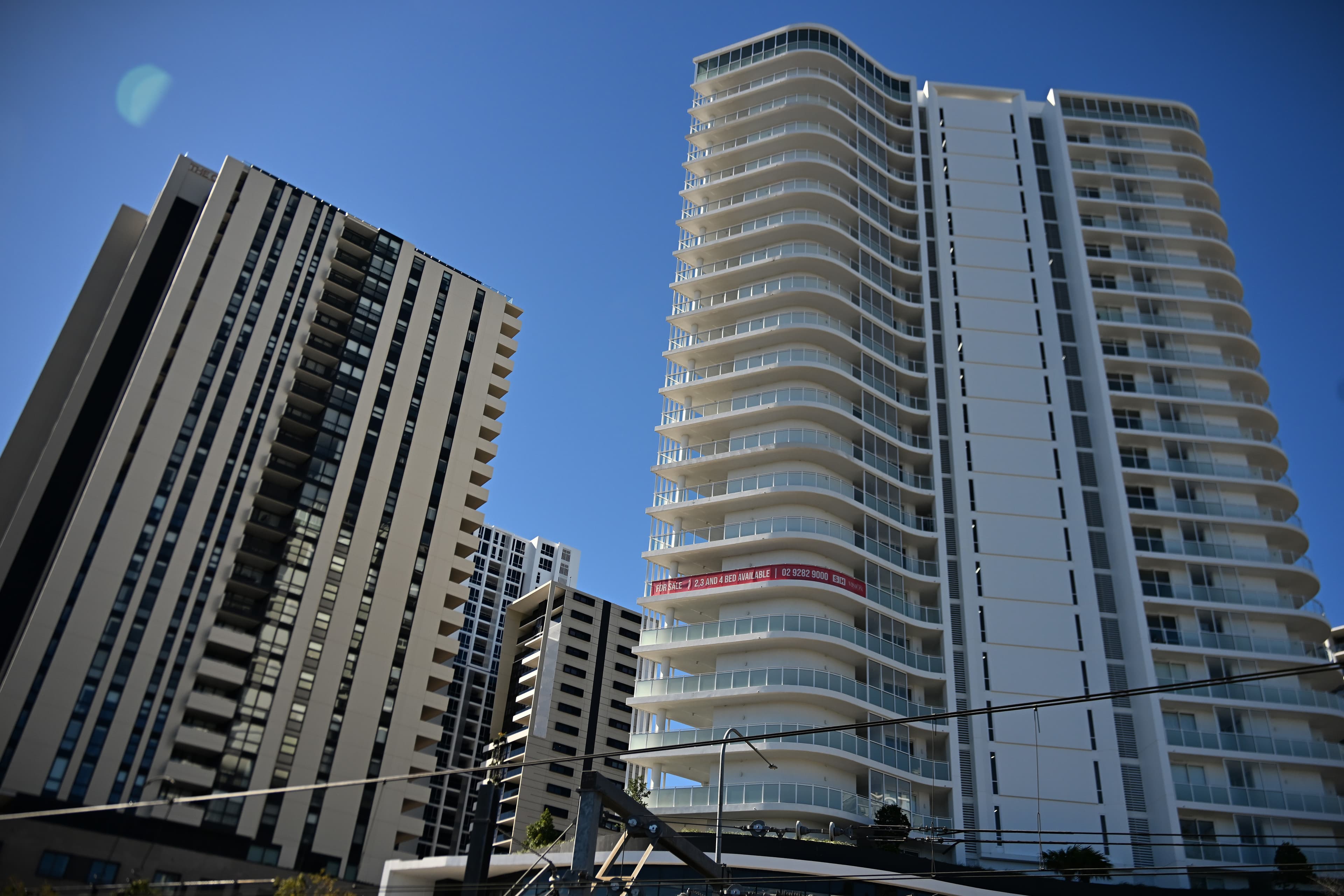
TL;DR
The central result of Australia's housing debate is not the price of a house offered for sale. It is the cost of occupying a home month after month. A household cannot pay its rent with a forecast decline in national property values.
Key graph impact
The article explains graph entities; the causal edges belong to the facts and drivers it links to.
- ArticleAustralia's Rent Trap: Tax Reform Meets Scarce New Homes
- mentionsDriverInflationary Pressure
- strengthensIndicatorGlobal Consumer Price Inflation (annual %)
- ArticleAustralia's Rent Trap: Tax Reform Meets Scarce New Homes
- mentionsDriverCost-of-Living Pressure
- weakensIndicators (4)Unemployment, total (% of total labor force) (modeled ILO estimate)
Strengthens · 80% impact strength
Observed
5.8 annual % change in CPI · 2.3 above the normal line (Dec 2024)
Better than normal5 readings, 2020–2024: rose from 3.3 annual % change in CPI to 5.8 annual % change in CPI.
Moving normal line
- Better
Weakens · 38% impact strength
Observed
4.79% of total labor force · 1.3 above the normal line (2025)
Worse than normal8 readings, 2018–2025: fell from 5.76% of total labor force to 4.79% of total labor force.
Above normal = worse
- Better
Weakens · 31% impact strength
Observed
39.7% · 9.35 above the normal line (2024)
Worse than normal7 readings, 2018–2024: rose from 35.8% to 39.7%.
Above normal = worse
Strengthens · 30% impact strength
Observed
11% of primary-school-age children · 11 above the normal line (2023)
Worse than normalAbove normal = worse · Lag ~12 mo
Article
The central result of Australia's housing debate is not the price of a house offered for sale. It is the cost of occupying a home month after month. A household cannot pay its rent with a forecast decline in national property values. The final week of October brought three distinct signals: the Reserve Bank's 30 October lending numbers showed housing credit still expanding, the Australian Bureau of Statistics reported renewed consumer inflation pressure on 28 October, and its 30 October producer price release showed rising costs in building activity. New reporting on rental markets and investor behaviour added an uncomfortable political test. Lower asset prices and more affordable shelter are different outcomes, and policy can deliver one without delivering the other. The Albanese government is trying to redirect property tax incentives toward new supply. That may be sensible over time. The immediate distribution is harder: tenants face current leases, builders face current financing costs, and owners of established homes hold assets while the market resets. The decisive question is whether tax reform creates occupied additional dwellings faster than it reduces the stock of willing rental landlords.
The first event was the Reserve Bank of Australia's release of September financial aggregates on Friday 30 October. Housing credit rose 0.4 percent in the month and 7.0 percent over a year. Business credit grew 0.9 percent in September and 11.3 percent over a year. These are growth rates for the stock of credit, not direct counts of houses purchased, and the central bank warns against calculating growth from unrevised levels. They nevertheless show that debt remains a major channel through which money reaches property and business investment. A 7 percent annual expansion in housing credit can coexist with falling sale prices if loan volumes, refinancing or outstanding balances behave differently. It also means a sharp change in the rate path can influence both landlords and developers long before a completed building becomes available to rent. Treating credit growth as proof that homes are being built would confuse finance with output. Treating it as irrelevant would miss how refinancing costs enter rents and project feasibility.
The second event was the ABS consumer price release on 28 October. Annual CPI inflation reached 4.3 percent for September, compared with 4.0 percent in August; the trimmed mean was 3.6 percent, up from a revised 3.5 percent. These are economy-wide readings, not a causal estimate of the government's housing tax changes. They complicate the hope that cheaper property listings will quickly translate into easier living costs. If inflation remains persistent, the Reserve Bank's monetary context (opens in a new tab) matters to the price at which a household can borrow and a developer can carry land, labour and materials. Higher financing costs can restrain speculative demand, which helps first-time buyers relative to investors with more leverage. But the same costs can postpone marginal apartment projects. The apparent policy success of suppressing demand may thus reduce near-term transactions while failing to expand the rental stock. That is the core tension the government's headline affordability narrative has to confront.
The third event was the ABS producer price release on 30 October. Final demand prices excluding exports increased 1.1 percent in the September quarter and 3.6 percent over twelve months. Output prices for building construction rose 1.3 percent, driven by non-residential construction. It would be incorrect to attribute the entire building figure to apartment construction or to say that every home builder suffered the same increase. The relevant mechanism is competition for labour, equipment, finance and subcontractors across building types. Developers can receive a stronger incentive to build new homes and still find that the cost of delivery outruns their prospective income. Rising construction input prices raise the rent needed for a project to justify its funding. If governments report approved homes without distinguishing permissions from starts, completions and occupied units, readers cannot see whether reform changes the actual market in which tenants compete.
A further event in this week's reporting was evidence of a split rental market in Sydney. Reporting based on property listings placed the median weekly rent at around A$800 and described substantial increases in many suburbs, but also falls in some local areas. That mixture matters. No single suburb represents the whole city, and asking rents are not always the same as rents actually paid under signed leases. Yet a family facing a renewal notice experiences a real cash cost even if the citywide median conceals offsetting declines. The difference between asking and achieved rents, and between newly advertised leases and continuing tenancies, deserves routine publication. A government can point to falling dwelling prices while renters still face a greater share of wages diverted from food, transport and savings. That household arithmetic is an immediate form of cost-of-living pressure (opens in a new tab), not a rhetorical statistic.
The policy lever is the federal government's 2026 treatment of negative gearing and capital gains tax. Treasury's budget explainer says losses from residential rentals are being confined to residential property income in a reform that favours new properties, while capital gains changes affect gains accruing after July 2027 and certain investments held before the May announcement remain exempt from the negative gearing revision. These differences in dates and asset treatment are central, not fine print. They shape whether an existing investor sells, holds, refinances, upgrades or purchases a new unit. The stated policy ambition is to redirect subsidies toward supply rather than bid up established stock. But a tax incentive cannot itself pour concrete or train electricians. The evaluation therefore needs to distinguish movement of investor money from a net increase in completed homes. Investors may change the type of asset they prefer even if the total supply response is small.
The most politically tempting claim is that reduced demand for established investment properties automatically benefits younger buyers. Some former rental stock may indeed be sold to people who plan to occupy it, enlarging the owner-occupier share of the housing market. For an eligible buyer, that is a real gain. But when a rented unit moves from a landlord to an owner-occupier, the number of physical homes has not increased. The household that buys gains security while the tenant who previously occupied the home may need to move. The net effect on renting depends on the buyer's previous accommodation, whether the tenant also becomes an owner and how many new dwellings are delivered. It is possible for ownership access to improve and rental availability to worsen in the same neighbourhood. This is why distributional gains should be traced by household type rather than recorded as a universal rise in affordability.
On 30 October, reporting on house prices and investor lending suggested a shift toward finance for new homes and a decline in lending against established properties. Those observations support the government's intended direction, but they are not sufficient to claim a durable increase in supply. Loan approval precedes physical construction; construction precedes completion; completion precedes letting. Some projects are cancelled after finance is obtained. Some new properties are sold to owner-occupiers rather than leased. Policymakers should publish the conversion rate along that entire path, cohort by cohort, using comparable definitions and dates. Otherwise a change in tax-driven investment composition can be presented as a building success long before a single additional tenancy is available. The gap between announcements and delivered homes is where both political credit and financial risk accumulate.
Developers and renters respond to different horizons. A renter facing a twelve-month lease renewal needs help now, while a developer of a multi-storey site may face years of site preparation, planning consent, design, procurement and construction. There is no contradiction in supporting long-term tax reform and demanding short-term protection against displacement. The essential distinction is between the transfer of cash today and the expansion of productive housing capacity tomorrow. A subsidy paid to an investor may be capitalised into land prices. A grant for enabling infrastructure may raise the eventual number of homes, but only if roads, utilities, approvals and builders arrive together. Anthony Albanese (opens in a new tab) is politically responsible for setting the federal incentive structure; state governments and councils retain crucial control over planning and delivery. Neither level can plausibly claim sole credit or shift every failure to another.
The record of construction also needs care. At their October ministerial meeting, federal and state governments pointed to more than 248,000 homes under construction and improvements in completions, while describing an A$2 billion infrastructure fund designed to unlock future land. Those were reported earlier in October and are background rather than separate events from the final week. Under-construction stock is a pipeline, not a completed supply measure. An elevated pipeline may mean progress, but it can also signal lengthy building times if more units enter the pipeline than leave it. The correct denominator is required housing demand by place and household type. A national target of homes over several years may be achieved in aggregate while the particular suburbs that attract workers and students remain inaccessible. Public accounts should measure completed dwellings, location, affordability and actual occupation against the target.
Who benefits from the new structure is not a single class. A first-time buyer with stable income and a deposit may benefit from weaker competition for established dwellings. A developer of genuinely new homes may gain a more attractive investor pool, provided sale prices and expected rents still cover costs. A patient institution financing rental buildings may secure investment opportunities if short-term sellers retreat. The federal treasury may gain revenue or reduce concessions depending on realised taxable gains and transitional exemptions; a projected figure is not the same as cash received. Who pays is equally mixed. A leveraged landlord with higher debt service faces reduced margin, but may offset some cost through rent only where tenants can afford it and competing supply is tight. Tenants with weak bargaining power can bear a near-term cost through higher asking rents, mobility barriers and bond requirements.
Some property industry critics warn that changes in investor taxation can reduce private rental supply. That is a serious counterargument, not a mathematical law. The result depends on whether investors withdraw finance entirely or switch to newly built dwellings; how much public and community housing arrives; and whether owner-occupiers take the place of renters without adding new households. In a tight market, reduced existing-rental listings can raise local competition. In a more elastic market, tax reform plus planning change can channel money into additional construction. Both mechanisms are plausible and can occur at different times. The strongest defence of reform is that established homes do not become additional homes each time investors trade them. The strongest criticism is that families cannot occupy a promised future building, and transitional pressure must be measured rather than dismissed.
The role of credit institutions is often underplayed. Banks price loans using repayment capacity, collateral value, capital rules and funding costs. Lower headline property prices do not guarantee easier credit access for households whose wages are flat or whose deposit is small. Nor does a tax reward for new building ensure that banks fund a project when construction cost risk is high. The benchmark should include the spread between new housing loan rates, investor rates and rental development finance, not simply the central bank's cash rate. Better competition in finance could ease the passage from approved projects to completed units. But easier credit without more land and construction capacity may simply sustain prices. Cost-of-living analysis therefore needs both a financial and a real-economy lens.
The strongest policy package would separate objectives that are too often blended. Ownership access is about deposits, income and competition for listings. Rental affordability is about housing available at a price households can pay. Construction productivity is about the amount of completed floor space produced per worker, dollar and month. Social housing is about supply insulated partly from private-market returns. These goals overlap, but one instrument rarely meets all four. Governments should disclose which groups each reform is designed to assist and the expected time before that help reaches them. That would make it harder to use a fall in national sale prices as an answer to a question about rents in Sydney, or to use a high count of planned homes as evidence that a person sleeping in temporary accommodation has housing now.
What it moves
The indicators have different directions and different degrees of certainty. Annual housing credit growth is up to 7.0 percent in September on the RBA series; that is an observed financing trend, not proof of increased supply. Headline inflation is up to 4.3 percent and the trimmed measure to 3.6 percent in the ABS September release, raising pressure on household budgets and on future rate expectations. Quarterly final-demand producer prices are up 1.1 percent and the annual measure up 3.6 percent, a warning about cost conditions rather than a specific apartment price index. Asking rents in reported Sydney markets are under upward pressure, with wide local variation; signed lease data are needed for a stronger conclusion. A sustained increase in new rental completions would push vacancy rates up and rent growth down relative to demand, but that outcome has not been established by this week's releases. Falling existing-home prices could improve purchase ratios for qualified buyers while leaving rent-to-income ratios higher for tenants.
The attribution problem demands discipline. The inflation driver is influenced by energy, goods, services, wages and expectations beyond housing tax rules. The credit figures reflect national demand and lending decisions, not one federal intervention. Rental prices respond to local population change and available stock, as well as taxes. It would be unsound to describe every rental increase as caused by the May budget, or every completed house as caused by a tax concession. A credible assessment would compare places with different investor exposure, control for construction trends and report uncertainty. That is also how public officials should be assessed: by the portion of the chain they actually control, with evidence separating enacted policy, committed funds, approvals, starts, completions and occupied homes.
The next six months offer clear tests. Monitor November building approvals, housing starts and completions, investor loan commitments separated into new and established dwellings, advertised vacancy rates, and lease renewal inflation. Publish the share of tax-favoured new units that actually become long-term rental homes. Watch the relationship between construction output prices and new-home sale prices: if costs rise while projects become less profitable, even strong investor demand may not generate physical supply. Finally compare housing costs with wage growth for renters at the lower end of the income distribution. The public benefit of reform is not an investor portfolio changing composition. It is a household finding a safe, stable dwelling at a manageable cost without crowding out other necessities.
Sources
- Reserve Bank of Australia — Financial Aggregates September 2026, 30 October (opens in a new tab)
- Australian Bureau of Statistics — Price indexes and inflation, 28–30 October releases (opens in a new tab)
- Australian Government Treasury — Budget 2026–27 Negative Gearing and Capital Gains Tax Reform (opens in a new tab)
- The Daily Telegraph — Sydney rents surge past Treasury budget forecasts, 31 October (opens in a new tab)
- News.com.au — New data reveals how housing tax shake-up is changing the market, 30 October (opens in a new tab)
- Treasury — Joint Ministerial Meeting on Housing Supply and Affordability, 16 October (opens in a new tab)
- NAB — Residential Property Survey Q3 2026, 14 October (opens in a new tab)
- Housing Industry Association — Trades shortages persist, 22 October (opens in a new tab)
Evidence
The sources this article cites, claim-bearing material first.
- rba.gov.au · rba.gov.au/statistics/frequency/fin-agg/2026/fin-agg-0926.html
- abs.gov.au · abs.gov.au/statistics/economy/price-indexes-and-inflation
- budget.gov.au · budget.gov.au/content/factsheets/download/tax-explainers-negative-gearing-capital-gains-tax.pdf
- treasury.gov.au · treasury.gov.au/media-release/meeting-communique-building-ministers-october-2026
More analysis
Ranked by shared facts, drivers and people — never by publication date alone.
Articles12
- Carney’s Trade Fight: Who Pays in Jobs, Currency and Housing?Shares the driver: Inflationary Pressure · 31 October 2026
- Four Migration Systems, One Fiscal Test: Work, Shelter and Asylum This AutumnShares the driver: Cost-of-Living Pressure · 31 October 2026
- Albanese’s Inflation Squeeze: Rates or Budget Savings?Shares the driver: Inflationary Pressure · 31 October 2026
- Housing Caps Without Homes: Canada and AustraliaShares the driver: Cost-of-Living Pressure · 31 October 2026