Canada's Trade Data Task Force Faces a Test Beyond Paperwork
Published Factrail
Summary
Canada has created a new forum to confront a problem that rarely attracts the attention given to tariffs or exchange rates: the cost of repeatedly submitting the same commercial information to different public agencies.
Report
Canada has created a new forum to confront a problem that rarely attracts the attention given to tariffs or exchange rates: the cost of repeatedly submitting the same commercial information to different public agencies. On October 30, Transport Minister Steven MacKinnon announced that the Trade Digitalization Task Force had begun work, following its first meeting on October 29. Government and business representatives will examine how shipment data can move securely across firms, ports and departments. The initiative offers potential savings, but its creation does not establish that any shipment has become faster or that public spending on a future information system has been approved.
The signature idea is a Tell Us Once approach. Companies would supply information once and, subject to authorization, the same information would be available to relevant federal bodies rather than being entered repeatedly. This sounds like a small administrative reform until the scale of the physical trading system is considered. Carriers, customs brokers, retailers, manufacturers and exporters rely on records that must match cargo, ownership, destination and compliance requirements. A mismatch can cause delays, duplicated work and uncertainty about whether goods are cleared to move. Reducing unnecessary repetition could help smaller firms that lack dedicated compliance departments.
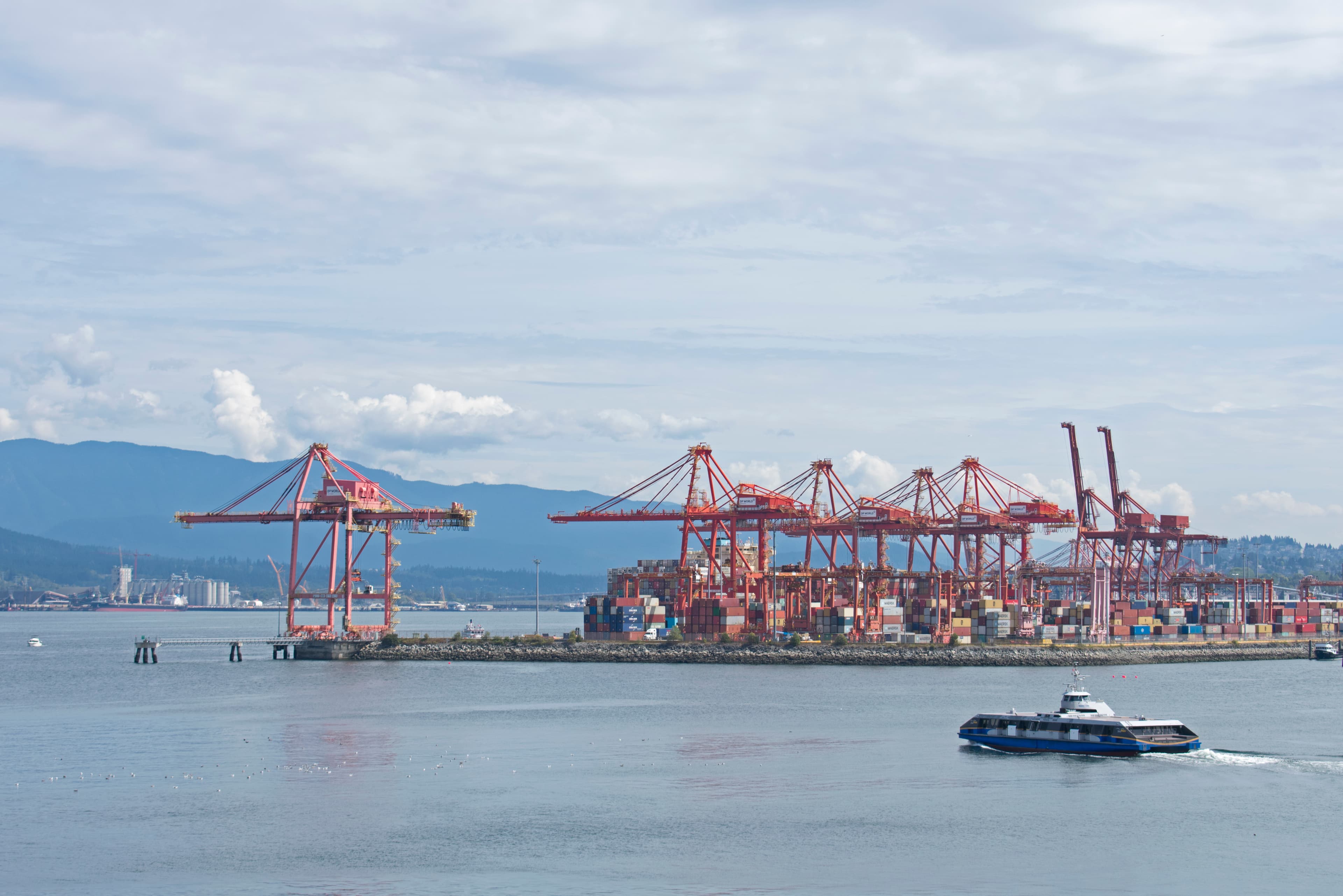
The task force's membership matters because no single minister controls every stage of the supply chain. It includes the Canada Border Services Agency, Finance Canada, Global Affairs Canada and business representatives from air travel, railways, trucking, ports, shipping, retail and industry. Among named participants are Canadian National Railway, Canadian Pacific Kansas City, Air Canada, DP World, the Canadian Federation of Independent Business, the Canadian Trucking Alliance and ports in Vancouver, Montréal and Halifax. A joint table can identify common technical and legal barriers, but the varied membership also creates competing interests over who owns data, who pays integration costs and whose systems become the standard.
The larger policy objective is diversification away from excessive dependence on the United States. Trade Minister Maninder Sidhu connected the task force to Canada's ambition to double exports outside the United States over the next decade. Global Affairs Canada's strategy says that expansion of non-US exports is a central economic goal. Yet digital documentation cannot create foreign demand, new maritime capacity or a trade agreement by itself. It can reduce a friction cost once the commercial route exists. The task force is therefore best judged as an enabling measure whose value must be demonstrated through shorter release times and lower processing expense.
There is a relevant numerical baseline. Statistics Canada's August 2026 merchandise trade release reported exports of C$77.9 billion, up 2.5% from July, and imports of C$73.7 billion, down 2%. The monthly goods surplus was C$4.2 billion. Those figures reflect volumes, prices, currency effects and trading conditions, not the new task force, which had not yet started. The same release reported that Canada's exports to countries other than the United States fell 8.5% in August and that their share of total exports was 30.2%, down from 33.9% the previous month. One monthly change is not a long-run verdict, but it shows how demanding the diversification goal is.
Global Affairs Canada's State of Trade 2026 report provides an additional distinction. Non-US trade diversification in the previous year was supported in part by exceptional movement in gold and energy shipments. A strong aggregate export value can conceal concentration in commodities or a temporary price movement. If the new digital programme works, evaluators should track how many firms enter new export markets, whether smaller exporters participate and whether recurring administrative costs fall. Celebrating a growing export total while ignoring the number of firms benefiting would miss the policy's distributional effect.
The government also points to physical investments: a C$5 billion Trade Diversification Corridors Fund and the longer-running C$4.6 billion National Trade Corridors Fund, as described in its October announcement. These are distinct policy instruments. Corridors funding targets infrastructure such as transportation gateways; the task force targets how information moves around that infrastructure. A port can have modern software but still suffer congestion from scarce rail capacity, labour disputes or weather. Conversely, a new terminal can be underused if documents remain slow and incompatible. The combined value depends on both physical reliability and data systems that actually communicate.
The most obvious winners from a functioning system are exporters and importers who spend fewer staff hours on duplicated submissions. Freight carriers could reduce idle time and improve planning. Customs and other federal authorities might obtain more consistent records and allocate inspection effort more efficiently. Consumers could benefit if measurable efficiency gains reduce delivered prices, but that is conditional: any savings may instead be retained by firms, absorbed by implementation expense or offset by unrelated transport costs. Suppliers of software and consulting services may gain contracts, making open procurement, interoperability and auditability important public questions.
The costs and risks deserve equal attention. A secure national data-sharing model needs access permissions, reliable identity checks, system uptime and methods for correcting inaccurate information. Greater reuse makes one faulty record capable of traveling to more departments unless corrections propagate promptly. Small businesses may face new technology requirements and subscription costs if the chosen standards favour large operators. Public agencies need clear rules distinguishing records necessary for compliance from records that should not be shared. Strong privacy and cybersecurity arrangements are not optional extras: they are conditions for the promised reduction in duplicated forms.
What it moves
The first indicator should be average time to release and move shipments through relevant border processes, split by mode and by shipment type. The second is the administrative cost per declaration or consignment, ideally measured for small and large firms separately. Third is the frequency of data re-entry, corrections and duplicate submissions. Fourth is the share and value of Canadian exports going to markets outside the United States, measured over several years and interpreted alongside prices, volume and exchange rates. Fifth is the reliability of the system, including outage hours and documented security incidents. The task force itself has not yet reported improvements to any of these measures.
As Prime Minister Mark Carney (opens in a new tab) pursues economic diversification, the fiscal question is whether future digital procurement saves more than it costs. For the driver fiscal policy sustainability (opens in a new tab), net savings require transparent operating budgets and a realistic forecast of maintenance and replacement expense. For cost-of-living pressure (opens in a new tab), the relevant test is whether any lower logistics costs reach retailers and households rather than appearing only in administrative performance charts. A better trade system might improve competitiveness without delivering an immediate reduction in consumer prices.
This policy also intersects with cross-border tariffs. Administrative simplification cannot neutralize a tariff imposed by another government. Even where trade documentation improves, exporters still face exchange-rate risk, standards compliance and transport capacity constraints. The Bank of Canada (opens in a new tab) can respond to the wider economic impact of trade changes through monetary policy but has no direct authority to design the federal data-sharing standard. Separating these institutions avoids presenting every government economic announcement as the same policy lever.
Next decisions
The task force has to identify specific forms or data sets that can be submitted once, name the agencies that could legally reuse them, estimate costs and publish a staged implementation calendar. It should explain whether participation will be optional, who can see shipment data and how error corrections will be made. Businesses need a predictable migration path so a promised simplification does not temporarily require both old and new submissions. The next Statistics Canada release on September trade, scheduled for November 4, will be useful context for the diversification debate but cannot measure a reform announced days earlier. Real evidence will arrive only after procedural changes go live and their results are published.
Sources
-
Transport Canada — Canada launches new task force to make trade faster, simpler and more efficient (opens in a new tab), October 30, 2026.
-
Statistics Canada — Canadian international merchandise trade, August 2026 (opens in a new tab), October 6, 2026.
-
Global Affairs Canada — Diversifying Canada's trade (opens in a new tab), accessed October 31, 2026.
-
Global Affairs Canada — State of Trade 2026 (opens in a new tab), 2026.
-
Global Affairs Canada — 2026–27 Departmental Plan (opens in a new tab), 2026.
-
Government of Canada — Bill C-39 introduction and Tell Us Once approach (opens in a new tab), September 2026.
-
Transport Canada — Port of Vancouver trade diversification announcement notice (opens in a new tab), October 30, 2026.