Europe's Ukraine Talks Meet America's Midterm Test
Published Factrail
Summary
Washington plans Ukraine-Russia talks after the US midterms as European allies face hard questions on guarantees, weapons procurement and the cost of peace.
Report
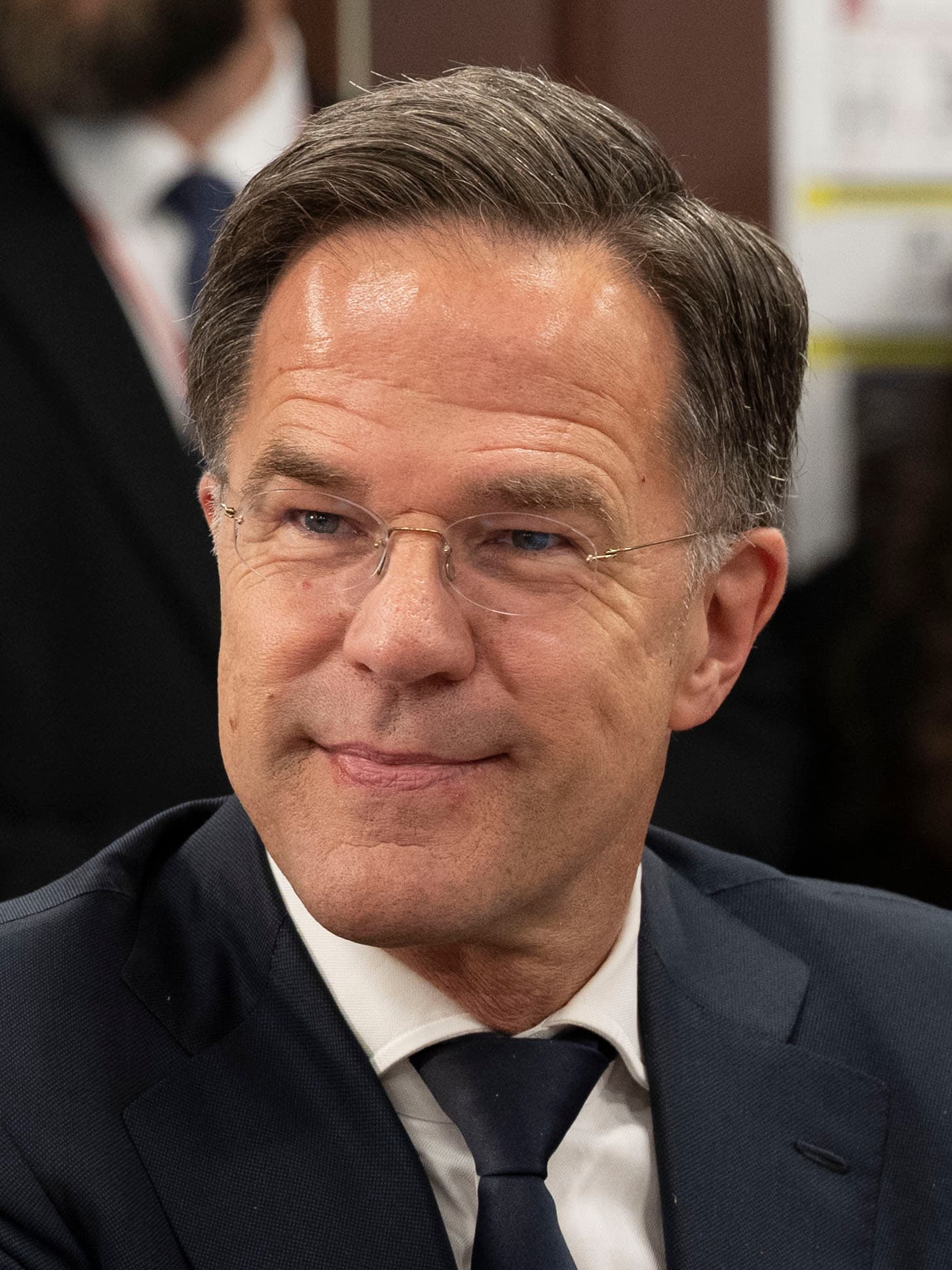
 Cover: US Department of Defense / Wikimedia Commons, public domain.
Europe's Ukraine Talks Meet America's Midterm Test
Washington's announcement of new Ukraine-Russia talks in Abu Dhabi on November 10 and 11 has put a concrete deadline on Europe's security diplomacy just as Americans vote in their November 3 midterms. A Reuters report on November 2 said US envoy Steve Witkoff described a trilateral meeting, preceded by discussions in Brussels with France, Germany, Britain, the EU and NATO. The people most immediately affected are Ukrainians whose security depends on the terms eventually negotiated. The potential beneficiaries are governments that can secure credible security guarantees and firms supplying necessary military equipment. The risk falls on taxpayers financing arrangements that prove unenforceable, and on Ukraine if diplomatic urgency outpaces actual deterrence.
The timing matters but does not prove any causal election bargain. Congressional composition after November 3 could change the incentives around further appropriations, oversight and sanctions legislation. The president's diplomatic authority and the legal powers of Congress are different instruments. A change in either chamber does not itself cancel approved European aid or determine negotiating positions in Abu Dhabi. Equally, an election headline cannot assure Kyiv that weapons, intelligence, air defence or financial support will arrive on a fixed schedule. Those commitments need budgets, legal authorities, procurement contracts and delivery records.
Reuters reported that Witkoff and Jared Kushner were expected to represent Washington, following prior discussions involving Russia. The planned Brussels meetings were to address security guarantees for Ukraine, Europe's security framework and reconstruction. These were stated diplomatic plans, not an announced settlement. Ukraine and Russia remained far apart on key terms, and an invitation to talks should never be written as though the governments agreed to borders, ceasefire monitoring, troop deployments or sanctions relief. Each would require separate evidence. An announced meeting may lower diplomatic uncertainty without changing the danger faced by civilians today.
European governments possess their own instruments independent of the American electoral result. On April 23 the Council of the EU agreed to a €90 billion Ukraine support loan covering 2026 and 2027, with an indicative €30 billion for economic support and €60 billion for military assistance. The arrangement is financed through EU borrowing backed by the EU budget. Its stated repayment concept relies on war reparations owed by Russia, an uncertain future source rather than cash already collected. The Council's financial assistance record distinguishes amounts mobilised and disbursed. Those differences are important: headline commitments are not interchangeable with bank transfers or completed military deliveries.
Another October decision shows the financing mechanism more concretely. On October 26 the Council adopted measures worth around €4.9 billion under the European Peace Facility, chiefly reimbursements for military aid already delivered by member states and additional military training support. Reimbursement is not the same as a new weapon arriving on Ukraine's front line on that date. European leaders can fairly claim that the step supports military assistance, but the chronology should identify when equipment was actually supplied and when the reimbursement was approved. A voter trying to assess who pays must also know which national treasury originally incurred the expense.
The industrial question is more difficult than budget speeches suggest. The EU's SAFE programme enables up to €150 billion in loans for common defence procurement, while NATO's Hague commitment calls for allies to invest five percent of GDP in core defence and security-related spending by 2035. NATO separates a minimum 3.5 percent for core defence capabilities and up to 1.5 percent for wider security. Those are future commitments with distinct categories, not proof that factories have expanded output. A German, Polish or British supplier benefits from additional orders only when procurement terms, manufacturing capacity and deliveries support the claim. The NATO deterrence driver (opens in a new tab) should ultimately be evaluated against force readiness rather than announcements.
The leaders handling these choices include Mark Rutte (opens in a new tab), NATO's secretary general, and European governments led by figures including Friedrich Merz (opens in a new tab) and Keir Starmer (opens in a new tab). Their public positions can shape negotiations but do not make them interchangeable with parliamentary budget votes or the Council's formal decisions. The alliance's own statements recognise that spending must translate into capabilities such as air and missile defence, logistics and production. A peace framework would similarly need monitoring, enforcement and arrangements for breaches. Without those details, the language of guarantees can conceal quite different risk allocations.
An important counterargument is that talks can save lives even before comprehensive guarantees are drafted. Diplomatic contact can support prisoner exchanges, humanitarian arrangements and limited de-escalation. That possibility deserves weight. The opposite risk is that a rushed framework shifts military or financial burdens onto European governments while Russia retains room to resume attacks. Neither risk is an established outcome of the newly announced meeting. It is an analytical scenario that should be judged against signed texts, troop dispositions, sanctions mechanisms and independent monitoring. The Ukraine war driver (opens in a new tab) is a continuing mechanism, not a single news event to be declared resolved when negotiators sit down.
What it moves: expected European defence expenditure, Ukraine support disbursements, procurement delivery schedules, fiscal borrowing costs and indicators of civilian security. The immediate observable signals are whether Brussels consultations happen, who attends the November 10-11 Abu Dhabi meeting and whether an agreed document emerges. Later signals are appropriations, NATO capability reporting, EU disbursement tables and independently verified changes in attacks. The European Commission (opens in a new tab) and member states will face scrutiny over both financial additionality and political commitments.
For Europeans watching the US elections, the correct question is not whether one projected American winner guarantees peace or abandonment. It is which specific legal and financial levers the next Congress can exercise, what support Europe already controls, and what the proposed negotiation commits each party to do. A diplomatic meeting is a test of political will. The welfare outcome is determined later, through enforceable security, fewer casualties, functioning civilian services and accountable spending. Confusing those stages would turn a complicated and consequential security story into election-night speculation.
Sources
- Reuters, November 2 US-mediated Ukraine talks announcement (opens in a new tab)
- Council of the EU, Ukraine financial assistance and €90bn loan (opens in a new tab)
- Council of the EU, October 26 European Peace Facility decision (opens in a new tab)
- Council of the EU, Ukraine military support and SAFE procurement (opens in a new tab)
- NATO, defence expenditures and five-percent commitment (opens in a new tab)
- NATO, Hague Summit Declaration (opens in a new tab)
- NATO, July 2026 European defence investment update (opens in a new tab)