
David Gregosz
David Gregosz (born 10 October 1983 in Leinefelde, in the Eichsfeld) is a German politician of the Christian Democratic Union and a member…
- Facts0
- Drivers0
- Indicators0
David Gregosz (born 10 October 1983 in Leinefelde, in the Eichsfeld) is a German politician of the Christian Democratic Union and a member…
David Gregosz (born 10 October 1983 in Leinefelde, in the Eichsfeld) is a German politician of the Christian Democratic Union and a member of the Bundestag. He has sat in the 21st electoral term since 25 March 2025 for the CDU/CSU group, having been returned on the state list of Thuringia after standing in constituency 188, Eichsfeld – Nordhausen – Kyffhäuserkreis. The Bundestag lists his occupation as entrepreneur. Its biography, which rests on the member’s own information, records that he is Roman Catholic, married and the father of two children.
He attended the Marie-Curie-Gymnasium in Worbis and took a combined course in economics and politics at the Philipps University in Marburg. From 2013 to 2017 he headed the Konrad Adenauer Foundation office in Santiago, Chile; from 2017 to 2020 he coordinated the foundation’s international economic-policy work in Berlin; and from 2020 to 2025 he headed its office in Warsaw. Since 2020 he has also been a shareholder and authorised signatory of Luxotronic Werk 2 GmbH in Hauröden, in the Eichsfeld. In the disclosures required of members he lists a right to return both to that company role and to the foundation post.
Gregosz joined the CDU in the Eichsfeld in 2007. Since 2024 he has been deputy district chairman of the CDU Eichsfeld and a member of the board of the local branch of the Mittelstands- und Wirtschaftsunion. On 16 December 2024 the CDU associations of Eichsfeld, Nordhausen and the Kyffhäuserkreis chose him as their candidate in constituency 188; the party said he received every vote of the members present. At the federal election of 23 February 2025 he took 27.8 percent of the constituency’s first votes, behind Christopher Drößler of the Alternative for Germany on 39.5 percent. The Federal Returning Officer’s final figures for the same constituency are 45,728 CDU first votes (27.8 percent) and 65,033 for the AfD (39.5 percent), with turnout of 80.3 percent among 206,544 eligible voters. He entered parliament on the Thuringia state list rather than by winning the district.
In the Bundestag he is a full member of the Interior Committee and of the Committee on European Union Affairs, and a deputy member of the Committee on Labour and Social Affairs and the Committee on Economic Affairs and Energy. He is also a deputy member of the German delegation to the Parliamentary Assembly of the Council of Europe. A Bundestag list dated 11 September 2025 names him among the ordinary members of the board of trustees of the Federal Agency for Civic Education. On 13 November 2025 the Bundestag elected him, together with Joachim Ebmeyer and Stephan Mayer, to the advisory board of the Stiftung Datenschutz. The chamber’s register of members’ outside roles lists him as deputy chairman of Asienbrücke e.V., a Berlin association concerned with relations with Asia.
David Gregosz was born on 10 October 1983 in Leinefelde, in the Eichsfeld of the German Democratic Republic, now in Thuringia. The Bundestag biography, drawn from members’ own statements, lists him as Roman Catholic, in a district the local chronicle describes as a former Mainz exclave restored to Catholicism after 1574. Leinefelde’s municipal history records that the inner-German border crossed the Eichsfeld from 1961, and that the town was still small and largely Catholic—2,559 people in 1960, about 2,000 of them Catholic—before the GDR’s Eichsfeld Plan industrialized it. A cotton-spinning mill begun in 1961 employed about 4,400 people by 1977. On 7 October 1969, with about 6,200 inhabitants, Leinefelde received town rights; the chronicle says the SED intended it as the first “socialist city” of Bezirk Erfurt in a traditionally Catholic area.
Aerial view of Leinefelde’s Südstadt, the prefabricated housing district built as the town grew into an industrial centre in the Eichsfeld.
In a self-description on Abgeordnetenwatch, Gregosz wrote that he was six when the Berlin Wall fell, and that German unity offered “unendliche Chancen in einem freien Land” (“endless opportunities in a free country”). He turned six on 10 October 1989; Leinefelde’s chronicle says that on 9 November about 10,000 people were at a peace service and candlelight procession when news came that the border had opened. Leinefelde and Worbis were still separate towns during his school years. On 16 March 2004 they merged with Breitenbach and Wintzingerode to form Leinefelde-Worbis. The Bundestag biography names the Marie-Curie-Gymnasium in Worbis as his school, without an Abitur year; the school calls itself the Staatliches Gymnasium „Marie Curie“ Worbis.
He then took a Doppelstudium in economics (Volkswirtschaftslehre) and politics at the Philipps-Universität in Marburg, Hesse. The Bundestag entry and a February 2025 note in the Eichsfelder Nachrichten give that combination but no titles or dates. A 2010 author biography in 60 Tahun Ekonomi Pasaran Sosial—a Malay volume on the social market economy published by Institut Kajian Dasar with the Konrad Adenauer Foundation—says he received a diploma in political science in 2008 and a bachelor of science in economics in 2009. The CDU/CSU group styles him “Dipl.-Pol., Bs. Sc.” Marburg’s 1995 regulations made the Diplom-Politologe a first professional degree of nine semesters’ standard length, with economics or business as the required second subject, or law, sociology or geography plus another elective. The economics bachelor, a year later, was a separate degree, which is what the “double course” wording records.
That 2010 note says he was a student assistant at two Marburg chairs, worked with members of parliament in Brussels and Berlin, and wrote on the German electricity market and the durability of the social market economy. It dates foundation employment, not a scholarship, to the same period: he had already worked with the Konrad Adenauer Foundation and, from the start of 2009, was a researcher in its Hauptabteilung Politik und Beratung in Berlin, coordinating fundamental questions and Ordnungspolitik. The Bundestag biography likewise omits any Begabtenförderung grant.
David Gregosz worked for the Konrad Adenauer Foundation (Konrad-Adenauer-Stiftung, KAS) from at least 2012 until he entered the Bundestag in 2025. The biography on the Bundestag website, which the parliament notes rests on members’ own information, lists three posts: head of the foreign office in Santiago, Chile, from 2013 to 2017; coordinator for international economic policy in Berlin from 2017 to 2020; and head of the foreign office in Warsaw from 2020 to 2025. Author notes published while he held the Warsaw job narrow the months to October 2013–January 2017 in Santiago, at an office with an economic-policy focus; January 2017–August 2020 coordinating the foundation’s international economic-policy work; and the Warsaw directorship from September 2020. His mandatory disclosure of pre-parliamentary employment lists the Konrad-Adenauer-Stiftung e.V. in Berlin, the post of head of a foreign office, and a right to return.
The KAS, founded in 1964, is the political foundation aligned with the Christian Democratic Union. Under the Political Foundations Financing Act of 19 December 2023 it is legally and factually independent of that party, must keep its distance from it, and acts on its own responsibility. They are not government implementing agencies. Since the 1960s they have run partner projects aimed at democracy, the rule of law, and a market economy, in Africa, Asia, and Latin America and, after 1989, in Central and Eastern Europe; the foundations design the projects, which ministries then finance. In 2017 more than 90 percent of the six foundations’ income was public, chiefly from the Federal Ministry for Economic Cooperation and Development for development work, with further money from the Federal Foreign Office, the interior ministry, and the education ministry. Citing the foundation’s 2022 annual report, the Bundesrechnungshof noted that the KAS described about 100 foreign offices and projects in more than 120 countries, usually with local non-governmental partners. Its communication of 21 January 2025, on BMZ funds for 2018–2023, found that in 2020 the KAS assigned €71.6 million from the ministry’s foundation title to foreign-office projects and recorded €110.2 million in BMZ funds altogether. Projects in non-ODA countries, including Chile, plus one assigned to Russia, came to €17.5 million; the auditors also said 16 percent of that year’s BMZ funds went to non-ODA countries, against the budget note then in force.
By August 2012, before Santiago, he was already coordinator for international economic policy in the department for European and international cooperation. His Analysen & Argumente paper “Wirtschaftspolitische Megatrends bis 2020” was a discussion brief on consolidation, new economic centers, population, resources, and digitalization.
From October 2013 to January 2017 Gregosz headed the Santiago office; the Bundestag entry gives those years without the months. Chile was an early field for the German foundations. A 2002 study in Aus Politik und Zeitgeschichte records the Cold War charge that their educational work had contributed to the 1973 Chilean coup, and treats it as polemic rather than a finding.
The office was still publicly linked to Chile’s Christian Democrats while he was there. In January 2015 El Mostrador reported that former finance minister Andrés Velasco had told prosecutors his Plural foundation had received money from foreign foundations, “such as the Konrad Adenauer,” and described the foundation as known for financing Christian Democratic activities. The German-language weekly Cóndor later wrote that Andreas Klein, who applied for the Santiago directorship in 2016 and led the office for six years until 2022, found cooperation with the Chilean Christian Democrats still in the foreground when he arrived. Chile stayed on the project list after Gregosz left. The 2025 audit includes it among non-ODA countries where the KAS still booked BMZ-funded projects in 2020, and notes that on 16 November 2023 the Bundestag’s budget committee asked the BMZ, the Foreign Office, and the finance ministry to agree a long-term division of responsibility for foundation work in countries such as Chile.
In January 2017 he returned to Berlin as coordinator of the foundation’s international economic-policy work, the desk named on his 2012 byline, and stayed until August 2020. The Bundestag biography records the same years. The Federal Audit Office places that department over the foundation’s development projects: staff in Germany support the employees who represent the projects in the foreign offices. What is publicly visible of the coordinator’s job is that kind of discussion paper, not the management of a country office.
From September 2020 Gregosz headed the Warsaw office; the Bundestag biography carries the posting through 2025. The office opened at the end of the Cold War. Bernhard Vogel, then the foundation’s chairman, told Deutsche Welle that on 10 November 1989 he opened its first office on Warsaw Pact territory, in Warsaw, during Helmut Kohl’s visit to Poland. Kohl returned to Berlin after the Wall opened on 9 November, so the inauguration went ahead without him and without the Polish prime minister.
The post mixed representation, contact with Polish institutions, and comment on German-Polish relations. On 22 June 2021 the Polish Ombudsman Adam Bodnar received him as the foundation’s new head in Poland; the official note says they discussed non-governmental organizations and European integration. In July 2022 Tygodnik Powszechny printed a greeting to Father Adam Boniecki on his 90th birthday, signed by Gregosz as director with the team in Poland. On 25 February 2022 the Thüringer Allgemeine described him as working for the Adenauer Foundation in Warsaw and reported his view that concern was growing in Poland that the war could spread. On 13 December 2022 he and Daniel Lemmen published a t-online guest essay arguing that German-Polish disputes — a Patriot air-defense offer, a tank ring-exchange, defense spending, and campaign rhetoric from Law and Justice — worked to Vladimir Putin’s advantage. The piece places both authors with the foundation’s Poland office in Warsaw and is marked as their own view.
The Bundestag lists David Gregosz’s occupation as entrepreneur. In the biographical note, which the parliament says rests on members’ own statements, he reports that since 2020 he has been a shareholder (Gesellschafter) and a holder of commercial procuration (Prokurist) of Luxotronic Werk 2 GmbH in Hauröden, in the Eichsfeld district of Thuringia.
The firm is a GmbH entered at the Amtsgericht Jena on 28 May 2020 under HRB 516936, with articles of 28 April 2020, share capital of €25,000 and its address at Honigäcker 1 in Hauröden, a locality of Am Ohmberg. Its registered object is the manufacture and sale of its own or customer-specific electronic and electrotechnical products, in particular populated printed-circuit boards, cables, subassemblies and end devices. Krystof Gregosz, of Brehme, is named sole managing director. David Gregosz, then recorded as resident in Berlin, received sole procuration (Einzelprokura), including authority to sell and encumber land, a power the Commercial Code requires to be granted expressly. A register-data site gives that May 2020 notice as the only published announcement and as the last change it records; register courts stopped publishing such notices in August 2022. Filings compiled by a commercial-data service put the 2023 balance-sheet total at €424,034 and class the firm as a small maker of electronic components. The holding is in Werk 2, not in Luxotronic GmbH (Jena HRB 405697) at the same address, whose 2021 entry set its object as operating photovoltaic installations under managing director Hans-Jürgen Riehn.
The stake and the procuration ran alongside his post at the Konrad Adenauer Foundation. The biography dates both the company role and his direction of the foundation’s Warsaw office from 2020, the Warsaw post ending in 2025.
The Members of the Bundestag Act requires notice to the President of the Bundestag, within three months of taking the seat and of any later change, of the last pre-mandate occupation, of any right of return, and of any company holding above 5 percent. Notifiable income is published to the cent. For paid work beside the mandate that duty applies above €1,000 in a month or, if not, €3,000 in a year; income from a notifiable shareholding must also be stated.
For the 21st Bundestag, “Gesellschafter und Prokurist, Rückkehrrecht” at Luxotronic Werk 2 GmbH, Am Ohmberg, is published under professional activity before membership. The same category lists “Leiter des Auslandbüros, Rückkehrrecht” at the Konrad Adenauer Foundation in Berlin. The shareholding appears again under participations in companies. Neither Luxotronic line gives a euro amount, and the page lists no paid activity beside the mandate and no corporate-board seat at the firm. Abgeordnetenwatch copies the same items, recorded on 25 July 2025, also without an income figure.
Rückkehrrecht records whether a right to resume the previous activity exists after the mandate. It is distinct from dismissal protection under section 2(3) and from civil-service reinstatement; the publication gives no contractual terms. Both the foundation post and the role of shareholder and Prokurist are notified as pre-mandate activities with such a right, while the equity interest remains disclosed as a holding during the mandate. The percentage is not published; the participation category is the one used for stakes above 5 percent.
David Gregosz has been a member of the Christian Democratic Union of Germany (CDU) in the Eichsfeld since 2007, according to his Bundestag biography, which the parliament notes is based on members' own information. That biography dates his district posts to 2024: deputy chairman of the CDU district association Eichsfeld, and a Beisitzer — an executive member without a named portfolio — of the Eichsfeld branch of the Mittelstands- und Wirtschaftsunion (MIT). By then he had spent most of the previous decade with the Konrad Adenauer Foundation, including as head of its Santiago de Chile and Warsaw offices, while the Eichsfeld membership continued.
The executive was chosen on 23 November 2024 at the association's 37th district party congress in Niederorschel. The association had said the meeting would elect a new board and name its nominee for the 2025 Bundestag election in the constituency that joins the Eichsfeld with Nordhausen and the Kyffhäuserkreis. Thüringer Allgemeine reported that 177 members attended. Thadäus König, elected president of the Landtag of Thuringia on 28 September 2024 with 54 of 87 valid votes, was returned unopposed as district chairman with 154 of 160 valid votes. Marion Frant, Landrätin of Landkreis Eichsfeld since June 2024, became first deputy with 157 of 159 votes. Gregosz, of the Brehme local branch, was elected second deputy with 153 of 159 votes, and Konstantin Müller, chairman of the Eichsfeld Young Union, defeated Ingo Michalewski, mayor of Niederorschel, by 92 votes to 67 for the third deputy seat. The same congress nominated Gregosz as the district's Bundestag candidate, the point at which the new local office led into a federal candidacy.
The MIT is a recognized CDU association. The party describes it as Germany's largest party-political business organization, with about 25,000 members drawn from business owners, employees and the self-employed around the social market economy. Gregosz's Beisitzer role in the Eichsfeld branch, dated to 2024, appears in the self-reported Bundestag biography.
The Eichsfeld, in northwestern Thuringia along the former inner German border, is a Catholic enclave unlike most of the state. In the 2022 census, after the small confidentiality adjustments applied by the Federal Statistical Office, 66,953 of 104,268 residents of the Landkreis were recorded as Roman Catholic, about 64 percent, and 10,315 as Protestant. At the June 2024 European election the Alternative for Germany (AfD) finished first in 16 Thuringian districts; the Eichsfeld was the rural exception, with the CDU on 40.4 percent, 1.6 points below 2019, and the AfD on 26.9 percent, up 8.2 points. The CDU also led in Jena, Weimar and Erfurt, but with lower shares.
The state election of 1 September 2024 kept the CDU ahead in the Landkreis, on a narrower margin. On the list vote it received 37.4 percent, the AfD 29.1 percent, the Sahra Wagenknecht Alliance 11.7 percent and Die Linke 10.7 percent, at a turnout of 75.8 percent. Statewide the AfD led the list vote with 32.8 percent and the CDU was second with 23.6 percent. The CDU held both direct seats: König won Eichsfeld I with 54.3 percent of the constituency vote, and Christina Tasch won Eichsfeld II with 47.1 percent. In the June 2024 Landrat runoff, Frant defeated Marcel König — nominated by the AfD, though not a member — by 70.2 percent to 29.8 percent. The AfD's gains were large, but the CDU was still the largest party in the Landkreis in the year Gregosz entered its executive.
In September 2025 the district association marked its 80th anniversary at a congress in Silberhausen, with an exhibition on its founder, Hugo Dornhofer.
On 16 December 2024 the constituency delegates of the CDU district associations of Eichsfeld, Nordhausen and Kyffhäuserkreis met in Breitenworbis and nominated David Gregosz for Bundestag constituency 188, Eichsfeld – Nordhausen – Kyffhäuserkreis. The Thüringer Allgemeine reported that he received 100 percent of the votes; Mitteldeutscher Rundfunk, citing the party, reported that every member present voted for him. He stood in succession to Manfred Grund, the CDU deputy for the area since 1994, who did not run again. The constituency comprises the districts of Eichsfeld, Nordhausen and Kyffhäuserkreis in northern Thuringia.
The state list was drawn up the next month. At a CDU representative assembly in Erfurt on 8 January 2025, Christian Hirte, a member of the Bundestag since 2008, was elected to first place with 74 of 86 votes. Second place went to Diana Herbstreuth, a Bundeswehr officer, who beat the municipal politician Erik Thürmer in a runoff by 46 votes to 35. The assembly selected 16 candidates, and several places were contested. On the list used at the election, the Land returning officer recorded Gregosz in third place and Michael Hose in fourth.
The election was held on 23 February 2025. In constituency 188, 206,544 people were entitled to vote and 165,873 did so, a turnout of 80.3 percent, 6.3 points above 2021. There were 164,518 valid first votes.
Christopher Drößler of the Alternative for Germany won the constituency with 65,033 first votes, 39.5 percent, a rise of 16.9 points on the AfD’s 2021 share. The federal returning officer ranked that result fifth among AfD plurality winners in Thuringia and marked the seat as covered by second votes. Gregosz was runner-up with 45,728 votes, 27.8 percent, 0.9 points above the CDU share in 2021. His personal vote was higher than the CDU list vote in the same district, which was 38,445, or 23.3 percent.
The remaining first-vote field was led by Donata Vogtschmidt of Die Linke, with 19,527 votes (11.9 percent). Mohamed Sayed of the Social Democratic Party received 14,361 (8.7 percent), and Robert Henning of the Bündnis Sahra Wagenknecht 12,712 (7.7 percent). Marcel Hardrath of the Free Democratic Party polled 3,815 (2.3 percent), Kai Klemm-Lorenz of Alliance 90/The Greens 3,000 (1.8 percent), and Ilka May of the Marxist-Leninist Party of Germany 342 (0.2 percent). On the second vote the AfD also finished first, with 64,146 votes (38.9 percent). Die Linke followed the CDU with 21,894 (13.3 percent). The SPD and the BSW each took 8.6 percent, 14,094 and 14,085 votes.
Each voter casts two votes. The first vote chooses a constituency candidate. From the 2025 election a party candidate wins that seat only with the most first votes and only if the seat is covered by the party’s second-vote allocation in the Land: plurality winners are ordered by their share of the valid first vote, and constituency seats are assigned in that order until the allocation is used up. The second vote is cast for a closed state list, whose order the party has already fixed, and it decides how many seats the party receives. Seats left after the covered constituency winners are filled in list order.
In Thuringia the CDU polled 246,065 second votes, 18.6 percent of the valid vote, and the Sainte-Laguë/Schepers apportionment gave it four of the Land’s 18 seats. None of the four was a constituency seat. Seven of the eight Thuringian constituencies were won by the AfD and the eighth, Erfurt – Weimar – Weimarer Land II, by Bodo Ramelow of Die Linke, with 36.8 percent; all eight of those seats were covered by second votes. With no CDU constituency winner to absorb a place, the four CDU seats went to the top of the state list: Hirte, Herbstreuth, Gregosz and Hose. The same count seated Vogtschmidt from second place on the Left list. Across Thuringia the AfD received eight seats from 38.6 percent of the second vote, Die Linke three from 15.2 percent, the SPD two from 8.8 percent and the Greens one from 4.2 percent. The BSW’s 9.4 percent produced no name on the Land returning officer’s list of those elected.
Gregosz therefore entered the 21st Bundestag from third place on the CDU state list for Thuringia, while having been the party’s candidate in constituency 188. The Bundestag dates his membership from 25 March 2025 and records him as elected over the Thuringia state list, with a constituency candidacy in Wahlkreis 188.
David Gregosz has sat in the Bundestag since 25 March 2025 for the CDU/CSU group, having entered on the Thuringia state list after standing in constituency 188, Eichsfeld – Nordhausen – Kyffhäuserkreis. The Bundestag directory lists a Berlin office at Platz der Republik 1 and three constituency offices: Wilhelmstraße 20 in Heilbad Heiligenstadt, for the Eichsfeld; Bahnhofstraße 15/16 in Nordhausen; and Hauptstraße 20 in Sondershausen, as the Kyffhäuserkreis office.
The biography records him as a full member of the Interior Committee (Innenausschuss) and of the Committee on the Affairs of the European Union, and as a substitute member of the Committee on Labour and Social Affairs and the Committee on Economic Affairs and Energy.
Both full committees constituted themselves on 21 May 2025. The Interior Committee has 42 full members, 14 from the CDU/CSU, and Gregosz was named in that group. Under Bundestag vice-president Andrea Lindholz it did not elect a chair: the AfD nominee Jochen Haug received 12 votes in favour, 29 against and one abstention, and Thomas Silberhorn (CDU/CSU) then took the chair on an acting basis. The Bundestag describes the committee’s field as running from migration and asylum to civil protection, combining scrutiny of the interior ministry and its agencies with bill preparation and hearings.
The EU affairs committee has 34 members. At the constitutive sitting, members elected Anton Hofreiter of Alliance 90/The Greens as chair. The CDU/CSU holds 11 seats, the AfD eight, the SPD seven, the Greens five and Die Linke three; Gregosz was among the CDU/CSU members named that day. Later plenary speeches clustered on interior business rather than on those substitute seats.
On 16 October 2025, in the 34th sitting, he spoke for the CDU/CSU on an AfD motion for “Antifa” bans and action against left-wing terrorism (Drucksache 21/2221), arguing for a “360-degree” view of espionage, Islamism, and left- and right-wing extremism rather than only the motion’s focus. On 19 December 2025, in the 51st sitting, he spoke on the 2024 report on German police in international missions (Drucksache 21/515), citing 123 officers on voluntary European Union and United Nations duty and 1,050 Federal Police and state-police staff supporting Frontex.
On 25 March 2026, in the 67th sitting, he opened the CDU/CSU side of the debate on the Interior Committee’s recommendation on the AfD motion “Eine wirkliche Migrationswende braucht eine reformierte Einbürgerungspolitik” (Drucksachen 21/4466 and 21/4792). He quoted a January 2024 AfD paper welcoming well-integrated citizens and rejecting collective deportations, then said citizenship was not given away and stood at the end of integration. He put annual deaths at about one million, births at about 650,000 and naturalisations at just under 300,000, about 108,000 of them of people from Europe, and said border controls and the end of accelerated naturalisation (“Turboeinbürgerung”) would bring the number down. He argued for limiting irregular migration and deporting offenders while keeping citizenship open to people who met the statutory tests, and asked the House to reject the motion. The committee had recommended rejection; the roll call adopted that recommendation by 439 votes to 135, with Gregosz among the yes votes.
On 21 May 2026, in the 80th sitting, he led for the CDU/CSU at second and third reading of the bill on cutting bureaucracy in the interior ministry (Drucksache 21/3620; committee report 21/6049). He treated deregulation as continuing work, and pointed to digital registration procedures, fewer reporting duties for police, the end of De-Mail servers, and digital planning and permitting. The House adopted the committee text with the CDU/CSU and the SPD in favour, the AfD and Die Linke against, and the Greens abstaining.
On 24 June 2026, in the 85th sitting, he spoke in a current-affairs hour requested by the CDU/CSU and the SPD on statements by Die Linke co-chair Luigi Pantisano and on antisemitic tendencies at that party’s congress. He criticised what he described as the party’s distance from the market economy, the Bundeswehr, Israel, the United States and NATO, took an intervention from Lorenz Gösta Beutin, and said that calling the Union fascist either misunderstood the term or used it for party purposes. On 7 October 2026, in the 98th sitting, he answered a Green motion on organised crime (Drucksache 21/8362) by saying drug crime remained the main field and asking the Greens not to oppose bills that would let customs and police use modern technology, including artificial intelligence.
The minutes of 5 December 2025 also print a written explanation under paragraph 31 of the rules of procedure. Gregosz said he was voting for the bills on the pension level and child-raising periods, occupational pensions, and tax support for work past retirement age, because the existing stop-line would otherwise expire and the level would fall, which he wrote he could not justify for pensioners in Thuringia. He added that higher tax subsidies and contributions were not a lasting fix, and that he expected more capital funding and the return of the sustainability factor still in that term.
Abgeordnetenwatch lists 85 roll-call votes for the mandate, from 25 June 2025 to 16 October 2026, and marks him as having voted in 84. The single gap, with no reason recorded, is the 13 November 2025 vote on the veterinary medicines act and the pharmacy act. On that record he voted yes on 27 June 2025 to suspend family reunification for people with subsidiary protection; yes on 8 October 2025 to amend the nationality act; no on 3 December 2025 to visas for Afghan nationals who had an admission promise; and yes on 5 December 2025 both to the pension bill in his written explanation and to modernising military service. Further yes votes include the 27 February 2026 adaptation of national law to the Common European Asylum System, the 10 July 2026 health-insurance financing reform, the 25 September 2026 modernisation of the Federal Police Act, and the 15 October 2026 extensions of the Bundeswehr missions UNMISS in South Sudan and EUNAVFOR Aspides in the Red Sea. No votes on the same list include a general speed limit on 9 July 2026, a proposal logged as extra military and humanitarian support for Ukraine on 8 July 2026, and a windfall-profits tax on 25 September 2026, when he also voted yes for a fuel-tax discount; on 16 October 2026 he voted yes to amend the fuel-emissions trading act.
The Bundestag biography of David Gregosz lists a substitute seat in the Parliamentary Assembly of the Council of Europe and, among association offices, the deputy chairmanship of Asienbrücke e.V. in Berlin. The same entry, which the Bundestag says rests on members’ own statements, also names the Karnevals- und Schützenverein Brehme and Rotary International.
On 5 June 2025 the Bundestag adopted a joint nomination by the CDU/CSU, Alternative for Germany, the SPD, Alliance 90/The Greens and Die Linke (Drucksache 21/339) of Germany’s representatives in the Assembly of the Council of Europe in Strasbourg. Under the election statute of 6 December 1990, the Bundestag chooses representatives and substitutes from its own members for the electoral term; the term starts when the Assembly confirms the mandates.
Gregosz was one of six CDU/CSU substitutes; the group’s full members included Knut Abraham and Patricia Lips. Germany sends 18 full members and 18 substitutes. On 18 June 2025 the delegation elected Abraham leader and a vice-president of the Assembly, and Gabriela Heinrich (SPD) deputy leader. The Assembly lists Gregosz as a substitute from 23 June 2025, opening day of the 23–27 June part-session, in the Group of the European People’s Party (EPP/CD): alternate to Lips on the Committee on Culture, Science, Education and Media from 23 June, and to Heinrich on the Sub-Committee on Media and Information Society from 24 June. It shows no report, motion, question or vote on an adopted text in his name. The Bundestag notice of that part-session said delegation members would attend but did not name him.
In the 21st electoral term Gregosz is an ordinary member of the Kuratorium of the Federal Agency for Civic Education. A Bundestag list of 11 September 2025, published by the agency, places him with the CDU/CSU members; the agency’s page of 23 September 2025 names Christina Stumpp (CDU/CSU) as chair. The Kuratorium has 22 Bundestag members, the groups being represented by strength. Under section 6 of the decree of 24 January 2001 it oversees the political balance and effectiveness of the agency’s work. The President of the Bundestag appoints the members on proposals from the groups. The agency is subordinate to the Federal Ministry of the Interior; the Kuratorium secretariat sits with the interior committee.
On 13 November 2025 the Bundestag elected members of the Beirat (advisory board) of Stiftung Datenschutz, not of its Verwaltungsrat (board of trustees). The foundation, seated in Leipzig, was established by the Federal Republic; its statute defines the purpose as promoting data protection. Chosen for the CDU/CSU were Joachim Ebmeyer, Gregosz and Stephan Mayer (Altötting), with two members each from the AfD and the SPD and one each from the Greens and Die Linke. Under the January 2025 statute the Bundestag names up to nine members and the Verwaltungsrat appoints them for four years. The unpaid Beirat advises the executive board and may propose projects. The foundation lists Gregosz among those named by the Bundestag.
Gregosz’s disclosure names him deputy chair of Asienbrücke e.V. – Euro-Asian-Initiative, Berlin. Lobby-register entry R007504, updated on 18 March 2026, records a charitable association at Unter den Linden 78. Andreas Scheuer, a former federal transport minister of the Christian Social Union in Bavaria, is entered as president and chair, and Gregosz as deputy chair; with managing director Annemarie Bella they are the three people listed as directly exercising interest representation. On 7 February 2022 the association reported that a members’ meeting in Berlin had unanimously elected Scheuer, then still a Bundestag member, as president. Its structure page instead lists Karl Kuffner as deputy chair and treasurer and Gregosz only as an ordinary board member (Beisitzer).
The entry says the association holds events on foreign trade, innovation and geopolitics with Asian partner countries, acts only for itself, and is not seeking a specific change in the law. On 1 June 2025 it reported 47 members (26 individuals and 21 organisations). In the year to September 2025 it reported fees of €110,001–120,000, no public grant above €10,000 and no spending recorded for interest representation.
David Gregosz’s writing has run from the social market economy to India, Latin America, Germany–Poland relations and European security. Much of it came from the Konrad Adenauer Foundation, the CDU-aligned body that employed him, alongside guest essays elsewhere. In August 2010 the foundation series Analysen & Argumente (issue 80) published “Wachstum ohne Ende?!,” a plea for a differentiated view of growth. It defends gross domestic product against subjective satisfaction measures, expects only moderate German growth unless innovation, labour supply and investment improve, and treats growth as incentive-compatible ordoliberal policy in which prosperity and environmental protection can both fit what Walter Eucken called a menschenwürdige Wirtschaftsordnung. In 60 Years of Social Market Economy (2010), co-edited with Christian L. Glossner, “The Financial and Economic Crises: A Threat to the Social Market Economy?” denies that 2008–09 disproved the model. Neglect of competition, liability, monetary stability and predictable rules, including the United States housing bubble, produced what he calls an “imported recession” in export-led Germany; the answer he offers is to restore those principles, not to intervene without limit.
With Rabea Förstmann, “Indiens Wirtschaftspolitik und die Notwendigkeit eines ökonomischen Leitbildes” (KAS-Auslandsinformationen, 2010, no. 5) treats India, beside China, as a coming influence on trade and capital flows, and argues that steady policy still lacked a public guiding model, or Leitbild. His prologue to the 2015 volume Economía Social de Mercado en América Latina: Realidad y Desafíos, edited in Santiago de Chile, describes a split between market-accepting and expressly statist governments as the commodity boom ended. The social market economy might, he writes, frame a turn toward productivity, inclusion and sustainability, but it was little known in Latin America; the country chapters are by other authors.
Outside that series, The European on 4 September 2021 published “Zwischen Anspruch und Wirklichkeit – Hat das Bündnis noch eine Zukunft?”, with Moritz Siebers. The Weimar Triangle, joining states with about 45 percent of European Union GDP and nearly 40 percent of its population, had faded: Law and Justice (PiS) court changes, an Article 7 procedure, a media law and Nord Stream 2 blocked national work; only regional and youth links held, and ending the format would still be a mistake. On 16 August 2021 Gregosz called the removal of economy minister Jarosław Gowin foreseeable: the United Right was already unstable, and Gowin’s Agreement party had branded parts of the recovery taxes “extreme socialism.” Early elections, he writes, would be risky for Jarosław Kaczyński.
On 19 November 2021 Nowa Konfederacja published “Keine Rückkehr zur Normalität,” in a project of the Foundation for Polish-German Cooperation. Nearly a year after Donald Trump, Gregosz argues, Joe Biden’s reassurance had not restarted U.S.–European economic relations: attention was moving to the Indo-Pacific, and AUKUS and Afghanistan had soured talks. U.S.–Polish ties had cooled over the rule of law and the broadcaster TVN, even where NATO and policy toward Russia overlapped with German interests. Western weakness, he concludes, would strengthen adversaries.
On 13 December 2022 Gregosz and Daniel Lemmen, both then identified with the foundation’s Warsaw office, argued on t-online that German–Polish disputes helped Vladimir Putin despite renewed NATO cohesion. They treat a €1.3 trillion reparations claim as a PiS campaign theme and describe a reversed offer of a German Patriot battery and a stalled tank swap: nearly 300 Soviet-type tanks sent to Ukraine, a request for 44 Leopard 2s, and an initial German offer of 20 plus older Leopard 1s. Poland refused European Sky Shield and spent 2.4 percent of GDP on defence in 2022, planning 3 percent, against about 1.5 percent expected for Germany in 2023 by the Institut der deutschen Wirtschaft. Berlin’s Zeitenwende, they write, still lacked the Polish trust an eastern security order required. t-online labelled the essay opinion.
With Charlotte Hübner, the 29 August 2023 Cicero essay “Wahlkampf in Polen – Rechtspopulisten als Königsmacher?” treats Confederation Liberty and Independence, then near 13 percent beside PiS near 36 percent, as a possible kingmaker. Under Sławomir Mentzen and Krzysztof Bosak it drew young men with a flat 12 percent tax, opposition to compulsory social contributions and the euro, “Polexit” language, and then-unusual criticism of aid to Ukraine. Against the Alternative for Germany, the differences stressed are economics and voters’ ages. A joint government is denied by both, but not ruled out.
Foundation country reports ran alongside the essays. The June 2024 Länderbericht “Polen als starker Sicherheitsgarant an der NATO-Ostflanke,” with Lemmen and Benjamin Urban, calls Polish policy a long-standing focus on Russia, NATO and the United States, intensified after 2022 rather than recast like Germany’s Zeitenwende, and kept after the change of government. With 2023 defence spending near 3.8 percent of GDP and the Eastern Shield of May 2024, Poland still could not, they argue, secure eastern Europe alone without imported arms. Allied support, and a Bundeswehr able to reinforce the flank, would still be required.
In the Bundestag, David Gregosz of the Christian Democratic Union (CDU) has argued for tighter asylum rules while opposing motions of the Alternative for Germany. In his maiden speech, on 11 September 2025, on a proposal to turn back all asylum seekers at the border, he said Interior Minister Alexander Dobrindt had begun a change of course that most of society welcomed, and called the AfD text unusable. On 9 October 2025 he called asylum temporary and said flight grounds for the broad population of Syria had largely lapsed, though minorities still faced repression. He backed limited revocation of protection, deportation of offenders and of people without a right to stay, and a Migrationswende through fewer applications and European cooperation, and faulted the AfD for ignoring Russia.
On 25 March 2026 he said German citizenship “wird in diesem Land nicht verschenkt” and comes at the end of integration, that “Turboeinbürgerung” was already gone, and that he would not refuse a passport after five years to people who meet strict checks on fraud, language and values. AfD speaker Gottfried Curio said a CDU congress had itself demanded eight years and accused the Union of voting against its own line. In February 2025 he told the Eichsfelder Nachrichten that illegal migration had to be stopped at once, while Germany should still recruit skilled workers. At a Nordhausen forum he backed CDU chairman Friedrich Merz: a right decision should not turn on who else votes for it. On MDR’s Fakt ist! in August 2025 he dated a felt loss of control to Angela Merkel’s “Wir schaffen das” in September 2015 and said integration capacity was overloaded. Former Thuringian migration commissioner Mirjam Kruppa answered that most people who arrived in 2015 were in work.
In that interview he named high taxes on workers and owners, the highest energy costs and a “Dickicht” of regulations as the three problems for the German economy, including firms in northern Thuringia. In Nordhausen he proposed removing at least two bureaucratic measures for every new one. Opening debate on 21 May 2026 on an Interior Ministry bill, he called reduction a permanent task needing persistence rather than “stupides Bürokratie-Bashing,” because sweeping deletion can disturb rules that still work. AfD deputy Arne Raue called the bill a “zahnloser Papiertiger,” citing €11 million of relief against a €525 billion budget. For Alliance 90/The Greens, Moritz Heuberger said protection standards were being cut under a relief label and that his group would abstain.
On energy he told the Eichsfelder Nachrichten not to make sources a “Religion”: fossil fuels would remain necessary and Germany could not run industry on sun and wind alone. In Nordhausen he said nuclear power was no longer competitive, stressed gas plants and faster grids, and lower bills through cuts to the electricity tax and grid fees. Green candidate Kai Klemm-Lorenz replied that under CDU economics minister Peter Altmaier, until 2021, neither wind power nor photovoltaics had been expanded: “Das nenne ich Ideologie, nicht Pragmatismus.” At a CDU meeting of mayors in the Eichsfeld in October 2025, after a draft of wind priority areas, he said the previous coalition had left expertise “im Hintergrund” and pursued climate policy “nahezu religiös,” and that he wanted fewer subsidies and new turbines only where they serve the grid. The Thüringer Allgemeine reported that the CDU deputies advised against rejecting the zones outright and urged detailed objections instead.
A December 2022 t-online essay with Daniel Lemmen, written while Gregosz led the Warsaw office of the Konrad Adenauer Foundation, argued that quarrels between Berlin and Warsaw benefit the Kremlin. Polish reparation claims and anti-German campaigning by Law and Justice were largely domestic, they wrote, but German errors on air defence, tanks and spending under the NATO 2 percent benchmark had cost trust, and security on the eastern flank of the European Union was possible only with Poland. In Nordhausen he rejected leaving the euro or “kicking European partners in the shin.” In 2025 he said Germany should seek an end to the war in Ukraine by “Frieden durch Stärke” with its allies.
Ranked by shared high-impact facts, then explicit ties, then shared drivers.
 Vladimir PutinVladimir Putin has been President of Russia since 2012Affiliated
 Friedrich MerzFriedrich Merz has been Chancellor of Germany since May…Affiliated
 Donata VogtschmidtDonata Vogtschmidt (born 24 February 1998 in Koblenz) is a…Affiliated
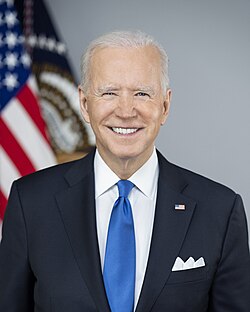 Joe BidenJoe Biden was the 46th President of the United States from…Affiliated
 Gabriela HeinrichGabriela Heinrich (born 18 April 1963 in Berlin) is a…Affiliated
How the record is sourced and how the score is derived.
The score is formula-derived (Factrail formula v1, version 1.0.0), not an editorial verdict. Read the methodology.
By the Factrail desk · Method: how we source and score · Last reviewed
Dispute a fact on this pageNamed here, or represent someone who is? Request a right of reply.
People and organizations as listed in the Related section of this page; facts, drivers and the pages that name it as listed in the blocks here. Counts, not a rating.