Fred Hiatt
Frederick Samuel Hiatt (April 30, 1955 – December 6, 2021) was an American journalist who edited the opinion section of The Washington Post for more…
- Facts0
- Drivers0
- Indicators0
Frederick Samuel Hiatt (April 30, 1955 – December 6, 2021) was an American journalist who edited the opinion section of The Washington Post for more…
Frederick Samuel Hiatt (April 30, 1955 – December 6, 2021) was an American journalist who edited the opinion section of The Washington Post for more than two decades. He was a three-time finalist for the Pulitzer Prize in editorial writing.
Hiatt was born in Washington, D.C., where his father, Howard Haym Hiatt, was a medical researcher at the National Institutes of Health. After his father became dean of the Harvard School of Public Health, the family moved to Brookline, Massachusetts, where Hiatt grew up. His mother, Doris (Bieringer) Hiatt, attended library school and co-founded a magazine that reviewed books for school libraries. Hiatt studied history at Harvard University and wrote for The Harvard Crimson, where he met Margaret Shapiro, known as Pooh. They graduated in 1977 and traveled together for a year and a half. He began reporting at The Atlanta Journal and then The Washington Star; when the Star closed in 1981 he joined the Post, covering Fairfax County, Virginia politics, and the Pentagon. He and Shapiro married in 1984.
In 1987 the Post sent the couple to Tokyo as co-bureau chiefs, the first time it assigned a married pair to share a foreign posting. They later shared a similar assignment in Moscow, reporting on the fall of the Soviet Union; the Foreign Correspondents’ Club of Japan placed the Tokyo years in 1987–1990 and the Moscow years in 1991–1995. Publisher Donald E. Graham named Hiatt editorial page editor in 1999. He held the job from 2000 until his death and enlarged the opinion staff from about a dozen people to more than 80, adding writers, bloggers, videographers, and designers.
The editorial board’s support for the 2003 invasion of Iraq, after accounts of mass killings under Saddam Hussein, drew sharp criticism from many liberals and approval from conservative hawks. Hiatt resisted being called a neoconservative and described the Post’s tradition as favoring a strong defense and an America “that is prudently engaged in the world.” He gave the Saudi dissident Jamal Khashoggi a column and, after Khashoggi disappeared in October 2018 on entering the Saudi consulate in Istanbul, published a blank space where that column would have run. He championed Aung San Suu Kyi while she was imprisoned in Myanmar and later condemned her defense of a military campaign against the Rohingya. In 2016, before the general election, he wrote that Donald Trump was unfit for office, warning that Trump’s “contempt for constitutional norms might reveal the nation’s two-century old experiment in checks and balances to be more fragile than we knew,” and was a Pulitzer finalist for editorials about Trump.
Hiatt suffered sudden cardiac arrest on November 24, 2021, while visiting a daughter in Brooklyn and shopping for Thanksgiving dinner. A bystander called 911, but he never regained consciousness and died on December 6 at a hospital in Manhattan; he was 66 and had a history of heart ailments. He also wrote four books, including two for children.
Frederick Samuel Hiatt was born on April 30, 1955, in Washington, D.C., where his father, Howard Haym Hiatt, was a medical researcher at the National Institutes of Health. His mother, Doris (Bieringer) Hiatt, attended library school and co-founded a magazine that reviewed books for school libraries; the Boston Globe later described it as a bimonthly guide that helped high school librarians choose paperbacks. She died in 2007.
Howard Hiatt was born on July 22, 1925, in Patchogue, New York, and grew up in Worcester, Massachusetts, the eldest of three children of Alexander Hiatt, a Jewish shoe manufacturer, and Dorothy (Askinas) Hiatt. After two years at Harvard College he entered the Army, then returned as a medical student and received his M.D. from Harvard Medical School in 1948. While in medical school he met Doris Bieringer, a Wellesley College student and future librarian; they married in 1948 and had three children. He later joined the staffs of Harvard Medical School and Boston’s Beth Israel Hospital—now Beth Israel Deaconess Medical Center—and became chair of medicine there. In 1972 Harvard president Derek Bok appointed him dean of the Harvard School of Public Health, now the Harvard T.H. Chan School of Public Health; he served until 1984. When he became dean, the family moved to Brookline, Massachusetts, where Fred grew up. Fred’s siblings were his brother, Jonathan, and his sister, Deborah.
In a 2006 oral history, Howard Hiatt said his father had come alone from Eastern Europe before he was 15, settled in Worcester, and kept a small business so that he could educate his children and bring over relatives who wanted to emigrate. Alexander Hiatt, he said, was the third of nine children—five sons and then four daughters—and brought three brothers to the United States. The siblings who remained were victims of the Holocaust, although one sister survived a concentration camp in which her husband and child were killed; when she returned to the family’s village in Lithuania, she learned that townspeople had killed relatives there before Nazi forces arrived.
Fred’s maternal grandfather, Walter H. Bieringer, a Boston-born Harvard College graduate, was president of the United Service for New Americans in the 1950s and helped resettle European Jews in the United States. He also directed a relocation program for Japanese Americans confined during the wartime internment, advised President Harry S. Truman on refugee affairs, and consulted for the State Department under President Dwight D. Eisenhower. Bieringer died in Boston in 1990 at age 90; Howard Hiatt confirmed the death.
Hiatt attended Harvard College, majored in history, and wrote for the student newspaper The Harvard Crimson. Archived Crimson bylines from 1976 and 1977 cover campus reporting and features, including Harvard Student Agencies, university health services, and the university police department’s first woman officer. At the Crimson he met Margaret Shapiro, known as Pooh; they graduated in 1977 and traveled together for a year and a half.
The Program on U.S.-Japan Relations, begun in 1980 at Harvard, lists Hiatt among prominent alumni for 1986–1987; an earlier note from the program groups him with former associates and dates the affiliation to 1987. The Washington Post’s biography of Hiatt also lists Russian language and area studies at the Johns Hopkins University School of Advanced International Studies, alongside the U.S.-Japan program and his bachelor’s degree in history, without recording another degree.
Fred Hiatt began reporting in 1979 at the Atlanta Journal, after graduating from Harvard in 1977 and traveling for about a year and a half. A 1999 Editor & Publisher account called that his first reporting job and the next one, at the Washington Star, brief.
Time Inc. had owned the afternoon Star for three and a half years when, on July 23, 1981, it said the paper would close. Like other evening papers, the Star was losing ground to television and to the difficulty of delivering papers in late-afternoon traffic. Time put its investment, including the purchase from Joe L. Allbritton, at more than $85 million and the annual loss at about $20 million. About 1,400 employees learned of the decision largely from morning broadcasts. Circulation had fallen from about 349,000 copies when Time bought the paper to about 323,000, and the Star still held only about a quarter of local advertising against The Washington Post. The 128-year-old paper’s last issue appeared on August 7, 1981, leaving Washington with one daily. Hiatt joined the Post that year. Margaret “Pooh” Shapiro, already a Post reporter, married him in 1984.
His first Post assignment was suburban Fairfax County, Virginia. There, and then on a statewide Virginia beat, he covered government, politics, development, and related issues. The county’s cable franchise was one early story. A compilation of the Post archive records his February 19, 1982, account of two bidders and a July 27 story, written with Lee Hockstader, on the Board of Supervisors’ award the day before to Richmond-based Media General.
He then moved to military and national-security reporting on the national staff, which the New York Times obituary described as the Pentagon after Virginia politics. The 1983 Congressional Record Index lists articles under his name on spare-parts overcharges, including one on Defense Secretary Caspar Weinberger’s acknowledgment that the Pentagon had overpaid, and on a plan to arm a Jordanian force for the Persian Gulf. On February 28, 1984, he reported that Richard D. DeLauer, undersecretary of defense for research and engineering, had told the House Armed Services Committee that the Pentagon was seeking $143 million in fiscal 1985 for an antisatellite rocket launched from F-15 fighters, and had said work was underway on a follow-on weapon aimed at satellites in higher orbits. DeLauer said research for President Ronald Reagan’s “Star Wars” missile defense would include an antisatellite element. The 1984 index also lists Hiatt pieces on NATO ministers’ reported doubts about the antisatellite plan, on excess contractor profits tied to weak Pentagon auditing, on faster Soviet military spending in 1983, and on Soviet bombers in Afghanistan. That assignment lasted until 1987, when the Post sent him and Shapiro to Tokyo as co-bureau chiefs.
In 1987, after covering Virginia government and then military and national-security affairs, Fred Hiatt and his wife, the Post reporter Margaret “Pooh” Shapiro, became co-bureau chiefs of The Washington Post’s Northeast Asia bureau in Tokyo, a posting that lasted until 1990. It was the first time the paper sent a couple to share a foreign job. Shapiro, whom Hiatt had met at The Harvard Crimson, later said they sat on opposite sides of one desk and edited each other’s copy: “It was seamless.” His staff biography lists study in Harvard University’s U.S.-Japan program and Russian-language and area studies at the Johns Hopkins University School of Advanced International Studies.
The bureau’s file was Japan and Korea in the years when Japan’s trade surplus, and the argument over whether it had become an economic superpower, dominated American coverage of the relationship. A September 1989 Post dispatch, reprinted by the Deseret News, reported a minority view among economists and former officials that Japan had already peaked, citing an aging society, a “hollowing-out” as factories moved abroad, and what former diplomat Kenichi Ito called sclerosis in the ruling Liberal Democratic Party elite—Ito’s phrase was “the Brezhnev system.” The same article set that forecast against the picture then in front of correspondents: trade surpluses with the United States on the order of $50 billion a year, Japanese ownership of the world’s ten largest banks, and heavy spending on new capacity. People Hiatt quoted tied the shift to the easing of the Cold War. Johsen Takahashi of the Mitsubishi Research Institute said that while the Cold War lasted, Washington had been willing to “turn a blind eye to Japan’s nuisance as an economic animal.”
Korea was part of the same beat. William Horsley, the BBC’s Japan correspondent from 1983 to 1990, recalled that he and Hiatt joined a Korean course at the Foreign Correspondents’ Club of Japan ahead of the 1988 Summer Olympics in Seoul, and that Hiatt reached “a decent level” and left the rest of the class behind. Writing in 2007, Hiatt remembered a Tokyo press corps large enough that American papers competed and disagreed about what the central questions were; he named Colin Nickerson and Tom Ashbrook of The Boston Globe among the reporters he worked alongside and against. He also turned the trade-wars assignment into fiction before the foreign years were over. The Secret Sun (1992), a mystery set in Japan, follows a young reporter sent out so his publisher can claim to have “our man in Tokyo,” and satirizes editors who wanted correspondents to match whatever had appeared that morning in The New York Times.
The shared posting was repeated. From 1991 to 1995 Hiatt and Shapiro were correspondents and co-bureau chiefs in Moscow. The Post’s obituary said that, as the Communist regime collapsed, they chronicled the contest for power in Russia “atop the crumbling structure of the old Soviet Union.” The dates ran from the last year of Mikhail Gorbachev’s leadership through the dissolution of the Soviet Union and the early presidency of Boris Yeltsin. Another Post correspondent, Lee Hockstader, worked in Moscow at the same time.
Anders Åslund, an economist who advised the Russian reform government, wrote after Hiatt’s death that the couple followed “the rise and fall of Russia’s reform effort.” Åslund said no foreign journalist had greater access to Yegor Gaidar, Boris Fyodorov, and Anatoly Chubais, “probably because he understood Russian politics better than any other foreign journalist,” and that Hiatt’s copy was factual “with great sympathy.” He also noted that Hiatt never wrote a book about Russia, and guessed that the years had touched him too deeply or that the reforms’ limited success had discouraged it. Kathryn Tolbert, a former Associated Press reporter in Tokyo who later edited on the Post’s foreign desk, said Hiatt was the Moscow correspondent whose first instinct was to accept an assignment, and the one an editor would choose to wake in the middle of the night. After the couple returned to Washington, Hiatt joined the editorial board in 1996.
Hiatt joined the editorial page of The Washington Post in 1996, after 15 years as a Post reporter covering regional politics and national security and serving as a correspondent in Tokyo and Moscow. The pages were then led by Meg Greenfield, with her deputy, Stephen S. Rosenfeld, as the immediate successor in waiting. Greenfield died in May 1999. Rosenfeld edited the page on an interim basis and was preparing to retire.
In September 1999 publisher Donald E. Graham named Hiatt, then 44 and already an editorial writer, to take over within a few months. Graham later said he had picked Hiatt for his independence—“a somewhat rare quality in Washington”—and for what Graham called careful, measured news judgment. Hiatt told The New York Times that any changes would come gradually. He described the editorial pages as a place to “make a lot of the connections that a general-subject newspaper should,” when cable television and internet sites were, as he put it, “fracturing the issues as well as the audience.” He became editorial page editor in 2000 and remained in the job until his death in December 2021.
The editorship covered the unsigned editorials of the editorial board and the signed columns on the op-ed page and, later, the website. For two decades Hiatt wrote or edited nearly every unsigned editorial the paper published—more than 1,000 a year—and edited the opinion columns that ran with them. The page he inherited often set progressive editorials opposite conservative columns, and its positions were not uniform: it favored gun control, campaign-finance reform, and abortion rights, while also allowing that school vouchers might help some children. The Associated Press later wrote that he worked to keep long-standing Post positions on civil rights, fiscal responsibility, and international human rights. The board’s support for the 2003 invasion of Iraq, and the opinion section’s response to the killing of contributor Jamal Khashoggi, are covered in later sections.
Anne Applebaum, who served on the board for four years in the early 2000s, described the daily machinery behind those editorials. About five to ten people, she wrote, met five days a week and argued over subjects from Montgomery County politics to wars abroad; the published editorial was meant to reflect that argument, including well-founded objections, even when they cut against the main line.
The appointment had been the publisher’s. The same question—who would choose the editor—returned when Jeff Bezos, founder of Amazon, agreed in 2013 to buy the paper for $250 million. At staff meetings on September 4, Hiatt offered to step aside. Bezos said he had no desire to change the editorial-page staff, that he did not associate with any party, and that he saw “no reason to change what we’re doing” on opinion. In November, after the sale had closed, National Journal reported that Hiatt had offered his resignation—leaving Bezos free to name his own editor—and that Bezos had declined and was keeping the rest of senior management. An insider told the magazine that Bezos would replace a team that was failing in a healthy industry, but not one “doing the best one could expect during one of the biggest information convulsions of all time.”
The opinion staff Hiatt inherited was small and built around print. Over more than two decades he expanded it from about a dozen people to more than 80, adding younger writers, videographers, bloggers, and designers alongside veteran journalists, according to The New York Times. Deputy editorial page editor Karen Tumulty called the section “the house that Fred built.” A Foreign Correspondents’ Club of Japan obituary described a team of some 80 writers, bloggers, video artists, and guest columnists. Publisher Fred Ryan told the staff that nearly every person in the department had been hired by Hiatt, and that they held “many diverging viewpoints.” The Associated Press reported that the internet-era operation produced some of the website’s most-read articles, and that three columnists won the Pulitzer Prize for commentary during his editorship: Colbert I. King in 2003, Eugene Robinson in 2009, and Kathleen Parker in 2010. Hiatt himself was a three-time finalist for the Pulitzer in editorial writing.
Named hires and internal promotions ran in more than one direction. Robinson, a Post journalist since 1980, was named associate editor and columnist in 2005 and started a twice-weekly op-ed column that February; within a year the Washington Post Writers Group was syndicating it to more than 130 newspapers. In September 2006 the paper announced that Michael Gerson, chief speechwriter to President George W. Bush, would join the op-ed page. Hiatt’s announcement called Gerson “an eloquent writer and provocative thinker.” Critics on the left tied the hire to Gerson’s role in the rhetoric used to justify the Iraq War. In November 2010 Hiatt hired Jennifer Rubin, then writing for Commentary, to start the conservative blog Right Turn, described as a counterpart to Greg Sargent’s liberal blog, The Plum Line. He also invited Jonathan Capehart onto the editorial team. Applebaum wrote that the columnists he hired ran “across a broad spectrum,” including, late in his tenure, some who supported Donald Trump.
Unsigned editorials were the newspaper’s institutional voice, written apart from the newsroom. In a 2006 online discussion, Hiatt said the board met almost every morning, argued over the day’s subjects, and tried—not always successfully—to agree on what to write and which of about eight writers, himself included, would draft it. Owners did not review most pieces, he said; they hired an editor they expected would generally share their worldview. A 2009 explainer said members pitched ideas from subject beats, debate could be heated, and the aim was consensus with earlier stands. News reporters did not sit in. The board then was two editors, six writers, and cartoonist Tom Toles; beats included politics, the budget, and taxes.
Anne Applebaum, who served on the board in the early 2000s, later wrote that Hiatt was responsible for the unsigned editorials for more than two decades—about three a day, every day of the year. Five days a week, she wrote, roughly five to ten people argued over subjects from Montgomery County politics to foreign wars, and well-founded objections were written in even when they cut against the line. What was not negotiable, she said, were his premises: the Constitution, the rule of law, tolerance of lawful disagreement, and support for human rights and democracy abroad. The Post’s obituary reported that for two decades he either wrote or edited nearly every unsigned editorial—more than 1,000 a year—and edited the signed columns. Ruth Marcus, a deputy editorial page editor, wrote that he produced hundreds of signed columns and still more unsigned editorials. The paper’s author page called the signed column biweekly; columns listed there from his final months are spaced about two weeks apart, not twice a week. In “How We Endorse, and Why” (2006), he wrote that executive editor Leonard Downie had no part in endorsements and did not know when they were coming.
Hiatt tried to keep long-held editorial positions, including civil rights, fiscal responsibility, and equality of opportunity. The news obituary reported that under him the page supported abortion rights, campaign finance reform, wider access to health care, and limits on the proliferation of guns, and that local politics and education stayed routine subjects. Donald E. Graham, who named him editorial page editor, said the board was “not reliable supporters of any party or policy.” Applebaum wrote that he would defend a Democrat or a Republican who advanced those premises, and that corruption, racism, and poverty at home concerned him along with repression abroad.
The October 2016 endorsement of Hillary Clinton compressed that domestic line. It called most of her agenda commendable—immigration reform; infrastructure, research, and education paid for by higher taxes on the wealthy; family leave; criminal-justice reform; climate policy; and gun regulation—while saying her plans were “less lofty than we would like” on “unsustainable entitlement programs.”
On March 21, 2016, Donald Trump, then seeking the Republican nomination, spent more than an hour with the board. That day’s editorial, “We met with Donald Trump. Electing him will still be a radical risk,” said the visit “provided no reassurance regarding Mr. Trump’s fitness for the presidency.” It cited “a breezy willingness to ignore facts and evidence,” thin answers on libel law, a proposed ban on noncitizen Muslims, and urban poverty, and his view of NATO as obsolete and too costly. The board posted a transcript and audio and invited readers to judge the session.
After the nominating convention, the July 22 editorial “Donald Trump is a unique threat to American democracy” called him “uniquely unqualified to serve as president, in experience and temperament,” and warned that “His contempt for constitutional norms might reveal the nation’s two-century-old experiment in checks and balances to be more fragile than we knew.” It said the board would not “pretend that we might endorse him this fall.” Hiatt told Washingtonian the page had been “sounding the alarm” for more than a year, that the editorial was not a backdoor endorsement of Clinton, and that “every other option is still on the table.” He said the board drafted it before Trump’s acceptance speech and published it after the claim that “I alone can fix” the country’s problems.
On September 25, “It’s beyond debate that Donald Trump is unfit to be president” said the first debate could not reset the record: he had “amply demonstrated his unworthiness to occupy the Oval Office.” On October 13 the board endorsed Clinton as “dogged, resilient, purposeful and smart,” denied that the choice was merely the lesser of two evils, and called Trump “dreadful” and “uniquely unqualified as a presidential candidate.” Applebaum wrote that Hiatt still hired columnists across a range of views, “including, recently, some who supported Donald Trump.”
The Washington Post editorial page under Hiatt supported the 2003 invasion of Iraq. The New York Times later wrote that, after accounts of Saddam Hussein's mass murders and "other depravities," Hiatt and the board backed the invasion—a position that "drew sharp criticism from many liberals and led conservative hawks to embrace him." He resisted the neoconservative label and said the paper had long favored a strong defense and an America "that is prudently engaged in the world."
The page treated Iraqi weapons of mass destruction as fact. The day after Secretary of State Colin Powell's February 5, 2003, presentation to the United Nations Security Council, the editorial "Irrefutable" said it was "hard to imagine how anyone could doubt that Iraq possesses weapons of mass destruction," called his evidence "overwhelming," and described "a powerful new case" of cooperation with a branch of al-Qaeda seeking chemical weapons. In the Columbia Journalism Review, Chris Mooney grouped the Post with the pro-war pages before the March 19 invasion, though as the most self-questioning: it called war "an operation essential to American security," then criticized George W. Bush's planning without dropping its support. Hiatt told CJR the case rested more on chemical and biological stockpiles than on nuclear weapons, and that the page treated the International Atomic Energy Agency's finding of no active nuclear program as a "diversion."
On April 3, 2003, Hiatt said he would be surprised if no such weapons appeared: "I can't imagine any explanation for the chemical suits American troops have been finding amid Iraqi arsenals other than that Iraqi troops knew their armed forces might use chemical weapons." The October 12 editorial "Iraq in Review" conceded that stockpiles had not been found and said "we never saw a connection between Iraq and 9/11 or major collaboration between Saddam and al Qaeda," while accusing officials including Vice President Dick Cheney of exaggerating those ties. It did not renounce the war. "Success or failure in the effort to stabilize Iraq under a reasonably representative government that poses no threat to the world will provide the ultimate answer to the question of whether the war should have been undertaken."
Hiatt told CJR he wished the editorials had not stated the stockpiles "as flat fact." "If that's not true, it would have been better not to say it," he said, and he would feel "suckered" only if Powell "had deliberately lied." He later rejected the charge that Bush had invented the case. After a June 2008 Senate report, he wrote that many statements on nuclear, biological, and chemical programs were "substantiated by intelligence information," and that a "phony 'Bush lied' story line" hid a shared intelligence failure. In August 2015 he still called "my support of the Iraq war in 2002" part of his record, quoting the Robb-Silberman commission on "one of the most public — and most damaging — intelligence failures in recent American history."
The page had called postwar plans "worryingly vague" before the war and faulted them again in October 2003. "The Right Type of 'Surge'" (December 26, 2006) said any increase had to be large and lasting, and through 2007 the page opposed a fixed withdrawal while urging Congress to wait for General David Petraeus.
"Iraq's Narrow Window" (November 18, 2007) said it was "overwhelming" that the surge had been, "in purely military terms, a remarkable success," crediting soldiers, Petraeus, and Bush for acting against most of Congress and "the country's foreign policy elite." The political aim, it added, had seen "no progress since January." Hiatt later wrote that the board itself had called the strategy "very risky," and that Bush's decision would be seen as "an act of remarkable courage." In 2015 he argued that Barack Obama's full withdrawal, from what Hiatt called "unity and relative stability," had a "foreseeable, and foreseen" result. The page did not renounce the war, and the stance remained contested.
The Iraq line belonged to a longer argument about force and alliances. In 2000 Hiatt was a Pulitzer finalist "for his authoritative editorials on the crisis in Kosovo," which pressed for a firm NATO response to Slobodan Milošević in the Kosovo War. On Afghanistan, his November 15, 2010, column argued that naming Petraeus moved Obama from "begin to come home" after 18 months toward a conditions-based 2014 horizon—"'Win' is not a verb that Obama applies to the Afghan mission"—and warned against another 1989-style abandonment.
As Muammar Gaddafi's forces advanced in March 2011, the page argued that strikes in the Libyan intervention might have changed the balance. Hiatt in 2015 called Libya Obama's "war of choice," a seven-month campaign that "dislodged" Gaddafi without "postwar stabilisation," leaving civil war and militant havens. Late-2011 editorials on Iran's nuclear program treated an IAEA report of work "relevant to the development of a nuclear explosive device" as a reason time was short, and defended keeping "all options" open; by 2015 Hiatt said he supported the agreement while calling nuclear intelligence "notoriously unreliable."
He rejected the claim that NATO enlargement caused the Russo-Georgian War. "Who Made Russia Attack?" (August 18, 2008) defended a "Europe whole and free" and blamed Vladimir Putin's authoritarianism, not Western provocation. "A Russia Reality Check" (February 2009) questioned a "reset" after the occupation, energy cutoffs, and arms sales, quoting Vice President Joe Biden that states may choose their alliances.
The opinion pages Fred Hiatt edited returned regularly to people imprisoned for political speech. He later said the page had written often about the blogger Raif Badawi, jailed in Saudi Arabia for peaceful expression, about women arrested there for advocating the right to drive, and about the kingdom's retaliation against Canada for raising human-rights cases. In a January 2011 column he wrote about Geng He, whose husband, the lawyer Gao Zhisheng, had been tortured and then disappeared by Chinese security agents, and criticized President Barack Obama for hoping for "further evolution" in China's human-rights practices over 30 years rather than pressing such cases.
Aung San Suu Kyi was among the prisoners he wrote about most often while she was confined in Myanmar. In a June 2010 column on her 65th birthday, still under house arrest, he wrote that the generals had kept her locked up for nearly 15 of the previous 21 years, that in 1999 they would not let her visit her dying husband in Britain, and that a coming election was drawn to exclude her and the National League for Democracy after the junta refused to seat its 1990 victory. The New York Times later reported that she visited the Post to thank him, and that years afterward, when she defended the military campaign against the Rohingya, he condemned her in an editorial. On January 26, 2018, the editorial board wrote that she "has temporized in response to atrocity" after some 650,000 Rohingya were forced into Bangladesh, and agreed with Bill Richardson, who had quit an advisory panel she appointed, saying, "I don't want to be part of a whitewash."
Jamal Khashoggi, a Saudi journalist in exile whose Post column criticized Crown Prince Mohammed bin Salman, entered the Saudi consulate in Istanbul on October 2, 2018, for marriage paperwork and was murdered inside, in the assassination of Jamal Khashoggi. Saudi officials later called it a rogue operation; Turkish officials said the team had acted on orders from the highest levels of the government. While he was still missing, the opinion section Hiatt edited left his space empty. The October 5 print edition carried his byline and the headline "A missing voice," with a note that his words should have appeared there. The same week's editorial, "Where is Jamal Khashoggi?", urged the crown prince to see that he was "free and able to continue his work."
Hiatt told Washingtonian that his first reaction was disbelief, and that he, publisher Fred Ryan, deputy editorial page editor Jackson Diehl, and columnist David Ignatius called U.S., Turkish, and Saudi officials to try to keep Khashoggi from being taken to the kingdom. The paper held a column Khashoggi had filed the day before he entered the consulate, hoping to edit it with him, and published it on October 17 as an acknowledgment that he would not write another. Diehl, Hiatt said, wrote most of the editorials that followed. After the page argued against business as usual with Riyadh until there was a full accounting, Hiatt said it stopped running contributors whose firms still worked for the Saudi government; those firms, he said, ended the relationships the same day.
His October 15 column, "Is this what we want to be?", rejected the argument that arms sales or rivalry with Iran could excuse the killing. On February 25, 2019, the Post announced the Jamal Khashoggi Fellowship for writers from places where expression was threatened or suppressed, naming the Saudi scholar Hala Al-Dosari as the first fellow. Hiatt called it a tribute to Khashoggi's "life and work and to the values he cared most about, including human rights and freedom of expression."
Hiatt was a three-time finalist for the Pulitzer Prize in Editorial Writing and did not win it. In 1999 the citation was for "his elegantly-written editorials urging America's continued commitment to international human rights issues." In 2000 it was for "his authoritative editorials on the crisis in Kosovo." In 2017 it was for "editorials about the U.S. presidential election that stood out for their peerless moral clarity in defending American values against the normalization of bigotry"; the entry in his name was a series of unsigned board editorials from the 2016 campaign. In 2011 Freedom House gave him its Raising Awareness Award for journalism on threats to freedom. The Pulitzer board later noted that he had also served on three nominating committees.
The Secret Sun: A Novel of Japan, Hiatt's debut, was published in New York in 1992 by Pantheon Books as a 306-page Cornelia & Michael Bessie book. Catalog records also list a 1992 Simon & Schuster edition and a 1993 Simon & Schuster paperback.
American journalist John Piper, tired of another Tokyo anniversary story on the atomic bombing of Hiroshima, investigates Japan's wartime effort to build a nuclear weapon, a failed counterpart to the Manhattan Project. With his assistant, Kyoko, he follows physicists' deaths into a conspiracy its leaders will kill to hide, as Congress considers seizing Japanese-owned factories in the United States.
Kirkus Reviews called the debut impressive, with a likable hero and an unlikely but possible plot, and wrote that Hiatt used American fears of Japanese economic power without "gratuitous Japan-bashing," despite a leisurely pace and an obvious mystery. Publishers Weekly praised the account of Japanese etiquette and of a cynical reporter, then said cartoonish villains made a jarring shift that spoiled an otherwise skillful novel.
If I Were Queen of the World (Margaret K. McElderry Books, 1997), illustrated by Mark Graham, is narrated by a girl whose fantasies of rule—late nights, a hundred lollipops a day, flight over castles—include only token concessions to her younger brother, such as "a lick or two" of candy. Publishers Weekly called the book slight but genial and wrote that Graham's soft-focus oils suited the daydreams, though some portraits of the siblings were inconsistent.
Baby Talk (Margaret K. McElderry Books, 1999), also illustrated by Graham, follows Joey as relatives translate his infant brother's cries until Joey repeats the sounds and becomes the family's interpreter. Publishers Weekly found the text simple and warm despite some unbelievable babbling, and said Graham's paintings of ordinary errands gave the 32-page book a cozy tone.
Nine Days (Delacorte Press, April 9, 2013) follows Washington-area tenth-graders Ethan Wynkoop and Ti-Anna Chen to Hong Kong and then Vietnam after her father, an exiled Chinese democracy activist, disappears. Using forged documents and a borrowed credit card, they are drawn into a human-trafficking operation; Ethan narrates the book as a statement written for a judge.
Penguin Random House describes the characters as fictionalized versions of a real family in the Chinese democracy movement. Ti-Anna Wang told The Washington Post in April 2013 that a 2009 op-ed about her father, Wang Bingzhang, imprisoned since 2002, led her to meet Hiatt, and that her campaign to publicize his case inspired the novel. She was 13 and living in Montreal when he vanished; she said activist family life was more complicated than the fiction, while scenes of surveillance and wary meetings in Hong Kong resembled her own.
Kirkus called it an appealing thriller for ages 11 to 16 that set a friendship, not a romance, against Chinese history. Publishers Weekly found it captivating for ages 12 and up and grounded in human-rights abuses, while noting that how far the teenagers get was hard to accept even though those choices had repercussions.
After Hiatt’s death in December 2021, Washington Post publisher Frederick J. Ryan Jr. told the staff that Hiatt had made the editorial page “the most consequential in the news industry,” and that few journalists had matched his “complete dedication to the causes of democracy and human rights.” The Pulitzer Prize Board, on which he had served three nominating juries, called him “a great journalist and an inspiration to all of us.”
The Post editorial board he led called him an editor of “surpassing intelligence, compassion and integrity” who held together “a wide range of views” without what it called Washington’s usual rancor. It said outrage at Saddam Hussein led the board to support the U.S. invasion in the Iraq War, “a stance that earned him enmity from many readers and colleagues,” and that hawks who thought the page had joined them were “disabused” by editorials against torture in Iraq and at Guantánamo Bay. The same appreciation said the unsigned editorials were “notable for their independence”: one in 2016 declared Donald Trump unfit for the presidency, while defenders of Trump kept space on the op-ed pages.
Atlantic Council president Frederick Kempe credited “remarkable intellectual reach, an unwavering conscience, and an amazing eye for talent.” Journalism professor Dan Kennedy wrote that the stance under Hiatt, unchanged after Jeff Bezos bought the paper, was “moderately liberal with a taste for foreign intervention,” and called him “an honorable servant of the Washington establishment” in both a positive and a negative sense.
The sharpest criticism concerned the Iraq War and who was invited to argue about it. In February 2003 the page quoted readers accusing it of “endless drumbeating for war in Iraq” and a “jingoistic rush to war.” The previous autumn Michael Massing argued in The Nation that editorials, columns, and op-eds had mainly amplified the case of President George W. Bush, with regulars including George Will, Charles Krauthammer, and Jim Hoagland drowning out dissent. Hiatt told Massing the page had long held that a leader such as Hussein could not defy the Security Council on weapons without consequences, and that he sought “folks who can present other arguments.”
After the invasion, Media Matters for America argued that prewar claims were not withdrawn. It pointed to a February 6, 2003, editorial, “Irrefutable,” which treated Colin Powell’s United Nations speech as leaving it “hard to imagine how anyone could doubt that Iraq possesses weapons of mass destruction,” and contrasted the page’s silence with a New York Times acknowledgment that it had been wrong about Iraqi weapons and with newsroom editor Leonard Downie Jr.’s concession that Post reporting had underplayed skeptics. Fairness & Accuracy in Reporting argued that Hiatt read Senate intelligence reports selectively. Defending a 2006 editorial on diplomat Joseph C. Wilson and alleged Iraqi uranium purchases, he cited a finding that Wilson’s trip “did not change any analysts’ assessments” and not conclusions that the estimate had overstated what was known. In 2008 FAIR said he quoted another Senate report as substantiating Bush’s weapons statements while omitting its reference to “substantial disagreements” in the intelligence community.
Glenn Greenwald, at Salon.com in March 2007, called Hiatt a “war cheerleader”: an editorial urging planners to ask how a war ends, remember its horrors, and not leave the choice to generals was followed within days by opposition to a House deadline of August 2008 for withdrawing combat troops, which Hiatt tied to MoveOn rather than to commanders. Greenwald called that counsel “neoconservative-accommodating.” Chris Hayes, in The Nation in 2008, wrote that the board was again citing gains in Iraq as a reason to reject an “arbitrary” timetable. A 2010 Columbia Journalism Review critique argued that a Hiatt column left the opposition one useful national-security role—demanding a more hawkish policy—and that the pattern ratcheted debate in one direction.
In 2018 FAIR’s Adam Johnson wrote that 21 of 23 staff columnists with a clear Iraq position had supported the war, the exceptions being Katrina vanden Heuvel and Radley Balko, and that Michael Gerson, Mitch Daniels, and Ed Rogers had Bush administration ties around the invasion. He quoted Hiatt, from April 2003, saying the board “tended to be fairly hawkish” on Cold War defense. Kennedy wrote that Hiatt later paired anti-Trump conservatives, including Max Boot, Gerson, and Will, with pro-Trump columnists such as Marc Thiessen, and questioned what the pro-Trump columns added. The board’s appreciation treated that spread, and the staff’s lack of personal enmity, as the test of the editorship.
In 1984 Hiatt married Margaret Shapiro, a Washington Post reporter known as Pooh, whom he had met while both were students working at the Crimson. She was already on the Post staff when he joined the paper in 1981. When he died he was survived by Shapiro; those three children; a granddaughter; his father, Howard Hiatt, a medical researcher who had become dean of the Harvard University School of Public Health; his brother, Jonathan; and his sister, Deborah Hiatt.
On November 24, 2021, while visiting a daughter in Brooklyn and shopping for the family's Thanksgiving dinner, Hiatt went into sudden cardiac arrest. Shapiro said a bystander called 911 at once, but that he never regained consciousness, and that he had a history of heart ailments. He died on December 6, 2021, at a hospital in Manhattan, at the age of 66. The Post's news obituary reported the same date and a New York City hospital. A notice from the Pulitzer Prize Board that day described the death as a heart attack.
The Pulitzer Board's statement called him a great journalist and an inspiration, and noted that besides three finalist selections he had served on three nominating committees. Board co-chair Gail Collins said he would be remembered for leadership and writing across five presidencies, and that on those committees he had been "a great team player who was always a joy to work with." On December 8, Representative Steve Cohen of Tennessee entered remarks in the Congressional Record offering condolences to Shapiro and to Alexandra, Joseph, and Nathaniel.
On May 9, 2022, the Post received the Pulitzer Prize for Public Service for its coverage of the January 6, 2021, attack on the U.S. Capitol. The citation honored the paper "for its compellingly told and vividly presented account of the assault on Washington on January 6, 2021, providing the public with a thorough and unflinching understanding of one of the nation's darkest days." Poynter described the entry as the paper's daily reporting while the attack was underway and a later three-part investigation, "Before, During and After," involving 75 journalists. The citation does not name the editorial page or Hiatt.
On December 13, 2023, Freedom House announced Free Them All: The Fred Hiatt Program to Free Political Prisoners, named with the family's blessing, to seek releases, support prisoners' families, and publicize the detention of human rights defenders, journalists, and pro-democracy activists. President Michael J. Abramowitz said Hiatt had believed those defenders and journalists could "challenge oppressive governments," and Shapiro said he had been determined that people who risked their lives for democracy "not be allowed to vanish from our sight." Freedom House said it had raised more than $6 million to launch the effort, beginning with a donation from philanthropist Alfred H. Moses and including support from the Knight Foundation and from Shapiro.
Ranked by shared high-impact facts, then explicit ties, then shared drivers.
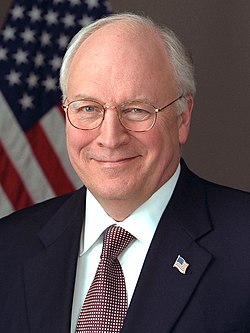 Dick CheneyRichard Bruce Cheney (born January 30Affiliated
 Ronald ReaganRonald Wilson Reagan (February 6Affiliated
 Mikhail GorbachevMikhail Sergeyevich Gorbachev (2 March 1931Affiliated
 Boris YeltsinBoris Nikolayevich Yeltsin (1 February 1931Affiliated
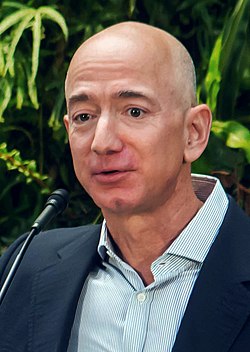 Jeff BezosJeffrey Preston Bezos (born January 12Affiliated
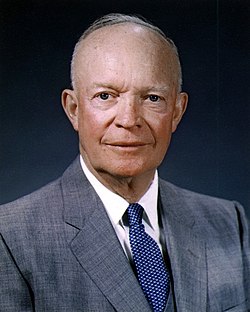 Dwight D. EisenhowerDwight David Eisenhower (October 14Affiliated
How the record is sourced and how the score is derived.
The score is formula-derived (Factrail formula v1, version 1.0.0), not an editorial verdict. Read the methodology.
By the Factrail desk · Method: how we source and score · Last reviewed
Dispute a fact on this pageNamed here, or represent someone who is? Request a right of reply.
People and organizations as listed in the Related section of this page; facts, drivers and the pages that name it as listed in the blocks here. Counts, not a rating.