Gertrude Lübbe-Wolff
Gertrude Lübbe-Wolff (born 31 January 1953 in Weitensfeld, Carinthia) is a scholar of public law in Germany and a former justice…
- Facts0
- Drivers0
- Indicators0
Gertrude Lübbe-Wolff (born 31 January 1953 in Weitensfeld, Carinthia) is a scholar of public law in Germany and a former justice…
Gertrude Lübbe-Wolff (born 31 January 1953 in Weitensfeld, Carinthia) is a scholar of public law in Germany and a former justice of the Federal Constitutional Court. She is professor emerita of public law at Bielefeld University. She sat on the Court's Second Senate from 10 April 2002 until 2 June 2014, when her twelve-year term ended.
She studied law at Bielefeld and the University of Freiburg, passing the first state examination in 1974, and received a Master of Laws from Harvard Law School in 1975. After her legal traineeship in Freiburg she passed the second state examination in 1977 and took her doctorate at Freiburg in 1980. From 1979 to 1987 she was a research assistant at Bielefeld, where in 1987 she completed her habilitation, Die Grundrechte als Eingriffsabwehrrechte, on fundamental rights as rights against state interference.
From 1988 to 1992 she headed the environmental office of the city of Bielefeld. In 1992 she returned to the university as professor of public law. From 1996 to 2002 she was managing director of Bielefeld's Center for Interdisciplinary Research, and from 2000 to 2002 she chaired the German Advisory Council on the Environment. In 2000 the German Research Foundation awarded her the Gottfried Wilhelm Leibniz Prize.
On 15 March 2002 the Bundestag's judicial selection committee elected her to the Federal Constitutional Court to succeed Jutta Limbach. The Social Democratic Party of Germany had nominated her; reporting on the day of the vote described her as not a member of the party. As rapporteur she handled, in particular, asylum, nationality, the execution of prison sentences and other deprivations of liberty, and constitutional finance and budget law. Cases in which the Court named her as rapporteur included the requirement of a statute for youth imprisonment, compulsory treatment in forensic psychiatric detention, and the plenary proceeding on the Aviation Security Act. Doris König succeeded her on the Second Senate.
She has been married since 1978 to the philosophy professor Michael Wolff, and they have four children. Her father is Hermann Lübbe. Since 2010 she has been a member of the Berlin-Brandenburg Academy of Sciences and Humanities. The European University Institute awarded her an honorary doctorate in 2015.
Gertrude Lübbe-Wolff was born on 31 January 1953 in Weitensfeld, Carinthia, Austria. Her father is the philosopher Hermann Lübbe, who held chairs of philosophy in Germany and in Switzerland. Her younger sisters, Weyma Lübbe and Anna Lübbe, also became professors. Weyma Lübbe holds the chair of practical philosophy at the University of Regensburg. Anna Lübbe, professor of public law and alternative dispute resolution, has taught at Fulda University of Applied Sciences since 2005.
Lübbe-Wolff has described her father’s influence on her decision to pursue an academic career as indirect, coming from the role he played in the family rather than from direct pressure, and has said that the household was one of constant reading and discussion of substantive questions. As a schoolgirl, after phases of playing with dolls and of playing Indians, she most wanted to become a professor, originally of philosophy. Her father advised her against studying only philosophy, on the ground that a philosopher first needed knowledge outside philosophy, and she found the argument persuasive. She skipped two school grades, took the Abitur, and at 16 joined the first cohort of the university that opened in Bielefeld in 1969. Since 1978 she has been married to the philosopher Michael Wolff, who was already at Bielefeld University when she met him; they have four children, born in 1980, 1981, 1984 and 1990.
Before settling on law she hesitated among law, mathematics and linguistics, and she also studied some philosophy. She set mathematics aside, despite a teacher's encouragement, because she was not sure she could do it well. To decide between linguistics and law she attended one lecture in each subject; the linguistics hour was spent counting vowels and consonants, while the law lecture was an argument over a pig-fattening case, which she found more interesting.
From 1969 she studied law at Bielefeld University. Teaching took place in the provisional Aufbau- und Verfügungszentrum between Voltmannstraße and Kurt-Schumacher-Straße, before work on the main building had begun. She later described student life as initially bleak: there was no cafeteria, café, outside lecture program, university sport or student cinema, and the city was not yet set up for students. By her estimate the students were mathematicians, sociologists and about 100 law students. She valued the block system, including six weeks devoted only to the Bürgerliches Gesetzbuch and Roman legal history. Lectures were sometimes cancelled because a hall had been occupied, or the class voted to discuss Cambodia instead.
After four semesters she transferred to the University of Freiburg in Freiburg im Breisgau. She passed the first state examination in law in 1974. In 1974 she went to the United States and to Harvard Law School in Cambridge, Massachusetts, which she later said she had chosen because the name sounded best to her, without knowing much else about the school. She received the Master of Laws there in 1975. At Harvard she concentrated on public international law, which she said her German studies had not covered, and on American constitutional law; she considered living in another country, among people from many parts of the world, the most important part of the stay. The Studienstiftung des deutschen Volkes supported that year; from her studies in Germany she particularly remembered the foundation’s summer academies in Alpbach.
She then completed the legal clerkship (Referendariat) in Freiburg and passed the second state examination in 1977. In 1978 she worked on her dissertation with a further scholarship from the Studienstiftung and, after meeting Wolff, returned to East Westphalia at the end of that year. The University of Freiburg awarded the doctorate in 1980. The dissertation, supervised by Alexander H. Hollerbach, was published in 1981 by Verlag Karl Alber as Rechtsfolgen und Realfolgen. Welche Rolle können Folgenerwägungen in der juristischen Regel- und Begriffsbildung spielen?
From 1979 to 1987 Gertrude Lübbe-Wolff was a research and university assistant (wissenschaftliche Assistentin/Hochschulassistentin) in the faculty of law at Bielefeld University. She took up the post in 1979 with Jochen Abraham Frowein, professor of constitutional and international law at Bielefeld from 1969 to 1981 and the faculty’s founding dean, who in 1981 moved to the Max Planck Institute for Comparative Public Law and International Law in Heidelberg. In a 2019 interview she described Frowein as a knowledgeable supervisor who required solid legal craftsmanship and who, himself the father of three children, accepted that she worked from home for a time during a pregnancy. She also worked under Meinhard Hilf, professor of public, European and international law at Bielefeld from 1982 to 1991, and under Dieter Grimm.
In the summer semester of 1986 she substituted for a chair at the University of Hannover while remaining an assistant at Bielefeld; in 1987 she completed her habilitation there, with a venia legendi in public law, modern constitutional history and legal philosophy, and substituted for a Bielefeld chair in the same year. The thesis was published in 1988 by Nomos in Baden-Baden as Die Grundrechte als Eingriffsabwehrrechte: Struktur und Reichweite der Eingriffsdogmatik im Bereich staatlicher Leistungen; the German National Library catalogues it as the 1987 Bielefeld habilitation thesis. Its chapters treat fundamental rights as defensive rights against state interference, criticize the traditional concept of an interference (Eingriff) and propose a wider one, and ask how far that doctrine extends to state benefits and their limitation, using subsidy law as the principal example.
After the habilitation she left the assistantship for the municipal administration of Bielefeld, where from 1988 to 1992 she was a city administrative director and head of the environmental office; in 1991 she was offered a chair of public law at Goethe University Frankfurt and did not accept it. She later said she had not wanted to commute to other universities: her husband, the philosopher Michael Wolff, held a professorship in Bielefeld, and three of their four children had already been born.
In 1992 she was appointed professor of public law at Bielefeld University, returning to the faculty at which she had been an assistant. She later described husband and wife both holding posts at the same university as a great stroke of luck. She kept the chair while serving, from 10 April 2002 until 2 June 2014, as a justice of the Federal Constitutional Court. Section 3(4) of the Federal Constitutional Court Act permits a justice to teach law at a German institution of higher education, but provides that the judicial office takes precedence over work as a university teacher. On leaving the court she was to continue as professor in Bielefeld, and she returned to the university in 2014.
A university account published in 2024 describes her as a lecturer in public law until her emeritus status in 2018. A profile dated 4 January 2019 reported that she had retired at the end of August and remained connected to the university, including through smaller courses. The faculty page titles the post “Professur für Öffentliches Recht (em.)” and, between the return from Karlsruhe and that retirement, records fellowships at the Wissenschaftskolleg zu Berlin in 2015–2016 and at the Käte Hamburger Kolleg “Recht als Kultur” in Bonn in 2017–2018.
From 1988 to 1992 Gertrude Lübbe-Wolff was Stadtverwaltungsdirektorin in Bielefeld and head of the municipal Wasserschutzamt, the water-protection office her university curriculum vitae later calls the Umweltamt. A later city account dates the office to 1985, founded under that name after defects came to light in building on the Brake landfill, with responsibility for contaminated sites, air and noise, groundwater, surface waters and the sewage works. In 1999 landscape planning was merged with the Wasserschutzamt; the name Umweltamt dates from 2000, and the office was later housed at Ravensberger Straße 12.
Dieter Grimm later described that work as leaking public sewers, private-property drainage, wastewater bylaws and sewage sludge, and noted that she treated enforcement, not the statute book, as the weak point of environmental protection. Essays of 1989 and 1993 asked whether the “cooperation principle” masked that deficit, and in 1993 she published Umweltschutz durch kommunales Satzungsrecht on environmental protection by municipal bylaw.
In 1991 she declined a chair at Frankfurt, and in 1992 she became professor of public law at Bielefeld University. From 1992 to 1998 she sat on the legal-questions committee of Lower Saxony’s advisory board on the nuclear phase-out, which environment minister Monika Griefahn had opened in December 1991 for experts outside the nuclear industry. She also sat on the board of the Gesellschaft für Umweltrecht (1994–2002), the scientific board of the Öko-Institut (1994–2002), the board of the Arbeitsgemeinschaft für Umweltfragen (1998–2002) and the managing board of the university’s Institute for Environmental Law (1994–2002), and from 1996 to 2002 directed the Center for Interdisciplinary Research.
The Rat von Sachverständigen für Umweltfragen was created by a decree of the federal interior minister of 28 December 1971, first sat in 1972, and has come under the environment ministry since that ministry was established in 1986. It chooses its own topics and is not instructed on its assessments; members may not belong to a federal or Land government or parliament or, apart from university teachers and research-institute staff, be public servants. On 7 June 2000 the cabinet accepted environment minister Jürgen Trittin’s proposal and appointed seven members for 2000–2004, Lübbe-Wolff among them for law. The council’s list of former members records her term and chairmanship as May 2000 to 2002. The 2002 report names deputy chair Martin Jänicke together with Max Dohmann, Thomas Eikmann, Christina von Haaren, Peter Michaelis and Konrad Ott.
In February 2001, at a session in Osnabrück, she said the council would demand corrections to particular defects in the draft federal nature-conservation act. It welcomed a biotope network, stronger landscape planning, ecological monitoring and a clearer definition of proper farming, and objected to changes it regarded as deteriorations, including the intervention rule and the weight given to sport.
Umweltgutachten 2002, titled Für eine neue Vorreiterrolle, was signed in Wiesbaden in March 2002 and sent to the Bundestag as Drucksache 14/8792 with a ministry letter of 11 April 2002. Its preface argues that European and global environmental policy had advanced through national pioneers, that a country such as Germany generally gained from pioneering—the Renewable Energy Sources Act is cited as one such step in climate policy—and that “persistent” problems, including diffuse pollution, required environmental policy to reach beyond the environment ministry into the sectors that cause the damage. Its press notice recommended a 40 percent cut in carbon dioxide by 2020 from 1990, further predictable rises in the ecological tax, conditions on European emissions trading and an end to special treatment of coal, and it warned that strict disposal rules were diverting waste into questionable “recovery” routes while doubting that privatizing water supply or municipal waste services would produce real competition.
At the handover the taz reported Jänicke presenting the report and calling the record of Gerhard Schröder’s red-green government, taken together, respectable—renewable energy, the nuclear exit, the truck toll, the new nature-conservation statute and the start of an agricultural turn—while saying there was no all-clear on climate, land consumption, species loss, noise or hazardous substances. The 2005 aim of 25 percent less carbon dioxide than in 1990 would, he said, take the greatest efforts; the article also reported criticism of the federal sustainability indicators and opposition to a compulsory deposit on one-way drinks containers, on the ground that it could push reusable systems out of the shops. Trittin welcomed the climate assessment, said the proposals would be examined, rejected replacing the deposit with a packaging levy, thanked Lübbe-Wolff as outgoing chair, and said he had proposed Hans-Joachim Koch of the University of Hamburg as her successor. The month before, she had told the taz that election to the Federal Constitutional Court meant giving up the chair. The council later elected Koch and recorded that Jänicke, until then acting chair, remained deputy.
The doctorate completed at the University of Freiburg in 1980 appeared the next year from Verlag Karl Alber as Rechtsfolgen und Realfolgen. The subtitle asks what role considerations of real-world consequences (Folgenerwägungen) can play in forming legal rules and concepts.
The main constitutional monograph is the 1987 habilitation at Bielefeld University, for which she received the venia legendi in public law, modern constitutional history and legal philosophy. Nomos published it in 1988 as Die Grundrechte als Eingriffsabwehrrechte, with the subtitle Struktur und Reichweite der Eingriffsdogmatik im Bereich staatlicher Leistungen (352 pages). In Kritische Justiz, Frank Scholderer reported that Lübbe-Wolff set aside a general theory of fundamental rights, which she called an "overproduction crisis," in order to repair a dogmatic deficit where state benefits are concerned. Benefits were not treated as original rights of participation under a social-state reading of the Basic Law, but were brought under defensive rights against interference. The traditional Eingriff, limited to the imperative curtailment of freedoms imaginable as prior to the state, was widened to any impairing intervention, by positive state action, in the protective scope of a liberty right.
Only positive action could be an interference; omission drew weak review or none in the form of a subjective right. She justified that line by the democratic allocation of competences: holding an omission unconstitutional would force the Federal Constitutional Court to choose among indefinitely many lawful alternatives and to dictate a legislative program, whereas an unconstitutional act has one constitutional opposite, that it not be done. Where an ordinary statute fulfilled a constitutional mandate by granting benefits, she claimed protection of the norm's application and continuance, so that retreats and changes of course would face judicial proportionality review. Scholderer read the framework as liberal-conservative and objected that it neglected freedom dependent on benefits, including an existential minimum.
In the first edition of Horst Dreier's Basic Law commentary she annotated Articles 16 and 16a (1996), Article 33 (1998) and, in volume 3 (2000), Articles 116, 119, 120, 120a, 131, 132, 137 and 139.
The German Research Foundation, citing her for the Leibniz Prize in 2000, described work centered on carrying a legal command into practice—Wirkungsforschung des Rechts—and said that she held a leading position in the instruments and principles developed for the institutionally and economically complex field of environmental protection. Modernisierung des Umweltordnungsrechts (Economica, Bonn, 1996), subtitled Vollziehbarkeit – Deregulierung – Effizienz, was commissioned by the Bundestag Enquete Commission "Schutz des Menschen und der Umwelt."
Recht und Moral im Umweltschutz, delivered in Würzburg on 15 February 1998 and published by Nomos in 1999 in the Würzburger Vorträge zur Rechtsphilosophie, Rechtstheorie und Rechtssoziologie, left aside the collision of immoral positive law with morality. It asked how far environmentally relevant conduct should be guided by positive law and how far by morality, and criticized answers then offered by environmental philosophy and by the debate on deregulation and Eigenverantwortung. She concluded that effective protection required more environmental law, not less, and that law and morality must not be treated as rival steering resources, one usable only at the other's expense.
With Bernd Hansjürgens she edited Symbolische Umweltpolitik (Suhrkamp, 2000), from a conference of the research group "Rationale Umweltpolitik – Rationales Umweltrecht" at Bielefeld's Center for Interdisciplinary Research, which she directed in 1998/99. The volume asks which institutional and cultural factors favor merely symbolic environmental policy, and which changes would make substantive results more likely; her chapters introduced the subject with Hansjürgens, surveyed forms of symbolic environmental law, and discussed its constitutional limits. Effizientes Umweltordnungsrecht – Kriterien und Grenzen (Nomos, 2000), edited with Erik Gawel from the same group, treats commands and prohibitions as widely regarded as economically inefficient yet still indispensable, and asks how efficient they are, how that performance can be improved, and how remaining inefficiencies can be justified. A shorter English essay, "Efficient Environmental Legislation – On Different Philosophies of Pollution Control in Europe," appeared in the Journal of Environmental Law in 2001. Essays of 1998 treated the mandate and limits of the precautionary principle in German and European law, and the Integrated Pollution Prevention and Control Directive in relation to the European form of that principle.
For the October 2000 Leipzig meeting of the Vereinigung der Deutschen Staatsrechtslehrer she gave the report "Europäisches und nationales Verfassungsrecht," published in 2001 in volume 60 of the association's proceedings, pages 246–289. Dietrich Murswiek's later opinion on the Treaty of Lisbon quotes her account of a specifically European democratic deficit: the central and opaque procedure of the Council of the European Union; the weak position of the European Parliament, especially its limited powers over the Commission; and large departures from equal representation in Parliament and in the Council's composition and voting weights. She treated the Commission's near-monopoly of formal legislative initiative as inconsistent with democratic principles. Allowing that some departures from majority rule can be compatible with democracy, and even required by it, she wrote that European decision-making was so remote from what is ordinarily called democratic that analogous changes nationally would be unacceptable and would in Germany fail under Article 79(3) of the Basic Law. Package deals in the Council, she argued, made legislation a Verantwortungsverschiebebahnhof, a shunting yard of accountability that also impaired responsibility inside the member states.
The same years include legal-philosophical essays rather than a separate late project: a 1982 paper on methods of justification in Immanuel Kant's doctrine of right; a 1985 paper, in the Archiv für Rechts- und Sozialphilosophie, on the historical functions of distinguishing law from morality, the distinction the environmental lecture later reused; and essays of 1981 and 1986 on Georg Wilhelm Friedrich Hegel's constitutional law in the first Prussian constitutional conflict and on the absence of fundamental rights in his philosophy of right. A 2009 essay returned to the contemporary relevance of that philosophy of right.
The Federal Constitutional Court consists of two senates of eight justices each. The Basic Law requires that half the justices be elected by the Bundestag and half by the Bundesrat, and the Court states that each election needs a two-thirds majority. At the time of Lübbe-Wolff’s election, and still in 2014, the Bundestag did not vote in plenary: a twelve-member electoral committee (Wahlausschuss), chosen by proportional representation, elected its justices by a two-thirds majority of the committee. The term is twelve years, ending at the latest at the close of the month in which a justice turns 68; re-election is excluded, and a justice whose term has expired continues until a successor is appointed. The Federal President appoints those elected, and they take the judicial oath before him on assuming office.
On the morning of 15 March 2002 the committee elected Gertrude Lübbe-Wolff a justice of the Second Senate and, at the same sitting, elected Winfried Hassemer vice-president. She was the Social Democratic Party’s nominee to succeed Jutta Limbach, then president of the Court. The tageszeitung, reporting that day, described Lübbe-Wolff as parteilos, unlike Limbach, whom it called an identified politician.
On 10 April 2002 in Berlin, Federal President Johannes Rau gave Limbach her certificate of discharge and handed certificates of appointment to Hans-Jürgen Papier as president, to Hassemer as vice-president, and to Lübbe-Wolff as a justice of the Second Senate. She was sworn in at that ceremony, and the Court dates her membership of the Second Senate from that day. Hassemer, a member of the Second Senate since 3 May 1996, became its chairman as well as vice-president, while Papier continued as presiding justice of the First Senate.
On 2 June 2014 the Federal President handed her the certificate of discharge at the end of the twelve-year term. The same day Doris König, then president of the Bucerius Law School in Hamburg, received her certificate of appointment and entered the Second Senate. The Court records the service as 10 April 2002 to 2 June 2014, a span consistent with continuation in office until the successor is appointed. On the day of discharge the Federal President conferred the Grand Cross with Star and Sash of the Order of Merit of the Federal Republic of Germany.
The Court sits in Karlsruhe. Which senate hears a case, and which justice reports it, is fixed by statute and by the allocation of business.
Section 14 of the Federal Constitutional Court Act assigns to the First Senate norms-control proceedings and constitutional complaints in which fundamental rights, or a listed group of other constitutional guarantees, predominate. The Second Senate takes the remaining catalogue, including disputes between supreme federal organs, federal–state disputes, and party bans, plus the norms-control cases and constitutional complaints not given to the First Senate. The Court describes that split as making the Second Senate primarily a state court (Staatsgerichtshof) and the First Senate the senate for fundamental rights. The plenary may reallocate jurisdiction from the next business year when one senate’s overload is more than temporary, and it does so because constitutional complaints would otherwise fall overwhelmingly on the First Senate. The president and the vice-president each chair their own senate. A senate is quorate with six justices, and a finding of a constitutional violation needs a simple majority, so an even division does not establish one.
Each senate adopts an annual schedule assigning fields to individual rapporteurs (Berichterstatter), alterable during the year only for overload or a long absence. The rapporteur is responsible for a written votum. In the Court’s account of constitutional complaints, the rapporteur’s research staff prepare that opinion—the facts, the legal analysis, and a proposed decision—and the senate’s deliberation, which is not public, proceeds from it. Most decisions are taken by chambers of three justices and must be unanimous; if the three disagree, or if a formal statute is to be held void or incompatible with the constitution, the full senate of eight decides.
The Court’s departure notice stated that, as rapporteur, Lübbe-Wolff was responsible in particular for asylum law, nationality law, measures in the execution of criminal sentences and other deprivations of liberty, financial constitutional law and budget law, and proceedings not otherwise assigned. Its later note on her seventieth birthday repeated the fields of asylum, nationality, detention, and financial constitutional and budget law.
Hassemer chaired the Second Senate from 10 April 2002 until 7 May 2008. In May 2008 Andreas Voßkuhle was appointed vice-president and chairman of that senate, receiving his certificate on 7 May, and in March 2010 he was appointed president. He remained the Second Senate’s chair after becoming president: when he left in 2020 the Court described the office he vacated as president, chairman of the Second Senate, and justice, and filled his seat in that senate. On 16 March 2010 Papier’s term as president and as chairman of the First Senate ended, and Ferdinand Kirchhof became vice-president and chairman of the First Senate. A 2005 Deutsche Welle portrait of the Second Senate’s eight members noted that Lübbe-Wolff had come in on an SPD proposal and called her a critical voice there; it described Lerke Osterloh as often sharing what the profile called a left-liberal grouping around Lübbe-Wolff and Michael Gerhardt.
The Federal Constitutional Court has described Lübbe-Wolff’s rapporteur work on the Second Senate as covering asylum and nationality law, measures in the execution of imprisonment and other deprivations of liberty, and constitutional finance and budget law. In a judgment of 31 May 2006 on juvenile imprisonment, for which the Court has identified her as rapporteur (BVerfGE 116, 69), the Senate held that a statutory basis adapted to the particular demands of imprisoning juveniles was constitutionally required and was missing. Intrusive measures could continue only until the end of 2007, and only if indispensable to an orderly regime; challenges to general mail control and to a disciplinary measure failed because those measures met that test.
On 23 March 2011, again with her as rapporteur (BVerfGE 128, 282), the Senate held section 6(1), second sentence, of the Rhineland-Palatinate law on forensic psychiatric confinement incompatible with physical integrity under Article 2(2), first sentence, of the Basic Law, read with effective judicial protection under Article 19(4), and void. It may be authorized, including to make release possible, only where illness blocks insight or action on it, and only as a proportionate last resort after an attempt, where possible, to obtain consent; those conditions must be in the statute. The Land law omitted incapacity for insight, and orders authorizing neuroleptic treatment were set aside.
In a judgment of 28 January 2014 on the film levy, another case in which the Court has named her as rapporteur (BVerfGE 135, 155), the Senate upheld the Film Promotion Act. The Federation could use its competence for economic law even where it also pursued cultural purposes, and the levy met the requirements for a special charge with a financing function.
On 18 December 2002 the Senate declared the Immigration Act of 20 June 2002 void for formal incompatibility with the Basic Law (BVerfGE 106, 310). At the German Bundesrat’s sitting of 22 March 2002, Brandenburg’s interior minister, Jörg Schönbohm, spoke against the bill while the minister-president announced a yes. Lübbe-Wolff and Lerke Osterloh agreed that the Land had not at first voted uniformly, and that the Act would have failed if that vote had stood. They held, however, that the president’s question opened a further round in which the minister-president voted yes and Schönbohm made no further statement identifiable as a vote, so that Brandenburg had corrected its vote.
On 18 July 2005 the Senate declared the European Arrest Warrant Act void (BVerfGE 113, 273). It held that the Act restricted Article 16(2)’s protection of Germans against extradition disproportionately, because the legislature had not used the room left by the European Union framework decision to give that right the greatest possible weight, and that the lack of a remedy against the judicial grant of extradition violated Article 19(4). Judges Broß, who agreed with the result, Gerhardt, and Lübbe-Wolff each dissented. She agreed that the Act insufficiently respected the fundamental rights of people who might be affected, but not with much of the reasoning or with nullity of the whole Act. She placed the restricted ban on extraditing Germans in the text and practical weight of Article 16(2), not in natural law, a supposed Europe-wide conviction since the French Revolution, or international law. Total nullity, she wrote, also blocked extraditions the majority had not found constitutionally problematic and forced Germany into breaches of Union law that could have been avoided without a constitutional violation.
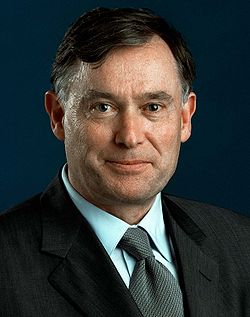
On 25 August 2005 the Senate rejected applications by members of the Bundestag against President Horst Köhler’s order of 21 July 2005 dissolving the 15th Bundestag and setting an election for 18 September, after Chancellor Gerhard Schröder’s vote of confidence (BVerfGE 114, 121). By 7 votes to 1 on the result, and 5 to 3 on the standard of review, the majority found no use of Article 68 contrary to its purpose: no other assessment was clearly preferable to the chancellor’s view that he could no longer pursue a policy backed by a parliamentary majority. Lübbe-Wolff joined the result and dissented on the reasoning; Jentsch dissented from the result. She wrote that a vote of confidence, like a question at the altar, asks for will rather than knowledge and can be answered only by parliament, and that reviewing whether the chancellor really lacks majority support means the Bundestag’s answer must not be taken at face value.
On 14 January 2014 the Senate, by 6 votes to 2, stayed proceedings on the European Central Bank’s 2012 Outright Monetary Transactions decision and referred questions to the Court of Justice of the European Union (BVerfGE 134, 366). Subject to that court’s interpretation, the majority saw important reasons to treat unlimited purchases of selected governments’ bonds, tied to a reform programme, as exceeding the monetary-policy mandate and as conflicting with the ban on monetary financing, while still considering a restrictive reading compatible with primary law possible. As construed by the majority, the applications challenged both participation by the Deutsche Bundesbank and inaction by the federal government and the Bundestag. Lübbe-Wolff and Michael Gerhardt filed separate opinions, each treating the applications, so far as they concerned the programme, as inadmissible. She wrote that, in seeking to secure the rule of law, the Court had exceeded judicial competence: the response of the Bundestag and the federal government to an alleged violation of sovereign rights was a matter of political discretion, not of positive duties a court could prescribe, and admitting the complaints committed the Senate to a later decision on the merits. A decision by a few independent German judges, with incalculable consequences for the euro area’s currency, was in her view an anomaly of highly doubtful democratic quality.
In an order of 1 April 2014, for which the Court has named her as rapporteur (BVerfGE 136, 69), the Senate rejected abstract-review applications against a time-limited ordinance on extra-long goods vehicles. The Road Traffic Act authorized the ordinance, Bundesrat consent was not required, and the citation requirement and parliamentary reservation were met. In the Aviation Security Act plenary, also listed by the Court as her rapporteur work (BVerfGE 132, 1), the Second Senate had asked whether it could depart from the First Senate’s judgment of 15 February 2006 voiding the power to shoot down aircraft used as weapons against human life. On 3 July 2012 the plenary derived federal competence from the air-traffic power rather than Article 35, allowed specifically military weapons under Article 35 only on narrow conditions that do not circumvent Article 87a(4), and required even urgent over-regional deployments to be decided by the federal government as a body. Judge Gaier dissented on military weapons.
After the Second Senate’s judgment of 5 May 2020 on the European Central Bank’s public-sector purchase programme, which for the first time declared acts of European Union institutions ultra vires, commentary returned to the 2014 dissent. Franz C. Mayer wrote that a dissent can become a prophecy, and that Lübbe-Wolff’s warning—that a court may exceed judicial competence while trying to secure the rule of law—extended to the 2020 judgment, which he described as immediately highly controversial in Germany and abroad. Francesca Bignami quoted the dissent’s description of a decision by a few independent German judges, with incalculable consequences for the euro area’s currency, as an anomaly of questionable democratic character, and argued that this was what the 2020 judgment had done.
In 2014, shortly after leaving the bench, Gertrude Lübbe-Wolff lectured at the University of Osnabrück on the internal work of the Federal Constitutional Court; the text appeared in 2015 as Wie funktioniert das Bundesverfassungsgericht? (V&R unipress / Universitätsverlag Osnabrück, 52 pages). From a 2013 intake of more than 9,000 cases, she described chambers deciding thousands of matters while the senates decided a few dozen, and presented the open complaint and consensus-seeking deliberation as reasons for the court’s acceptance and for the standing of the Basic Law. The publisher’s summary sets that account against European observers who see the court as activist. A Spanish edition appeared with Palestra in Lima in 2020, an abridged Japanese version in the Sophia Law Review 60, no. 3 (2017), and a Chinese version in 2022.
In 2015/16 she was a fellow at the Wissenschaftskolleg zu Berlin on “Cultures of Deliberation in Apex Courts,” comparing preparation, time, the presence of clerks, and political factionalism in constitutional courts. She interviewed judges in Berlin and reported the work on 14 June 2016 in a colloquium, “Justices in Conference.”
Beratungskulturen. Wie Verfassungsgerichte arbeiten, und wovon es abhängt, ob sie integrieren oder polarisieren was issued in Berlin in 2022 by the Konrad Adenauer Foundation and listed at 682 pages; the 2023 second edition corrected typographical errors only. It contrasts a seriatim practice, illustrated by the Supreme Court of the United States, with a per curiam practice illustrated by Karlsruhe. In a 2023 interview she said the Supreme Court’s conference ordinarily lasts about half an hour of sequential voting, with a majority required only for the result, whereas German senates spend hours or days because a majority must also carry the reasons. She argued that this yields more moderate decisions and works against polarization only if judges are independent and no lasting one-sided majority is foreseeable.
Thomas Gawron’s review stresses independence, bench size, rapporteurs, clerks and rooms, and her claim that political appointment need not destroy independence, while limited terms and supermajorities—present in Germany, absent at the U.S. Supreme Court—block a stable partisan majority; he counts 88 national and six transnational courts. Christoph Möllers, in the Frankfurter Allgemeine Zeitung of 27 January 2023, praised coverage of France, Myanmar, Peru, Finland and Senegal, and detail such as Karlsruhe’s seating order, while noting an evident preference for one system and the lack of a synthesis.
In winter semester 2017/18 she was a fellow at the Käte Hamburger Kolleg “Recht als Kultur” at the University of Bonn, on a project about law, morality and behavioral traditions in European anti-corruption policy, not on courts. She also spoke there with Koen Lenaerts, Christoph Grabenwarter and others on “How to Behave as a Constitutional Judge.”
The Berlin year also produced Das Dilemma des Rechts. Über Strenge, Milde und Fortschritt im Recht (Schwabe, Basel, 2017, 93 pages), in the Jacob Burckhardt conversations at Castelen. It treats the conflict between strictness needed to steer conduct beyond the single case and leniency that seems right in that case, long cast as law against equity or justice against charity. It asks why blood feud, torture, kin liability and debt bondage have left modern law, and which conditions allow milder rules without losing their steering effect.
Demophobie. Muss man die direkte Demokratie fürchten? (Vittorio Klostermann, 2023, 212 pages) examines direct democracy. Ten objections—incompetence, demagoguery, fiscal irresponsibility, ignoble outcomes, antisocial effects, binary choices, danger to minorities, scale, incompatibility with representation, and diffused responsibility—are followed by four shorter arguments: unpacking policy packages, democratizing foreign affairs, offsetting short-termism, and easier correction of errors. Otmar Jung reports her charge of an “ideal-comparison error,” judging real referendums against an idealized parliament, and a “generalization error” that ignores design; she treats the 2016 Brexit vote as a badly built procedure whose faults lay with Parliament, using Switzerland and U.S. states as evidence. Jung calls the book positioned but differentiated. The Neue Zürcher Zeitung framed it as an account of why German politicians resist popular votes. Michael Koß credited the rebuttal of stock prejudices but called “demophobia” a category mistake, since Article 20 of the Basic Law already places the demos in representative government, and argued that she sometimes equates her preferences with public discontent, omits a concrete design, and ignores the tension with German-style constitutional review, which Switzerland largely lacks.
On Verfassungsblog on 30 November 2023 she argued that one-sided staffing is a failure of systemic impartiality, distinct from individual dependence, and that it survives a change of government, as at Poland’s Constitutional Tribunal after Law and Justice appointments. Limited terms and qualified majorities such as Germany’s two-thirds rule help, she wrote, but fail when one camp can meet the supermajority alone, as she said Hungary had done repeatedly, or when conventions such as Swiss proportionality weaken. In a 2024 interview she said the growth of a more radical Alternative for Germany warranted concern but not a new 1933, because most citizens were not extremists and the Basic Law was better protected than the Weimar constitution. Party bans, forfeiture of basic rights and intelligence observation were legitimate, she said, while extending criminal law ever further into opinion was not. On 27 August 2025 the Frankfurter Allgemeine Zeitung interviewed her, under the headline “Brandmauern nicht gegen Parteien errichten,” on the failed nomination of Frauke Brosius-Gersdorf, American-style politicization, reform of judicial elections, and AfD candidates.
On 3 December 1999 the main committee of the German Research Foundation selected Lübbe-Wolff for the Gottfried Wilhelm Leibniz Prize for 2000, presented on 10 February 2000 in Bonn. The notice assigned her, then professor of public law at Bielefeld University, 1.5 million Deutsche Mark, the sum for more theoretically oriented recipients, usable over five years. It cited her work on law and morality in environmental protection and on carrying legal commands into practice (Wirkungsforschung des Rechts).
The Honourable Society of the Middle Temple called her an honorary bencher on 20 October 2011. On 24 July 2012 Stuttgart gave her the Hegel Prize (12,000 euro, every three years, for service to the humanities), endowed in memory of Georg Wilhelm Friedrich Hegel. The city said the jury honored her scholarship and her study of Hegel’s philosophy of right; Mayor Wolfgang Schuster said she showed that this philosophy also plays a part in political practice. Dieter Grimm gave the laudation.
On 2 June 2014, at Schloss Bellevue, Federal President Joachim Gauck conferred the Grand Cross with Star and Sash of the Order of Merit of the Federal Republic of Germany as she left the Federal Constitutional Court. He said it was for her commitment and her achievements. On 12 June 2015 the European University Institute awarded an honorary doctorate for her work in administrative and constitutional law and legal philosophy.
On 30 October 2021 the Immanuel Kant Foundation in Freiburg gave the eighth Freiburg Kant World Citizen Prize jointly to Lübbe-Wolff and Małgorzata Gersdorf “for courageous, incorruptible commitment on behalf of the community of values of a democratic Europe under the rule of law.” For Lübbe-Wolff it cited judicial work on European integration and environmental law, and her questioning of prevailing views, including a 2019 Freiburg lecture in favor of popular initiatives and referendums. The prize, endowed in the spirit of Immanuel Kant, totaled 15,000 euro.
On 26 November 2024 the Universitätsgesellschaft Münster gave her the Ernst Hellmut Vits Prize (20,000 euro) for her life’s work, citing theory joined to practice and her part in debate on the vulnerability of democracy. Rector Johannes Wessels of the University of Münster spoke of the rule of law and legal culture; Reinold Schmücker, in the laudation, of contributions to the common good beyond specialist debate. The program also records honorary membership of the Asociación Argentina de Justicia Constitucional, without a date.
The Berlin-Brandenburg Academy of Sciences and Humanities elected her in 2010 to its social-sciences class. It now lists her as an entpflichtetes ordentliches Mitglied, an ordinary member released from duties, which the academy does at age 70.
She chaired the academic advisory board of the Wissenschaftskolleg zu Berlin from 2003 to 2009 and was a fellow there in 2015–16. In 2017–18 she was a fellow of the Käte Hamburger Kolleg “Law as Culture” at the University of Bonn. The 2014 inaugural booklet of the International Society of Public Law (ICON•S) names her to its inaugural council; her university profile still lists council membership.
That profile records the editorial board of the Neue Zeitschrift für Verwaltungsrecht (2001–2010), the advisory boards of the Zeitschrift für Umweltrecht (1992–2004) and the Zeitschrift für Ausländerrecht, the Nomos series Interdisziplinäre Studien zu Staat und Recht, and the Moscow journal Pravo i Politika.
Ranked by shared high-impact facts, then explicit ties, then shared drivers.
 Joachim GauckJoachim Gauck (born 24 January 1940) is a German civil…Affiliated
 Michael WolffMichael Wolff (born August 27Affiliated
 Gerhard SchröderGerhard Schröder (born 7 April 1944) is a German…Affiliated
 Horst KöhlerHorst Köhler (22 February 1943Affiliated
 Georg Wilhelm Friedrich HegelGeorg Wilhelm Friedrich Hegel (1770–1831) was a…Affiliated
 Johannes RauJohannes Rau (16 January 1931Affiliated
How the record is sourced and how the score is derived.
The score is formula-derived (Factrail formula v1, version 1.0.0), not an editorial verdict. Read the methodology.
By the Factrail desk · Method: how we source and score · Last reviewed
Dispute a fact on this pageNamed here, or represent someone who is? Request a right of reply.
People and organizations as listed in the Related section of this page; facts, drivers and the pages that name it as listed in the blocks here. Counts, not a rating.