
Jonas Sjöstedt
Jonas Sjöstedt (born 25 December 1964 in Gothenburg) is a Swedish politician of the Left Party (Vänsterpartiet) and a writer.
- Facts0
- Drivers0
- Indicators0
Jonas Sjöstedt (born 25 December 1964 in Gothenburg) is a Swedish politician of the Left Party (Vänsterpartiet) and a writer.
Jonas Sjöstedt (born 25 December 1964 in Gothenburg) is a Swedish politician of the Left Party (Vänsterpartiet) and a writer. He has been a member of the European Parliament since 16 July 2024, having previously sat there from 9 October 1995 until his resignation on 26 September 2006. Between those European terms he was a member of the Riksdag for Västerbotten County from 4 October 2010 to 3 November 2020 and leader of the Left Party from 6 January 2012 to 30 October 2020.
Before his first election to the European Parliament he worked as a metalworker at Volvo Trucks in Umeå. He left the Parliament in 2006 and lived in New York City from 2006 to 2010, while his wife served as a diplomat, and during those years he published nonfiction and a first novel.
The Left Party’s congress elected him leader on 6 January 2012, with 179 votes to 39 for Rossana Dinamarca. In the national elections of that decade the party received 5.60 percent of the vote and 19 seats in 2010, 5.72 percent and 21 seats in 2014, and 8.00 percent and 28 seats in 2018.
His term as party leader ended on 30 October 2020. Nooshi Dadgostar was elected to succeed him at a digital party congress on 31 October 2020. In the European Union election of 9 June 2024 the Left Party won 11.06 percent of the Swedish vote, 464,166 ballots and two of Sweden’s 21 seats. Sjöstedt received 260,093 personal votes, 56.03 percent of his party’s votes, and took office with Hanna Gedin.
Tor Jonas Sjöstedt was born in Gothenburg on 25 December 1964. He was the middle of three children. The biography he supplied for the Riksdag register names his parents as the engineer and teacher Tor Sjöstedt and the physician Ingrid Dahlström. A 2014 Hemmets Journal interview adds that his mother also worked as a psychotherapist, and names an older sister, Hanna, and a younger brother, Svante.
His father’s engineering work at hydroelectric stations took the family around Sweden: Sundsvall, Västerås and then Vänersborg. Sjöstedt has said that his earliest memory is from Sundsvall, of a Konsum delivery van backing over a pedal car on the day he was given it. He has described a secure home with two well-educated parents and no shortage of money, but not a party-political one: in a 2018 Sveriges Radio interview he said his parents felt alien to the Social Democrats, whom they saw as the people in power, and that the left was not discussed. Hemmets Journal reported that his mother spent much of her career with disabled people and refugees, that his father had a strong interest in the environment, and that father and son worked together for line 3 in the 1980 nuclear-power referendum.
He has said that new schools and the “wrong” dialect sometimes left him exposed, bullied and in fights, and that starting the second grade in Vänersborg with dyslexia made him withdrawn. At 13 he hitchhiked alone to Oslo and Helsinki.
He has said that he dropped out of school more than once—later specifying two occasions—and that at 17 he left home, took the train north to Kiruna and used student loans to continue at upper secondary school. He described eventually getting through a two-year social line in Luleå, and not studying formally after that. The Riksdag biography records a two-year upper secondary school in Luleå in 1985. Classmates interviewed in 2013 placed that schooling at the since-closed Hermelinsskolan; one recalled the class leaving in the spring of 1984. They described high grades and an essay prize, shared with two other boys, about a future Luleå. Sjöstedt credited the class teacher Göta Nergård and classmates who visited him on his first evening, when he knew no one in the town.
Reading had come late. He has called the difficulty a mild dyslexia that the school did not identify, and said he could not read until he was nine. In the same interview he said pupils were grouped by ability and that he sat with those described as lacking a “reading head”; he got through a book about Native Americans after his mother refused to read it aloud again. Dagens Nyheter reported that he then worked through the newspapers, and that at ten, during the Vietnam War, he remembered a feeling of euphoria when FNL forces took Saigon.
In 1978, aged 13, he joined Kommunistisk ungdom, the youth league of Vänsterpartiet kommunisterna, the predecessor of the Left Party. The 2012 Dagens Nyheter profile describes him as much the youngest member of the Vänersborg branch, among older members from working-class homes, and says his parents were troubled that he had become a communist. At 14 his father offered a trip to New Zealand if he earned the fare himself; he did, and afterwards mixed school with casual jobs and travel. A Hermelinsskolan classmate later remembered that he was already in Kommunistisk ungdom in Luleå, visibly so, but that he did not try to win the class over. He told an interviewer that he had simply been “instinctively left.”
In 1990 Jonas Sjöstedt moved from Gothenburg to Umeå, where he worked as a metalworker at Volvo Trucks (Volvo Lastvagnar). Nationalencyklopedin states that in 1993–94, while he was vice-chair of Nej till EU, he was employed as a metalworker at Volvo in Umeå. A January 2014 SVT fact box lists “lastbilsmontör” (truck assembler) for 1990–1995, and a 2020 Svenska Dagbladet note says he worked as an assembler at Volvo Lastvagnar in Umeå. Store norske leksikon describes him as a metalworker who has worked at Volvo’s truck factory in Umeå. The biography he supplied to the Riksdag publication Fakta om folkvalda — the parliament says those entries are information the member provided — reads “Metallarbetare, Volvo Lastvagnar, Umeå,” with no dates and no union title.
Aerial view of the Volvo Group plant in Umeå, with the company name on a building beside the river.
In an interview published by Aftonbladet on 5 January 2014, Sjöstedt told Lena Mellin that he assembled truck cabs on a door line at the Umeå works. He said that when the early-1990s crisis brought large cuts at the plant, a foreman looked at the floor, handed him a brown envelope and told him he was among those who had to leave, and that he was out of work for about six months before being taken back when the economy turned. The dismissal is documented as his account in that interview, not as a company personnel record cited by the reference biographies.
From his election to the European Parliament in 1995 he was on leave from the assembler job. Aftonbladet reported on 27 January 2003 that he still took extra summer shifts as a metalworker in Umeå, and quoted him saying it felt good “to work a bit for real” (“Det känns bra att jobba lite på riktigt”). In December 2009 the LO newspaper Arbetet described him as a former MEP with a union background from Volvo Lastvagnar in Umeå (“ett fackligt förflutet”). None of these accounts names a club chairmanship, a safety-representative post, or another elected office in the metalworkers’ union.
The same Riksdag biography lists one municipal mandate: member of Umeå municipal council, given as “Kommunfullmäktig, Umeå kommun 98-02.” Those years fall during his time as an MEP, rather than before the 1995 election. The entry does not place him on the municipal executive, and published reports do not attach him to a particular item of council business.
A seat on the national party executive is documented separately. Svenska Dagbladet reported on 11 January 2002 from the Left Party congress in Västerås that, late the previous evening, three new members had been elected to the party executive (partistyrelsen): Lena Karlsson from Värmland, the MEP Jonas Sjöstedt from Umeå, and Stellan Hermansson from Västerbotten. Gudrun Schyman was unanimously re-elected party leader at the same congress. Published reports do not show him on that executive, or as chair of the Umeå or Västerbotten party organisation, before he entered the European Parliament.
On 13 November 1994 Sweden held an advisory referendum on membership of the European Union. Of the votes cast, 52.3 percent were for joining, 46.8 percent against and 0.9 percent blank, on a turnout of 83.3 percent. The parties had agreed to follow the result. The Riksdag decided on 15 December 1994, and Sweden joined on 1 January 1995. Sjöstedt later wrote that he had been vice-chair of the campaign organisation Nej till EU, that the no side lost narrowly, and that he would have voted the same way again. In a survey that November, 88.0 percent of Left Party sympathisers said they had voted no.
Sweden's first election to the European Parliament, on 17 September 1995, filled 22 seats. Turnout was 41.6 percent. The Left Party won 12.9 percent and three seats. Sjöstedt took his seat on 9 October 1995 in the Confederal Group of the European United Left/Nordic Green Left (GUE/NGL).
He was returned for the term beginning 20 July 1999, when the party won 15.8 percent and again three seats. He received 155,278 preference votes, the third-highest total among Swedish candidates elected that year. On 13 June 2004 the party took 12.79 percent and two seats, as Sweden's allocation fell from 22 to 19. He was re-elected from 20 July 2004 with 174,633 preference votes, the most of any Swedish candidate elected that year.
Until 19 July 1999 he was a full member of the Committee on Institutional Affairs and of the delegations to the European Economic Area Joint Parliamentary Committee and the EU–Slovakia Joint Parliamentary Committee. He was a substitute on the Committee on Regional Policy until January 1997, and thereafter on the Committee on the Environment, Public Health and Consumer Protection and the delegation for relations with Estonia. After leaving, he wrote that he had been GUE/NGL coordinator on the environment committee, and that inside Parliament he had worked against further transfers of power, for returning decisions to the member states, and for more openness.
From 20 July 1999 he was a full member of the environment committee — from 2004 the Committee on the Environment, Public Health and Food Safety — and of the delegation to the ACP–EU Joint Parliamentary Assembly, holding both until 26 September 2006. He was vice-chair of the EU–Lithuania Joint Parliamentary Committee from 7 February 2002 to 30 April 2004. Substitutes included constitutional affairs, budgetary control and, from 19 January 2006, the temporary committee on the alleged use of European countries by the CIA for the transport and illegal detention of prisoners.
The environment committee appointed him rapporteur on 16 June 2003, and again on 27 July 2004, for the proposal on management of waste from extractive industries, procedure 2003/0107(COD). On 8 September 2005 he was also rapporteur for Parliament's conciliation delegation.) He wrote the first-reading report A5-0177/2004, which underpinned Parliament's position of 31 March 2004, and remained rapporteur for A6-0236/2005 and the third-reading report A6-0001/2006.) After several serious mining spills, Norrbottens-Kuriren reported that the January 2006 plenary decision on stricter waste requirements for mining companies rested on a compromise he had proposed.
He also campaigned against the euro. The Centre Party, the Green Party and the Left Party recommended a no in the referendum of 14 September 2003. The result was 55.9 percent no, 42.0 percent yes and 2.1 percent blank, on a turnout of 82.6 percent. In May 2003 Svenska Dagbladet called him one of the no side's principal representatives. He argued that staying out would preserve more freedom over economic policy, and that the case against a more federal Union mattered more than the economics. In the post-referendum survey, 84.7 percent of Left Party sympathisers said they had voted no.
On 15 October 2005 Aftonbladet reported that he would leave the seat and move to New York City to live with his wife, the diplomat Ann Måwe, who was working for Sweden at the United Nations. He said he wanted to live with his family rather than meet every other weekend. They had met nearly three years earlier, when she was vice-consul in Jerusalem, and he had commuted between Umeå, Brussels, Strasbourg and Jerusalem. He planned to stay about another year, through the next Swedish election, rather than until 2009 as he had expected, and named Jens Holm as his successor.
He told Flamman the following month that there was no political reason for leaving, that the couple had never lived together, and that her posting was the career they had chosen to prioritise. Holm, third on the 2004 list, was to take the seat after the Swedish election. The Parliament's list of outgoing members records the end of his mandate as 26 September 2006.
Sjöstedt left the European Parliament in the autumn of 2006 and moved to New York City, where his wife had taken a job at the United Nations. In January 2009, still living there as a stay-at-home father, he accepted a request from members of the Left Party in Västerbotten County to seek nomination for the party's Riksdag list. He had not previously been a Riksdag candidate. Visiting Umeå the following month, he said he was standing because of the economic crisis, rising unemployment and widening class gaps in Sweden and Västerbotten, and he then expected the sitting list leader, Liselotte Olsson, to keep the first place.
At the general election on 19 September 2010 the Left Party received 17,034 votes in the Västerbotten County constituency, 9.98 percent of the valid votes, and one of the constituency's 11 seats. Sjöstedt was already placed first on the party's ballot. He received 5,507 preference votes, 32.33 percent of the party's votes in the county, and the Election Authority recorded him among the candidates who cleared the personal-vote threshold then in force, 8 percent of the party's constituency vote, where a seat was available. He was declared the member, with Olsson as the first substitute, and took the seat on 4 October 2010.
The party kept that single seat at the next two elections. In 2014 it won 19,214 votes in the county, 10.96 percent; in 2018 it won 22,696 votes, 12.69 percent, while the constituency's allocation fell from 11 seats to 10 and then to nine. The register lists him as a serving member from 29 September 2014 and again from 24 September 2018.
From 12 October 2010 he was a full member of the Committee on EU Affairs and a substitute on the committees on foreign affairs and transport. In the EU committee the government consults the Riksdag on the line Sweden is to take in the European Union, including the prime minister's consultations before the European Council and other ministers' consultations before the Council of the European Union. Unlike the standing committees, it does not prepare decisions of the chamber.
The full EU-committee seat ended on 25 January 2012, shortly after the register dates the start of his party leadership to 6 January, and the foreign-affairs and transport substitutes ended on 11 March 2012. From 26 January 2012 he was a substitute on the EU committee, an assignment renewed after the 2014 election, aside from a few days at the change of term, and held until 3 November 2020. On 14 February 2012 he joined the Advisory Council on Foreign Affairs (Utrikesnämnden) and the War Delegation, and remained on both until he left parliament.
The council is chaired by the king, with the prime minister presiding in his absence, and consists of the Speaker of the Riksdag and members elected for the term. The government must keep it informed of foreign relations that may matter for Sweden and, where possible, consult it before any major foreign-policy decision. The War Delegation, the Speaker and 50 members, can assume the Riksdag's powers if Sweden is at war or in danger of war. In several periods between 20 March 2012 and 14 October 2020 Sjöstedt was also a substitute on the Swedish delegation to the Nordic Council. From 18 March 2020 he was entered as a substitute on most of the standing committees for the remainder of the mandate.
On 15 January 2020 Sjöstedt said he would not stand again as party leader. He wrote that he wanted more time with his family, who had for several months been living in Vietnam, where his wife was ambassador, and that he planned to resign the Riksdag seat in the summer and join them in Hanoi. Because of the COVID-19 pandemic, the party board postponed the congress, set for the spring and expected to choose a successor, until 29 October, and he said he would remain leader until then. The register gives 30 October 2020 as the last day of the leadership.
On 15 October the chamber approved his resignation from the seat with effect from 4 November. His service as an ordinary member ended on 3 November 2020. The Election Review Board then reported that the Election Authority had credentialed Gudrun Nordborg of the Left Party as a new member from 4 November 2020, and that the credentials accorded with the Elections Act.
On 6 January 2012 the Left Party congress in Uppsala elected Jonas Sjöstedt party leader, succeeding Lars Ohly. Delegates gave him 179 votes against 39 for the member of parliament Rossana Dinamarca, with one abstention. The Riksdag register records the post as running from 6 January 2012 to 30 October 2020.
The evening before, the congress rejected a proposal for two party leaders, by 115 votes to 108. Ulla Andersson, who had argued for a shared leadership, withdrew and backed Sjöstedt. Dinamarca, who opposed a dual post, stayed in as a candidate for sole leader. Sjöstedt had spent the previous eight years outside the party executive, including three years in the United States, and said his support lay in the membership rather than on the board. He told delegates he would also be chair for those who had voted for Dinamarca, and he thanked Ohly for what he called a healthy internal debate and agreement on direction. At the press conference he said the party would not be defined by saying no, that it would compete with the Green Party on climate policy joining social justice to ecological sustainability, and that he saw a possible 10 to 15 percent without promising that at the next election.
In the Riksdag election of 14 September 2014 the Left Party won 356,331 votes, 5.72 percent and 21 seats: 22,278 votes and 0.11 percentage points more than in 2010, when it took 334,053 votes and 5.60 percent, and two seats more than the 19 it then held. On 9 September 2018 it won 518,454 votes, 8.00 percent and 28 seats, a gain of 162,123 votes, 2.29 percentage points and seven seats. Neither result put the party in cabinet. In 2014 the Social Democrats and the Greens formed a minority government with the Left Party outside it; after 2018, no combination had a majority, and forming a government took 131 days.
On 15 September 2014 Stefan Löfven, leader of the Swedish Social Democratic Party, told Sjöstedt that the Left Party would not enter a Social Democratic-led government, because he wanted to keep cross-bloc cooperation open. Sjöstedt called that a serious mistake. He said the party would oppose the cabinet from outside, abstain rather than vote yes or no on a Social Democratic–Green prime minister, and negotiate a budget only alongside an agreement on profits in welfare that it could accept.
The government did negotiate its budget with the Left Party. On 3 December 2014 the Riksdag rejected it: the Alliance alternative passed by 182 votes to 153 after the Sweden Democrats voted with the centre-right. Löfven said he would not resign and that on 29 December he would call an extra election for 22 March 2015. On 27 December the Social Democrats, the Greens and the Alliance — the Moderate Party, the Centre Party, the Liberals and the Christian Democrats — agreed that the largest constellation would be allowed to install a prime minister and pass its budget. Löfven then said there would be no extra election. The Left Party was not a signatory. Sjöstedt welcomed the cancellation and a continued joint budget, including the welfare-profits deal, and said that staying outside left the party free to vote against a future centre-right prime minister or budget.
On 11 January 2019 the Social Democrats, Greens, Centre and Liberals published a 73-point agreement under which the Centre and the Liberals accepted Löfven as prime minister of a Social Democratic–Green government. The text stated that the Left Party would not have influence over the political direction in Sweden during the term. The points included wider exceptions to seniority rules in the Employment Protection Act, free rent-setting in new housing, and a rebuilt Swedish Public Employment Service in which independent providers under a freedom-of-choice system would match jobseekers to jobs. Legislation on employment protection and rents was aimed at 2021.
Sjöstedt called abstention a hard internal decision. On 17 January he said the alternative was a government led by Ulf Kristersson and dependent on Jimmie Åkesson, and warned that the party was pivotal: do not touch labour law and do not introduce market rents, "for then it will blow up." He said Löfven had given assurances, confirmed by a handshake, that free rents in new building and weaker employment protection would not be carried out, that the Left Party could negotiate outside the agreement, and that its earlier reforms would stand. If not, he said, it would vote with the Moderates and Christian Democrats to bring the government down. On 19 January he called the threat "100 percent real," noted that a no-confidence motion needed at least 35 members while his party had 28, and said he would not seek Sweden Democrat votes.
On 18 January the Riksdag approved Löfven by 115 votes to 153, with 77 abstentions and four members absent. A prime minister falls only if a majority votes no, so the abstentions decided it. The Left Party cast 27 abstentions; one of its members was absent. In December 2019 the party threatened a no-confidence vote against labour-market minister Eva Nordmark over the employment-service reform, with the Moderates and Christian Democrats indicating support. On 9 December, after the government delayed the reform a year and dropped the freedom-of-choice statute as its basis, Sjöstedt withdrew the threat, saying the aim had been to change the policy.
That rent warning was not voted on while he led the party. On 21 June 2021, under his successor Nooshi Dadgostar, the Riksdag dismissed Löfven by 181 votes to 109, with 51 abstentions, the first time a sitting Swedish prime minister lost a confidence vote. The Left Party voted with the Moderates, Christian Democrats and Sweden Democrats. Dadgostar said that if Löfven and Centre leader Annie Lööf introduced market rents, it would not be in the Left Party's name.
On 15 January 2020 Sjöstedt said he would not stand at the congress planned for May, and that he would leave the Riksdag in the summer to join his family in Hanoi, where his wife was ambassador. He said he wanted more time as a parent and partner. Critics, including inside the party, argued that tolerating Löfven and the January Agreement had made the party insufficiently radical. He said he did not regret the choice: most Left voters, he argued, had not wanted Åkesson and Kristersson in office, but pressure against parts of the agreement.
The pandemic changed the date. On 21 March 2020 the board postponed the spring congress, and Sjöstedt stayed on. At a digital congress on 31 October 2020 Dadgostar, deputy leader and the nomination committee's candidate, was elected unanimously. The Riksdag record ends his term as party leader on 30 October 2020.
As leader of the Left Party, Jonas Sjöstedt made caps on profits in tax-funded welfare, and opposition to weaker job protection and market rents, central demands. On 19 January 2018 the Social Democratic–Green government of Stefan Löfven and the Left Party agreed rules for schools and social care, not health care: a permit to take public money, and an operating surplus of at most seven per cent of operating capital plus the government borrowing rate. Sjöstedt said that “money for welfare should go to welfare.” Such a bill had been a condition of the party’s budget support after 2014. In March the Council on Legislation called the drafts incomplete and possibly in conflict with municipal self-government and freedom of enterprise, warning of “highly undesirable” effects. The government still sent a bill to the Riksdag. On 7 June 2018 it fell, 162 votes to 139. Social Democrats, Greens and the Left voted for it; the centre-right Alliance and the Sweden Democrats voted against and asked for national quality requirements instead.
The January 2019 agreement among the Social Democrats, the Greens, the Centre Party and the Liberals included free rents in new housing and looser employment protection. Sjöstedt, whose party abstained so Löfven could return as prime minister, set both as red lines: “We hold the balance. Do not touch labour law and do not introduce market rents, because then it blows up.”
From his seat in the European Parliament he argued for leaving in principle; later he chose not to campaign for exit, without dropping criticism of the union or rejection of the euro. In the 2003 referendum on the third stage of economic and monetary union he wanted “an exception from EMU that is as comprehensive as possible,” so the Riksdag could set the Riksbank’s status, the exchange rate and whether Sweden was bound by the stability pact’s three-per-cent deficit ceiling. “In principle we want to leave the EU, but this referendum is not about that, and voting no does not mean that we leave the EU,” he said, after Social Democrat Anders Sundström read the opt-out as a sign that the Left really wanted to leave the EU. In February 2019 a conference voted 41 to 30 not to pursue exit in that election. In May 2024 a congress ceased to treat withdrawal as an end in itself. Nooshi Dadgostar said the party would work inside the EU. Sjöstedt, the lead candidate, said there was “at present no reason whatsoever to talk about an exit,” though the programme still called the union undemocratic and sometimes an obstacle, including on rents, strike-breaking and railways. SVT’s Elisabeth Marmorstein compared a retained exit option with the Sweden Democrats. His 2024 answers still rejected the euro, in favour of monetary policy set to Swedish conditions.
He was no longer leader, and no longer in the Riksdag, when on 22 March 2023 parliament approved NATO accession by 269 votes to 37. Only the Left and the Greens voted no. Foreign Minister Tobias Billström called membership “the best way to safeguard Sweden’s security.” Turkey and Hungary had yet to ratify. In Arbetet in May 2022 he called silence on President Recep Tayyip Erdoğan’s conditions “pitiful”: resumed arms exports, extraditions, and the risk that Kurds who had fought the Islamic State would be the first victims. After the election he argued in Dagens Arena for freezing the bid until at least summer 2023. It had been rushed without a referendum, he wrote; Russia’s war on Ukraine did not make a separate attack on Sweden realistic. He still backed aid to Ukraine, and said the bid already meant deference to Erdoğan, arms that might be used against Kurds in Syria, alignment with NATO nuclear policy, and pressure on asylum and speech.
He opposed the temporary asylum rules that followed 2015. In April 2016 he told Migration Minister Morgan Johansson the bill would “split a great many families,” discourage education and settlement, and barely change arrivals. Johansson said permanent permits would leave Sweden almost alone in the EU and could mean perhaps ten thousand arrivals a week, on top of the 160,000 who came the year before, and that Sjöstedt had been “against every restriction,” from identity checks to border controls. On 21 June 2016 the Riksdag passed the temporary Aliens Act, 240 to 45, with 30 abstentions. The Left and the Centre voted no; the Christian Democrats and the Liberals mostly abstained. From 20 July, for claims after 24 November 2015, temporary permits were the rule and family reunification was cut to the EU minimum.
As a 2024 lead candidate he treated the EU as the place to cut emissions when Swedish policy weakened. He wanted more room for state aid to green industry, to match the United States and China, and would not promise every 2030 target: “we have to try; it is not impossible.” Households had a part, he said, but could not convert a steel plant or build a trunk line; the levers were cheap transport, solar power and rail. In 2014 he described feminism and ecology, alongside socialism, as “the glasses through which we see the world,” and said parental insurance had to be shared equally if women’s and men’s incomes were to converge.
Sjöstedt’s first book, Masthugget, Moskva, Madrid: berättelsen om Bengt och Greta (Carlsson, 2009), interviews Bengt and Greta Segerson, a Gothenburg couple whom Erik Löfvendahl in Svenska Dagbladet described as rank-and-file communists. It follows Greta’s courier work for the Comintern, Bengt’s time as a Swedish volunteer in the Spanish Civil War, party activity and wartime internment. Stig Hansén, in GT, called it a large story told in small voices—Segerson disliked being called a legend—and said Sjöstedt made the history readable by supplying context. Löfvendahl thought the account filled a gap and noted that the couple admitted how naively they had viewed the Soviet Union, while Sjöstedt’s afterword called Stalinism a catastrophe for socialism. Arbetet found the lives extraordinary, and wrote that surveillance by the Swedish Security Service supported them, but wanted a more distant narrator for their suspicion of Social Democrats and for the book’s silence on purges in the International Brigades.
Socialister (Verbal, 2022) stays with members: interviews with 20 people in the Left Party on why they joined and how they were active. The leadership memoir Allt kommer att bli bra (Albert Bonniers Förlag, 2021), written with his former press secretary Jessica Nordh, is 526 pages on 2012–2020, the two authors taking turns. Early reviews were largely cold. Saga Cavallin wrote in Dagens Nyheter that the arrangement was ill-considered and that Sjöstedt appeared “underbar.” Victor Malm, in Expressen, found behind-the-scenes gossip but called the book boastful and far too long. Johan Manell in Altinget said the two voices grew repetitive; a few sharp scenes, including security-police protection for Sjöstedt’s son after neo-Nazi harassment, sat among reports of debates and tours. Fokus headlined its review as colourless self-advertisement without literary quality. A 2023 notice in Svensk Tidskrift dissented, calling the book an unusually good party-leader memoir, while still finding the shared authorship confusing and the portrait of Ulla Andersson close to a tribute.
After the leadership he also returned to columns. Interviewed by Dagens Arena from quarantine in Hanoi, he said he had missed time for longer writing; the magazine announced that he would contribute every other week.
Between the European Parliament and the party leadership he published three political thrillers with the Umeå house H:ström Text & Kultur: Sammanflöden (2009), Sahara (2010) and Spanska brev (2010). Reviewing them in Aftonbladet in 2012, Inga-Lina Lindqvist described a finished trilogy, with the killings set in the Parliament where he had sat from 1995 to 2006. The plots take up toxic-waste dumping in Somalia, Morocco’s occupation of Western Sahara, and, in Spanska brev, whether the left could keep a democratic history of the Spanish war without erasing its communist past. She found the moral scheme almost too neat, a passive MEP beside an assistant and an official who take the risks, and a bitter view of politicians fixated on their image.
Hämndens tid (Saga Egmont, 2022) and Svekens tid (Ordfront, 2024) extend the series Maktens korridorer. Rasmus Landström, also in Aftonbladet, called the first three badly and dutifully written, but argued that the later, shorter novels were gossipier, fuller of caricature and much more accomplished. He called Svekens tid—in which the Left Party official David Lööf is drawn into a case around a Kurd sought by Turkish intelligence—Sjöstedt’s best book and a pamphlet for the party’s line on NATO, with the accession process itself treated as the offender. The later novels, he added, work best when older injuries, from Chile, Spain and Finland’s Lapua movement, drive the revenge plot.
On 11 September 2023 Sjöstedt said he had accepted a nomination from his party association in Umeå to stand again for the European Parliament. He wrote that he wanted another campaign and to use what he called the Parliament’s considerable power for left-wing politics and a stricter climate policy, and for the European Union as cooperation among democracies rather than a superstate concentrating power in Brussels. The Left Party placed him first on the list adopted for the election, announced on 20 January 2024. Second was Hanna Gedin, who worked for the party in the Parliament and had been deputy party secretary; she said she wanted to continue work for a ceasefire in the Gaza Strip.
The election was held on 9 June 2024. In the Election Authority’s final protocol the Left Party received 464,166 votes, 11.06 percent, and two of Sweden’s 21 seats. Turnout was 53.39 percent. Sjöstedt received 260,093 personal votes, 56.03 percent of his party’s votes. That was above the threshold of 5 percent of a party’s votes required to be elected on personal votes, and it was the highest personal vote among candidates who cleared the threshold. Gedin received 10,098 personal votes, 2.18 percent of the party total, below the threshold; she was elected as the party’s second member by list order. The Swedish Parliament’s register lists him as a member of the European Parliament from 16 July 2024 to 16 July 2029. The Parliament’s data service likewise records his membership of the tenth term from 16 July 2024, with no end date entered.
Sjöstedt sits with The Left group in the European Parliament – GUE/NGL and has been a member of the group’s bureau since 18 July 2024. His national affiliation in the Parliament is the Left Party. He is a full member of the Committee on Budgetary Control and of the environment committee, the latter recorded from 19 July 2024 and, from 20 January 2025, under the name Committee on the Environment, Climate and Food Safety. He is a substitute on the Committee on Foreign Affairs and, from 23 January 2025, a substitute on the Special Committee on the European Democracy Shield.
From 19 September 2024 he has also been a member of the delegations to the EU–Ukraine and EU–Moldova parliamentary association committees, the delegation for relations with Central Asia, and the delegation to the Euronest Parliamentary Assembly. Gedin was elected alongside him and sits for the same party; the parliamentary posts above are Sjöstedt’s.
On 23 August 2026 Israel denied entry to Sjöstedt and Gedin. SVT reported that they were refused boarding in Athens, on an order requested by the Israeli foreign minister, while travelling toward Israel and then the West Bank. Agence Europe reported that the two, who were not travelling on an official European Parliament mission, announced the next day that they had been stopped from entering Israel and going on to the occupied West Bank and East Jerusalem. A statement from The Left, quoted by Agence Europe, said this happened despite entry permits and supporting documents from the Parliament and the Swedish embassy.
Foreign Minister Gideon Sa'ar asked the Population and Immigration Authority to bar them under Israel’s Entry Law, the Jerusalem Post reported. The Foreign Ministry said they had been due to arrive overnight and to visit the Palestinian Authority, and that they had “consistently acted against Israel in recent years, including by calling for international legal proceedings to be advanced against Israelis.” The ministry said that on public occasions they had made “false accusations against Israel, including claims of genocide, deliberate starvation, and the intentional targeting of children and medical personnel.” The Jerusalem Post reported that Sjöstedt had called Israel’s conduct in Gaza “genocide,” argued for an EU arms embargo and sanctions on Israeli officials, and described policy toward Palestinians as a “cruel occupation,” while recognizing Israel’s right to exist and condemning the 7 October 2023 attack by Hamas.
Sjöstedt said Israel had stopped them from continuing to the occupied West Bank and East Jerusalem. He said they had planned to meet Save the Children, visit refugee camps and meet Israeli and Palestinian human rights organisations, and that they were not going to meet the Palestinian Authority. He said the EU and Swedish embassies in Israel had protested. Gedin described the decision as Israel denying them entry to Palestine, a country she said Sweden recognizes and which she said Israel occupies in violation of international law. She asked what the foreign minister feared they would find, referring to genocide, apartheid laws and settler violence, and said the Parliament had approved the trip. She told SVT it was remarkable that the Swedish government had not acted against Israel and that she expected it to do so. The Left informed the office of Parliament President Roberta Metsola. The office told Agence Europe it was in contact with the two members “because the safety of Members of the European Parliament is our priority,” and that the Parliament was seeking an explanation from the Israeli authorities.
Sjöstedt married the diplomat Ann Måwe in 2004. They had met about three years before an interview in October 2005, when she was vice-consul in Jerusalem; by then she was a diplomat for Sweden at the United Nations in New York, and he said the distance had become too much. A profile published as he was about to become leader of the Left Party listed three children: a daughter, Karin, then 22, from an earlier relationship, and four-year-old twins. Expressen has since referred to the twins as Tor and Greta. In August 2018 he said they had been married for 14 years, had two children together, and shared the children's care, with Måwe taking more of it in election campaigns.
In October 2005 he said he would remain in the European Parliament through the 2006 Swedish election and then move to New York. He lived there in the late 2000s, between that mandate and his return to the Riksdag in 2010, while Måwe served at Sweden's UN representation. He left day-to-day politics, was a stay-at-home father and wrote, including three crime novels set in the European Parliament. The couple also kept a house in Umeå: in 2012 a small house in Sörböle and a ministry flat on Karlavägen in Stockholm, and in 2018 a house in Umeå with a sublet in Midsommarkransen.
On 2 May 2019 the government appointed Måwe ambassador in Hanoi from 1 September, noting earlier service in New York and at the consulate-general in Jerusalem. He said he would move to Umeå, commute to Stockholm and remain party leader, and that living apart was not a separation. On 15 January 2020 he declined another term as leader. The family had already been in Vietnam for several months; he wanted time to be a present father, husband and friend, and planned to leave parliament that summer for Hanoi.
The handover was delayed by the pandemic. In an interview published on 1 November 2020 he said he would fly to Hanoi two days later, where Måwe and the twins were waiting, and then spend two weeks in quarantine in a separate room of the ambassador's residence. He had registered a business and described writing books and articles as his main work. In September 2023, speaking from Umeå, where he was staying only temporarily, he said the Vietnam years had given him time with his children, that he was at work on a fifth crime novel, and that the family planned to move back to Sweden the following summer. In March 2024, while she was still ambassador in Hanoi, the government named Måwe director of the Swedish Dialogue Institute for the Middle East and North Africa in Amman, to start that autumn. In December 2024 Dagens Nyheter photographed him at his and the family's house just south of Umeå.
Ranked by shared high-impact facts, then explicit ties, then shared drivers.
 Tobias BillströmTobias Lennart Billström is a Swedish former politician of…Affiliated
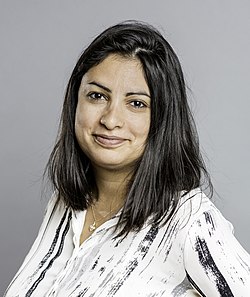 Nooshi DadgostarMehrnoosh "Nooshi" Dadgostar (born 20 June 1985) is a…Affiliated
 Roberta MetsolaCriticism first: European Parliament President Roberta…Affiliated
 Recep Tayyip ErdoğanPresident of Turkey since 2014 after a premiership from 2003Affiliated
 Jimmie ÅkessonPer Jimmie Åkesson is a Swedish politician and authorAffiliated
 Annie LööfAnnie Marie Therése Lööf is a Swedish former politician…Affiliated
How the record is sourced and how the score is derived.
The score is formula-derived (Factrail formula v1, version 1.0.0), not an editorial verdict. Read the methodology.
By the Factrail desk · Method: how we source and score · Last reviewed
Dispute a fact on this pageNamed here, or represent someone who is? Request a right of reply.
People and organizations as listed in the Related section of this page; facts, drivers and the pages that name it as listed in the blocks here. Counts, not a rating.