
Judith Skudelny
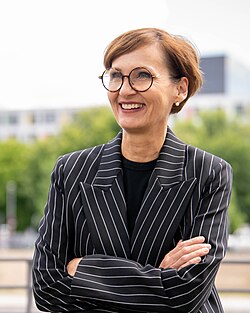
Judith Skudelny (born 2 October 1975 in Stuttgart) is a German lawyer and politician of the Free Democratic Party (FDP).
- Facts0
- Drivers0
- Indicators0
Judith Skudelny (born 2 October 1975 in Stuttgart) is a German lawyer and politician of the Free Democratic Party (FDP).
Judith Skudelny (born 2 October 1975 in Stuttgart) is a German lawyer and politician of the Free Democratic Party (FDP). She was a member of the Bundestag from 2009 to 2013 and from 2017 to 2025, each time via the state list of Baden-Württemberg. The federal party lists her as a member of its national executive since 2017 and of the commission drafting a new basic programme, and as secretary-general of the Baden-Württemberg FDP from 2015 to 2026.
She passed the Abitur at the Königin-Charlotte-Gymnasium in Stuttgart-Möhringen and studied law at the University of Tübingen. The Bundestag biography, which rests on the member’s own statements, records her as a lawyer since 2001 and, since 2009, a partner in the Stuttgart insolvency firm Rüdisühli Insolvenzverwalter GbR. She joined the FDP in 1998, has been a municipal councillor in Leinfelden-Echterdingen since 2004, and has sat on the district council of Esslingen since 2019. She is married, has two children, and is a member of Amnesty International.
In her first term she served on the environment committee and, from 2010 to 2013, on the study commission “Growth, Prosperity, Quality of Life”. After returning in 2017 she was the FDP parliamentary group’s spokesperson on environmental policy, its rapporteur on insolvency law, and chair of the Baden-Württemberg state group. In the 2021–2025 Bundestag she was also the group’s Obfrau on the Committee on the Environment, Nature Conservation, Nuclear Safety and Consumer Protection, and a deputy member of the legal-affairs committee. Inside the state party she was deputy chair in 2013–2014, chair of the Liberal Women in Baden-Württemberg from 2013, and secretary-general from 2015.
On 23 November 2024 a state delegate meeting in Karlsruhe elected her lead candidate for the snap Bundestag election, with 85.7 percent of the vote. She defended the FDP’s departure from government with the Social Democrats and the Greens, saying the chancellor had forced a choice between the constitutional debt brake and the coalition, and she campaigned for lower energy prices, stronger work incentives in the citizen’s benefit, and a sharp reduction of bureaucracy. At the election of 23 February 2025 the FDP took 4.3 percent of the national second vote and won no seats. In Stuttgart I, the constituency in which she had stood in 2021, the FDP’s constituency vote in 2025 was 5.8 percent (9,327 votes) and its list vote 7.3 percent.
While a member she continued paid work as a lawyer and insolvency administrator; the Bundestag published gross figures for that activity of €265,565.54 in 2023 and €241,237.73 in 2024. In December 2019 Stuttgart police investigated a letter, sent to her constituency office with a cartridge case, whose authors described themselves as a militant cell and invoked the Red Army Faction; she published the letter and said she would not be intimidated. At the state party’s congress in January 2026 she broke down while reading the name of her father, Gisbert Skudelny, in the memorial for members who had died; she later said he had belonged to the FDP for more than sixty years, had been active in the Esslingen district association, and had been the reason she joined the party.
Judith Skudelny was born on 2 October 1975 in Stuttgart. In the days after the 2009 federal election, the Stuttgarter Nachrichten described the then 33-year-old as about to mark her 34th birthday that Friday.
Her parents, Heide and Gisbert Skudelny, lived in Stetten, a district of Leinfelden-Echterdingen. The same article called the town her Heimatstadt, reported that she lived there as well, and said the family's election-night gathering had been held at the parental house. Two years of her primary schooling were spent in the United States. In an SWR interview recorded on 22 January 2025 she said her father, then employed by IBM, had been sent on an assignment near New York, and that the family returned to Germany when she was in the fourth grade. The name and the town match an IBM patent: German patent DE2421219, assigned to IBM Deutschland GmbH, lists Dr. rer. nat. Giselbert Skudelny of 7023 Echterdingen among the inventors of a method for controlling a stepper motor, and the United States equivalent, US4072888, gives that inventor's name as Gisbert Skudelny.
She described the household as a liberal one in which both parents were already working. Her mother, whom she identified as born in 1943, had been self-employed and had made a career when a working mother was still called a Rabenmutter. Skudelny called her a model, but said she had led by example rather than steering her daughter into politics. School marks were the condition for early independence. Skudelny said she had not been an outstanding pupil, and that from about the age of twelve her parents allowed youth trips and riding holidays if she was certain of being promoted.
Both parents, she said, had long been active in the Free Democratic Party. Gisbert Skudelny belonged to the association in the Esslingen district for more than sixty years and died about a year before January 2026. After she read his name at a memorial during the Baden-Württemberg party congress, she told the Deutsche Presse-Agentur that he had passed on the political values she still held and had ultimately been the reason she joined the party.
Skudelny took her Abitur at the Königin-Charlotte-Gymnasium in Stuttgart-Möhringen. That detail appears in the biography published by the Bundestag, which states that such biographical entries rest on the members' own information. In the 2025 interview she called the school a very political one. She recalled that the pupils included a person known nationwide as a right-wing radical and a punk who had long gone to demonstrations with the schwarzer Block, and that politics was therefore an ordinary subject of conversation. She said she looked at the parties and in the end stayed with the FDP because she shared values her parents had given her, not merely because it was their party.
After leaving school she studied law at the University of Tübingen (Eberhard Karls Universität), again according to the Bundestag biography. The same text says she has been a lawyer since 2001. A profile on the website of Rüdisühli Insolvenzverwalter GbR in Stuttgart also lists study in Tübingen, but dates her work as a lawyer in the city from 2004 and does not give the years of the state examinations.
Judith Skudelny studied law at the University of Tübingen. The biography published by the Bundestag for the 20th electoral term, which the parliament states is based on the member's own information, records that course of study and says that she has been a lawyer since 2001. The profile of Rüdisühli Insolvenzverwalter GbR, the Stuttgart practice with which she is associated, instead dates her work as a lawyer in Stuttgart to 2004, and neither publication gives the year of a second state examination or of a formal admission order.
That profile's legal notice says the lawyers practising in the partnership, Skudelny among them, are admitted in Germany and are members of the Rechtsanwaltskammer Stuttgart, Königstraße 14, which it names as the supervisory authority, and that the GbR is represented by the partners Manfred Rüdisühli and Judith Skudelny at Silberburgstraße 160. During the 17th electoral term the Bundestag site described her as a lawyer in a medium-sized firm whose work was concentrated on restructuring and insolvency law, and listed her occupation before she entered parliament as lawyer in Stuttgart.
The same sources differ on when the insolvency practice began. The firm profile says she has been an insolvency administrator since 2006. In a reply carried by Parliamentwatch on 24 March 2021 she wrote that she had been self-employed as an insolvency administrator since 2004, and that court appointments are published on insolvenzbekanntmachungen.de. The 20th-term Bundestag biography says she has been a partner of that GbR since 2009. In January 2025 Südwestrundfunk described her as a lawyer and insolvency administrator with her own firm in Stuttgart.
The appointments on record are court appointments. The disclosures published with the 17th-term biography listed her as insolvency administrator for the Amtsgericht Esslingen am Neckar and, until 2012, as trustee (Treuhänderin) for the Amtsgericht Tübingen, in addition to practice as a lawyer in Stuttgart. On 13 November 2023 the Amtsgericht Esslingen opened insolvency proceedings over SNAPSADY UG of Wolfschlugen for inability to pay and appointed Skudelny, at the Silberburgstraße address, as administrator. On 3 April 2025 the Amtsgericht Tübingen ordered provisional measures in the insolvency application concerning Solargold24 GmbH of Reutlingen and appointed her provisional administrator, barring the company from disposing of its accounts and receivables. In November 2025 the Stuttgarter Zeitung reported that, as administrator for Solargold24, she described what remained of the company as a "großer Misthaufen".
A separate business interest is recorded in the 17th-term disclosures: a participation in Novitech Prototyping GmbH of Gerlingen. Commercial-register summaries place the company at the Amtsgericht Stuttgart under HRB 730003, with its seat at Ringstraße 132, a formation or first registration dated 22 May 2009, and a last change of entry on 13 July 2017; OpenCorporates lists it as still registered. Those free summaries do not name the managing directors, and the Bundestag entry records a shareholding rather than an executive post.
Asked in 2021 how the practice could be combined with a Bundestag mandate, she wrote that the published figures were gross receipts, including value-added tax, from which a firm and its staff were financed, that the time spent could not be fixed, and that the mandate and party work came first.
Skudelny has dated her party activity to the age of 18, when she joined the Young Liberals (Junge Liberale), the youth organisation of the Free Democratic Party (FDP). In a 2012 profile she said she had liked arguing with punks about who was really the more conventional. She joined the FDP in 1998. She later told the Deutsche Presse-Agentur that her father, Gisbert Skudelny, had passed on the values she still held and had been the reason she entered the party.
The remark followed the state party's New Year congress, reported on 5 January 2026, at which the general secretary reads the names of members who have died. The list included Gisbert Skudelny, a member for more than sixty years, active in the association in the Esslingen district, who had died about a year earlier. When she reached his name her voice failed; she said the moment was a reminder that party members were "all human beings".
She has been a member of the municipal council of Leinfelden-Echterdingen since 2004. At the election of 9 June 2024 the FDP won 9.64 percent of the vote and two of 26 seats; Skudelny was returned with 6,302 votes and Wolfgang Haug with 7,627. Turnout was 63.47 percent. Her disclosure for the 20th Bundestag listed her on the council's administration, culture and social committee, with no end date for the seat.
On 26 May 2019 she entered the Esslingen district council on an FDP levelling seat for the Leinfelden-Echterdingen constituency, where Haug held the direct mandate; the FDP won six of 98 seats. The same disclosure named her on the district council's culture and schools committee and recorded the mandate as ending on 25 July 2024, the day the new council was constituted. Of 94 members, 58 had sat in the previous council and 36 were new; the councillors honoured that day for long service did not include Skudelny.
At the state congress in Filderstadt on 2 November 2013, Michael Theurer was elected FDP chair in Baden-Württemberg, eleven votes ahead of Hans-Ulrich Rülke, who received 188. Delegates made Rülke, Hosam El Miniawy and Skudelny the deputy chairs, in place of Florian Toncar, Volker Beisel and Hartfrid Wolff, and elected Patrick Meinhardt general secretary in succession to Gabriele Heise. Bundestag biographies limit her deputy chairmanship to 2013–2014.
In 2013 she was also elected state chair of the Liberal Women of Baden-Württemberg, and those biographies continued to describe the post as hers from that year. A speaker profile at the German Packaging Institute later dated the tenure 2013–2022, while the FDP's profile of Anke Hillmann-Richter states that Hillmann-Richter has been state chair since 2020. Hillmann-Richter wrote that the association re-elected its board in Karlsruhe on 21 September 2024 and that she would lead it for two further years. On 17 October 2026 the federal Liberal Women reported her confirmation again, with Alena Trauschel remaining a deputy, Anna Stubert newly elected as a deputy, and Claudia Felden returned as treasurer.
On 5 January 2015 a state congress in Stuttgart elected Skudelny general secretary with 84.79 percent and no opponent, succeeding Meinhardt, who had left for professional reasons. The biography for the 19th Bundestag had dated the office from 2014; the FDP's later profile dates it from 2015 to 2026.
It passed to a successor at the 129th ordinary state congress in Balingen on Saturday, 26 September 2026. The MEP and surgeon Andreas Glück was elected state chair with 89.12 percent; Andreas Fichtner of Karlsruhe, a spontaneous challenger, received 6.9 percent. Glück replaced Rülke, who had led the party into the March 2026 Landtag election, missed the state parliament, and called that the heaviest defeat in the state party's history and the reason he was stepping aside. Julian Grünke, a 31-year-old political scientist from Tübingen who had sat in the Bundestag from September 2024 to March 2025 as Theurer's successor, was elected general secretary. Deputy chairs were Tim Nusser, Anja Widenmann and Erik Schweickert, with Jochen Haußmann as treasurer.
The FDP lists Skudelny as a Beisitzerin on the federal executive since 2017 and as a member of its basic-programme commission. Published results show her elected on the second ballot of the second section of Beisitzer with 38.23 percent at the 68th ordinary federal congress (2 May 2017) and, on the first ballot of that section, with 52.81 percent (301 votes) at the 70th (27 April 2019). She later held Baden-Württemberg's seat in the first section, one place for each state association: 71.38 percent at the 76th congress, in results of 17 May 2025, and 62.40 percent at the 77th, in results of 30 May 2026.
On 23 June 2025, after the Bundestag election of 23 February 2025 and thirteen years after the Karlsruhe freedom theses, the federal executive set up a commission under Toncar to draft a new basic programme. Its steering group was Toncar, Nicole Büttner as deputy, Maximilian Reiter for the Young Liberals, and Steffen Dähne as operational lead; Skudelny was among the further members.
At the 2009 German federal election on 27 September, Judith Skudelny stood for the Free Democratic Party (FDP) in constituency 262, Nürtingen, and in twelfth place on the Baden-Württemberg list, nominated in autumn 2008. She received 17,768 first votes (11.6 percent); Michael Hennrich of the Christian Democratic Union won the seat with 66,116 (43.3 percent). The FDP took 20.7 percent of that constituency's second votes and 18.8 percent statewide, up from 11.9 percent in 2005 and its highest share in any Land, against 14.6 percent nationally. All 15 of its Baden-Württemberg seats were list seats, so twelfth place put her in the 17th Bundestag. At the constituent sitting on 27 October 2009 she brought her four-month-old daughter into the chamber.
Judith Skudelny with her infant in the Bundestag plenary beside Chancellor Angela Merkel.
Ushers hesitated until the FDP's parliamentary leader, Guido Westerwelle, stood with her. A Bundestag photograph shows her with the infant beside Chancellor Angela Merkel. She told the Frankfurter Allgemeine Zeitung that she had not meant a political gesture and had simply gone to work with her child, as on the council in Leinfelden-Echterdingen.
She was a full member of the Committee on the Environment, Nature Conservation and Nuclear Safety. She later said she would have preferred the family committee, but chose environment after the notice given to her child, so as not to be reduced to that episode.
As a noise rapporteur she was named on the committee report of 25 May 2011 on the tenth amendment to the Federal Immission Control Act. The government and coalition drafts, which were identical, treated noise from children at day-care centres, playgrounds and similar facilities as, in the rule, not a harmful environmental effect, to make expanding childcare easier. The committee unanimously recommended adopting them unchanged. Skudelny said she had pressed for playgrounds to be included and was satisfied that they were covered along with day-care centres and kindergartens. Of the 2010 extension of operating lives for nuclear power plants in Germany, and its reversal, she said in 2012 that she had helped shape the extension, viewed it positively, and considered the reversal a risk.
A later Bundestag biography lists her as a member, from 2010 to 2013, of the study commission "Wachstum, Wohlstand, Lebensqualität – Wege zu nachhaltigem Wirtschaften und gesellschaftlichem Fortschritt in der Sozialen Marktwirtschaft". The Bundestag established it on 1 December 2010. It constituted itself on 17 January 2011 under Daniela Kolbe (SPD), with Matthias Zimmer (CDU) as deputy chair, and filed its final report on 3 May 2013 as Drucksache 17/13300. The FDP's full members, among 17 parliamentarians, were Florian Bernschneider (group spokesperson from April 2012), Claudia Bögel until June 2012 and then Horst Meierhofer, and Skudelny. She sat on project group 3, on growth, resource use and the limits of decoupling.
The report is collective and carries many minority opinions; it does not assign a programme of recommendations to her. Its main proposal was a "W³" set of ten indicators, reading material prosperity together with social participation and ecology rather than through gross domestic product alone: GDP per capita, income distribution and public debt; employment, education, health and freedom; and greenhouse gases, nitrogen and biodiversity, with further "warning lights" used only when they worsened. It recommended regular calculation, a cross-departmental government comment, and analysis by the Council of Economic Experts and the Advisory Council on the Environment, and it also discussed decoupling, the social market economy, financial markets, work and consumption. The Left, and the Social Democrats with the Greens, dissented from the whole report. Skudelny signed, with Matthias Heider and several experts, a minority opinion on chapter 7 of the project-group 3 text.
At the 2013 German federal election on 22 September she was the FDP candidate in constituency 258, Stuttgart I, and sixth on the state list. She received 3,894 first votes (2.6 percent). The seat went to the CDU's Stefan Kaufmann, with 42.0 percent; the FDP's second-vote share in the constituency was 8.3 percent. The party still took 6.2 percent of second votes in Baden-Württemberg (348,317), but the five-percent threshold is national. The Federal Returning Officer recorded 4.8 percent for the FDP, down from 14.6 percent in 2009, and gave it no seats. Skudelny therefore lost the mandate she had held since 2009.
The Free Democratic Party in Baden-Württemberg drew up its state list for the 2017 federal election at a delegates' assembly in Donaueschingen on 19 November 2016, placing Michael Theurer first and Judith Skudelny second. She also stood as the party's candidate in constituency 258, Stuttgart I. On 24 September 2017 she received 13,399 first votes, 8.4 percent, 5.8 percentage points more than in 2013. The direct seat went to Stefan Kaufmann of the Christian Democratic Union with 51,118 votes (32.0 percent); Cem Özdemir of Alliance 90/The Greens was runner-up with 47,430 votes (29.7 percent). In the same constituency the FDP took 26,203 second votes, 16.4 percent, a gain of 8.1 points.
Across Baden-Württemberg the party received 762,008 second votes, 12.7 percent. In the final distribution of seats it was allotted twelve in the Bundestag from that Land, all of them list seats and none constituency seats, and the returning officer's table of elected state-list candidates for the FDP runs from list place 1 to list place 12. Abgeordnetenwatch records Skudelny's mandate as won on the Baden-Württemberg list from place 2. The Bundestag dates her membership of the 19th electoral term from 24 October 2017 to 26 October 2021 and records the seat as a list mandate associated with constituency 258.
The biographical note carried on her Bundestag profile for the following term, which the House states is drawn from members' own information, says that from 2017 to 2021 she was environmental-policy spokesperson of the FDP Bundestag group, the group's rapporteur for insolvency law, and chair of the FDP Landesgruppe Baden-Württemberg. The party's profile uses the same three descriptions for the 19th electoral term. Those posts are functions inside the parliamentary group. The Landesgruppe is the grouping of a party's Bundestag members from one Land, and the profiles name her as its chair for the term; the 19th-term biography itself does not list them among the formal offices of the House. The insolvency brief sat alongside her continuing work as a lawyer and insolvency administrator, which the same 19th-term profile records as activity carried on during the mandate.
For the whole of the 19th electoral term the Bundestag lists her as a full member of the Committee on the Environment, Nature Conservation and Nuclear Safety and as a deputy member of the Committee on Legal Affairs and Consumer Protection. She was also a deputy member of the Wahlausschuss for the judges of the Federal Constitutional Court. The recorded committee roles run from 24 October 2017 to 26 October 2021.
At the federal election of 26 September 2021 she again contested Stuttgart I and stood second on the Baden-Württemberg FDP list. She received 16,504 first votes, 10.5 percent, 2.1 points more than in 2017. The Greens won the constituency with 39.9 percent of the first votes, and the CDU was second with 23.4 percent. FDP second votes were 26,036, or 16.6 percent, in the constituency and 908,039, or 15.3 percent, in the Land. The 19th electoral term ended when the 20th Bundestag held its constitutive sitting on 26 October 2021. The record of that new term lists Skudelny as again returned on the state list, with membership from the same day and with Stuttgart I again given as her constituency.
The Free Democratic Party (FDP) in Baden-Württemberg adopted its list for the 2021 federal election on 17 October 2020 at a state delegate assembly in Friedrichshafen. State chair Michael Theurer was elected lead candidate with 91.3 percent of the vote; Skudelny, then the state general secretary and the Bundestag group's spokesperson on environmental policy, was placed second with 83.4 percent.
On 26 September 2021 she stood again in constituency 258, Stuttgart I. She received 16,504 first votes, 10.5 percent of the valid constituency ballots, and did not win the seat. The direct mandate went to Cem Özdemir of Alliance 90/The Greens, with 62,594 votes (39.9 percent). Turnout there was 82.1 percent, and the FDP's second votes in the constituency were 26,036 (16.6 percent). Across Baden-Württemberg the party polled 908,039 second votes, 15.3 percent, 2.5 points above 2017. Skudelny entered the 20th Bundestag on the state list.
The Bundestag's biography for that term lists her as a full member, and as Obfrau — the group's lead member on a committee, as distinct from its chair — of the Committee on the Environment, Nature Conservation, Nuclear Safety and Consumer Protection, and as a deputy member of the Committee on Legal Affairs and of the Parliamentary Advisory Council on Sustainable Development. The committee, with 38 full members, was constituted on 15 December 2021, when Harald Ebner of the Greens was elected chair by secret ballot. The Social Democratic Party (SPD) held eleven seats, the CDU/CSU ten, the Greens six, the FDP five, the Alternative for Germany four and the Left two; the FDP members were Muhanad Al-Halak, Ulrike Harzer, Olaf in der Beek, Lars Lindemann and Skudelny.
Talks on an SPD–Green–FDP, or traffic-light, government opened on 21 October 2021 in 22 working groups. Deutschlandfunk reported that the six principal negotiators met with the group heads first, and that about 300 politicians would then draft the chapters, with a cabinet intended before Christmas.
On the FDP list, environment and nature conservation was assigned to Stefan Birkner, with Olaf in der Beek, Karlheinz Busen and Skudelny. Agriculture, and climate, energy and transformation, were separate groups. The FDP's principal negotiators for the talks as a whole were Christian Lindner, Volker Wissing, Marco Buschmann and Bettina Stark-Watzinger. Parallel lists gave the SPD environment team as Rita Schwarzelühr-Sutter, Florian von Brunn, Carsten Träger and Isabel Mackensen, and the Green team as Steffi Lemke, Jutta Paulus, Axel Vogel and Bettina Hoffmann, whose surname those lists spelled "Hofmann". Skudelny was one of four FDP members of that single group; the coalition agreement itself was a matter for the main negotiating round.
On 11 November 2021, with the groups still sitting and the Glasgow climate conference under way, she spoke for the FDP in a current-affairs hour called by the CDU/CSU. She said that, after the exploratory talks, the three parties would pursue climate policy uniting "ambitious targets with social standards and economic expertise" ("ambitionierte Ziele mit sozialen Standards und ökonomischem Sachverstand"). Olaf Scholz was elected chancellor on 8 December 2021, and the traffic-light cabinet took office.
For the rest of the term the biography keeps the same posts: Obfrau and full member on the environment committee, which also covered nuclear safety and consumer protection, and deputy on the legal committee and the sustainability council.
The coalition ended in November 2024. On the evening of 6 November, after leaders failed to settle the 2025 budget and economic policy, Lindner proposed an early election, and the government said Scholz would ask Frank-Walter Steinmeier to dismiss him as finance minister. Lindner had urged ending the solidarity surcharge for higher earners and a change of course in climate policy, which the SPD and the Greens opposed. On 7 November Steinmeier handed dismissal certificates to Lindner, Buschmann and Stark-Watzinger. Wissing left the FDP, stayed as transport minister and was also appointed justice minister; Özdemir, already agriculture minister, took on education. SPD and Green ministers remained, and the cabinet continued as a minority government without a budget for the year ahead.
Scholz was to table a confidence motion under Article 68 of the Basic Law on 11 December, with the vote on 16 December; party leaders looked to 23 February 2025 as polling day, subject to the president. On 16 December the Bundestag withheld confidence. President Bärbel Bas announced 207 votes for Scholz, 394 against and 116 abstentions; 367 were required, and abstentions counted against him. All 88 FDP members who took part voted no. Scholz then asked Steinmeier to dissolve the Bundestag.
On 27 December, at Schloss Bellevue, Steinmeier dissolved the 20th Bundestag and set the election for 23 February 2025, and a letter to that effect was given to the Bundestag president. He said that stability required a government able to act and reliable majorities, which the confidence vote had shown were missing. Dissolution did not end the sitting parliament at once: it remains until its successor convenes, and ministers stay until a new chancellor is elected, so Skudelny's mandate ran on through the caretaker months.
As environment spokesperson of the Free Democratic Party group in the Bundestag, Judith Skudelny argued for an emissions cap rather than sectoral bans. In October 2021 she wrote that politics should set the cap and trading should allocate allowances, with firms cutting once that cost less than a certificate. She called the European Union Emissions Trading System the only reliably successful climate instrument and said it should cover every source. In December 2019 she called a general motorway speed limit symbolic: on her reading of a 2009 Umweltbundesamt figure, 120 km/h for cars would save about 3 percent of motorway car emissions, or about 0.015 percent of global carbon dioxide. She preferred putting transport into that system.
On 26 November 2020 she called a ban on lightweight plastic carrier bags environmental populism, saying no study showed those bags were the litter problem and citing a 2014 ifeu assessment she read as favourable to the plastic bag, including one with the Blue Angel. Motions with Frank Sitta and the FDP group on 16 September and 25 November 2020 asked that section 3(19) of the Packaging Act follow the Circular Economy Act, so chemical recycling counted toward the mechanical quota under the EU definition used for the circular economy. On 27 September 2024, on a CDU/CSU motion about the strategy drafted under Steffi Lemke, she said such a strategy should frame investment, called the motion too vague, and rejected compulsory dearer rules for public buyers.
At a German Institute for Economic Research event on 7 March 2023 she said Russian supplies would probably not be fully replaced until spring 2024, and that the last reactors should stay operable rather than be dismantled for lack of certainty that nuclear power would not be needed. Claudia Kemfert replied that there was no supply problem—the plants made about 6 percent of electricity—and that they should close on 15 April 2023 as planned. In January 2025, as the party's Baden-Württemberg lead candidate, she told SWR that energy prices then outweighed the climate transition, which she still called important, because simpler manufacturing jobs risked moving abroad. The FDP would cut energy taxes, restart the three recently shut reactors—SWR noted that the operators opposed this—and allow new plants.
The Bundestag register for the 20th term lists her from January 2022 as a deputy member of the digital advisory board of the Federation of German Consumer Organisations (Verbraucherzentrale Bundesverband) and from March 2022 as an unpaid deputy member of its energy board. From 15 February 2022 to 20 March 2024 she sat, unpaid, on the advisory board of the Versicherungsombudsmann.
On 28 September 2023 she defended the ordinance under that year's single-use plastics fund law. She blamed litter on people too "lazy or stupid" to use a bin, said the proceeds went to municipalities, and accepted that producers would pass on the levy, while backing a compromise so firms had certainty before charges began on 1 January 2024. Die Linke deputy Ralph Lenkert called the rates—0.8 cent a takeaway cup, 0.2 cent a bag or film, 0.1 cent a filter cigarette—"indulgences", too low to cut waste. At the 7 July 2023 final reading of the law on EU representative actions, Social Democratic deputy Sonja Eichwede thanked rapporteurs Skudelny, Till Steffen and Luiza Licina-Bode for the committee work.
The biography lists her as the group's insolvency rapporteur for 2017–2021. On 9 September 2020, at first reading of a bill to shorten residual-debt discharge, she said Germany was carrying out a European Union directive on a second economic chance. She contrasted twelve months in Ireland and two years in France with six years for more than 90 percent of German cases, and backed equal treatment of consumers and entrepreneurs in the COVID-19 pandemic. Three years was no fresh start, she argued, if credit agencies kept the entry. As a practising administrator she said discharge had to be earned, including refusal of the court's own motion where debtors did not cooperate, and she faulted both the government bill and a draft from Alliance 90/The Greens.
On 17 December 2020 she opposed the Corporate Stabilisation and Insolvency Law Development Act. Out-of-court restructuring was the right idea, but she said experts judged that the draft would miss firms already unable to pay. She also objected to moving the suspended filing duty from 30 September to 31 December and then 31 January, which she said unsettled business and hid the failure to pay out aid.
In the same sitting she opposed an Alternative for Germany motion on 5G, citing research already under way, including 1.75 million euros just provided by parliament, and arguing that the state should not certify one study as the truth.
In a January 2025 SWR interview she said bureaucracy should be met with a "chainsaw, lawnmower, axe, or for my part a lightsaber": an entrepreneur spent 14 hours a week on state requirements, and traffic-light relief laws had been too cautious. On Bürgergeld she proposed merging it with housing benefit, restoring a wage gap, and a clearer test of reasonable work, including a commute of about 20 kilometres; SWR reported possible savings of up to 15 billion euros. Plans had to stay inside the debt brake. She also named cuts for people required to leave and fewer electric-car subsidies, expecting growth to refill revenue. SWR, citing the German Economic Institute in Cologne, put the income-tax plans at a 95 billion euro loss and the wider package, including a 25 percent corporate-tax rate, at 138 billion.
On 23 November 2024 a delegates' assembly of the Free Democratic Party (FDP) in Baden-Württemberg met in Karlsruhe and elected Judith Skudelny first on its list for the Bundestag election. A party spokesperson said she received 85.7 percent of the votes. She replaced Michael Theurer, who had led the 2021 list and had joined the executive board of the Deutsche Bundesbank.
In her speech she defended the end of the traffic-light coalition. Chancellor Olaf Scholz, she said, had forced a choice between breaking the debt brake and ending the coalition. She argued against high energy prices, for stronger work incentives for people on Bürgergeld, and for less bureaucracy, in order to get the state economy moving again. In the same season the other state lead candidates were Thorsten Frei of the Christian Democratic Union, Franziska Brantner of Alliance 90/The Greens, and Saskia Esken of the Social Democratic Party.
On 24 January 2025 the constituency committee admitted her as the only FDP candidate in constituency 258, Stuttgart I, a lawyer living in Leinfelden-Echterdingen. The state returning officer's notice of 3 February listed Judith Sandra Skudelny first on the FDP list, ahead of Florian Toncar and Michael Link.
The ballot was brought forward after the coalition broke. Scholz lost a confidence vote on 16 December 2024, and on 27 December Federal President Frank-Walter Steinmeier dissolved the Bundestag and set the election for 23 February 2025. Her Karlsruhe nomination had come three months earlier.
In an SWR interview recorded on 22 January, Skudelny described an "economic turn" of less bureaucracy, a stricter citizen's benefit and lower energy prices. She said a chainsaw, a lawnmower, an axe, "or for my part a lightsaber," should be taken to the rules; an entrepreneur, she said, spent 14 hours a week on state requirements, and the coalition's relief laws had been too timid. Work had to leave people clearly better off than Bürgergeld, which she wanted bundled with housing benefit. The programme she defended would cut energy taxes and return to nuclear power: the three recently closed reactors should be restarted, despite the operators' opposition, and new plants allowed.
Tax cuts, she said, would not all come at once, and not by loosening the debt brake. She pointed instead to ending benefits for people required to leave the country and to dropping some environmental subsidies, including aid for electric cars.
On 23 February 2025 the FDP won 2,148,757 second votes, 4.3 percent, down 7.1 percentage points from 11.4 percent in 2021. On 14 March the Federal Electoral Committee confirmed that the party received no seats, against 91 in 2021, because it had missed the five-percent threshold.
In Baden-Württemberg the FDP took 357,539 second votes, 5.6 percent (down 9.6 points), and 271,794 first votes, 4.3 percent (down 7.7 points). The higher state share created no list seats, because the threshold is national. In Stuttgart I the FDP, whose only admitted candidate was Skudelny, received 9,327 first votes (5.8 percent, down 4.7 points) and 11,759 list votes (7.3 percent, down 9.3 points), on a turnout of 85.8 percent.
At the FDP gathering in Stuttgart's Alte Kanzlei, early projections were 4.9 percent (ARD) and 5 percent (ZDF). Skudelny told supporters that "the longest day of the year is today." The national share then fell below 5 percent. The parliamentary group ceased because the party had missed the threshold and held no seats. On 26 February its members met for what was expected to be their last sitting.
Members of the Bundestag may keep a profession beside the mandate if the mandate remains the centre of their work. Since 19 October 2021, conduct rules in the Members of the Bundestag Act, set out by the Council of Elders on 12 May 2022, require each outside activity to be notified, with the income if it exceeds €1,000 in a month or €3,000 in a year, published to the cent. When electoral terms change, the old and new totals are shown separately. The Bundestag states that the figures are gross payments, including compensation and benefits in kind, that the member's own costs are not deducted, and that the amount is not taxable income.
For the 20th electoral term the archived biography of Judith Skudelny, of the Free Democratic Party, lists paid work as a lawyer and insolvency administrator in Stuttgart, with the Land Baden-Württemberg as the other party. The gross amounts are €38,490.42 for 2021, €238,970.34 for 2022, €265,565.54 for 2023, €241,237.73 for 2024 and €113,721.79 for 2025. The same disclosure records a participation in Rüdisühli Insolvenzverwalter GbR in Stuttgart. On her own information, she has been a lawyer since 2001 and a partner there since 2009.
On 31 December 2019 Der Spiegel reported that Stuttgart police were investigating after Skudelny, then also general secretary of the Baden-Württemberg FDP, filed a complaint. A letter containing a cartridge case had arrived that Monday at her constituency office while she was in Berlin, and staff gave it to the police. The writers called themselves the "revolutionäre Aktionszellen" ("RAZ") and "MIEZE (MIlitantE ZellE)", accused the addressees of doing nothing about exploitation, "Faschismus", gentrification and the climate, called the case a Christmas warning, and invoked Holger Meins of the Red Army Faction, who died in prison in 1974. She posted the letter; Spiegel and a dpa report on n-tv quoted her, "Mich kann man nicht einschüchtern. Ich wehre mich!"
The letter was part of a wider series, not a campaign directed only at her. On 22 April 2020 Die Zeit, citing dpa, reported a further letter to her, this one containing a knife. On her account it spoke of a "letzte Warnung" and of "mehr als genug Möglichkeiten" in her committees—she was the FDP group's environmental spokeswoman—to advance environmental protection; the RAZ and MIEZE names were used again. The Public Prosecutor General in Karlsruhe said it was investigating and had assigned the Baden-Württemberg state criminal police office. She said the rule of law and democracy were stronger than extremists.
In September 2020 Spiegel reported a federal investigation into suspected formation of a terrorist organisation after more than 30 letters since late 2019, enclosing accelerants, irritant cartridges or knives, addressed to politicians including Roger Lewentz, Carsten Träger and Skudelny. Devices that did not ignite had also been left at the Federal Employment Agency in Nuremberg and at the home of meat producer Clemens Tönnies. In October a couple from the Stuttgart area, Martin E. and Nicole G., were arrested in Berlin and accused of that series, whose recipients also included Horst Seehofer, Svenja Schulze and Winfried Kretschmann. The federal prosecutor had first examined a possible terrorist association; the authorities then treated the two as acting alone and passed the file to the Stuttgart prosecution. On 29 June 2021 the Landgericht Stuttgart sentenced each to two years and four months in prison for attempted coercion, threats and attempted criminal damage, covering five waves of letters from December 2019 to October 2020 signed as a "Kollektiv der Revolutionären Aktionszellen". The court classed the Nuremberg incident as attempted damage rather than attempted arson, and the items left at the Tönnies property as a threat.
Spiegel reported that posting the December 2019 letter brought Skudelny many messages of solidarity. On 5 January 2026, still general secretary of the state FDP, she read at the party's usual start-of-year congress the names of members who had died, while hundreds of delegates stood with their heads bowed. The list included her father, Gisbert Skudelny, a liberal of more than sixty years' membership, active in the Esslingen district association, who had died about a year earlier. A dpa report carried by n-tv said that when the 50-year-old reached his name her voice failed, she cried and paused, and the hall stayed silent until she continued. She told dpa he had passed on the values she still held and was why she had joined, and closed with the line that one was more than a party soldier: "Wir sind alle Menschen."
Ranked by shared high-impact facts, then explicit ties, then shared drivers.
 Christian LindnerChristian Wolfgang Lindner is a German retired politician…Affiliated
 Bärbel BasBärbel Bas (born 3 May 1968) is a German politician of the…Affiliated
 Guido WesterwelleGuido Westerwelle (27 December 1961Affiliated
 Marco BuschmannMarco Buschmann is a German lawyer and politician of the…Affiliated
 Olaf ScholzOlaf Scholz was Chancellor of Germany from December 2021…Affiliated
 Bettina Stark-WatzingerBettina Stark-Watzinger (born 12 May 1968) is a German…Affiliated
How the record is sourced and how the score is derived.
The score is formula-derived (Factrail formula v1, version 1.0.0), not an editorial verdict. Read the methodology.
By the Factrail desk · Method: how we source and score · Last reviewed
Dispute a fact on this pageNamed here, or represent someone who is? Request a right of reply.
People and organizations as listed in the Related section of this page; facts, drivers and the pages that name it as listed in the blocks here. Counts, not a rating.