
Till Steffen
Till Benjamin Steffen (born 22 July 1973 in Wiesbaden-Sonnenberg, part of Wiesbaden in Hesse) is a German lawyer and a politician of Alliance 90/The…
- Facts0
- Drivers0
- Indicators0
Till Benjamin Steffen (born 22 July 1973 in Wiesbaden-Sonnenberg, part of Wiesbaden in Hesse) is a German lawyer and a politician of Alliance 90/The…
Till Benjamin Steffen (born 22 July 1973 in Wiesbaden-Sonnenberg, part of Wiesbaden in Hesse) is a German lawyer and a politician of Alliance 90/The Greens. He has been a member of the Bundestag since the constituent sitting of the 20th Bundestag on 26 October 2021, holding the direct mandate for Hamburg-Eimsbüttel. At the 2021 German federal election he won that constituency with 29.8 percent of the first votes (47,734), 359 votes ahead of Niels Annen of the Social Democratic Party of Germany. He kept the seat at the election of the 21st Bundestag on 23 February 2025, taking 27.7 percent (45,674 votes) to 26.0 percent (42,765) for the Social Democrat Wolfgang Schmidt.
The Bundestag biography, which reproduces members' own disclosures, records that Steffen studied law from 1994 to 1999 in Mainz, Hamburg and Aberdeen. Those places of study are the University of Mainz, the University of Hamburg and the University of Aberdeen. The same parliamentary biography lists him as a Rechtsanwalt and a certified specialist in administrative law, and his disclosure names legal practice in Hamburg both before the mandate and as paid work beside it. A 2008 profile reported that his doctorate compared how Germany and the United Kingdom had implemented European Union nature-conservation law. He joined the Greens in 1990, was a Wiesbaden city councillor from 1993 to 1997, and in 1994 helped found the Green Youth and sat on its first federal executive.
In Hamburg he chaired the Green group in the Eimsbüttel district assembly from 2001 to 2004 and, from 2017, the party's Eimsbüttel district association. He was a member of the Hamburg Parliament from 2004 to 2008 and again from 2010 to 2015, and senator of justice of the city-state from 2008 to 2010 and from 2015 to 2020. The first of those Senate terms was in the Christian Democratic–Green government: he succeeded Carsten Lüdemann as justice senator, and Die Welt described the 34-year-old as the youngest senator in Hamburg's history.
During the 20th Bundestag he was a parliamentary manager of the Green group. On 26 February 2025 the group kept its existing managers, including Steffen, in office on a caretaker basis; on 29 April 2025 it confirmed Filiz Polat and Anja Reinalter and added Claudia Müller of Mecklenburg-Vorpommern in Steffen's place. In the 21st Bundestag he is a full member of the Committee on Legal Affairs and Consumer Protection and a deputy member of the Defence Committee and of the Wahlausschuss, which proposes the Bundestag's candidates for the Federal Constitutional Court. He chairs the Parliamentary Friendship Group Berlin–Taipei. The parliamentary biography also states that he is married and has two children.
Till Benjamin Steffen was born on 22 July 1973 in Wiesbaden-Sonnenberg, a district of Wiesbaden, the capital of Hesse, then part of West Germany. The German National Library's name authority gives the fuller form Till Benjamin Steffen and records Wiesbaden as the place of birth; the published dissertation uses Till B. Steffen.
He grew up in Wiesbaden, where he attended a primary school and a Gymnasium. A 2008 profile in Die Welt described him as a former Stadtschülersprecher, the spokesperson for the city's secondary-school students, and reported that in 1993, at the age of 19 and immediately after the Abitur, he entered the Wiesbaden city assembly.
After school he performed Zivildienst, Germany's civilian alternative to conscripted military service, in a kindergarten. Munzinger places that service before the start of his law studies in 1994.
Parliamentary biographies state that from 1994 to 1999 Steffen studied law at the Johannes Gutenberg University Mainz, the University of Hamburg and the University of Aberdeen in Scotland. Munzinger gives a finer sequence: he began at Mainz in 1994, transferred to Hamburg in 1997, and in 1999 passed the first juridical state examination (Erstes Juristisches Staatsexamen) in Hamburg. The author note printed with the dissertation records the same examination, year and place.
From 1999 to 2001 he was a research assistant at the University of Hamburg. The dissertation's author biography names the Institut für Recht der Wirtschaft; Munzinger locates the post in the faculty of economics.
In 2002 he began the Referendariat, the practical legal training that precedes the second state examination. The Bundesrat lists that training as running from 2002 to 2004 in Hamburg. Munzinger adds that part of it was spent in Brussels and that he passed the second juridical state examination (Zweites Juristisches Staatsexamen) in Hamburg in 2004.
He took the doctorate in the same year. The national library catalogues the thesis as a 2004 dissertation of the University of Hamburg, Habitatschutz in Deutschland und im Vereinigten Königreich: eine rechtsvergleichende Untersuchung der Umsetzung des Habitatschutzes der FFH- und der Vogelschutzrichtlinie ("Habitat protection in Germany and the United Kingdom: a comparative legal study of the implementation of habitat protection under the Habitats Directive and the Birds Directive"), including an English summary, and records it as 265 pages. The work compares how Germany and the United Kingdom transposed the European Union Habitats Directive and the Birds Directive. Its publisher's summary sets out four questions: which member state's rules better served the directives' aims; what national legislators still needed to do; what discretion national legislators and courts retained in implementation; and what action remained for the EU legislator and the Commission.
Peter Lang issued the book in 2004 as volume 3920 of Europäische Hochschulschriften, Reihe 2, Rechtswissenschaft. The German National Library's authority file records the degree as Dr. jur. Munzinger associates a research stay in Aberdeen with the doctorate, while the curricula vitae given to the Bundestag and the Bundesrat list Aberdeen among the universities of the 1994–1999 law course.
Steffen began legal practice in Hamburg in 2004, the year he passed the second juridical state examination there, as a lawyer concentrating on administrative law at Kanzlei von Harten. The Munzinger archive states that in 2008 he became an independent partner, holding the specialist title of Fachanwalt, in the firm elblaw Rechtsanwälte. On 17 December 2007, replying on abgeordnetenwatch.de, he wrote that he would work at Kanzlei von Harten – Rechtsanwälte until 1 January 2008. He denied that the firm represented Wolfgang Poggendorf, said that it had represented only the Hamburger Tierschutzverein, and wrote that, to avoid a conflict of interest, he had instructed the office not to entrust him with any mandate connected with that association. He added that he had taken the same position in his group in the Hamburg Parliament, where he was neither responsible for the subject nor involved in the discussions.
A copy of the elblaw website archived on 29 February 2008 shows separate firm email addresses for Matthias Möller, Steffen, Reinald Berchter and Sabine Kramer, and a link to von Harten Rechtsanwälte. The Deutsches Anwaltsregister, which states that the entry is information supplied by the directory rather than an offer by Steffen, lists him at elblaw, Kaiser-Wilhelm-Straße 93, Hamburg, under administrative law, school law and higher-education law. The firm's current legal notice names Matthias Möller, Reinald Berchter and Karsten Klug as members and does not name Steffen.
The biography published by the Bundestag for the 20th electoral term, which the parliament notes rests on members' own statements, gives his profession as Rechtsanwalt and Fachanwalt für Verwaltungsrecht. The mandatory disclosures on that page list "Rechtsanwalt, Hamburg" both as the occupation before membership and as a paid activity carried on beside the mandate. Abgeordnetenwatch's compilation of the disclosures records that side activity, for the 2021–2025 term and the term beginning in 2025, as freelance practice ("Rechtsanwalt – freiberuflich"), entered on 20 December 2022 and last amended on 27 June 2025, with the income field left blank. The same list gives the pre-mandate occupation as a lawyer in Hamburg.
From 1999 to 2001 Steffen was a wissenschaftlicher Mitarbeiter (research assistant) at the University of Hamburg. Munzinger places that post in the university's faculty of economics, immediately after the first state examination, which he passed in Hamburg in 1999. The Bundesrat biography records a later teaching appointment: from 2011 to 2014 he was a Lehrbeauftragter at Bucerius Law School, identified there as the Hochschule für Rechtswissenschaft in Hamburg. The note does not name the subjects taught. Those years fall between a 2008–2010 term as Präses of Hamburg's justice authority and the offices dated from 2015 in the Government of Hamburg: Präses of the authority for justice and equality until 2017, and of the justice authority from 2016 to 2020.
Steffen joined the Greens, now Alliance 90/The Greens, in 1990. From 1993 to 1997 he was a city councillor (Stadtverordneter) in the Stadtverordnetenversammlung of Wiesbaden. In 1994 the Green Youth was founded in Hanover under the name Grün-Alternatives Jugendbündnis (GAJB); the organization dates that founding to 15 January. Steffen’s official biographies state that he co-founded the youth association that year and sat on its first federal executive. He held the Wiesbaden seat until 1997, the year he transferred his law studies from Mainz to the University of Hamburg.
In Hamburg the party was then organized as the Grün-Alternative Liste (GAL). Published biographies place Steffen on its state executive around the turn of the century, but not in identical years: Munzinger gives 1999–2000, while the Bundesrat’s biographical note gives 2000–2001.
The GAL group in the Eimsbüttel Bezirksversammlung was already divided when he stood for the borough assembly. In August 2001 the taz reported a legal dispute inside the faction over an unauthorized advertisement for a business manager, and traced it to a split at the end of 2000 in which long-time business manager Rudi Brandt and three of the group’s eleven deputies left for Regenbogen. Steffen, second on the GAL list and expecting a seat, said he wanted an orderly handover after the election. He was a member of the Bezirksversammlung Eimsbüttel from 2001 to 2004 and, on the account in his Bundestag biography, chaired the GAL faction throughout those years. Contemporary reporting has him in the chair by 2002. That August he criticized plans by the Hamburg Senate not to renew the social-preservation ordinance (Soziale Erhaltungsverordnung) for Eimsbüttel-Nord and Hoheluft-West, arguing that the plan threatened the quarters’ social mix and that the ordinance had prevented sharp rent increases. In September 2002 the assembly endorsed a citizens’ petition to keep the Grindelhof in its existing form; the GAL, the Social Democratic Party of Germany and the Christian Democratic Union of Germany voted in favor and the Schill faction against. Steffen congratulated the CDU on dropping its earlier position and called the compromise worked out by the SPD and the GAL a viable one, although reopening the street was written into the city-state coalition agreement that the CDU had signed. In March 2003, after the water tower in the Schanzenpark was sold and a long-delayed hotel project was said to be going ahead, he said there had already been many such announcements and that he was cautious.
On 15 May 2017 a members’ meeting of the Eimsbüttel district association elected him chair (Kreisvorsitzender). He was the only candidate, received two votes against, and succeeded Dominik Lorenzen, who did not run again for professional reasons. The Eimsbütteler Nachrichten recorded that he had been active for the Greens in Eimsbüttel since 2001, initially as a member of the district assembly; the same meeting elected Miriam Schaper deputy chair. He gave the office up after five years. In a statement the district association published on 1 June 2022, he wrote that members would elect a successor on 28 June, beside Gabriele Albers, who would remain co-chair, and that he himself would stand only as an ordinary board member (Beisitzer). He said the unpaid post could not be combined indefinitely with a Bundestag mandate. In the same account he wrote that membership had risen to nearly 1,000, about three times the number of five years earlier, and he described as unsuccessful the district coalition with the CDU, formed after an attempt to renew a coalition with the SPD failed in 2019. He stayed on the executive. At the board election of 29 September 2025, when Ruth Brovtchenko and Lisa Kern became co-chairs, the association named him among the members who were re-elected.
Till Steffen was a member of the Hamburg Parliament (Hamburgische Bürgerschaft), which meets in Hamburg City Hall, from 2004 to 2008, from 2010 to 2015, and again from June 2020 until October 2021. In the intervals the seat rested because he was in the Senate. Article 39 of the constitution of the Free and Hanseatic City of Hamburg provides that senators may not exercise a Bürgerschaft mandate, that the mandate rests while they hold office, and that statute determines who exercises it.
He first sat in the 18th electoral term, after the election of 29 February 2004, for the GAL (Grün-Alternative Liste), the Hamburg organization of Alliance 90/The Greens. That poll was the last under the old electoral law: each voter had one vote for a closed party list, and all 121 seats were filled in the order fixed on the lists. Abgeordnetenwatch records him sixth on the list for the 2004–2008 term. At the 2008 election he was returned for constituency 5, Rotherbaum–Harvestehude–Eimsbüttel-Ost. Bürgerschaft president Carola Veit later recorded that he moved to the Senate at the start of the 19th electoral term, so the mandate rested until he resumed it in 2010.
In the early election of 2011 the official final result listed him among those elected in constituency 5, with 18,355 personal votes, beside Katharina Wolff (CDU) and Martin Schäfer (SPD). The statistical office’s preliminary list for 2015 recorded 26,269 constituency votes for him, again in constituency 5. Veit stated that he entered the Senate again with the 21st term; Die Welt reported that Mareike Engels then took the Green seat in his place.
On 23 February 2020 he stood in constituency 6, Stellingen–Eimsbüttel-West. Placed first on the Green constituency list, he finished second on personal votes, with 25,841 to Miriam Putz’s 34,376, and the constituency seat went to her. He was elected through place 6 on the Green state list. The mandate rested while he remained a senator and was exercised by him again from June 2020.
After the final result of the 2021 federal election confirmed his election to the Bundestag, he resigned the Bürgerschaft seat by letter of 15 October 2021. Veit announced the resignation on 20 October. The seat passed to Eva-Maria Botzenhart, who had been exercising a senator’s resting mandate; the same day Sonja Lattwesen, next on the Green state list, took the resting mandate Botzenhart vacated. Steffen said he had belonged to the house for nearly 18 years and that the mandate had rested for seven and a half of them because he was a senator.
Veit described him as the Green group’s spokesperson for justice, the boroughs and the protection of the constitution, and as having served in particular on the legal affairs committee, the data-protection body and its subcommittee, and the parliamentary control body for the State Office for the Protection of the Constitution of Hamburg, as well as on the constitutional committee and on several committees of inquiry. The briefs changed with the term. After the 2011 election he was reported as the faction’s transport-policy spokesperson and called the halt to the planning-approval procedure for a Hamburg light-rail line (Stadtbahn) a mistake, on the ground that the procedure was already advanced and financed, so that stopping it would not save money, while completing it would secure planning permission.
In the 18th term he was the GAL’s lead member (Obmann) on the inquiry known as the Protokollaffäre, which examined the unlawful passing of confidential minutes from an earlier inquiry into a closed institution for young offenders on the Feuerbergstraße to the social-affairs and justice authorities. With the SPD’s Obmann, Andreas Dressel, he said in December 2006 that a second hearing of Senate state secretary Volkmar Schön had exposed contradictions and incomplete answers to parliamentary questions. In 2007 he accused social senator Birgit Schnieber-Jastram of having covered the affair up, then failed to clear it up, and finally sought a scapegoat; she told the committee she had neither received nor read the confidential minutes.
On 20 June 2020, after his return to the chamber, the Green group named him spokesperson for the constitution and for the protection of the constitution, and named Lena Zagst spokesperson for justice policy. He left that role with the mandate in October 2021. The group marked his departure on 20 October, and its chair, Jennifer Jasberg, said Lattwesen would cover housing and civil protection.
On 7 May 2008 the Hamburg parliament re-elected Ole von Beust of the Christian Democratic Union as first mayor. n-tv reported that he would lead the first Christian Democratic–Green state government in Germany, with six Senate seats for the CDU and three for the Grün-Alternative Liste (GAL), then the Hamburg organization of Alliance 90/The Greens. Till Steffen entered that Senate as senator and Präses of the justice authority. The Bundesrat records the post from 2008 to 2010 and full membership for Hamburg from 20 May 2008 to 29 November 2010.
In 2010 he chaired the Conference of Justice Ministers. At the spring meeting in Hamburg he said voluntary safeguards were not enough for services such as Google Street View. The 16 state justice ministers backed pixelation of people and number plates, a right to object, deletion of raw data and advance notice of collection. Federal justice minister Sabine Leutheusser-Schnarrenberger agreed that data-protection law had to fit the digital world but rejected a statute aimed only at Google. The same meeting asked a working group to examine a statutory quota for women on the boards and supervisory boards of listed companies, rising toward 40 percent. Steffen had told the Hamburger Abendblatt that appeals were no longer enough and that a quota should start near 20 percent and climb to 40. Leutheusser-Schnarrenberger said the federal government was not planning a law. The ministers also wanted a prompt federal bill on preventive detention and a check on whether electronic location monitoring worked.
At the autumn conference, in Hamburg’s representation in Berlin, a majority backed wider adoption rights for registered same-sex partners. Steffen said gay and lesbian people were “just as good or bad parents as heterosexuals,” and that loving care mattered more than biological parenthood. Lower Saxony’s CDU minister Bernd Busemann opposed the plan. A majority again supported internet data-protection rules, but not Steffen’s criticism of the Therapy Accommodation Act linked to preventive detention.
The coalition did not last the year. After von Beust left, Christoph Ahlhaus continued the black–green Senate. When the GAL withdrew, Ahlhaus dismissed the three GAL senators at once: Christa Goetsch (education), Steffen (justice) and Anja Hajduk (urban development and the environment). Steffen’s Bundesrat membership ended on 29 November 2010.
After the 2015 state election, Olaf Scholz of the Social Democratic Party formed another red–green Senate. Die Welt reported that Steffen returned to the justice portfolio he had held from 2008 to 2010, while Katharina Fegebank became second mayor and science senator. The Bundesrat lists him from 2015 to 2017 as head of the Authority for Justice and Equality and, in an overlapping entry, as head of the Justice Authority through 2020. He was a deputy Bundesrat member from 28 April 2015.
He remained after Scholz moved to the federal government. On 28 March 2018 the Bürgerschaft elected Peter Tschentscher first mayor. The Bundesrat record of Steffen’s justice tenure runs to 10 June 2020. On 11 June he handed the authority to Anna Gallina, also of the Greens, who was to lead it with consumer protection added. That remit moved the same afternoon from Cornelia Prüfer-Storcks, the outgoing health and consumer-protection senator. At a handover limited by coronavirus rules and streamed to staff, Steffen said the department had begun a staffing drive and pushed digitalization. Gallina thanked him and said trust in the Rechtsstaat depended on a strong judiciary.
The main statute of the second term was the Hamburg Resocialization and Victim Assistance Act (Hamburgisches Resozialisierungs- und Opferhilfegesetz). The Senate bill, Bürgerschaft printed paper 21/11906, was adopted on 22 August 2018 and promulgated on 31 August 2018. It links imprisonment with outpatient help. Transition support generally begins six months before a projected release and continues for six months after, with an individual reintegration plan for housing, work, health, addiction and debt, plus rules on help for victims.
Prison staffing remained strained. In March 2019 NDR’s Panorama 3 reported more than 65,000 hours of overtime in Hamburg’s prisons, over 12,000 more than four years earlier, and 68 vacant posts. Steffen said fewer officers than the staffing model required meant restrictions, including locking down other prisoners if one had an emergency, and that training was being expanded because “we still have some way to go.” For the 2017 G20 Hamburg summit, Der Spiegel, citing the tageszeitung, reported that about 80 remand prisoners were being moved to neighboring states to free cells. A holding point and court outpost on Schlachthofstraße ran around the clock from 29 June until the day after the summit.
In October 2016 he told the tageszeitung that illegal posts should be reviewed within 24 hours, and that someone insulted or defamed on Facebook should get a flat-rate payment if a justified complaint was ignored that long. For incitement he proposed fines, including against a network with no working complaints system, and a representative in Germany who could be served quickly because Facebook Europe was based in Ireland. He called federal justice minister Heiko Maas still hesitant. In March 2018, during the Cambridge Analytica disclosures, he said he would delete his own profile, writing that the company no longer deserved a minimum of trust and that data suitable for psychological profiles had been used to influence voters.
The sharpest dispute followed the 2016 Berlin truck attack. Anis Amri drove a truck into the Breitscheidplatz Christmas market on 19 December, killing 12 people; Italian police shot him dead in Milan the day before Christmas. On the early evening of 21 December the federal prosecutor’s office, through the Federal Criminal Police Office, asked state police for a public search, including on Facebook. Hamburg posted it on the police website at once; the Facebook channel stayed empty. Die Welt reported that Hamburg, like Bremen, had not applied a federal rule on social-media manhunts. The justice authority said comments could not be switched off, so an official page might carry insults or incitement, and that witness statements in comment threads could hinder the investigation. Other states published immediately. Steffen later allowed an exception because of the gravity of the crime. The Frankfurter Allgemeine Zeitung wrote that the Facebook notice appeared more than twelve hours late.
The CDU, the FDP and the AfD demanded his resignation. FDP member Anna von Treuenfels-Frowein said an earlier Hamburg Facebook alert could have helped catch Amri even if he was not in the city, and accused him of blaming the police. CDU justice spokesman Richard Seelmaecker summoned the justice committee to ask whether investigators had been obstructed. Steffen told the Hamburger Abendblatt that police had not needed his order: “We have no jurisdiction of our own there.” At the special committee session in early January 2017 he denied that his authority had blocked the search for hours over data protection. A journalist reached him at 10:10 on 22 December, the interior authority at 10:15, and at 10:38 he recommended the Facebook notice, which appeared that day. “We are not standing in the way of a Facebook search,” he said. Die Welt reported that he left satisfied and the opposition did not. Accounts of the hearing record no formal finding that he had unlawfully delayed the search, and he stayed in office. He asked the chief public prosecutor for an interim rule so Hamburg police could use Facebook and Twitter for manhunts.
Steffen entered the Bundestag for constituency 20, Eimsbüttel in Hamburg, when the 20th Bundestag held its constituent sitting on 26 October 2021. At the federal election of 26 September 2021 the Alliance 90/The Greens took the seat with 29.8 percent of the first votes (47,734), 359 votes ahead of the Social Democrats on 29.6 percent (47,375); the biography for that term records the direct mandate as his. He held the constituency again on 23 February 2025, with 27.7 percent (45,674 first votes) against Wolfgang Walter Schmidt of the SPD on 26.0 percent (42,765). The 21st Bundestag convened on 25 March 2025.
On 7 December 2021 the Green parliamentary group elected him one of its parliamentary managing directors (Parlamentarische Geschäftsführer), with Irene Mihalic as first managing director and Filiz Polat and Anja Reinalter in the other posts. In that term he also sat on the Council of Elders. After the 2025 election the outgoing executive continued in an acting capacity from 26 February; on 29 April the group confirmed Polat and Reinalter and replaced Steffen with Claudia Müller.
In the 20th term he was a full member of the Legal Affairs Committee, the Committee on the Scrutiny of Elections, Immunity and the Rules of Procedure, and the Committee for the Scrutiny of Elections, and a deputy member of the Joint Committee and of the committee that proposes the Bundestag’s nominees to the Federal Constitutional Court. On 27 January 2022 the Bundestag elected him a full member of the Richterwahlausschuss, which with the Länder justice ministers selects judges of the federal supreme courts; the Green members returned were Canan Bayram, Steffen and Renate Künast. He was an ordinary member, and the Greens’ Obmann, of the commission on electoral-law reform and the modernisation of parliamentary work, set up on 16 March 2022.
In the 21st term he is a full member of the Committee on Legal Affairs and Consumer Protection and a deputy member of the Defence Committee and of the committee that proposes Constitutional Court judges. On 21 May 2025 the plenary again elected him a full member of the Richterwahlausschuss, with Helge Limburg as the Greens’ second member. The same sitting elected Britta Haßelmann, not Steffen, as the Greens’ full member of the Constitutional Court selection committee. On 18 September 2025 it unanimously adopted the Green list naming him a deputy member of the advisory board of the Federal Network Agency, with Michael Kellner and Anna Lührmann as full members. The group lists him as its spokesperson for consumer-protection policy.
The plenary index on his Bundestag page shows 20th-term speeches on the federal electoral law, including 27 January and 17 March 2023 and 1 February 2024, and on justice bills such as collective redress and whistleblower protection. That index records no speech by him on the Network Enforcement Act (Netzwerkdurchsetzungsgesetz).
In the 21st term his floor work concentrated on consumer statutes implementing European Union directives. On 17 October 2025, in the first reading of a third amendment to the Act against Unfair Competition, he described a “jungle” of about 400 sustainability symbols and said firms were trading on shoppers’ willingness to pay more for goods presented as environmentally sound. The bill passed on 19 December 2025 with CDU/CSU, SPD and Green votes; the AfD and The Left voted against. He called the package, which also covered a withdrawal button for online contracts, largely a transposition of EU rules, described the curb on greenwashing as a long-standing Green demand, and criticised a time limit on withdrawing from insurance contracts where the information on withdrawal rights had been wrong. The Greens backed the statute and abstained on an accompanying resolution, which passed with CDU/CSU and SPD votes.
He spoke on 20 May and 25 June 2026 on the bill implementing Directive (EU) 2024/1799 on the repair of goods. In the final debate he returned to a washing machine whose door lock alone had failed: the repair was eventually done, he said, at a price and after a delay the manufacturer called “reasonable” — the draft’s standard — and he said eight in ten consumers found repair simply too expensive. An amendment in his name, including a 30-day limit for subsequent performance, was defeated, as was a Green resolution asking the government to examine fines, platform duties, a repair bonus and spare-part rules beyond the directive. The bill passed on 25 June 2026 with CDU/CSU, SPD and Green votes, against The Left, the AfD and one CDU/CSU member.
On 4 March 2026 he spoke in the first reading of the government’s bill to recast product-liability law, Drucksache 21/4297 of 25 February 2026, written to transpose Directive (EU) 2024/2853 and to cover software, including artificial-intelligence systems, and control of a product after sale. He cited battery-heated insoles, bought through Amazon or Shein, that had burned users who could not identify a seller or manufacturer in China, and a robot vacuum whose battery had started a fire, and argued that the draft still lacked clear solvency requirements for an EU-based representative of a non-EU manufacturer.
In the 21st Bundestag he chairs the Parliamentary Friendship Group Berlin–Taipei. From 23 to 31 May 2026 he led a cross-party delegation — Markus Reichel and Klaus-Peter Willsch (CDU/CSU), Mandy Eißing (The Left) and Rainer Kraft (AfD) — to Taiwan.
Till Steffen (left) with Taiwanese President Lai Ching-te during the Parliamentary Friendship Group Berlin–Taipei’s visit in May 2026.
The Bundestag said the delegation was to meet President Lai Ching-te, former president Tsai Ing-wen and the Taiwanese-German friendship group, and to visit the Central Taiwan Science Park. Afterwards Steffen said the two economies complemented each other — German cars and machinery, Taiwanese information technology — and that the group’s aim included helping an investment such as TSMC’s plant in Dresden succeed. Because Germany has no diplomatic relations with Taiwan under its one-China policy toward the People’s Republic of China, he said, the friendship group keeps parliamentary contacts that the federal president, the Bundestag president and the chancellor do not. He added that Beijing’s rhetoric had sharpened, that the Chinese government had called the visit a crossing of a red line, and that such parliamentary travel had been practice for decades. His register of interests records that Taiwan’s foreign ministry met travel costs of 7,025 euros in 2026.
In the 20th term he was a full member of the Franco-German Parliamentary Assembly. That membership is not listed on his biography for the 21st term.
Steffen has argued that the Alternative for Germany (AfD) should be banned only after a prepared legal file. In a Frankfurter Allgemeine Zeitung interview on 9 June 2024 he said a thorough examination was still required, but that enough material already existed to begin. An assessment by the Federal Office for the Protection of the Constitution was, he said, important but not automatic: the Bundestag, the federal government and the Bundesrat could act without a new classification. Citing the Federal Constitutional Court’s ruling on financing of the National Democratic Party of Germany, he treated “remigration” as an attack on human dignity and said conduct mattered as well as the programme, including the federal party’s failure to discipline state branches classed as confirmed right-wing extremist and its choice of Maximilian Krah as European-election lead candidate. He conceded that his own Alliance 90/The Greens group then lacked a majority, and described talks with the Christian Democratic Union’s Marco Wanderwitz as the route to a wider one; he also said the AfD would cast itself as a victim whenever a case was opened.
On 13 November 2024 he was a lead signatory, with Carmen Wegge of the Social Democratic Party, Wanderwitz, Martina Renner of Die Linke and Stefan Seidler of the South Schleswig Voters' Association, of printed paper 20/13750. It asked the Bundestag to apply under Article 21 of the Basic Law for a finding that the AfD is unconstitutional, for confiscation of its assets for charitable purposes and, alternatively, exclusion from state funding, and for governments to establish the freedom from state steering that the court requires before a ban case. The motion argued that human dignity and the ban on discrimination were being openly questioned. Tagesschau reported 113 supporters, beside a motion by 43 Greens around Renate Künast that would first commission experts on the chances of success rather than apply at once.
The house debated the motions on 30 January 2025. Tagesschau then counted 124 members behind the initiative, short of a majority, so there was no vote; after referral to the interior committee there was still none, and the business lapsed under parliamentary discontinuity when the new Bundestag met in March 2025. Steffen told the ARD capital studio that the aim remained another group procedure in the next term; Wegge said there was still no realistic majority, while Wanderwitz said the effort had to continue. A Tagesspiegel interview that day ran under his line that the project would not succeed unless the CDU was reminded of its responsibility. Critics cited by Tagesschau warned that a case would be long and the outcome open, and that banning a party with large support was problematic; the AfD called the debate a campaign against it. The same account recalled the court’s January 2017 NPD judgment that a ban is only an extreme exception, “the sharpest and, moreover, double-edged weapon” of the democratic state.
He kept the position after a setback on the separate intelligence classification. On 26 February 2026 the Administrative Court of Cologne barred the domestic service from treating the federal AfD as confirmed right-wing extremist while the main case was pending, finding efforts against the free democratic basic order inside the party but not an anti-constitutional tendency. The next day the Frankfurter Allgemeine published an interview headlined with his remark, “I am sure that Karlsruhe will turn differently,” and said he was working toward a ban procedure.
During the COVID-19 pandemic in Germany, Steffen helped initiate a cross-party push for a general vaccination mandate from age 18. On 26 January 2022 he told Tagesspiegel that low uptake risked another autumn of restrictions and that “we are reaching the limits of voluntariness.” On 7 April 2022, debating a merged draft for a mandate from 60, he said the country was “sick of” the loop of lockdown and relaxation. It failed by 296 votes to 378, with nine abstentions, as did a Union preparedness bill, a motion led by Wolfgang Kubicki against a general mandate, and an AfD motion against a statutory mandate.
As justice senator of Hamburg, he told Handelsblatt in September 2019 that a European regime against online hate, on the model of the Network Enforcement Act, could become a wider standard in the way the General Data Protection Regulation had, and that networks should have to disclose information when a crime was suspected. FDP digital-policy spokesman Manuel Höferlin, in the same reporting, called the NetzDG superfluous and unacceptable if a felt coarsening of debate was fought at the expense of freedom of expression.
He was a rapporteur for the 2023 statute implementing the EU representative-actions directive. On 7 July 2023 he used the diesel emissions scandal to argue that firms were buying claimants out of individual suits and that convicting a former Audi chief did not itself deter the company. CDU/CSU speakers said the coalition had lost measure; Die Linke’s Clara Bünger said an opt-in model would mainly reach people able to handle complex litigation, and her group abstained. On 25 June 2026, with Steffen among the listed speakers, the Bundestag adopted the government bill implementing the EU right-to-repair directive; CDU/CSU, the SPD and the Greens voted for it, while a Green amending motion and resolution failed.
In a Spiegel interview of 20 October 2023, headlined “The Jews should stay, the others should go,” he called for robust police operations against anti-Israel protests in Berlin and urged interior minister Nancy Faeser to act more firmly.
Till Steffen was elected to the Hamburg Parliament at each of the five state elections from 2004 to 2020 for the Hamburg Greens, listed in the earlier official results as GRÜNE/GAL and later as Alliance 90/The Greens.
The election of 29 February 2004 was still run with closed party lists and one vote. GRÜNE/GAL received 101,227 votes, 12.3 percent, and turnout was 68.7 percent. A report published before polling day described an alternating list of women and men and placed Steffen sixth on the state list, immediately after Verena Lappe and behind a four-candidate leading group. His Bundestag biography, drawn from his own disclosure, records membership of the Bürgerschaft from 2004 to 2008.
At the election of 24 February 2008 in Hamburg, the final result for constituency 5, Rotherbaum–Harvestehude–Eimsbüttel-Ost, named three members chosen on personal constituency votes: Martin Schäfer of the Social Democratic Party with 7,901, Steffen (GRÜNE/GAL) with 7,768, and Heinrich Langhein of the Christian Democratic Union with 7,615. Steffen was returned in the same constituency on 20 February 2011 with 18,355 votes.
On 15 February 2015, constituency 5 had 60,000 eligible voters and a turnout of 67.0 percent (40,178 voters). Steffen was elected there with 26,284 votes, together with Uwe Giffei (SPD, 27,848) and Michael Westenberger (CDU, 20,067). The Greens’ constituency-list total in the district was 46,522 votes, 23.9 percent. The same biography lists him as a Bürgerschaft member again from 2010 to 2015 and as justice senator in 2008–2010 and 2015–2020.
At the election of 23 February 2020 he headed the Green constituency list in constituency 6, Stellingen–Eimsbüttel-West, and received 25,841 constituency votes, second to Miriam Putz’s 34,376; Putz took that constituency seat. Steffen was elected from state-list place 6. He had 4,075 personal votes on the state list, ranking 12th by those votes, and the statistical office classified the mandate as a list-order seat, Landesliste (Liste), rather than a personal-vote seat.
Steffen’s federal district is constituency 20, Hamburg-Eimsbüttel, in the borough of Eimsbüttel. The statistical office’s map for the 2025 Bundestag election labels the quarters Eimsbüttel, Rotherbaum, Harvestehude, Hoheluft-West, Lokstedt, Niendorf, Schnelsen, Eidelstedt and Stellingen inside the constituency boundary.
On 26 September 2021, 160,970 of 193,823 eligible voters cast ballots, a turnout of 83.0 percent. Of 160,039 valid first votes, Steffen received 47,734 (29.8 percent, 14.8 points above the Greens’ 2017 share) and Niels Annen of the SPD 47,375 (29.6 percent), a margin of 359 votes. The Federal Returning Officer’s ranking of constituency winners records Dr. Till Benjamin Steffen as elected there for the Greens. Of 160,365 valid second votes, the Greens took 47,983 (29.9 percent) and the SPD 44,911 (28.0 percent).
On 23 February 2025, turnout was 85.1 percent: 165,712 of 194,730 eligible voters. Steffen again won the direct seat, with 45,674 first votes, 27.7 percent (down 2.1 points), ahead of Wolfgang Schmidt of the SPD on 42,765 (26.0 percent). There were 164,592 valid first votes. Of 165,063 valid second votes, the Greens received 39,401 (23.9 percent) and the SPD 36,923 (22.4 percent). The Bundestag lists his seat as the constituency mandate for Wahlkreis 020, Hamburg-Eimsbüttel.
Steffen has been married since 2006 to the lawyer Heike Opitz. A 2008 profile described her as a fellow member of Alliance 90/The Greens; they had met at political congresses and moved together to Hamburg in 1997. In 2010 the Hamburger Abendblatt referred to her as a former member of the Hamburg Parliament for the Green Alternative List (GAL). The couple have two sons. Konstantin was born about 2006: in May 2008 he was described as having been part of the family for one year and nine months, and in January 2010 the Abendblatt said he had been born three years earlier. Their second son, Nikolas, was born in April 2010, when Konstantin was three. Steffen's Bundestag biography, which rests on members' own statements, records him as married with two children.
In May 2008 he was living in the borough of Eimsbüttel, where he had lived since 1998, and had asked that official appointments not begin before 9 a.m. and that Fridays end by 3 p.m. so he could take Konstantin to daycare. When Nikolas was born, the Abendblatt reported that he reduced his official business in order to spend the first weeks at home. A biographical note published by the Heinrich Böll Foundation states that he lives in Eimsbüttel with his wife and two sons. On 28 February 2020, while he was justice senator, he and Opitz attended the Senate's Matthiae-Mahl at Hamburg City Hall.
Alongside the mandate, Steffen declares several offices under the Bundestag's rules of conduct. Since 5 July 2022 he has been an unpaid member of the board of the Deutsch-Taiwanische Gesellschaft in Berlin; the society lists him as one of several deputy chairs. From 12 May 2022 to 30 July 2024 he was an unpaid member of the board of trustees of the Stiftung Forum Recht, a federal public-law foundation seated in Karlsruhe and established by statute in 2019 to present questions of law and the rule of law to the public, and from 1 August 2024 a deputy member of that board. From 18 September 2023 his disclosure listed him as an assessor (Beisitzer) on the board of the Deutsche Vereinigung für Parlamentsfragen, which describes its board as voluntary. The board published on the association's website does not include him.
He is an honorary member of the Grüne Akademie of the Heinrich Böll Foundation. The foundation describes the academy as an interdisciplinary forum of scholars and politicians close to Green politics, and its membership list includes him. Since 27 August 2025 he has been a member of the board of trustees of the Deutsche Stiftung Verbraucherschutz in Berlin, a private-law foundation established in 2010 and carried by the Federation of German Consumer Organisations; the foundation lists him among the trustees.
Ranked by shared high-impact facts, then explicit ties, then shared drivers.
 Heiko MaasHeiko Josef Maas is a German lawyer and former politician…Affiliated
 Christoph AhlhausChristoph Ahlhaus (born 28 August 1969 in Heidelberg) is a…Affiliated
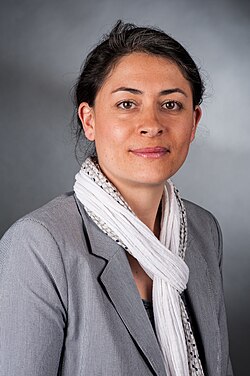 Filiz PolatFiliz Polat (born 11 July 1978 in Bramsche) is a…Affiliated
 Olaf ScholzOlaf Scholz was Chancellor of Germany from December 2021…Affiliated
 Anja ReinalterAnja Margrit Reinalter (born 1 May 1970 in LaupheimAffiliated
 Renate KünastRenate Künast (born 15 December 1955 in RecklinghausenAffiliated
How the record is sourced and how the score is derived.
The score is formula-derived (Factrail formula v1, version 1.0.0), not an editorial verdict. Read the methodology.
By the Factrail desk · Method: how we source and score · Last reviewed
Dispute a fact on this pageNamed here, or represent someone who is? Request a right of reply.
People and organizations as listed in the Related section of this page; facts, drivers and the pages that name it as listed in the blocks here. Counts, not a rating.