
Kacem El Ghazzali
Kacem El Ghazzali (Arabic: قاسم الغزالي; born 1990 in the Moroccan village of Bouderbala) is a Moroccan-Swiss essayist and atheist who has lived…
- Facts0
- Drivers0
- Indicators0
Kacem El Ghazzali (Arabic: قاسم الغزالي; born 1990 in the Moroccan village of Bouderbala) is a Moroccan-Swiss essayist and atheist who has lived…
Kacem El Ghazzali (Arabic: قاسم الغزالي; born 1990 in the Moroccan village of Bouderbala) is a Moroccan-Swiss essayist and atheist who has lived in Switzerland since 2011 and writes on political Islam, migration, and freedom of expression. He is among the few Moroccans to have stated his atheism in public. He has also spoken at the United Nations Human Rights Council for secular humanist organizations.
His father, a dentist, sent him as a boy to a Salafist Quranic boarding school so that he might become an imam or an Islamic jurist. He later told Der Spiegel that he had never been able to believe, and both that magazine and NZZ Folio describe an uncle—in one account a communist, in the other an atheist who did not say so publicly—introducing him to books by Karl Marx, Charles Darwin, Baruch Spinoza, Voltaire, and Richard Dawkins. In 2007, at 17, he began an anonymous blog, later associated with the address atheistica.com, which NZZ Folio reported had drawn about 13,000 followers from Morocco and other Arabic-speaking countries.
After he was identified online he agreed, while still in high school, to an interview with the Arabic service of France 24. Der Spiegel reported that he was then threatened, denounced by an imam in Bouderbala, assaulted by his school principal, and stoned by students, in a country where Article 220 of the penal code criminalizes incitement to shake a Muslim's faith or to convert a Muslim. In spring 2011 he received a visa after an interview at the Swiss embassy in Rabat and flew to Geneva; NZZ Folio reported that Swiss freethinkers paid for the ticket, and Humanists International states that he obtained political asylum that year. By 2013 he was based in Zürich. The Neue Zürcher Zeitung wrote in 2017 that he spoke English, French, and German fluently, worked as an author, and was married to a Swiss woman. An author note in the same paper on 18 January 2019 said he had come as a refugee in 2011 and had since been naturalized.
In Switzerland he took part, according to Der Spiegel, in a campaign to deny entry to the Saudi preacher Mohamed Al Arifi, and NZZ Folio described a "Mayasaminch" ("I do not fast") effort in which young Moroccans posted photographs of themselves eating during Ramadan. By 2017 he was delivering statements for the International Humanist and Ethical Union, the body later renamed Humanists International, including during Morocco's Universal Periodic Review. In March 2025 the Center for Inquiry named him, with Wafa Bahri, as an advocate at the Council and said he held academic credentials in Middle Eastern studies and history from the University of Bern.
A 2017 NZZ profile treated him as one of the more visible critics of Islam in Swiss debate and recorded both death threats and criticism from the left, including a Facebook comment by Zurich government councillor Jacqueline Fehr asking whether it was enough to rant against Islam "as a Muslim" to be treated as an expert. The same article quoted him calling right-wing populism and Islamism the two greatest threats to democracy, and saying the Swiss People's Party was wrong to place all Muslims under general suspicion.
Kacem El Ghazzali was born in 1990 in Bouderbala, a small village near Meknes in Morocco. In a July 2011 interview he called himself a Berber and described a very religious Sufi family; his father, a dentist, wanted him trained as a prayer leader or a scholar of Islamic law. Later accounts do not agree on how observant that household was. He told Der Spiegel that his parents prayed five times a day and fasted during Ramadan, and that from about the age of seven he could not make the belief hold: "I was never able to believe. I had this struggle to believe." NZZ Folio instead reports that the family was not strictly devout when, at twelve, his father sent him to a Salafist boarding school to become an imam or jurist.
The length of that Quran schooling is also told differently. In 2011 he said he complied for three years, memorized numerous suras, and was not allowed to debate, while at secondary school he took to philosophy and mathematics. Folio describes about a year and a half in traditional dress, recitation, a feeling of emptiness in prayer, and a return home at fourteen after he fell ill. A 2017 Neue Zürcher Zeitung profile gives the routine he said made him sick: rising at sunrise, two pages of the Quran a day, no questions, and a division of life into what Salafist scholars called permitted and forbidden. In a 2014 essay he wrote that his father removed him from ordinary school for a year of jurisprudence and memorization because his grandfather wanted an imam, and that this study helped drive him from the faith. Folio adds that he briefly liked the status—adults asked his view, and he could order his mother about—and later cited that feeling of importance to explain Salafism's appeal.
The reading that followed was informal and, by his account, risky. An uncle who never publicly said he was an atheist opened a library; El Ghazzali read Karl Marx and Charles Darwin, and took a French translation of Richard Dawkins's The Selfish Gene to biology class, where the teacher seized it and told him not to bring such material again. On the internet he found the Universal Declaration of Human Rights, Immanuel Kant, Jean-Jacques Rousseau, and an Arabic version of The God Delusion, which he said he read in Morocco with the fear that the "criminal" thoughts might show. Der Spiegel adds Baruch Spinoza and Christopher Hitchens, and a communist interval—a Che Guevara shirt and the view that "America is Satan"—which he dropped after deciding it felt as dogmatic as Quran school. The 2017 profile lists Voltaire among the uncle's books and quotes him comparing Marx, in that phase, to an imam.
In 2007, at seventeen, he began a pseudonymous blog about religious doubts he said he could share with no one. He later described the start as "more agnostic than atheist": philosophical argument, and criticism of what he called excesses of sharia in Iran and elsewhere, written in Arabic and English. The Arabic site was Bahamut's Blog, at bahmut.blogspot.com; an interview posted on his English blog, atheistica, called it one of the most controversial blogs in the Arab world. Archived pages argue that the creed's "I bear witness" claims eyewitness knowledge the speaker lacks, and that Article 3 of the Moroccan constitution, making Islam the state religion, blocked secular law, equal inheritance, civil marriage, conversion, and criticism of religion. NZZ Folio reported that by 2010 www.atheistica.com (opens in a new tab) had about 13,000 followers in Morocco, Egypt, Saudi Arabia, and Tunisia. The 2017 profile summarizes the anonymous writing as criticism of the treatment of women, homosexuals, and apostates.
He was still in secondary school when he left Morocco. NZZ Folio reported in 2014 that he had gone a few days before the school-leaving examination, that missing it barred university entry, and that he looked like what he most wanted to be: a student. Der Spiegel, in 2013, set his asylum application against the age at which others go to college. No thesis, enrolment notice, or named degree for him appears on public pages of the University of Bern. Later biographies used by organizations he works with nevertheless place him there. A March 2025 Center for Inquiry announcement credits "academic credentials in Middle Eastern Studies and History from the University of Bern," and a Swiss Freethinkers note says he studied Islamic studies (Islamwissenschaft) and history at the university. Humanists International's staff note, covering his essays and United Nations work, does not mention a degree. Those sources do not establish whether a Bern course was completed, or when.
In 2010, while Kacem El Ghazzali was still a secondary-school student in Morocco, an anonymous blog about atheism was linked to his name. He later said threats aimed at an unknown blogger began to carry his full name and a landline, which he took as identification through the internet connection. Der Spiegel reported the warning he said he was given: an atheist might be tolerated, "but not an atheist activist."
An Arabic-language France 24 interview, given while he was still in school, ended the anonymity. In a 2011 account in the Swiss Freethinkers' magazine he wrote that a previously recorded interview was then broadcast, drew more than 30,000 views in a day, and was reposted with calls for his killing. He described a Facebook message promising to slaughter him "like a sheep" in Al-Hajib, where he often met friends, and a group circulating his photograph, telephone number, and a call to kill him as an apostate; NZZ Folio later described a similar post of masked men. He wrote that his Islamic-education teacher told the class that he, not a Dane, was behind the Muhammad cartoons, showed the blog, called him an unbeliever and an apostate, and said that under sharia he deserved to be killed.
The accounts of the violence are not identical. In 2011 he wrote that classmates beat him and threw stones, that a taxi and a restaurant refused him, and that the school expelled him. Der Spiegel reported that four days after the broadcast the principal accused him of a "foreign agenda" and a penal-code offence and physically assaulted him, that students threw rocks, that the imam in Bouderbala denounced him from the pulpit, and that extended family stopped speaking to him. At the Geneva Summit for Human Rights and Democracy in 2013 he said that, when he went to complain, the director slammed his head against a wall, and that he woke in hospital with a certificate for 21 days. The Neue Zürcher Zeitung in 2017 and NZZ Folio in 2021 also reported a beating that required hospital care, and imams denouncing him to worshippers. He told the summit he then moved between friends' houses; Spiegel described him living underground, with texted death threats and a public post of masked men promising, "Soon you will be slain like a sheep."
Article 220 of the Moroccan penal code, in the consolidated text, does not punish private unbelief. It punishes, by six months' to three years' imprisonment and a fine, the use of "means of seduction" to shake a Muslim's faith or to convert that person, by exploiting weakness or need or by using schools, health facilities, asylums, or orphanages. The U.S. State Department's 2011 religious-freedom report on Morocco described that rule, stated that voluntary conversion was not a criminal or civil offence, and noted that policy discouraged leaving Islam and forbade proselytizing Muslims. The same report said the constitution made Islam the official state religion. Article 222, separately, punishes a person "notoriously known" as Muslim who ostentatiously breaks the Ramadan fast in public, without a reason the religion accepts, with one to six months in prison and a fine. Neither Spiegel nor the summit account describes a charge under Article 222. The accusation he attributes to the principal is the faith-shaking offence, which the director, on his account, treated as covering talk about God and as punishable by jail.
His 2011 article, the 2013 speeches, and the Spiegel and NZZ profiles do not describe a criminal trial or sentence against him before he left. At the United Nations Human Rights Council in March 2013, speaking for the International Humanist and Ethical Union, later Humanists International, he said police would not intervene in a demonstration against him, that men identifying themselves as secret police took him from home at night, and that officers refused his complaint against the teacher. He said they told him to delete the blogs and apologize, warned that a case by an Islamic association could be used to arrest him, and equated public atheism with insulting the king. At the Geneva Summit he said police asked why he was being attacked, that he also complained against the director and an anonymous threatener, and that those responsible were not found.
NZZ Folio reported that he contacted Amnesty International and then the Swiss ambassador, at a time when an asylum application could still be made at an embassy. In the 2011 Freethinkers account he wrote that a preliminary check of his story produced a visa for Switzerland in the spring of 2011, and that the Freidenker-Vereinigung der Schweiz made the journey possible. NZZ Folio reported that association members paid for the ticket to Geneva. Der Spiegel and his summit remarks say a Moroccan employee at the embassy in Rabat told him to leave, that he insisted on a Swiss official, and that the ambassador then interviewed him; Spiegel put that interview at about four hours, after which a visa was issued. The Neue Zürcher Zeitung reported that, while hiding in Rabat, he convinced the ambassador with written evidence of persecution on religious grounds, and that he flew to Geneva that spring with the freethinkers' help. Writing later in 2011, he said he was still waiting for a decision on asylum.
El Ghazzali flew to Geneva in the spring of 2011 on a visa issued after an interview at the Swiss embassy in Rabat; members of the Swiss Freethinkers' Association paid the fare, visited him in a transit centre, and later found him a flat. That embassy step was not the same thing as recognition as a refugee. An NZZ Folio account said he had filed the asylum application at the embassy, a route then still open, while in August 2017 he told Der Bund that he received the visa, travelled to Switzerland, and applied for asylum after arrival.
He was first housed at the federal reception centre in Vallorbe, in the canton of Vaud. In a 2011 article for the freethinkers' magazine Frei denken, he wrote that he had felt anything but safe there among other North African asylum seekers, that he was then moved to Romanshorn, and that he had recently left the centre for a flat belonging to a freethinker in eastern Switzerland, still waiting for a decision so that he could finish his schooling. The Neue Zürcher Zeitung later quoted him saying that he had spent the first two weeks in Vallorbe "almost only crying," having expected other political refugees who would argue and stick together, and that as an atheist he had instead been threatened more than once. In the same 2017 interview with Der Bund he limited those remarks to a short period in Vallorbe, just after the Tunisian revolution, and said a Blick report had misquoted him as claiming that Maghrebi asylum seekers came to Switzerland only to steal and deal.
On 18 June 2011 the Tages-Anzeiger described the then 20-year-old as provisionally taken in in Switzerland ("vorläufig in der Schweiz aufgenommen") and still blogging. Recognition came later. In March 2013 Der Spiegel reported that he had been in the country for about two years after applying for political asylum and was based in Zurich, without saying that refugee status had been granted. By August 2017 he told Der Bund that he had been a recognized refugee (anerkannter Flüchtling) for three years; the NZZ profile of 28 September 2017 used the same description.
From 2013, published interviews place his ordinary life in Zurich: Der Spiegel called the city his base, and both the autumn 2014 NZZ Folio portrait and the 2017 NZZ profile met him in Zurich cafés. The September 2017 article said that since entering in 2011 he had left what he called the "asylum world," spoke fluent English, French, and German, worked as a writer, and was married to a Swiss woman. It still identified him as a recognized refugee and did not mention citizenship. He told Der Bund the same summer that he had felt he belonged in Switzerland from the start, and that it was in Morocco that he had lived, as an atheist, in a kind of parallel society.
An author note in the NZZ of 18 January 2019 stated that he had come as a refugee in 2011 and had since been naturalized, without giving the year of the grant. In an essay the paper published on 10 February 2024 he described himself as a new citizen whose passport was red, having previously been green, and whose place of origin (Heimatort) was the municipality of Huttwil in the canton of Bern, rather than his village in Morocco. In that essay he also recalled being called in by the police "at the end of last year" about his naturalization application, and telling the officers that he looked forward to the result but that a document would not decide whether he belonged. The piece does not say that he had taken up residence in Huttwil.
Organized ex-Muslim activism in Switzerland predates Kacem El Ghazzali. In March 2009 a Zentralrat der Ex-Muslime, on the model of groups in Germany and elsewhere, went public. The Neue Zürcher Zeitung described it as carried mainly by Iranians and backed by the Giordano Bruno Foundation and the Freidenker-Vereinigung der Schweiz. It demanded a headscarf ban for minors and in public institutions and a halt to mosque building, which the freethinkers did not share: they opposed the pending minaret initiative on grounds of religious freedom. The same body was also called the Verein der Ex-Muslime der Schweiz. Its president, Iranian exile Ebadullah Mehtinezhad, told the Bote der Urschweiz in October 2009 that the full-body veil should be banned in public like other face coverings, calling it a symbol of women's oppression. The paper said the association had formed only the previous spring.
By November 2012 news reports identified El Ghazzali as president of a Bern-based Union suisse des ex-musulmans; in December 2013 20 Minuten still called him president of the Verein der Ex-Muslime Schweiz. Those 2012 reports also credited the Bern association with a 2009 call for a public burqa ban, treating his role as continuous with the earlier Verein rather than as a group founded that year. A larger part of the same network was the Council of Ex-Muslims of Britain, launched at Westminster on 21 June 2007 and tied principally to the German council. Spokesperson Maryam Namazie said 25 members were being named for people afraid to speak, argued that belief should stay private, and offered the council as an alternative to bodies such as the Muslim Council of Britain, which declined to comment. The British Humanist Association and the National Secular Society backed the launch.
In Morocco, breaking the Ramadan fast in public is an offense for people the state treats as Muslim. Article 222 of the penal code punishes "a person commonly known to be Muslim who violates the fast in a public place during Ramadan, without having one of the justifications allowed by Islam," with one to six months in prison and a fine. Human Rights Watch noted that it exempts non-Muslim minorities while appearing to deny those considered Muslim the right to say they are not, or that they will not fast.
The Mouvement alternatif pour les libertés individuelles (MALI), formed in 2009, tested the law with a picnic on 13 September 2009 in woods near Mohammedia, between Rabat and Casablanca, chosen so as not to eat in front of people who were fasting. Police turned arrivals back at the station, and the state news agency said organizers would be prosecuted. Human Rights Watch reported arrests or repeated summonses of students and of journalist Zineb El Rhazoui and psychologist Ibtissame Lachgar, and urged that proceedings be dropped. MALI said it was not against Islam and sought repeal of Article 222.
A Facebook collective, Massaiminch or Masayminch ("we are not fasting"), appeared in July 2012 as a quieter continuation of MALI. Promoter Abdelhak Amrani told Yabiladi it had more than 300 members, including former MALI participants, and that no public action was settled. He said Switzerland-based blogger Kassim Ghazali, of the platform Moroccans Free Thinkers, had proposed filming a few minutes of public non-fasting and posting it, an idea still needing members' approval. Coverage that week cast El Ghazzali as one exile contributor, not as the organizer of another picnic.
The Islamic Central Council of Switzerland invited Saudi sheikh Muhammed Al-Arifi to its second annual conference on 15 December 2012 at Forum Fribourg in Granges-Paccot, in the canton of Fribourg. On the night of 17–18 November the Bern ex-Muslim association and the Zürich Forum for Democracy and Human Rights said he preached hatred and violence, and asked the council to withdraw the invitation and the authorities to stop him speaking in public. El Ghazzali, as president of the Bern group, cited televised remarks that Islam set no minimum age for a girl's marriage. The associations also pointed to clips describing "light" blows to a wife that should not mark the face, and to remarks about Western and Danish women, which they said violated the Swiss legal order.
On 12 December 2012 the Federal Office for Migration barred him from Switzerland and the Schengen Area, citing the Swiss legal order. Carl-Alex Ridoré, prefect of the Sarine, who had sent the file to Bern, informed the council the next day and ordered Al-Arifi off a list of 14 speakers. The council called the step disproportionate, promised a suitable surprise guest, and said the conference would go ahead for an expected 2,000 to 2,500 people. The same office had refused entry in November 2010 to German preacher Pierre Vogel. The council said the claim that Al-Arifi justified violence against women was "completely false," and called him a defender of women's rights who was popular among Muslim women.
Kacem El Ghazzali began speaking at the United Nations Human Rights Council in Geneva in 2013 for the International Humanist and Ethical Union (IHEU), which adopted the operating name Humanists International on 15 February 2019. The organization says it holds special consultative status at the United Nations in Geneva, Vienna and New York, which it uses to deliver oral statements to the Council.
On 12 March 2013, attached to the IHEU delegation, he asked Morocco, through the Council, why an atheist should be threatened with death. IHEU described that speech as a guest intervention and reported a further criticism of Morocco at the Council that June; later statements were delivered for the organization, including in Arabic.
On 21 September 2017, during the Council’s 36th session, he spoke on Morocco’s Universal Periodic Review, with the country’s human rights minister present. He criticised a partial rejection of Kenya’s recommendation on Christians and other minorities, cited laws against criticism of Islam and the monarchy and arrests for eating or smoking during Ramadan, and said freedom of religion should not be limited to “those fortunate enough to agree with the religious beliefs of the state they live in.”
On 17 September 2013, in Arabic at the 24th session, he spoke on bloggers in member states of the Organisation of Islamic Cooperation. He said Raif Badawi, detained since 17 June 2012, had been sentenced to seven years and 600 lashes—“the punishment for being a liberal in Saudi Arabia”—and that the poet Hamza Kashgari had been held almost a year and a half after tweets imagining a meeting with Muhammad, then asked how King Abdullah’s new Vienna interreligious centre, later the KAICIID Dialogue Centre, fitted that record. The BBC reported that Kashgari was freed on 29 October 2013 without formal charges having been made public.
On 18 March 2014, at the 25th session, he said a judge had recommended an apostasy trial for Badawi and that Mauritanian blogger Cheikh Ould Mohamed M’Kheitir faced the death penalty under Article 306 of Mauritania’s penal code, although Saudi Arabia and Mauritania both sat on the Council. A Nouadhibou court sentenced M’Kheitir to death for apostasy that December.
Badawi’s sentence was later ten years and 1,000 lashes; he received 50 in January 2015. UN High Commissioner for Human Rights Zeid Ra’ad Al Hussein called the flogging, at the very least, cruel and inhuman punishment prohibited by the Convention against Torture, which Saudi Arabia had ratified. His wife, Ensaf Haidar, said he was free on 11 March 2022 but still under a ten-year travel ban. At the 49th session El Ghazzali, calling Badawi “my friend,” asked the Council to urge Saudi Arabia to lift the ban, citing the Universal Declaration of Human Rights and the Convention on the Rights of the Child. In October 2019, at the 42nd session, he called for repeal of blasphemy laws, arguing that they justify persecution, and cited the Egyptian blogger Sherif Gaber and threats against the Kuwaiti activist Karima Karam.
On 19 March 2025 the Center for Inquiry, which says it has held special consultative status since 2005, announced that El Ghazzali would join Wafa Bahri at the Council and credited him with ten years of Geneva advocacy on freedom of thought.
On 7 July 2025 his remarks on Iran and Iraq criticised Iran’s omission of the Woman, Life, Freedom protests after Mahsa Amini’s death in morality-police custody, together with hijab enforcement and blasphemy and apostasy laws, and said Iraq had not addressed rules requiring a declared religion for some public services.
On 24 September 2025, speaking in Arabic, he treated imprisonments in Morocco and Algeria as examples of vague statutes used against critics of religion. One case was Ibtissame “Betty” Lachgar, a psychologist and co-founder of the Alternative Movement for Individual Liberties: Human Rights Watch reported her arrest on 10 August 2025 and a 3 September Rabat sentence of 30 months and 50,000 dirhams for a social-media photo of a T-shirt reading “Allah is lesbian,” charged as “causing harm to Islam.” The other was the novelist Boualem Sansal, then imprisoned while being treated for cancer. Reuters reported that a court near Algiers sentenced him on 27 March 2025 to five years for undermining national unity after remarks on colonial-era borders with Morocco; CFI presented that charge as widely seen as a pretext for his criticism of Islamism. President Abdelmadjid Tebboune pardoned him on 12 November 2025 after a request from Germany’s president.
In March 2026, in Arabic, he criticised the Organisation of Islamic Cooperation’s observer role and the Cairo Declaration’s limits on expression by reference to sharia, and urged that the status depend on repeal of apostasy and blasphemy laws. In September 2026 he said an appeals court had upheld Lachgar’s sentence while those who threatened her had not been jailed, and that freedom of belief “is not complete unless it includes the freedom to be an atheist.” A 2015 page of the Montreal Raif Badawi Foundation for Freedom, led by Ensaf Haidar, listed him on an international advisory board.
El Ghazzali's first book was an Arabic autobiographical novel issued in 2013 in Cairo by Mu'assasat Shams lil-Nashr wa-l-I'lam (Shams Foundation for Publishing and Media). Youm7 reported the title al-Dar al-Bayda' – Jinif: al-rihla raqm 8J540 (Casablanca–Geneva: Flight Number 8J540), 224 pages, cover by Tony San Marc: a first-person story from a remote Moroccan village to asylum in Zurich, through belief and unbelief, takfiri groups, death threats, and freedom. The seller eKtab lists the same title, publisher and ISBN 978-977-493-155-0.
It followed an anonymous blog on his atheism. A March 2013 Der Spiegel profile said that, once the blog was traced, he was told, "We can tolerate an atheist but not an atheist activist," and cited Article 220 of Morocco's penal code, which criminalizes incitement to shake a Muslim's faith.
English essays on HuffPost identified him as a representative of the International Humanist and Ethical Union at the UN Human Rights Council. In May 2016 the site ran "Reading 'The God Delusion' in the Arab World," about meeting Richard Dawkins at the Swiss freethinkers' Denkfest and about Bassam al-Baghdadi's unofficial Arabic translation of The God Delusion. He wrote that the PDF was downloaded ten million times, 30 percent in Saudi Arabia, that the translator was threatened, and that Al-Azhar University in Cairo answered with The Atheism Delusion. In June 2016, "Muslims Must Do More Than Distance Themselves From Terrorism" set claims that Islam had nothing to do with terrorism against his mother's report, after the November 2015 Paris attacks, of a village imam to the police for recruiting for the Islamic State. That December the Richard Dawkins Foundation for Reason and Science posted "'Islamophobia' – the blasphemy accusation of Western liberals," arguing that criticizing conservative Islam and Islamism was a condition of reform, and that "nothing to do with Islam" was a way to stop the criticism.
German-language newspaper work followed in 2017. On 5 April the Basel Basler Zeitung published "Europa: Die Inspiration und die Anklage," which begins with online articles on the European Enlightenment he says he read at fifteen in northern Morocco, then uses them against European debates on speech, refugees and religion. On 22 June the Neue Zürcher Zeitung ran "Warten auf die Utopie": Muslims as individuals were already in Europe, he wrote, but an Islam compatible with democratic and humanist standards was not. He split a political Islam that would shape public life by a fundamentalist Quran and by sharia from a "traditional" Islam that did not impose sharia on non-Muslims but, he argued, still pressed against individual autonomy inside Muslim families.
On 26 August 2017 Bern's Der Bund published the interview "Viele Schweizer haben Angst, Kritik am Islam zu üben." His 19 September reply, "Das doppelte Spiel der Linken," answered Zurich Social Democratic justice director Jacqueline Fehr, who had asked whether ranting against Islam "as a Muslim" was enough to be called an expert. He wrote that the interview's first sentence called him an atheist, and that the Muslim label was shared by multiculturalists, right-wing populists and Islamists; the paper noted applause for Fehr from the Salafist Islamic Central Council. Lucien Scherrer's NZZ profile "Der böse Flüchtling" (28 September 2017) described a former Quran student and Marxist whose pieces warned of political Islam, criticized left cultural relativism and backed a burqa ban, and who drew both commissions and death threats.
On 6 September 2017 the Frankfurter Allgemeine Zeitung ran "Wie die Linke im Globalisierungskampf Menschenrechte opfert," with the line "Weltbürger zweiter Klasse" ("second-class world citizens"): shielding theocratic regimes in arguments over globalization, it said, harmed people living under them. On 17 August 2018 Le Monde published "Les valeurs des Lumières n'appartiennent pas qu'à 'l'homme blanc'" ("The values of the Enlightenment do not belong only to 'the white man'"). In the NZZ on 4 May 2026, "Der ewige Migrant" argues that immigrants who are not on the left are called steered or bought, while Islamist or reactionary views from them count as authentic—a refusal of authorship he likens to charges he says he met in Casablanca.
In January 2025 the Zurich magazine Schweizer Monat opened "Der Okzidentalist," which it describes as a defense of liberal humanism against Islamists in the East and against authoritarian tendencies of left and right in the West; about twenty columns followed through October 2026. The first, "Ich bin mehr als meine Fluchtgeschichte," rejects being asked to write only as a former Muslim or a refugee, and argues that if feeling is the last test of truth, common argument fails, while the individual self remains a basis of freedom. Later pieces, in the magazine's summaries, treat Islam as a screen for European exhaustion, criticize the Social Democrats on laïcité and the headscarf, and use a World Cup choice between Switzerland and Morocco to describe divided belonging.
Secularism, in the 2017 NZZ commentary, is the test he applies to both political and traditional Islam: individual citizenship is accepted, a religious law for public life is not. Freedom of speech, in the foundation essay, is room to criticize scripture and political religion without the charge of blasphemy or of "Islamophobia." On migration, the 2026 NZZ essay and the first column refuse a fixed role as refugee or ex-Muslim. The Le Monde title presents Enlightenment values as not the property of "the white man" alone. The magazine's line on the column adds a second target—authoritarian habits in the West—so the criticism is not only of political Islam.
On 2 January 2018 the Basler Zeitung published "Die 15 wichtigsten Denker 2017," by Erik Ebneter and Hansjörg Müller, who called it "so objektiv wie nötig und so subjektiv wie möglich": no citation counts, no active politicians or natural scientists, and dissent invited. Kacem El Ghazzali, then 27, was one of the fifteen. The note said he had lived as an atheist in Morocco and fled to Switzerland because atheists in Muslim countries were "nicht immer pfleglich behandelt"; that he criticized Islam; and that Jacqueline Fehr, an SP government councillor in Zurich, had asked whether ranting against Islam "als Muslim" was enough to be an expert, missing that he was an atheist. It closed, "Der Mann mischt das Land auf, neuerdings als Schweizer."
On 29 September 2017 Lucien Scherrer profiled him in the Neue Zürcher Zeitung as "Der böse Flüchtling." Scherrer wrote that outlets in Switzerland, Germany, and the Anglophone press were running his warnings on political Islam, his attacks on left-wing cultural relativism, and his case for a burqa ban. The title named what Scherrer presented as a left-wing objection: a refugee who would not be "ein Opfer, das nicht selber denkt." El Ghazzali said, "Ich bin nicht so, wie sie mich haben wollen."
On 29 December 2018 the Tages-Anzeiger placed him 21st, as a writer, in "Besonderes erreicht – unsere Schweizer des Jahres 2018," one entry in a long gallery rather than a single prize. Now a Swiss citizen after arriving as a Moroccan refugee, he was called "eine unverzichtbare Stimme in der Islam-Debatte": the right instrumentalized the subject and the left mostly avoided it, while he named religious fundamentalism, failed integration, and "falscher Sozialromantik" plainly. Rarely, the paper said, had citizenship been so earned as by this 28-year-old "Freiheitskämpfer und Schriftsteller."
The dispute began with Bernhard Ott's interview in Der Bund on 26 August 2017. El Ghazzali said people who worked with refugees feared being called Islamophobic or racist and so tolerated intolerance. A Young Socialists evening, he said, had stressed the Swiss People's Party and a racist Switzerland and dulled newcomers' wish to integrate; at the Autonome Schule Zürich, two Algerian classmates would not sit with a "Gottlosen," and the teachers never raised it. He wanted a burqa ban, a "Negierung der Identität"; said the SVP was right about a problem with Islam and wrong to suspect every Muslim; and called right-wing populism and Islamism the two greatest threats to democracy, while saying the task was to integrate Muslim individuals, not Islam.
Fehr answered on Facebook by asking whether ranting "als Muslim" now made an expert, and why journalists had not checked the school. On 29 August Rafaela Roth reported that El Ghazzali asked whether Fehr was doubting his account and why she called him a Muslim—an ethnicized identity he called typical of "regressive Linke, Rechtspopulisten und Islamisten." Fehr apologized for "Muslim," changed the post, and said she had meant the reporting, not him. There was no taboo and "keinen Schonraum für Muslime"; the problem was Salafist extremism, not Muslims. Michael Schmitz of the school said it opposed discrimination by belief or non-belief and that the episode, if accurate, was not its practice, but was too old to reconstruct.
Michèle Binswanger's column that day, "Der blinde Fleck der Linken," read Fehr's reaction as the taboo itself. In the WOZ of 14 September Fehr said she had been criticizing the journalism and that the conduct he described would have been "komplett falsch," because religion was not taboo. For her, political Islam matched political evangelicalism, and the rule of law was the "Leitkultur." Scherrer added that she denied "Einzelstimmen" the right to charge her with naivety, while allowing that some on the left, "unter dem Druck der Rechten," might have grown protective.
On 19 September his Basler Zeitung essay "Das doppelte Spiel der Linken" said the storm came from the left rather than from Islamists, that "Muslim" and "wettern" echoed Islamist usage, and that sympathizers of the Islamic Central Council had praised Fehr. He set her government salary against his still being a refugee for whom, "in den Augen vieler Muslime," apostasy deserved death. On 22 September Scherrer noted Franziska Schutzbach's charge that a burqa ban continued an "androzentrischer Logik," and Regula Stämpfli's comparison, on Klein Report, of the post with "Regieren per Twitter."
Scherrer wrote that replies ran from coffee invitations to death threats, some hateful and not only from Islamists. An unnamed figure in Zurich cultural life had called him an "islamophoben, sich selbst hassenden Araber und Eurozentristen"; another reader, a "paternalistischen Eurozentristen."
In the December 2014 NZZ Folio article "Fluchtgrund: Unglaube," Barbara Klingbacher reported right-wing letter writers angry that he received asylum when he could have stayed silent in Morocco, and left-wing writers angry at his claim that most North African asylum seekers he met in a reception centre had come only to steal. She also wrote that he had been called racist and Islamophobic, and that the Islamic Central Council resented a campaign against a Saudi speaker he called a hate preacher.
In a July 2026 interview, 20 Minuten described El Ghazzali as an Islamic-studies scholar, publicist and political consultant who had for years advised members of the Swiss parliament on drafting political proposals, without naming the members or a registered firm. One documented briefing is from the Nahost Friedensforum (NAFFO), which says it advises the German and Swiss parliaments on Middle East questions. NAFFO reported that on 3 June 2026, at a security-policy breakfast in the Galerie des Alpes of the Federal Palace, parliamentarians from the SVP, SP, FDP, Mitte, the Greens and the EDU heard a scholar and human rights activist it spelled Kaceem El Ghazzali outline the history of Islamism and right-wing extremism in Switzerland, as context for the Federal Council's May 2026 security report.
On 11 September 2015 friends and family launched the Raif Badawi Foundation for Freedom, named for the imprisoned Saudi blogger Raif Badawi and described as education on freedom of the press and of speech. Evelyne Abitbol, called executive director and co-founder in that release, said the foundation had formed an advisory committee of intellectuals, writers, essayists and journalists. The Montreal Gazette reported an organization to press for Badawi's release and to promote freedom of expression and of the press, with Desmond Tutu and Salman Rushdie as honorary members.
Its "Board and Advisors" page, archived that September, listed a Quebec board: Badawi as "Blogger, Co-Founder and Honorary President," Ensaf Haidar as "Author, Co-Founder, President," and Abitbol as "Strategic Advisor, Co-Founder, Director General." On the international advisory board the same page entered "Kacem El Ghazzali – Moroccan Writer, President of the Association of Former Muslims in Switzerland," not a directorship. Later wording differs. A speakers list dated 16 May 2017 for the 47th St. Gallen Symposium, connected with the University of St. Gallen, calls him "Co-Scientific Director, Raif Badawi Foundation for Freedom." The Geneva Summit for Human Rights and Democracy's speaker profile says that in 2015 he "became a co-director," and author notes at der Freitag and the Humanistischer Pressedienst call him Ko-Direktor. The site described a Canadian not-for-profit, number 943188-8. A compilation of federal records lists Fondation Raif Badawi pour la liberté as incorporated on 6 September 2015, with a registered office in Sherbrooke, Quebec, directors including Haidar, and dissolution on 26 August 2019.
Since 2020 he has been a regular outside contributor to the Neue Zürcher Zeitung. On 28 February 2020 he wrote that life in Morocco had been the real exile and that Switzerland had become his first true home. That November he argued that projects to "reform Islam" would only legitimize religion's primacy over politics and society. In February 2021, during the campaign on a national ban on face coverings, the NZZ ran "Verbotene Weiblichkeit," whose title line holds that the burka has nothing to do with Western ideas of emancipation.
On 10 February 2024 he was one of six contributors to an NZZ series on how cultural figures see Switzerland. In January 2025, after the fall of the Assad government in Syria, he wrote that Islam and democracy hardly go together. Later that year he covered the arrest in Morocco of the feminist Ibtissam Lachgar over a shirt reading "Allah is lesbian," called the Swiss dispute over the word "Mohr" and Mohrenkopf sweets absurd, and argued that Islamists still see Europeans as hostile crusaders. In 2026 the paper published his pieces on anti-Black violence in Morocco after an Africa Cup defeat and on federal language that, he wrote, treats criticism of Islam as "anti-Muslim racism."
From January 2025 Schweizer Monat has run his column "Der Okzidentalist," described there as a defense of liberal humanism against Islamists and against authoritarian tendencies of left and right; the first piece, "Ich bin mehr als meine Fluchtgeschichte," is dated 23 January 2025. His St. Gallen Symposium credit remains the May 2017 list. The Geneva Summit's record of him is its speaker profile and the address "The Silencing of Critical Voices in Morocco," not a 2020s program listing.
Ranked by shared high-impact facts, then explicit ties, then shared drivers.
 Boualem SansalBoualem Sansal (born 1949) is an Algerian-French novelist…Affiliated
 Jean-Jacques RousseauJean-Jacques Rousseau (1712–1778) was a Genevan writer…Affiliated
 Karl MarxKarl Marx (1818–1883) was a Trier-born political economist…Affiliated
 Christopher HitchensChristopher Eric Hitchens (13 April 1949Affiliated
 Immanuel KantImmanuel Kant (1724–1804) was a Prussian philosopher of…Affiliated
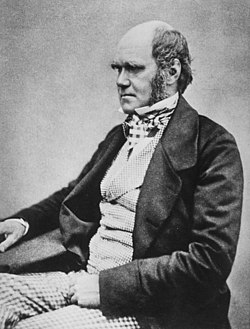 Charles DarwinCharles Darwin (1809–1882) was a British naturalist and…Affiliated
How the record is sourced and how the score is derived.
The score is formula-derived (Factrail formula v1, version 1.0.0), not an editorial verdict. Read the methodology.
By the Factrail desk · Method: how we source and score · Last reviewed
Dispute a fact on this pageNamed here, or represent someone who is? Request a right of reply.
People and organizations as listed in the Related section of this page; facts, drivers and the pages that name it as listed in the blocks here. Counts, not a rating.