
Markus Reichel
Markus Alexander Reichel (born 15 July 1968 in Munich) is a German politician of the Christian Democratic Union (CDU) and a member…
- Facts0
- Drivers0
- Indicators0
Markus Alexander Reichel (born 15 July 1968 in Munich) is a German politician of the Christian Democratic Union (CDU) and a member…
Markus Alexander Reichel (born 15 July 1968 in Munich) is a German politician of the Christian Democratic Union (CDU) and a member of the Bundestag for Dresden. The parliament's biography lists him as a graduate mathematician (Diplom-Mathematiker). Before his election he was managing director of DREBERIS GmbH, a consulting firm in Dresden. In the 21st Bundestag he sits with the CDU/CSU group, holding his seat through the state list of Saxony for constituency 158, Dresden I.
The Bundestag biography, which the parliament states is drawn from the member's own information, records an Abitur in 1987 at the gymnasium of the Benedictine abbey of Schäftlarn, civilian service, and from 1989 studies of Japanese studies and history in Vienna. He then studied mathematics in Dresden and Bonn on a grant from the Studienstiftung des Deutschen Volkes, graduating in 1994, and completed a further degree as a business mathematician. In February 1998 he received a doctorate, graded summa cum laude, from the economics faculty of TU Dresden on the market introduction of renewable energy, with funding from the Deutsche Bundesstiftung Umwelt. The research appeared the same year as Markteinführung von erneuerbaren Energien: Lock-Out-Effekte und innovationspolitische Konsequenzen für die elektrische Wind- und Solarenergienutzung. From 1999 until 2021 he was managing partner of DREBERIS.
At the 2021 federal election he won Dresden I, then constituency 159, with 37,811 first votes (21.1 percent). The Left took 33,872 votes (18.9 percent) and the Alternative for Germany (AfD) 33,780 (18.8 percent). Turnout in the constituency was 79.2 percent. On second votes the SPD led locally with 19.0 percent, ahead of the AfD on 17.9 percent and the CDU on 15.4 percent. The 20th Bundestag held its constituting session on 26 October 2021, the date on which that legislative period began.
In the 2025 federal election the district, renumbered constituency 158, returned Thomas Max Ladzinski of the AfD with 53,853 first votes (29.4 percent). Reichel received 50,040 votes (27.3 percent), 6.3 points more than the CDU's 2021 share, and re-entered the Bundestag on the Saxon state list. Turnout was 82.1 percent. On second votes the AfD led with 27.4 percent and the CDU took 19.9 percent.
In the 20th Bundestag he was a full member of the committees on labour and social affairs and on digital affairs, a deputy member of the environment committee, and one of the parliamentary secretaries (Schriftführer). In the 21st Bundestag he is a full member of the committees on labour and social affairs and on digital affairs and state modernisation, a deputy member of the foreign affairs committee and of the committee on the environment, climate action, nature conservation and nuclear safety, and deputy chair of the Berlin–Taipei parliamentary friendship group. The same biography lists him, from autumn 2025, as a member of the advisory board of the Federal Network Agency. In the CDU he chaired the Saxon Mittelstands- und Wirtschaftsunion from 2011 to 2021 and has been its honorary chair since then, and he chaired the Dresden district association from 2019 to 2025. He is married and has five children.
Markus Reichel was born on 15 July 1968 in Munich. The biography published by the Bundestag, which the parliament notes is based on members' own statements, records that he passed the Abitur in 1987 at the gymnasium of the Benedictine monastery at Schäftlarn. That school, the Gymnasium der Benediktiner Schäftlarn, belongs to the Benedictine abbey in the Isar valley south of Munich.
The biography places Zivildienst between the Abitur and the start of university study in 1989. On his own website he describes those months as care work with people who needed physical and mental support.
In 1989 he began Japanese studies and history in Vienna. The Bundestag biography states that after German reunification he returned to Germany and studied mathematics in Dresden and Bonn, with support from the Studienstiftung des deutschen Volkes, and that a postgraduate qualification as a Wirtschaftsmathematiker came before the doctorate.
His website supplies dates and subjects that the parliamentary text does not. He writes that the Vienna course, at the University of Vienna, continued until 1990; that he moved to Dresden in 1991; that mathematics at TU Dresden, with physics as a minor, ended in 1994 as a Diplom-Mathematiker graded 1.0; and that a postgraduate course in economics ended in 1997 as a Diplom-Wirtschaftsmathematiker.
From 1 December 1994 to 30 November 1996 the Deutsche Bundesstiftung Umwelt funded a doctoral scholarship for him at the Faculty of Economics of TU Dresden, file 01000/288. The foundation names Professor Marco Lehmann-Waffenschmidt as supervisor. The project was titled Potentiale erneuerbarer Energiequellen in Sachsen unter verschiedenen Szenarien der zukünftigen Einbeziehung der Umweltkosten and concerned the potential of renewable energy in Saxony under scenarios that included environmental costs.
The preserved project text argues for a test it calls Entriegelungseffizienz: support is efficient only if it is minimal, time-limited and of positive net social benefit, and no longer than one investment cycle where only learning and network effects drive costs. On that test it does not credit German support for photovoltaics with ex-post unlocking efficiency, in contrast to policy for wind power, mainly because the solar measures were discontinuous and poorly aimed at a self-sustaining market. Japan's New Sunshine Programme is described as a longer but still time-limited plan for self-sustaining solar use by 2020; the text calls some of its assumptions highly optimistic and notes that the model could not forecast non-incremental technical change or later market structures.
The Bundestag biography states that the doctorate was awarded in February 1998 at the same faculty, on the market introduction of renewable energy, with the grade summa cum laude, and that the foundation had supported the work.
The dissertation was published the same year by the Deutscher Universitätsverlag in Wiesbaden as Markteinführung von erneuerbaren Energien: Lock-Out-Effekte und innovationspolitische Konsequenzen für die elektrische Wind- und Solarenergienutzung, in the Gabler Edition Wissenschaft series Studien zum internationalen Innovationsmanagement (ISBN 3-8244-6747-X). Catalogue notes identify it as the 1998 TU Dresden dissertation Realisierbarkeit der Potentiale von erneuerbaren Energien: xvii and 250 pages, with illustrations, a bibliography on pages 231–244 and a foreword by Matthias Kramer. The stored publisher's description says that a need for intensive state support of electrical wind and solar use was often asserted but not adequately demonstrated.
Reichel has written that in 1999 he left a permanent public-service post as a research associate at the Internationales Hochschulinstitut in Zittau to found his own firm. The company now registered as DREBERIS GmbH was entered on 7 May 1999 at the Amtsgericht Dresden under HRB 17178, on articles of association dated 22 February 1999. Compilations of that file list the earlier names Econ Trade Deutschland GmbH, Inercon GmbH and INERCONSULT Dr. Reichel & Co. GmbH. A shareholders’ resolution of 9 August 2007, supplemented on 25 October 2007 and entered on 15 November 2007, changed the name to DREBERIS GmbH.
That amendment set the object as management consulting, especially advice on investment projects in Central and Eastern Europe and in Germany, with project development and management, brokerage of investment projects, controlling, market analyses, intercultural training and seminars, and related work that needs no permit. A resolution of 5 February 2013, entered on 7 March 2013, raised the share capital by €15,000 to €40,000. In June 2012 the office moved from Gostritzer Straße 63 to Heinrich-Zille-Straße 2, 01219 Dresden. The Bundestag biography, drawn from members’ own statements, calls him managing partner of a medium-sized company from 1999 to 2021 and lists managing director of DREBERIS GmbH as the occupation before the mandate; the parliamentary heading gives Diplom-Mathematiker.
In Poland, DREBERIS spółka z ograniczoną odpowiedzialnością (KRS 0000322951) was registered on 4 February 2009 in Wrocław, at ulica Aleksandra Ostrowskiego 7, with share capital of 200,000 złoty. The register names DREBERIS GmbH of Dresden as shareholder and Markus Alexander Reichel on the management board, represented by the president of the board alone; Dorota Dutka holds procuration. An extract updated on 26 September 2026 still listed him there, after a change dated 7 July 2026.
In Ukraine, TOV “Dreberis” (YeDRPOU 36312828) was registered on 14 January 2009 at prospekt Svobody 47, apartment 3, in Lviv, with capital of 60,500 hryvnia and management consulting (KVED 70.22) as its main activity. A unified-register snapshot of 19 October 2026, reproduced by zvitnist.com, gives DREBERIS GmbH 80 per cent and the director since 8 September 2010, Volodymyr Ihorovych Motyl, 20 per cent. It names Reichel, a German citizen, as a beneficial owner with indirect decisive influence of 64 per cent, and records 36 per cent as undisclosed. The 20th Bundestag also published a notifiable interest, until 21 November 2024, in DREBERIS Swiss GmbH of Schwyz. That company is not among the interests published for the next term.
The Dresden entry of 12 January 2022 shows Reichel leaving as managing director and receiving sole procuration (Einzelprokura). The same entry appointed Agata Reichel-Tomczak, sole authorised signatory since 20 December 2016, as managing director with sole representation and power to contract with herself, and ended her procuration. For 2021–2025 the Bundestag published managing-director pay of €2,322.66 gross a month until 20 December 2021, then pay as Prokurist and “Senior Expert” of €1,085.50 gross a month until 30 November 2024 and €592.75 from 1 December 2024, plus €4,262.48 gross a year. It stated €433 gross a month, until 30 November 2024, for chairing the Wrocław board. Under that activity it listed client fields and years, including economic promotion, business associations, the Deutsche Bundesstiftung Umwelt in Osnabrück, public administration and machinery manufacturing.
On his website Reichel states that he has sat on the foreign-trade committee (Fachausschuss Außenwirtschaft) of the Dresden chamber of industry and commerce since 2014. The chamber’s current committee page, whose members the general assembly appoints, does not name him. It lists Agata Reichel-Tomczak of DREBERIS GmbH; the published chair is Sven Strzelczyk of Koenig & Bauer Sheetfed AG & Co. KG. The chamber describes it as a forum for the region’s internationally active firms, covering import and export, customs, foreign-trade policy and the competitiveness of Saxon companies.
Current notifications still list Prokurist/Senior Expert at DREBERIS GmbH for €592.75 gross a month plus €4,262.48 gross a year, and the chairmanship of DREBERIS Sp. z o.o. in Wrocław (there given as Breslau), with no sum for the Polish office. They record a notifiable holding in DREBERIS GmbH and state that the company is notifiably interested in DREBERIS sp. z o.o. in Wrocław and DREBERIS TOV in Lviv.
Reichel has described a membership of about thirty years in the Christian Democratic Union (CDU). His Bundestag biography, which the parliament states is drawn from members' own information, records that he joined the state executive of the Mittelstands- und Wirtschaftsunion (MIT) in Saxony in 2007, became its state treasurer in 2009, chaired the Land association from 2011 until 2021, and has been honorary chairman since 2021. The MIT Sachsen board still lists him as Ehrenvorsitzender. The Freie Presse reported on 19 July 2021 that Landtag member Jan Hippold had been elected state chairman. Hippold did not stand again, and on 24 October 2023 a members' meeting in Meissen elected Nora Seitz, with Reichel speaking as honorary chairman.
On 31 January 2018, as MIT state chairman, he wrote to the Saxon participants in the federal talks between the CDU and the Social Democratic Party, citing a member survey in which 35 percent called the exploratory results economically "good" and 65 percent "bad".
The same style of Bundestag biography names him chairman of the Saxon CDU's specialist committee on prosperity (Landesfachausschuss Wohlstand) and a member of the federal economic committee.
Reichel chaired the CDU district association in Dresden from November 2019 until June 2025. He did not stand at the congress on 6 June 2025; the Sächsische Zeitung, citing the party, reported that Landtag member and former city councillor Ingo Flemming was elected with 89 percent.
Markus Reichel at the CDU Dresden district conference on 6 June 2025, when Ingo Flemming was elected to succeed him as district chairman.
The state party reported that the 57th Dresden congress, covered on 11 November 2019, had elected him with 88 percent in succession to Christian Hartmann, who was leaving after six years. The congress unanimously adopted "Demokratie leben und stärken", distancing the district party from a city-council resolution on a "Nazinotstand" and saying that such labels distorted political reality in Dresden. In a Dresdner Neueste Nachrichten interview of 5 December 2019 he ruled out cooperation, or a joint supervisory-board list, with the Alternative for Germany (AfD), which he said would not separate itself from the far right, and said there would likewise be no cooperation with Die Linke. A CDU motion, he added, would not become a bad one merely because the AfD voted for it, and the CDU would support what it regarded as good proposals from the Greens, the Left or the AfD, though he said he knew of none from the AfD.
On 17 February 2020, when Björn Höcke spoke at the 200th Pegida rally in Dresden, the Dresden CDU and FDP, with the Sächsische Bibliotheksgesellschaft, called a nearby counter-rally, "Demokratie braucht Rückgrat", which the state CDU put at about 2,500 people. Euronews quoted him rejecting hate speech against the free democratic order. In a Deutschlandfunk Kultur report of 23 October 2020 he said the CDU would demonstrate only exceptionally, called Pegida a radicalised minority, and argued for dialogue to narrow the social divide.
On 3 June 2023 the Sächsische Zeitung reported his re-election for two further years by 98 votes to 14, against Stefan Müller from Dresden's south-east, with Christoph Böhm, Bettina Kempe-Gebert and Anja Bohländer as deputies. He called recent results "desaströs" and said Dresdeners should see the CDU as an alternative to red-green politics; the paper noted that he did not mention the AfD. The same paper set the 2025 change of chairman against an 18 percent city-council result in 2024, the CDU's lowest in Dresden since the first free elections in 1990, and against the loss of the city's direct Bundestag seats in 2025. The district association said Reichel stayed on the executive as a Beisitzer.
After the 2019 Saxony state election, the CDU, the SPD and Alliance 90/The Greens negotiated in nine working groups. On 26 October 2019 the Sächsische Zeitung listed Reichel, as MIT state chairman, among five CDU members of the infrastructure group, whose brief covered the economy, transport, digitalisation, structural change, innovation, tourism, procurement law and the creative economy.
In October 2024, after former Saxon CDU office-holders urged talks with the AfD following that year's state election, he told the RedaktionsNetzwerk Deutschland that cooperation between the Union and the AfD "is ruled out and remains so". The state executive had said so repeatedly, he added, and he still rejected cooperating with the party itself while arguing that its voters needed an offer back into what he called the democratic spectrum.
On 26 March 2024 Welt reported a Saxon CDU economic strategy to 2035, titled "Wertschätzung für Wertschöpfung", and named Reichel as a co-author of a text drafted by the state committee on the economy and innovation. The paper described it as a "living document" of ten points, including energy, skilled labour, education and internationalisation, and quoted Reichel that without value creation nothing else counted and that economic policy was a cross-cutting task. The committee text of 18 April 2024 presents that paper as an update of a 2014 "Wirtschaftsstrategie Sachsen 2030".
At the election to the 20th Bundestag on 26 September 2021, Markus Reichel won the direct mandate in Dresden I, then constituency 159, for the Christian Democratic Union of Germany (CDU). In the final result published by the Federal Returning Officer he received 37,811 first votes, 21.1 percent of valid first votes and 3.5 percentage points less than the CDU share in the same constituency in 2017. The count was a three-way race decided by plurality. Katja Kipping of Die Linke was second with 33,872 votes (18.9 percent), 3,939 behind Reichel, and Jens Maier of the Alternative for Germany (AfD) was third with 33,780 (18.8 percent), 92 votes behind Kipping.
Rasha Nasr of the Social Democratic Party of Germany (SPD) received 26,271 first votes (14.6 percent), Torsten Herbst of the Free Democratic Party (FDP) 18,588 (10.4 percent) and Kassem Taher Saleh of Alliance 90/The Greens 17,137 (9.5 percent). Turnout was 79.2 percent, with 181,120 voters out of 228,643 people eligible to vote. Second votes did not follow the first-vote order: the SPD led on 34,125 (19.0 percent), ahead of the AfD on 32,122 (17.9), the CDU on 27,710 (15.4), the Greens on 27,369 (15.2), the FDP on 21,989 (12.2) and Die Linke on 18,910 (10.5).
The constituency member in the 19th Bundestag had been Andreas G. Lämmel (CDU), recorded by the parliament as directly elected in constituency 159, Dresden I. At the 2017 election the CDU took that constituency with 44,388 first votes (24.6 percent), ahead of the AfD on 40,380 (22.4 percent) and Die Linke on 37,936 (21.0 percent); turnout was 78.6 percent. Before the rules applied in 2025, the constituency seat went to the candidate with the most first votes, without a further requirement that the seat be covered by the party’s second votes.
Reichel stood again on 23 February 2025, when the same area was constituency 158. Thomas Max Ladzinski of the AfD won the constituency with 53,853 first votes (29.4 percent), 10.6 points above the AfD’s 2021 first-vote share. Reichel, listed on the official result as Dr Markus Alexander Reichel, was second with 50,040 votes (27.3 percent), up 6.3 points, 3,813 votes behind Ladzinski.
Eight constituency candidates were on the ballot. Funda Römer (Die Linke) was third with 26,085 first votes (14.2 percent). Rasha Nasr (SPD) received 21,457 (11.7 percent), Kassem Taher Saleh (Greens) 19,899 (10.9 percent) and Torsten Herbst (FDP) 6,229 (3.4 percent); Terence Koch (Volt) had 3,482 (1.9 percent) and Frank Anton (Bündnis Deutschland) 2,020 (1.1 percent). Turnout was 82.1 percent: 184,922 of 225,103 eligible voters, 2.9 points higher than in 2021.
Second votes were also led by the AfD, with 50,386 (27.4 percent). The CDU followed on 36,585 (19.9 percent), then Die Linke on 25,445 (13.8), the Greens on 22,545 (12.2), the SPD on 18,241 (9.9), Bündnis Sahra Wagenknecht on 15,474 (8.4) and the FDP on 7,082 (3.8). The Bundestag’s biography for the 21st term records Reichel as elected via the state list of Saxony, with a constituency candidacy in 158, Dresden I. At its list assembly in Dresden on 14 December 2024 the Saxon CDU placed him third, after Carsten Körber and Christiane Schenderlein.
The 2025 election was the first held under the Federal Elections Act as amended on 8 June 2023. A candidate of a party receives a constituency seat only by winning the most first votes and only if that seat is covered by second votes. Seats are distributed among parties, and then among each party’s state lists, in proportion to second votes; within a Land, that party’s constituency winners are ranked by their share of the first vote and the state-list seats are assigned in that order. Seats still left after that coverage procedure are filled from the closed state list in the order fixed by the party. The reform, first applied in 2025, removed overhang and leveling seats and set the Bundestag at 630 members, so a first-vote plurality no longer by itself secured entry. Reichel, who finished second in the constituency, returned through the remaining Saxon CDU list seats rather than as the constituency member.
Dresden I is one of the 299 single-member Bundestag constituencies. For the 2025 election it is number 158 and consists of the Dresden boroughs Altstadt, Blasewitz, Leuben, Plauen and Prohlis; the city’s other boroughs and localities fall in constituency 159, Dresden II – Bautzen II.
The number changed from 159, used in 2017 and 2021, to 158 because population change moved one constituency from Saxony-Anhalt to Bavaria. On the population figures of 30 September 2023, the legislature renumbered the former constituencies 72 to 255 and redrew 16 constituencies; the Federal Returning Officer’s description of constituency 158 keeps the same five Dresden boroughs.
Across the three elections the winning first-vote share stayed under 30 percent: 24.6 percent for the CDU in 2017, 21.1 percent for Reichel in 2021 and 29.4 percent for Ladzinski in 2025. Turnout moved from 78.6 percent in 2017 to 79.2 percent in 2021 and 82.1 percent in 2025. Second votes have repeatedly diverged from the constituency result. In 2021 the SPD led them while the CDU won the seat; in 2025 the AfD led both, but the CDU’s first-vote share of 27.3 percent was 7.4 points above its second-vote share of 19.9 percent.
Markus Reichel has been a member of the Bundestag in the CDU/CSU parliamentary group since 26 October 2021, the start date given for his seat in the 20th legislative period. In that term he held a direct mandate for constituency 159, Dresden I, in Saxony. He took his seat in the 21st Bundestag on 25 March 2025 on the Saxony Land list, not by direct mandate, while standing again in Dresden I, renumbered as constituency 158.
In the 20th Bundestag he was a full member of the Committee on Labour and Social Affairs and of the Committee on Digital Affairs, a deputy member of the Committee on the Environment, Nature Conservation, Nuclear Safety and Consumer Protection, and a secretary (Schriftführer) of the plenary. The labour committee covers pensions, labour-market policy, support for the unemployed and the inclusion of people with disabilities. The digital committee of that term dealt with network policy, including the expansion of digital infrastructure. The environment committee combined climate, nature conservation and nuclear safety with consumer protection. Secretaries, elected on the proposal of the parliamentary groups, receive requests to speak and motions, keep the speakers’ list and establish voting results.
From 25 March 2025 the 21st Bundestag lists him as a full member of the Committee on Labour and Social Affairs and of the Committee on Digital Affairs and State Modernisation, and as a deputy member of the Committee on the Environment, Climate Protection, Nature Conservation and Nuclear Safety and of the Foreign Affairs Committee. He is not listed as a secretary. Abgeordnetenwatch gives the same four posts for 2025–2029 and, for 2021–2025, only the labour, digital and environment committees. The Committee on Digital Affairs and State Modernisation brings together digital change, the future organisation of the state, administrative digitalisation and cutting bureaucracy. The environment committee deals with the conditions of life, including climate change, biodiversity, resource use and nuclear waste. The Foreign Affairs Committee has constitutional rank: Article 45a (1) of the Basic Law requires a committee for foreign affairs, which accompanies government foreign policy, including decisions on sending soldiers abroad.
The Bundestag keeps contacts with other parliaments through 47 bilateral and multilateral parliamentary groups, including the Parliamentary Friendship Group Berlin–Taipei, whose stated aim is a continuous dialogue with partner parliaments. In the 21st Bundestag Reichel is deputy chair of the Berlin–Taipei group. The Bundestag has described that group as the setting for bilateral parliamentary exchange with Taiwan. His biography, which the Bundestag notes rests on members’ own statements, also lists membership of the German–Ukrainian and German–Polish parliamentary groups. The archived 20th-term biography does not record the Berlin–Taipei deputy chair or those two groups.
Reporting the election proposal in Drucksache 21/1651, the Bundestag press service named Reichel among the CDU/CSU candidates for the advisory board of the Federal Network Agency (Bundesnetzagentur) for Electricity, Gas, Telecommunications, Post and Railways. On 18 September 2025 the plenary adopted that proposal, as Drucksache 21/1651 (neu). Board members are appointed by the federal government on proposals from the Bundestag and the Bundesrat. A membership list dated 23 September 2026 still names him as a Bundestag member of the board, and his biography dates the membership from autumn 2025. The agency states that the board proposes candidates for its president and two vice-presidents, is consulted on specified regulatory decisions, and may require information from the agency.
His disclosable interests record him, from 19 November 2025, as a member of the council (Stiftungsrat) of the Foundation for German–Polish Cooperation (Stiftung für deutsch-polnische Zusammenarbeit; Fundacja Współpracy Polsko-Niemieckiej) in Warsaw. The self-reported biography on the same page instead calls the November 2025 appointment a seat on the foundation’s Beirat. The foundation’s website describes him as co-chair of the Stiftungsrat. The foundation, in existence since 1991, funds projects of mutual German and Polish interest; its council has ten members, five named by each government.
The Commission on Welfare-State Reform (Kommission zur Sozialstaatsreform, KSR) worked from September 2025 to January 2026 under the Federal Ministry of Labour and Social Affairs, which presents it as carrying out a task in the coalition agreement. Its members came from federal ministries, from Bavaria, Hamburg, North Rhine-Westphalia, Saxony and Lower Saxony, and from the national associations of local authorities. A separate accompanying group of coalition members of the Bundestag followed the work and could add views from parliament. The ministry names Marc Biadacz, Peter Aumer and Reichel as the CDU/CSU members of that group. His Bundestag biography, based on his own statement, instead calls him part of the “Kommission zur Reform des Sozialstaats (KSR)” for the CDU/CSU Bundestag group.
On 5 June 2025 Reichel told the Bundestag, for the CDU/CSU, that an AfD bill to abolish the Supply Chain Due Diligence Act and a motion against the EU due-diligence directive should fail. A Union–SPD coalition had passed the national law in 2021; the new coalition, he said, would repeal it “in this form”. Due diligence on human rights and the environment was undisputed, but the law had become a “bureaucracy monster” for the Mittelstand: heavy documentation, platforms such as Temu and Shein outside the same duties, and fines of up to 2 percent of turnover that “can be ruinous”. He wanted a harmonised European transposition and “practice checks” before statutes were passed.
On 16 October 2025 he opened the final reading of the treaty on the National Once-Only Technical System. A move from Munich to Dresden, he said, should update address, car and childcare without forms, because registers would reuse data. He called the treaty the base for register modernisation, not a quick fix, to be linked to the Online Access Act and the EU digital-identity wallet, with a prototype due by the end of 2025. “Data should travel, and not the citizen.” The CDU/CSU, SPD, Greens and AfD voted for the bill; Die Linke voted against. netzpolitik.org reported that the Left warned of data leakage and later misuse.
In June 2025 he co-wrote, with Dresden IT manager Michael Breidung, Leipzig official Anja Soisson and Radebeul mayor Bert Wendsche, a paper reviving the “Dresden demands” the Association of German Cities had issued there in 2021. Tagesspiegel Background reported a group around him trying to give those demands effect. The pilot is central vehicle licensing by the Federal Motor Transport Authority on the existing i-Kfz service. The authors estimated about €270–340 million a year in administrative savings from 2028, and about €10 billion a year for municipalities if the wider demands were applied.
The Commission on Social-State Reform was a labour-ministry body, sitting from September 2025 to January 2026 to carry out the coalition agreement. Minister Bärbel Bas received its 26 recommendations on 27 January 2026. They propose one system of tax-financed benefits, taking in basic support for jobseekers, social assistance, the child supplement and housing benefit, with single points of contact; stronger incentives to work more hours; simpler rules through flat rates and shared definitions; and a digital portal with data reuse and more automation, including artificial intelligence. The remit excluded benefit cuts or expansions and required the protection level to be kept; integration assistance was called urgent but out of scope, under a financing reservation. The parliamentary accompanying group lists, for the CDU/CSU, Marc Biadacz, Peter Aumer and Reichel, and for the SPD Dagmar Schmidt, Annika Klose and Parsa Marvi.
In a Table.Briefings opinion column that day, Reichel called the report a workable basis and argued for planning back from 2029. He backed one Existenzsicherungsgesetz so that terms such as income and need are defined once, which he treated as the condition for procedures people can follow and software can run, and he wrote that digitalisation was a means, not an end. The municipal cost of integration assistance, he argued, still needed a reform of its own.
On 8 October 2026 he, Biadacz and Aumer published a further column on a roadmap for digitising social administration. The reform could blueprint a digital state, they wrote, only if benefit law, organisation and IT were designed together rather than in that order. They pointed to one social platform, the EUDI wallet from 2 January 2027 and the once-only system, with the labour ministry keeping benefit law and the digital ministry the architecture. In their argument the test is fewer forms and faster decisions, and the main changes should be in force before 2029.
The Dresden plants are a federal and European Union project; Reichel is one CDU voice from the city, not an author of the European Chips Act. On 20 August 2024 the European Commission approved €5 billion in German aid for the European Semiconductor Manufacturing Company to build and run a plant in Dresden, citing supply security, resilience and digital sovereignty under that Act. ESMC is a joint venture of the Taiwanese foundry TSMC, Bosch, Infineon and NXP Semiconductors. The approved scheme is an open foundry for automotive and industrial chips on 300 mm wafers at 28/22 nm and 16/12 nm, at full capacity in 2029 with 480,000 wafers a year. heise online reported a 70 percent TSMC stake and a €3.5 billion TSMC investment, 10 percent each for the European partners at €500 million, first output at the end of 2027 and about 2,000 jobs at the firm.
On 23 February 2026, to the Wirtschaftsrat’s Berlin-Brandenburg digital committee, Reichel said digital sovereignty was not autarky but the ability to develop and produce key technologies. Chips, he argued, underpin cars, industry, energy, artificial intelligence and communications, and reliance on plants in Asia and the United States is an economic and security risk. He placed the Chips Act’s 2030 target in that frame and used Saxony’s cluster — Infineon, GlobalFoundries, Bosch, X-FAB and ESMC — as the example, citing policy continuity, links between research and production, public funding and training.
Markus Reichel is deputy chair of the Parlamentarischer Freundeskreis Berlin-Taipei, a cross-party group in the Bundestag for contacts with Taiwan. Germany has no diplomatic relations with Taiwan. The Federal Foreign Office says German interests are represented by the German Institute Taipei, and that parliamentary visits accompany economic, cultural and scientific ties maintained without recognition.
From 23 to 31 May 2026 he travelled with a delegation led by the circle’s chair, Till Steffen of Alliance 90/The Greens. The other members were Klaus-Peter Willsch of the CDU/CSU, Mandy Eißing of Die Linke and Rainer Kraft of the Alternative for Germany. The Bundestag press office said the aim was economic and cultural cooperation with what it called one of the region’s most important democratic partners, and talks on foreign, domestic and economic policy. The programme listed meetings with President Lai Ching-te, former president Tsai Ing-wen and the Taiwanese–German friendship group, plus a visit to the Central Taiwan Science Park on semiconductors.
A later Bundestag account, drawing on Steffen, said Lai received the delegation and that the members also met legislators, officials, civil-society groups, companies and research bodies. Steffen described the economies as complementary, in Taiwanese information technology and in German cars and machinery. He said the circle handles contacts that, under Germany’s one-China policy toward the People’s Republic of China, are not made by the federal president, the president of the Bundestag, the chancellor, or the foreign and defence ministers.
Reichel is a member of the German–Polish and German–Ukrainian parliamentary groups. From 2 to 5 July 2024 he was among the Bundestag members who received a delegation of the Polish–German group of the Sejm. The Bundestag reported that the talks focused on support for Ukraine and on a proposed German–Polish parliamentary assembly; Paul Ziemiak chaired the German side, and Reichel is named on the official group photograph.
At the end of 2025 the federal government appointed him to the council (Stiftungsrat) of the Foundation for German–Polish Cooperation. The Bundestag interests register dates that seat from 19 November 2025, while his biography on the same site, based on MPs’ own information, calls the appointment membership of the foundation’s advisory board (Beirat). The foundation’s German profile lists him as co-chair of the Stiftungsrat. Its report for 2025, issued in Warsaw in June 2026, still records the year-end step as membership of the council and Markus Meckel as a co-chair for that year. On 30 September 2025 Reichel joined Anton Hofreiter and Dietmar Nietan on a foundation panel at the Warsaw Security Forum on whether Poland and Germany were strategic partners. The report also notes the foundation’s scholarships for Ukrainian journalists. His role in the German–Ukrainian parliamentary group is the membership listed by the Bundestag.
The Taiwan visit overlapped with a trip to Beijing by the federal minister for economic affairs, Katharina Reiche. n-tv, citing AFP, called the parliamentary journey sensitive because Beijing treats Taiwan as a province to be reunited with the mainland and does not rule out force. On 3 August 2022 a Foreign Office spokesperson said the federal government follows a one-China policy, recognises the People’s Republic as the only sovereign state in China, and within that policy keeps ties with Taiwan in the economy, culture, education, science and research. Any change in the Taiwan Strait, the spokesperson said, should be peaceful and by consent. In December 2025 Foreign Minister Johann Wadephul wrote that events in the strait affect Europe and that the status quo can change only by consensus and peacefully.
Deutsche Welle reported on 28 May 2026 that spokesperson Mao Ning said China rejects official contacts between states that recognise Beijing and what it calls the Chinese region of Taiwan. Steffen told DW that Germany should not depend on China alone, including for electric-vehicle batteries, and referred to joint battery research with Taiwan. Kraft cited semiconductors and a plant TSMC has been building in Saxony since 2024 with Bosch, Infineon and NXP, which DW said would make chips in Dresden from 2027 in a project of €10 billion. Steffen added that the greater risk was other countries looking away, and that China and the United States had shifted rather than Germany or Taiwan. On 4 June the Frankfurter Allgemeine Zeitung quoted Willsch, not Reichel: after Washington paused arms deliveries and Donald Trump called Taiwan a bargaining chip, Willsch said everyday life there seemed little marked by the threat. The replies to Beijing published by Deutsche Welle were Steffen’s and Kraft’s.
Pegida (Patriotische Europäer gegen die Islamisierung des Abendlandes) was founded in Dresden in October 2014 and described itself as a patriotic movement against a supposed Islamisation of Europe. In May 2021 the Saxon Office for the Protection of the Constitution classified it as a proven right-wing extremist endeavour, citing contempt for parliament, rejection of the rule of law, and hostility toward minorities and Muslims.
On Monday 17 February 2020 Pegida held its 200th demonstration on the Neumarkt, with Björn Höcke of the Alternative for Germany as a speaker. Beside other counter-protests, the Dresden district associations of the CDU and the FDP, with the Sächsische Bibliotheksgesellschaft, called a rally under the title “Demokratie braucht Rückgrat”. Churches and the state association of Jewish communities were among the first signatories, and Saxony’s minister-president Michael Kretschmer was a prominent supporter. Organisers put the counter-rally at about 2,500 people; Die Tageszeitung estimated the Pegida crowd at about 4,000.
Reichel, then CDU district chairman, spoke on the Neumarkt. In the text the district association published, he said bourgeois organisations could no longer retreat from politics, cited Marian Turski’s appeal not to be indifferent, and called nearby rhetoric the work of “geistige Brandstifter” out to destroy trust in institutions. Asked on abgeordnetenwatch.de in October 2024 how he opposed the far right, he said the CDU had ruled out cooperation with the AfD and that his task was to win people by argument rather than by a party ban, which he called liable to avoid the causes of the AfD’s support and to radicalise it further.
On 31 January 2025 Reichel wrote that his constituency office in Dresden had been attacked that day: masked people had blocked the entrance, and staff had reached safety in time. He said the argument over migration belonged in the Bundestag, not in violence and intimidation, and noted that activists had blocked a CDU event the day before. He distinguished that from demonstrations by the SPD, Alliance 90/The Greens, Die Linke and the Pirate Party against a CDU/CSU migration bill, which he called their right, and asked other democratic parties for solidarity against what he termed coercion. The next day he described the blocking on Instagram as an “Anschlag”.
The Sächsische Zeitung reported that unknown persons had blocked the office that Friday, that police were investigating, and that members of other parties expressed solidarity.
Outside work is generally allowed, but the mandate is meant to remain the centre of a member’s activity. Since 19 October 2021 the code of conduct has required notification of paid side jobs, posts in companies, associations and foundations, and company holdings. Income above €1,000 in a month, or otherwise €3,000 in a year, is published to the cent; breaches can bring a reprimand, a published finding and an administrative fine. Filings are due within three months of taking a seat and of any later change.
Reichel’s published entry lists him as managing director of DREBERIS GmbH in Dresden before he entered parliament. Alongside the mandate he is recorded as Prokurist and senior expert at the same firm, at €592.75 gross a month plus €4,262.48 gross a year, and as chairman of the board of DREBERIS Sp. z o.o. in Wrocław. The Dresden company is also listed with a notifiable interest in that Polish firm and in DREBERIS TOV in Lviv. Abgeordnetenwatch reproduces these disclosures. Its profile does not carry a separate inquiry or finding that the payments or holdings breached the disclosure rules.
Biographies issued by the Bundestag for the 20th and 21st electoral terms state that he is married and has five children; both carry the parliament's note that the biographical details are the members' own disclosures (Selbstauskünfte). On his website he writes that he went to Dresden in 1991 as a mathematics student and remained, describing more than 30 years there as his adopted home, that his five children were born in the city, and that his wife's name is Agata.
A commercial-register notice dated 12 January 2022 for DREBERIS GmbH, Heinrich-Zille-Straße 2, 01219 Dresden (Amtsgericht Dresden, HRB 17178), records that Dr Markus Reichel of Dresden left the post of managing director and was granted sole power of procuration (Einzelprokura). The same notice appointed Agata Reichel-Tomczak of Dresden as managing director, solely authorised to represent the company, including in dealings with herself, and stated that her Prokura had ended. The register database North Data lists that 12 January 2022 change against her name. The notice identifies her by name and residence in Dresden; it does not state that she is his wife.
The current Bundestag self-report states that in 2025 Reichel passed the examination for 4th dan in the Japanese martial art aikido. His website says that he teaches aikido; a short tally on the page lists four black belts in the art, while a separate first-person passage still says that after more than 18 years of intensive training he held three black belts. The Erste Aikidoschule Dresden names Markus Reichel, 4th dan, among its substitute teachers (Vertretungslehrer). The same page lists the head instructor, Maik Gräfe, separately as 5th dan Aikikai, and does not name a federation on Reichel's own line. The school gives its address as Kipsdorfer Straße 100, 01277 Dresden-Striesen. It describes itself as a martial-arts school founded in 1992 that moved in 1994 to its present premises in Dresden-Striesen, where aikido is taught alongside taijiquan and qigong.
Ranked by shared high-impact facts, then explicit ties, then shared drivers.
 Bärbel BasBärbel Bas (born 3 May 1968) is a German politician of the…Affiliated
 Peter AumerPeter Aumer (born 17 April 1976 in Regensburg) is a German…Affiliated
 Björn HöckeBjörn Uwe Höcke is a German politician of the far-right…Affiliated
 Rasha NasrRasha Nasr (born 12 May 1992 in Dresden) is a politician…Affiliated
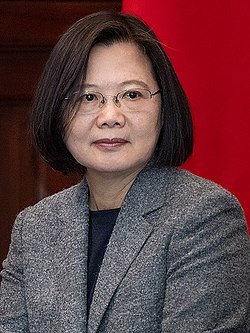 Tsai Ing-wenTsai Ing-wen was President of Taiwan from 20 May 2016 to…Affiliated
How the record is sourced and how the score is derived.
The score is formula-derived (Factrail formula v1, version 1.0.0), not an editorial verdict. Read the methodology.
By the Factrail desk · Method: how we source and score · Last reviewed
Dispute a fact on this pageNamed here, or represent someone who is? Request a right of reply.
People and organizations as listed in the Related section of this page; facts, drivers and the pages that name it as listed in the blocks here. Counts, not a rating.