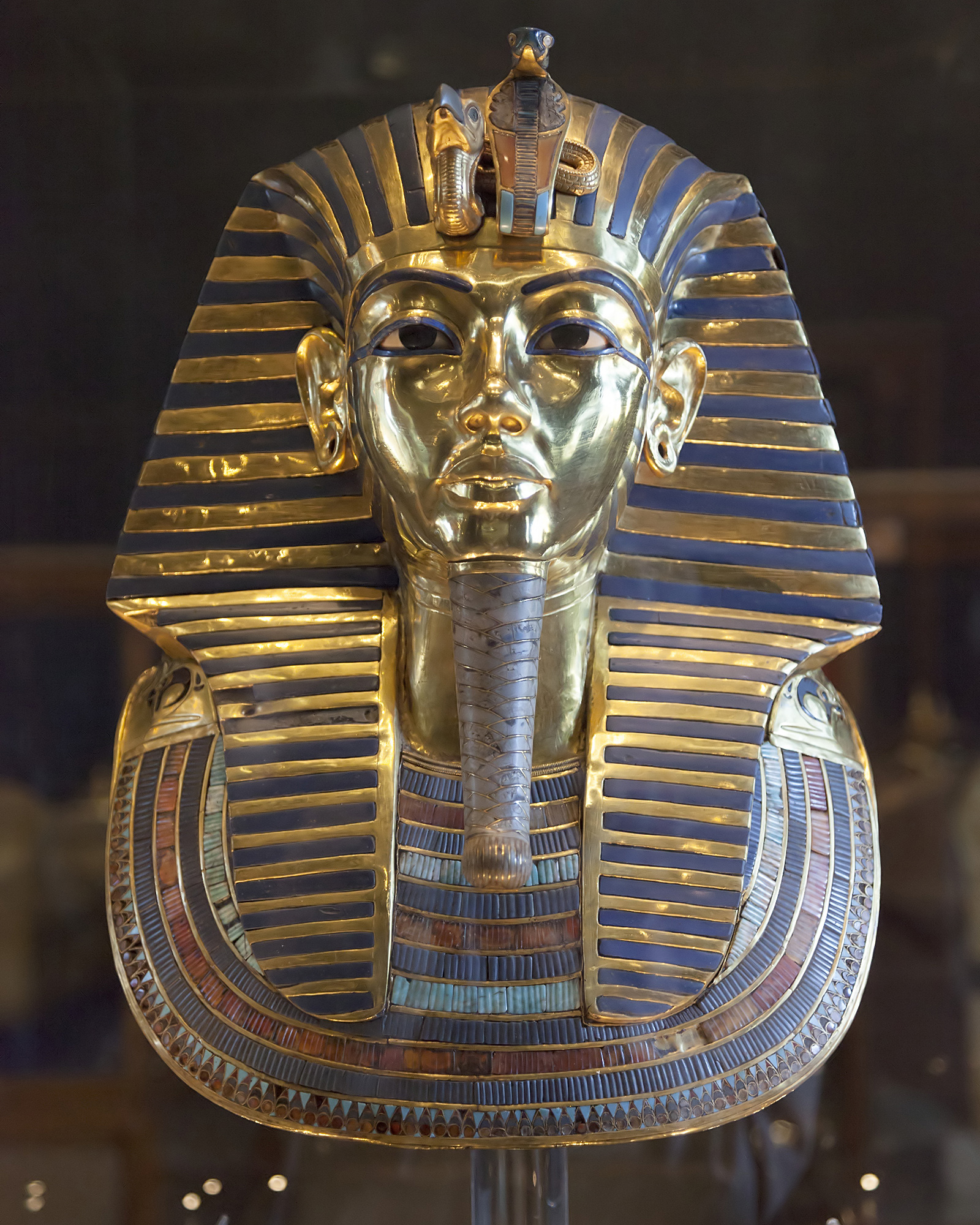
The first fact about Tutankhamun is a source limit. Almost everything with a calendar date that a modern catalog can store without inventing a BCE timestamp is a later instrument: a diary, a newspaper exclusive, an unwrap, a museum tour, a CT, a DNA paper, a glue repair, a World Heritage file. Treating the gold mask as a speech is naive. Treating the king as only a 1922 brand is evasive.
The harms that survive in dated public records are not all colonial cartoons. Ancient robbery holes are in Carter’s own publication. The 1925 unwrap destroyed wrappings to free gold. The Times exclusive and Burton copyright gated news and images. 1924 was a title fight. 1970s tours extracted rent and stressed objects. 2014 epoxy was a conservation failure. 2010 DNA-plus-press made a girl-queen and a malaria parasite into a soap opera. Restoration-stela editions show Amun’s return as a court policy under a child’s cartouche, with Ay and the temples as co-authors. Horemheb’s later recuttings attacked names. Press death-dogmas from 1968 onward sold murder as fact.
The offsets are also dated. 4 and 26 November 1922 journals are public primaries. Griffith’s archive and object cards made the find checkable. UNESCO 1979 and GEM are conservation-industrial frames. The 1972 exhibition was mass access even as it pooled tickets in London. 2005 CT improved on the unwrap. A 1925-era settlement kept objects in Egypt. Cairo display of the mask is a domestic icon, unlike Berlin’s Nefertiti. The 2022 Bodleian show named Egyptian staff. Amarna Project publications bound the mask with a city.
What the score must not say: that the king wrote a restoration essay in a modern voice; that a curse killed Carnarvon as a supernatural Fact; that JAMA closed the family novel; that Reeves opened a queen’s chamber; that 1972 washed 1922; that gold is a welfare state. Complex contribution is the honest type. Confidence is high on 1922–2022 diaries, listings, and museum acts, medium on stela policy authorship, low on hidden rooms and murder.
1922 is not 1330. 2010 is a journal. 2014 is glue. Off-family indicator padding is refused. Related people are Amarna kin, successors, and excavators. Nefertiti is already a public Person page; Carter and Carnarvon may be stubs.
The useful question is not whether Tutankhamun was a weak child. It is which dated later instruments still move knowledge, title, remains, rent, and cult, and how much of that movement can be attributed to a short cartouche without invention. Dated later instruments, not a recovered palace diary, remain the public record. Shared work remains named. Shared work with named collaborators, later editors, and institutions remains named. Day-precision is not invented where the named records are year-level. 1924-02-12 (cost, driver institutional-corruption): Egyptian authorities lock the tomb after a dispute over access and division — Howard Carter’s diary and journal 1922 — Griffith Institute (http://www.griffith.ox.ac.uk/gri/4sea1not.html (opens in a new tab)); Britannica — Tutankhamun (https://www.britannica.com/biography/Tutankhamun (opens in a new tab)). 1923-01-01 (cost, driver institutional-corruption): Carter’s published record documents ancient robbery holes in KV62 — Carter, The Tomb of Tutankhamen — scan (https://archive.org/details/tombofTutankhame01cart (opens in a new tab)); Griffith Institute — Tutankhamun: Anatomy of an Excavation (http://www.griffith.ox.ac.uk/discoveringTut/ (opens in a new tab)). 1925-11-11 (cost, driver humanitarian-access): Carter’s team unwraps the mummy in the tomb, destroying wrappings for gold and anatomy — Griffith Institute — Tutankhamun: Anatomy of an Excavation (http://www.griffith.ox.ac.uk/discoveringTut/ (opens in a new tab)); Britannica — Tutankhamun (https://www.britannica.com/biography/Tutankhamun (opens in a new tab)). 1923-04-05 (cost, driver political-polarization): Press turns Carnarvon’s 5 April 1923 death into a public ‘curse of the pharaohs’ — Britannica — Tutankhamun (https://www.britannica.com/biography/Tutankhamun (opens in a new tab)); National Geographic — Tutankhamun (https://www.nationalgeographic.com/history/article/king-tut (opens in a new tab)). 2014-08-01 (cost, driver institutional-corruption): Egyptian Museum staff glue the mask’s detached beard back with epoxy, later reported as a botch — Egypt Ministry of Tourism and Antiquities — monuments (https://egymonuments.gov.eg/ (opens in a new tab)); Guardian — Tutankhamun mask beard glued back on (https://www.theguardian.com/culture/2015/jan/22/tutankhamun-mask-beard-glued-back-on-botched-repair (opens in a new tab)). 2010-02-17 (cost, driver personal-data-protection): JAMA publishes a family DNA and pathology paper that the press reads as a closed royal novel — JAMA 2010 — Ancestry and pathology in Tutankhamun’s family (https://jamanetwork.com/journals/jama/fullarticle/185393 (opens in a new tab)); Nature news — Tutankhamun family DNA study and disputes (https://www.nature.com/articles/news.2010.35 (opens in a new tab)). 2015-08-01 (cost, driver institutional-corruption): Reeves’s 2015 hidden-chamber theory is published and globally captioned as Nefertiti in KV62 — National Geographic — Reeves hidden-chamber theory (https://www.nationalgeographic.com/history/article/150828-nefertiti-tomb-king-tut-egypt-archaeology (opens in a new tab)); Nature news — Tutankhamun family DNA study and disputes (https://www.nature.com/articles/news.2010.35 (opens in a new tab)). 1927-01-01 (cost, driver political-polarization): Twentieth-century editions print the Restoration Stela as a court reversal of Amarna cult — Met Heilbrunn — Tutankhamun’s tomb (Timeline of Art History) (https://www.metmuseum.org/toah/hd/tuta/hd_tuta.htm (opens in a new tab)); The Amarna Project (https://www.amarnaproject.com/ (opens in a new tab)). 1972-01-01 (cost, driver income-inequality): The 1972 London Treasures of Tutankhamun show concentrates ticket rent outside Egypt’s then museums — British Museum (https://www.britishmuseum.org/ (opens in a new tab)); Britannica — Tutankhamun (https://www.britannica.com/biography/Tutankhamun (opens in a new tab)). 2010-02-17 (cost, driver protection-of-minority-rights): 2010 DNA-and-press cluster narrates Ankhesenamun as a sister-wife in a medical-political plot — JAMA 2010 — Ancestry and pathology in Tutankhamun’s family (https://jamanetwork.com/journals/jama/fullarticle/185393 (opens in a new tab)); Britannica — Tutankhamun (https://www.britannica.com/biography/Tutankhamun (opens in a new tab)). 1927-01-01 (cost, driver protection-of-minority-rights): Modern epigraphy prints Horemheb’s later recutting of Tutankhamun’s public names — The Amarna Project (https://www.amarnaproject.com/ (opens in a new tab)); Met Heilbrunn — Tutankhamun’s tomb (Timeline of Art History) (https://www.metmuseum.org/toah/hd/tuta/hd_tuta.htm (opens in a new tab)). 1922-12-01 (cost, driver income-inequality): Harry Burton’s excavation photographs circulate under European expedition control — Griffith Institute — Tutankhamun: Anatomy of an Excavation (http://www.griffith.ox.ac.uk/discoveringTut/ (opens in a new tab)); Met Heilbrunn — Tutankhamun’s tomb (Timeline of Art History) (https://www.metmuseum.org/toah/hd/tuta/hd_tuta.htm (opens in a new tab)). 1976-01-01 (cost, driver humanitarian-access): 1970s international tours put the objects through repeated packing, climate, and crowd stress — British Museum (https://www.britishmuseum.org/ (opens in a new tab)); National Geographic — Tutankhamun (https://www.nationalgeographic.com/history/article/king-tut (opens in a new tab)). 1968-01-01 (cost, driver infectious-disease-transmission): Harrison’s 1968 x-rays and later press dogmas circulate rival ‘murder’ and ‘chariot’ causes of death — Britannica — Tutankhamun (https://www.britannica.com/biography/Tutankhamun (opens in a new tab)); JAMA 2010 — Ancestry and pathology in Tutankhamun’s family (https://jamanetwork.com/journals/jama/fullarticle/185393 (opens in a new tab)). 1923-01-01 (cost, driver industrial-policy-activism): Carter’s catalogue of gold objects is published as evidence of extractive Nubian and imperial metal flows — Carter, The Tomb of Tutankhamen — scan (https://archive.org/details/tombofTutankhame01cart (opens in a new tab)); Met Heilbrunn — Tutankhamun’s tomb (Timeline of Art History) (https://www.metmuseum.org/toah/hd/tuta/hd_tuta.htm (opens in a new tab)). 1979-01-01 (offset, driver humanitarian-access): UNESCO lists Ancient Thebes with its Necropolis, including the Valley of the Kings — UNESCO — Ancient Thebes with its Necropolis (https://whc.unesco.org/en/list/87/ (opens in a new tab)); Egypt Ministry of Tourism and Antiquities — monuments (https://egymonuments.gov.eg/ (opens in a new tab)). 1972-03-30 (offset, driver social-cohesion): The British Museum opens Treasures of Tutankhamun as a mass public exhibition — British Museum (https://www.britishmuseum.org/ (opens in a new tab)); Britannica — Tutankhamun (https://www.britannica.com/biography/Tutankhamun (opens in a new tab)). 2005-01-06 (offset, driver health-system-capacity): A CT scan of the mummy is published as a less invasive pathology instrument — National Geographic — Tutankhamun (https://www.nationalgeographic.com/history/article/king-tut (opens in a new tab)); JAMA 2010 — Ancestry and pathology in Tutankhamun’s family (https://jamanetwork.com/journals/jama/fullarticle/185393 (opens in a new tab)). 2002-01-01 (offset, driver industrial-policy-activism): Egypt launches the Grand Egyptian Museum project as a national home for the Tutankhamun corpus — Grand Egyptian Museum (https://grandegyptianmuseum.org/ (opens in a new tab)); Egypt Ministry of Tourism and Antiquities — monuments (https://egymonuments.gov.eg/ (opens in a new tab)). 2022-04-13 (offset, driver social-cohesion): The Bodleian exhibits Carter’s archive for the centenary, including Egyptian team labour — Bodleian — Tutankhamun: Excavating the Archive (2022) (https://visit.bodleian.ox.ac.uk/event/tutankhamun-excavating-the-archive (opens in a new tab)); Griffith Institute — Tutankhamun: Anatomy of an Excavation (http://www.griffith.ox.ac.uk/discoveringTut/ (opens in a new tab)).