Benjamin Netanyahu’s ‘Ceasefire’ Still Has a Rising Death Toll in Gaza
TL;DR
The argument over individual targets cannot erase the wider accountability test: people are still being killed under an arrangement whose political label promises restraint. Palestinian medical sources cited on 5 October put the number killed since the October 2025 ceasefire at 1,446, with more than 5,000 injured.
By the Factrail desk · Method: how we source and score · Last reviewed
Key graph impact
The article explains graph entities; the causal edges belong to the facts and drivers it links to.
- ArticleBenjamin Netanyahu’s ‘Ceasefire’ Still Has a Rising Death Toll in Gaza
- mentionsDriverIsrael–Gaza war (Oct 2023+)
- strengthensIndicators (6)Global deaths from organized violence (UCDP)
Strengthens · 85% impact strength
Observed
245k deaths per year · 195k above the normal line (2025)
Worse than normalAbove normal = worse
Strengthens · 85% impact strength
Observed
69M people (stock, end-of-year) · 28M above the normal line (2025)
Worse than normal3 readings, 2023–2025: rose from 68M people (stock, end-of-year) to 69M people (stock, end-of-year).
Above normal = worse · Lag ~7 d
Strengthens · 40% impact strength
Observed
11% of primary-school-age children · 11 above the normal line (2023)
Worse than normalAbove normal = worse
Strengthens · 40% impact strength
Observed
27.9% · 19.9 above the normal line (2024)
Worse than normal7 readings, 2018–2024: rose from 21.5% to 27.9%.
Above normal = worse
Article
A ceasefire is supposed to change the civilian experience of war. In Gaza, the label is increasingly colliding with a simpler measure: people continue to be killed and wounded by Israeli fire months after the agreement took effect.
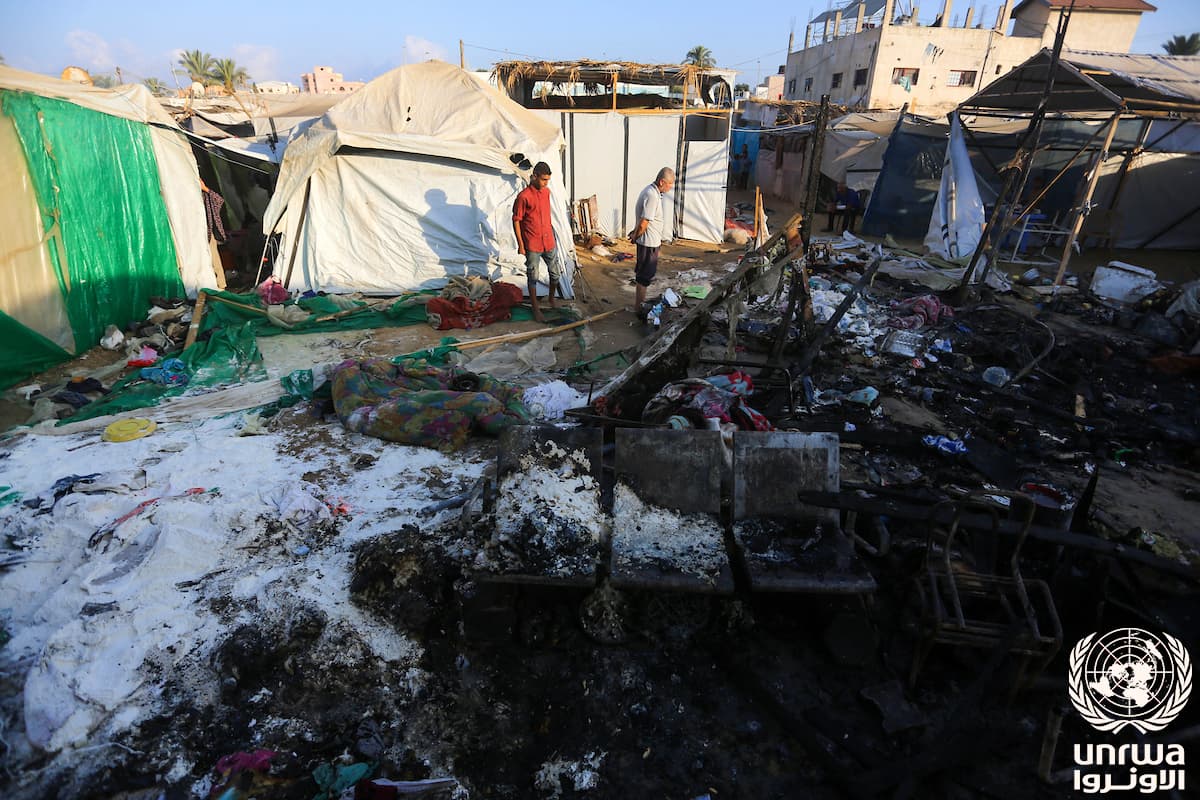
Palestinian medical sources cited on 5 October put the number killed since the October 2025 ceasefire at 1,446, with more than 5,000 injured. Among the latest reported deaths was six-year-old Suha Mohammed Nasser, who died from wounds after being shot while in her family’s displacement tent in Wadi al-Salqa. A separate Israeli strike on a vehicle was reported to have killed one person and wounded ten others. Ilkha (opens in a new tab)
Those figures come from Palestinian sources and should be attributed accordingly. Israel, meanwhile, continues to describe individual operations through a counter-Hamas frame. The IDF said in a separate announcement that it had killed Hamas military figures, including Muad Gamal Abu Nuseira and an observation-unit operative. Devdiscourse (opens in a new tab)
Both propositions can be true at once: Israeli forces may be targeting armed-group personnel, and civilians may still be dying under the resulting pattern of military action. Accountability fails when the existence of a claimed military target is treated as a complete answer to the second question.
That is the political burden carried by Benjamin Netanyahu (opens in a new tab). Factrail already tracks the October 2025 ceasefire (opens in a new tab) and the later phase-two launch (opens in a new tab) inside the continuing Israel–Gaza war (opens in a new tab). Those milestones matter only if they produce a durable reduction in exposure to violence. A ceasefire that contains recurring lethal strikes must therefore be judged by what the arrangement permits in practice, not merely by its diplomatic title.
The welfare test is particularly stark for displaced families. A tent offers almost no physical protection. Once people have been displaced from homes into temporary encampments, every continued strike or shooting operates on a population already deprived of normal shelter, mobility and security. The cumulative harm is not captured by a simple binary of “war” versus “ceasefire.”
The Israeli government also has an information responsibility. When it says an operation was directed against Hamas, the public needs enough evidence to assess target identification, precautions, proportionality and civilian consequences. Palestinian authorities and armed groups likewise bear obligations to distinguish civilian loss reporting from political messaging and to avoid using civilian areas for military purposes.
But the central point on 5 October is measurable. The death count under the truce is still rising. The accountability question is therefore not whether officials continue to call the arrangement a ceasefire. It is whether the rules, enforcement mechanisms and military decisions operating beneath that word are actually delivering the civilian protection the word implies.
Evidence
The sources this article cites, claim-bearing material first.
- International Criminal Court · ICC — Pre-Trial Chamber I rejects Israel's jurisdiction challenges and issues arrest warrants for Benjamin Netanyahu and Yoav Gallant, 21 November 2024 · 21 Nov 2024
More analysis
Ranked by shared facts, drivers and people — never by publication date alone.
Articles12
- Benjamin Netanyahu Calls It an Opening for Peace While Israel Digs In Across South LebanonShares the driver: Israel–Gaza war (Oct 2023+) · 5 October 2026
- Israel turns remembrance into a border shutdown — and Gaza aid absorbs the security decisionShares the driver: Israel–Gaza war (Oct 2023+) · 4 October 2026
- A named Hamas target does not erase the civilian bill from an Israeli strikeShares the driver: Israel–Gaza war (Oct 2023+) · 4 October 2026
- The October 7 Accountability Fight Is About Who Knew What — and WhenShares the driver: Israel–Gaza war (Oct 2023+) · 4 October 2026