Nord Stream Trial: Who Is in the Dock and What Is Alleged?
TL;DR
Former Ukrainian military officer Serhii K. went on trial in Hamburg on 14 October 2026 over the 2022 Nord Stream explosions. German prosecutors allege he helped lead the sabotage team; he denies involvement, and Ukraine denies ordering the attack.
By the Factrail desk · Method: how we source and score · Last reviewed
Key graph impact
The article explains graph entities; the causal edges belong to the facts and drivers it links to.
- ArticleNord Stream Trial: Who Is in the Dock and What Is Alleged?
- explainsFactExplosions rupture Nord Stream gas links in the Baltic Sea
26 September 2022 · verified
- ArticleNord Stream Trial: Who Is in the Dock and What Is Alleged?
- explainsFactFormer Ukrainian officer goes on trial in Germany over Nord Stream sabotage
14 October 2026 · verified
- ArticleNord Stream Trial: Who Is in the Dock and What Is Alleged?
- explainsDriverSecurity of Maritime Trade Routes
Article
A former Ukrainian military officer identified in Germany as Serhii K. went on trial in Hamburg on 14 October 2026 over the 2022 Nord Stream explosions. Prosecutors allege he helped lead the sabotage team; he denies involvement, and Ukraine denies that it ordered the attack.
The case is the first public trial to put evidence about the Nord Stream explosions (opens in a new tab) before a court after years of speculation. That makes legal precision more important than geopolitical shorthand: prosecutors have a theory, the defendant has not been convicted, and allegations of Ukrainian state involvement are not the same as proof that Volodymyr Zelenskyy (opens in a new tab) ordered or knew about the operation.
Who is Serhii K. and what do prosecutors allege?
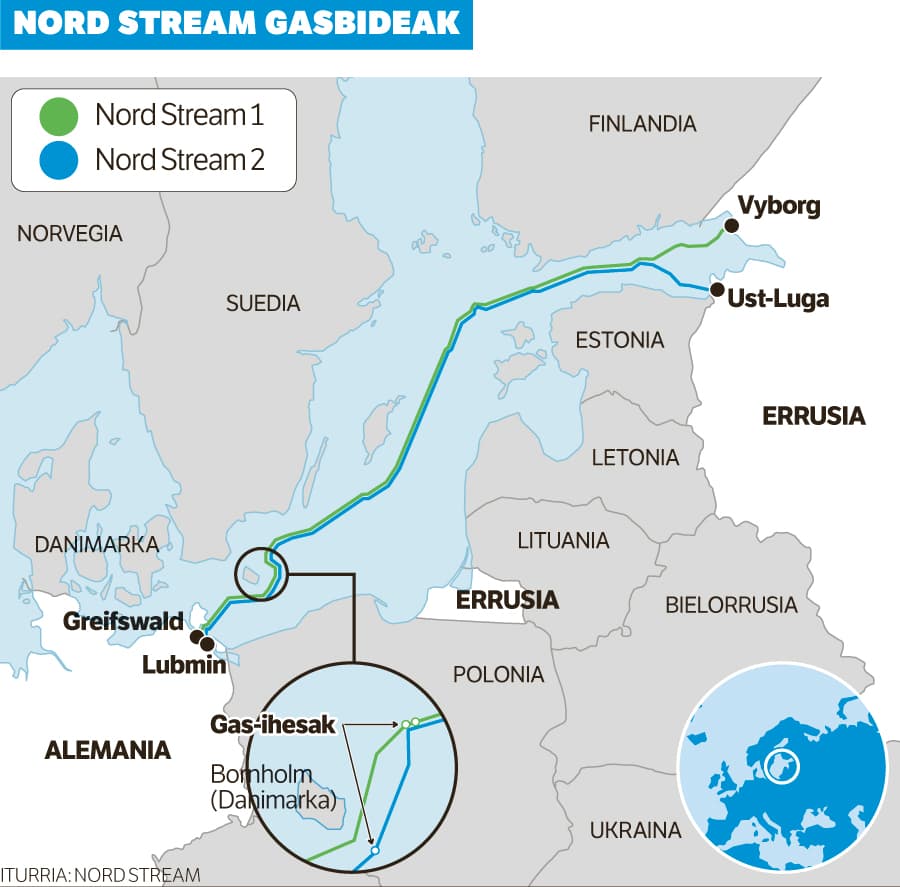
AP identifies the defendant as a former Ukrainian army officer. German prosecutors allege he led or helped lead a team that used a rented yacht, false identities and divers to place explosive devices on the Nord Stream system near the Danish island of Bornholm. He was arrested in Italy in 2025 and later extradited to Germany.
The Hamburg trial (opens in a new tab) is expected to continue for months. Serhii K. denies involvement. That denial is the strongest defense available at this stage and must remain beside every description of the prosecution case.
What are the charges?
AP reports charges including causing explosions, property damage, disruption of public services and complicity in war crimes. The war-crimes component is especially consequential because it asks a German court to characterize an attack on energy infrastructure within the legal framework of an armed conflict, not merely as ordinary property sabotage.
The human and economic effect of the attack was broader than the physical rupture. Nord Stream 1 had been a major route for Russian gas to Germany, while Nord Stream 2 had not entered service after its certification was suspended. Destroying undersea gas infrastructure in the Baltic Sea became a major maritime trade and infrastructure security (opens in a new tab) issue during the Ukraine war (opens in a new tab), feeding arguments about energy vulnerability and escalation beyond the battlefield.
Does Germany say Ukraine ordered the sabotage?
German prosecutors have alleged that the team acted on behalf of unidentified Ukrainian state entities, according to RFE/RL and reporting on the opening of the trial. That is a serious allegation, but it is not yet a court finding. Kyiv denies responsibility.
No cited source says Zelenskyy personally ordered the operation. Converting a prosecution theory about unidentified state entities into a claim of presidential guilt would go beyond the evidence. The German government has also emphasized judicial independence rather than adopting the prosecution theory as a political declaration.
The contradiction for Ukraine is political. Kyiv depends on German military and financial support while a German court hears allegations that Ukrainian-linked operatives attacked infrastructure central to Germany's energy relationship with Russia. Ukraine's defense is that it did not order the sabotage. The trial will test how much evidence prosecutors can present under oath for a state-link theory that has circulated for years.
Why does the case matter now?
The trial moves the story from anonymous briefings into an adversarial courtroom. Prosecutors must present evidence, the defense can challenge witnesses and forensic claims, and judges must distinguish proof from inference. That process can either strengthen or weaken allegations that have carried major diplomatic consequences without a public trial.
What comes next is documentary and testimonial evidence: travel records, yacht rentals, explosives analysis, communications, command relationships and witness credibility. Until a judgment is reached, the accurate formulation remains that Serhii K. is accused, he denies involvement, prosecutors allege a Ukrainian-state connection and Ukraine denies ordering the attack.
Questions people ask
Who is on trial for Nord Stream?
A former Ukrainian military officer identified under German privacy rules as Serhii K. is the first defendant to face a public trial over the 2022 Nord Stream sabotage.
What are the charges?
AP reports charges including causing explosions, property damage, disruption of public services and complicity in war crimes. These are accusations to be tested at trial.
Does Germany say Ukraine ordered it?
Prosecutors have alleged involvement by unidentified Ukrainian state entities, but Kyiv denies responsibility and no cited source accuses President Zelenskyy personally.
Evidence
The sources this article cites, claim-bearing material first.
- RFE/RL · RFE/RL report: Germany opens Nord Stream war-crime trial · 13 Oct 2026
- Al Jazeera · Ukrainian ex-officer goes on trial in Germany over Nord Stream blasts
More analysis
Ranked by shared facts, drivers and people — never by publication date alone.
Articles12
- Vladimir Putin's War Reached a Grain Ship in Romania's Economic Zone - But the Cause Still Needs ProofShares the driver: Security of Maritime Trade Routes · 5 October 2026
- Why Is Saudi Arabia Striking Sanaa Again?Shares the driver: Security of Maritime Trade Routes · 14 October 2026
- Why Is Iran Attacking Ships in the Strait of Hormuz?Shares the driver: Security of Maritime Trade Routes · 14 October 2026
- Hormuz Fertilizer Crisis: Why the UN Warns of Food ShortagesShares the driver: Security of Maritime Trade Routes · 15 October 2026