Vladimir Putin's War Reached a Grain Ship in Romania's Economic Zone - But the Cause Still Needs Proof
TL;DR
The Turkish-owned Royad Mammadov left Izmail carrying corn for Italy and sank in Romania's economic zone after a fire that killed two people. Volodymyr Zelenskyy blamed Russian drones; Romanian authorities had not publicly established the cause.
By the Factrail desk · Method: how we source and score · Last reviewed
Key graph impact
The article explains graph entities; the causal edges belong to the facts and drivers it links to.
- ArticleVladimir Putin's War Reached a Grain Ship in Romania's Economic Zone - But the Cause Still Needs Proof
- mentionsDriverUkraine war (Crimea–Donbas–2022+)
- strengthensIndicators (5)Global deaths from organized violence (UCDP)
- ArticleVladimir Putin's War Reached a Grain Ship in Romania's Economic Zone - But the Cause Still Needs Proof
- mentionsDriverFood-Supply Resilience
- weakensIndicators (2)Poverty headcount ratio at $3.00 a day (2021 PPP) (% of population)
- ArticleVladimir Putin's War Reached a Grain Ship in Romania's Economic Zone - But the Cause Still Needs Proof
- mentionsDriverSecurity of Maritime Trade Routes
Strengthens · 85% impact strength
Observed
245k deaths per year · 195k above the normal line (2025)
Worse than normalAbove normal = worse
- Worse
Strengthens · 80% impact strength
Observed
69M people (stock, end-of-year) · 28M above the normal line (2025)
Worse than normal3 readings, 2023–2025: rose from 68M people (stock, end-of-year) to 69M people (stock, end-of-year).
Above normal = worse · Lag ~30 d
Weakens · 64% impact strength
Observed
10.4% · 10.2 above the normal line (2024)
Worse than normal7 readings, 2018–2024: fell from 11.1% to 10.4%.
Above normal = worse
Weakens · 58% impact strength
Observed
27.9% · 19.9 above the normal line (2024)
Worse than normal7 readings, 2018–2024: rose from 21.5% to 27.9%.
Above normal = worse
Article
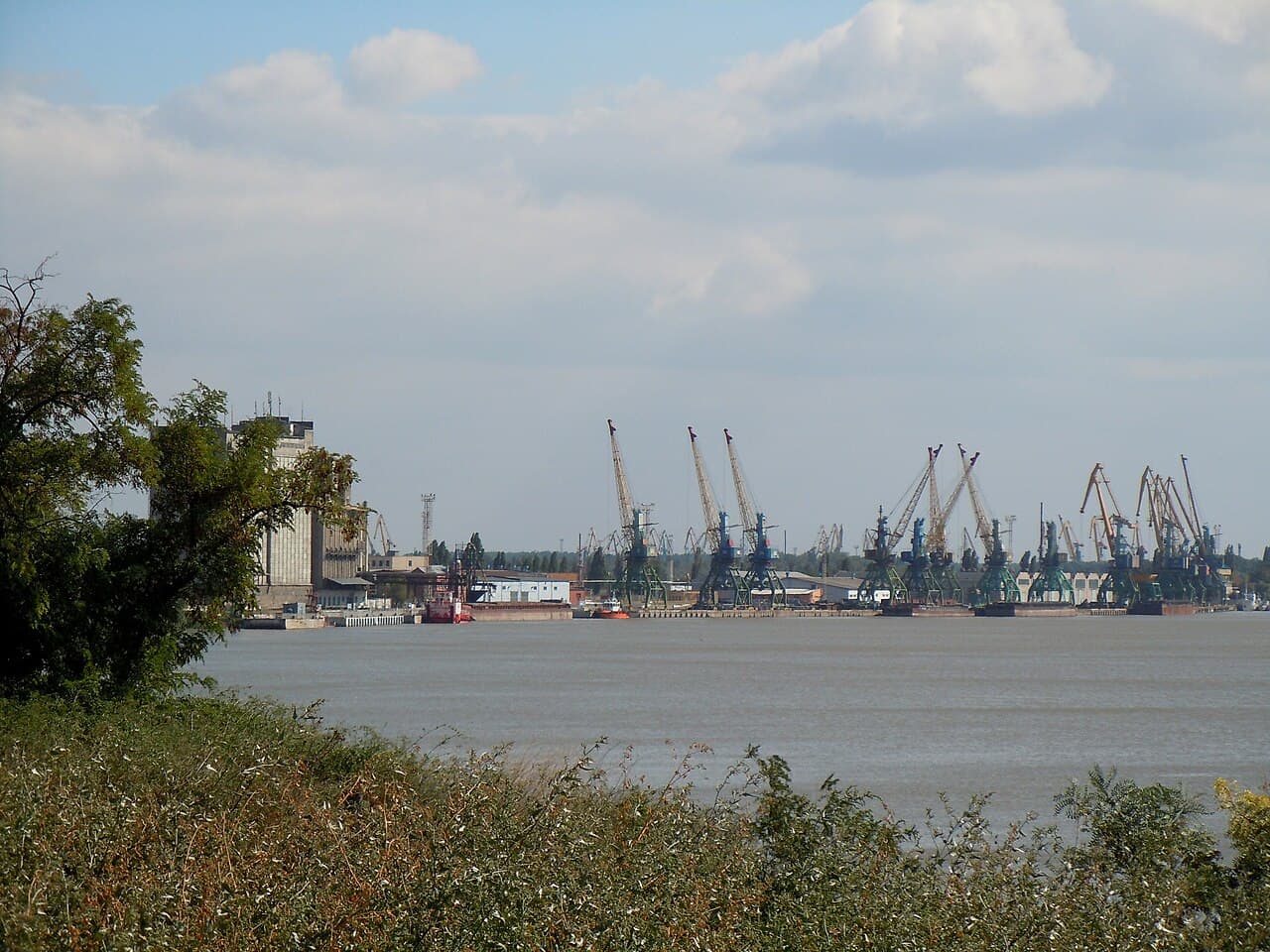
The Royad Mammadov had already cleared the most obvious danger zone. The Turkish-owned, Saint Kitts and Nevis-flagged commercial vessel had left Izmail carrying corn toward Italy when it caught fire and sank in Romania's exclusive economic zone in the Black Sea. Two people died and 11 crew members were rescued.
Ukraine's President Volodymyr Zelenskyy (opens in a new tab) said Russian drones struck the ship. That attribution is important, but it is still an attribution. Romanian authorities confirmed the casualties and the location of the sinking; they had not, at the time of the initial reporting, publicly established Russia as the cause. A criticism-first account has to preserve that gap rather than converting Kyiv's accusation into an independently established fact.
The accountability stakes are serious even with that uncertainty intact. A ship carrying food from a Ukrainian Danube port burned and sank in waters attached to a NATO member. If the drone attribution is confirmed, the incident would be another expansion of the physical costs of Russia's invasion of Ukraine (opens in a new tab) beyond Ukrainian territory and into the commercial infrastructure that keeps Ukrainian agriculture connected to global markets.
That connection is why the vessel matters more than as an isolated maritime casualty. The Black Sea Grain Initiative (opens in a new tab) once created a negotiated mechanism for moving Ukrainian agricultural exports through the war zone. Russia's 2023 exit from that arrangement (opens in a new tab) pushed Ukraine toward alternative routes, including Danube ports such as Izmail and independent shipping corridors. Those adaptations kept grain moving, but they did not remove the war from the supply chain.
That leaves a direct causal path from the Ukraine war (opens in a new tab) into the security of maritime trade routes (opens in a new tab) and ultimately food-supply resilience (opens in a new tab). A commercial vessel carrying corn is not just steel and cargo. It represents crews willing to sail, insurers willing to cover the route, ports willing to load it and buyers willing to depend on delivery. Repeated attacks or unexplained losses can raise the cost of every link.
The policy lever belongs primarily to the actor prosecuting the war. If evidence ultimately confirms a Russian strike, responsibility does not become diffuse merely because the target was outside a front line. Vladimir Putin (opens in a new tab) presides over the Russian war effort and the broader strategy that has repeatedly placed Ukrainian ports and export infrastructure under attack.
But Factrail should not outrun the evidence. The correct present-tense conclusion is narrower: a grain ship departing Ukraine sank in Romania's economic zone; two people died; Zelenskyy blamed Russian drones; the cause still required independent confirmation.
That uncertainty is not a reason to ignore the event. It is the reason to track it carefully.
Evidence
The sources this article cites, claim-bearing material first.
- BelTA / Presidency of Belarus · BelTA — Lukashenko confirms missile launch from Belarus at Ukraine, 27 February 2022
More analysis
Ranked by shared facts, drivers and people — never by publication date alone.
Articles12
- Vladimir Putin can negotiate while Russia prepares to freeze Ukrainian cities.Shares the driver: Ukraine war (Crimea–Donbas–2022+) · 5 October 2026
- Trump Wants Technical Talks While Putin Keeps Manufacturing Leverage by Destruction.Shares the driver: Ukraine war (Crimea–Donbas–2022+) · 5 October 2026
- Kharkiv Attack: Glide Bombs Kill 6, Zaporizhzhia Bridge HitShares the driver: Ukraine war (Crimea–Donbas–2022+) · 6 October 2026
- Kyiv accepts another negotiating table while Washington offers Putin a larger stageShares the driver: Ukraine war (Crimea–Donbas–2022+) · 4 October 2026