Trump Wants Technical Talks While Putin Keeps Manufacturing Leverage by Destruction.
TL;DR
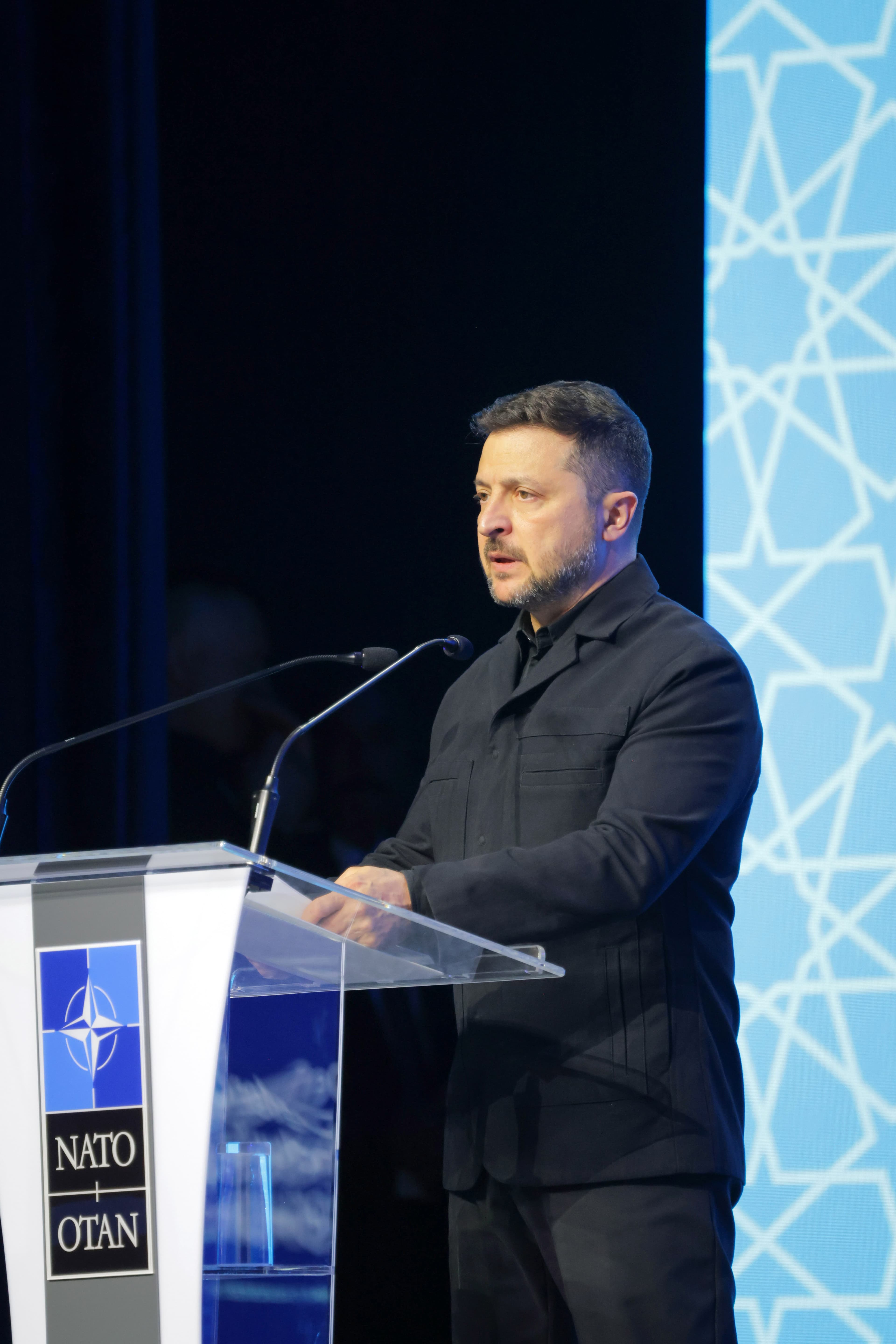
Washington is proposing trilateral technical negotiations by the end of October, but Ukraine enters any talks while Russian attacks are damaging the infrastructure, industry and export capacity that sustain the country's ability to resist. Volodymyr Zelenskyy said on October 4 that Washington was proposing a trilateral meeting at the technical level involving Ukraine, Russia and the United States before the end of the month.
By the Factrail desk · Method: how we source and score · Last reviewed
Key graph impact
The article explains graph entities; the causal edges belong to the facts and drivers it links to.
- ArticleTrump Wants Technical Talks While Putin Keeps Manufacturing Leverage by Destruction.
- mentionsDriverUkraine war (Crimea–Donbas–2022+)
- strengthensIndicators (5)Global deaths from organized violence (UCDP)
Strengthens · 85% impact strength
Observed
245k deaths per year · 195k above the normal line (2025)
Worse than normalAbove normal = worse
- Worse
Strengthens · 80% impact strength
Observed
69M people (stock, end-of-year) · 28M above the normal line (2025)
Worse than normal3 readings, 2023–2025: rose from 68M people (stock, end-of-year) to 69M people (stock, end-of-year).
Above normal = worse · Lag ~30 d
Strengthens · 40% impact strength
Observed
11% of primary-school-age children · 11 above the normal line (2023)
Worse than normalAbove normal = worse
Weakens · 40% impact strength
Observed
73.7% · 1.92 above the normal line (2024)
Better than normal7 readings, 2018–2024: rose from 69.4% to 73.7%.
Above normal = better
Article
The United States wants Ukraine and Russia back at a negotiating table before the end of October. The harder question is what condition Ukraine will be in when it gets there.
Volodymyr Zelenskyy (opens in a new tab) said on October 4 that Washington was proposing a trilateral meeting at the technical level involving Ukraine, Russia and the United States before the end of the month. The proposal follows another American push to restart negotiations with Moscow. (Kyiv Independent (opens in a new tab))
Diplomacy is not inherently the problem. Negotiations may eventually be necessary to end the war.
The accountability problem is treating the existence of talks as though it suspends the coercion happening outside the negotiating room.
Russia continues to damage the economic infrastructure Ukraine needs both to fight and to function. Reuters reported on October 5 that Russian attacks have battered industrial production, transport and export capacity while Kyiv is simultaneously trying to finance an increasingly expensive war. Steel and mining operations have been disrupted, ports and rail infrastructure have suffered damage, and Ukraine faces a major budget gap. (Reuters (opens in a new tab))
The Financial Times separately described a renewed Russian campaign against Black Sea ports, the energy grid and other infrastructure, with agricultural exports among the sectors under severe pressure. (Financial Times (opens in a new tab))
That matters because destruction is not external to negotiations. It can alter the bargaining position.
Vladimir Putin (opens in a new tab) does not need every strike to create an immediate battlefield breakthrough for the campaign to generate leverage. Damage to electricity, export terminals, railways and heavy industry raises Ukraine's fiscal needs, increases dependence on foreign support and makes civilian life more expensive. A country negotiating while its productive base is being degraded is not negotiating under neutral conditions.
Donald Trump (opens in a new tab)'s administration therefore holds a lever of its own. Washington can pursue talks, but it also influences the military, financial and diplomatic environment in which those talks occur. If American policy prioritizes getting representatives into a room while treating the ongoing degradation of Ukraine's economic capacity as background, process can become detached from power.
For Zelenskyy, the dilemma is equally sharp. Rejecting diplomacy can create friction with a crucial partner. Entering talks without sufficient defensive and economic backing risks allowing Moscow's campaign outside the room to shape what becomes politically possible inside it.
This is why a technical meeting should not be mistaken for de-escalation.
Russia's invasion created the war. Russia retains the ability to stop attacking Ukrainian infrastructure. The burden of resisting that pressure falls on a Ukrainian state already financing military operations, repairs, social spending and reconstruction simultaneously.
A serious negotiation framework therefore requires more than dates, delegations and photographs. It requires asking whether either side is being allowed to improve its bargaining position by systematically worsening civilian welfare while diplomacy proceeds.
Peace talks can be a route out of war.
They can also become another stage on which the consequences of military pressure are converted into political concessions.
The distinction depends on whether Washington measures success by the existence of negotiations or by whether the negotiations reduce coercion rather than reward it.
Evidence
The sources this article cites, claim-bearing material first.
- BelTA / Presidency of Belarus · BelTA — Lukashenko confirms missile launch from Belarus at Ukraine, 27 February 2022
More analysis
Ranked by shared facts, drivers and people — never by publication date alone.
Articles12
- Vladimir Putin can negotiate while Russia prepares to freeze Ukrainian cities.Shares the driver: Ukraine war (Crimea–Donbas–2022+) · 5 October 2026
- Vladimir Putin's War Reached a Grain Ship in Romania's Economic Zone - But the Cause Still Needs ProofShares the driver: Ukraine war (Crimea–Donbas–2022+) · 5 October 2026
- Kyiv accepts another negotiating table while Washington offers Putin a larger stageShares the driver: Ukraine war (Crimea–Donbas–2022+) · 4 October 2026
- Moscow promises more strikes: the retaliation loop now runs through Ukraine’s winter infrastructureShares the driver: Ukraine war (Crimea–Donbas–2022+) · 4 October 2026