Vladimir Putin can negotiate while Russia prepares to freeze Ukrainian cities.
TL;DR
Washington wants technical trilateral talks before the end of October. At the same time, Ukraine says Russia is preparing another campaign against power, heat and water in Kyiv, Kharkiv and Odesa. Diplomacy has to be judged against the coercion operating beside it.
By the Factrail desk · Method: how we source and score · Last reviewed
Key graph impact
The article explains graph entities; the causal edges belong to the facts and drivers it links to.
- ArticleVladimir Putin can negotiate while Russia prepares to freeze Ukrainian cities.
- mentionsDriverUkraine war (Crimea–Donbas–2022+)
- strengthensIndicators (5)Global deaths from organized violence (UCDP)
Strengthens · 85% impact strength
Observed
245k deaths per year · 195k above the normal line (2025)
Worse than normalAbove normal = worse
- Worse
Strengthens · 80% impact strength
Observed
69M people (stock, end-of-year) · 28M above the normal line (2025)
Worse than normal3 readings, 2023–2025: rose from 68M people (stock, end-of-year) to 69M people (stock, end-of-year).
Above normal = worse · Lag ~30 d
Strengthens · 40% impact strength
Observed
11% of primary-school-age children · 11 above the normal line (2023)
Worse than normalAbove normal = worse
Weakens · 40% impact strength
Observed
73.7% · 1.92 above the normal line (2024)
Better than normal7 readings, 2018–2024: rose from 69.4% to 73.7%.
Above normal = better
Article
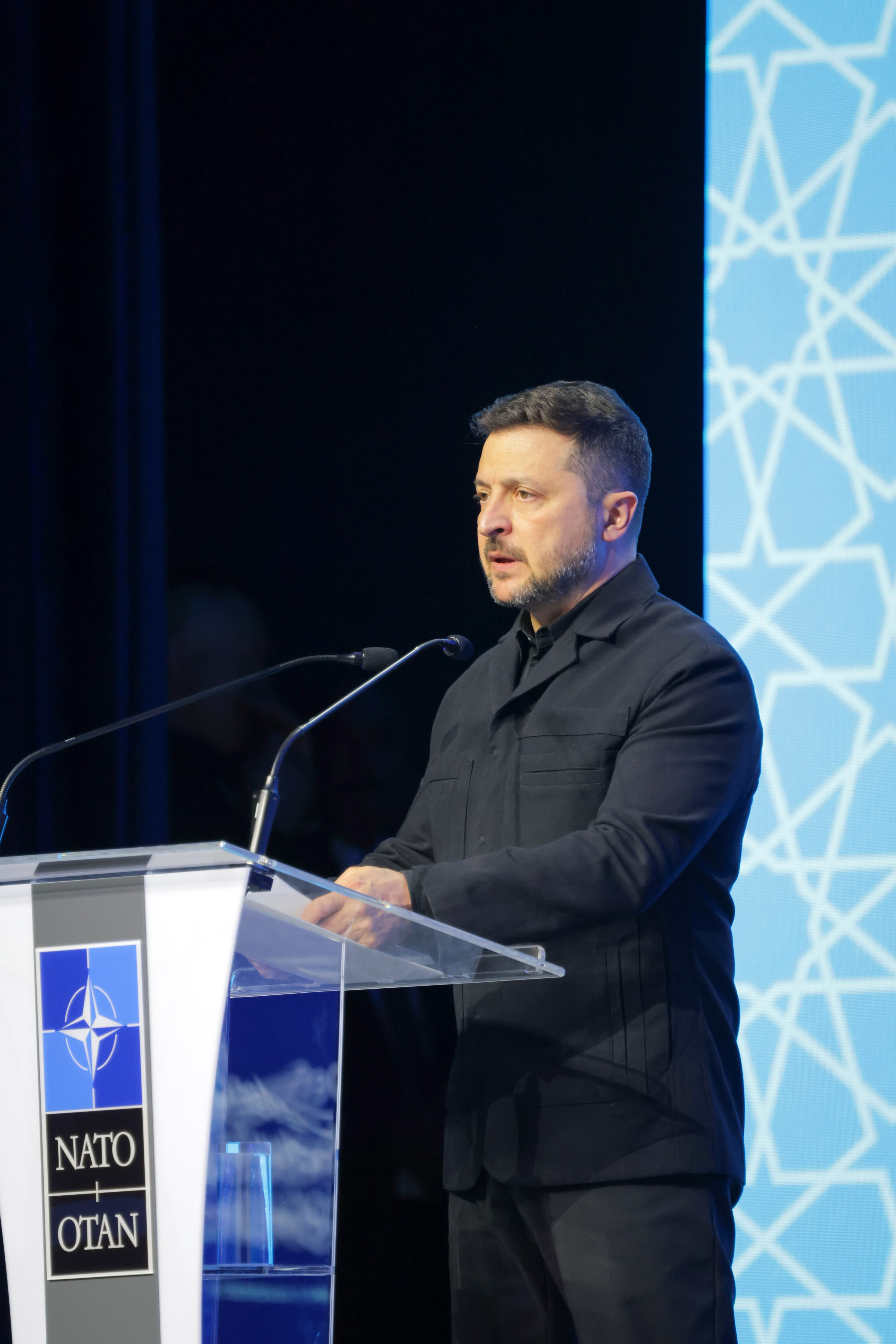
The United States wants Ukraine and Russia to enter technical-level trilateral talks before the end of October. Volodymyr Zelenskyy (opens in a new tab) says Ukraine has accepted the proposal and is willing to meet in the United Arab Emirates or another location suggested by Washington. Russia's answer is still the essential missing piece.
The diplomatic offer matters. But it cannot be evaluated separately from what Russia is doing and reportedly preparing to do inside the Ukraine war (opens in a new tab).
Ukraine has warned European partners of a Russian plan aimed at crippling electricity, heating and water supplies in major cities including Kyiv, Kharkiv and Odesa during winter. Kyiv Post, citing reporting about a document presented by Ukrainian officials, described a goal of cutting as much as 90 percent of essential services in targeted urban areas. The underlying document was not independently authenticated, so that numerical claim should remain clearly attributed rather than treated as settled Russian policy.
The broader strategy, however, does not depend on that single document. Russian forces have repeatedly attacked Ukrainian energy infrastructure during the invasion that began in 2022, represented on Factrail by Russia's invasion of Ukraine (opens in a new tab). Current strikes against power, transport and urban infrastructure make another winter campaign a real operational risk rather than a hypothetical diplomatic talking point.
This creates the central accountability problem around the new negotiations.
Technical talks can reduce harm if they produce enforceable restraints: for example, reciprocal limits on attacks against energy systems, shipping or other infrastructure. But negotiations can also operate beside coercion rather than replacing it. A state can discuss ceasefire mechanisms while continuing to improve the military pressure intended to shape what the other side will eventually accept.
For Vladimir Putin (opens in a new tab), attacks on civilian-supporting infrastructure create leverage precisely because their effects accumulate. Destroyed generating capacity or substations do not need to kill thousands instantly to change political conditions. They can make apartments unlivable, interrupt water, close businesses, weaken transportation and force governments to divert scarce resources into emergency repair.
Winter amplifies each effect.
The territorial objective remains relevant too. Ukrainian officials have said Moscow continues to seek full control of Donetsk Oblast, with Russian political and military planning discussed around deadlines stretching from the end of 2026 into early 2027. Russia has also continued to demand Ukrainian territorial concessions as part of any settlement. Those claims and timelines come from Ukrainian officials and should be treated as attributed assessments, not access to Putin's private decision-making.
Taken together, however, they show why the technical talks need a causal test rather than a ceremonial one.
Does diplomacy reduce Russia's ability or willingness to impose civilian pain in pursuit of territorial concessions? Or does it merely create another negotiating channel while the coercive campaign continues?
Washington matters because Donald Trump (opens in a new tab) and his administration hold leverage over Ukraine as a major supplier and diplomatic broker. A mediator is not neutral merely because it sits between two delegations. It influences which issues reach the table, which pressure is treated as legitimate and which side is asked to change behavior first.
That makes the structure of any proposed energy arrangement crucial. A superficially symmetrical prohibition can produce asymmetrical consequences if one party is invading the other's territory, occupying infrastructure or using long-range attacks to degrade cities.
None of this argues against talks. A verifiable agreement protecting energy infrastructure could directly improve civilian welfare. Even a limited arrangement that keeps heating and electricity running through winter would matter.
It argues against measuring diplomatic progress by the existence of a meeting.
The relevant outcome is whether homes remain heated, grids remain functional, civilians face less coercion and territorial negotiations become less dependent on who can inflict the greater winter hardship.
Russia can negotiate and attack at the same time. Accountability begins by refusing to confuse the first activity with an end to the second.
Sources: Kyiv Independent (opens in a new tab), Ukrainska Pravda (opens in a new tab), Kyiv Post (opens in a new tab), Interfax-Ukraine (opens in a new tab).
Evidence
The sources this article cites, claim-bearing material first.
- BelTA / Presidency of Belarus · BelTA — Lukashenko confirms missile launch from Belarus at Ukraine, 27 February 2022
More analysis
Ranked by shared facts, drivers and people — never by publication date alone.
Articles12
- Trump Wants Technical Talks While Putin Keeps Manufacturing Leverage by Destruction.Shares the driver: Ukraine war (Crimea–Donbas–2022+) · 5 October 2026
- Vladimir Putin's War Reached a Grain Ship in Romania's Economic Zone - But the Cause Still Needs ProofShares the driver: Ukraine war (Crimea–Donbas–2022+) · 5 October 2026
- Kyiv accepts another negotiating table while Washington offers Putin a larger stageShares the driver: Ukraine war (Crimea–Donbas–2022+) · 4 October 2026
- Moscow promises more strikes: the retaliation loop now runs through Ukraine’s winter infrastructureShares the driver: Ukraine war (Crimea–Donbas–2022+) · 4 October 2026