Moscow promises more strikes: the retaliation loop now runs through Ukraine’s winter infrastructure
TL;DR
Russia says it will intensify attacks after Zelenskyy pledged more strikes on Russian refineries. The military language is reciprocal; the welfare exposure is not. Bridges, heating infrastructure, logistics and urban services put millions of civilians inside the escalation mechanism.
By the Factrail desk · Method: how we source and score · Last reviewed
Key graph impact
The article explains graph entities; the causal edges belong to the facts and drivers it links to.
- ArticleMoscow promises more strikes: the retaliation loop now runs through Ukraine’s winter infrastructure
- mentionsDriverUkraine war (Crimea–Donbas–2022+)
- strengthensIndicators (5)Global deaths from organized violence (UCDP)
Strengthens · 85% impact strength
Observed
245k deaths per year · 195k above the normal line (2025)
Worse than normalAbove normal = worse
- Worse
Strengthens · 80% impact strength
Observed
69M people (stock, end-of-year) · 28M above the normal line (2025)
Worse than normal3 readings, 2023–2025: rose from 68M people (stock, end-of-year) to 69M people (stock, end-of-year).
Above normal = worse · Lag ~30 d
Strengthens · 40% impact strength
Observed
11% of primary-school-age children · 11 above the normal line (2023)
Worse than normalAbove normal = worse
Weakens · 40% impact strength
Observed
73.7% · 1.92 above the normal line (2024)
Better than normal7 readings, 2018–2024: rose from 69.4% to 73.7%.
Above normal = better
Article
Russia’s October 4 pledge to intensify strikes on Ukraine makes the escalation mechanism unusually explicit.
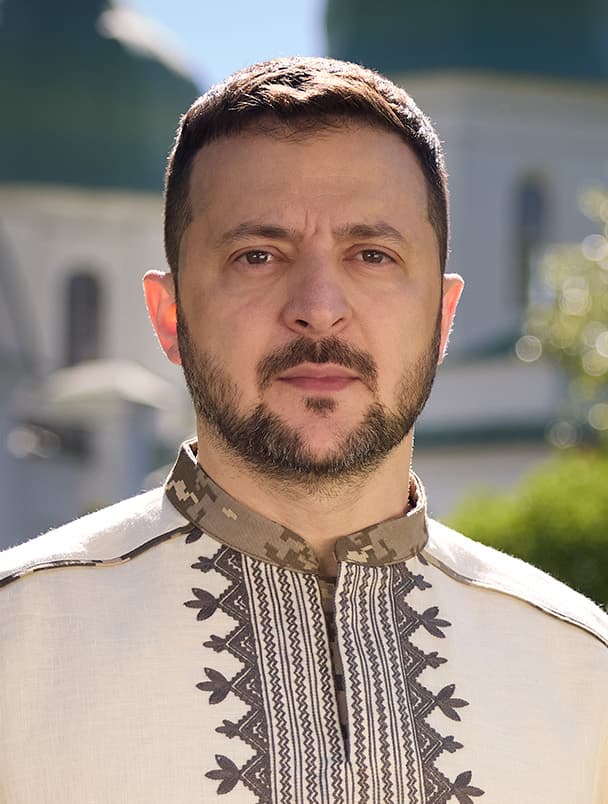
The Russian Defence Ministry said attacks would increase after President Volodymyr Zelenskyy (opens in a new tab) told Reuters that Ukraine intended to step up strikes on Russian oil refineries in response to Moscow’s campaign against Ukrainian infrastructure. Russia describes its targets as military facilities, defence industry sites and associated infrastructure. Ukraine says its refinery campaign is retaliation for Russian attacks and says it will avoid deliberately targeting civilians.
The danger is not merely that both sides can describe themselves as responding. It is that reciprocal justification can become an engine with no internal stopping rule.
Russia launched the full-scale invasion in 2022 (opens in a new tab); the resulting Ukraine war (opens in a new tab) is therefore not a symmetrical dispute over how hostilities began. That distinction matters when assigning responsibility for the existence of the war. But it does not eliminate the need to trace individual escalation decisions after the invasion. Ukraine chooses its targets. Russia chooses its targets. Those choices produce different exposure for civilians.
Moscow’s current lever is particularly consequential because attacks are intersecting with the physical systems required to keep a large city functioning through winter. The Northern Bridge strike was reported to have damaged a heating main, while recent Russian operations have also disrupted logistics and other infrastructure. A bridge can be militarily useful and simultaneously be essential civilian infrastructure. A heating network is even less abstract: damage becomes cold apartments, repair risk, public expenditure and vulnerability during outages.
That is why Vladimir Putin (opens in a new tab) and the Russian command structure cannot outsource accountability to the word “retaliation.” Retaliation explains a stated rationale; it does not independently establish necessity, proportionality or civilian protection.
Ukraine’s refinery strategy deserves its own scrutiny for the same reason. Oil infrastructure finances and supplies Russia’s war economy, but attacks can also generate economic and civilian effects. Kyiv’s stated intention to avoid civilian targets is relevant; subsequent targeting and outcomes are the evidence against which that commitment has to be judged.
The immediate evening development, however, is Moscow’s announced intensification. It converts a pattern visible in recent strikes into declared policy.
The causal loop now looks increasingly self-reinforcing: Russian infrastructure attacks → Ukrainian refinery retaliation → Russian promise of intensified attacks → Ukrainian promise to answer attacks on bridges and logistics. Each government can point backward one step and call the next action responsive.
Accountability requires looking farther back and farther forward at the same time. The invasion establishes the foundational agency. Individual targeting decisions establish responsibility for each subsequent civilian consequence. And the forward-looking welfare test is brutally concrete: whether escalation leaves Ukrainians with less heat, mobility, communications and physical security as winter approaches.
A retaliation loop is still made of decisions. Calling it a loop should never make those decisions ownerless.
Evidence
The sources this article cites, claim-bearing material first.
- BelTA / Presidency of Belarus · BelTA — Lukashenko confirms missile launch from Belarus at Ukraine, 27 February 2022
More analysis
Ranked by shared facts, drivers and people — never by publication date alone.
Articles12
- Kyiv accepts another negotiating table while Washington offers Putin a larger stageShares the driver: Ukraine war (Crimea–Donbas–2022+) · 4 October 2026
- Ukraine's refinery strategy turns Russia's winter campaign into an energy accountability ledgerShares the driver: Ukraine war (Crimea–Donbas–2022+) · 4 October 2026
- Ukraine's Lyman counteroffensive tests whether battlefield innovation can break Putin's political calendarShares the driver: Ukraine war (Crimea–Donbas–2022+) · 4 October 2026
- Merz arrives in Kyiv as bridge strikes expose Europe's air-defense responsibility gapShares the driver: Ukraine war (Crimea–Donbas–2022+) · 4 October 2026