Merz arrives in Kyiv as bridge strikes expose Europe's air-defense responsibility gap
TL;DR
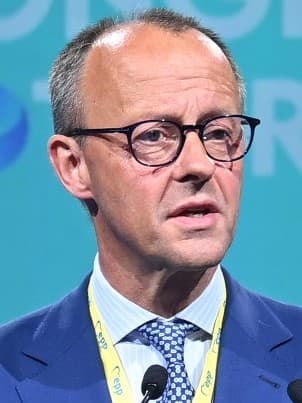
Friedrich Merz's Kyiv visit arrives at the intersection of political solidarity and a difficult accountability question: why does Europe continue to discuss Ukrainian air-defense needs after years of Russian missile and drone pressure? The visit follows renewed strikes affecting Ukrainian transport infrastructure, including the Pivnichnyi Bridge.
By the Factrail desk · Method: how we source and score · Last reviewed
Key graph impact
The article explains graph entities; the causal edges belong to the facts and drivers it links to.
- ArticleMerz arrives in Kyiv as bridge strikes expose Europe's air-defense responsibility gap
- mentionsDriverUkraine war (Crimea–Donbas–2022+)
- strengthensIndicators (5)Global deaths from organized violence (UCDP)
Strengthens · 85% impact strength
Observed
245k deaths per year · 195k above the normal line (2025)
Worse than normalAbove normal = worse
- Worse
Strengthens · 80% impact strength
Observed
69M people (stock, end-of-year) · 28M above the normal line (2025)
Worse than normal3 readings, 2023–2025: rose from 68M people (stock, end-of-year) to 69M people (stock, end-of-year).
Above normal = worse · Lag ~30 d
Strengthens · 40% impact strength
Observed
11% of primary-school-age children · 11 above the normal line (2023)
Worse than normalAbove normal = worse
Weakens · 40% impact strength
Observed
73.7% · 1.92 above the normal line (2024)
Better than normal7 readings, 2018–2024: rose from 69.4% to 73.7%.
Above normal = better
Article
Friedrich Merz (opens in a new tab)'s Kyiv visit arrives at the intersection of political solidarity and a difficult accountability question: why does Europe continue to discuss Ukrainian air-defense needs after years of Russian missile and drone pressure?
The visit follows renewed strikes affecting Ukrainian transport infrastructure, including the Pivnichnyi Bridge. Merz presented German security as directly connected to Ukraine's ability to resist Russia, framing support for Kyiv as a European strategic interest rather than only foreign assistance.
The symbolic value of a high-level visit is limited if it does not translate into the systems required to protect civilians. Bridges, power networks, logistics routes, and urban infrastructure remain vulnerable because defensive capacity has always been a scarce resource.
Factrail's causal view focuses on the chain between political decisions and civilian outcomes. Russian strikes are the immediate driver of infrastructure damage, but allied delivery timelines and defence-industrial limits shape the ability of Ukraine to absorb those attacks.
The accountability question therefore has multiple actors. Russia bears responsibility for initiating and continuing the campaign against Ukrainian infrastructure. European governments also face questions about whether their commitments matched the speed and scale required by the threat environment.
The welfare impact is measured not by diplomatic appearances but by whether civilian systems remain functional under pressure: transport access, energy security, economic continuity, and public resilience.
Merz's visit is therefore both a statement of support and a reminder of the unresolved gap between political declarations and physical protection.
Friedrich Merz's presence in Kyiv does not, by itself, close Europe's air-defense gap. The Ukraine war (opens in a new tab) has already shown that political solidarity can coexist with delayed delivery of the systems that keep bridges, substations and apartment blocks intact. Accountability therefore attaches to schedules and inventories, not speeches.
The civilian ledger is transport continuity, heat, and survival under missile and drone pressure. Volodymyr Zelenskyy (opens in a new tab) can request capacity; Vladimir Putin (opens in a new tab) can continue strikes; European cabinets decide whether protection arrives at the tempo the threat environment requires. Visits matter only when they change that tempo.
The operational test remains unchanged: publish the decision chain, measure civilian harm, and refuse narratives that treat population costs as incidental footnotes to elite strategy. Allied industrial tempo is therefore a first-order variable in the civilian outcome of the Ukraine war, not a footnote to summit optics. When air-defense batteries arrive late, the welfare cost is already paid in damaged bridges, disrupted logistics and households forced to absorb another winter under fire. Friedrich Merz can convert the Kyiv visit into accountability only by changing delivery schedules — not by restating that German security is linked to Ukrainian survival.
Evidence
The sources this article cites, claim-bearing material first.
- BelTA / Presidency of Belarus · BelTA — Lukashenko confirms missile launch from Belarus at Ukraine, 27 February 2022
More analysis
Ranked by shared facts, drivers and people — never by publication date alone.
Articles12
- Ukraine's Lyman counteroffensive tests whether battlefield innovation can break Putin's political calendarShares the driver: Ukraine war (Crimea–Donbas–2022+) · 4 October 2026
- Ukraine's refinery strategy turns Russia's winter campaign into an energy accountability ledgerShares the driver: Ukraine war (Crimea–Donbas–2022+) · 4 October 2026
- When a Peace Deal Has an Oil Deal Inside ItShares the driver: Ukraine war (Crimea–Donbas–2022+) · 4 October 2026
- Kyiv’s Bridges Are Becoming a Winter Pressure PointShares the driver: Ukraine war (Crimea–Donbas–2022+) · 4 October 2026